Translate

Wednesday, March 30, 2016

Trudeau To Discuss Possibility Of Terrorists Using Nuclear Weapons


CP | By Alexander Panetta, The Canadian Press

WASHINGTON — Justin Trudeau will be among the world leaders gathering to contemplate the spine-tingling scenario of terrorists getting hold of nuclear weapons.

The prime minister will be in Washington this week at the last of the nuclear-safety summits organized by President Barack Obama.

The leaders will close out the two-day event with a session that discusses a hypothetical nuclear-terrorism scenario.

But that imaginary case study will be happening amid unnerving real-life events.

Belgium has just deployed soldiers to defend its nuclear facilities — after terrorist attacks in that country, and several incidents involving site personnel.

Analysts believe al-Qaida and Japan's Aum Shinrikyo have actively pursued nuclear weapons and they've begun expressing concern the so-called Islamic State might have similar designs.

"A terrorist attack with an improvised nuclear device would create political, economic, social, psychological and environmental havoc," said Laura Holgate, a White House aide who oversees efforts to limit the threat from weapons of mass destruction.

"The impact of a nuclear terrorist attack would be global, and the solutions must therefore also be global."

It's the fourth such summit and flows from a speech President Barack Obama gave in Prague soon after he took office.

He expressed hope for a world without nuclear weapons — which he conceded might not be achievable in his lifetime.

But the 2009 speech set shorter-term targets. One was securing the existing nuclear material around the world; he convened international leaders' meetings to make it a high-level priority.

The mixed results will be underscored by some glaring absences this week.

The Pakistani and Belgian leaders will be home dealing with the after-effects of terrorist attacks.

Putin to skip the summit

Russia's Vladimir Putin is skipping the summit — he'll be represented by observers. Russia says the U.S.-led process has run its course, and the issue should be left to the five international organizations working on it, including the UN, Interpol and the International Atomic Energy Agency.

As Obama leaves office, U.S. officials said the final summit communique will announce next steps leaders intend to take within those five organizations.

The Obama administration points to several successes these last few years:
Enough fissile material to make 130 nuclear weapons has been removed or downgraded from 50 facilities in 30 countries.

Fourteen countries and Taiwan have eliminated all nuclear material from their territory.

Twenty countries have increased co-operation to counter nuclear smuggling.

But 2,000 metric tons of weapons-usable material remain in civilian and military programs, says the White House.

It would require 25 kilograms of highly enriched uranium to produce a nuclear bomb, former State Department official Sharon Squassoni told a briefing at the Center for Strategic and International Studies.

Numerous incidents involving nuclear-plant-staff have been reported just in Belgium.

A guard at one facility was shot dead in his home last week — although authorities say it wasn't terrorism-related.

Security badges were just stripped from workers at a Belgian plant.

Video footage of an official at a Belgian facility was discovered in the home of a suspected militant linked to killers from the Nov. 13 Paris attacks.

Belgium's nuclear agency had its computer system hacked and briefly shut down this year.

Two employees at a plant near Brussels reportedly joined jihadists in Syria. One was killed, another arrested.

A new study cites three potential ways terrorists could launch a nuclear attack.

They could attack facilities — perhaps by hacking their computers, says the study for the Harvard Kennedy School.

They could explode a so-called dirty bomb involving radioactive waste, which might not kill anyone but, the study says, could cause billions in damage.
"The consequences of detonation of even a crude terrorist nuclear bomb would be severe, turning the heart of a modern city into a smoldering radioactive ruin..."

The hardest to pull off would be the most devastating: an actual nuclear weapon in the hands of terrorists.

"The consequences of detonation of even a crude terrorist nuclear bomb would be severe, turning the heart of a modern city into a smoldering radioactive ruin and sending reverberating economic and political aftershocks around the world," said the study.

Canada is deemed to have a better-than-average track record on nuclear safety.

Canada is third among 24 countries for the safety of its materials, according to an international non-profit organization that tracks nuclear-security trends.

It scored above-average in 18 different categories, like on-site protection and cyber security, according to the 2016 Nuclear Threat Initiative's security index.

But it was middle-of-the-pack in two categories: dispersal of quantities and sites, and in potential terrorist presence.

"We are committed to working with the international community to prevent nuclear terrorism — a very real social, political, economic, and environmental threat," Trudeau said in a statement.

Tuesday, March 29, 2016

Canadian Rafale Cost Could be as low as $15 Billion for RCAF

Written by JDR - CAFDispatch Author
Published: March 29, 2016

As the debate continues as to which aircraft the Royal Canadian Air Force should choose as it's replacement to the McDonall-Douglas CF-18's a report came out today from Europe that France has agreed to sell Qatar the Rafale fighter at a fairly reasonable cost.

It should be noted that the costs estimates present in this post for the RCAF are my estimates based on information available.

The Dassault Rafale deal to Qatar includes 24 Rafale fighters (specific model details were not released), MBDA missiles and training for 36 pilots and 100 mechanics. The agreed cost, $7.5 Billion. It is assumed that these 24 fighters will be built in France, as with the smaller deal previously made with India.

What makes this deal interesting is that Dassault has previously stated that it would allow the majority of Rafael's to be built in Canada should the RCAF choose its aircraft. This could greatly reduce the cost of purchasing the aircraft; and it would create jobs in the Canadian aerospace industry which desperately needs a boost.

Canada's original F-35 purchase estimate was for 65 fighters, at a cost of $14.7 Billion (a 2012 figure) This number we know was a complete lie - it was discovered within a year that the purchase price would be closer to $25 Billion. That didn’t include Canada-specific modifications, ongoing maintenance and other costs

However by 2014, the purchase price had ballooned to nearly $56 Billion, and once you considered the maintenance costs and life-cycle management of the F-35 - it was going to cost an estimated $126 Billion over the 30 estimated lifespan of the Joint Strike Fighter.

With all the hidden costs, lies, and general distaste for the way the Harper Government was managing the seemingly "secrete" purchase - the F-35 purchase was put on hold. (Where it still stands today)

If we take the cost estimate of the Qatar deal and calculate it according to the 65 fighter plan Canada wants - it seems it could possibly cost $22 Billion - but this figure includes the cost of the MBDA missiles Qatar wants. Canada could opt out of this option. This estimates a cost of around $312 Million per aircraft (including training). But let's be honest - sales to Middle East countries always seem to be inflated. Egypt purchased 24 fighters for $5.6 billion. India just announced it will purchase 36 for $8.8 billion.

If we consider that the Rafale was built in Canada - the price (including intellectual property rights transfers) might get closer to the flyaway cost of around $150 million per air frame. Canada has been training Commonwealth pilots since the Second World War, and would therefore also require less training from the French Air Force. Even at a higher estimate of around $240 million per air frame, Canada would only be paying $15 billion for an aircraft that entered service nearly 20 years after the CF-18's and  2 years after the Boeing F/A-18 Super Hornet which is also being considered.

One snag in this wheel is that despite potential delays to the F-35 IOC, the Pentagon recently dropped the estimated price of its acquisition of 2,457 fighters by $12.1 billion. The drop marks a 3% decrease on the expected costs declared a year ago. This could potentially dissuade the program’s nay-sayers who have often derided the program’s soaring costs, potentially persuading Denmark and Canada who are currently on the fence, to perhaps continue with their participation in the Joint Strike Fighter Program.
For those who long for the days when we purchased the CF-18's (which had a flyaway cost of around $40 Million - those days are long over. Any fighter purchase will be into the tens of billions. Let's just buy the right one - and one that

HMCS Summerside & Saskatoon assist in seizure of almost 700 kg of cocaine

Written by David Pugliese, Ottawa Citizen 

Her Majesty’s Canadian Ships (HMCS) Summerside and Saskatoon assisted in the seizure of almost 700 kg of cocaine while on patrol in the Caribbean Sea and the eastern Pacific Ocean, says the Royal Canadian Navy. The ships were taking part in Operation CARIBBE.

Her Majesty’s Canadian Ship (HMCS) Summerside crashes through rough seas during the transit to the Caribbean for Operation CARRIBE on January 30, 2016. 

Photo: DND Imagery Technician, Formation Imaging Services
HS2016-C007-003
~
Le Navire canadien de Sa Majesté (NCSM) Summerside vogue sur une mer agitée en direction des Caraïbes en vue de participer à l’opération CARRIBE, le 30 janvier 2016. 

Photo : Technicien en imagerie du MDN, Services d’imagerie de la formation
HS2016-C007-003

The interception involving HMCS Summerside took place on March 7 in international waters off the coast of Nicaragua when the ship located and approached a 12-metre long sailing vessel suspected of smuggling, the RCN noted. Members of a United States Coast Guard Law Enforcement Detachment, embarked on HMCS Summerside, questioned the master and subsequently boarded the vessel, the RCN stated in a news release. During the search, the team discovered and seized 16 bales weighing 324 kg that later tested positive for cocaine.

The other drug seizure by the RCN took place later.

During the evening of March 19, the crew of HMCS Saskatoon, its embarked U.S. Coast Guard team, and a U.S. maritime patrol aircraft were conducting a regular patrol monitoring targets of interest in international waters off the coast of Central America. One of the vessels being monitored, a “panga” style fishing boat, jettisoned its cargo and fled at high speed. Once on scene, crew members of HMCS Saskatoon and the U.S. Coast Guard team found and retrieved 10 bales of cocaine from the water, with a combined weight of approximately 360 kg.

CAF to Niger? Background Information

Two weeks ago I published a post about the possibility of the Canadian Armed Forces heading to Africa with a list of possible destinations, for both UN or NATO missions. One of those regions was Niger.

Here is some background information on what is happening in Niger, and some recent visits by the CAF.

While the United Nations does not currently have a Peacekeeping force in Niger, many believe that Niger will be one of the next locations in Africa where the UN deploys next. Niger is located between two countries who are currently facing terrible violence; Mali and Nigeria. Boko Haram is also becoming a concern within Niger itself, as the terrorist group spreads from Nigeria.

The United Nations Refugee Agency (UNHCR) is currently working in Niger with refugees from both Mali and Nigeria. Those fleeing Nigeria are fleeing Boko Haram

The main populations of concern in Niger in 2015 are: Malian refugees who have fled violence in their country since 2012 and are living in camps, refugee-hosting and urban areas; as well as refugees (Nigerian nationals) and returnees (Niger nationals who were living in Nigeria) who have fled violence in north-eastern Nigeria since May 2013, are dispersed in more than 100 villages, and are hosted by the local community.

In northern Mali, after a short period of calm, rising insecurity and tension have led to the arrival of approximately 4,200 new Malian refugees since May 2014. Meanwhile, since the beginning of 2014, more than 6,700 Malian refugees living in Niger have returned home. Niger is currently hosting approximately 37,000 Malian refugees. While conditions do not support massive returns home, UNHCR will, in consultation with host countries and Malian authorities, provide refugees willing to return home with information on the situation in areas of origin, as well as repatriation assistance.

The deteriorating security situation in north-eastern Nigeria has caused several population movements into Niger, including refugees from Nigeria and citizens of Niger who were living in Nigeria and have returned. New arrivals are spread across hundreds of towns and islands on Lake Chad on a vast territory with a poor road network. Accessing these populations poses significant operational and security challenges, and is costly.

When did the CAF first get involved? 


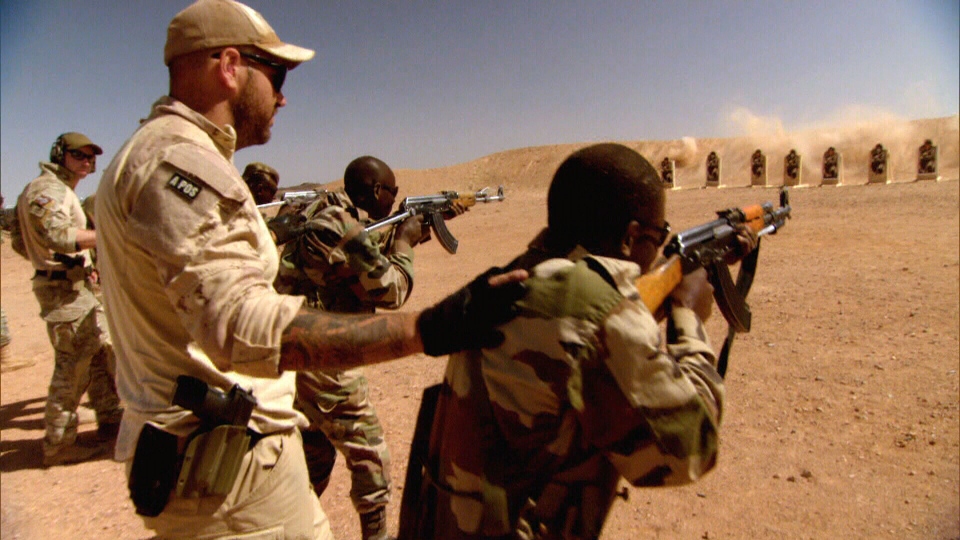
The first time the Canadian Armed Forces went to Niger was as part of Exercise Flintlock in 2013. The Harper Government announced that it would send the Canadian Special Operations Regiment to the region to help train the Niger military on counter-terrorist measures; as the country began to struggle with the conflicts in both Mali and Nigeria. 

CSOR training was provided because the soldiers from Niger receiving Canadian instruction may very well find themselves fighting the al-Qaeda-linked rebels of Mali in the near future. Niger is expected to be one of the three biggest troop-contributing nations, along with Nigeria and Burkina Faso, in a UN-sponsored West African military intervention in Mali.

The Canadian government, which is normally quick to trumpet overseas military efforts, was surprisingly silent on its West African training mission. Canada's deployment was supported by the US and other allies as part of Flintlock. The exercise, aimed at helped West African countries fight terrorism.

The annual Flintlock exercise takes place in different western African countries each year. Canada last participated in 2011. The 2012 exercise, which was supposed to take place in Mali, was cancelled because that country’s army was busy responding to attacks from Tuareg separatists.

The French military intervention on Friday, a dramatic shift from earlier plans for an African-led force, was a sign of the world’s growing fear that the Islamist rebels could topple Mali’s weakened government and turn the country into a haven for terrorists.

The CSOR returned to Niger for Flintlock in 2014 and again in 2015 - where their presence was more widely reported by CTV's W5 and when an attack by Boko Haram forced the CSOR to evacuate the area; which I reported here, in one of my posts in January, this year.

So what would a 2016 UN mission to Niger look like? No one is really sure. It could be an expanded training role; similar to Exercise Flintlock where the CSOR deployed from 2013-2015; or it could be a humanitarian role helping with the refugees; or both. Only time will tell. 

---
Information in this post came from the UNHCR's webpage about its mission in Niger, and the 2013 report by the Globe and Mail, "Canada's Contribution to the Fight in Mali" 

Kilford: Military forgotten in big-spending Liberal budget

Opinion Piece Written by: Chris Kilford
Defence will never be party’s priority,

For the new Liberal government and despite plenty of evidence to the contrary, it appears that maintaining military hard power is, like … so yesterday.

Pity, then, the poor staff in National Defence Headquarters as they set about transforming our “multi-purpose, combat-capable” Canadian Armed Forces into something, well, less so.

With this latest federal budget, and with a larger than forecasted deficit, we now know the money for defence just isn’t there.

Instead, the capital spending needed to keep our existing military forces even barely afloat has been postponed until at least the next election in 2020.

Of course, the previous government also deferred big-ticket procurement spending. And to be fair, this government needs time to consider what our defence priorities will be and how best to meet them.

But then again, with deficit spending set for at least the next five years, it’s unlikely defence will ever be a spending priority.

Indeed, we appear to be re-visiting the past and heading back to a time very much like that in which then-prime minister Pierre Trudeau found himself almost 50 years ago. Shortly after the 1968 election, he launched a formal defence review, rejecting the military’s first draft “on the grounds that it amounted to nothing more than a reaffirmation of current policy” that was simply unaffordable but, more so, unnecessary.

What he wanted was “fresh thinking” but in truth his mind had already been made up. For him, defence spending was wasteful, especially when there were far more pressing domestic needs.

His real aim was to slash military expenditures as much as one could get away with, including withdrawal from NATO altogether. In the end, Canada’s NATO contribution was cut in half, important capabilities were shed and personnel numbers tumbled.


Pierre Trudeau was also very concerned that having Canadians train military forces in the developing world would lead to all sorts of foreign entanglements.

For example, the Canadian-trained and mentored Ghanaian military overthrew the government in 1966. So, in 1971, he put an end to foreign military training schemes.

Nor did he, unlike his son, think much of sending Canadian blue helmets overseas. Peacekeeping, according to his 1971 Defence White Paper, had “too often been frustrating and disillusioning.”

Presciently, the document noted that many conflicts “have their roots in subversion and insurgency, and therefore will not lend themselves easily to resolution through the use of internationally constituted peacekeeping bodies.” Not much has changed. Today’s peacekeeping missions, which more often involve UN troops in combat, continue to be thankless, miserable and never-ending.

What to do, then? Even when we do have an idea of what sort of military we need, finding the right balance between people, equipment, infrastructure and readiness is never easy. Military planners are also faced with numerous constraints.

Suggesting changes to the reserves or reducing the civilian workforce has always been a political hot potato, along with any talk of “divesting” bases.

Depriving Canadians of a chance to see the Snowbirds is also off the table, so no savings there. Nor can you opt for cheaper Chinese equipment.

Turkey tried that, and for some reason it just didn’t go over well in Washington.

Nevertheless, a government which appears to be in favour of a more robust and active foreign policy ought to be supported by a well-equipped, combat-capable armed forces. But this budget tells a different story. Canada is likely to end up with a much smaller, less responsive military than we have today, largely focused on the home front and the occasional, symbolic assignment abroad.

Major capabilities will wither or disappear. More importantly, so will our future policy options. 

-- 
Chris Kilford is a fellow at the Queen’s Centre for International and Defence Policy. He is also the former Canadian Defence Attaché to Turkey.