By: Lee Berthiaume, The Globe and Mail
Defence Minister Harjit Sajjan has ruled out sending Canadian troops into Syria as the clock ticks down on Canada’s current mission against the Islamic State of Iraq and the Levant.
Military planners have been drawing up options for the next phase of the fight against ISIL, after the Trudeau government extended the current mission for another three months in March.
The hope was that the battle for the city of Mosul would be over by the new deadline on June 30, at which point the international community would have a better idea of how the next chapter was shaping up.
ISIL continues to hold out in parts of Mosul, but Sajjan said Friday that the government is looking at how the mission should change to better support the fight against the extremist group.
Yet Sajjan closed the door on sending troops into Syria, offering a clear “No” when asked if that option was on the table.
“Right now, as Canada, we’re focused on Iraq and we’ll continue that focus to make sure we reinforce some of the gains that we have made and make adjustments where it’s necessary,” he said.
That is despite the presence of several hundred U.S. troops in Syria and the fact that Canadian surveillance planes and a refuelling aircraft have flown missions over the country for the last several months.
Their efforts have fed into the larger U.S.-led bombing campaign against ISIL in both Iraq and Syria.
Canada also has about 200 special forces operating alongside Kurdish and Iraq forces in northern Iraq, including inside Mosul, as well as medical personnel and a helicopter detachment in the area.
Sajjan said Canada remains committed to the fight against ISIL and supporting Iraq, where there are fears the extremist group will go underground and resort to more traditional terror attacks after Mosul.
That will require different training and support from the international community, which to this point has been largely focused on helping Iraqi and Kurdish forces fight ISIL as a regular military force.
There are also concerns about Iraq’s political future, with several potential conflicts bubbling just beneath the surface as the threat posed by ISIL appears to be receding.
The president of Iraq’s Kurdistan region announced earlier this month that a referendum on independence will be held on Sept. 25, setting up a potentially explosive standoff with Baghdad.
Much of Canada’s military support in Iraq has gone to the Kurds.
Sajjan also said the Trudeau government continues to weigh a request from NATO to send police trainers to Afghanistan.
Thursday, June 22, 2017

Canadian Elite Special Forces Sniper makes record-breaking kill shot in Iraq
By: Robert Fife, The Globe and Mail
A sniper with Canada’s elite special forces in Iraq has shattered the world record for the longest confirmed kill shot in military history at a staggering distance of 3,450 metres.
Sources say a member of Joint Task Force 2 killed an Islamic State insurgent with a McMillan TAC-50 sniper rifle while firing from a high-rise during an operation that took place within the last month in Iraq. It took under 10 seconds to hit the target.

“The shot in question actually disrupted a Daesh [Islamic State] attack on Iraqi security forces,” said a military source, who stressed the operation fell within the strictures of the government’s advise and assist mission. “Instead of dropping a bomb that could potentially kill civilians in the area, it is a very precise application of force and because it was so far way, the bad guys didn’t have a clue what was happening.”
The kill was independently verified by video camera and other data, The Globe and Mail has learned.
“Hard data on this. It isn’t an opinion. It isn’t an approximation. There is a second location with eyes on with all the right equipment to capture exactly what the shot was,” another military source said.
A military insider told The Globe: “This is an incredible feat. It is a world record that might never be equalled.”
The world record was previously held by British sniper Craig Harrison, who shot a Taliban gunner with a 338 Lapua Magnum rifle from 2,475 metres away in 2009.
Previously, Canadian Corporal Rob Furlong had set the world record in 2002 at 2,430 metres when he gunned down an Afghan insurgent carrying an RPK machine gun during Operation Anaconda.
Weeks before, Canadian Master Cpl. Arron Perry briefly held the world’s best sniper record after he fatally shot an insurgent at 2,310 metres during the same operation. Both soldiers were members of the 3rd Battalion Princess Patricia’s Canadian Light Infantry.
JTF2 special forces are primarily tasked with counterterrorism, sniper operations and hostage rescue. Much of the information about this elite organization is classified and not commented on by the government. The unit’s snipers and members of Canadian Special Operations Regiment, who are carrying out the main task of training Kurdish forces, have been operating in tough conditions in Iraq.
The Trudeau government pulled CF-18 fighter jets out of Iraq in 2016 but expanded the military mission, which will see the number of Canadian special forces trainers climb to 207 from 69 in an assist, train and advise mission. Canadian commandos are not supposed to be involved in direct combat, but are authorized to go up to the front lines on training missions with Kurdish Peshmerga fighters and to paint targets for coalition air strikes.
For operational security reasons, sources would not reveal the names of the elite Canadian sniper and his partner, nor the location where the action took place.
A sniper and his observer partner are often sent to remote and dangerous locations to hunt down insurgents while having to carry heavy equipment. Once they have located the target, snipers follow the same methodical approach before each shot. Breathe in, out, in, out, find a natural pause and then squeeze the trigger.
Canada has a reputation among Western military forces for the quality of its snipers, despite the small size of the Canadian Armed Forces compared to the United States and Britain.
“Canada has a world-class sniper system. It is not just a sniper. They work in pairs. There is an observer,” a military source said. “This is a skill set that only a very few people have.”
The skill of the JTF2 sniper in taking down an insurgent at 3,450 metres required math skills, great eyesight, precision of ammunition and firearms, and superb training.
“It is at the distance where you have to account not just for the ballistics of the round, which change over time and distance, you have to adjust for wind, and the wind would be swirling,” said a source with expertise in training Canadian special forces.
“You have to adjust for him firing from a higher location downward and as the round drops you have to account for that. And from that distance you actually have to account for the curvature of the Earth.”
U.S. Sergeant Bryan Kremer has the longest confirmed sniper kill shot by a U.S. soldier. He killed an Iraqi insurgent with his Barrett M82A1 rifle at 2,300 metres in 2004.
A sniper with Canada’s elite special forces in Iraq has shattered the world record for the longest confirmed kill shot in military history at a staggering distance of 3,450 metres.
Sources say a member of Joint Task Force 2 killed an Islamic State insurgent with a McMillan TAC-50 sniper rifle while firing from a high-rise during an operation that took place within the last month in Iraq. It took under 10 seconds to hit the target.
“The shot in question actually disrupted a Daesh [Islamic State] attack on Iraqi security forces,” said a military source, who stressed the operation fell within the strictures of the government’s advise and assist mission. “Instead of dropping a bomb that could potentially kill civilians in the area, it is a very precise application of force and because it was so far way, the bad guys didn’t have a clue what was happening.”
The kill was independently verified by video camera and other data, The Globe and Mail has learned.
“Hard data on this. It isn’t an opinion. It isn’t an approximation. There is a second location with eyes on with all the right equipment to capture exactly what the shot was,” another military source said.
A military insider told The Globe: “This is an incredible feat. It is a world record that might never be equalled.”
The world record was previously held by British sniper Craig Harrison, who shot a Taliban gunner with a 338 Lapua Magnum rifle from 2,475 metres away in 2009.
Previously, Canadian Corporal Rob Furlong had set the world record in 2002 at 2,430 metres when he gunned down an Afghan insurgent carrying an RPK machine gun during Operation Anaconda.
Weeks before, Canadian Master Cpl. Arron Perry briefly held the world’s best sniper record after he fatally shot an insurgent at 2,310 metres during the same operation. Both soldiers were members of the 3rd Battalion Princess Patricia’s Canadian Light Infantry.
JTF2 special forces are primarily tasked with counterterrorism, sniper operations and hostage rescue. Much of the information about this elite organization is classified and not commented on by the government. The unit’s snipers and members of Canadian Special Operations Regiment, who are carrying out the main task of training Kurdish forces, have been operating in tough conditions in Iraq.
The Trudeau government pulled CF-18 fighter jets out of Iraq in 2016 but expanded the military mission, which will see the number of Canadian special forces trainers climb to 207 from 69 in an assist, train and advise mission. Canadian commandos are not supposed to be involved in direct combat, but are authorized to go up to the front lines on training missions with Kurdish Peshmerga fighters and to paint targets for coalition air strikes.
For operational security reasons, sources would not reveal the names of the elite Canadian sniper and his partner, nor the location where the action took place.
A sniper and his observer partner are often sent to remote and dangerous locations to hunt down insurgents while having to carry heavy equipment. Once they have located the target, snipers follow the same methodical approach before each shot. Breathe in, out, in, out, find a natural pause and then squeeze the trigger.
Canada has a reputation among Western military forces for the quality of its snipers, despite the small size of the Canadian Armed Forces compared to the United States and Britain.
“Canada has a world-class sniper system. It is not just a sniper. They work in pairs. There is an observer,” a military source said. “This is a skill set that only a very few people have.”
The skill of the JTF2 sniper in taking down an insurgent at 3,450 metres required math skills, great eyesight, precision of ammunition and firearms, and superb training.
“It is at the distance where you have to account not just for the ballistics of the round, which change over time and distance, you have to adjust for wind, and the wind would be swirling,” said a source with expertise in training Canadian special forces.
“You have to adjust for him firing from a higher location downward and as the round drops you have to account for that. And from that distance you actually have to account for the curvature of the Earth.”
U.S. Sergeant Bryan Kremer has the longest confirmed sniper kill shot by a U.S. soldier. He killed an Iraqi insurgent with his Barrett M82A1 rifle at 2,300 metres in 2004.
Liberals Limiting Options for Interim Fighter Solution
By: Murray Brewster, CBC News
Talks with the Pentagon about filling the Canadian air force's short-term need for jet fighters remain on track, said Defence Minister Harjit Sajjan.
Those negotiations for a so-called "interim capability" continue despite the Liberal government making a very public display at the Paris Air Show this week of snubbing Boeing executives.
The U.S. aerospace giant's commercial trade complaint against Montreal-based Bombardier has thrown the military contract into limbo.
Boeing wants trade regulators in Washington to investigate subsidies for Bombardier's CSeries aircraft, claiming they allow the Canadian company to export planes at well below cost.
The Liberals had intended to purchase 18 Super Hornet fighters — at a potential total program cost of between $5 billion and $7 billion — from Boeing. The deal was supposed to be a stopgap until the government can finalize the purchase of 88 permanent replacements for the aging CF-18 fleet.
After Boeing filed the trade complaint earlier this year, the government broke off contact with the U.S. company and said it was reviewing the "interim" fighter deal. It heightened the rhetoric last month, saying the aircraft maker was no longer the "trusted partner" it had been.
Sajjan said that, regardless of the trade dispute, the urgent requirement for fighters has not gone away and must be filled somehow.
"We're still continuing our discussions with the U.S. government, making sure that we fill this capability gap," Sajjan said.
Other options?
If Boeing has been frozen out, what is the Liberal government talking about with the Pentagon?
Sajjan said there are "other options," but refused to explain what they might be.
There are limited choices for a government-to-government purchase with the U.S. if the Super Hornet has been excluded.
During a recent trip to Singapore, Sajjan met with the CEO of Lockheed Martin, which is eager to sell Canada its advanced, but often maligned, F-35 — a plane the Liberals promised not to buy during the last election.
A defence industry source with knowledge of the file said Lockheed Martin has sent a letter to the Liberal government, expressing interest in providing its jets as the "interim solution."
Defence Minister Harjit Sajjan unveiled the government's long-awaited vision for the Canadian Armed Forces last week. The new policy calls for the purchase of 88 new jet fighters but also says the government will continue to explore a stopgap purchase until the full fleet arrives. (Adrian Wyld/Canadian Press)
Sajjan dismissed the notion of making the stealth fighter the "interim" solution and seemed to place his faith in the trade dispute being settled.
"No, right now for us we need to fill this interim capability gap and keep on with these discussions with the U.S. government on this," he told CBC News. "We are going to be looking at other options as well. We are looking for this to be resolved by the U.S. Department of Commerce quickly, so we can get back to business."
During an appearance before the Commons defence committee late Tuesday, the country's top military commander also dangled that possibility.
"What I would tell you is that, as the minister has said, the option for the Super Hornet is still open," said Gen. Jonathan Vance.
Referring to Boeing, he said: "They're a bad partner now. Maybe they [could] become a good partner again."
New versus used
But if the dispute drags on, it is unclear what the Liberal government can do if both the Super Hornet and the F-35 are ruled out as the gap-filler.
Talks with the Pentagon about filling the Canadian air force's short-term need for jet fighters remain on track, said Defence Minister Harjit Sajjan.
Those negotiations for a so-called "interim capability" continue despite the Liberal government making a very public display at the Paris Air Show this week of snubbing Boeing executives.
The U.S. aerospace giant's commercial trade complaint against Montreal-based Bombardier has thrown the military contract into limbo.
Boeing wants trade regulators in Washington to investigate subsidies for Bombardier's CSeries aircraft, claiming they allow the Canadian company to export planes at well below cost.
The Liberals had intended to purchase 18 Super Hornet fighters — at a potential total program cost of between $5 billion and $7 billion — from Boeing. The deal was supposed to be a stopgap until the government can finalize the purchase of 88 permanent replacements for the aging CF-18 fleet.
After Boeing filed the trade complaint earlier this year, the government broke off contact with the U.S. company and said it was reviewing the "interim" fighter deal. It heightened the rhetoric last month, saying the aircraft maker was no longer the "trusted partner" it had been.
Sajjan said that, regardless of the trade dispute, the urgent requirement for fighters has not gone away and must be filled somehow.
"We're still continuing our discussions with the U.S. government, making sure that we fill this capability gap," Sajjan said.
Other options?
If Boeing has been frozen out, what is the Liberal government talking about with the Pentagon?
Sajjan said there are "other options," but refused to explain what they might be.
There are limited choices for a government-to-government purchase with the U.S. if the Super Hornet has been excluded.
During a recent trip to Singapore, Sajjan met with the CEO of Lockheed Martin, which is eager to sell Canada its advanced, but often maligned, F-35 — a plane the Liberals promised not to buy during the last election.
A defence industry source with knowledge of the file said Lockheed Martin has sent a letter to the Liberal government, expressing interest in providing its jets as the "interim solution."
Defence Minister Harjit Sajjan unveiled the government's long-awaited vision for the Canadian Armed Forces last week. The new policy calls for the purchase of 88 new jet fighters but also says the government will continue to explore a stopgap purchase until the full fleet arrives. (Adrian Wyld/Canadian Press)
Sajjan dismissed the notion of making the stealth fighter the "interim" solution and seemed to place his faith in the trade dispute being settled.
"No, right now for us we need to fill this interim capability gap and keep on with these discussions with the U.S. government on this," he told CBC News. "We are going to be looking at other options as well. We are looking for this to be resolved by the U.S. Department of Commerce quickly, so we can get back to business."
During an appearance before the Commons defence committee late Tuesday, the country's top military commander also dangled that possibility.
"What I would tell you is that, as the minister has said, the option for the Super Hornet is still open," said Gen. Jonathan Vance.
Referring to Boeing, he said: "They're a bad partner now. Maybe they [could] become a good partner again."
New versus used
But if the dispute drags on, it is unclear what the Liberal government can do if both the Super Hornet and the F-35 are ruled out as the gap-filler.
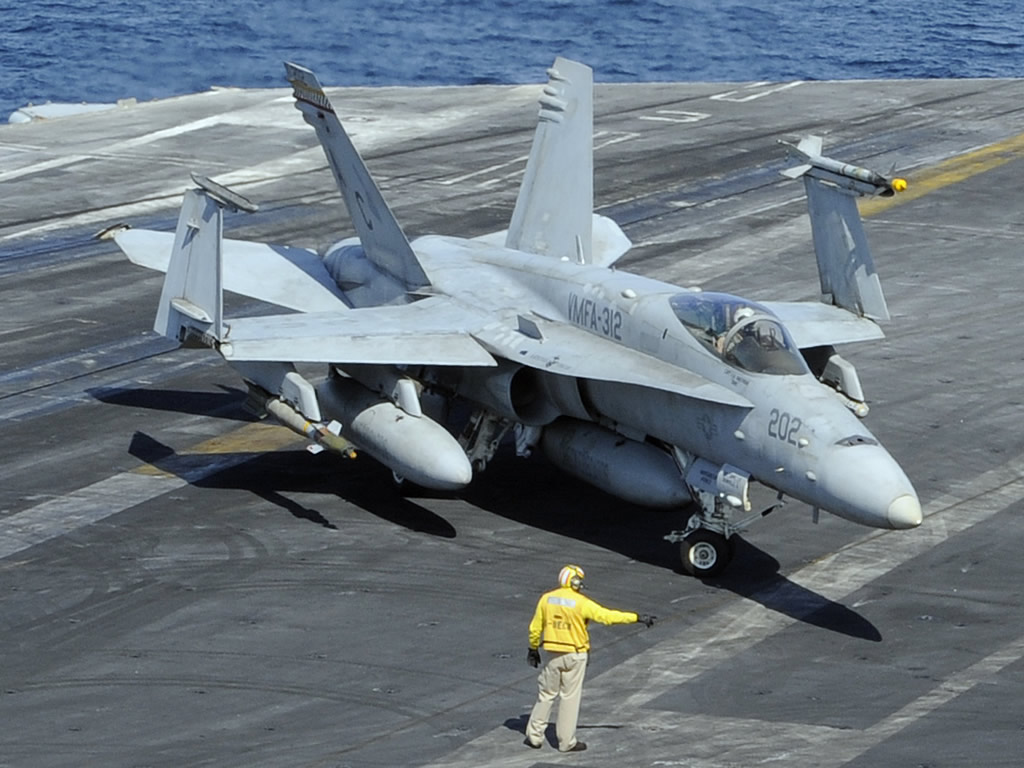 |
| There is a possibility that the Liberals could purchase refurbished F/A-18; which would be similar to the current CF-18's flown by the RCAF. |
Defence experts have suggested there is a remote possibility the U.S. could sell Canada refurbished F-18s, similar to the current CF-18s.
The Pentagon recently had modernized F-16s on the market, which the Polish air force considered but eventually declined. That would be an even more unlikely fit, since Canada has never flown the single-seat fighters, which were the backbone of the U.S. air force for decades.
The Pentagon recently had modernized F-16s on the market, which the Polish air force considered but eventually declined. That would be an even more unlikely fit, since Canada has never flown the single-seat fighters, which were the backbone of the U.S. air force for decades.
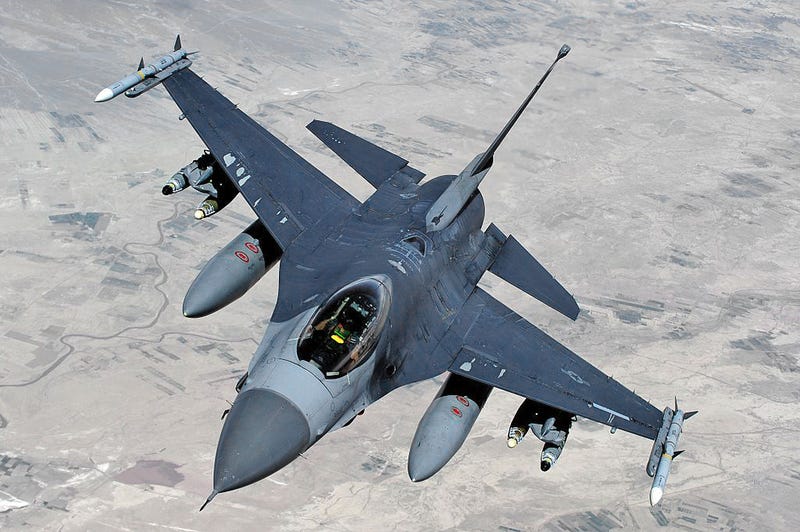 |
| The US Government also has surplus F-16s available, but it is highly unlikely Canada would purchase these jets. |
The "interim" fleet is meant to fill the gap until the Liberal government decides on a permanent replacement for the CF-18s.
Conservative MP James Bezan, his party's defence critic, wants the government to proceed to an open competition to buy fighter jets. (Adrian Wyld/Canadian Press)
Conservative defence critic James Bezan said he doesn't understand why the Liberals are twisting themselves into knots for a temporary solution when they can simply proceed to the open competition they promised for the full fleet.
Sajjan said that is still in the cards, but federal procurement officials have said a competition could take up to five years to run.
"If you look at what other states, other countries are doing in their recent procurement to replace their tactical fighters, none of them are taking five years to do this competition," Bezan said.
"If you look right now, Denmark is doing theirs in two years; Belgium means to complete theirs right now in 18 months; and just earlier this week, Finland started their F-18 replacement program, and they plan to have their first deliveries in 2021 and the entire fleet replaced by 2025, which coincidentally is the same time that our life extension on our CF-18s run out."
Conservative MP James Bezan, his party's defence critic, wants the government to proceed to an open competition to buy fighter jets. (Adrian Wyld/Canadian Press)
Conservative defence critic James Bezan said he doesn't understand why the Liberals are twisting themselves into knots for a temporary solution when they can simply proceed to the open competition they promised for the full fleet.
Sajjan said that is still in the cards, but federal procurement officials have said a competition could take up to five years to run.
"If you look at what other states, other countries are doing in their recent procurement to replace their tactical fighters, none of them are taking five years to do this competition," Bezan said.
"If you look right now, Denmark is doing theirs in two years; Belgium means to complete theirs right now in 18 months; and just earlier this week, Finland started their F-18 replacement program, and they plan to have their first deliveries in 2021 and the entire fleet replaced by 2025, which coincidentally is the same time that our life extension on our CF-18s run out."
Monday, June 19, 2017
New Saab Gripen E takes first flight - A Possibility for RCAF CF-18 Replacement?
By: David Pugliese, Defence Watch
Saab’s Gripen E, the next generation of that fighter jet made its first flight on June 15. That is a major development for the plane. Deliveries are set for 2019.
At 10:32 on Thursday June 15, Gripen E took off on its maiden flight, flown by a Saab test pilot, according to the company. The aircraft (designation 39-8) left from Saab’s airfield in Linköping, Sweden and flew for 40 minutes. During the flight, the aircraft carried out a number of actions to demonstrate various test criteria including the retracting and extending of the landing gear.
Here are photos from Saab of that flight:
Saab’s Gripen E, the next generation of that fighter jet made its first flight on June 15. That is a major development for the plane. Deliveries are set for 2019.
At 10:32 on Thursday June 15, Gripen E took off on its maiden flight, flown by a Saab test pilot, according to the company. The aircraft (designation 39-8) left from Saab’s airfield in Linköping, Sweden and flew for 40 minutes. During the flight, the aircraft carried out a number of actions to demonstrate various test criteria including the retracting and extending of the landing gear.
Here are photos from Saab of that flight:


Sweden and Brazil have purchase the Gripen E. Belgium and Finland are considered potential opportunities for the Saab product, Richard Smith, Saab’s head of Gripen marketing, told journalists.
Perhaps Canada as well?
Defense News has noted that the Swedish Air Force has committed to a purchase of 60 E models, and Brazil is acquiring 36 jets, including eight twin-seat F versions.
Canada to Join US and Korea in Naval Exercise
The Korean Herald
South Korea said Monday it will hold a combined live-fire naval exercise with the United States and Canada this week in its southern waters.
Hosted by South Korea's Maritime Task Flotilla Seven, the three-day training exercise will be staged in waters near Jeju Island from Friday, according to the Navy.
It will involve five South Korean warships, including the Aegis cruiser DDG-992 Yulgok Yii, P-3C Orion maritime surveillance aircraft and Lynx multi-role planes as well as the USS Dewey (DDG-105), an Arleigh Burke-class guided missile destroyer from the US Navy, and MH-60R helicopters.
Two major Canadian frigates -- Winnipeg and Ottawa -- and SH-3 choppers will also take part in the practice.
The three sides plan to hold various drills on interdiction, air defense, anti-submarine operations and ballistic missile detection, along with live-fire training, said the Navy.
Even through Canada participated in the 1950-53 Korean War to help the South fight against the invading North, it's unusual for Canadian warships to join South Korea-US naval drills here.
"The joint exercise is expected to serve as an opportunity to improve our navy's combined operational capability and promote friendly relations with the US and Canada," said Rear Adm. Kim Jeong-su, the commander of the MTF 7.
The Canadian naval ships are in Asia on the occasion of the nation's 150th anniversary of the Confederation for numerous opportunities to exercise with regional partner navies at sea and make port calls. (Yonhap)
South Korea said Monday it will hold a combined live-fire naval exercise with the United States and Canada this week in its southern waters.
Hosted by South Korea's Maritime Task Flotilla Seven, the three-day training exercise will be staged in waters near Jeju Island from Friday, according to the Navy.
It will involve five South Korean warships, including the Aegis cruiser DDG-992 Yulgok Yii, P-3C Orion maritime surveillance aircraft and Lynx multi-role planes as well as the USS Dewey (DDG-105), an Arleigh Burke-class guided missile destroyer from the US Navy, and MH-60R helicopters.
Two major Canadian frigates -- Winnipeg and Ottawa -- and SH-3 choppers will also take part in the practice.
The three sides plan to hold various drills on interdiction, air defense, anti-submarine operations and ballistic missile detection, along with live-fire training, said the Navy.
Even through Canada participated in the 1950-53 Korean War to help the South fight against the invading North, it's unusual for Canadian warships to join South Korea-US naval drills here.
"The joint exercise is expected to serve as an opportunity to improve our navy's combined operational capability and promote friendly relations with the US and Canada," said Rear Adm. Kim Jeong-su, the commander of the MTF 7.
The Canadian naval ships are in Asia on the occasion of the nation's 150th anniversary of the Confederation for numerous opportunities to exercise with regional partner navies at sea and make port calls. (Yonhap)
Subscribe to:
Posts (Atom)