Josh Dehaas, CTVNews.ca
Published Saturday, April 2, 2016 10:58AM EDT
Last Updated Saturday, April 2, 2016 10:02PM EDT
Prime Minister Justin Trudeau says the threat of a nuclear terror attack on Canada is lower than it was five or six years ago, and that he sees it as a “modest success” that groups like ISIS haven’t gotten their hands on more dangerous weapons.
In an interview with CTV Atlantic’s Steve Murphy, the prime minister said the “concern level” of a nuclear attack remains high “because the consequences would be so devastating,” but that the threat level is “certainly lower than it has been in past years, because we’ve taken significant measures to secure dangerous materials.”
Trudeau just returned to Canada from a nuclear-safety summit hosted by U.S. President Barack Obama, who warned that al Qaeda has been actively pursuing nuclear material.
RELATED STORIES
PM announces $42M to safeguard nuclear materials
Prime Minister Justin Trudeau talks with children as he visits the Seaport Farmers' Market in Halifax on Saturday, April 2, 2016. (THE CANADIAN PRESS/Andrew Vaughan)
Canada committed on Friday to spend $42 million to reduce the risk of nuclear terrorism, in part by protecting materials in Peru, Jordan, Colombia, Ukraine, Thailand and Egypt.
“Because of meetings like the one we had in Washington,” Trudeau said Saturday, “it’s less of a threat than it was five or six years ago.”
Asked whether Canada is safer from terrorism in general than it was five years ago -- a time before ISIS’ devastating attacks – Trudeau noted that recent attacks have been “very conventional” using “pipe bombs” and “Kalashnikovs,” the Russian rifle used in the Paris attacks.
Trudeau added that such weapons had killed “dozens and even hundreds of people … but with how much they want to be able to do more, and how hard they’ve been trying to get their hands on more dangerous materials, the fact that they haven’t is a modest success.”
Peggy Mason, Canada’s former ambassador for nuclear disbarment, said she was stunned by Trudeau’s comments about the nuclear threat.
“I find it hard that we could say it has gone down,” she said, pointing to Pakistan and North Korea as sources of concern
“We have huge numbers of weapons still on hair-trigger alert,” she added.
Conservative MP Michelle Rempel called the prime minister’s comments startling. “I think he’s being very uniformed and naïve about the situation,” she said.
Gordon Edwards, president of the Canadian Coalition for Nuclear Responsibility, told CTV News Channel that he believes agreements made in Washington to better safeguard nuclear materials are a “good sign.”
However, he said Canada still has “quite a substantial amount of weapons-grade uranium here in Canada, mostly connected with isotope production, and it is a security risk.”
Part of the risk is transportation, he said. For example, Edwards said Canada is expected to send “hundreds of truckloads of liquid radioactive waste containing weapons-grade radioactive uranium down to the (U.S. government’s) Savannah River Site in South Carolina,” rather than dealing with it on-site in Chalk River, Ont.
Edwards added that, “if we really want to be serious, we have to stop producing these materials in the first place.”
The Prime Minister spoke to Steve Murphy at a farmer's market in Halifax, ahead of a meeting with Liberal Premier Stephen McNeil and an appearance at the Nova Scotia Liberal Party's annual general meeting.
With a report from CTV’s Richard Madan
Monday, April 4, 2016

HMCS Fredericton Deploys to the Black Sea on OP REASSURANCE
DND Press Release:
April 1, 2016 – Ottawa – National Defence / Canadian Armed Forces
Her Majesty’s Canadian Ship (HMCS) Fredericton begins operations in the Black Sea today as part of Operation REASSURANCE, the Canadian Armed Forces’ on-going mission to promote security and stability in Central and Eastern Europe.
HMCS Fredericton is the lead to Standing NATO Maritime Group 2 (SNMG2) Task Unit 02 deployed to the Black Sea following the surveillance, reconnaissance and monitoring operations of migrant crossings in the Aegean Sea. During the month of April, the Royal Canadian Navy frigate will conduct operations in concert with Romanian Frigate ROS Regina Maria and other allied ships from Bulgaria and Turkey to enhance the Alliance’s maritime interoperability as participating nations develop familiarity, trust and confidence in each other.
While in the Black Sea, HMCS Fredericton will also conduct port visits to enhance diplomatic and defence relations with strategic partners in the region. Recurring naval operations in the Black Sea as part of NATO’s assurance measures to demonstrate solidarity towards our allies and partner nations.
Quotes
“HMCS Fredericton’s deployment to the Black Sea is one of many examples of Canada’s continued commitment to promoting security and stability in Central and Eastern Europe, as well as our resolute support for NATO’s collective defence. Canada’s participation in regional maritime security operations re-affirms that Canada’s Navy is a responsive, effective force in today’s maritime security environment.”Harjit S. Sajjan, Defence Minister
“Since joining Standing NATO Maritime Group 2 (SNMG 2) in January, HMCS Fredericton has had the opportunity to operate alongside a number of our allies in the Mediterranean and Aegean Seas. Moving our operations into the Black Sea will not change our objectives but will give the HMCS Frederictonan opportunity to work with key Black Sea-based partners. Fredericton’s ship’s company is very much looking forward to operating in this complex region.”Commander Trevor JC MacLean, Commanding Officer, HMCS Fredericton
April 1, 2016 – Ottawa – National Defence / Canadian Armed Forces
Her Majesty’s Canadian Ship (HMCS) Fredericton begins operations in the Black Sea today as part of Operation REASSURANCE, the Canadian Armed Forces’ on-going mission to promote security and stability in Central and Eastern Europe.
HMCS Fredericton is the lead to Standing NATO Maritime Group 2 (SNMG2) Task Unit 02 deployed to the Black Sea following the surveillance, reconnaissance and monitoring operations of migrant crossings in the Aegean Sea. During the month of April, the Royal Canadian Navy frigate will conduct operations in concert with Romanian Frigate ROS Regina Maria and other allied ships from Bulgaria and Turkey to enhance the Alliance’s maritime interoperability as participating nations develop familiarity, trust and confidence in each other.
While in the Black Sea, HMCS Fredericton will also conduct port visits to enhance diplomatic and defence relations with strategic partners in the region. Recurring naval operations in the Black Sea as part of NATO’s assurance measures to demonstrate solidarity towards our allies and partner nations.
Quotes
“HMCS Fredericton’s deployment to the Black Sea is one of many examples of Canada’s continued commitment to promoting security and stability in Central and Eastern Europe, as well as our resolute support for NATO’s collective defence. Canada’s participation in regional maritime security operations re-affirms that Canada’s Navy is a responsive, effective force in today’s maritime security environment.”Harjit S. Sajjan, Defence Minister
“Since joining Standing NATO Maritime Group 2 (SNMG 2) in January, HMCS Fredericton has had the opportunity to operate alongside a number of our allies in the Mediterranean and Aegean Seas. Moving our operations into the Black Sea will not change our objectives but will give the HMCS Frederictonan opportunity to work with key Black Sea-based partners. Fredericton’s ship’s company is very much looking forward to operating in this complex region.”Commander Trevor JC MacLean, Commanding Officer, HMCS Fredericton
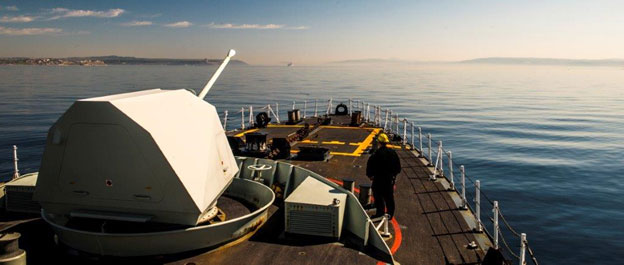 |
| April 1, 2016, HMCS Fredericton enters the Black Sea on NATO-led Maritime Assurance Activities. (Photo credit: Leading Seaman Dan Bard, Formation Imaging Service) |
Operation NUNALIVUT 2016 begins
DND Press Release:
April 1, 2016 – Yellowknife, Northwest Territories – National Defence / Canadian Armed Forces
Operation NUNALIVUT 2016 (Op NU 16) will take place in and around Resolute Bay and Alert, Nunavut from 1-22 April.
Commanded by Joint Task Force (North) (JTFN) and involving more than 230 Canadian Armed Forces (CAF) personnel from across Canada; Op NU 16 incorporates soldiers from 2nd Battalion, The Royal Canadian Regiment (2 RCR), Royal Canadian Navy (RCN) divers from Fleet Diving Unit Atlantic, and personnel from across the Royal Canadian Air Force, including Yellowknife-based 440 (Transport) Squadron.
Op NU 16 will consist of two distinct activities. RCN divers will conduct ice dives near Alert, Nunavut, and Canadian Army personnel will conduct patrols and Arctic survival training on the sea ice near Resolute Bay, Nunavut. Throughout this operation, Canadian Rangers from 1st Canadian Ranger Patrol Group will guide and mentor participating troops. All activities will be commanded and controlled by the Task Force NUNALIVUT headquarters element, based in Resolute Bay, Nunavut.
“Operation NUNALIVUT is one of our most austere and challenging operations in the High Arctic. It enables all three elements to polish their Arctic skills in a collaborative operation. I am proud that our men and women in uniform deployed on Operation NUNALIVUT have the opportunity to experience the unique environment found only in the High Arctic, while demonstrating northern sovereignty.” Brigadier-General Mike Nixon, Commander, Joint Task Force (North).
April 1, 2016 – Yellowknife, Northwest Territories – National Defence / Canadian Armed Forces
Operation NUNALIVUT 2016 (Op NU 16) will take place in and around Resolute Bay and Alert, Nunavut from 1-22 April.
Commanded by Joint Task Force (North) (JTFN) and involving more than 230 Canadian Armed Forces (CAF) personnel from across Canada; Op NU 16 incorporates soldiers from 2nd Battalion, The Royal Canadian Regiment (2 RCR), Royal Canadian Navy (RCN) divers from Fleet Diving Unit Atlantic, and personnel from across the Royal Canadian Air Force, including Yellowknife-based 440 (Transport) Squadron.
Op NU 16 will consist of two distinct activities. RCN divers will conduct ice dives near Alert, Nunavut, and Canadian Army personnel will conduct patrols and Arctic survival training on the sea ice near Resolute Bay, Nunavut. Throughout this operation, Canadian Rangers from 1st Canadian Ranger Patrol Group will guide and mentor participating troops. All activities will be commanded and controlled by the Task Force NUNALIVUT headquarters element, based in Resolute Bay, Nunavut.
“Operation NUNALIVUT is one of our most austere and challenging operations in the High Arctic. It enables all three elements to polish their Arctic skills in a collaborative operation. I am proud that our men and women in uniform deployed on Operation NUNALIVUT have the opportunity to experience the unique environment found only in the High Arctic, while demonstrating northern sovereignty.” Brigadier-General Mike Nixon, Commander, Joint Task Force (North).
Additional 200 CAF Still Waiting to Deploy to OP IMPACT
In a new report released this morning, David Pugliese, of The Ottawa Citizen, reported that despite it being almost two months since the Liberal's announced their new mission to Iraq - the extra 200 CAF personnel have yet to be deployed.
Here here is his report:
In the first week of February, Prime Minister Justin Trudeau announced the changes in the Iraq mission. The CF-18s were to be withdrawn while the Auroras and refuelling aircraft would stay. Canada’s contribution would actually increase by more than 200 personnel, with those extra staff being assigned to the training mission, according to the government.
The CF-18s now are gone. There are still 600 Canadians overseas on the Iraq mission, according to the Department of National Defence. That figure includes the estimated 69 special forces personnel.
"But the promised extra personnel have yet to deploy. An exact timeline has yet to be determined,” Canadian military spokesman Capt. Kirk Sullivan told Defence Watch. “The Canadian Armed Forces is in the process of finalizing plans for the transitioning of the mission. Deploying military capabilities over thousands of kilometers into a theatre of operations requires careful planning, which takes time."
CAF Army Generals will see Maple Leaf Insignia Return
Written by David Pugliese, Defence Watch - Ottawa Citizen
The country’s army generals are getting their maple leaves back so that allies can identify them as Canadians.
Almost three years after the Conservative government ordered Canadian Army generals to abandon the maple leaf insignia in favour of British-style pips, the army is returning to its previous look.
The move was prompted by concerns that military allies were having trouble recognizing the generals as Canadians, sources say.
The diamond-shaped insignia — known as a pip — will be replaced by a gold-coloured metal maple leaf, Canadian Army spokesperson Capt. Susan Magill said.
She said the change brings the army generals in line with senior officers of the Royal Canadian Navy and Royal Canadian Air Force. Those officers have maple leaves on their epaulets. “There won’t be any confusion as everything will be harmonized,” Magill said.
Over the years Canada’s military allies have come to recognize the maple leaf as a symbol of the country and Canadian Forces. “To change it could have caused some confusion so we want to be sure (when) we’ve got higher ranking officers it’s very clear who is who,” Magill said.
The Conservative government announced in July 2013 that Canadian Army rank insignia, names and badges would revert to those used before 1968 when the military was unified. The army replaced the maple leaf rank designation on the uniforms of officers with pips and crowns. The ranks of non-commissioned officers returned to the original designations that were in place during the First and Second World Wars. Those were based on the British army.
The move followed the Conservative government’s push to re-introduce symbols of the British monarchy to Canadian military organizations. The cost of its 2011 move to reinstate the word “royal” back into the titles of the navy and air force, as well as changing the name of Land Force Command to Canadian Army was about $1 million.
The Conservatives also ordered the removal of gold braid bands on officers’ tunic cuffs. The army is reversing that decision.
“The sleeve braid will be restored to same braid as before 2013,” Magill said.
The Conservatives’ decision to revert to the traditional British military terminology and insignia for Canadian units was greeted enthusiastically by monarchists and some veterans.
But military sources say the changes were not universally welcomed by a generation of army officers who proudly served under the Canadian-oriented insignia and designations for almost 50 years. There was also confusion among some younger soldiers who were having difficulty identifying the ranks of army generals, sources said.
The army will keep the other changes brought in by the Conservatives.
Magill said the cost to replace the pips with the maple leaves was about $6,000.
When he announced the changes, then defence minister Peter MacKay said the Conservatives were committed to honouring the history of the Canadian Army. “The restoration of these historical features will encourage the esprit de corps of our soldiers and reinforce a rich military tradition that will continue to develop as they serve their country,” he said.
The country’s army generals are getting their maple leaves back so that allies can identify them as Canadians.
Almost three years after the Conservative government ordered Canadian Army generals to abandon the maple leaf insignia in favour of British-style pips, the army is returning to its previous look.
The move was prompted by concerns that military allies were having trouble recognizing the generals as Canadians, sources say.
The diamond-shaped insignia — known as a pip — will be replaced by a gold-coloured metal maple leaf, Canadian Army spokesperson Capt. Susan Magill said.
She said the change brings the army generals in line with senior officers of the Royal Canadian Navy and Royal Canadian Air Force. Those officers have maple leaves on their epaulets. “There won’t be any confusion as everything will be harmonized,” Magill said.
Over the years Canada’s military allies have come to recognize the maple leaf as a symbol of the country and Canadian Forces. “To change it could have caused some confusion so we want to be sure (when) we’ve got higher ranking officers it’s very clear who is who,” Magill said.
The Conservative government announced in July 2013 that Canadian Army rank insignia, names and badges would revert to those used before 1968 when the military was unified. The army replaced the maple leaf rank designation on the uniforms of officers with pips and crowns. The ranks of non-commissioned officers returned to the original designations that were in place during the First and Second World Wars. Those were based on the British army.
The move followed the Conservative government’s push to re-introduce symbols of the British monarchy to Canadian military organizations. The cost of its 2011 move to reinstate the word “royal” back into the titles of the navy and air force, as well as changing the name of Land Force Command to Canadian Army was about $1 million.
The Conservatives also ordered the removal of gold braid bands on officers’ tunic cuffs. The army is reversing that decision.
“The sleeve braid will be restored to same braid as before 2013,” Magill said.
The Conservatives’ decision to revert to the traditional British military terminology and insignia for Canadian units was greeted enthusiastically by monarchists and some veterans.
But military sources say the changes were not universally welcomed by a generation of army officers who proudly served under the Canadian-oriented insignia and designations for almost 50 years. There was also confusion among some younger soldiers who were having difficulty identifying the ranks of army generals, sources said.
The army will keep the other changes brought in by the Conservatives.
Magill said the cost to replace the pips with the maple leaves was about $6,000.
When he announced the changes, then defence minister Peter MacKay said the Conservatives were committed to honouring the history of the Canadian Army. “The restoration of these historical features will encourage the esprit de corps of our soldiers and reinforce a rich military tradition that will continue to develop as they serve their country,” he said.
Subscribe to:
Posts (Atom)