Translate

Showing posts with label CH-149 Cormorant. Show all posts

Wednesday, May 30, 2018

Cormorant SAR Helicopters to be Modernized

By: David Pugliese, Defence Watch 

The Canadian military is moving ahead with plans to upgrade its Cormorant search-and-rescue helicopter fleet and will also examine whether to buy or lease more of the same aircraft.

The federal government notified industry Thursday morning of the sole source deal to modernize the 14 helicopters. There was no cost attached to the plan but a previous estimate on the upgrade put the price-tag anywhere between $500 million to $1.5 billion.

A Search and Rescue Technician is hoisted down from a CH-149 Cormorant helicopter over a confined area in Cloud Lake, NS during a training flight on January 8, 2016. Photo: Master Corporal Johanie Maheu, 14 Wing Imaging GD2016-0039-33 ~ Un technicien en recherche et sauvetage est descendu par treuil depuis un hélicoptère CH-149 Cormorant au dessus d’une zone restreinte, à Cloud Lake, en N. É., lors d’un vol d’entraînement, le 8 janvier 2016. Photo : Caporal chef Johanie Maheu, Services d’imagerie de la 14e Escadre GD2016-0039-33 
The deal is with Leonardo, the Italian aerospace firm whose subsidiaries originally built the CH-149 Cormorants.

Last year Defence Minister Harjit Sajjan suggested that the upgrade program for the Cormorants would be a key program for the Royal Canadian Air Force in the future.

The government will also examine a number of options to expand the search-and-rescue helicopter fleet. Those will include leasing AW-101 helicopters, a variant of the Cormorant, buying AW-101s or upgrading former U.S. presidential helicopters so they can join the search-and-rescue flight line.

Canada purchased the nine VH-71 presidential helicopters, which are similar to the Cormorant, as well as 800,000 spare parts in 2012 after then U.S. President Barack Obama shut down the multi-billion dollar program and decided that existing aircraft were good enough for his needs.

The Department of National Defence stated at the time of the purchase that the VH-71 helicopters would not be put into service but instead stripped down for parts to supply the Cormorant fleet.

Although Canada is entering into a sole-source deal with Leonardo, the government is considering holding a competition among other companies to provide in-service support for the helicopters, according to Department of National Defence officials.

The modernization project comes as the U.S. helicopter firm Sikorsky was trying to interest Canada in buying its S-92 choppers for search and rescue. The S-92 is a civilian version of the Cyclone maritime helicopter the RCAF is putting into service. Sikorsky officials have argued that buying new S-92s would cost less than upgrading the older Cormorants.
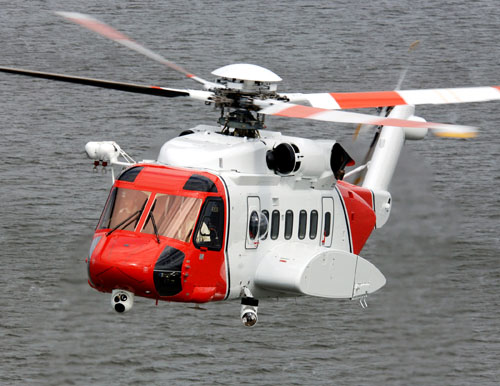
Related image
A Sikorsky S-92 in Coast Guard Colours. The Irish Coast Guard currently operates the S-92. The RCN operates the CH-148 Cyclone - the military version of the S-92. 
Department of National Defence sources, however, say it was determined that it was more cost effective to stay with the Cormorant fleet as it is a proven aircraft the RCAF knows well. In addition, existing infrastructure can continue to be used.

The RCAF also hopes to purchase a simulator for the Cormorant fleet to help train crews.

The upgrade program is expected to include the latest avionic and mission systems, advanced radars and sensors, vision enhancement and tracking systems. The CH-149 Cormorant fleet entered service in the year 2000 and the modernization would allow the helicopters to operate for another 25 years at least.

Canada originally bought 15 Cormorants, but one crashed in 2006.

Powered by three engines, the Cormorants are known for their long-range capability, large cargo space and rear-ramp. The helicopter can carry up to 12 stretchers, according to the RCAF.

The decision to sole-source the deal appears to have caught some in the air force off guard. On April 20, the RCAF spokesman Maj. Scott Spurr claimed the air force was still examining options on how to proceed and that the next phase of the project wouldn’t come until 2019.

Defence sources say some inside the RCAF have argued that since seven of the nine U.S. presidential helicopters are already airworthy, it makes sense to use them. Preparing those helicopters for search-and-rescue duty would include installing a side door as well as upgrading the cockpits.

Parts obtained in the U.S. presidential helicopter deal have also played a critical role in keeping the RCAF Cormorants flying, according to documents obtained by Postmedia through the Access to Information law. The U.S. helicopters and spare parts were originally purchased for $168 million.

Thursday, May 11, 2017

RCAF Helicopter Rescues 3 Men from Boat off N.B. Coast

FILE: Search and rescue technicians are hoisted by a Cormorant helicopter during a Canada-United States coast guard ceremony in Halifax
By:Alexander Quon, Global News 

Three men were rescued by a Royal Canadian Air Force helicopter early Monday morning after their fishing boat ran aground and began to take on water in Miramichi Bay

The call went out to members of the Joint Task Force Atlantic (JTFA) at 11:30 p.m. on Sunday.

A Cormorant helicopter was then dispatched from the Royal Canadian Air Force’s base in Greenwood, N.S.

According to Alex Roy, a JTFA spokesperson, three people were on board the fishing vessel.

“The three were hoisted on board [the helicopter] and transported to Neguac, N.B. where RCMP and Emergency Health Services were waiting,” said Roy.

Roy did not have information on the status of the three rescued individuals.

Wednesday, November 2, 2016

RCAF SAR Rescues Fisherman off Cape Scott

DND Press Release

Late Monday afternoon 442 Transport and Rescue Squadron was involved in a mission to medevac a crew member of a commercial fishing vessel to hospital for immediate care, the Canadian Forces said in a news release Tuesday.

More details from the news release:

* The vessel was 60 nautical miles (110 km) northwest of Cape Scott at the time of the call for assistance.

* A CH-149 Cormorant helicopter and a CC-115 Buffalo were tasked to respond.

* The Buffalo arrived on scene first and after making contact with the crew by radio provided them instructions to prepare for the arrival of the Cormorant with SAR Techs on board.


* The Cormorant arrived on scene shortly after the Buffalo and two SAR Techs were lowered onto the deck of the vessel to prepare the patient to be hoisted onto the Cormorant.

* The patient was transported by Cormorant to Port Hardy then transferred to the Buffalo and subsequently flown to Victoria where the BC Ambulance Service transferred the patient to hospital

Tuesday, October 18, 2016

Exercise VIGILANT SHEILD Starts - RCAF CF-18s and CH-149s involved

DND Press Release

Exercise Vigilant Shield has started.

“The Canadian North American Aerospace Defense (sic) Command (NORAD) Region has begun its participation in NORAD’s annual VIGILANT SHIELD field training exercise,” the news release from the Canadian Forces noted. “The live-fly field training exercise, which will run October 17 to 21, is part of a larger series of annual NORAD VIGILANT SHIELD exercises that take place throughout the United States and Canada.”

VIGILANT SHIELD 17 will see NORAD building on previous training in North America’s northern aerospace and in the high Arctic, according to the release.

Exercise VIGILANT SHIELD 17 will see the deployment of:

– Royal Canadian Air Force (RCAF) CF-18 Hornets to Inuvik, N.W.T.;

– U.S. Air Force (USAF) F-15 Eagle fighter jets to Yellowknife, N.W.T.;

– USAF E-3 Sentry airborne early warning and control aircraft and KC-135 Stratotankers to 5 Wing Goose Bay, N.L.;

– an RCAF CH-149 Cormorant search and rescue (SAR) helicopter and 42 Radar Squadron to Canadian Forces Station Alert;

– an RCAF CH-149 Cormorant SAR helicopter and CC-130H Hercules SAR aircraft to the USAF’s Point Barrow Long Range Radar Site in Alaska; and

– Canadian Army personnel to provide on-site security support.

Monday, June 27, 2016

An RCAF Icy Rescue

RCAF Rescue Story:

Transcript Warrant Officer Aaron Bygrove: We parachuted and were able to rescue two hunters and a helicopter pilot who had crashed through the ice out on Hudson Bay. My name is Warrant Officer Aaron Bygrove, this is Master-Corporal Bruno Robitaille. Master-Corporal Bruno Robitaille: For myself, at nine years old I saw a program about search and rescue, and since that day I did everything I could to be a Search and Rescue Technician. We parachuted with medical and survival needs for him and myself. When we landed on the ground there were three patients. There were Inuit and the pilot, who was submerged in water. It was –36, plus the wind. I personally took care of the medical aspect for the patients and everything having to do with logistics and extraction. I warmed up the pilot, who was still submerged during that time. Aaron started to put up the tent. We brought the three patients inside. We were able to bring the three patients to a suitable temperature. And then later, about two hours from when we’d jumped, the 417 Squadron from Cold Lake came to extract us. We were busy the whole time. Trying all the time to do something to improve our quality of life because, yes, you know the helicopter will come, but you never know if it will really happen. But we have all that we need to spend the night, no matter what. It's a team effort. Warrant Officer Aaron Bygrove: We took some calculated risks, risks that needed to be taken to save lives. We worked our crew, as well as Search and Rescue as a whole. At Rideau Hall we were both honored with a Meritorious Service Medal. I feel, and we feel, honoured today to receive this. Not only for ourselves, but also for the Canadian Forces Air Force who is tasked with almost a thousand missions every year to help bring back people and save lives. Master-Corporal Bruno Robitaille: Anytime, anywhere, we’ll be
there. That’s what we do.

Tuesday, April 12, 2016

Liberals Are Consider Privatizing SAR in Canada

By: LEE BERTHIAUME, Ottawa Citizen 

An RCAF CH-149 Cormorant helicopter on exercising with a Canadian Coast Guard vessel.
The Liberal government is considering whether the military should continue to be involved in search-and-rescue missions, or rely instead on private companies and other alternatives to save Canadians in distress.

The idea has been raised as part of the government’s defence review, and is sure to stoke strong reactions both inside the military and across the country.

The previous Conservative government aired a similar proposal five years ago, before letting it quietly die.

Defence Minister Harjit Sajjan said last week that everything was on the table as he launched consultations with the public, parliamentarians and defence experts on how the military should be structured for the future. Consultations will continue until the end of July, with a new defence policy to be released in early 2017.

As part of those consultations, the government released a 36-page document asking for feedback on what the military should — and should not — be doing. One section focuses specifically on the military’s role in search and rescue, and asks if there are “models for alternative service delivery that could be explored.”

The Canadian Armed Forces responds to more than 9,000 distress calls each year, the document says. But only about 1,000 actually require military search-and-rescue helicopters or airplanes. The rest involve co-ordinating other government departments, volunteers and private companies hired to help. The Conservatives raised the possibility of privatizing search-and-rescue operations in a meeting with representatives from various aerospace firms in 2011. The idea didn’t get far, however, after a public outcry.
HMCS Saskatoon near Esquimalt, British Columbia and An RCAF CH-149 Cormorant helicopter that is practicing personnel transfers.
Among those who spoke out against the proposal was Liberal MP Judy Foote, who wrote in a blog post at the time that she was “appalled by the government’s notice to companies that the government would be exploring the privatization of searchand-rescue operations.”

Foote, who hails from Newfoundland and Labrador, is now the minister of public services and procurement, which oversees military equipment purchases. Her department is currently managing a $3.1-billion project to replace the air force’s ancient search-and-rescue planes.

Paul Ives, mayor of Comox, B.C., which is home to the air force’s search-and-rescue school as well as one of its search-and-rescue squadrons, said he was surprised to learn that privatizing the service was being considered.

A Canadian Coast Guard communications centre is slated to close in the Vancouver Island community next month, and Ives said there would be an economic impact if search and rescue were privatized as well. But he was more skeptical that private companies could provide the same level of service as the military.

“Those guys who are rappelling down to rescue you are professionals to the nth degree and they’re a very proud part of the military,” he said.
An RCAF CC-146 Griffon helicopter waits to take off as CAF personnel from 424 (Transport and Rescue) Squadron conducted a search and rescue (SAR) during exercise TIGEREX
“I wouldn’t want to be out in the wilderness somewhere expecting somebody to come in on a rescue mission who’s working on a contract basis and worrying about, ‘Can we really do this? Will it cost us more than it’s worth?’ ”

York University professor Martin Shadwick, who has written extensively on military search and rescue, said the actual monetary savings of privatization or moving the service somewhere else such as the Coast Guard would likely be very small.

At the same time there would be a number of intangible costs, he said, such as damage to military morale and the Force’s links with average Canadians given that search and rescue is one of the military’s most highprofile activities.

“So there’s a whole lot of things that often don’t fit nicely on a balance sheet,” he said. “Getting rid of it completely, I don’t think it’s in the broader national interest.”

Wednesday, February 10, 2016

103 SAR Sqn Trains with Icelandic Coast Guard

Written by: JDM, Canadian Forces Dispatch author
Last Updated: February 10, 2016

CH-149 Cormorant
A RCAF CH-149 Cormorant SAR Helicopter. (Undated DND Photo) 
As Arctic nations come together after the reaffirmation of the Arctic Search and Rescue Agreement late last year, the RCAF's 103 Squadron has landed in Iceland to train with the Icelandic Coast Guard.

Unlike many other nations, Canada's areal search and rescue is not conducted by the Coast Guard, but by the RCAF; largely for budgetary reasons. The aerial Search and Rescue (SAR) is conducted by the RCAF using CH-149 Cormorant helicopters and Fixed-Wing CC-115 Buffalo aircraft.

103 Search and Rescue Squadron is located at 9 wing Gander, Newfoundland and Labrador. Members from 103 Squadron are deployed to Iceland from the 9-12 of February 2016.
 
Training will involve multiple scenarios with the Canadian CH-149 Cormorant, the Icelandic Coast Guard vessel Thor, and the Icelandic Association for Search and Rescue also known as ICE-SAR. 

Icelandic Coast Guard vessel Thor (Photo: Naval-Technology)

The RCAF released the following images after the exercise concluded. More images can be seen here


CH-149 Cormorant helicopter to perform a mountain rescue scenario during a 
Joint SAR Exercise held in Iceland on February 10, 2016. 

Iceland SAR Exercise
CH-149 Cormorant helicopter hoist Sergeant Sean Daniell with a member from the Iceland Association for Search and Rescue (ICE-SAR) and his dog Joey in Neskaupstadur, Iceland during a Joint SAR Exercise on February 9, 2016.

Thursday, June 4, 2015

RCAF Looks to Former US. Presidential Helicopters for SAR

Rescue'es could soon be rescued by Helicopters that once carried the President of the United States, as the RCAF looks at ways of bolstering the number of Search and Rescue (SAR) helicopters it has available on a regular basis.

Former U.S President George W. Bush began a replacement program for the Marine One helicopters, which fly either the VH-3D Sea King or the VH-60N Whitehawk. The VH-71 Kestrel was selected as the appropriate replacement.

File:US101-CZG-082007-002.jpg
The Lockheed Martin VH-71, in testing in Owego, New York. File Photo. 

By February 2009, the program cost had risen to over $13 billion for 28 helicopters, and President Barack Obama looked at cancelling the program. The US Navy came to the same conclusion, and in June 2009, cancelled the program, after investing more than $4.4 billion and accepting delivery of 9 VH-71's.

Shortly after the US Navy cancelled the program, it sold the 9 helicopters and more than 800,000 spare parts to the RCAF for $164 million. The RCAF initially intended to strip the 9 VH-71's for spare parts for its AugustaWestland CH-149 Cormorant SAR helicopters. The VH-71 was a variant of AugustaWestland's AW101, as is the CH-149 - so they use similar parts.

AgustaWestland CH-149 Cormorant -Canadian Forces Base Greenwood, Nova Scotia, Canada-7Aug2013.jpg
RCAF CH-149 Cormorant over Nova Scotia. Photo: DND
Officials at DND and the RCAF are now saying that the $4 billion dollar aircraft purchase was a steal for the RCAF and 7 of the 9 are airworthy and it does not make sense to strip them down for spare parts. With several of the CH-149's heading into a retrofit for their (mid-life) renewals, the RCAF wants to bolster the number of SAR helicopters it has available, and the 7 VH-71's can help. The remaining 2 VH-71's are/were test airframes and therefore are no longer airworthy and cannot be converted.

If the RCAF moves forward with this plan, the VH-71's will need some retrofitting. Including having side sliding doors installed, and an upgrade to the cockpit, so it is closer to the CH-149. An AugustaWestland spokesman said, the company has always supported converting the VH-71's into SAR helicopters, and would be happy to help the RCAF in its retrofit.

Canada currently has 14 SAR Cormorant helicopters, and the 7 VH-71's would increase that total to 21, which would help for increased coverage in the Arctic.

The RCAF is still studying the option, and breaking down the cost effectiveness of the plan.