Translate

Showing posts with label Italy. Show all posts

Tuesday, March 21, 2017

CAF Working to Iron Out Challenges Ahead of Latvia Deployment

By: Murray Brewster, CBC News 

Some NATO allies are calling it "Noah's Ark."

The description of the Canadian-led battle group being assembled in Latvia this summer is more than just a cheeky reference to the disparate collection of nations that make up the force of 1,500 heavily-armoured troops.

It underlines some of the very real challenges military planners face, including how much intelligence data Canadians can share with their partners on the ground and what restrictions — known as caveats — the other nations will impose on the use of their troops.

The constraints some European NATO members placed on their soldiers during the Afghan war, notably forbidding them from operating in southern provinces where the Taliban were present, were a major source of tension among the allies.

Nations operating alongside Canada in Latvia will also be coming with caveats, some of which have raised eyebrows at alliance headquarters in Brussels, said defence officials, who were only authorized to only speak with the media on background.

They would not be specific about the restrictions, other than to say officials are working through the matter.

The Trudeau government agreed to the open-ended deployment at last summer's NATO summit in Warsaw, where the western military alliance announced it would place four battalion-sized formations in the three Baltic States and eastern Europe to act as deterrent against a resurgent Russia.
Diverse team
Canada will deploy 450 soldiers, including a headquarters team and a company of infantry soldiers driving the army's new (light armoured vehicle) LAV 6 fighting vehicle, a larger more powerful version of the troop carrier used in Afghanistan. They will be joined by: A troop of tanks from Poland; Two companies of mechanized soldiers travelling in armoured vehicles — one each from Spain and Italy; and infantry soldiers from Slovenia, Albania and Latvia.

"We are certainly recognized as taking on a diverse team," said Brig.-Simon Hetherington, commander of the 3rd Canadian Division, which is training the first rotation of Canadians for deployment in a few weeks.

One of the important preoccupations for commanders will be deciding what intelligence can and cannot be shared.

"Nobody is in the Five-Eyes there so we've got to be careful about what we do there in that regard," said Hetherington, referring to the long-standing intelligence-sharing network among Canada, the U.S., Britain, Australia and New Zealand.

It's not your grandfather's Cold War, Canadian and NATO officials insist

What also makes this deployment different is the cyber threat posed by Russia and the expectation that so-called fake news will be used to drive a wedge between the NATO troops and the Latvian population.

To that end, Hetherington says soldiers are being schooled and reminded to be careful what they post online and where they post it.

"We need to educate our soldiers. What do they say on social media? How do they say it? That's a direct link to the cyber threat," he said.
Cyber vs. 'fake news'

Karlis Eihenbaums, Latvia's ambassador to Canada, says public opinion in his country overwhelmingly supports the NATO deployment.

His country has not faced the same kind of cyberattacks as neighbouring Estonia, but has struggled against disinformation campaigns.

A military unit from Canada marches during a 2014 military parade marking Polish Armed Forces Day, in Warsaw, Poland, where Canadian soldiers were taking part in military exercises. Canada is preparing to lead a multinational battle group in Latvia that will include Polish tanks, as part of NATO's deterrence measures against Russia. (Czarek Sokolowski/AP Photo)

"What is good is our Western allies understand the urgency to do something about this," he said.

There are other more pedantic details for the Canadian-led force to consider.

"The language issue: That's always a challenge, particularly at the junior level," Hetherington told CBC News in an interview. "Our Polish isn't that good and I doubt the young (non-commissioned officer) from Poland's English is going to be that great."

Mechanics is another issue: "How do we communicate? We've all got different radio sets, different comms systems, digital and analogue. We have to work through that."
Tripwire battalions

A study by the Rand Corporation, a U.S.-based think-tank, estimated it would take less than 60 hours for Russian troops to overrun Latvia, Estonia and Lithuania in the event of a full-blown crisis.

The NATO battalions have been loosely described as a "tripwire" to guard against any interference similar to what to has unfolded in Ukraine over the last three years.
Troops from the U.S. Army's 173rd Infantry Brigade Combat Team parachute from a Boeing C-17 Globemaster III during a NATO-led exercise in May 2014 that including parachuting, airborne operations and infantry skills. (Kacper Pempel/Reuters)
The sobering scenarios are on the minds of soldiers, particularly as tensions with Moscow remain high in the aftermath of allegations of tampering in the U.S. election.

"We need to be prepared for the worst case," said Hetherington.

"This is about showing the solidarity of our alliance. The willingness of Canada to be prepared to defend one of NATO's allies."

In theory, the battle groups would be expected to hold out until NATO could muster its high-readiness rapid reaction force — something that could take days.

Privately, Latvian officials don't believe help would arrive in time, an assessment Hetherington, as a professional military officer, shares.

"It would be over very quickly," he said.

"Are we a tripwire? I've never liked that term. We are a show of assurance. We are a show of deterrence. We hope that everything, like every other war that's happened out there; that diplomacy and other means of national power are going to be the way we avoid the worst case scenario."

Friday, October 28, 2016

Four countries promise to join Canadian-led battle group in Latvia

By: Lee Berthiaume, The Globe and Mail 

Canadian troops will not face Russia alone when they begin to arrive in Latvia early next year.

Four countries — Albania, Italy, Poland and Slovenia — have promised to contribute troops and equipment to a Canadian-led NATO force that is being organized in Latvia in response to recent Russian actions in Eastern Europe.

“As Canada takes a leadership role as a NATO framework nation, I look forward to working with our partners from Latvia, Albania, Italy, Poland and Slovenia as we stand together to enhance our collective security,” Defence Minister Harjit Sajjan said in a statement.
Image result for OP REASSURANCE in Latvia
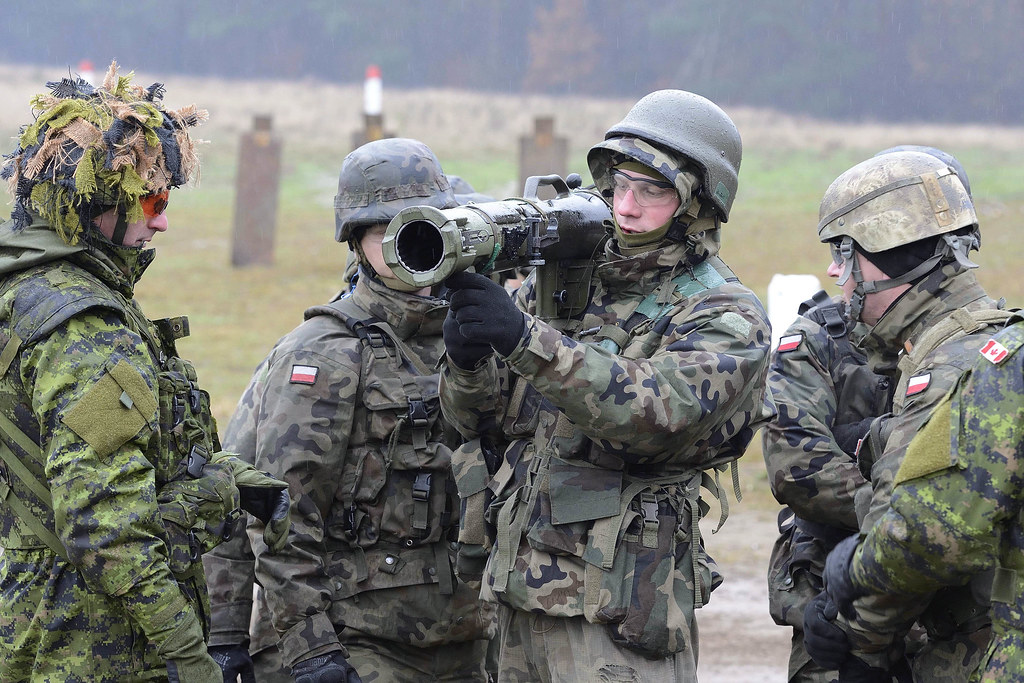
CAF Members train with Polish Military members in a recent exercise during OP REASSURANCE in Poland. (CAF/Flickr) 
The Liberal government announced in July that Canada would lead one of four multinational NATO forces in Eastern Europe, where the military alliance has been beefing up its presence in response to recent Russian actions.

Germany, the United States and Britain are leading similar forces in Lithuania, Poland and Estonia, respectively.

Eastern Europe allies had asked NATO to bolster its footprint in the region as a deterrent against Russia trying to destabilize them in the same way it did in Ukraine — with cyberattacks and by crossing into their territory and inciting Russian speakers within their borders.

Russia has denied any such intentions, and instead accused NATO of instigating the current standoff by expanding into former Soviet territory and trying to undermine its sphere of influence. It has also warned against any military build-up on its borders.

Canada will provide 450 troops as well as light armoured vehicles and other military equipment to the force; Italy has said it will send 140 soldiers.

It wasn’t immediately clear what the other countries will contribute, though media reports have indicated the Polish contribution will include tanks.

The Canadians will form the “nucleus” of the battle group, which will be based at the Adazi military base, about half an hour northeast of the capital Riga.

The first troops will arrive in the spring, but the bulk won’t touch down until fall. They will stay six months before being replaced by another group of Canadians.

Officials have said the four battle groups are intended to make Russia think twice before taking any aggressive action. But they are also being kept small to prevent any provocation or escalation in tensions between Russia and NATO.

Tuesday, January 19, 2016

Was Canada Snubbed From ISIS Meeting?


OTTAWA — Canada has not been invited to a meeting of defence ministers in Paris this week to discuss the fight against ISIL militants, media reports say.

Jan 20th Globe and Mail Cartoon

Defence Minister Harjit Sajjan’s office has confirmed to CBC News and the Globe and Mail that he won’t attend Wednesday’s meeting.

The reports say defence ministers from the United States, Britain, Germany, France, Italy, Australia and the Netherlands will take part in the talks.

Sajjan spokesman Renee Filiatrault told the Globe that Canada’s plan to pull its CF-18s from the fight against ISIL had nothing to do with Canada’s exclusion from the meeting.

Omar Alghabra, the parliamentary secretary to Foreign Affairs Minister Stephane Dion, told the CBC it wasn’t a surprise as those seven countries meet regularly without Canada and the only thing different this time it that defence ministers will be there.

But Conservative defence critic James Bezan said the apparent snub shows Canada is no longer seen as a valuable ally.

Defence Minister Harjit Sajjan is brushing off suggestions Canada was snubbed from an anti-ISIS coalition meeting that several other countries, including Australia and the Netherlands, were invited to attend on Wednesday in Paris.

“Meetings happen all the time,” Sajjan told reporters Tuesday in Saint Andrews, N.B.

However, sources inside the Department of National Defence told CTV’s Mercedes Stephenson they were surprised by the lack of an invitation, initially thinking it was a mistake.

Retired Maj.-Gen. David Fraser told CTV’s Power Play he believes the lack of an invitation is a result of the Trudeau government’s plan to pull Canada’s CF-18 fighter jets from the mission against ISIS in Iraq and Syria.

“The United States are the ones who determine who comes to the meeting and (we’re) considered now, apparently … not a significant contributor and they don’t want to hear what we have to say,” he said.

Fraser said the Americans view Canada’s current contribution of CF-18s “as very significant,” adding that they are currently making a difference on the ground.

“If you don’t come to the game standing shoulder to shoulder, sharing the burden and the risk of the hard fighting, you will not be included in the conversation,” he added.

Former defence minister Peter MacKay told Power Play he sees the lack of an invitation as “downgrading of Canada’s perception and our role in the world.”

“Any way you want to try and spin it, it signals a diminished role for Canada in this mission and in the world,” he said.

MacKay urged the Liberals to “put aside the partisan campaign promise” to pull the six jets.

Conservative defence critic James Bezan said earlier Tuesday that the omission was “predictable,” because of the Liberals’ promise to pull CF-18 fighter jets from the bombing mission against ISIS.

“It is important that Canada be part of these discussions,”Bezan told CTV News Channel Tuesday. “We have a role to play and we have things to say, but unfortunately, under this government, nobody is taking us seriously.”

Conservative interim leader Rona Ambrose echoed Bezan’s comments in a speech to the Manitoba Chamber of Commerce.

“Six months ago we hosted the (anti-ISIS coalition) meeting,” she said. “Enter Trudeau, we’re not even invited to the meeting.”

“These kinds of signals matter.”

Ambrose told reporters after her speech that it’s “obvious” why Canada wasn’t invited.

“When you’re not a full partner, you don’t get invited to the table,” she said. “We were asked to join by the United States and other partners and now we’ve said we’re pulling out of that bombing mission,” she added.

“I’ve called on the prime minister to keep our CF-18s in the fight against ISIS and stand resolutely with our allies,” Ambrose said.

But Sajjan brushed off suggestions that Canada has been sidelined in the fight against terror.

“Meetings happen all the time,” Sajjan told reporters Tuesday in Saint Andrews, N.B.

Although Canada won’t participate in Wednesday’s meeting, Sajjan said he is actively engaged in anti-terror talks and will be discussing ISIS with Canada’s allies at two other upcoming meetings.

That includes another coalition meeting of defence ministers on Feb. 11.

Sajjan also said that Canada is contributing to anti-terror efforts around the globe, including the aftermath of the November attacks in Paris and the more recent attack in Burkina Faso.

“We are actively participating on a meaningful basis,” he said. “We’re not just looking at the current situation in Syria and Iraq, we’re actually looking at the overall threats around the world as well.”

But Bezan said that the Liberals have been sending “confusing messages” about Canada’s role in the fight against ISIS. Despite the promise to withdraw fighter jets from the bombing missions in Iraq and Syria, a timeline has not yet been given.

Bezan said the Tories “firmly believe” that Canada’s CF-18s should stay in the battle. The party also supports a more robust training mission for local troops on the ground, he said.

“Prime Minister Trudeau wants to talk about his sunny ways and that Canada is back on the international scene, and quite the opposite is true,” he said.

“We should be sitting at the table. We have made significant contributions until now.”

The Globe and Mail reported that Wednesday’s meeting is for “significant contributors” to the anti-ISIS coalition, including the United States, Britain, Germany, France, Italy, Australia and the Netherlands.

Tuesday, December 8, 2015

Canada in Iraq: Final CF-18 Withdrawal Will Be Measured Against Coalition Capabilities

Defence Minister Harjit Sajjan said Monday that the decision on when to pull out Canada’s CF-18s will be based on ensuring there is no “capability gap” for the country’s allies.

“The decision on that is going to be based on making sure that there is no capability gap, and we’re figuring out the exact time to do so,” Sajjan explained.

“We’ve worked out many different options, but we also want to make sure that the contribution that we are going to make is also going to have that meaningful impact, whether it’s going to be training or other components, to the mission that we’re going to be bringing to bear.”

His reference to “other components” could mean a number  of different things. Stephane Dion last week said a police training contigent was possible or even the continuation of the Aurora and Polaris aircrafts in the mission. 

Today, Italy announced that it will not partake in the US led coalition against ISIS - they referenced the outcome of the NATO Air Campaign in Libya as its reasons. 

"Italy will not take part in the U.S.-led bombing campaign in Syria," says Italian Prime Minister Matteo Renzi.

Renzi questioned the effectiveness of the campaign and pointed to disastrous NATO war against Libya as an example of the pitfalls of such campaigns.

“If being a protagonist means playing at running after other people’s bombardments, then I say ‘no thank you,'” Renzi said. “Italy’s position is clear and solid. We want to wipe out terrorists, not please the commentators. The one thing we don’t need is to multiply on-the-spot reactions, without a strategic vision.”

Renzi pointed to the 2011 NATO bombing campaign which led to the overthrown of Libyan leader Moammar Gadhafi. After the death of Gadhafi rebel groups carved up Libya. The country is now a haven for Islamic extremists and is mired in chaos.

“Four years of civil war in Libya show it was not a happy decision,” Renzi said, pointing out that a different strategy is needed for Syria.“The one thing we cannot allow ourselves is a repeat of Libya,” he added.

Friday, September 4, 2015

Refugee Crisis: CAF Can Help - Deploy Them

In the wake of the recent tragic death of 3 year old Alan Kurdi, his brother and mother - there have been calls for Canada and the World do to more to help Syrian and Iraqi refugees fleeing the Middle East. Minister of Defence Jason Kenney comes out and said that Canada has no responsibility to help the migrant issue. We had no 'onus' to help.

What about the human responsibility? While I have always been a proponent of the Peacekeeping Myth - that Canada became a Peacekeeping country as a war by other means during the Cold War. Canada has always cared about those in need.

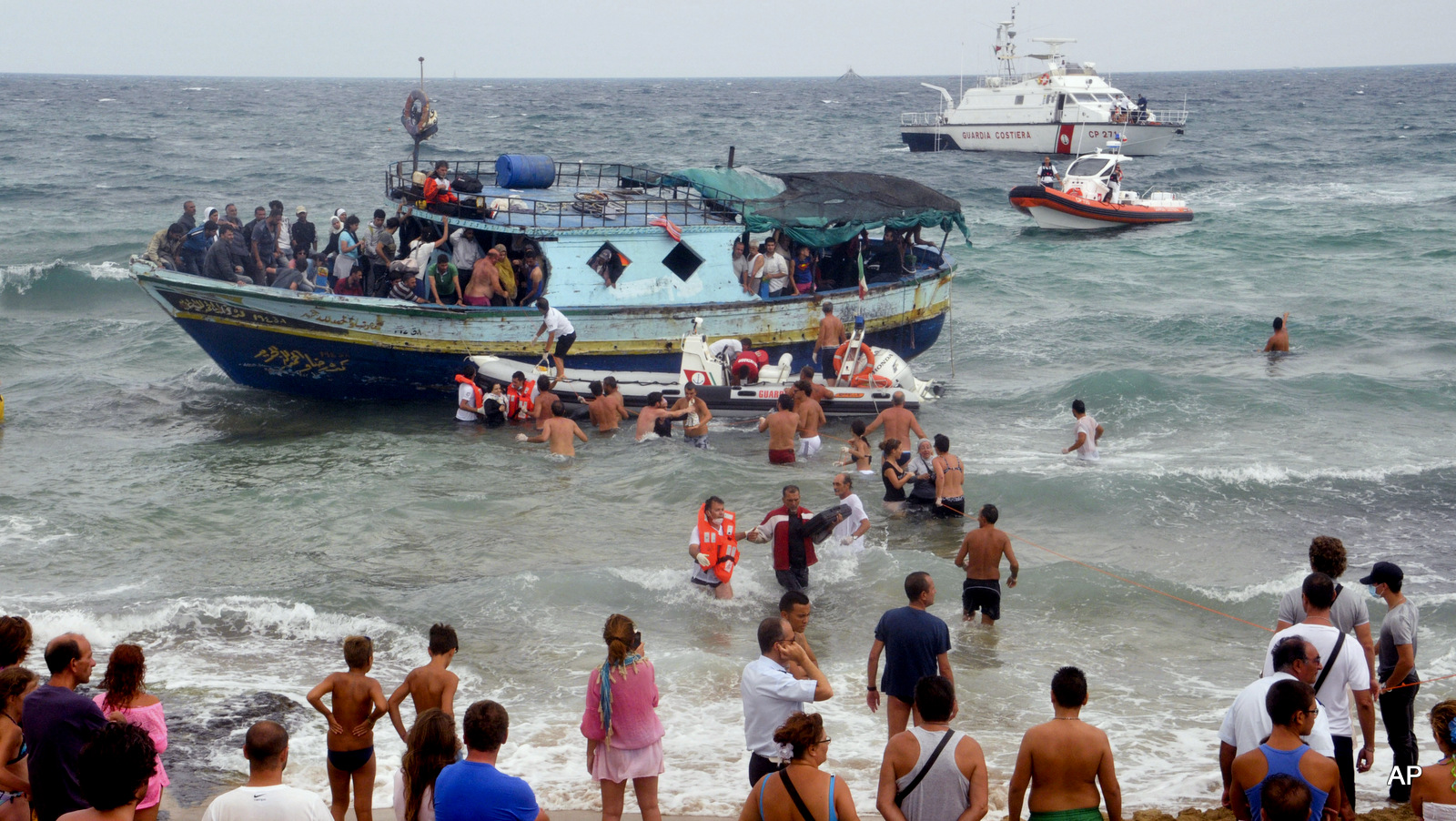
According to the UN an estimated 350,000 refugees crossed the Mediterranean fleeing the Middle East in the last year - and approximately 2,500 have died trying. Earlier this year Italy made a global outcry for help on the migrant problem, as their Navy is baring the brunt of the rescue.


Other European nations have send support. In May Great Britain deployed HMS Bulwark to help. It rescued 500 migrants off of Libya earlier this year. The Irish Naval service also deployed a ship, and it has rescued some 2,000 migrants. As of August 22, 2015, the Italian Navy has rescued more than 3,000 migrants.

Canada has had a Naval vessel deployed to the Mediterranean since 2014, and could have went to the aid of migrants. But, according to the Royal Canadian Navy, they were never given the order to intervene by the Conservative Government.

My question is why not? Why does Canada not have any military responsibility to help European nations struggling with the thousands of migrants?

It would not cost any extra money to have the RCN vessel that is already deployed to help support Eastern Europe. Not sending help when it is the vicinity, is like not stopping at the scene of a horrific car accident on a back road, when you know paramedics will not make it in time.

Why not help at the refugee centers? Hungary has thousands of migrants blockaded in their train station. While this situation needs political help to help move the trains to locations willing to accept the migrants - the camps in Turkey and Jordan are huge, and quickly outgrow their boundaries. Canada could easily deploy the DART (Disaster Assistance Response Team) to one of the regions to help. This team specializes in setting up and helping in humanitarian crisises. They are usually deployed for a month long period, but with added support - the team could be deployed for a longer period of time.

In the current election campaign, the Liberals and NDP have both said they will do more to help the humanitarian issue caused by ISIS and the Syrian Civil War - neither are willing to continue to stand up and confront ISIS. Yet, now it seems the Conservatives are unwilling to help through  humanitarianism. What we need is a government that will step up on both fronts - the CAF can help in the refugee crisis all we need is a leader who will deploy them to do so.


Thursday, June 25, 2015

1,650 CAF members heading to Europe


Defence Minister Jason Kenney announced yesterday that Canada will partake in the largest NATO exercise in Europe since the end of the Cold War in 1991.

Operation TRIDENT JUNCTURE-15 will be held in late September to early November in Spain, Portugal, and Italy; and will include more than 25,000 troops from NATO members. Canada will be sending a contingent of 1,650 troops, including elements of the RCAF, RCN, and Land elements, including Special Forces.


The Conservative government, despite not spending the NATO requested 2% of GDP on defence has been a large supporter of NATO's response to Russian aggression in Eastern Europe. Canada is still deciding on how many members (if any) of the CAF it will contribute to the NATO Rapid Reaction Force. However, Ottawa officially offered the RCAF spy planes, tanker aircraft and strategic lift capabilities to the Rapid Reaction Force, which is set to triple in size from the current 13,000 members.

Two weeks ago, the CAF announced that it would provide staff officers to work at the Rapid Reaction Force command centres in Latvia, Lithuania, Estonia, Poland, Bulgaria, and Romania.

Despite Canada's slow decision making process in sending troops to be part of the reaction force, Canada has had 200 infantry rotating through Eastern Europe since the summer of 2014, and according to DND, plans for the continued rotation is set for as far as March 2016.

Opponents are saying that Canada is planning on establishing a permanent presence in Europe, much like it did between 1946 and 1991 in Germany. However, DND says no permanent planning is in the process, as it is not cost-effective and in most cases too expensive.


Thursday, May 21, 2015

RCN Potential Future Frigate Fires First Test Missiles

The Royal Canadian Navy is considering a number of options for its multi-billion dollar rebuild of its fleet. The front runner in the design process is the DCNS FREMM (French: Frigate Europeenne multi-mission) Frigate. DCNS is hoping Canada will choose the FREMM for its Canadian Surface Combatant Fleet.

The French frigate Aquitaine (the first frigate of the multinational multi-billion dollar program) fired its first missiles; a European built Exocet MM40 surface-to-surface missile, as well as a naval cruise missile.

Artists rendering of a FREMM Frigate - from naval-technology.com
The testing took place on May 12 and May 19th respectively, and mark the first time a European surface ship has fired a European naval cruise missile.

The FREMM will be the future backbone of the French and Italian Navy's (Morocco is also an operator of the FREMM). The FREMMs are heavily armed warships, capable of carrying naval cruise missiles, Exocet MM40 anti-shop missiles, as well as MU90 anti-submarine torpedoes. All the FREMMs can accommodate a Caiman marine helicopter, as well as Special Forces units aqnd their equipment. France is expected to be operating 6 FREMMs by mid 2019. Italy's time table runs into the early 2020s. The FREMMs naval cruise missile provides a deep strike capability, with a range of several hundred kilometres.  Morocco currently operates a single FREMM, and Egypt plans to operate two of the frigates to help in policing the Suez Canal.

France brought the Aquitaine to Halifax in 2013 to showcase it to the Canadian Government in hopes of selling the design plans. France has even said it would allow Irving to build the ships in Canada.
The FREMMs certainly seem to fit the need of the future Canadian Surface Combatant fleet.