Translate

Showing posts with label CP-140 Aurora. Show all posts

Thursday, March 8, 2018

CP-140 Aurora Good To Fly Until 2030; Replacement Plan In The Works

By: David Pugliese, Defence Watch 

Image result for cp-140
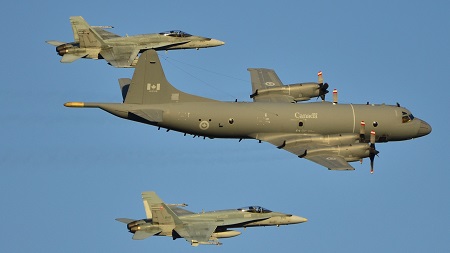
CP-140 Aurora escorted by CF-18 Fighter Jets. Vanguard Magazine. 

Pat Finn, the Department of National Defence’s assistant deputy minister for materiel, says the Aurora maritime surveillance aircraft will be around for a while. “We still have some years ahead as we add more capability to the aircraft,” he recently told parliamentarians. “We’re just finishing the life extension of the aircraft to 2030, which is a pretty significant capability investment.”

A short time later, Defence Minister Harjit Sajjan signed a letter signaling Canada’s intent to join the Maritime Multi-Missions Aircraft forum, along with other nations, to share force development resources and knowledge. The end result could be a new maritime patrol aircraft. Poland and Canada were invited to join existing members of the forum which include France, Germany, Greece, Italy, Spain and Turkey.

So what exactly comes next?

The Cooperation on Maritime Multi-Mission Aircraft (M3A) Capabilities is part of NATO’s Smart Defence Initiatives. It has a M3A Specialist Team, which is a multinational force development working group that is currently chaired by Canada. The team’s job is to examine technological advancements in the area of maritime patrol aircraft.

Department of National Defence spokeswoman Jessica Lamirande told Defence Watch the information gathered by the ST will be used to support the statement of requirement for Canada’s next generation multi-mission aircraft. That initiative is included in the Liberal’s defence policy but with the Aurora flying until 2030 the replacement is still a ways off.


In addition, the activities of the ST will also indirectly inform the advancement of other DND initiatives including those related to Arctic Intelligence, Surveillance, and Reconnaissance, Lamirande added.

Thursday, May 25, 2017

RCAF CP-140 Aurora Quietly Recalled from OP IMPACT

By: Murray Brewster, CBC News 

One of the Canadian air force spy planes assigned to the campaign against the Islamic State has been quietly withdrawn and brought home, CBC News has learned.

The CP-140 Aurora, with a suite of high-tech surveillance equipment, was one of two that had been flying missions over northern Iraq and Syria since the fall of 2014.

The decision to bring one of the turboprop aircraft home was not announced by the Liberal government, which recently extended the deployment of the Canadian military, including special forces trainers on the ground, until the end of June.

A single CP-140 and a refuelling tanker remain in Kuwait, where the Canadian Air Task Force has been based, to continue operations alongside the U.S.-led coalition.

But the decision could signal the beginning of the end of Canada's military involvement in the anti-ISIS fight.

A spokesperson for the military's operations command said the Aurora was withdrawn on May 15 and its departure has not impeded the coalition's air campaign.

"The [Canadian Armed Forces] shared its intent to return the aircraft to Canada with our coalition partners well in advance in order to ensure continuity in the coalition's intelligence, surveillance and reconnaissance operations against Daesh," said Capt. Vincent Bouchard, referring to ISIS by its Arabic acronym.
Battle for Mosul

Iraqi security forces and Kurdish fighters are close to liberating the northern Iraqi city of Mosul and when the bloody campaign is completed, ISIS will largely have been driven from country.

In an email, Bouchard painted the decision to remove one of the CP-140s as a routine matter, meant "to effectively balance its expeditionary requirements and domestic commitments." He said the aircraft was needed to "deliver on its full range of missions domestically."

The primary mission of the CP-140s in Iraq was to act as spotters, targeting ISIS combat units and buildings for destruction.
In February 2016, Defence Minister Harjit Sajjan told the House of Commons that Canada's CF-18 fighter jets had completed their bombing mission in Iraq and Syria. At that time, the Liberal government took pains to underline it was leaving the spy planes and tanker in place. (Sean Kilpatrick/Canadian Press)

When Canada's CF-18 fighter jets were withdrawn from the bombing campaign in February 2016, the Liberal government took pains to underline it was leaving the spy planes and tanker in place to support other coalition members as they continued combat operations.

As of May 20, the Auroras had flown 793 reconnaissance missions.
Special forces in northern Iraq

Canada still has more than 200 special forces troops advising Kurdish and Iraqi forces, as well as a tactical helicopter detachment, a number of intelligence officers and a Role 2 combat hospital deployed in Iraq.

The mission was reviewed in March, but only given a three-month mandate extension, to June 30.

Kurdish Peshmerga commanders have asked that highly trained special forces remain behind once Mosul is freed in order to help with training in counter-insurgency warfare.

Many experts and U.S. commanders have said expelling ISIS from Iraq will not entirely end the fighting and that extremists will likely resort to hit-and-run guerilla tactics.

The Liberal government has been unclear on whether it's prepared to facilitate that kind of training or participate in reconstruction efforts.
Beginning of the end?

The removal of the Aurora, which has been called out by allies for its usefulness, is a signal to defence analysts that the deployment could be coming to an end.

"If this is not the end of the mission, it seems a bit strange they would be pulling out one of these aircraft, which arguably has been one of the most important parts of our contribution," said Richard Cohen, who was an adviser to former defence minister Peter MacKay and served in both the Canadian and British militaries.

Given the deployment of troops to Latvia next month and the Liberal government's plan to return to peacekeeping, he said the military might not have the bodies to sustain an extended commitment in Iraq.
Four Canadian aircrew who fly one of the country's CP-140 surveillance planes leave the flight line at an unidentified coalition airbase in Kuwait on Nov. 13, 2016. (Murray Brewster/CBC)
The question of what Canada is going to do post-Mosul has been met with resounding silence, said Steve Saideman, a professor of international affairs at Carleton University.

The U.S.-led coalition has been organizing the next phase of the anti-ISIS campaign, with a finite number of positions, and Canada has yet to apparently signal interest.

"Canada has no role there," said Saideman. "And what that's going to lead to is dumb politics, shockingly enough."

By not articulating a clear way forward in the fight against ISIS, the Liberals have opened themselves up to criticism from Opposition Conservatives and possibly allies, he said.

The future of the Iraq mission could be made clear with the release of Canada's new long-awaited defence policy on June 7, but Saideman said it's unlikely to change the narrative.

"The fact is Canada may not be needed, and given the tempo of special forces operations, it might be time for them to come home and relax," he said. "But that's not going to be the conversation. The conservation is going to be about [how] Canada doesn't care about Iraq."

Dealing with terrorism, and specifically ISIS, is a top priority for the Trump administration. The U.S. leader recently scored a victory on that front, as NATO commanders moved to endorse a plan to formally join the U.S.-led coalition in Iraq and Syria.
Friday, May 5, 2017

Canada Needs to Boost Aurora Fleet Now & Beginning New Fleet Plan

Originally Published to Defence Watch

What is printed below is an executive summary of the document, “Preserve Canada’s Strategic Surveillance Capability” which was forwarded to the Defence Policy Review Committee by the Maritime Air Veterans Association (MAVA). It was provided to Defence Watch by the authors, retired Brig.-Gen. Duane Daly, President of the Maritime Air Veterans Association and retired Col. E.S.C. Cable, Strategic Studies Coordinator of the same organization. 

Image result for CP-140

Here is what they wrote in their document:

By: Brig.-Gen. Duane Daly (Ret.) & Col. E.S.C. Cable (Ret.)

Canada’s geography has insulated our nation from conflicts on our soil; however, our geography also presents a massive three-ocean frontier consisting of the world’s longest coastline and a massive Arctic archipelago to defend. For the past 65 years, Canada has maintained a credible maritime surveillance capability, which has significantly extended our awareness of domestic and military activities beyond our shores and has safeguarded our sovereignty.

Canada acquired a fleet of 33 Argus maritime surveillance aircraft in the late 1950s to conduct anti-submarine (ASW) patrols over the Atlantic and Pacific with periodic sovereignty forays to the Arctic. Designed and built in Canada by Canadair (now Bombardier) the Argus was the most capable ASW aircraft of its era. In the early 1980s the obsolete Argus fleet was replaced by 18 CP-140 Aurora ASW patrol aircraft and three CP-140A Arcturus Arctic and Maritime Surveillance Aircraft. However, Canada’s surveillance capability has now been reduced to an alarming level. Canada has already disposed of two Arcturus and turned the third into a permanent maintenance trainer; and is in the process of updating and extending the life of only 14 of the 18 Auroras with the intention to operate only ten aircraft in a rotatable pool of 14 to achieve a life expectancy to 2030 at a reduced pace of operations. Four Auroras are to be scrapped.

During RIMPAC 2015, a multi-national exercise in the Pacific, the U.S. Navy publically stated that the systems in the updated Aurora are performing at level they hope to attain with their newly acquired P-8 Poseidon surveillance aircraft in ten years. During the current Operation Impact in Syria and Iraq the updated Aurora is acknowledged as one of the most successful and capable ASW and Intelligence, Surveillance and Reconnaissance (ISR) aircraft in the world.

Image result for CP-140 Iraq
An RCAF CP-140 in Kuwait

The Need

Fleet sizing studies for the Aurora procurement indicated that 24 aircraft were required to deal with the two-ocean sub-surface threat posed by the Warsaw Pact nations and their satellites. The government unilaterally reduced the number of aircraft to 18 Auroras without a commensurate reduction in tasking. The current fleet size of 14 updated and life extended Auroras to produce ten Auroras for operations is insufficient to fulfill the surveillance requirements for a country with the world’s longest coastline and largest Arctic Archipelago. In addition to the two-ocean commitment, global warming has expanded the requirement for Arctic ISR to monitor shipping activity, search and rescue, communications relay and ASW. There is also a growing need to provide ISR support for international expeditionary missions such as Libya, Syria and Iraq. Despite this increased demand for overland and maritime surveillance, the RCAF is being forced to scrap the remaining four Auroras because of budget and associated manning constraints.

Operations in Libya, Syria and Iraq have demonstrated the requirement for persistent surveillance with a stand-off weapons capability. The RCAF and Canadian industry have the capability to modify and equip the Auroras to carry any weapon currently certified on the U.S. Navy’s P-3C aircraft, including air-to-ground stand-off weapons. An Aurora stand-off, ground attack weapon capability would provide an alternative to the contentious use of armed unmanned air vehicles (UAV) against fleeting targets for the foreseeable future. Moreover, with the increasing use of surveillance UAVs, the Aurora’s communication and data management systems can be readily configured as an airborne UAV controller to provide line-of-sight, operator control of UAVs in theatre.

The Opportunity

There is an urgent requirement to allocate incremental funding to the RCAF to take advantage of the narrowing window of opportunity to update and life extend the four Auroras currently to be scrapped. This will restore the Aurora fleet to its original size of 18 aircraft. A decision is urgent because Lockheed-Martin will likely close the wing and horizontal tail production line necessary to life-extend the four remaining Auroras if there are no follow-on orders. Also, restoring the fleet to 18 aircraft will require additional RCAF manning and funding to operate the last four Auroras.

As an alternative to acquiring armed UAVs, a modification program, already implemented by the U.S. Navy, should be considered to provide the Aurora a stand-off ground attack capability. Also, any future program to acquire surveillance UAVs should include the modification to the Aurora software to provide line-of-sight control of in-theatre UAVs.

The enhanced life expectancy of the updated Aurora will enable operations to at least 2030 when the Aurora will require replacement. The Boeing P-8 Poseidon surveillance aircraft would be a viable replacement candidate. However, liaison with industry is recommended to assess if a maritime version of the Bombardier C-Series airliner could be a home-grown option in much the same manner as Canadair developed the Argus from the Bristol Britannia airliner.

Conclusion

The Government of Canada is rightly concerned about the opening up of the Arctic due to global warming. A full fleet of 18 updated and life-extended Auroras would provide an extensive capability to meet that requirement in the near term with minimal investment. It would also provide a viable counter to the ever growing submarine threat in the Atlantic and Pacific.

Canadian defence industry innovation and partnership with the Government of Canada has delivered a state-of-the art alternative to the more expensive Boeing P-8. The Aurora update solution is sufficiently scalable and flexible to garner the attention of foreign governments, particularly with the Canadian capability to life-extend hundreds of foreign P-3C aircraft as part of a systems upgrade. This represents an immediate export opportunity, which could create and maintain high paying jobs in Canada.

Modifying the Auroras to carry air-to-ground stand-off weapons and to provide direct, line-of-sight control of UAVs in-theatre could provide a near-term solution to the debate over the acquisition and use of weapon-capable UAVs.
Image result for Boeing P-8
USN P-8 Poseidon 
Recommendations

It is recommended that update and life extension modifications be completed on all 18 Aurora aircraft before the window of opportunity closes.

It is recommended that RCAF manpower and associated funding be increased to restore the Aurora fleet to its full 18 aircraft capability.

It is recommended that planning be initiated now to replace the 18 aircraft Aurora fleet by 2030 with a fully ASW/ISR capable aircraft with sufficient range and endurance to meet Canadian strategic (sub-surface and overland) surveillance requirements. Such planning should consider the possible development of a maritime version of the Bombardier C-Series airliner in the same manner that Canadair developed the Argus from the Bristol Britannia airliner.

Thursday, May 4, 2017

CAF Guards Ferry Against Pirates During Vancouver Island Exercise

By: Chris Bush, Nanaimo News 

Image result for Operation Ready Angle 17

Royal Canadian Navy coastal patrol vessel HMCS Brandon and an RCFA CP-140 Aurora aircraft that tracks surface and underwater threats escorted the 10:30 a.m. B.C. Ferry sailing from  Departure Bay Tuesday, May 2nd.

Why? Pirates.

The ferry was taking part in Operation Ready Angle 17, a military exercise to hone the Canadian military’s proficiency at evacuating Canadian citizens from a hostile zone to safety. In this case, from Vancouver Island – called "Macedemia" for the purposes of the exercise, a country that has suffered severe social upheaval after a major earthquake and tsunami. It’s chaos with gun-toting gangs roaming the streets and pirates lurking in its coastal waters.

The mission for about 240 Canadian Armed Forces members were tasked with the job, with discretion and a minimal amount of fuss, get Canadian citizens out of the region.

“We send in guys in civilian clothes. They kind of find out where all the Canadians are and they bring them to a processing centre where the government takes over – Global Affairs Canada,” said Capt. Jeff Manney, a public affairs officer for Canadian Forces.

Civilian-clothed troops reconnoitre the area to find safe routes to get Canadians to processing centres where Global Affairs Canada takes over.

“A huge part of it is discretion,” Manney said. “No government wants to see foreign soldiers wandering around in its territory, so we try and be discrete and we work with our allies as well.”

Personnel tasked with evacuations must be proficient at a wide range of tasks and coordination between multiple agencies to pull off missions like the one in 2006 when 14,000 Canadians were evacuated from Beirut, Lebanon.

On Monday, armed troops guarded a “processing centre” at HMCS Quadra Cadet Summer Training Centre in Comox while genuine citizens were sorted from imposters, put on a bus for Nanaimo and evacuated to a naval reserve base in Vancouver, which is also part of Macedemia.

While much of the exercise took place in Comox, military reconnaissance personnel have met with police and local governments in Nanaimo and Port Alberni to test procedures.

“They’ve been, basically, all around the area in the country of Macedemia,” Manney said.

Ready Angle 17 follows Operation Ready Renaissance, a Disaster Assistance Response Team exercise on the Island in February to the simulated earthquake and tsunami that triggered Macedemia’s demise.

Tuesday’s ferry sailing to Vancouver meet with HMCS Brandon about 30 minutes into its voyage.

“In this scenario, there are pirates operating in this vicinity where we need to get the Canadians out of. The Aurora will be in the air providing surveillance of the area as well to see these Canadians off safely to the safe haven,” Manney said.

Manney said Ready Angle 17 is an annual exercise and not in response to “any particular incident going on in the world today.”

Tuesday, March 21, 2017

Operation IMPACT Long Range Patrol surpasses 700 missions

By: Major Paul Doucette, Joint Task Force- Iraq Public Affairs Officer

Joint Task Force Iraq’s Long Range Patrol Detachment reached a major milestone last month when it carried out its 700th mission since beginning operations in the region in late 2014.
Man in front of plane
A CP-140 M Aurora taxis to a parking spot at its base in Kuwait, following the successful completion of the Operation IMPACT Long Range Patrol Detachment’s 700th mission on February 28, 2017. This photo has been modified for OPSEC purposes. (Photo Credit: Corporal PJ Létourneau, JTF-I Image Technician)
The detachment has two CP-140 Aurora long range patrol aircraft that conduct Intelligence, Surveillance and Reconnaissance (ISR) missions over points of interest in Iraq and Syria. A point of interest is a specific location that may be assessed as useful or of interest in the identification of a potential legitimate military target and which may or not become a target itself.

While all possible measures to mitigate risk are taken, any mission over enemy territory is not without risks. For the CP-140 crews, their missions take them over a variety of potential Daesh targets. The work is meticulous and can be painstaking with each mission lasting for hours as information on particular points of interest is collected for further analysis. The end state comes when an enemy target is clearly identified and, after all due process is followed, then engaged by coalition assets.

“These flights show the resilience and versatility of the CP-140 and its crews,” said Colonel Luc Guillette, Commander of Operation IMPACT’s Air Task Force. “By flying these demanding missions on a daily basis, we have denied Daesh freedom of movement and helped to wear them down to the point where they are today.”

Since October 30, 2014, the coalition has employed two CP-140 Aurora aircraft. Flying within the area of operations, the aircraft employs Electro Optic sensors, as well as various other sensors to provide ISR imagery for coalition strike assets and target development. The CP-140 aircraft and crews generally fly six or seven days a week.

Tuesday, February 21, 2017

RCAF Active over Syria; Canada Waiting on US before Extending OP IMPACT

By: Lee Berthiaume, The Canadian Press

PERSIAN GULF – Canadian military personnel involved in the fight against the Islamic State of Iraq and the Levant are waiting to see what shape their mission will take in the coming months – a decision that could be heavily influenced by U.S. President Donald Trump.

More than 800 service members are currently deployed in half-a-dozen locations across the Persian Gulf region, after the Liberal government revamped Canada’s contribution to the American-led war against ISIL last year.

Two Canadian surveillance planes have flown hundreds of sorties to identify potential targets for coalition airstrikes.

While the majority of those missions have been over Iraq, a senior Canadian commander revealed Sunday that the aircraft have also flown dozens of times over Syria in recent months.

“We have done work in Syria,” Brig.-Gen. Shane Brennan, commander of Canada’s Joint Task Force-Iraq, told reporters during a media tour of the mission, though he added: “There’s lots of work to do in Iraq. We are looking at all of the areas.”

The flights over Syria have also included a different Canadian plane that has been refuelling coalition aircraft directly responsible for bombing or otherwise destroying ISIL forces and other targets.

The increased Canadian military activity over Syria, which Brennan described as between 20 and 30 missions in the past few months, is only one indication that the war against ISIL is shifting into a new phase.

As Brennan was speaking at an airfield, the location of which the military didn’t want revealed for security reasons, Iraqi forces were launching their long-awaited assault on western Mosul.

READ MORE: Mosul civilians trapped indoors as Iraqi forces bombard ISIS targets

The battle, which comes about a month after Iraqi forces declared the eastern part of the city free of ISIL, has been billed as a defining moment in eventually freeing Iraq from the extremist group’s grip.

While the fight for the city’s western half is expected to be much harder than what came before, Brennan was adamant that victory was a certainty.

“There is a battle that is ongoing and will be won,” Brennan said. “It’s an inevitable event.”

Less certain is what role Canadian troops will play when the current mandate, which also includes a military hospital, special forces troops and a helicopter detachment in northern Iraq, expires in March.

Military commanders are drawing up options based on a number of factors, including the expectation that ISIL will become a traditional insurgency in Iraq, which would require more police and counter-terrorism forces.

Canadian Brig.-Gen. David Anderson, who is leading an international team of military advisers in Iraq’s defence ministry, said his group recently submitted a two-year plan focused on exactly that.

There are also concerns that the group will try to spread outside Iraq and Syria, which is why Canada helping strengthen border security in Jordan and Lebanon.

The military will present three options for the government to choose from in the coming weeks in deciding the future of the mission.

Yet one big wild card is what direction the U.S. military will go, after President Trump blasted the slow progress of the fight against ISIL and ordered a 30-day review to consider new options.

U.S. Defence Secretary James Mattis is expected to visit Iraq in the next week or so before presenting his recommendations later this month.

Exactly what Mattis will recommend, both in Iraq and Syria, is wide open for speculation.

But Brennan said the results could have a big impact on what Canada decides to do given the need to ensure a unified and co-ordinated international effort in the fight against ISIL.

“It does depend what happens,” Brennan said. “We are waiting as well. I think the question is: What else needs to be done or could be done?”

Thursday, October 20, 2016

RCAF CP-140 Aurora Will Track Russian Aircraft Carrier

By: Tim Ripley, London - IHS Jane's Defence Weekly

Russia's only aircraft carrier, Admiral Kuznetsov, and a supporting naval task group has set sail for the Mediterranean, state-owned news agency TASS has reported.

"The group consists of the aircraft-carrying heavy cruiser Admiral Kuznetsov , the battlecruiser Pyotr Velikiy , large anti-submarine ships Severomorsk and Vice Admiral Kulakov and support vessels," according to a statement from the Russian Northern Fleet on 15 October, reported by TASS later that day.

The mission of the deployment is "to ensure naval presence in the important areas of the World Ocean", said the Northern Fleet statement. "Special focus will be made on safeguarding security of maritime traffic and other types of maritime economic activity of Russia and also on responding to the new kinds of modern threats such as piracy and international terrorism."
NATO has been developing plans to monitor the progress of Admiral Kuznetsov and its battlegroup as they transit through the North Atlantic and into the Mediterranean. Many of the alliance's naval and air assets participating in Exercise 'Joint Warrior' off the west coast of Scotland are expected to be drawn upon for the surveillance operation, including Royal Canadian Air Force CP-140 Aurora and US Navy Boeing P-8A Poseidon maritime patrol aircraft temporarily deployed to RAF Lossiemouth in Scotland.

UK assets on call for the surveillance operation include a Type 23 frigate and a Type 45 destroyer to shadow the Russian ships, a senior UK military official has told IHS Jane's . Royal Air Force aircraft are also being prepared for the operation. These include a Boeing RC-135 Rivet Joint electronic eavesdropping aircraft, a Lockheed Martin C-130J Hercules transport being used in the surface surveillance role and Eurofighter Typhoon aircraft to shadow any Sukhoi Su-33 or Mikoyan MiG-29K naval strike fighters launched from the Russian carriers.

A UK Royal Navy spokesperson told IHS Jane's on 15 October, "UK and NATO assets routinely monitor warships from other nations when they enter our area of interest and this will be no different."

Tuesday, October 18, 2016

Canadian Special Forces providing crucial support in Battle of Mosul

By: Steven Chase, Globe and Mail 

Canadian Armed Forces members are playing a modest but vital supporting role as the operation to retake Mosul, the last major stronghold of Islamic State militants in Iraq, gets under way.

How dangerous it might get for Canada’s special forces soldiers will depend on whether the Kurdish troops they’re advising are assigned a difficult role in reclaiming Mosul, which has been occupied by the Islamic State jihadis since June, 2014. It will also depend on whether their political masters in Ottawa allow Canadian soldiers to enter Mosul during what could be difficult block-by-block urban warfare.

Up to 210 Canadian special forces troops are advising Kurdish peshmerga fighters who are teaming up with Iraqi government forces, Sunni tribal fighters and Shia militias to encircle and take Mosul. The Trudeau government, which promised in the 2015 election campaign to end a combat role in Iraq, insists what soldiers are doing there is not combat even though Canadian special forces soldiers are guiding the Kurds from the front lines and exchanging fire with enemy troops from time to time.

Related:
Explainer: A guide to the battle of Mosul, and why it matters in the war against Islamic State
Interactive: Untangling the Middle East: A guide to the region's shifting relationships

Right now, Canadian military advisers are with Kurdish unit commanders near the battlefront or in peshmerga encampments around Erbil, the capital of Iraqi Kurdistan which is 85 kilometres from Mosul, or farther south in Kirkuk, 175 kilometres from the IS stronghold.

Canadian generals last week warned the public that the environment in Iraq has grown more dangerous for Canada’s soldiers as their task now focuses on advising the Kurds in battle rather than merely training them in open-air classrooms far back from the conflict.

Overhead, two Canadian spy planes, the CP-140 Auroras, are gathering intelligence that will be used by coalition planners to generate lists of Islamic State targets to be bombed. As well, the Royal Canadian Air Force’s Polaris tanker is refuelling coalition warplanes conducting the bombing raids.

Not far from the front line – but not so close as to be in harm’s way – up to 60 Canadians will be operating a field hospital to treat the wounded Kurds, Iraqi government forces or their allies. The Role 2 facility will not be big but will triage, resuscitate, treat and care for injured soldiers until they return to duty or are evacuated.

Ottawa is tight-lipped on the role that Canada’s 21st Electronic Warfare Regiment is playing in Iraq. The military has reportedly deployed members of this regiment, which can intercept and decipher enemy communications.

Canadian Defence Minister Harjit Sajjan was tight-lipped Monday when asked exactly where Canada’s soldiers are located on the battlefield, citing operational security.

“For force protection, I won’t tell you exactly where they will be, but they will be always in an advise-and-assist mission. They will always be within [or] behind the front lines to conduct their work and … they will always have the right tools and abilities to be able to protect themselves if needed.”

The fight to retake Mosul is being billed as the largest military effort in Iraq since the United States withdrew its combat forces in 2011.

David Perry, a senior analyst with the Canadian Global Affairs Institute, said Canadians are also helping to assemble targeting “packages” for air commanders who are selecting bombing targets.

He said it’s possible the fight to retake Mosul could end up going relatively slowly because the coalition will be trying to avoid killing civilians inside the city. Mr. Perry said estimates of civilians inside Mosul are as high as one million people.

A U.S.-led air campaign has helped push Islamic State from much of the territory it held, but 4,000 to 8,000 fighters are thought to remain in Mosul.

Tuesday, October 11, 2016

Canada in Iraq: More Canadian intelligence, less ball hockey

By: David Pugliese, National Post 

Canada’s much-vaunted surveillance planes operating over Iraq were so limited in the information they could collect and share with allies, Canadian military personnel planning CF-18 attacks had to rely on the U.S. for data, according to documents obtained by the Ottawa Citizen.

The briefing, produced last year on lessons learned from operations in Iraq in 2014, also pointed out efforts to set up ball hockey facilities and a Tim Hortons for personnel at a base in Kuwait should take a back seat to getting key components of the mission in place.

Canada initially contributed special forces, Aurora surveillance aircraft, a refuelling plane and CF-18 fighter jets to the international coalition battling Islamic extremists.

The Liberal government withdrew the jets, but expanded the number of special forces and kept the refuelling planes and Auroras.

Canadian military officers have claimed from the beginning of the mission the upgraded CP-140 Auroras are among the most advanced surveillance aircraft in the world.

But the “lessons learned” document, obtained through the Access to Information law, tells a different story.

“The CP140 deployed without the organic capability to share their data with coalition partners,” it notes.

In addition, the software needed to process some CP-140 surveillance data was not available and the air crews needed “greater experience operating over land.”

The Aurora is primarily a maritime surveillance plane, but the upgrades allow it to collect data on ground targets.

The problems didn’t stop with the Auroras. There were concerns about the overall lack of ability to share information Canada collected from various sources with its allies. In addition, the Canadian Forces had problems accessing coalition intelligence data without having to go through a U.S. military intermediary.

Gathering information about targets the CF-18s were to attack proved difficult. Problems with the planes’ targeting pods “severely” limited some information gathering, although the details were censored.

“Poor information” was provided to those deciding on targets. There is a need to increase the capability to “contribute to target discovery,” other comments in the briefing point out.

Military staff asked about the lessons learned said while ball hockey and a Tim Hortons trailer were “a nice boost,” these “projects must wait well into the sustainment phase after the mission’s essential components are all in place.”

Other issues included:
Significant delays in delivering communications equipment and having enough trained personnel.
Military communications personnel sent back to Canada within seven days of arriving in Kuwait, and before the systems were up and running.
Some military personnel, who travelled overseas on civilian flights, had to use their own credit cards to pay up front, then had trouble getting reimbursed. In some cases, they had to spend up to $1,000 just for baggage.
Civilian contractors supporting the refuelling aircraft detachment were not properly prepared for work in Kuwait or the type of accommodation they were given.
There should be a 24/7 duty desk to deal with problems encountered by those on overseas missions. “A list of people who can actually help with problems would be nice,” said one person. “Help accounts suck. They are rarely monitored. Real people with real contact lists only.”

Commanders back in Canada weren’t spared criticism either. Some of those serving in Kuwait questioned the abilities of the Ottawa-based Canadian Joint Operations Command, which co-ordinates military missions at home and around the world.

“Despite the best of intentions and a desire to do so, CJOC is incapable of conducting true 24/7 operations, at least as it concerns targeting,” said one critic.

Canadian Forces spokesman Capt. Vincent Bouchard said in an email many of the challenges outlined in the document are common when setting up a multinational operation abroad.

“The capabilities the Block III CP140s brought to theatre were new, both to the RCAF and our allies,” he said. “As it was expected, it took time to learn how to make the most of these new capabilities in the context of a multinational operation.”

Bouchard said the points raised in the documents were dealt with and the Aurora detachment continues to provide valuable surveillance information for the coalition.

He repeated the Canadian military’s statement the Auroras are “world-class intelligence surveillance and reconnaissance aircraft.”

Wednesday, September 7, 2016

Canadian Surveillance Aircraft feeding ISIL bombing campaign with info

By: Lee Berthiaume, The Canadian Press

OTTAWA — Despite the withdrawal of Canada's fighter jets from Iraq and Syria last spring, a senior officer says Canadian military aircraft are providing vital intelligence to allies for air strikes and other operations against the Islamic State of Iraq and the Levant.

The Liberal government announced in February that it was ending Canadian combat operations in Iraq by withdrawing six CF-18s that had been part of the U.S.-led bombing campaign against ISIL since October 2014.

But the Liberals left behind a Polaris air-to-air refueller and two Aurora surveillance aircraft. Those aircraft have continued to support the bombing campaign against ISIL, also known as Daesh, even as public attention has turned to the role of Canadian special forces operatives in northern Iraq.

National Defence says the Polaris has flown 544 missions and delivered more than 14,200 tonnes of fuel to allied aircraft over the last two years. The Auroras, meanwhile, have flown 575 reconnaissance missions over ISIL territory.

Brig.-Gen. Shane Brennan, commander of Canada's Joint Task Force-Iraq, says at the same time the number of Canadian intelligence officers assigned to the anti-ISIL effort has grown to 50. Their mission is to analyze the pictures taken by the Auroras so the coalition can plan air strikes and ground operations.

"What we do is gather the trends and the activities of what is happening with Daesh," Brennan said from the task force's headquarters in Kuwait. "That is used to support what you would call targeting, whether that's munitions-based or lethal targeting, or other types of targeting."

Brennan described the work of the Auroras and intelligence officers as a "critical contribution" to the fight against ISIL.

"In military operations, the planning and intelligence preparation is usually a key to success," he said. "In this way, we're actually feeding into the larger coalition process and making a significant difference."

U.S. and other coalition officials have credited the bombing campaign with helping to push ISIL back after it initially overran large swaths of Iraq and Syria in 2014. But there have also been concerns about civilian casualties, particularly following a series of U.S. strikes around the Syrian city of Manbij in July.

Brennan said the Auroras were not involved identifying targets in Manbij and have instead been flying over northern Iraq in support of the coming battle for the city of Mosul.

Preparations to liberate Mosul from ISIL have become the main focus for allied and Iraqi forces over the last few months, given that the city is the last major urban centre still controlled by the militant group in Iraq.

The approximately 2,000 Kurds trained by Canada over the last two years aren't expected to actually enter Mosul when the battle begins, but will instead secure territory to the north and east while the Iraqi military clears the city. At the same time, Brennan said Canada will be contributing in other ways.

An additional helicopter is being deployed into the area — bringing the total to four — to help transport troops and equipment. In addition, a field hospital is set to be deployed from Canadian Forces Base Petawawa.

But Brennan also acknowledged the many political challenges facing Iraq besides ISIL. Those include questions about the country's long-term stability, particularly given Kurdish desires for independence, and the surprise sacking of Iraq's minister of defence on corruption charges last month.

"It is a difficult time for the government of Iraq," he said. "Obviously there's all kinds of challenges that occur within a diverse country like that as well."

The good news, Brennan said, is that there are discussions between central Iraqi officials and the semi-autonomous Kurdish government in the north of the country. In addition, he said, the interim defence minister previously served with the Iraqi security forces.

"So we're very confident that we're not going to see this as a setback in the ongoing planning for Mosul. So there's good stability from that particular front," he said. "But all these things are of concern, that is true."

- Follow @leeberthiaume on Twitter.

Lee Berthiaume, The Canadian Press

Friday, June 24, 2016

RCAF Releases New Photos from CC-150 Polaris & OP IMPACT

On it's Twitter feed today, the Canadian Armed Forces released new images from OP Impact today.

The country has heard very little about Canada's aerial contributions to the fight against ISIS since the government withdrew the RCAF CF-18s in February of this year.

The RCAF left 2 CP-140 Aurora Intelligence aircraft's and a CC-150 aerial refueling tanker in the region to help the US-led coalition continue to fight ISIS.

The photos released today are from the CC-150 tanker refueling USAF F/A-18s and US Marine Corps AV-8B Harriers  aircraft over Iraq.


Thursday, June 2, 2016

OP IMPACT Air-Task-Force Iraq Update

Since the end of the RCAF CF-18 Air campaign against ISIS, little news has surfaced about OP IMPACT until the recent news regarding CAF Special Forces facing mortar fire over the weekend; or the political implications of wearing the Kurdish flag on their uniforms.

As such, I figured it was about time to offer an update on Air-Task-Force Iraq.

According to the DND OP IMPACT webpage,

As part of the Government of Canada’s expanded contribution to multinational efforts to degrade and defeat the so-called Islamic State of Iraq and the Levant (ISIL), the Canadian Armed Forces (CAF) recently added three CH-146 Griffon helicopters, an all-source intelligence centre, and additional trainers to Operation IMPACT. Learn more.

Current Total of Aircraft sorties

  • As of 28 May 2016, Air Task Force-Iraq has conducted 2332 sorties*:
  • CC-150T Polaris aerial refueller conducted 462 sorties, delivering some 26,800,000 pounds of fuel to coalition aircraft; and
  • CP-140 Aurora aircraft conducted 492 reconnaissance missions.
Definition - sortie: in air operations, a sortie refers to an operational flight by one aircraft. A sortie starts when one aircraft takes off and ends upon landing.

*This total includes 1378 sorties conducted by CF-18 Hornets between 30 October 2014 and 15 February 2016.
To keep the aircraft functioning properly in a desert environment, an aviation technician sprays down the wing and fuselage of a CP-140 Aurora in Kuwait during Operation IMPACT on April 4, 2016.
To keep the aircraft functioning properly in a desert environment, an aviation technician sprays down the wing and fuselage of a CP-140 Aurora in Kuwait during Operation IMPACT on April 4, 2016. Photo: CAF Combat Camera

Wednesday, June 1, 2016

Canadians to hold key positions in RIMPAC; while U.S. politicians want to ban China from military exercise

By: David Pugliese, Defence Watch 

RIMPAC 16 gets underway June 30 and runs until August 4 in the Hawaiian and Southern California area. The Canadian Forces says it is sending the following:
  • A maritime component comprised of four ships (HMCS Calgary, HMCS Vancouver, HMCS Saskatoon and HMCS Yellowknife), a RCN team of clearance divers, and a forward logistics team;
  • A Land Component comprised of a Company Group based on a Rifle Company from the Third Battalion, Royal 22e Regiment, based out of Valcartier, Quebec;
  • An Air Task Force comprised of several aircraft (six CF-188 Hornets, one CC-130 Hercules, one CC-150 Polaris and one CP-140 Aurora), a Maritime Helicopter Detachment, and a Tactical Aviation Detachment consisting of four CH-146 Griffons and two CH-147 Chinooks;
  • More than 1,500 sailors, soldiers, airmen and airwomen; and Several command, staff and support personnel.
The Canadian Forces noted that some of its personnel will once again hold key leadership positions during RIMPAC 2016. They include Rear-Admiral Scott Bishop, who will serve as the Deputy Commander of the Combined Task Force; and Brigadier-General Blaise Frawley, will serve as the Air Component Commander.

RIMPAC is held every two years. This year it will include 45 ships, five submarines, more than 200 aircraft and 25,000 personnel from the armed forces of 27 nations.

Training is varied and will include everything from counter-piracy to amphibious operations.

Besides the U.S., the participating nations include Australia, Brunei, Canada, Chile, Colombia, France, India, Indonesia, Japan, Malaysia, Mexico, the Netherlands, New Zealand, Norway, Peru, South Korea, the Philippines, Singapore, Thailand, Tonga, the United Kingdom, Brazil, Denmark, Germany, Italy and China.

China first joined RIMPAC in 2014. It sent four ships but in addition one of its spy vessels also shadowed the exercise off Hawaii.

Some U.S. lawmakers have called for China to be banned from RIMPAC.

They are upset with what they see as China’s aggressive stance in the South China Sea. As part of its strategy in the region, China has been building artificial islands to act as military bases.

U.S. congressman Mark Takai, of Hawaii, has asked U.S. defense secretary Ash Carter to ban China from RIMPAC. “I guess my question is why then should we reward China for this aggressive behavior by including them in an event meant for allies and partners?” Takai asked Carter during a meeting in March.

CAF and RCN Prepare for RIMPAC 2016

By: Frontline Defence News

Four warships, several aircraft and more than 1,500 Canadian sailors, soldiers, airmen and airwomen will participate in the United States Navy-led Exercise Rim of the Pacific (RIMPAC) from June 30 to August 4, 2016, in and around the Hawaiian Islands and Southern California.

The aircraft carrier USS Ronald Reagan (CVN 76) transits the Pacific Ocean with ships assigned to Rim of the Pacific (RIMPAC) 2010 combined task force as part of a photo exercise north of Hawaii.
The 25th edition in a series and held every two years, RIMPAC has grown into the world’s largest combined and joint maritime exercise. RIMPAC 2016 will bring together 45 ships, five submarines, more than 200 aircraft and 25,000 personnel from the armed forces of 27 nations. The exercise will challenge participants with unique training opportunities across the spectrum of military capabilities - from humanitarian assistance and disaster response to dynamic maritime security and complex warfighting operations.

"Canada has participated in every RIMPAC since 1971," said Defence Minister Harjit Sajjan. "Over the years, our participation has helped us build and foster collaborative relationships with our allies and partners in the region. RIMPAC 2016 will once again provide the Canadian Armed Forces with a valuable training opportunity, while demonstrating Canadian leadership and operational excellence abroad."

Participation in RIMPAC contributes to the operational readiness of the Canadian Armed Forces. Operational readiness allows the CAF to meet the likely tasks that the Government of Canada will assign.

“RIMPAC 2016 is a valuable opportunity for all services of the Canadian Armed Forces to train together in a joint environment with international allies and partners.," said Rear-Admiral Scott Bishop, RIMPAC Deputy Commander Combined Task Force.

"As Deputy Commander for the Combined Task Force, I am looking forward to working with our forces and our allies. The exercise will challenge our 1,500 Canadian men and women as we improve our readiness to respond to a range of potential operations, strengthen military-to-military partnerships, and enhance our ability to work effectively with participants from more than 25 nations.”

RIMPAC 16 takes place from June 30 to August 4, 2016 in the Hawaiian and Southern California area. Canada is deploying:

A maritime component comprised of four ships (HMCS Calgary, HMCS Vancouver, HMCS Saskatoon and HMCS Yellowknife), a RCN team of clearance divers, and a Forward Logistics Team;
A Land Component comprised of a Company Group based on a Rifle Company from the Third Battalion, Royal 22e Regiment, based out of Valcartier, Quebec;
An Air Task Force comprised of several aircraft (six CF-188 Hornets, one CC-130 Hercules, one CC-150 Polaris and one CP-140 Aurora), a Maritime Helicopter Detachment, and a Tactical Aviation Detachment consisting of four CH-146 Griffons and two CH-147 Chinooks;
More than 1,500 sailors, soldiers, airmen and airwomen; and
Several command, staff and support personnel.

Canadians will also hold key leadership positions during RIMPAC 2016:
Rear-Admiral Scott Bishop will serve as the Deputy Commander of the Combined Task Force; and
Brigadier-General Blaise Frawley, will serve as the Air Component Commander.

Wednesday, May 25, 2016

RCAF Ex. MAPLE FLAG Set for May 30th

DND Press Release:

Cold Lake, Alberta – National Defence / Canadian Armed Forces

Exercise MAPLE FLAG, the Royal Canadian Air Force’s largest and most complex international training event of the year, begins next week in Cold Lake, Alberta. Taking place between May 30 and June 24, Exercise MAPLE FLAG brings together up to 1300 Canadian Armed Forces (CAF) personnel in participant or supporting roles, and over 400 personnel from six allied and partner nations along with multiple aircraft including:
From Canada: CF-188 Hornet fighters, CH-146 Griffon helicopters, CP-140 Auroras, CC-177 Globemaster III heavy lift aircraft, CC-130 Hercules air-to-air refueling and transport aircraft, and contracted Dornier Alpha Jets;
From United States: C-130 Hercules aircraft and E-3 Sentry aircraft;
From France: Mirage 2000-5 and Rafale fighter aircraft; and
From the United Kingdom: E-3 Sentry aircraft.

This international exercise prepares Canadian and international aircrew, maintenance, and support personnel for the rigours of operations in the modern aerial battlespace. Exercises like this contribute to the operational readiness of the CAF so it can meet the likely tasks that the Government of Canada could assign.

Slide - Royal Canadian Air Force hosts Exercise MAPLE FLAG

“Exercise MAPLE FLAG is a direct contributor to the RCAF’s success in generating world-class air power. This exercise is a great opportunity to enhance our agility, reach, and power, while integrating with our domestic joint partners and allies.” - Major-General David Wheeler, Commander 1 Canadian Air Division

“We are pleased to once again host Exercise MAPLE FLAG in Cold Lake. The personnel of 4 Wing and CFB Cold Lake have been working hard over the past several months planning this incredible, fully immersive training opportunity for not only the Royal Canadian Air Force, but our international allies and partners. The outcomes of this exercise will undoubtedly provide those involved with the skills and expertise to operate effectively against any adversary.” - Colonel Eric Kenny, Commander 4 Wing Cold Lake
MAPLE FLAG Quick Facts
In recent years, Exercise MAPLE FLAG has begun to fuse with elements of concurrent exercises, such as the Canadian Army-led Exercise MAPLE RESOLVE.
Participants will use a fictitious scenario in which they will fight against simulated threats using the latest in tactics, weaponry, and technology. The goal is to hone their skills within a realistic, evolving, and challenging operating environment. This exercise is as close as it gets to the real thing.
Participants from allied and partner forces include:
The United States Air Force;
The United States Air Force Reserve;
The Kentucky Air National Guard;
The United States Marine Corps;
The Royal Air Force;
The French Air Force;
The German Army; and
The Belgian Army.

Exercise MAPLE FLAG takes place primarily inside the Cold Lake Air Weapons Range (CLAWR). This unique airspace permits the use of a variety of simulated and live weapons systems, as well as supersonic flight.

Friday, April 8, 2016

Air Task Force-Iraq Welcomes New Commander


Article / April 8, 2016

By Joint Task Force-Iraq Public Affairs Officer

On April 8, 2016, Colonel Jason Major assumed command of Air Task Force-Iraq (ATF-I) from Colonel Shayne Elder in a change of command ceremony held in the sandy and windy Camp Canada in Kuwait, home of Joint Task Force-Iraq, the higher headquarters of ATF-I.

Brigadier-General James Irvine, Commander of Joint Task Force-Iraq, presided over the change of command ceremony.

Chief Warrant Officer Bill Hinchey (left), Air Task Force – Iraq Chief Warrant Officer, hands the senior appointment to Chief Warrant Officer Luigi Di Stephano as Colonel Shayne Elder makes the change over official during a ceremony in Kuwait on April 8, 2016. Photo: Op Impact, DND
“I want to take this opportunity to thank Colonel Elder for his exceptional leadership of the Air Task Force,” said Brigadier-General Irvine. “Over the last six months, he has led his personnel with care and dedication. I congratulate him for the very significant role that he has played in elevating Canada’s airpower reputation within the Coalition. I also would like to welcome Colonel Major to my team as the on-coming commander of Air Task Force-Iraq. I have known and worked with Colonel Major for more than a decade. A recognized airpower expert and an experienced senior leader, I know that he will lead the Air Task Force with distinction.”

Colonel Major joined the Canadian Forces in 1990. Before assuming command of ATF-I, he was Officer in Charge, Air Component Coordination Element – Atlantic. He has more than 5000 hours of military flying with combat experience in Iraq, Libya and Afghanistan.

“I am looking forward to the challenges that come with leading an expeditionary air task force alongside our Coalition partners,” said Colonel Major. “The troops I saw on parade today, from the aircrew to the maintainers and other support staff, are sharp and represent the finest airmen and airwomen the Royal Canadian Air Force has amongst its ranks.”

Colonel Elder had been Commander of ATF-I since October 19, 2015. In this role, Colonel Elder led the task force though the successful execution of CF-18 Hornet operations to halt and degrade the so-called Islamic State of Iraq and Levant (ISIL). He also led his team in CP-140 Aurora intelligence, surveillance, and reconnaissance missions, and in CC-150 Polaris refuelling operations.

“It is with great satisfaction that I look back over all we have accomplished in our pursuit of ISIL and the provision of support to Coalition forces,” said Colonel Elder. “It is with regret that I depart this team but I am confident that Colonel Major will continue to lead these air warriors through many successful missions.”

Sunday, February 14, 2016

HMCS Edmonton and Saskatoon depart on OP CARIBBE 2016

DND Press Release
February 12, 2016

OTTAWA – Her Majesty’s Canadian Ships (HMCS) Edmonton and Saskatoon will depart Esquimalt today to participate on Operation CARIBBE 2016, embarking on Canada’s 10th year of contributions to Op MARTILLO – the multinational campaign against transnational criminal organizations in the Pacific Ocean and Caribbean.
Slide - HMCS Edmonton and Saskatoon Depart for Operation CARIBBE
HMC Ships Edmonton and Saskatoon are the second of several Canadian Armed Forces (CAF) ships that will participate on Operation CARIBBE 2016. Throughout the year, the Royal Canadian Navy will deploy warships from both the East and West Coasts, while the Royal Canadian Air Force will provide CP-140 Aurora aircraft from various long-range patrol squadrons, all in support of Operation MARTILLO.

As part of Operation CARIBBE 2015, the CAF contributed four CP-140 Aurora surveillance aircraft, five Maritime Coastal Defence Vessels (HMC ShipsBrandon, Goose Bay, Nanaimo, Shawinigan and Whitehorse), two Halifax-class frigate with their embarked CH-124 Sea King helicopter (HMCS Winnipegand Vancouver), and one Iroquois-class destroyer (HMCS Athabaskan) with her two embarked CH-124 Sea King helicopters.

HMC Ships Edmonton and Saskatoon will look to follow-up on the success of HMC Ships Brandon and Whitehorse. The ships assisted in the seizure and disruption of more narcotics during a 44-day deployment in the fall of 2015 than any other duo of Maritime Coastal Defence Vessels in the history of Operation CARIBBE, with a combined total of approximately 9,800 kilograms.

Operation CARIBBE is one of the many activities undertaken by the Government of Canada and DND/CAF as part of Canada's broader commitment to engagement in the Americas. This annual operation directly supports the CAF's mission to defend against threats and security challenges to Canada, North America, and our defence and security partners.

The CAF has conducted Operation CARIBBE since November 2006 and remains committed to working with Western Hemisphere and European partners to address security challenges in the region to disrupt illicit trafficking operations.

Monday, February 8, 2016

Canada in Iraq: Trudeau Outlines Canada's New ISIS Commitment

Written by: JDM, Canadian Forces Dispatch author
Last Updated: February 8, 2016 - 2:12 pm

In a nearly hour long briefing and question session, Prime Minister Justin Trudeau, flanked by Minister of Defence Sajjan, and Minister of Foreign Affairs Dion, outlines Canada's new mission against the Islamic State (ISIS) in Iraq and Syria.

Prime Minister Trudeau started the press conference by thanking the RCAF and its personnel for their service to Canada over the past year and half in the fight against ISIS. The Prime Minister made it clear, he believes that, "airstrikes can be useful...and there is a role for bombing in the short-term," however, he said, "they cannot ensure a long-term stability for the region."

As examples to support his opinion, Trudeau pointed to US led airstrikes in Afghanistan and Libya.

The Prime Minister stated that Canada is going to contribute and is committed to a multi-lateral robust mission to stabilize the region.

Canadian CF-18 fighter jets will halt their airstrikes on ISIS positions as of February 22, 2016, and will be withdrawn from the region. The CC-150 Polaris, and CP-140 Aurora aircraft will remain as part of the US-led coalition.

Canada will triple the size of its training force in Northern Iraq. Specifics on who Canada will be training are still vague - and should be outlined in a technical briefing by the Chief of Defence Staff later today. It is assumed that most of this training will be to the Kurdish Peshmerga forces that Canada's current 69 Special Forces trainers are currently working with. There were also some hints that some of the training might be for the Iraqi Security Forces in the northern region of Iraq. However, it was announced that the CAF will also provide medical personnel to the new training mission; something that is currently not part of OP IMPACT.

Prime Minister Trudeau announced that Parliament will debate and vote on this motion when Parliament resumes next week. However, with the Liberal Majority, it will likely not make any difference, as it is expected all Liberal members will support the motion. The Opposition Conservatives will likely be up-in arms over the withdrawal of Canada's CF-18s which can be seen as valuable in this mission, especially with the 10 RCAF Airstrikes already in February.

Prime Minister Trudeau has faced opposition on many fronts to maintain the CF-18 presence in Iraq and Syria - but has remained adamant that he will not back down from his election promise; this despite the fact that most polls continue to show that Canadians support the bombing mission. According to an Angus Reid poll late last week, it showed that only 27% of Canadians agreed with the Liberal plan to withdraw the CF-18s. While, 64% said the bombing should continue, or increase.

“We know Canada is stronger, much stronger, than a threat posed by a group of murderous gang of thugs,” Trudeau said.

Trudeau said his decision to pull the CF-18 fighter jets was guided by a “desire to do what Canada can do best” to assist affected regions.

“For us, this is the right approach,” he said.

Increased training efforts are “very much appreciated by the Iraqi government,” he added.
Canada's training mission will be an "Advise and Assist" mission. So the specifics seem not to have changed from Canada's current training mission, and CAF members will potentially still be on the front-lines of the Battle with ISIS - although will only fire-back when fired upon.

The difference in the Liberal plan is Canada will commit to sending small-arms and ammunition to those who the CAF is training. The mission will remain under the OP IMPACT banner until March of 2017; at which point the mission will be reviewed, and ensure it remains relevant before any extension is considered. Any changes will again be subject to parliamentary approval. The total number of personnel deployed under Operation IMPACT is increased to a maximum of 830 CAF members, from the previous mandated level of 600 personnel and 69 advisers working in an advisory and assistance role to the Iraqi security forces.

Over the next three years, Canada plans to commit $1.6 Billion to the region to combat ISIS. Much of this funding will go to Lebanon and Jordan who have seen the largest influx of refugees. A large portion of this funding will be directed to building local capacity to ensure long-term stability in the region. The humanitarian mission includes $840 million to provide water, shelter, health care, and sanitation. Another $270 million will be provided to assist countries that are helping refugees from the region.

In a statement by the interim Conservative Party leader Rona Ambrose, she called the withdrawal from the combat mission a “shameful step backward” for Canada.

“For generations, our men and women in uniform have fought bravely against those who violate human rights, and those who threaten and terrorize the innocent and vulnerable,” she said. “Today, in his first major foreign policy decision, the Prime Minister has shown that Canada is not ‘back’.”

Ambrose went on to call ISIS “the greatest terror threat in the world” and said pulling back threatens the safety of Canadians.

Today's announcement comes before the NATO Secretary meeting in Brussels later today.

In a statement on DND's OP IMPACT webpage reads:

"Subject to further discussions with the Government of Iraq and coalition partners, the Government of Canada is implementing a renewed and broadened whole-of-government approach to the fight against ISIL. The main areas of engagement are Human Assistance, Building Resilience, Political Engagement and Security and Stability. The CAF is responsible for the Security and Stability area and sees its contribution of military capabilities and personnel increased. The military engagement in Iraq and Syria under Operation IMPACT is extended until 31 March, 2017."

Friday, January 1, 2016

Canada in.Iraq: RCAF targets 7 ISIS Positions & 2015 OP IMPACT numbers


The RCAF was active over New Years in Iraq. According to its OP IMPACT webpage, the RCAF targeted 7 ISIS fighting positions leading up to New Years and on New Years Day.

On 30 December 2015, while taking part in coalition operations in support of Iraqi security forces, two CF18 Hornets successfully struck an ISIS fighting position south east of Sinjar, Iraq, using precision guided munitions.

On 31 Dec 2015, while taking part in coalition operations in support of Iraqi security forces, two CF-18 Hornets successfully struck an ISIS fighting position north-west of Mosul, using precision guided munitions. Also on December 31, while taking part in coalition operations in support of Iraqi security forces, two CF-18 Hornets successfully struck an ISIS fighting position near Kisik, using precision guided munitions.

On 1 January 2016, while taking part in coalition operations in support of Iraqi security operations to clear ISIS from Ramadi, two CF-18 Hornets successfully struck four ISIS fighting positions with precision guided munitions.

As of 31 December 2015, Air Task Force-Iraq conducted 1955 sorties:
CF-188 Hornet fighters conducted 1249 sorties;
CC-150T Polaris aerial refueller conducted 337 sorties, delivering some 19,724,000 pounds of fuel to coalition aircraft; and
CP-140 Aurora aircraft conducted 368 reconnaissance missions.


Thursday, December 17, 2015

Canada in Iraq: 33 Airstrikes by RCAF Since Election

Despite the looming stand-down of at least the CF-18 component of Air Task Force Iraq, the Liberal promise to bring home the CF-18s following the election has not slowed down the RCAF in its efforts to degrade ISIS's progress in Iraq. (Syria is another story completely - Canada has hardly been involved)

As of 15 December 2015, Air Task Force-Iraq conducted 1878 sorties:
  • CF-188 Hornet fighters conducted 1201 sorties;
  • CC-150T Polaris aerial refueller conducted 325 sorties, delivering some 19,056,000 pounds of fuel to coalition aircraft; and
  • CP-140 Aurora aircraft conducted 352 reconnaissance missions.
While Stephane Dion said earlier in December that the Government's looming announcement of the CF-18 withdrawal from the US-Led Coalttion was "week away," Defence Minister Harjit Sajjan has said it will not be before the end of 2015. So the RCAF members supporting the CF-18s will be spending Christmas in Kuwait.

KW02-2015-0353-037
An RCAF CF-18 is refueled by an RCAF CC-150 Polaris over Iraq on November 7, 2015. Photo: CAF Combat Camera 

During the 2015 Election, the Liberals made it seem that if elected, one of the first actions they would announce was the end to Canada's participation in the bombing campaign. That has not happened, despite Prime Minister Trudeau's phone call to President Obama within 48 hours of being elected signalling the CF-18 withdrawal.

Since October 22nd, the RCAF has conducted 33 Airstrikes against various ISIS positions in Iraq. The RCAF airstrikes also played a role in the retaking of Sinjar from ISIS, and has been actively supporting Iraqi forces in their fight for Mosul.

The delay in announcing the CF-18 withdrawal seems to be around what exactly Canada's role in the fight against ISIS will be. Coalition Allies have asked Canada to keep its CC-150 Polaris and CP-140 Aurora aircraft in the campaign. The coalition needs the aerial refueling and surveillance capabilities more than it needs Canada's meager 6 CF-18 fighter jets. The rest of the coalition can make up the pin-sized hole that will be left when the CF-18 do eventually leave - which will be no later than March 2016 - as that is when the current mandate ends.

The surveillance is key to selecting targets for the Air Campaign, and Canada's surveillance aircraft have state of the art equipment that is capable of seeing at night and in poor weather.  As none of the US-led coalition allies actually have their fighters stationed in Iraq or Syria, refueling the fighters and bombers is key to ensuring their safe return; so the allies would prefer if Canada's tanker would stay in the region.

Perhaps Minister Sajjan is looking at if Canada could deploy additional CC-150s or CP-140s to help fill the obvious gap in capabilities for the coalition.

Canada is also planning an additional training mission - to boost the number of trainers on the ground in Iraq. No details have been made public about this process yet.