Translate

Showing posts with label Canada in Afghanistan. Show all posts

Friday, June 23, 2017

Canadian Trainers Would Face Risk in Afghanistan

By: Evan Dyer, CBC News 

As the security situation in Afghanistan continues to slip, NATO has asked Canada to help with its Resolute Support mission by sending trainers to help build an Afghan military and police force capable of defending the country.

For the past three years, Canadian soldiers have been training and mentoring Kurdish Peshmerga fighters in Iraq with great success and only one fatality: Sgt. Andrew Doiron was killed in a "friendly fire" incident that all sides agree was a tragic but honest mistake.

The Canadians have developed a relationship of mutual trust and even affection with their Kurdish hosts, according to Canadian military commanders.

So the Afghan training and mentoring mission NATO is now asking Canada to take on, might also seem to be a relatively safe assignment.

But bitter experience has taught NATO that the Afghan frontline runs through every army base, police detachment and training classroom. Western soldiers have died not only on the battlefield, but on the parade ground, the firing range and even sitting down to dinner with their Afghan counterparts.

"Insider attacks" have been a constant of the Afghan war, and many have taken the form of so-called "green-on-blue" shootings, in which foreign instructors are deliberately killed by their own students.

Opinion: Canada should join its closest allies and return to Afghanistan

In August 2012, an Afghan police commander called Asadullah sat down to a pre-dawn meal with three U.S. marines in Helmand province. The marines were there to train Afghan national police. Asadullah invited them, he told them, to discuss security arrangements.

Partway through the meal, Asadullah produced a pistol and shot the three marines dead. He then fled the base in the dark.

"He is with us now," Taliban spokesperson Qari Yusuk Ahmadi later confirmed to Agence France-Presse by phone.
Insider attacks

Sixty foreign advisers were killed by Afghan soldiers and police that same year, according to figures compiled by the International Security Assistance Force. The attacks prompted new measures by ISAF to protect trainers from their trainees.

The changes included strengthened identity vetting for Afghan security forces members.

That's no simple matter in a country where the typical recruit is an illiterate villager with no real birth certificate and often, no family name (many Afghans use only a first name).

The Afghan military is now using biometric scans, with equipment and supervision provided by ISAF, on all new recruits. Recruits must also provide references from two trusted elders from their home district.

Western trainers also instituted a system of "guardian angels," where a coalition soldier is assigned to stand guard over Afghan recruits at all times.
Afghan police demonstrate their skills during a graduation ceremony at a police training centre in the Adraskan district of Herat province, Afghanistan, in March, 2011. (Reza Shirmohammadi/Associated Press)
Not getting safer

On military bases where Afghan soldiers and police mix with foreign forces, the Afghans are required to be unarmed inside the gates, or have the firing pins removed from their rifles.

It was partly because of that rule that a recent Taliban attack on an Afghan army base in Mazar-e-Sharif was so deadly, says Bill Roggio, a former U.S. soldier who today edits the Long War Journal, published by the Washington think-tank the Foundation for the Defence of Democracies.

In that incident, about 10 attackers were recently able to kill about 140 mostly unarmed recruits.

"It tells you just how the Taliban strategy of conducting insider attacks has second and third order effects that people often don't consider," said Roggio. "They just aren't being trusted right now and trust is the first thing you need when you're partnering with foreign forces.

"You have cases where Afghan soldiers have gone through the vetting process, they didn't have any problems and then after a couple years in service, or a couple of months or weeks, they've been pressured or talked to by the Taliban and recruited to conduct attacks," he said.

Roggio says the countermeasures taken by NATO forces are not the main reason for the reduction in insider attacks.

"The primary reason for the reduction over the last several years is there's been less coalition forces partnered" with Afghan forces, he says, and fewer Westerners in Afghanistan generally.
Police forces clash with protesters during a demonstration in Kabul earlier this month. Hundreds of demonstrators demanded better security in the Afghan capital in the wake of a powerful truck bomb attack that killed scores of people. (Massoud Hossaini/Associated Press)
Yet three more U.S. soldiers fell victim to such an attack on June 12. The men of the 101st Airborne were killed in Nangarhar province by an Afghan National Army soldier who was immediately killed by return fire.

A week later, seven more Americans were shot by an Afghan soldier inside the Mazar-e-Sharif base. All seven survived.


An Ottawa cop remembers

Canada has been involved in training Afghan police before.

Ottawa police Sgt. Colin Stokes, who trained Afghan police in Kandahar from 2009 to 2010, operated mostly out of Camp Nathan Smith.

He says his experience was mostly positive, but remembers the precautions he and his fellow police officers took, particularly when their students were armed at the firing range.
Ottawa police Sgt. Colin Stokes oversees an Afghan police trainee during weapons training in Kandahar. Stokes was posted with the Canadian Armed Forces as a trainer in 2009 and 2010. (Colin Stokes )
"When we were on the range with them, we always ensured there were other police officers, basically, very hands on and close to all the Afghan soldiers and constables that were on the line," he says.

Stokes said his Afghan trainees were mostly keen to learn, but says it's impossible to prevent all green-on-blue killings when dealing with armed recruits.

"Mistakes are made, things slip through the cracks. Everybody tries to do the best we can to vet personnel, but it's a war zone and you can't be too surprised when people get killed."

He says he'd be willing to return under certain circumstances.

"If Canada does go back, if I was to go back, I'd want to mentor Afghans that have the capacity to absorb the type of police training that we have to give."

Monday, June 12, 2017

Canada Considering NATO Request for Police Trainers in Afghanistan

By: Laura Payton, CTVNews Online 

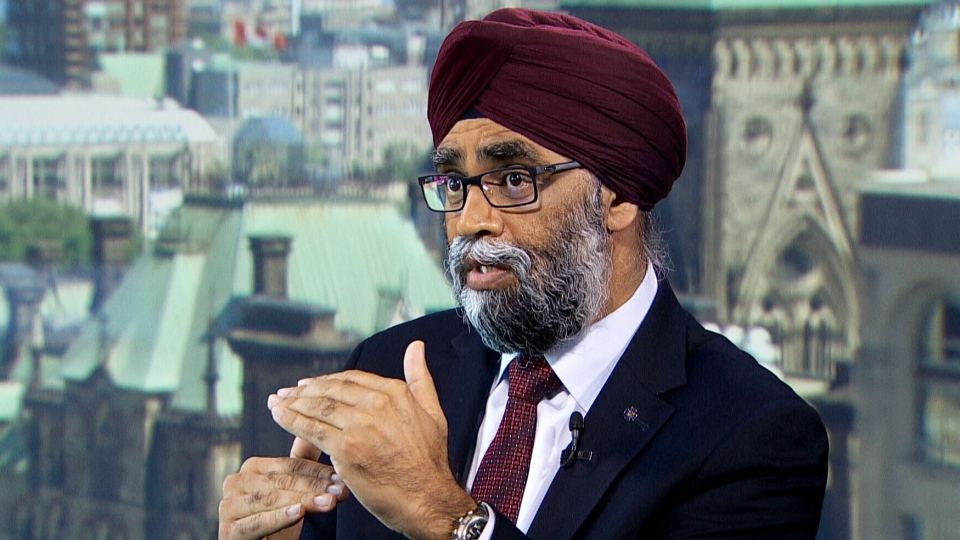
OTTAWA -- Canada is considering a NATO request to send police trainers to Afghanistan, three years after the military mission officially ended, Defence Minister Harjit Sajjan says.

The request came from the U.S. through NATO, and could involve either civilian police trainers like the RCMP, or military trainers working with Afghan police, a defence official added.

Sajjan says Canada is "looking at all aspects of support" for Afghanistan -- though he ruled out the country as a destination for Canadian peacekeepers since it's not a UN mission.
Defence Minister Harjit Sajjan speaks on CTV's Question Period. (CTV)
"We've actually had an ask, but it was for police trainers in Afghanistan," Sajjan said in an interview with Evan Solomon, host of CTV's Question Period.

"We are actually still committed to Afghanistan. We've provided the funding, whether it's for development" or salaries for security forces in the country, he said.

From 2014 to 2017, Canada committed $227 million in international development programs in Afghanistan, and $330 million from 2015 to 2018 in support for the Afghan National Security Forces, which include the Afghan National Army and the Afghan National Police.

Sajjan says Canada can't look at any country in isolation.

"This is what coalitions are for, multilateralism is for. I'm in constant discussions with my counterparts on all the various threats, whether it's at NATO or the counter-DAESH meetings," he said, using another name for the Islamic State.

"We will always look at the various requests, but the thing is when we have the discussions, it's not about just one nation ... stepping up and saying, 'I'll do this.' It's about working together."

Peacekeeping mission 'on the table'

Last August, Sajjan announced Canada would devote 600 troops and $450 million over three years to a peacekeeping mission. He later toured several African countries and said he would announce the mission by the end of the year, but six months into 2017 there is still no word on where it will be.

A mission somewhere in the world "is on the table. We're committed to peace support operations," Sajjan said, citing a change in leadership at the UN and the new president of the U.S. as reasons for the delay.

"I've had discussions with [the UN], things looked very good... It's not about just sending troops. How can we now look at the current environment and bring our unique skillset to the table?"

While Sajjan ruled out Afghanistan as a peacekeeping destination, Richard Fadden, a former top civil servant at the Department of National Defence and former national security adviser to the prime minister, says having shed blood and spent a great deal of money on the country, it would make sense to return.

"Afghanistan has deteriorated quite a bit over the last few years," he said.

"I think if we were going anywhere to make a contribution, broadly speaking, to peace in the world, Afghanistan would be a good place to go. There are not that many other places where we could make a difference that would not result in ... our being involved in a massive quagmire."

Retired Gen. Tom Lawson, a former chief of the defence staff, says he prefers Afghanistan to some of the African countries Canada could end up, like Mali or the Democratic Republic of Congo. Both would carry significant risks for Canadian Armed Forces personnel.

"If it keeps us out of other places, [like] in Africa, I'd be delighted as a former chief of defence," Lawson told Solomon.

"So Afghanistan is a place that Canadians have invested both money and blood. We continue to invest money there. If a return was in Canadian defence future, it would be to a familiar zone."

Over the 12-year mission, 158 Canadian troops were killed, as well as a diplomat, a journalist and two civilian contractors, according to a tally by The Canadian Press.

Tuesday, February 7, 2017

SoD Mattis Admits Soft-Spot for Canadian Troops

By: Alexander Panetta, The National Post 

WASHINGTON — A first meeting between Donald Trump’s defence secretary and his Canadian counterpart began well on Monday — so well that, within just a few seconds, there was already talk of kissing and hugging.

Newly sworn-in U.S. defence secretary James Mattis says he’s so grateful for Canadian soldiers in Afghanistan he could have smooched them on sight.

At a meeting at the Pentagon, the retired general — nicknamed “Mad Dog” — said there’s a reason his first phone call to a foreign counterpart was to Canada’s Defence Minister Harjit Sajjan. The U.S. and Canadian military have been close allies since the Second World War, he said, and he experienced that bond personally in Afghanistan.

He noted that his own unit in Kandahar was relieved by Canadian soldiers from Princess Patricia’s Canadian Light Infantry.

“They were a welcome sight,” Mattis said as the meeting with Sajjan began.

“There was, ‘Don’t Ask, Don’t Tell’ in those days,” he said, referring to the now-discarded U.S. policy on gays and lesbians in the military.

“(But) I was hugging and kissing every one of you guys coming off the plane.”

He said the lives lost in the Afghan conflict have created a permanent bond between the countries. He also applauded Canada’s humanitarian efforts: “Your pledge to do a lot of leadership, whether it be in humanitarian ops, in battle groups, in reassurance efforts, we’re proud as all get-out of you and your forces and what they’ve stood up and delivered.”

The message from Mattis was striking in its difference from that of his boss. At a separate event Monday, the president said he expects allies to start doing their fair share and spending more on their military.

Canada spends less on its military as a share of its economy than almost any member of NATO.

Sajjan was at the Pentagon for what was scheduled to be a 45-minute discussion on a broad range of topics including military co-operation both abroad and closer to home. Key questions were expected to include the ongoing commitment to NATO, defence spending levels, and peacekeeping operations.

I was hugging and kissing every one of you guys.

The Canadian government delayed a planned peacekeeping deployment to Africa following the U.S. election, saying it wanted to first discuss a variety of global issues with its closest ally.

Trump’s election has prompted uncertainty on several military fronts — he has suggested NATO is becoming obsolete, while at the same time demanding that NATO allies increase defence spending.

He repeated his complaints about NATO spending during a speech Monday at an air force base in Florida.

Trump said he supports NATO, but countries must pay their share.

“We only ask that all of the NATO members make their full and proper financial contributions to the NATO alliance, which many of them have not been doing,” he said.

Trump has also been more supportive than his predecessor of Russia, which has caused anxiety in Eastern Europe.

Trump has sowed uncertainty on several defence issues. He’s complained about the cost of the F-35, a staple of the U.S. fighter-jet program. Also, in his inauguration speech Trump heaped scorn on the U.S. habit of defending other countries.
Saul Loeb/AFP/Getty ImagesU.S. Secretary of Defense James Mattis and Canadian Minister of Defense Harjit Sajjan shake hands prior to a meeting at the Pentagon in Washington, DC, Feb, 6, 2017.
Mattis spent last weekend in Asia, reassuring traditional U.S. allies. During the campaign, the president questioned why the U.S. should spend money securing Japan and South Korea — he went as far as to suggest, at one point, that they should get their own nuclear weapons.

Trump later dialled that back. But he said he wants allies spending more on defence. That was also the policy of the previous Obama administration and the former president even made that request in Canada’s Parliament.

It’s unclear where that conversation goes now.

Canada is 23rd among 27 NATO countries in terms of spending as a share of GDP. Canada’s 2016 spending of 0.99 per cent of GDP was less than half the NATO guideline of two per cent, which only five NATO countries currently meet.

One Canadian-American military analyst said it’s important to watch what Mattis says, while remembering he’s not the boss: “(There’s) the caveat of: I don’t believe anything that Mattis says binds this administration,” said Steve Saideman of Carleton University.

“Mattis is in the outer circle — and has been bypassed on major issues.”

Tuesday, January 3, 2017

Canadian Hockey Boards Removed from KAF

By: Matthew Fisher, The National Post 

The iconic Canadian ball hockey rink at Kandahar Airfield, its boards adorned with faded Maple Leaf flags, has been dismantled.

A dozen Canadian embassy staff, including Ambassador Ken Neufeld and a few soldiers, played a final game of shinny last week on the concrete slab in the infield of the airfield’s boardwalk before U.S. army engineers helped take down the boards.

Image result for The faded boards from the Kandahar Airfield
The faded boards from the Kandahar Airfield hockey rink are headed to the Canadian War Museum in Ottawa and possibly the Hockey Hall of Fame in Toronto.
“I gotta say, it was a lot of fun,” Neufeld said. “But it was emotional, too.”

A Canadian soldier on his fourth tour in Afghanistan, who asked that his name not be published because of the sensitive nature of his current work, said that “to be part of the ceremony and bring those boards back, it felt like a healthy closing of a chapter.

“Strange to think we were playing hockey in the desert but there we were. It was a very positive experience. We sweated blood and tears for that place. It will always be part of me.”

The boards of the rink are to be flown to CFB Trenton to eventually be put on display at the Canadian War Museum in Ottawa. There have also been discussions about exhibiting some of the mementos at the Hockey Hall of Fame in Toronto.

At the peak of the Kandahar mission, the rink was home to a highly competitive ball hockey league comprising 24 teams. Two of them were from Slovakia, one was from the U.S. and the other 21 teams were from Canada.

The rink also hosted visits from such hockey stars as Jarome Iginla, Guy Lafleur and Tiger Williams as well as the Stanley Cup.

“I am not aware of a single Canadian soldier who did not stop at the rink when they passed through Kandahar on their way to and from the battlefield. It was a touchstone,” said Howard Coombs, a Royal Military College professor who visited Kandahar in 2004 and spent nearly a year there in 2010-11 as an adviser to the last rotation of troops in Task Force Afghanistan.

Canadians served in Afghanistan between 2001 and 2014. During the years in Kandahar, the ball hockey rink became a social focal point and a cathartic oasis for Canadian troops fighting in the Taliban heartland.

The rink was completed in late 2006, and was mostly the work of Canadian engineers volunteering days off or evenings to build it.

Kandahar was not the first place where Canadian soldiers fighting overseas have found time to indulge the national passion. Soldiers from the Princess Patricia’s Canadian Light Infantry and the Royal 22nd Regiment (the Van Doos) played on the frozen Imjin River during the Korean War. Before that Canadian troops played hockey in Europe during both world wars.

“The men and women who played hockey in Afghanistan represent the continuation of this tradition,” said Stephen Quick, director general of the Canadian War Museum. “The boards from the rink at the Kandahar Airfield will help tell that story.”

The Canadian troops and their gear were hauled out of Kandahar when the combat mission ended in July, 2011. Since then, the U.S. has sharply reduced the number of forces that it has in Afghanistan. The rink has not been used for hockey for some time. With a net set up at centre ice, it had been converted into a makeshift tennis court.

As well as repatriating the hockey boards from Kandahar, Ambassador Neufeld was in the city to meet the provincial governor and to check on Canadian-funded training for Afghan female police officers.

The Trudeau government pledged to spend $465 million in Afghanistan between 2017 and 2020. About $90 million of that money will go to Afghan security forces.

The Taliban has retaken much of the territory that it lost to NATO forces since Canadian combat forces left Afghanistan five years ago, but Kandahar remains relatively calm.

Monday, October 24, 2016

Airdrie Legion set to unveil 1st Light Armoured Vehicle Monument in Canada

By: Ryan Rumbolt, The Calgary Herald

Once a part of Canada’s military might, a light armoured vehicle is patiently waiting for its debut as a monument.

Part of the Light Armoured Vehicle (LAV) III Program, the decommissioned LAV is the first of its kind in Western Canada. The LAV was delivered to Airdrie’s Nosecreek Valley Museum on Oct. 19 and will serve as a memorial to veterans who served in Afghanistan.

A Canadian LAV (light armoured vehicle) arrives to escort a convoy at a forward operating base near Panjwaii, Afghanistan at sunrise on Nov.26, 2006. The Canadian Press has learned that Canada's foreign ministry is closely monitoring all of the country's military exports, but won't revisit the controversial decision to allow the sale of light armoured vehicles to Saudi Arabia. THE CANADIAN PRESS/Bill Graveland

0514 ed black
A Canadian LAV (light armoured vehicle) arrives to escort a convoy at a forward operating base near Panjwaii, Afghanistan at sunrise on Nov.26, 2006. The Canadian Press has learned that Canada's foreign ministry is closely monitoring all of the country's military exports, but won't revisit the controversial decision to allow the sale of light armoured vehicles to Saudi Arabia. THE CANADIAN PRESS/Bill Graveland 
The LAV III Program recognizes the service and sacrifice of the Canadian Armed Forces in Afghanistan by providing a full-sized, demilitarized replica of the LAV III to qualified, deserving communities throughout Canada.

A veteran of peacekeeping missions in Egypt and Cyprus, retired Canadian Forces Sgt. Bob McNevin led the Airdrie LAV committee. McNevin said it is time for Canadians to start honouring the younger generation of veterans and their families, and the LAV monument is a way for the older generation to pass the torch of remembrance to veterans of more recent conflicts, such as Afghanistan and Bosnia.

“It’s these young men and women — that’s what it’s all about,” McNevin said. “I did not realize how many veterans we have in the city of Airdrie.”


Retired British Armed Forces Sgt. Bill Drummond is also with the Airdrie LAV Committee, and said many people only associate the Legion with veterans of the First and Second World Wars, and echoed McNevin’s wish to honour younger veterans.

“I think it’s a fitting tribute for the young fellas and women who put their lives on the line for world peace,” Drummond said. “To them, it means that they are being recognized — especially someone who has any kind of PTSD problems.”

The LAV III is a versatile fighting vehicle, able to reach speeds of more than 100 km/h. Drummond said Canadians were “seen as the envy of all of the United Nations troops” because the LAV is “so adaptable.”

“They were used as ambulances, they were used as mobile offices, they were used for taking troops out to advanced outposts,” Drummond said. “And they were taken there in relative safety.”

Drummond said the project to bring the LAV to Airdrie was estimated to cost around $70,000, butlocal businesses took the brunt of the financial load by donating money, transporting the LAV from Ontario and even pouring the concrete pad for the monument.

McNevin said he was stunned to see so many members of the community show their support for the LAV project by donating time, money and supplies to bring the monument to Airdrie.

“I want (veterans and their families) to see what we’ve done for them as a community,” McNevin said. “I’ve been involved in a lot of things and this is the largest rally I’ve ever seen of the community coming together.”

Currently sitting under camouflage netting, the LAV III monument will be unveiled during a ceremony Nov. 6 at the Nosecreek Valley Museum at 1 p.m.

Wednesday, June 22, 2016

Afghan service puts Defence Minister Sajjan in conflict of interest on detainees, say lawyers

By: David Pugliese, Defence Watch 

Defence Minister Harjit Sajjan’s work in the Canadian Forces, which included setting the stage for the killing or capture of some 1,500 Afghan insurgents, is enough to disqualify him from making the decision not to conduct a public inquiry into alleged abuses of detainees, say those pushing for such an investigation.

Sajjan, who could have been a potential witness for any Afghan inquiry, has dismissed outright the need for such an investigation even as new abuse allegations emerge.

Last week, Sajjan responded to an e-petition calling for the inquiry by stating the Canadian government ensured detainees were humanely treated, transferred or released in accordance with international law. That is a reversal of the Liberal’s demands, when in opposition, for a public inquiry.

But those advocating for the inquiry say Sajjan’s three tours in Afghanistan as a member of the Canadian Forces puts him in a conflict of interest.

“Does the fact that he was a senior officer in Kandahar at the time disqualify him from having oversight on this issue?” asked human rights lawyer Paul Champ. “Frankly, I think it does.

“He had relevant operational or on-the- scene information that could well be of interest to a commission of inquiry,” Champ added.

Retired Brig.-Gen. David Fraser has said Sajjan’s work as an intelligence officer and his activities in Afghanistan helped lay the foundation for a military operation that led to the death or capture of more than 1,500 insurgents. Sajjan was also later assigned to U.S. military forces.

The detainee issue has emerged on the Canadian political scene once again. Some Canadian military police officers say Afghan detainees were abused in their cells in Kandahar during surprise raids by Canadian guards in 2010 and 2011. A Defence Department document obtained by the Citizen acknowledges problems with the raids, noting the police who conducted the missions operated without oversight and lacked guidance.

In addition, military police officers have come forward to raise concerns that many Afghans taken prisoner by Canadian troops were innocent farmers and not members of the Taliban.

Such concerns were also highlighted back in 2007 when the head of Afghanistan’s intelligence agency also warned Canadian troops were grabbing innocent Afghans.

Canadian military officers have privately complained the detention of innocent Afghans may have helped push them to support the Taliban.

Sajjan, however, has said that in his three tours of Afghanistan he was never involved in any situations involving detainees.

“I wasn’t involved in this,” he explained last week. “I was using my experience as a police officer, engaging with the community, and one thing I can say is that the Canadian Armed Forces personnel, (with) the training that they have, abide by the Geneva Conventions and everybody who I served with, served with absolute credibility and honour.”

But some Canadian military police have disputed such statements.

Craig Scott, a law professor and former NDP MP who initiated the e-petition rejected by the minister, said Sajjan had dealings with Afghan officials, some of whom were later accused of torturing people. “(Sajjan) would be an absolute key witness” at an inquiry, Scott said.

Scott said because the treatment of detainees was never properly investigated by the Conservative government, the issue continues to be raised by some in the military concerned about incidents they saw in Afghanistan.

“It’s a festering sore that was never dealt with properly,” he added.

Tuesday, June 21, 2016

CAF Military Police Lacked Oversight in Afghan Abuse Claims

By; David Pugliese, The Ottawa Citizen 

CANADIAN MILITARY POLICE LACKED OVERSIGHT: DOCUMENTS

A human rights lawyer previously involved in the Afghan detainee case says newly released Defence Department documents obtained by the Citizen’s David Pugliese show the Canadian military is acknowledging something went seriously wrong in the Kandahar detention centre.

Canadian military police accused of terrorizing Afghan prisoners in their cells at Kandahar Airfield operated without oversight and lacked guidance, according to newly released Defence Department documents obtained by the Citizen.

The documents shed new light on allegations made last year by some military police officers who say Afghan detainees were abused in their cells in Kandahar during surprise raids by guards in 2010 and 2011.

Canaian soldiers lead Afghan detainees from a residential compound in southwest Kabul following a raid in 2004.
Canadian soldiers lead Afghan detainees from a residential compound in southwest Kabul following a raid in 2004. (CANADIAN ARMED FORCES FILE PHOTO)

The documents acknowledge the raids happened and suggest the situation was out of control.
Paul Champ, a human rights lawyer previously involved in the Afghan detainee issue, said the documents show the Canadian military is acknowledging something went seriously wrong in the Kandahar detention centre.

“I’m surprised the military didn’t take their investigation further and levy at least charges of misconduct,” said Champ, an Ottawa lawyer.

“Even if the actions didn’t meet some level of criminal threshold, although I would argue they do, it certainly would breach a code of conduct if these police officers weren’t properly trained or provided with oversight.”

Champ said there was no reason for military police to go into the cells on what they claimed was a training mission.

“It seems clear the purpose was to instil fear, to cause terror in these prisoners,” Champ said. “In my view that is a breach of humanitarian law.”

The issue of how Canadian military personnel treated Afghan detainees recently re-emerged on the political scene. Last week the Liberals rejected a request for a public inquiry even though they supported such an investigation while in opposition.

Canadian military police officers have also recently come forward to raise concerns that many Afghans taken prisoner by Canadian troops were innocent farmers or workers and not members of the Taliban or al-Qaida.

Last year, La Presse newspaper reported that Canadian military police conducted the surprise raids on detainees in their cells, roughing up prisoners in the process. The aim was to create a climate of high tension, which in turn could prompt detainees to provide information.

But the tactics terrorized the prisoners so much that some urinated or defecated during the raids, La Press reported. The Conservative government responded to the article by announcing that the Canadian Forces National Investigation Service had looked into the matter, but concluded no charges should be laid against their fellow police officers.

But behind the scenes, the La Presse article sent staff at National Defence headquarters in Ottawa scrambling, according to documents obtained by the Citizen under the Access to Information law.

Military police debated whether they should provide a copy of the 200-page investigation about the cell raids to the Conservative government. Information prepared for the Conservatives contained further details about how military police conducted themselves during such operations, which were supposed to provide training for officers.

“The investigation revealed that participants in the dynamic entry training lacked guidance and oversight required to carry out the work, and some had expressed frustration with the situation,” the Defence documents noted.

But military police later recommended that information be removed from the material sent to the Conservatives and in the Commons, James Bezan, parliamentary secretary of the Minister of Defence, instead recited the lines that the alleged actions were investigated and did not warrant any charges.

In November 2015, the Military Police Complaints Commission or MPCC launched an investigation into the incident. That decision was made after a complaint from an anonymous military police officer in which it was alleged that police conducted the exercises to terrorize detainees and in one instance entered the cells and manhandled prisoners. The officer also complained about the investigation into the incident and the fact that no charges were laid or court martial convened.

The MPCC interviewed a number of individuals aware of the raids and confirmed that several detainees were so scared they defecated and urinated on the spot during one such foray into the cells.

A day after launching its investigation, the complaints commission requested the documents relating to the police probe. But the Canadian Forces delayed release of that material for seven months.

It was finally received on June 10, MPCC spokesman Michael Tansey confirmed Monday.

“The MPCC has just received the documents and other material received and is reviewing them to determine if additional materials are required,” he said.

Thursday, June 16, 2016

NDP renews call for inquiry into Afghan detainee abuse

By: Amanda ConnollyiPolitics 

The NDP repeated calls Wednesday for a full public inquiry into the Afghan detainee abuse scandal amid fresh allegations by former military police officers who served in Afghanistan in a letter to La Presse.

Canadian soldiers with the NATO-led International Security Assistance Force (ISAF) walk during a patrol in Panjwayi district 30 km in the west of Kandahar province on March 28, 2008.
“We’ve called for a public inquiry for a number of years and the Liberals supported that call when they were in opposition,” said NDP defence critic Randall Garrison. “When we asked the minister of defence on Monday, there was no response so we’re repeating the call today for a full public inquiry.”

La Presse posted the letter online Wednesday morning (it can be read here) alleging that almost half of the Afghans captured and detained by Canadian soldiers had nothing to do with the Taliban.

It also says that most of them were released for lack of evidence after spending an average of two months in detention.

The former Conservative government had said the prisoners were held by Canadians for between 48 and 96 hours.

“What we have here is a potential stain on Canada’s international reputation through possible violations of international law, and also a stain on the reputations of all those Canadians who went there and served,” Garrison said.

Garrison, along with NDP foreign affairs critic Helene Laverdiere, called for an inquiry focused on whether there was a clear policy created to deal with the transfer of detainees after the lack of one was identified as a problem, and how the Afghans held in Canadian custody were treated.

Conservative defence critic James Bezan said Wednesday he doesn’t think there is evidence to suggest the need for an inquiry, calling the letter in La Presse “one person’s opinion.”

“It all comes back that our troops have conducted themselves honourably,” said Bezan. “I don’t believe that the evidence is there. As you know, there was a special parliamentary committee that went through all the documentation and again came up that there was no reason to pursue any further inquiry.”

The Liberals and NDP both called for an inquiry while in opposition during the Conservatives’ minority mandate in 2009.

The government formed an all-party committee to go through documents on the issue but refused to release unredacted records to the committee.

The government was ultimately voted in contempt of Parliament by the opposition parties for their refusal and Prime Minister Stephen Harper prorogued Parliament before disbanding the committee after their 2011 majority win.

Friday, May 13, 2016

Sajjan: The Warrior Minister - Legion Magazine Interview

Interview published in the Legion Magazine, by Adam Day 


Harjit Sajjan on the difference between the Taliban and Islamic State, why Russia is not behaving like a democratic nation, what we may have done wrong in Afghanistan, and a candid answer concerning hisleast-favourite thing about being a politician

Canada’s war against the Islamic State has switched into a higher gear. Hundreds of our special operations forces are flooding into Iraq, backed by helicopters, deepened intelligence capabilities and deployments of more than 100 soldiers to neighbouring Lebanon and Jordan. And in Iraq, at least, the likelihood is that the troops will be in combat, since they are going in on the same advise-and-assist mission that saw Canada’s troops placed in harm’s way last year.

But Harjit Sajjan, Canada’s minister of national defence, doesn’t want to call it a war. Not yet, anyway. And don’t call it a combat mission either, even though there will be combat.

Despite the semantic evasions, Sajjan takes up his new post with a reputation for solving tough problems. He is not just a former lieutenant-colonel, an Afghanistan combat veteran and a former gang-unit detective. He is also reportedly an all-star thinker whose analysis of enemy networks in Kandahar Province earned him repeated tours and accolades. And it brought him to his current position.

Now, Sajjan’s training as an intelligence officer is being tested on a bigger stage. The world is complex, he says, and we can’t hope to stop threats unless we understand where they come from. Sajjan is always thinking about the big picture. As such, he sometimes sounds like he may suffer from the paralysis of a man who understands too much—aware of the situation’s complexity, of underlying causes and third-order consequences and the relentless nature of a negative feedback loop. The question then becomes one of where to act, when, and why.

To get a better sense of the new minister and his objectives, Legion Magazine conducted a brief, lighting-round-style phone interview with him as he sped toward the airport in Ottawa, slightly behind schedule. While he is certainly more forthcoming than many recent ministers, Sajjan has already picked up the politician’s game of dodging a question as if it’s a sport.
The Honourable Harjit S. Sajjan, Minister of National Defence, presents medals to the members of CANSOF Task Force during a visit to Iraq on December 21, 2015.
PHOTO: SGT YANNICK BÉDARD, CANADIAN FORCES COMBAT CAMERA. IS01-2015-0007-040
Legion Magazine: Please give your opinion, and remember you have one minute to answer this question: did we win the war in Afghanistan?

Sajjan: It was not about winning or losing. It was about making sure we brought the Afghan National Security Forces and the government structure to a point where they were taking greater responsibility. You have to leave at some point; otherwise there is no long-term solution for it. And I think that was accomplished.

LM: Can you compare the Taliban to the Islamic State? Which one was or is the greater threat to Canadian national security?

Sajjan: ISIL is definitely a greater threat to Canadian security. The Taliban stayed within the borders. You didn’t have a lot of conversation regarding what they wanted to do outside their borders. The brutality is literally the same, but one thing is that ISIL uses social media to get brutality out. The Taliban were just as brutal, although only some of us who were in certain areas knew and witnessed some of that.

LM: Here’s something harder to understand: we responded to the Taliban with military force, and indeed, occupation of their country. But we respond to ISIL with more of a hands-off approach, with less combat. So can you describe why we respond to the greater threat with less force?

Sajjan:
Well, it’s not about us bringing capabilities and force, it’s about the totality of what you’re trying to do. If you look at how long the United States was at war in Iraq fighting the insurgency, and in the end, some Sunni tribes came onto their side and things were okay and they left. And what happened all of a sudden was that ISIL, a small radical organization that came out of Syria, became so big. This fight has to be done by the local regime. Yes, we can go in and fight and potentially get to a stalemate and even win. But it’s not about just defeating ISIL, it’s about allowing the Iraqi forces to defeat ISIL so we can have more of a long-term solution. And that’s far more important, because at the end of the day, we only have so much force, even with the U.S. and the European Union working together.

“As you fight, if you do not deal with the
recruitment, you will just keep fighting.”

LM: It seems that Sunni extremism—an ideology that gave rise to both al-Qaida and ISIL—is the real problem here. How do we deal with Sunni extremism?

Sajjan: I think any extremism needs to be dealt with. And in this particular region, ISIL—a small but very radical group—is at the forefront. Any group gets its recruitment based on its population. Even though we’re fighting, what we’re really doing is buying time to separate the population from the radical group and once you do that you end up fighting a smaller organization. And that’s the critical piece that has to be done in Iraq.

LM: So your proposal to defeat Sunni extremism is to separate the extremists from the population?

Sajjan: Well, in any counter-insurgency strategy, you have to do that. As you fight, if you do not deal with the recruitment, you will just keep fighting. So the base that they have to recruit from is absolutely critical to getting the long-term success that we’re looking to achieve.
“Dialogue is the absolute key to
understanding Russia’s intentions.”

LM:
What do you believe is the greater threat: ISIL or Russia?

Sajjan: You can’t separate them. You have to look at the threats in a different manner. With Russia, you have far greater regional and strategic issues. And with all the aggression they are showing around the world, the hope is that they’ll get back to a place of dialogue and be partners in the dialogue, which is better for their county. However, in ISIL you have a group you can’t negotiate with and so you have to deal with them in this [forceful] manner. So we need to be able to isolate that group and ensure they don’t take advantage of the political issues that have been created to push or pull the greater population. Once we isolate this radical organization in order to be able to destroy it, that’s going to be critical. But you can’t really look at which one is the greater threat. It’s like looking at apples and oranges, really.

LM: In your read, what is animating Vladimir Putin’s aggression? What is animating Russian aggression?

Sajjan: That’s pretty difficult to say for me, looking at it from the outside, like any other Canadian, having only recently gotten into this. It’s important to know what the person’s mindset is and what experience they have. When you’re leading a country like Russia, it cannot be done in an irresponsible manner, where you just invade other countries, regardless of what issues you have. Democratic nations deal with difficult issues. You come to the table and discuss them.
Defence Minister, Harjit S. Sajjan speaks with Antoni Macierewicz, his counterpart from Poland during the annual Defence Ministerial Meeting at NATO Headquarters in Brussels, Belgium on February 10, 2016.
PHOTO: SGT YANNICK BÉDARD, CANADIAN FORCES COMBAT CAMERA. IS01-2016-0001-010
LM: We are living in a unique historical period. We’ve seen international borders being rewritten, which doesn’t happen all that often. Crimea and Iraq. So, related to Russia’s aggression, NATO expansion into Eastern Europe does seem to be a bit of a trigger. Now we want to get Ukraine into NATO. How does this expansion serve our interests?

Sajjan:
I’ll be going to my first NATO meeting in a week and half or so, and these are a lot of the important discussions that we will have. It’s important to have the right balance, but I think dialogue is the absolute key to understanding Russia’s intentions. But NATO has a really important role and has had for a really long time. We have to stay unified. We’re going to stay steadfast with our partners, with Ukraine and some of the other Eastern European countries, but the opportunity for dialogue will always be there.

LM: Your career as a soldier is over. What was its defining moment?

Sajjan: In Afghanistan in 2006, when an infantry section allowed me to do the work I did, it really opened my eyes. Just because you have rank doesn’t mean you have all the answers. Some of the best answers and solutions come from unlikely sources. And I don’t know how many times that golden nugget of a clue we were looking for came from troops on the ground. I can look back and say, wow, our troops really are second to none. The thought processes they can bring to the table, the heart that they have, and the fight that they bring. They can easily turn around from doing humanitarian work in a village to fighting within the hour. Being able to switch on a dime like that is pretty hard to achieve. Just being able to work with people like that was the highlight.

LM: What is something you don’t like about being a politician?

Sajjan: I would say that the discussions that sometimes happen in the House take away from the real work that’s being done for Canadians. In Ottawa now it’s like being in a bubble and fighting to stay out of that bubble so you keep connected with Canadians and the real issues and what’s going on. In the Canadian Armed Forces, we do have a perspective on politicians, but at the same time we know that a lot of people who’ve gotten into politics, especially the colleagues I know, really do want to make a difference. When we serve, we all know that if you think you can make a difference and you have the capability and the experience that you should seek and accept responsibility. I felt that my experience was needed and I didn’t like how certain things were being done, so I stopped complaining about it because I felt I had the capability to do something and so I did.

Wednesday, April 13, 2016

Senior CAF officer being investigated for 2009 helicopter crash in Afghanistan

CBC Exclusive Report: By Brett Ruskin

1 British and 2 Canadian soldiers died in flaming wreckage

At least one senior Royal Canadian Air Force officer is under investigation by the military police unit that probes major crimes for alleged negligence relating to a deadly helicopter crash six years ago in Afghanistan.

CBC News has confirmed that the Canadian Forces National Investigation Service is looking into allegations of negligence related to an incident on July 6, 2009, when a CH-146 Griffon crashed with six people on board.

All survived the impact, but three soldiers — including two Canadians, Master Cpl. Patrice Audet, 38, and Cpl. Martin Joannette, 25, and British Capt. Ben Babington-Browne, 27 — died after being unable to escape the flaming wreckage.

"This investigation is ongoing and no further information can be provided at this time," a military police spokesperson said in an email.
Heavily redacted report

Initially the crash was blamed on "pilot technique" and sandy ground conditions.

Those conclusions were based on a heavily redacted board of inquiry report released two years after the crash.

CBC News has since obtained a less-redacted version, along with the flight safety investigation report.

According to both reports, there are at least two underlying issues — the flight crew had too little training and the helicopter carried too much weight.


The crash involved a CH-146 Griffon helicopter. (Canadian Forces)

On July 6, 2009, the Griffon took off from a sandy area. The down force of the spinning blades created a "dust ball," which reduced the pilot's visibility.

Dust ball training is mandatory for all flight crews, who usually did exercises before and during their deployment to Afghanistan.

However, "the vast majority of the [Canada Helicopter Force, Afghanistan] aircrew only received the theory portion of the dust ball training," the board of inquiry report said.

Some pilots only got to watch the manoeuvre, not attempt it.

In this specific case, prior to his deployment "the [pilot] only observed a demonstration of the landing technique rather than practised dust ball landings himself," the flight safety report said. "Additionally, the [pilot] did not observe or complete any dust ball takeoff techniques."

Put simply, the pilot blamed for crashing the helicopter was allegedly sent to Afghanistan lacking the training to take off and land in sand.
Griffon weight limits modified

The original weight limit for the Griffon helicopter in Afghanistan was between 10,300 and 10,700 pounds.

But senior officials thought the weight cap would limit operations.

The weight cap "would significantly impair the ability of the unit to fulfil the entire spectrum of operations in support of the Joint Task Force," the board of inquiry report heard from military commanders.

So they changed the flight manual.

"The modified operating limitations in Section 1 of the flight manual restricted the Griffon to between 11,750 and 11,900 lb.," the board of inquiry report said.
Weight limit 'unknowingly' tested

Helicopter payload calculations are complex.

If a helicopter is close to the ground, it needs less power. The air its rotor forces downward bounces off the ground and creates a type of cushion.

To rise above that cushion and maintain altitude, more power is needed. A helicopter loaded to its maximum weight might be able to take off, but would have difficulty climbing above a certain height.

These two height zones are called "in ground effect" or "out of ground effect."

That height as well as the weight and power calculations change with air temperature and altitude above sea level.

Investigators compared the Griffon's payload to all possible weight limits.

The board of inquiry report found it exceeded those limits "by between 1,020 lb. to 1,320 lb." The flight safety report found it may have been as much as 1,720 lb. overweight.

"The Griffon flight [crew] was unknowingly flight testing the performance information found in the flight manual," the board of inquiry report found.

"The crew attempted to conduct a takeoff not knowing that the aircraft had an insufficient margin to remain within engine limitations," the flight safety found.
New allegations prompt investigation

These report observations went largely unnoticed for years.

But recently, a former Royal Canadian Air Force flight instructor began raising concerns about the incident.

"As a former helicopter pilot, I was stunned by what I read," said retired captain Anthony Snieder.

Snieder said he began looking into the crash after noticing safety violations in Moose Jaw in 2012. He was stationed at 15 Wing Moose Jaw teaching air force pilots.

He looked back at previous incidents and found issues with the Griffon crash.
Retired Capt. Anthony Snieder (Facebook) in a CT-114 Tutor
"We have limitations for how to operate the aircraft, and they were intentionally violating aircraft limitations," he said.

As a result of voicing his concerns, Snieder said, he was reassigned to an office position and publicly discredited. He filed a harassment claim with the military, but it was dismissed. At that time Snieder asked to be released from the military.

Snieder has since applied to Federal Court for a judicial review of the dismissal of his harassment claim.

Amid his court battle, Snieder contacted the military police.

"If you do any act that could likely cause the destruction of an aircraft, it's against the law and you go to jail for it," Snieder said.

The Canadian Forces National Investigation Service is a unit with the military police that independently investigates serious and sensitive matters. Their jurisdiction covers Department of National Defence (DND) property, DND employees and Canadian Forces personnel serving around the world.

An official tells CBC News that "in all cases, investigations are conducted to determine the facts, analyze the evidence, and if warranted, lay appropriate charges."

----

Brett Ruskin is a reporter and video-journalist covering everything from local breaking news to national issues. He's based in Halifax.

Wednesday, February 10, 2016

Canada in Iraq: Trainers should build on Afghanistan Experience

Written by: Matthew Fisher, National Post
Published the Monday February 9, 2016 Ottawa Citizen - NP Section 

IN AFGHANISTAN, MOST OF THEM HAD NEVER BEEN TO SCHOOL SO EDUCATING THEM WAS A CHALLENGE. IF THEY CANNOT UNDERSTAND BASIC MATH, IT IS GOING TO BE AN EXTREMELY LONG TIME FOR THEM TO UNDERSTAND THEIR GUNS. — RETIRED COL. GREGORY BURT

A soldier who ran Ottawa’s training mission for Afghan soldiers and police battling the Taliban believes the 500 Canadian Forces trainers bound for the Middle East to work with Iraqi forces fighting ISIL should mentor them on the battlefield as well as in garrison, as Canadian troops did in Kandahar in 2006-11.
A CAF Member instructs Afghan National
Guard how to load a riffle
That candid assessment by Col. Gregory Burt, who retired last summer after more than 30 years with the Royal 22nd Regiment, the Van Doos, comes as Prime Minister Justin Trudeau announced Monday that Canadians being sent to instruct Iraqi forces would not be involved in combat.

“Motivating them in a secure training base where someone is not firing at you is a lot different than when the enemy has a vote,” said Burt, who took me several times to see his troops mentoring Afghan forces in dicey situations on the battlefield.

“When the enemy is going to the other flank, you’ve got to be able to say, ‘You don’t want to go there’ … Our stellar actions under fire were a motivating factor, Afghans saw us out there when the s--- was going down everywhere. It was a demonstration that we were with them.”

When they accompanied Afghan troops into battle, the Canadian trainers also directed artillery fire, called in airstrikes and arranged for helicopters to get the wounded to hospital quickly.

However, Burt says no trainers were with him when he saw action for the first time and everything he had learned about combat came from training behind the lines. The career infantryman is gung-ho about the new training assignment.

“The reason we can do well on every kind of mission is that I don’t think any other army trains as well as we do,” said the 52-year-old Newfoundlander. “It is in our doctrine and the way we give our junior ranks independence. Our maturity is above and beyond that of others.”

Canadian forces spent five years helping train in Afghanistan. The situation is different in Iraq, where they will start with “a blank sheet.”

It sounds prosaic, but a key part of the process will be to establish how good the Iraqi students are at mathematics, says Burt, who adds he has not been briefed on planning for the mission.

“To do the nuts and bolts to train an officer to take a platoon down range, you have to first establish a baseline about where they are in their training and the level of their education,” he said. “In Afghanistan, most of them had never been to school so educating them was a challenge.

“If they cannot understand basic math, it is going to be an extremely long time for them to understand their guns. Even to blow up a mine requires (detonation) cords and there are equations that go with that in order to be able to get safely to cover. Anything technical — and that includes the logistics of water and food for soldiers in the fight — requires math.”

He warns there will be no quick fixes for the Iraqi security forces.

“It took us hours in garrison to teach the Afghans skills before we crossed the line of fire with them. It requires patience.”

The rule of thumb is that it takes 40 to 50 weeks to train new recruits to become infantry officers, and 2½ to three years to get those officers on to the battlefield.

OP ATTENTION - Canada's Training Mission in Kabul, Afghanistan. CAF members training Afghan National Guard Members on the firing range. (Photo: OP ATTENTION - DND)
But because of the urgent need to field troops quickly in Afghanistan, the timelines were much shorter. The same is likely to be the case in the fight against the Islamic State of Iraq and the Levant.

Among the top priorities, Burt says, will be to quickly establish a close rapport with the Arab-speaking interpreters, and cultural and linguistic advisers who will provide the vital link between the Canadians and their Iraqi students.

“I guess they will be creating a mini-Gagetown,” Burt said, referring to the army’s combat schools in New Brunswick.

“There will be firing ranges, basic mine awareness, how to conduct road sweeps (for improvised explosive devices), how to issue basic orders and call in their own fire support, map reading skills for leadership, manoeuvre and counter-manoeuvre, first aid, training for medics, arranging medevacs for the injured, and teaching how to establish headquarters command and control.

“There will be teams to coach brigade-level intelligence in how to work and to prepare reports, and to give operations officers a common understanding of how coalition forces work.”

Teaching such skills would be even more challenging if the Iraqis’ morale was low or if most of the troops were conscripts.

Burt says that training Afghan forces was the highlight of his career, which included deployments to Somalia, the Balkans and Germany during the Cold War. While he was envious of the challenge facing those receiving orders to deploy to the Middle East, “others now carry the flame and they will succeed.”

Wednesday, December 2, 2015

Ottawa to Track Veteran Suicides

Ever since the Globe and Mail investigation; The Unremembered which conclusively showed that 54 CAF members committed suicide following deployments to Afghanistan, nearly 1/3 of all combat related deaths within Afghanistan - there has been a greater call for Veterans Affairs to take a closer look at Veterans and current serving CAF members following deployments.

The Globe and Mail released today that Ottawa will now regularly track veteran suicides.

Here is the article written by RENATA D’ALIESIO

Veterans Affairs is taking steps to solve a crucial statistical gap by planning to report on suicides of former military members annually starting in late 2017 – a move that will disclose, for the first time, how many vets are taking their lives each year in Canada.

While the coming change is taking too long for some veterans advocates, it will mark a milestone when implemented: Suicides of released military members have never been regularly tracked in Canada, even after intense combat missions, such as the Second World War and Korea.


INVESTIGATION
The Unremembered

158 Canadian soldiers died in the Afghanistan mission. But the losses did not end there. A Globe and Mail investigation reveals a disturbing number the military has kept secret: that at least 54 soldiers and vets killed themselves after they returned from war


In a statement Tuesday, Veterans Affairs Minister Kent Hehr said that “better tracking and reporting on suicides will help inform our suicide prevention actions.” He added that the Canadian Forces and Veterans Affairs must continue to address the stigma of mental health and encourage those in need to seek treatment.

“Even one soldier, sailor, airmen or women suffering from the invisible wounds of a mental health injury or committing suicide, is one too many,” Mr. Hehr said.

The lack of monitoring was one of several failings highlighted in a Globe and Mail investigation of suicides of soldiers who died after serving in the 13-year Afghanistan war. Through an Access to Information request to National Defence and poring over more than a decade’s worth of death notices, The Globe found that at least 48 active-duty soldiers and six veterans had taken their lives after returning from the Afghanistan operation.

The Canadian Forces released an updated number soon after The Globe’s investigation was published in late October, raising the suicide count to at least 59 military members and veterans – more than one-third of the number of soldiers who died in the war. There were 158 Canadian military deaths in theatre during the NATO-led combat operation that began in 2001 and ended last year.

Since The Globe’s series of stories, Prime Minister Justin Trudeau has instructed the ministers of Veterans Affairs and National Defence to make a new suicide-prevention strategy a priority. Defence Minister Harjit Sajjan, a veteran of the Afghanistan war, has directed the Chief of the Defence Staff, General Jonathan Vance, to examine the military’s mental-health services and efforts to reduce suicides.

The Globe’s series also drew attention to the fact that soldiers who died by suicide after returning from Afghanistan are not recognized in the same way as those who perished in the mission, even when their suicides were deemed attributable to military service. On Remembrance Day, Mr. Hehr, who is also associate minister of national defence, told The Globe he wants to ensure these soldiers and vets are commemorated.


The minister is meeting with representatives of about 30 stakeholder groups in Ottawa on Wednesday. The groups have been asked to provide him with feedback on priorities outlined in Mr. Trudeau’s mandate letter.

Gen. Vance applauded the department’s plans to improve the monitoring of former military members. In a statement, he said: “I remain committed to ensuring the well-being of all members of the Canadian Armed Forces, whether they are currently serving or veterans.”

Veterans advocates have long vented frustration at Canada’s lack of suicide tracking of former soldiers. The Canadian Forces keeps tabs on the number of active-duty military members who kill themselves, although its data on reservists are incomplete. A recent report released by the military’s surgeon-general revealed that suicides have increased in the army in recent years and the impact of overseas deployment may be emerging as a risk factor.

Canada’s only comprehensive look at veterans’ suicides showed that former members make up the lion’s share of military suicides in Canada. The Canadian Forces Cancer and Mortality Study, released in 2011, was done in partnership with Statistics Canada, National Defence and Veterans Affairs. It revealed that 78 per cent of 934 military suicides documented from 1972 to the end of 2006 involved vets. Male veterans were 1.5 times more likely to die by suicide than Canadian men of the same age – an increased risk that translated into 231 more vet deaths than expected.

David Pedlar, director of research for Veterans Affairs, said the department will be watching to see if vet suicides remain elevated. Officially known as the Veteran Suicide Mortality Study, the examination will involve linking National Defence data – which includes whether a member was released from the military – with Statistics Canada’s database of deaths from all provinces and territories. (Names of military members will be removed after the data are linked.)

Dr. Pedlar, who is leading the project that began late last year, said the methodology is still being ironed out. At the moment, it’s unclear how far back the first annual suicide report will go. Initial analysis will not include deployment history, Dr. Pedlar said, but both vets who were clients of Veterans Affairs and those who were not will be captured in the study.

“Right now the focus is on being able to get a high-quality suicide number and rate for release to Canadians on an annual basis,” Dr. Pedlar said. The study, he added, will give “us trends over time, which is something we don’t have right now. … That will be important information for us.”

The study has taken a lot of time to put together because it involves two departments and a federal agency, Dr. Pedlar said. Data quality has been an issue, too. The 2011 study that showed an increased suicide risk among veterans relied on National Defence human-resources information that did not accurately capture deployment history, said Elizabeth Rolland-Harris, a senior epidemiologist with the military’s directorate of force health protection.

“It was clear that we needed to find better data,” she said in an interview at a military health-research conference in Quebec City last week.

Dr. Rolland-Harris is leading the second run of the Canadian Forces Cancer and Mortality Study, which will produce a separate report from the veteran suicide study. She said the new examination will use member pay data, which is more reliable, and include those who enrolled in the military between January, 1976, and mid-2015.

The pay data will allow researchers to look at deployment and occupational history and to include Class C reservists who served full-time at some point during the nearly 40-year period. Class C designations are applied when reservists deploy to missions such as Afghanistan. Reservists were excluded in the 2011 study.

Initial results from the new cancer and mortality study are expected in 2017. Dr. Rolland-Harris said the examination will be one of the most comprehensive military suicide studies ever done in the world.

Still, former veterans ombudsman Pat Stogran is frustrated that the public will have to wait another two years to get a clearer picture on how many vets are taking their lives annually. He believes regular tracking of vet suicides could already be happening, if there had been a will to do so.

“This is a demographic that the federal government has complete control over,” said Mr. Stogran, a retired colonel. “We got to start demanding transparency and accountability and value for money.”

Follow Renata D’Aliesio on Twitter: @renatadaliesio 

(The Above was Written by RENATA D’ALIESIO, of The Globe and Mail) 

Wednesday, May 13, 2015

Richmond Landing to house two new Military Memorial Monuments

With Canada's 150th Anniversary just around the corner, the military and public works announced late yesterday that they plan to add two new memorials to the "Memorial Walk" in Ottawa that begins in Major Hill's Park, and heads down Wellington Ave. to the War Museum at Lebreton Flats.

The site of the new memorials will be Richmond Landing, located right behind the Library and Archives Canada building. The site already houses the Royal Canadian Navy Monument.

A design competition for the two new memorials will be announced shortly, as the government wants both to be in place for the celebration of Canada's 150th Anniversary in 2017.

One memorial will be Canada's Victoria Cross memorial, and will honour the 99 Canadians who have been awarded the highest military honour throughout Canada's history.

The other memorial will be to Canada's Mission in Afghanistan and will honour both the Civilian and Military personnel who conducted the fourteen year long mission in Afghanistan between 2001-2014. Other details have not been released yet.

Wednesday, February 18, 2015

CAF Upgrades Leopard-2 Tanks for Germany

It was in April 2007 that the CAF agreed to purchase/lease 120 Leopard-2 Tanks from Germany and the Netherlands. At the time, the purchase of the second-hand tanks and shipping them to Afghanistan from Europe, was cheaper than shipping the ones Canada owned back in Canada.

Part of the purchase/lease deal, Canada would upgrade 20 of the the tanks and return a number of them to Germany. These tanks were under a government-to-government use agreement and used for direct support operations while in Afghanistan.

The first upgraded tanks began to arrive in Germany in December and other are to follow very soon. The upgrades where completed by the original Leopard-2 manufacturer, Krauss-Maffei Wegmann.

Desert conditions have a way of deteriorating military equipment, and to be able to return the leased Leopard's in the same quality as they borrowed them, Canada agreed to pay for the work to convert the tanks into serviceable condition.

Some may ask why we are paying to upgrade and not just ensure they are in 100% operating condition - Germany paid to upgrade the Leopard-2 A6M tanks to the A7 variant before lending them to Canada in order to better support Canadian troops while in Afghanistan. Canada agreed to complete further upgrades once they finished using the tanks.

The upgrades Canada has paid for include:

  • auxiliary power units to help cool the turret and crew and ensure operations continue with the main engine running. 
  • A new drivers hatch
  • All-electric turret control equipment 
  • Modifications to fire fuse-programmable high explosives (use against Bunkers and fortifications) 
Original Source: Ottawa Citizen 
English/Anglais
IS2010-3030-28 
15 October 2010
Panjwa'i District, Afghanistan

A Leopard 2A6M Main Battle Tank from The Lord Strathcona’s Horse (Royal Canadians) and part of the 1st Battalion, The Royal Canadian Regiment Battle Group, provides over-watch during recent operations in the volatile Panjwa’i and Zhari Districts of Kandahar Province. The sheer size and firepower of the Leopard 2A6M Main Battle Tank makes it a formidable force and a huge deterrent to enemy insurgents. 

In close cooperation with Afghan National Security Forces, 1st Battalion, The Royal Canadian Regiment Battle Group provides security by conducting counter-insurgency operations throughout Panjwa’i District located south-west of Kandahar City. The Battle Group conducts partnered operations with the 2nd Kandak of the 1st Brigade, 205 Corps of the Afghan National Army, Afghan National Police and the Panjwa’i District Governor in order to advance governance, reconstruction and security in the area.

Operation ATHENA is Canada’
A Canadian Leopard A6M tank in Panjwa'i District Afghanistan in October 2010. Photo: DND Combat Camera

Monday, February 9, 2015

Misplaced or Misused in Kandahar? $513,000 Artillery Rounds Missing

The Canadian Press released yesterday that during Canada's exit from Kandahar in 2011, not everything was accounted for. While there where many things the Government wrote off, and either gave to the Afghan National Army or destroyed because they where not worth the cost of shipping to return them home; that is not the case with 3 Excalibur GPS Guided Artillery Rounds worth $177,224 each!

Original reports showed that 5 of the rounds were missing, but that was later amended to 3. Unlike single riffle bullets that can easily go missing from miscounting, misfires, and extra firing on ranges or that go unaccounted in combat is easy, as they cost pennies, but 3 large rounds that weigh 48 kilograms and are accurate within 20 meters even when fired from 40 kilometres away - don't just accidentally get fired.

While theft is a possibility - given the size of the rounds, and the fact that they where located in theatre, it is highly unlikely. The issue is, the loss still has major repercussions.  The rounds GPS technology is managed by the International Traffic in Arms Regulation, which meant an awkward report by DND to its Controlled Technology Access Office.

So where they lost, stolen or used without reporting?

One consideration is that they were lent to US forces operating in the same area in 2009. A request was made at the Canadian Munitions depot for several of the rounds for US forces, which was later denied, but were the rounds provided before authorization was given? That is unknown.

The loss of $513,000 was officially put on the books by DND as they have no record of where the Excalibur rounds went.

Wednesday, December 31, 2014

Pre-Blogger CAF Dispatch Articles

I moved to Blogger in 2015; as getting and sharing traffic to One-Drive seemed more challenging, and Blogger allowed me to share individual articles as well as more custom content.

All my Pre-Blogger articles are still available in One-Drive Format.

Should you wish to read older articles, and go back in-time and relive the 2007- era of the CAF in Afghanistan, please see here:

https://1drv.ms/f/s!ArlJlnHzbaTXhQCNoj1qjt_2uVVg