Translate

Showing posts with label Davie Shipbuilding. Show all posts

Friday, December 14, 2018

Second iAOR Supply Ship Not Needed: Trudeau

By: David Pugliese, Defence Watch

As the legal battle over the fate of Vice Admiral Mark Norman was being played out in an Ottawa court Wednesday just a short distance away in the House of Commons the country’s political leaders were dealing with a related issue.
Image result for Asterix iAOR
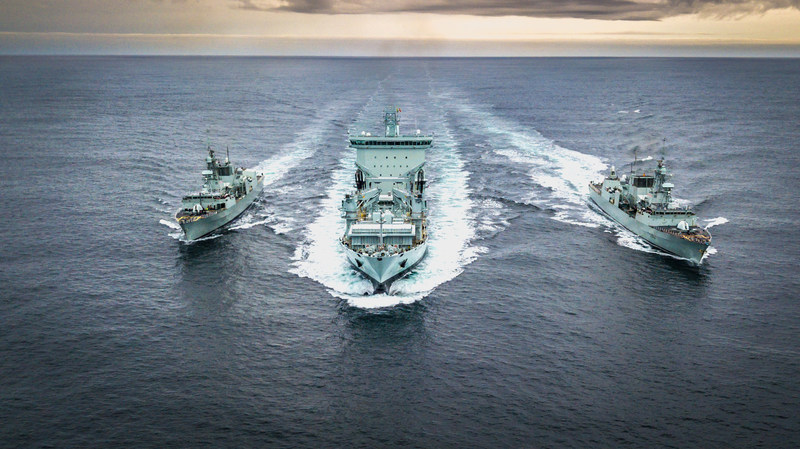
MV Asterix, accompanying Royal Canadian Navy ships, replenished two US Navy vessels at the same time in the North Atlantic this week. The USN ships are USS Bainbridge and USS Mitscher. March 2018
Norman is charged with one count of breach of trust for allegedly providing information to Davie Shipbuilding which had entered into a deal with the previous Conservative government to provide a supply ship to the Royal Canadian Navy.

Conservative leader Andrew Scheer questioned the Liberal government why it was not moving ahead with having Davie provide a second supply ship – the Obelix – to the navy. Scheer said the navy needed the second ship. “The Prime Minister has to stop playing political games and before Christmas should award that contract to Davie,” he told the Commons. “What’s he waiting for?”

But Trudeau accused Scheer of playing “petty politics.”

“The armed forces did an assessment,” Trudeau explained. “They don’t need the Obelix and for him to suggest that we should buy it anyway is pure base politics, the worst politics. We make our decisions based on facts. We recognize the quality of work done by Davie shipyard and we do want them to get good jobs but we are not going to make up work for political reasons.” Trudeau's comments follow the same line as comments made by Minister of Transportation Marc Garneau in December of 2017.

Reports from the Royal Canadian Navy indicate that there is a need for a second supply ship on the West Coast - but for now, the Asterix will be shared between both coasts until the new Protecteur-Class AORs are built by Seaspan and in service around 2026.

Image result for mv obelix
M/V A.Obelix is a container ship which is available for immediate purchase and conversion into a second interim-auxiliary oil replenishment ship for the Royal Canadian Navy. Davie Shipbuilding and Federal Fleet Services is offering this to the Government of Canada, and says it could have the Obleix operational as an iAOR by early 2020; six years before the Protecteur-Class AORs are available. 

Wednesday, December 12, 2018

Quebec Pushing for more Federal Shipbuilding Work

By: David Pugliese, Defence Watch

Quebec’s National Assembly has unanimously adopted a motion in support of the federal government re-examining the National Shipbuilding Strategy and how work on that strategy is allocated. The motion on Friday calls for more work to be directed to Quebec-based Davie Shipbuilding.

MV Asterix departs Halifax Harbour on 11 April, 2018 for the Pacific coast to work with Maritime Forces Pacific. Canadian Forces photo.


Davie has already converted one supply vessel, the Asterix, which is currently at the centre of the legal battle Vice Admiral Mark Norman faces. It is also converting a fleet of used icebreakers for the Canadian Coast Guard.

Quebec’s politicians want the Liberal government to proceed immediately with a second supply ship from Davie.

Not surprisingly, Davie officials and industry affiliates welcomed the political support and issued a news release Friday highlighting the National Assembly’s position.

“In order to ensure the success of the government’s defence policy – Strong, Secure and Engaged – as well as the navy’s Leadmark 2050 plan, we need to begin the construction of a second ship without delay,” James Davies, President of Davie Shipbuilding, said in a statement.

Irving and Seaspan, the shipyards selected to perform the major chunk of work under the shipbuilding strategy, are opposed to additional contracts going to Davie. Irving, in particular, has voiced its concern.

Seaspan shipyards in Vancouver will build the first of two Joint Support Ships, scheduled to be ready in the 2021-2022 timeframe.

This is not the first time that Quebec has pushed for more work under the shipbuilding strategy. In December 2017, politicians and unions in Quebec tried to turn up the heat on the Liberal government, questioning why Davie shipyards wasn’t getting work from the federal government. They highlighted the capability of the shipyard to deliver a second Asterix-type ship quickly.

But Transport Minister, and former navy officer, Marc Garneau said the federal government didn’t need another supply ship.
”We cannot artificially create a need for something that doesn’t exist,” he told reporters at the time.

He did not explain how one supply ship would support naval fleets operating on two coasts.

Tuesday, June 26, 2018

Why Canada Needs More Supply Ships for Humanitarian Relief Missions

By: Jeffrey F. Collins, Andrea Lane, Policy Opinions Forum 

Having at least two supply ships would allow Canada to engage in more humanitarian and disaster relief, thus furthering our foreign policy interests.

Naval procurement has been in the news lately for all the wrong reasons. First up is the ongoing legal squabbling over the former number two in the Canadian military, Vice Admiral Mark Norman, who is charged with breach of trust for allegedly leaking cabinet secrets to Quebec’s Davie shipyard. Then, the government is refusing to release a report that would shed light on exactly how far behind schedule the joint support ship and Coast Guard heavy icebreaker procurements are, nor will it provide an updated delivery estimate. Finally, the plan to replace frigates and retired destroyers with a new surface combatant vessel continues to be beset by delays and industry infighting as the bid process drags on and on — with further delays announced by the government recently.

Yet despite such persistent bad news, in March 2018 the Royal Canadian Navy (the navy) achieved a rare procurement success when its new supply ship, MV Asterix, officially entered service under a lease arrangement with the firm Federal Fleet Inc. A commercial ship purchased in 2015 and converted over the following two years, Asterix fulfills a key naval capability lost in 2014 when a fire and, separately, hull fatigue removed from service the decades-old auxiliary oiler replenishment (AOR) ships HMCS Protecteur and HMCS Provider. These ships, known as oilers, provided the lifeblood of the fleet, carrying the extra fuel, food, spare parts, helicopters and ammunition necessary to extend naval operations away from shore for longer periods at sea. The Protecteur-class AORs also gave limited onshore support to other Canadian Armed Forces units participating in peace support and in humanitarian assistance and disaster relief operations. With the loss of both AORs, the navy needs another ship like Asterix — and fast.


The M/V Asterix. Photo - RCN. 
The Protecteur-class oilers had to be retired when their replacements, to be called joint support ships, were scarcely beyond the design stage, much less completed. With delays stretching into the 2020s on the joint-support-ship project, the navy faced the very real possibility of losing its vital replenishment-at-sea skills and naval support capabilities. Oilers borrowed from the Spanish and Chilean navies were only a temporary stopgap. In fact, the need to get an AOR capability was so pressing that Asterix embarked into navy service even before all its interior fittings were completed. The ship has already taken part in military exercises in the North Atlantic, completed a double replenishment-at-sea operation with the US Navy and has now deployed for the West Coast to join in one of the world’s largest multinational naval exercises, RIMPAC.

The rapid pace of Asterix’s deployments has highlighted the navy’s stark need for the ship. But as the sole AOR in the Canadian fleet, the ship faces a clear limitation: it has to service a navy split between two oceans, Atlantic and Pacific, with a long transit voyage in between. While Asterix is taking part in RIMPAC, the East Coast fleet will be beholden to friends and allies for refuelling, or tied to shore on restricted sailings. This presents a problem, as the navy — indeed, the armed forces as a whole — is expected under the Trudeau government’s defence policy, Strong, Secure, Engaged, to be able to “act in multiple theatres simultaneously.” This includes sustaining not just domestic and North American defence but also overseas engagements, for example in support of NATO commitments in eastern Europe, drug interdiction in the Caribbean and antipiracy patrols. Put simply, with only one oiler, the navy cannot independently fulfill all of its assigned duties under the policy. Having only one functioning AOR also raises questions as to the Canadian military’s ability to respond to a humanitarian disaster whether at home or abroad, another tasking emphasized in the policy. While Strong, Secure, Engaged stipulates that “Strong at home” comes first, it is debatable whether the navy could currently meet large-scale humanitarian assistance and disaster relief challenges, in addition to its “normal” operations.

Naval humanitarian assistance and disaster relief capabilities serve both domestic and international functions. Natural disasters in recent years, like the New Brunswick floods this May, highlight the possible roles such a ship can provide. The 2010 landing of Hurricane Igor in Newfoundland saw hundreds of coastal communities lose power and endure days of isolation after road washouts. Under Operation Lama, three ships and a Sea King helicopter were dispatched to assist the hardest-hit communities. The timing and landfall of the hurricane coincided with the seasonal operation of a car ferry that carried troops and vehicles over from CFB Gagetown, New Brunswick, via Nova Scotia. Had the disaster struck in late fall or early winter or with more devastation, the military response would have been even more logistically challenging. With the possibility of earthquakes in British Columbia and more powerful hurricanes on the east coast, the strategic value of having domestic humanitarian assistance and disaster relief capabilities is greater than ever. The 2016 earthquake in New Zealand and the 2017 cyclone in Australia illustrate the value of having humanitarian and-disaster relief capable ships like HMNZS Canterbury and HMAS Choules available for duty on the home front.

On the international level, humanitarian assistance and disaster relief capabilities are more than just disaster response; they also are a proactive means of dealing with disasters before they happen. The United States has used a number of its vessels in this role, including expeditionary fast transport ships like USNS Brunswick and dedicated hospital ships like USNS Mercy. The navies of the United States, Australia, New Zealand and other Pacific countries support a forward engagement humanitarian assistance mission called Pacific Partnership every year; it provides health care and trains regional partners for coordinated disaster response. Canadian sailors and personnel sometimes take part, but Canadian ships do not. This mission is exactly the sort of thing that Asterix and other potential humanitarian assistance and disaster relief assets could participate in, if Canada chooses to become more active in this role.

Proactive humanitarian assistance and disaster relief represents a potentially rich opportunity for furthering Canada’s foreign policy interests, especially in light of the global political uncertainty generated by the Trump presidency. Countries in South America, the Caribbean and Asia are looking for reliable, stalwart allies, and Canada could well step into the breach left by the US, which is increasingly distracted and focused on national security. Such a role for Canada is not fantastical; indeed, the navy’s own policy framework, Leadmark 2050, has called for “the acquisition of a dedicated peace-support ship to meet the unique demands of HA/DR.” Such a vessel would become one of the “most heavily used assets” and “the principal Canadian Armed Forces defence diplomacy asset.” Currently, the navy practises defence diplomacy in port visits interspersed throughout more mission-focused deployments; having a dedicated humanitarian assistance and disaster relief ship or, at the very least, a sister ship to Asterix available for use in proactive humanitarian engagement when it is not busy as an oiler would allow the navy to be used directly as a whole-of-government asset, representing Canada’s diplomatic, trade and regional development agencies to the wider world.

Asterix, even more than its Protecteur-class predecessors, is the ideal humanitarian assistance and disaster relief platform from which to launch and sustain humanitarian aid operations in coastal regions, where 40 percent of the world’s population lives. Once fully finished, the ship will have a fully fitted hospital, a dental clinic and an emergency dormitory capable of holding up to 350 evacuees. The galleys can even cook 500 meals an hour if necessary. Navy ships like Asterix are self-contained in the event of a disaster, because their sailors live and eat on board, removing the necessity to first construct housing and kitchens for service members sent to help. While heavy airlift is faster to the scene of a disaster, nothing beats a large ship for medium-term disaster assistance, especially when, like Asterix, its company can include a helicopter and air detachment.

This brings us to an important conclusion: Canada needs more capability than Asterix can provide by itself. Currently, the interim AOR is being kept busy fulfilling its vital fuelling and replenishment role for the navy. At a minimum, a three-coast navy would have at least two AOR ships. Three would allow the navy — and Canada — to commit to a long-sought humanitarian role, one called for in the Strong, Secure, Engaged policy, and it ought not to come at the expense of standard naval readiness. The joint support ship project is an untold number of years behind schedule, and even on completion, it will supply the navy with only two ships. Canada needs the capability now, not in 10 years’ time.

Given the success of the Asterix procurement, the Trudeau government should take steps to acquire another interim AOR, ideally using the same modified off-the-shelf method as for Asterix, to ensure prompt delivery. Both AORs should eventually be transitioned from interim to permanent, augmenting the navy’s support ship fleet from two to four. Building on the success of Asterix would also keep jobs and knowledge in Canada, and they would likely be at Quebec’s Davie shipyard, which has not yet received any contracts under the National Shipbuilding Strategy. If Canada is intent on building ships at home for the foreseeable future, ensuring the sustainability of the industry across the country should be a priority, to encourage competition and reduce the hold that individual companies have on the government purse.
----
Jeffrey F. Collins holds a PhD in Political Science from Carleton University and is a Research Fellow with the Centre for the Study of Security and Development at Dalhousie University. He is the co-editor of the book, Reassessing the Revolution in Military Affairs (London: Palgrave, 2015) and the yet to be released, Canada's Defence Procurement Woes (London: Palgrave, 2019).


Andrea Lane is deputy director of the Centre for the Study of Security and Development and a PhD student at Dalhousie University. Her most recent publication is “Manning Up: Justin Trudeau and the Politics of the Canadian Defence Community” (2018).

Davie to Convert Three Icebreakers for Coast Guard

By: David Pugliese, Ottawa Citizen

The Canadian government intends to enter into a deal with Davie Shipyards of Quebec to provide three medium icebreakers, Public Services and Procurement Canada announced Friday.

The vessels will be acquired for the Canadian Coast Guard. The ships would provide the interim capability for the coast guard, while replacement vessels are built later under the government’s National Shipbuilding Strategy. The icebreakers are seen as essential to ensuring that Canadian ports remain open during winter months, according to the federal government.

The deal will see the purchasing a class of three existing Anchor Handling Tug Supply icebreakers. Those vessels will be used by the coast guard while its other ships undergo maintenance, refit and vessel life extension.
Artist Rendition courtesy of Davie Inc. 
The ships will be used for icebreaking duties during the winter and sent to the Arctic as needed during the summer. The first ship will be put to immediate use for icebreaking during the upcoming 2018-2019 season, Public Services and Procurement Canada stated in their news release.

The department has issued an Advanced Contract Award Notice to Chantier Davie of Lévis, Quebec, for the acquisition and conversion of three medium commercial icebreakers.

Other companies will have 15 business days to signal their interest in bidding for the contract, by submitting a “statement of capabilities” that meets the requirements laid out in the ACAN, the government noted.

Industry representatives, however, pointed out that an ACAN is usually designed so the company named in the notice is the only one capable of fulfilling the stated requirements.

No other details of the deal were released. It is unclear what the arrangement will cost taxpayers.

Quick facts

• This acquisition will consist of purchasing a class of three existing anchor-handling tug supply (AHTS) icebreakers.
• These ships will be used to backfill for Canadian Coast Guard vessels while they are undergoing maintenance, refit and vessel life extension.
• These ships will conduct critical icebreaking duties for the southern wintertime program and are to be deployed as needed in support of Arctic summertime programs.
• The first ship will be put to immediate use for icebreaking during the upcoming 2018-2019 season.

Tuesday, April 17, 2018

Clement: It's Time to Change Course on Shipbuilding


By Tony Clement, Special to Postmedia Network

Canada’s National Shipbuilding Strategy was announced with the goal of delivering vessels for the Canadian Coast Guard and the Royal Canadian Navy that were affordable, modern and effective. It was expected that the strategy would create world class, competitive yards that could produce vessels which could be exported.
Image result for aops
The Royal Canadian Navy's first Arctic and Offshore Patrol Ship (AOPS), the future HMCS Harry DeWolf, assembled at Irving Shipbuilding's Halifax Shipyard.
Two shipyards were selected under the plan in 2010 – Irving Shipbuilding of Halifax and Seaspan of Vancouver – and they were to be capable to start building ships immediately, and close gaps over time at “no cost to Canada” under a non-binding umbrella agreement.

Irving Shipbuilding in Nova Scotia was chosen to build the five Arctic Off-Shore Patrol Vessels (AOPS) and the future fleet of up to 15 Canadian Surface Combatants (CSC). Seaspan in Vancouver was selected to build five coast guard vessels and two Joint Support Ships (JSS) for the Navy.

Under the strategy, the two yards were guaranteed this work provided they could close their capability gaps within a specific period of time and at no cost to taxpayers. So where do we stand after almost eight years?

To date, millions in government subsidies have poured into the two selected shipyards; costs to taxpayers are‎ soaring and vessel delivery dates are pushed further back. Seven years later, not one ship has been delivered. When it comes to costs:

— The budget for the three Off-Shore Fisheries Science Vessels has grown from $244 million to $687 million.

— The Off-Shore Oceanographic Science Vessel, which is still in the design phase, has seen its budget grow from $108 million to $144 million, and speculation abounds that the budget will grow to over $275 million in the coming year.

— The two JSS originally budgeted at $2.6 billion are now expected to cost $4.13 billion according to the Parliamentary Budget Office (PBO).

Add to the list of shipbuilding woes, the John G. Diefenbaker, Canada’s planned polar class icebreaker for $1.3 billion. The vessel was designed in 2012; however it may not be contracted until 2030, meaning its design will already be obsolete before the keel is laid.

The Liberal government has no plans for the second polar class icebreaker, and no actions are being taken to build the three high endurance multi-tasked icebreakers or the five ocean patrol vessels for which funding has been allocated.

When it comes to the five AOPS, progress is being made, yet taxpayers will not know the cost of the vessels until at least six months after the first ship is delivered.

The budget for the future fleet of 15 surface combatants has grown from $26 billion to $60 billion and the procurement is in question, as many bidders have backed away from a process is that has been amended over 50 times.

Under the Liberals, the National Shipbuilding Program is failing. It is time for a course correction. Here are a few suggestions:

— All vessels under the NSS must come under a fixed-price contract.

— The government must return to selecting a proven design for the future fleet of surface combatants, rather than spending billions more and taking significant risks, and delays with an unproven ship design.

— Expand the shipbuilding strategy to add capacity and commercial pressure by including Davie Shipbuilding of Quebec in ongoing planning, including building additional coast guard vessels which are urgently needed, and for which funding was allocated years ago.

— The government should also follow up on the success of the AstĂ©rix, and accept Davie’s offer to build the second interim supply ship at $650M, (significantly cheaper than JSS) so the Navy can get on with having the capability to refuel the Atlantic and Pacific fleet simultaneously at sea.

Without some drastic changes in this program, all signs point to taxpayers getting soaked; our navy and coast guard being hobbled, and our security and sovereignty being put at risk.
---
— Tony Clement is a Conservative MP and Official Opposition Public Services and Procurement Critic

Tuesday, February 27, 2018

Davie Says Asterix Can Go Wherever CAF Needs

By: David Pugliese, Defence Watch 

Defence department bureaucrats rejected a plan to outfit the navy’s new supply ship with high-tech guns needed for its protection because they wanted to save money, officials with a Quebec shipyard say.

Davie Shipbuilding is pushing back against recent claims by the Royal Canadian Navy that the Asterix supply vessel it converted for the Canadian Forces can’t go to war.

Company officials point out Asterix can be used in combat as the vessel has been outfitted with similar navigation and other systems that will eventually be installed on a new future fleet of Canadian warships. In addition, the company has acquired insurance coverage for the vessel to operate in high risk and war risk areas, Davie noted in a statement on its website.

The vessel can also be outfitted with weapons, a capability Davie originally proposed to the Department of National Defence. But the installation of high-powered gatling guns – currently in storage in a military depot – was turned down by bureaucrats as a cost-saving measure, Davie sources and industry representatives point out.

“The ship can go wherever the Canadian Armed Forces require it to go,” Davie said on its website in response to questions about whether Asterix can be used in combat.

Naval officers acknowledged at a news conference in late January with Defence Minister Harjit Sajjan at CFB Esquimalt that a number of Phalanx guns are in storage but those are being saved so they can be outfitted on the new Joint Support Ships.

It is unclear when the navy will get those new supply vessels as construction has yet to start. Some estimates put the delivery of the first ship at 2022 but there have been suggestions that vessel could come as late as 2024 or 2025.

The Asterix, which is being leased to the federal government by a sister company to Davie, is being prepared to head to sea in March in support of Royal Canadian Navy operations. It is expected to be at sea for up to six months.

DND did not respond directly to specific questions about why it rejected the installation of Phalanx guns on Asterix.

But Pat Finn, assistant deputy minister for materiel, told a Commons defence committee on Feb. 1 that getting Asterix as quickly as possible was the main focus for the department. He said the Davie supply vessel is different from the Joint Support Ships in terms of its robustness. “We did not impose that upon a commercial ship, because of the speed at which we needed it,” he said. “What it needed to do, what kinds of areas it could go to, and the things it can do are quite different. The Asterix, in the context of that service contract to us, is delivering exactly what we asked of it.”

The ship can go wherever the Canadian Armed Forces require it to go

Davie, however, disputes claims Asterix is not as robust. “Operationally it is able to perform an identical role to that of the potential future Joint Support Ships,” the company added.

The Asterix is also at the heart of federal government’s case against Vice Admiral Mark Norman.

Norman has been accused by the RCMP of warning Davie that Liberal cabinet ministers wanted to derail the Asterix project.

That development leaked out to the news media and the resulting embarrassment forced the Liberal government to back down on its plans and Asterix proceeded. Norman, who was suspended from his job by Chief of the Defence Staff Gen. Jon Vance more than a year ago, has denied any wrongdoing. No charges have been laid against Norman and the claims made against him by the RCMP are so far unproven.

Prime Minister Justin Trudeau has twice predicted that Norman will eventually wind up in court, prompting concerns of political interference and concerns the Liberal government is punishing the officer.

Wednesday, February 7, 2018

MV Asterix (iAOR) Reaches Full Operational Service within RCN

PRESS RELEASE - Davie Shipbulding & Federal Fleet Services

On January 29, 2018, Davie Shipbuilding and Federal Fleet Services announced that following an intensive period of at-sea trials and testing, Asterix has been formally accepted by the Department of National Defence and has now entered full operational service with the Royal Canadian Navy (RCN) and Royal Canadian Air Force (RCAF).
Asterix completes Royal Canadian Navy trials, achieves Full Operational Capability (FOC) (CNW Group/Davie Shipbuilding)

Asterix completes Royal Canadian Navy trials, achieves Full Operational Capability (FOC) (CNW Group/Davie Shipbuilding)
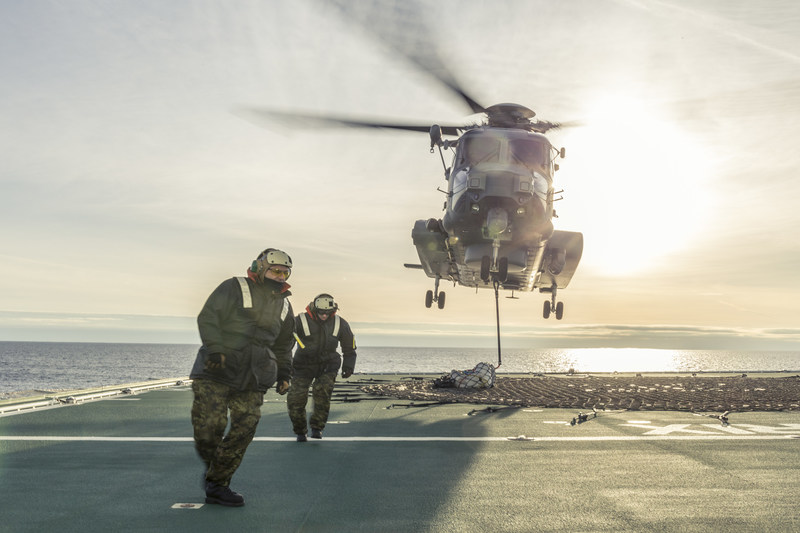
As planned, Asterix performed daily replenishment-at-sea (RAS) exercises with the RCN and conducted extensive RCAF CH-148 Cyclone helicopter operations to prove and demonstrate the world-leading capabilities of the Resolve-Class Naval Support Ship. These exercises have included everything from dual RAS operations to helicopter landing, take-off and vertical replenishment trials.

Spencer Fraser, CEO of Federal Fleet Services commented "To deliver the first Canadian naval ship in over twenty years, the first supply ship in almost 50 years, and to reach FOC so efficiently and in such a short period of time is a testament to the hard work, dedication and dynamism of the teams at Davie and FFS. We are all very proud of our achievement and appreciative of the professional support we have received from DND and PSPC."

Fraser added, "We promised the government that we would fill a strategic gap in an expedited manner, that we would save the Canadian taxpayer money with our solution, and most importantly, that we would provide the men and women of the RCN and RCAF with a world-class capability they could be proud of. Today marks that achievement and we stand ready to assist the Government of Canada to do more."

Alex Vicefield, Chairman of Davie commented, "We would like to thank Prime Minister Trudeau for the confidence and trust he placed in Canada's largest shipbuilder with the award of this program. We are proud to have delivered, as promised, on this vital defence capability which will serve Canada for years to come."

Over 900 Canadian companies from coast-to-coast participated in the build of Asterix, and the Resolve Class has been hailed worldwide for the innovative Canadian solutions integrated onboard. Participation in this project has assisted the exports of many of Davie's Tier 1 sub-contractors; Hepburn of Toronto designed and built the RAS equipment, L3 MAPPS of Montreal designed and installed the Integrated Platform Management System and OSI of Vancouver designed and built the Integrated Bridge System. By participating in the project, these and other innovative Canadian companies have been able to win export opportunities.

Asterix is now ready for global deployment to support combat and humanitarian operations as directed by the Government of Canada.

Wednesday, December 13, 2017

Davie Warns about Government’s Lack of action on Shipbuilding

By: David Pugliese, Defence Watch 
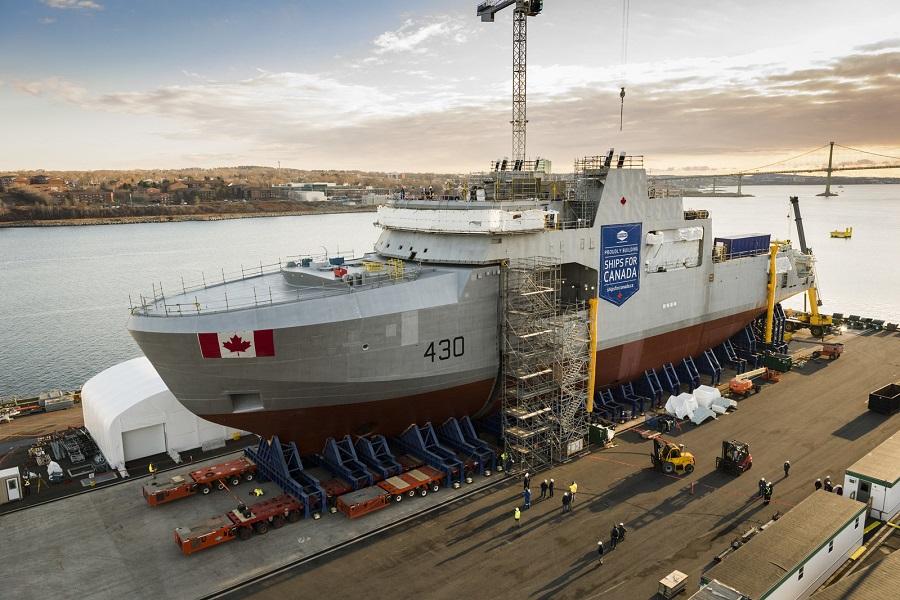
The naval support ship Asterix is unveiled at a ceremony at the Davie shipyard in Levis, Que., on July 20, 2017. The Asterix was delivered on time and budget. Something the CSC Fleet Proposal for Bits cannot say. 
Davie Shipbuilding and a number of its Montreal-area suppliers will hold a news conference Thursday to warn about the federal government’s “inaction” on tending shipbuilding contracts and how that will affect jobs.

Spencer Fraser of Davie Shipbuilding will outline the various proposals that the yard has made to the Liberal government (for icebreakers, supply ships, etc) and “present the results these efforts have yielded to date.” (all rejected?).

Politicians and unions in Quebec have been turning up the heat on the Liberal government, questioning why Davie shipyards in the province isn’t getting any more work from the federal government. Davie converted a commercial container ship into a supply vessel for the Royal Canadian Navy. The ship, the Asterix, goes into service early next year and under the agreement will be leased to the RCN. Davie says it is ready to quickly convert another vessel into a supply ship.

But Prime Minister Justin Trudeau’s government has said thanks but no thanks.

Transport Minister, and former navy officer, Marc Garneau said the federal government doesn’t need another supply ship. ”We cannot artificially create a need for something that doesn’t exist,” he told reporters.