Translate

Showing posts with label Irving Shipbuilding. Show all posts

Wednesday, December 12, 2018

Government Gets OK to award $60B Shipbuilding Contract to Lockheed Martin Canada

By: David Pugliese, The National Post

A federal trade tribunal has rescinded its order preventing the federal government from awarding a contract to Lockheed Martin Canada for a new fleet of warships for the Canadian navy.

The Canadian International Trade Tribunal ordered the government on Nov. 27 to postpone the awarding of the contract for the $60 billion Canadian Surface Combatant project while it investigated claims that Lockheed Martin’s proposed vessel doesn’t meet the military’s needs.

The firm is offering Canada the Type 26 warship designed by BAE in the United Kingdom.

Alion, one of the companies that submitted a bid on the project, filed a complaint with the trade tribunal alleging the process was flawed and that BAE’s Type 26 can’t meet Canadian requirements. Alion has also filed a legal challenge in federal court, asking for a judicial review of the decision by Irving and the government to select the BAE design. Alion argues the Type 26 cannot meet the stated mandatory requirements, including speed, that Canada set out for the new warship, so it should be disqualified.

But on Monday the CITT lifted its order, even though it has determined it will examine the Alion complaint. Mélanie Lalonde, CITT’s deputy director of communications, said Tuesday that the tribunal cannot comment on ongoing proceedings.

A delay in awarding contracts would be contrary to the public interest

But the decision came after Andre Fillion, an assistant deputy minister at Public Services and Procurement Canada, wrote to request the order be removed. He noted that “the procurement of goods and services to which the Alion Complaint pertains is urgent, and that a delay in awarding contracts would be contrary to the public interest.”

Alion’s legal team objected, noting that “no reasons, nor any justifications, are provided to support this claim.”

The CSC program, the largest single government purchase in Canadian history, will see the eventual construction of 15 warships at Irving Shipbuilding in Halifax. Lockheed Martin Canada says the Type 26 will meet all of Canada’s requirements. The government hopes to be in a position to have a contract ready for signature by early next year.
The Irving Shipbuilding facility is seen in Halifax on June 14, 2018. Andrew Vaughan/The Canadian Press

The CITT hearings into the Alion complaint could take as long as 90 days.

Alion had offered Canada the Dutch De Zeven Provinciën Air Defence and Command frigate, which the firm says meets all of Canada’s requirements. It also noted in its court application that the requirements and other parameters of the surface combatant project were altered 88 times during the process and that the changes diluted the requirements for a new warship, allowing the government and Irving to pick “an unproven design platform.”

The entry of the BAE Type 26 warship in the competition was controversial from the start. Previously, the government had said only mature existing designs or designs of ships already in service with other navies would be accepted for the bidding process, on the grounds they could be built faster and would be less risky — unproven designs can face challenges as problems are found once the vessel is in the water and operating.

But that criteria was changed and the Liberal government and Irving accepted the BAE design in the process, though at the time it existed only on the drawing board. Construction began on the first Type 26 frigate in the summer of 2017 for Britain’s Royal Navy, but it has not been completed.

Company claims about what the Type 26 ship can do, including how fast it can go, are based on simulations or projections.

The two other bidders in the surface combatant program have ships actually in service with other navies so their capabilities are known.

Tuesday, November 20, 2018

Government Announces Purchase of 6th AOPS

By: Mairin Prentiss · CBC News

The federal government is purchasing another ship to be built in Halifax, the defence minister says a day after Ottawa awarded $7 billion in contracts to three shipyards for work on Royal Canadian Navy frigates — leaving concerns over an 18-month gap in work for Irving Shipyard employees.

Image result for aops
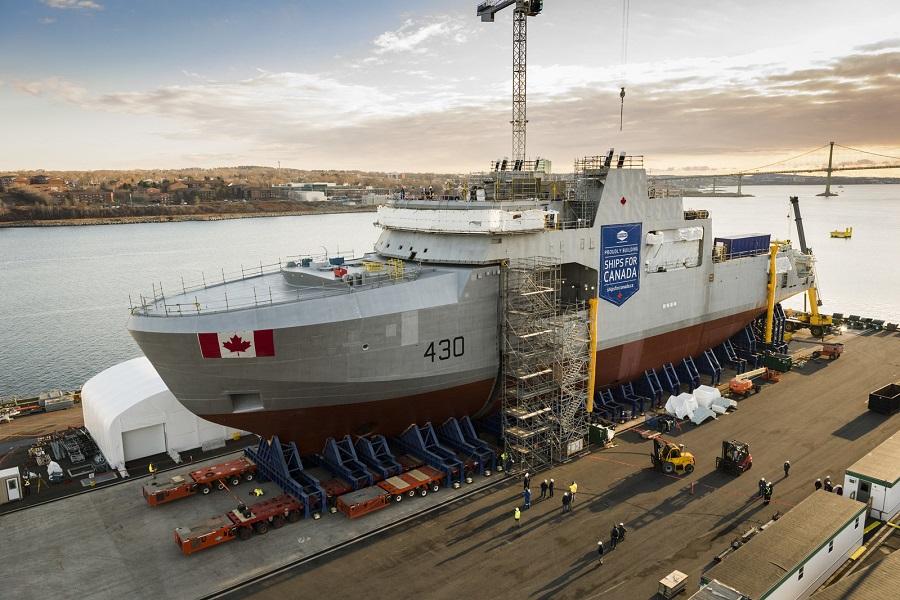
The First Arctic and Offshore Patrol Ship assembled at Halifax Shipyard - Irving Shipbuilding
The government will buy a sixth Arctic and offshore patrol ship for the navy, Harjit Sajjan said to a crowd at the Irving Shipyard in Halifax on Friday.

"The women and men of the Irving Shipyard build incredible ships and are essential for enabling the success of the Royal Canadian Navy," said Sajjan.

The government planned to purchase five Arctic and offshore patrol ships — with a possibility of a sixth — after scaling back its original plan of buying between six and eight vessels in 2014.

Public Services and Procurement Canada announced Thursday in a news release that it intends to sign contracts worth $7 billion with Davie in Lévis, Que., Irving Shipbuilding Inc. in Halifax and Seaspan Victoria Shipyards in Victoria for maintenance on 12 Canadian navy ships.

With the maintenance program split between three yards, workers in Halifax feared they would be laid off in between the end of the patrol ships program and the start of the Canadian Surface Combatant program.

Last month, Irving employees held a march in Halifax to protest the Liberal government's intention to split the contracts with other yards, saying it would result in job losses.

Irving Shipyard workers say sharing the work will mean layoffs. (Robert Short/CBC)

Friday's announcement appears to be aimed at allaying those fears.

In a news release, the Department of National Defence said the sixth ship will help sustain hundreds of jobs at Irving shipyards.

"Today's announcement is good news for the Royal Canadian Navy, but it is also good news for Canadians, our economy and the city of Halifax. This is a region with deep ties to our navy," said Sajjan.

"By adding a sixth Arctic and offshore patrol ship, we are ensuring that our Royal Canadian Navy remains an agile and responsive force for years to come, so that Canada can continue to assert and enforce our Arctic sovereignty," he said.

Irving officials had meetings in Ottawa on Thursday where they said they received the news.

But building another ship doesn't mean there won't be layoffs, said Kevin McCoy, the president of Irving Shipbuilding.

"Nothing is guaranteed until we have contracts in hand and I know hearing that might make some folks a little uneasy, but I am encouraged by our discussions yesterday particularly around Halifax class maintenance work. This is a big piece of solving about a three-year problem, but we now have about half the problem solved."

Irving will begin construction on the fourth Arctic and offshore patrol vessel later this year.

Thursday, May 3, 2018

RCN and Irving Look to Sell AOPS Internationally to Fill Construction Gap

By: David Pugliese, National Post

The gap between the building of new ships for the navy could be as much as 18 months, opening the possibility of east coast shipyard employees to be laid off.

But the Defence department’s top equipment official says changes to the shipbuilding procurement process will reduce some, but not all, of that gap. Workers that could be affected would be blue-collar shipyard employees at Irving Shipbuilding.

The 18-month gap between finishing construction of the fleet of Arctic Offshore Patrol Ships or AOPS and starting the new Canadian Surface Combatant vessels at Irving shipyards in Halifax is outlined in documents obtained by Postmedia through the Access to Information law.

Image result for AOPS

“We are still concerned about a gap,” Pat Finn, assistant deputy minister for materiel at the Department of National Defence, acknowledged in a recent interview.

The engineering workforce in the Irving yard is about to ramp up dramatically, he added, so there are no concerns there. “The issue is on what we call the blue‑collar workforce, and particularly (in) the early stages of construction,” Finn explained. “Those are the people that, once you’ve finished cutting steel in the last AOPS, ideally the next day you start cutting steel on the first surface combatant. Well, right now we’re not lined up to do that.”

Construction of the first surface combatants isn’t scheduled to begin until the early 2020s.

The first AOPS will be in the water in the summer and the other vessels are expected to follow fairly quickly.

“The gap is still a few years away, but clearly if we’re going to make sure there’s continuous flow of work, we’ve got to be dealing with that now,” Finn said.

He said the Royal Canadian Navy is lending its support to help promote the AOPS to international customers in the hopes of drumming up more work to shrink the size of the construction gap.

Procurement Minister Carla Qualtrough has also said she is open to the idea of additional AOPS being purchased for Canada.

Irving spokesman Sean Lewis said Wednesday that the company, the federal government and a third-party expert continue to look at the issue. “The construction of additional AOPS for Canada or international export opportunities is being considered and various options pursued,” he explained. “At this time it is premature to comment further.”

It’s way too early to talk about layoffs

In November federal government and Irving officials acknowledged their worry that highly skilled employees and their expertise could be lost in any potential gap between construction of AOPS and the surface combatants. “It’s way too early to talk about layoffs,” Irving Shipbuilding president Kevin McCoy said at the time.

The same problem has emerged in the federal shipbuilding program on the west coast and unions there warn that layoffs are coming. Seaspan Shipyards in Vancouver acknowledges there will be a gap between the construction of coast guard vessels, a situation it is trying to deal with by drumming up more work from the federal government or from the commercial marketplace.

Such gaps were supposed to be prevented by the federal government’s national shipbuilding strategy, which called for the continuous build of vessels, ensuring steady employment for a skilled labour force.

The Canadian Surface Combatant program will cost between $55 billion and $60 billion. Fifteen ships will be eventually built. Three consortiums have bid on the program.

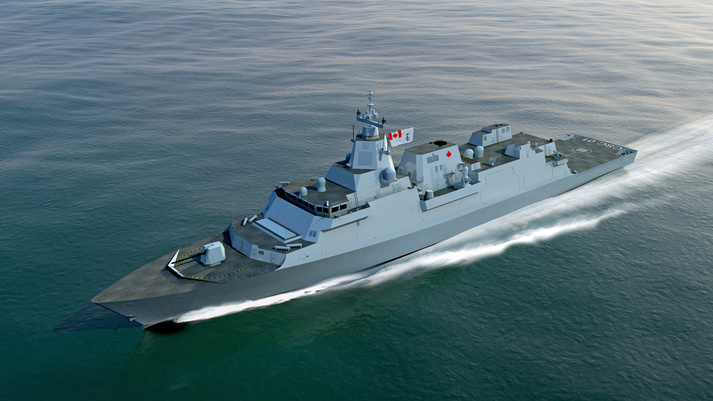
Image result for Type 26 Canadian Surface Combatant proposal
Artits Rendering of the BAE Type-26 Global Combat Ship; which many believe is the frontrunner in the CSC Fleet Proposal.
Finn said a contract is expected to be awarded by the end of the year.

About half of the cost of the surface combatants is for systems and equipment that will go on the 15 ships, according to federal documents obtained by Postmedia through the Access the Information law. “Approximately one-half of the CSC build cost is comprised of labour in the (Irving’s) Halifax yard and materials,” the documents added.

Last year, Jean-Denis Fréchette, the Parliamentary Budget Officer, estimated the CSC program would cost $61.82 billion. He also warned that every year the awarding of the contract is delayed beyond 2018, taxpayers will spend an extra $3 billion because of inflation.

Friday, April 20, 2018

Firms Skipped CSC Bib for Fear of Loss of Proprietary Information

By: David Pugliese, Ottawa Citizen 

In December Fincantieri of Italy and Naval Group of France decided not to bid on the Canadian Surface Combatant project. Instead, they offered the Canadian government a direct proposal that would see the the companies build 15 of the consortium’s FREMM frigates at a fixed price of roughly $30 billion.

The Liberal government rejected the offer.

A FREMM frigate sails off the coast of France in 2016. BORIS HORVAT/AFP/GETTY IMAGES
Fincantieri and Naval Group knew they were taking a chance when they passed on the formal bidding process for the CSC. Sources close to the European companies said at the time they felt they didn’t have anything to lose. They alleged the Canadian competition was skewed to favour a bid by Lockheed Martin Canada and the British firm BAE which would see Canada buying the Type 26 frigate BAE is building for Britain’s navy.

The Canadian government had originally asked for only bids featuring proven ship designs. But it later changed those parameters to allow a bid from BAE, though the Type 26 was at the time still on the drawing board.

Giuseppe Bono, the CEO of Fincantieri, recently told my colleagues at the U.S. publication Defense News of another concern that led to the decision not to bid on the CSC. Bono said that the firms were willing to turn over their sensitive technical data to the Canadian government but that they drew the line at providing the proprietary information to Irving and its team.

“We said we were prepared to give the information to the Canadian government but not to a rival company if we didn’t know if we were going to win the bid or not,” Bono said.

Fincantieri and Naval Group, along with other companies, have voiced concerns about Irving’s alliance with the U.S. firm, Gibbs and Cox, a top U.S. naval architecture firm that designs surface warships. Gibbs and Cox is also the main competitor for many companies – including Fincantieri and Naval Group – pursuing ship contracts around the world.

Irving, however, has rejected such concerns and has stated it is committed to protecting any sensitive data provided by companies bidding on CSC.

But Fincantieri and Naval Group weren’t buying that reassurance.

The firms still have their proposal ready in case the Canadian procurement falls apart and the federal government decides on a different course of action.

In February, the U.S. Navy named the FREMM design as one of five it could consider for its future frigate program and has provided Fincantieri $15 million to look at a design concept.

Tuesday, April 17, 2018

Clement: It's Time to Change Course on Shipbuilding


By Tony Clement, Special to Postmedia Network

Canada’s National Shipbuilding Strategy was announced with the goal of delivering vessels for the Canadian Coast Guard and the Royal Canadian Navy that were affordable, modern and effective. It was expected that the strategy would create world class, competitive yards that could produce vessels which could be exported.
Image result for aops
The Royal Canadian Navy's first Arctic and Offshore Patrol Ship (AOPS), the future HMCS Harry DeWolf, assembled at Irving Shipbuilding's Halifax Shipyard.
Two shipyards were selected under the plan in 2010 – Irving Shipbuilding of Halifax and Seaspan of Vancouver – and they were to be capable to start building ships immediately, and close gaps over time at “no cost to Canada” under a non-binding umbrella agreement.

Irving Shipbuilding in Nova Scotia was chosen to build the five Arctic Off-Shore Patrol Vessels (AOPS) and the future fleet of up to 15 Canadian Surface Combatants (CSC). Seaspan in Vancouver was selected to build five coast guard vessels and two Joint Support Ships (JSS) for the Navy.

Under the strategy, the two yards were guaranteed this work provided they could close their capability gaps within a specific period of time and at no cost to taxpayers. So where do we stand after almost eight years?

To date, millions in government subsidies have poured into the two selected shipyards; costs to taxpayers are‎ soaring and vessel delivery dates are pushed further back. Seven years later, not one ship has been delivered. When it comes to costs:

— The budget for the three Off-Shore Fisheries Science Vessels has grown from $244 million to $687 million.

— The Off-Shore Oceanographic Science Vessel, which is still in the design phase, has seen its budget grow from $108 million to $144 million, and speculation abounds that the budget will grow to over $275 million in the coming year.

— The two JSS originally budgeted at $2.6 billion are now expected to cost $4.13 billion according to the Parliamentary Budget Office (PBO).

Add to the list of shipbuilding woes, the John G. Diefenbaker, Canada’s planned polar class icebreaker for $1.3 billion. The vessel was designed in 2012; however it may not be contracted until 2030, meaning its design will already be obsolete before the keel is laid.

The Liberal government has no plans for the second polar class icebreaker, and no actions are being taken to build the three high endurance multi-tasked icebreakers or the five ocean patrol vessels for which funding has been allocated.

When it comes to the five AOPS, progress is being made, yet taxpayers will not know the cost of the vessels until at least six months after the first ship is delivered.

The budget for the future fleet of 15 surface combatants has grown from $26 billion to $60 billion and the procurement is in question, as many bidders have backed away from a process is that has been amended over 50 times.

Under the Liberals, the National Shipbuilding Program is failing. It is time for a course correction. Here are a few suggestions:

— All vessels under the NSS must come under a fixed-price contract.

— The government must return to selecting a proven design for the future fleet of surface combatants, rather than spending billions more and taking significant risks, and delays with an unproven ship design.

— Expand the shipbuilding strategy to add capacity and commercial pressure by including Davie Shipbuilding of Quebec in ongoing planning, including building additional coast guard vessels which are urgently needed, and for which funding was allocated years ago.

— The government should also follow up on the success of the Astérix, and accept Davie’s offer to build the second interim supply ship at $650M, (significantly cheaper than JSS) so the Navy can get on with having the capability to refuel the Atlantic and Pacific fleet simultaneously at sea.

Without some drastic changes in this program, all signs point to taxpayers getting soaked; our navy and coast guard being hobbled, and our security and sovereignty being put at risk.
---
— Tony Clement is a Conservative MP and Official Opposition Public Services and Procurement Critic

Tuesday, April 3, 2018

Danish Arctic Patrol Ship coming to Halifax

By: David Pugliese, Defence Watch 


Representatives from Canada’s defence industry are being invited to tour a Danish Arctic patrol ship that will be in Halifax April 4-5.

The EJNAR MIKKELSEN (EJMI) is one of three KNUD RASMUSSEN-class Arctic vessels, supplementing the four units of the larger THETIS-class, Lt. Col. Per Lyse Rasmussen of the Danish embassy in Washington, pointed out to Canadian industry.

The ship is similar in design to Canada’s Arctic Offshore Patrol Ships being built by Irving but it is smaller. What is also significantly smaller is the cost. Each AOPS is estimated to cost $700 million. The Danish ships are estimated to cost $70 million to $80 million each.

Here are some more details about the ship provided by Rasmussen to Canadian industry representatives:

EJMI is primarily used in the Arctic and specifically in the waters around Greenland as an Arctic Patrol Vessel. Main missions are surveillance, sovereignty enforcement, search and rescue, fishery protection and support to the local community. Other tasks include environmental monitoring, assistance to research and scientific studies, navigational tasks, ice reconnaissance, collection of weather and oceanographic data, icebreaking, explosive ordinance disposal and transportation of personnel and materiel. Additionally, EJMI also offers assistance to Greenland’s Home Rule Government, the Danish Meteorological Institute, the National Police of Denmark, Customs Authorities and many others.

Some useful facts about EJMI, which was named 13 September 2008 after one of the Danish polar explorers:

Length (total): 71,80 meters

Beam: 14,60 meters

Draught: 4,95 meters

Displacement (standard): 2,050 tonnes

Engines: Two MAN diesels 7.770 hp, three generators

Speed (eco): 12 knots

Speed (max): 17 knots

Icebreaking capability: about 3 feet (up to 5 feet)

Basic crew: 19 (up to 43/45)

Range at 12 knots: 7,050 nm

Container positions: 4 standard flex

Weaponry: One 3-inch Oto Melare gun, two 50-cal heavy machine guns, two light machine guns

Other facilities: Flight deck, hospital, SAR-vessel, RHIBs.

Photos Courtesy of the Danish Navy. 

Tuesday, June 6, 2017

Surface Combatant Bids Delays Until August

 By: David Pugliese, Defence Watch 

The Canadian government and Irving Shipbuilding Inc. announced Monday they were extending the submission deadline for the Canadian Surface Combatant request for proposals.

Bidders had previously complained they didn’t have enough time to recruit Canadian firms for the surface combatant program.

The deadline was originally June 22. That has now been delayed to at least mid-August, noted a statement from the federal government.

“As per the RFP, bidders can submit draft bids for review until June 15, 2017. These bids will not be scored, and financial information will not be submitted, but bidders will be informed if any part of their submission is non-compliant, so they can make adjustments before submitting a final bid,” the statement noted.

This is the second extension granted through this RFP process. The original deadline was set for April 27, 2017.

With this extension, targeted completion for the procurement process moves to 2018 from fall 2017, the federal government pointed out. The start of ship construction remains scheduled for the early 2020s, it claimed.

Thursday, April 6, 2017

RCMP Accuse Vice-Admiral Norman of Leaking Cabinet Secrets

ROBERT FIFE, STEVEN CHASE AND DANIEL LEBLANC
The Globe and Mail

The RCMP allege Vice-Admiral Mark Norman violated the Criminal Code by leaking government secrets, an accusation that arises from a 16-month probe into the release of information about cabinet deliberations to a Quebec-based shipbuilder that wanted Ottawa to stop delaying approval of a $667-million contract for an interim naval supply ship.A breach of trust conviction under Section 122 of the Criminal Code carries a sentence of up to five years in prison.

The RCMP investigation into the leaks – called Project Anchor – has not yet resulted in charges against Vice-Adm. Norman, who has served in the navy for 36 years.

Read also: Vice-Admiral Norman's removal from post shocks friends, colleagues

On Wednesday, an Ottawa court released an affidavit and supporting documents, including e-mails, that police used to obtain a warrant to search Vice-Adm. Norman's home earlier this year.

The documents show that the criminal probe has expanded to include interviews of prominent Ottawa lobbyists and executives of the Chantier-Davie Canada Inc. shipyard in Levis, Que. The Mounties also interviewed senior cabinet ministers, including Treasury Board President Scott Brison and top mandarins.

"Norman is suspected of having committed a Criminal Code section 122 breach of trust offence," RCMP Corporal Matthieu Boulanger wrote in an affidavit to obtain a search warrant to raid the Vice-Admiral's Ottawa home on Jan. 9. The Mounties also allege Vice-Adm. Norman violated the Security of Information Act.

The RCMP affidavit filed in the Ottawa courthouse alleges that Chantier-Davie shipyard and a sister company were attempting to press the Trudeau cabinet to stick with a contract the former Conservative government ordered in the final day of the October, 2015, federal election campaign.

Soon after taking power in November, 2015, the Trudeau Liberals put the supply ship project on hold after receiving a letter of complaint from Irving Shipbuilding Inc., which already had a multibillion-dollar contract to build the navy's new fleet of warships. This delay meant that cabinet might look at other, lower bids, threatening Chantier-Davie's contract.

The heavily redacted affidavit provides little idea of what the RCMP allege are Vice-Adm. Norman's motives. The senior naval officer, however, last year said delays in shipbuilding programs had hurt the navy. "It's important to keep in mind that [the delays were] completely avoidable," he said in 2016.

Irving Shipbuilding CEO James Irving tried to persuade the Trudeau Liberals to kill the sole-source contract with Chantier-Davie, arguing that his firm had offered a lower-cost option. Another shipbuilding firm, Vancouver-based Seaspan, called for an open competition and said it could convert a civilian cargo ship into a military supply ship at a significantly lower cost.


Court documents show that the RCMP obtained search warrants in the last two months of 2016 to seize the contents of Vice-Adm. Norman's mobile devices as well as e-mails from Spencer Fraser, CEO of Federal Fleet Services, the Chantier-Davie company in charge of the interim supply ship project.

The Mounties also raided the offices of Mr. Fraser and three Chantier-Davie executives and their Ottawa lobbyists: Brian Mersereau, chairman of Hill and Knowlton, and Kevin MacIntosh, a partner and senior vice-president at FleishmanHillard.

"As a result of the data seized at Chantier Davie, it was discovered that Spencer Fraser was supplying information subject to cabinet confidence to [Chantier-Davie vice-president John] Schmidt, to Alex Vicefield, CEO of Inocea, parent company of Chantier Davie, and to various lobbyists working on behalf of Chantier Davie," Cpl. Boulanger wrote.

Attempts to reach Mr. Fraser, Vice-Adm. Norman, FleishmannHillard and executives of Chantier-Davie on Wednesday were unsuccessful. Mr. Mersereau did not comment. There is no indication in the court documents that anyone other than Vice-Adm. Norman is under police investigation.

The Globe and Mail has gone to court to seek the release of an unredacted version of the warrant and production order used by the RCMP to search Vice-Adm. Norman's home.

Toronto lawyer Marie Henein, who is representing Vice-Adm. Norman, has obtained a court order to keep all potentially incriminating e-mails involved in the Norman probe under wraps. Lawyers for The Globe will argue in court that the material should be released except for parts dealing with cabinet confidentiality.

Ms. Henein has publicly asserted her client "was caught in bureaucratic cross-fire" and said his "sole objective" is to advance the country's national interest.

There was no indication of any bureaucratic infighting in the documents released by court on Wednesday.

The e-mails attached to the RCMP affidavit also suggest that lobbyists were planning to use the media to press Ottawa to rule in favour of the Chantier-Davie contract, and that Mr. Fraser developed a lobbying effort to get Quebec government to rally on behalf of Chantier-Davie.

Vice-Adm. Norman was Canada's second-most-senior military commander when he was suspended from his duties three months ago after RCMP raided his home and questioned him extensively. It is not known what the police seized during the raid or what the suspended military commander told the Mounties.

A curious feature of the Norman investigation is that it was set in motion by a story from then CBC radio reporter James Cudmore on Nov. 20, 2015. The story, citing secret deliberations, revealed cabinet had delayed approval of the Chantier-Davie contract for 60 days, the affidavit says. Two months after this story – and after an RCMP investigation had commenced – Mr. Sajjan hired Mr. Cudmore as a senior adviser.

Mr. Cudmore's story reported in detail on a cabinet decision to delay approval of the sole-source contract to Chantier-Davie.

In one e-mail discussion among Ottawa lobbyists that was part of the RCMP affidavit, one of them writes "the only thing we can do is sic the media and the union" on Social Development Minister Jean-Yves Duclos, who represents the Quebec City region. Mr. Mersereau at Hill and Knowlton writes: "Want me to try some of the media here?" Two days later, on Nov. 20, 2016, Mr. Cudmore reported on CBC that the Davie supply ship deal had been "halted by Liberals" and was "leading to concerns the plan will soon be scuttled and the navy will be left unable to properly defend Canada or deploy its forces abroad."

Mr. Cudmore also reported Mr. Irving had allegedly "meddled in the decision by sending letters to several cabinet ministers about the deal."

This CBC report went on to say "there was little risk" that Mr. Irving's concerns about the sole-source contract "could be successfully challenged."

The story took the Liberal cabinet by surprise. After the CBC report, Mr. Brison told the RCMP that "rendering of this [classified information] into the public domain did an awful lot to limit our ability to what we'd [the committee] intended to do, and that is more due diligence on this."

The government approved the Chantier-Davie deal on Nov. 30.

Mr. Cudmore also revealed in a Nov. 25 story that Seaspan CEO Jonathan Whitworth wrote to Mr. Sajjan expressing his interest in bidding on the supply ship contract.

Mr. Cudmore said on Wednesday that he has not seen the affidavit and has no comment.

The PMO ordered an internal investigation of the cabinet leaks, which led to the Mounties being summoned.

Editor's note: An earlier version of this story incorrectly said that the RCMP interviewed a former CBC journalist who is now a senior adviser to Defence Minister Harjit Sajjan. In fact, there is no mention of this in the affidavit. This is the corrected version.

Follow Robert Fife, Steven Chase and Daniel Leblanc on Twitter @RobertFife @stevenchase  @danlebla

Friday, February 17, 2017

Deadline for Surface Combatant RFPs Extended

GoC Press Release

The Government of Canada and Irving Shipbuilding Inc. (ISI) are extending the Canadian Surface Combatant Request for Proposal (CSC RFP) submission deadline. Originally due on April 27, 2017, submissions will now be received until June 22, 2017.

In order to meet the requirements of the Royal Canadian Navy and provide economic benefits to Canada it is important to ensure that the Government receives the maximum number of bids that meet technical requirements and offer high quality economic benefits to Canada. At this point, based on feedback from industry, an extension is the best course of action. It is not unusual for bidding periods to be extended, particularly for complex initiatives such as this one, which is the most complex procurement project in recent history.

This RFP was developed based on extensive engagement with industry. The 12 pre-qualified bidders had the opportunity to provide input on drafts of the RFP as well as the final version, prior to its release on Oct. 27, 2016.

With this extension, targeted completion for the procurement process remains Fall of 2017, with ship construction starting in the early 2020’s.

In addition to requests for an extension to the closing date, bidders have submitted a range of questions about the procurement. As of February 10, 2017, bidders submitted 164 questions and received 88 responses. Bidders have until March 10, 2017 to submit additional questions. All questions received prior to this date will receive a response.

The Government of Canada is committed to an open, fair and transparent procurement process, and providing the Royal Canadian Navy with the vessels they need to do their important work and at the best possible value for Canadians.

Tuesday, February 14, 2017

Shipbuilders Seek Simplified Government System

By: ANDREA GUNN, The Chrinicle Herald 

Having someone make swift decisions would save time and money on the National Shipbuilding Strategy, according to the government’s two key shipbuilders.

Both Irving Shipyard in Halifax and Seaspan in Vancouver have recommended Ottawa take a page from other seafaring nations and hire someone to act as a single point of accountability and decision-making in shipbuilding.

Jonathan Whitworth, CEO of Seaspan — which has contracts to build DFO and Coast Guard vessels as well as the navy’s Joint Support Ships under the NSS — told the Chronicle Herald the current system is cumbersome, often requiring extensive consultation among different bodies and levels of bureaucracy for simple decisions on things like engineering changes or matters of priority on the shipyard floor.

“What we’re asking for from the government side is that we have one person that can speak for all of the stakeholders within the government,” he said.

Whitworth said it’s often unclear who the point of contact is for a particular decision, and queries could end up with any number of government bodies: national defence, DFO, Public Works and Procurement Canada, or even the Treasury Board.

“There’s a lot of individuals,” Whitworth said.

“I will say we get along well, we talk in large groups, but that’s just really not the most efficient way to really make decisions.”

Whitworth said ideally there would be a central point of accountability within government for the NSS combat package, which Irving is building in Halifax, and one for Seaspan’s non-combat package.

“Just like any project, especially complex projects, time is money. The ability to make decisions on a more timely basis means the ship will be built quicker, which means it will inevitably be cheaper,” Whitworth said.

Though Irving president Kevin McCoy was not available for an interview, he offered similar comments to the House of Commons Standing Committee on National Defence in Ottawa earlier this month. Asked why the U.S. and U.K. tend to not have the same issues with delays as Canada when it comes to naval procurement, McCoy sa speed of decision-making as a major concern.

“I think one thing that does work against the system here is the very distributed authorities and responsibilities through many departments rather than what I’m used to, a single accountable officer, particularly for a program as huge as the Canadian service combatant,” McCoy told the committee.

“Somebody that can say, yes, in that area I’m going to go with Canadian content, in that area I’m going to go with operational requirements, in that area I’m going to go with low costs and risks and be able to push forward rather than debate it for a very long period of time.”

He went on to say that for major builds like the Canadian Surface Combatant, inflation is a real killer to a ship count, putting even more importance on swift decision-making if the navy wants the best bang for its buck.

Whitworth told the Chronicle Herald that Irving and Seaspan have already made the recommendation to government both at the defence committee as well as at a regular private meeting with government officials several weeks earlier, but have yet to get any sort of concrete answer.

He said the recommendation is not a particularly new or groundbreaking one and is something both the U.S. and U.K. have employed for years.

In fact, Whitworth said, Steve Brunton — the man hired by Ottawa last year as the government’s independent advisor on shipbuilding and ship acquisition — used to hold that position within the U.K. ministry of defence.

“This is something you don’t have to plough new ground with,” he said.

Retired navy commander and defence analyst Ken Hansen said there is definite value in having a single point of accountability on shipbuilding, from a time-saving point of view, but also to avoid issues with industrial capacity and workforce management.

“In a country like Canada where shipbuilding has not been very active for a long time, the suppliers have dwindled and their industrial capacity is reduced, so if you suddenly inject two, three, four more different construction programs under the central policy you can create conflict between them,” he said.

By putting a point of co-ordination in place, the government could better prioritize its shipbuilding activity to get the most value for the money.

The only potential issue, Hansen said, is that sometimes decisions will have to prioritize a certain project over another to arrive at the best option for the NSS as a whole.

“Whenever you have to make choices between various priorities, there’s always someone who is disappointed in the outcome.”

Public Works and Procurement Canada did not respond to an interview request by the Chronicle Herald’s deadline.

Wednesday, February 8, 2017

Four Companies ask Canada to Delay Shipbuilding Bidding

By: David Pugliese, The National Post 

A third of the companies involved in a $26-billion project to build a new fleet of warships for Canada have asked the Liberal government to delay bidding as problems continue to mount for the program.

On Monday, the Ottawa Citizen reported that one of the world’s largest shipbuilders — Fincantieri — had told Procurement Minister Judy Foote the project was so poorly structured it had doubts whether it would bid.

Foote’s department has now confirmed that four firms have come forward to request the bidding process for the Canadian Surface Combatant be delayed.

Canada has pre-approved 12 firms to bid on various aspects of the program, which would see Irving Shipbuilding construct a fleet of new ships for the Royal Canadian Navy.

“Canada and Irving Shipbuilding Inc. are considering the extension requests,” Jean-François Létourneau, a spokesman for Public Services and Procurement Canada, noted in an email. He did not identify the companies requesting the delay.

The Liberal government announced on Oct. 27 that Irving had issued a request for proposals from companies on the design of the new warships.

The firms have until April 27 to provide those bids, which must not only include the design but details of teaming arrangements with Canadian firms.

Allowing only six months to compile bids for one of the largest procurements in Canadian history doesn’t make sense, say representatives of some of the companies. The extent of the technical data and other information the Canadian government requires is overwhelming.

Fincantieri’s letter to Foote provided a detailed outline of other problems with the acquisition process, warning that “Canada is exposed to unnecessary cost uncertainty.”

There is also the belief in industry circles that the Liberals favour the design from the British firm BAE, which is offering the navy the Type 26 warship.

Foote had previously said only proven warship designs would be considered, to reduce the risk of problems. But the Liberals retreated on that, and will now accept a Type 26 bid, even though the vessel has not been built yet.

Over the last several months, various firms have highlighted their serious concerns about the project but are frustrated Foote has not acted to deal with those, industry sources added.

But Foote’s spokeswoman, Annie Trépanier, said industry has been repeatedly consulted on the project and an independent fairness monitor is involved in the process.

Irving spokesman Sean Lewis said the contract for the design would be awarded to an existing warship design that best fits the requirements of Canada’s navy. All bidders are being treated equally and no one bidder has an unfair advantage, he added.

Industry officials aren’t the only ones raising concerns. In December 2015, Vice Admiral Mark Norman told CBC journalist James Cudmore the Canadian public had not been given accurate information about the growing price of the ships. Norman warned the project, originally budgeted at $26 billion, could end up costing taxpayers $42 billion.

Cudmore is now a procurement adviser for Defence Minister Harjit Sajjan.

Norman was temporarily removed from his job as vice chief of the defence staff on Jan. 13 by Chief of the Defence Staff Gen. Jon Vance. The government and military have declined to provide a reason for the decision.

Monday, February 6, 2017

Warship Project At Risk as Shipbuilders Threaten to Withdraw from Bidding

By: David Pugliese, The National Post 

Canada’s multibillion-dollar project to buy a replacement for its frigates is so poorly structured that Italian shipbuilder Fincantieri, one of the world’s largest shipbuilders, has warned the Liberal government it won’t bid unless changes are made.

A number of other ship designers are also considering backing out because of the problems plaguing the project to spend more than $26 billion on a new fleet of Canadian Surface Combatants.

Italian shipbuilder Fincantieri sent Procurement Minister Judy Foote a detailed outline of why the acquisition process is in trouble, warning that, “Canada is exposed to unnecessary cost uncertainty,” according to the Oct. 24, 2016, letter obtained by Postmedia.

There is also a belief in industry circles that the federal government is favouring a design from the British firm BAE, which is offering the Royal Canadian Navy the Type 26 warship.

Foote had previously said only proven warship designs would be considered to reduce the risk of problems. But the Liberal government retreated on that and will now accept a Type 26 bid, even though the vessel has not been built yet, which is causing other shipbuilders to reconsider their bids.

Preparing a bid for the Canadian Surface Combatant or CSC will cost companies between $10 million and $20 million. If they see their chances of winning a contract as slim, firms could decide not to enter the competition, further narrowing the choices for the Liberals on a new vessel for the navy.

The government announced Oct. 27, 2016, that Irving Shipbuilding, its prime contractor, had issued a request for bids from companies on the design of the new ships.

The firms have until April 27 to provide those bids, which must not only include the design but details of teaming arrangements with Canadian firms.
Irving Shipbuilding Inc.A keel unit of an Arctic Patrol Ship is lowered into place at Irving Shipbuilding’s Halifax Shipyard in an undated photo.
In its letter to Foote, Fincantieri pointed out that the current structure of the procurement limits the role of the warship designers to simply providing engineering and design services to Irving, which will then build the vessels. In return for that small role, the companies are being asked to provide valuable intellectual property to their designs, access to their established supply chains and transfer technology to Irving and Canada.

In addition, the warship designers have to provide a warranty on the integration of technology into their designs, even though they are not responsible for buying that equipment.

The project as it is structured now leaves little incentive for warship designers and builders such as Fincantieri, which has designed and constructed ships for the navies of Italy, the United Arab Emirates, India, Iraq, Malta and Malaysia.

“If the current proposed procurement approach is retained, then it will be very difficult for Fincantieri to obtain approval to bid from its board,” the company warned Foote.

Fincantieri declined to comment on the letter.

Fincantieri instead proposed to Foote that a fixed-price competition be held, with the winning shipyard building the first three warships, complete with Canadian systems, and delivering those to Irving. The ships would then be run through evaluations and after any technical issues were worked out, Irving would begin to build the remaining 12 vessels.

That way work on the new ships could get underway faster, the vessels will be fully tested, and the risk to the Canadian taxpayer significantly reduced. The “winning team can be held accountable for the overall performance of the finished ship,” Fincantieri added.

“Companies are also given incentive to make long-term investment in Canada because they can expect to get a fair return from the greater value of their work responsibility,” Foote was told.

The minister responded by suggesting Fincantieri approach Irving with its concerns. Foote’s response further worried the Italian shipbuilder as it had believed the Canadian government and its ministers were ultimately responsible for the program and the spending of billions of tax dollars.

Related
Irving Shipbuilding’s $26-billion warship procurement deal under review, senior source says
Irving accused of conflict as it teams with company bidding on Canada’s multibillion-dollar warship program

Foote’s spokeswoman Annie Trépanier did not comment specifically on Fincantieri’s letter but repeated previous government comments about how industry was consulted extensively and those shaped the final documentation used to solicit bids. An independent fairness monitor is also involved in the process, she added.

Irving spokesman Sean Lewis said the contract for the CSC design will be awarded to an existing warship design that best fits the requirements of Canada’s navy. “I can assure you that the procurement process is being conducted in a way that ensures that all bidders are treated equally, with no unfair advantage given to any individual bidder, and under observation of an independent fairness monitor,” he added.

The surface combatants will be the backbone of the Royal Canadian Navy’s future fleet. The project has seen repeated delays, with the navy at one time expecting the ships by 2015. The first vessel is now planned for sometime in the early 2020s.

Initial cost estimates for the project were set at $26 billion. But that could potentially rise to more than $40 billion, depending on the number of ships constructed.

Friday, February 3, 2017

Irving Shipbuilding consults with Ottawa on frigate design delay

By: Murray Brewster,  CBC News 

The Trudeau government is considering an extension to a call for bids from defence contractors interested in designing and equipping Canada's next generation of combat ships.

Last fall, the federal cabinet approved the release of a long-anticipated request for proposals for an off-the-shelf warship design and combat systems.

Pre-qualified defence companies lined up for the opportunity to participate in the program, which is expected to run up to $40 billion over three decades.

A deadline of April 27 was set for bidders to submit their plans to Irving Shipbuilding Inc., which was selected in 2015 as the prime contractor.

The Halifax-based company is the federal government's go-to yard for combat ships under the National Shipbuilding Strategy.

But almost from the outset the competition, many of the warship designers complained about what they see as a tight turnaround time, even though the project has been in the industry consultation stage for years.

The notion of an extension is being examined, said Kevin McCoy, president of Irving Shipbuilding.
Ottawa to decide

"It's something we're in consultation with Canada on," he said in an interview Thursday.

"It'll be the government's decision. They'll get a recommendation from us, but we'll arrive at the right answer."

McCoy would not say whether Irving has asked for an extension or how many of the bidders have asked for extra time.

He did, however, downplay the discord among the notoriously cutthroat contenders.

"This is normal in a complex procurement that people think they need more time for a whole host of reasons," said McCoy, who testified before the House of Commons defence committee on Thursday.

A published report two weeks ago in The National Post — citing unnamed sources — said two of the bidders had asked that the entire process be delayed, and two others were considering such a request, in the aftermath of the suspension of the military's deputy commander.

Vice-Admiral Mark Norman was ordered to hand over his duties on Jan. 13 and is apparently under RCMP investigation for allegedly leaking classified information that may be related to shipbuilding.

McCoy said Irving Shipbuilding has no knowledge about what is being investigated, nor has there been an effect on the bidding process.

"It's really not an issue in the [Canadian Surface Combatant] deliberations right now," he said.
Timing crucial

However, if the federal government does grant an extension to the bidding deadline, it raises concerns about keeping the frigate replacement program on track.

One of the questions officials are grappling with is how a delay might affect construction of the new warships, which are meant to replace the navy's 12 Halifax-class patrol frigates built in the 1990s.

The Irving-owned yard is slated to finish work on the navy's Arctic offshore patrol ships in 2019-20 and transition to the surface combatant project.

"We're very mindful of gap," said McCoy, who added work interruption raises the possibility of losing trained shipyard workers to other industrial sectors. "It's one of things we're constantly talking to the government about."

But he said the frigate replacement program is too important to rush.

"We've got to get the procurement right," McCoy said. "We want good submissions. We want the field to be well-represented and we want industry to feel they have been treated fairly."

Monday, January 23, 2017

Companies Request Bidding for Surface Combatant Fleet be Delayed

By: David Pugliese, National Post 

Two companies looking to bid on the multibillion-dollar project to build a new warship fleet for Canada have asked that the process be delayed as controversy swirls around the removal of a top military commander.

And at least another two companies are also preparing to make similar requests to the Canadian government and its prime contractor, Irving Shipbuilding, industry sources have told the Ottawa Citizen.

While the removal of Vice-Admiral Mark Norman from his command for allegedly leaking sensitive shipbuilding information has sent shock waves through the maritime industry, the main reason for the requested delay is because the Canadian Surface Combatant project is poorly structured and allows little time for firms to properly prepare bids, sources say.

But some industry representatives say the removal of Norman has only contributed to their worries that the warship project, worth more than $26 billion, is in trouble.

Norman, the former head of the Royal Canadian Navy, was the vice-chief of the defence staff until Jan. 13, at which point he was removed from command.


Chief of the Defence Gen. Jon Vance, who originally selected Norman for the VCDS position, made the decision to remove him.

Vance has refused to provide any details about the situation and his office claims all aspects of the case — including whether taxpayers are still paying Norman — are covered under federal privacy provisions.

Related
Suspension of high-ranking military officer casts clouds over Canada’s $35B shipbuilding plan
Second-highest ranking officer in military relieved of command in unprecedented move
Leak of information about shipbuilding plans behind removal of senior military officer, sources say

The mystery surrounding Norman’s removal, and allegations from sources that it was linked to the unauthorized leak of information about the Canadian Surface Combatant program, has only further raised questions about the project, company representatives contend.

The Liberal government announced Oct. 27, 2016, that Irving Shipbuilding had issued a request for proposals from companies on the design of the new warships.

The firms have until April 27 to provide those bids, which must not only include the design but details of teaming arrangements with Canadian firms.

Allowing only six months to compile bids for one of the largest procurements in Canadian history doesn’t make sense, say representatives of some of the companies. The extent of the technical data and other information the Canadian government requires is overwhelming, they added.

Jean-François Létourneau, a spokesman for Public Services and Procurement Canada, confirmed Thursday that Irving has received two requests for an extension to the closing date for the bids.

He did not provide the names of the firms requesting the extension.

“Irving Shipyards and the Government of Canada are considering these requests,” Létourneau noted. “Responses to these requests will be provided to all bidders.”

Twelve firms have been pre-approved to bid on the surface combatant program.

Over the past several months, various firms have highlighted to the Liberal government their serious concerns about the project and are frustrated Procurement Minister Judy Foote has not acted to deal with those issues, industry sources added.

The project will provide a future warship fleet for the Royal Canadian Navy.

Norman has not commented on his removal from command.

But the senior officer has been vocal in his concerns that the federal government seriously misjudged on the amount of money needed to build the Canadian Surface Combatants. In addition, he has privately raised concerns that the Royal Canadian Navy might not get enough ships in the future because of how the shipbuilding plan is devised.

Norman’s concerns are well known inside the Liberal government.

In December 2015, he told CBC journalist James Cudmore that the Canadian public had not been given accurate information about the growing price of the surface combatants. He said just the warships alone will likely cost $30 billion. With added costs, that price tag could climb to $42 billion.

Cudmore is now a procurement advisor for Defence Minister Harjit Sajjan.

Public Services and Procurement Canada declined to comment on whether Norman‘s removal will have any impact on the Canadian Surface Combatant program. It referred that question to the Department of National Defence.

DND refused to comment.

Prime Minister Justin Trudeau has refused to provide any additional details about Norman’s removal. But he and Sajjan said they supported Vance in his decision to remove Norman.

Wednesday, January 18, 2017

Suspended vice-admiral being investigated for alleged leak of classified shipbuilding data

By: Murray Brewster · Defence and security · CBC News

An allegation that Canada's second-highest ranked military commander leaked classified technical information related to the country's shipbuilding program is being investigated by the RCMP, CBC News has confirmed.

Mystery still shrouds the sudden removal of Vice-Admiral Mark Norman, but sources say the Mounties became involved after it was determined an investigation of the accusations by military police would constitute a conflict of interest.

As the vice-chief of defence staff, Norman has been responsible for the Canadian Forces National Investigation Service, which includes military police.

The RCMP are conducting a full-fledged investigation, the sources told CBC News.

Norman, who was pegged as a possible successor to Chief of Defence Staff Gen. Jonathan Vance, was relieved of his duties on Monday. The move was characterized as "temporary" by Vance's office, which has refused to answer questions about the circumstances.

The Globe and Mail reported Monday that Norman's removal was related to the possible leak of classified information.

Sources tell CBC News that the classified information involved technical information about the navy's shipbuilding requirements and expectations.

Defence sources, speaking to CBC News on the condition of anonymity, say the allegation predates Norman's appointment as vice-chief last summer and likely extends back to his time as commander of the navy.

None of the sources were able to say how serious the breach might have been, but insisted that neither the media nor a foreign power received the information.
Shipbuilding link

It has been suggested inside National Defence that the alleged leak involved the defence industry, which has been engaged in cutthroat competition over the planned multibillion-dollar frigate replacement program.

While in charge of the navy, Norman was intimately involved over several years in the development of requirements for the new warships. Those requirements are partly developed using intelligence and threat assessments of the capabilities of potential enemies, now and into the future.
A French navy frigate rests at berth in Halifax in 2013. Canada is in the process of selecting a design contractor for its frigate replacement program. (Andrew Vaughan/Canadian Press)
Before a request for proposals goes out to potential contractors, most of the military's classified annexes are removed.

Defence sources say a leak of data would likely have involved portions of those classified addenda.

Ken Hansen, a retired navy planner and defence analyst, said it would be a serious breach if that kind of data made its way into the defence industry.

"A competitor that saw the classified data would have a really good insight into what the Canadian government and what the navy itself thinks is most needed in going forward for future warships," he said.

"If this breach took place, it is a very serious compromise of intelligence information that should not be shared with unqualified people, and it could be an international incident depending on what the source of that intelligence was."

Bidders were recently asked to submit proposed warship designs to the federal government's go-to shipyard, Irving Shipbuilding in Halifax.

During his tenure as navy commander, Norman was also at the forefront of the decision by the former Conservative government to sole-source the lease of a navy replenishment ship from Federal Fleet Services Inc., which runs the Davie Shipyard in Levi, Que.
Probe began under Tories

The investigation into the alleged leak has been underway for some time and pre-dates the current Liberal government, according to one well-placed source.

Asked for comment, the RCMP said it "does not generally confirm or deny who or who may not be subject of an investigation."

"This is done to protect the integrity of an investigation, the evidence obtained and the privacy of those involved," Sgt. Julie Gagnon said in an email.

Military police said Monday they have not conducted a probe into Norman's activities, nor were they co-operating with an outside law enforcement agency, which has been the practice in previous national security cases.

Although the RCMP are apparently not bound by law to inform the military that one of their own was under investigation, the Mounties have served notice as courtesy in the past.

Additionally, whenever National Defence — or other federal departments — suspect a leak, an internal review is carried out by the department's security officer. There is no indication whether that took place in this instance.
High stakes

Dave Perry, an analyst at the Canadian Global Affairs Institute, said the stakes are high for Canada, particularly among its allies that share information with the federal government.

He said they'll need to be reassured, but cautioned the investigation needs to take its course.

"I think our allies will be asking us what's going on and basically they'll want to see what happens with the actual investigation that's underway," he said.

Late Tuesday, Vance, who is overseas in military meetings, attempted to address the growing controversy.

"I understand there is a great deal of speculation surrounding the circumstances that led to my decision with regards to Vice-Admiral Mark Norman," he said in a statement. "For privacy considerations I am unable to provide further information."

Prime Minister Justin Trudeau was asked about the controversy on Tuesday during his town hall in the Maritimes. He refused to discuss specifics, but said he backed the military's decision to suspend Norman.

"The chief of defence staff took a decision and this government supports Gen. Vance in the decision that he took, and I have nothing further to say on this at this time," Trudeau said.

Public Safety Minister Ralph Goodale was similarly reticent.

"I really can't make a comment at all," Goodale told CBC's Power & Politics.

On Monday, Norman, who was appointed to the post of vice-chief of defence staff last summer, was suspended but not stripped of his command.
National Defence remains silent

There has been no official explanation from National Defence for the unprecedented move.

No military commander in recent memory, at such a senior a level, has been told to relinquish his duties, according to several defence experts.

Officials in the chief of defence staff's office put out a statement characterizing Norman's removal as "temporary" and that his successor at the helm of the navy — Vice-Admiral Ron Lloyd — would step in on an interim basis and serve as vice-chief "effective immediately."

Under Defence Department procedures, Norman would have been given a letter detailing the allegations against him and he would have had 48 hours to respond.

The letter was apparently served to him Monday morning, but the internal directive ordering that he hand over his post was signed and dated on Friday.
Removal shocks colleagues

Sources say Norman was not in the office during the latter half of last week. The official explanation was that he was "working on a special project," but it is now believed that the crisis came to a head internally around that time.

His removal caught many at National Defence headquarters by surprise, with several key staff finding out news via media or social media.

Norman has a reputation as a no-nonsense straight-shooter.

He is overseeing an investigation into suicides and harassment at the Royal Military College in Kingston, Ont.

And in 2014, he led a crackdown on heavy drinking and partying by sailors during off-duty hours following a spate of embarrassing incidents.

Wednesday, November 16, 2016

Irving Accused of Conflict of Interest with BAE in Future RCN Warship Contract

By: Lee Berthiaume, The Canadian Press

OTTAWA — The multibillion-dollar effort to replace the navy's warship fleet is being buffeted by concerns about a potential conflict of interest involving the Halifax company that is leading the project.

Canada's Irving Shipbuilding and British shipbuilder BAE Systems recently announced they have paired together to bid on a $5-billion maintenance and support contract for the navy's new Arctic patrol vessels and resupply ships.

But BAE is also expected to enter its Type 26 frigate into a competition being run by Irving, in conjunction with the Defence Department, to select the warship design to replace the navy's 12 frigates and three destroyers.

Irving will ultimately build the vessels.

Irving and the federal government say measures have been taken to ensure full transparency and fairness around the warship project, which previous estimates have pegged at as much as $40 billion.

The warship project "is being conducted in such a way that ensures that all bidders are treated equally, with no unfair advantage given to any individual bidder," Irving spokesman Sean Lewis said in an email.

Part of that has involved Irving and BAE putting safeguards in place to avoid any conflict, Lewis said, including the creation of separate teams for the maintenance contract and warship design competitions.

"All members of both teams, as well as senior management at both Irving Shipbuilding and BAE, have been thoroughly briefed on these measures and the government of Canada has been made aware," Lewis said.

Defence Minister Harjit Sajjan said Tuesday that the government has worked hard to make sure the process for selecting the next ship design is open, transparent and "done in a manner that is fair for all."

Some of BAE's competitors had already been grumbling about the Type 26 being allowed to compete, given that the ship has never actually been constructed, as well as Irving's role in selecting a design.

The announced partnership between BAE and Irving for the maintenance contract ratcheted those complaints to higher levels on Tuesday.

Several industry representatives, speaking on the sidelines of an aerospace conference in Ottawa, worried Irving would give BAE and the Type 26 preferential treatment during the design competition because of their existing relationship.

"This is an outright conflict," said one industry source, who like the others did not want to be identified because of a clause in the design competition restricting what companies can say publicly.

The warship project, known in defence circles as the Canadian Surface Combatant or CSC, is the single largest military procurement in Canadian history.

It forms the backbone of the federal government's national shipbuilding strategy, which includes new Arctic patrol vessels and resupply ships for the navy and a variety of Canadian Coast Guard vessels.

Previous estimates have put the budget for CSC at between $26 billion and $40 billion for 15 ships.

But the Liberal government has since said it will not discuss cost or how many ships it plans to buy until more information is available.

Defence officials have said they are trying to shave off the amount of time it will take to get the warships in the water, to both save time and ensure the navy has what it needs to operate.

The first CSC is expected to be ready in 2026, though officials would like to cut that back to 2024.

Any legal challenge to the process could scuttle those efforts, costing taxpayers millions of dollars and leaving the navy short of ships.

The British government announced earlier this month that construction on the first of eight Type 26s would begin next summer after years of delays.

Thursday, September 8, 2016

Irving facing significant challenges in building Arctic Offshore Patrol Ships

By: David Pugliese, Defence Watch with The Canadian Press

Assembly of Canada’s first Arctic offshore patrol ship on time and within budget is proving to be a “significant challenge” for the Irving Shipyard, though its top executive says a promised deadline will be met, the Canadian Press writes.

Here is the rest of the Canadian Press article:

Kevin McCoy said Wednesday his firm still plans to deliver the first of the ships designed to steam off Canada’s northern coasts in 2018, as originally announced.

aops-3-best-sized-copy

However, he told reporters at a defence industry conference in Halifax that his firm’s efforts to create North America’s most modern shipyard from the ground up hasn’t been easy.

“Now I’ll tell you, starting a shipyard up from scratch … all new software, new training, over 700 new procedures in place, establishing a supply chain for shipbuilding in Canada, all of that is a significant challenge,” he said.

He also said he realizes that the new Liberal government is observing his company’s progress on the offshore patrol ships as precursor to the yet-to-be finalized contracts for the replacements for Canada’s aging warships.

That project could sustain the yard for the next two decades.

“Clearly it’s a confidence builder for the Canadian government. The Arctic ships are a great warmup to the Canadian surface combatant,” said McCoy, standing before a model of the ships conceived of by the Harper government.

Observers of the procurement process say the Liberal government has been looking for ways to curb costs on the Arctic patrol vessel program.

Michael Byers, a professor of political science at the University of British Columbia, says Ottawa will likely have to scale back on promises to create six to eight of the Arctic patrol vessels and 15 warships to replace much of Canada’s bluewater fleet.

The original 2011 shipbuilding strategy announced by the Harper government was an umbrella agreement that designated the Irving shipyard in Halifax and the Seaspan shipyard in British Columbia as the two locations.

However, the specific deals on how many ships will be completed is the subject of contracts being worked out between the yards and the Trudeau government.

Byers, who closely follows defence procurement, says the resurrection of the Davie shipyard in Levis, Que., has given National Defence a possible alternative where some of the shipbuilding work could be shared out – putting some pressure on the prime contractors to fulfil timelines and stay on budget.

Original projections put the cost of building 15 new vessels at $26 billion, but internal documents and reports published last fall suggest the bill could run as high as $40 billion, with the federal public works minister recently declining to provide updated figures.

Byers says the Arctic patrol ships are challenging because the Harper government chose to create a new type of vessel that no other country had built, which can lead to design challenges and delays.

“There will be real pressures to compromise on capabilities to keep costs down. The federal cabinet will be scrutinizing all of this closely,” he said.

Still, McCoy announced during his speech that the shipyard currently has 50 of the 64 modular pieces of the first Arctic patrol vessel, HMCS Harry Dewolf, in its facility, and it cut steel last month for the second vessel, HMCS Margaret Brooke.

The company has been trying to build public awareness of shipbuilding’s importance to the Canadian economy, billing itself as being the key to a sustainable national shipbuilding industry that will avoid previous boom and bust cycles.

The company handed out a glossy brochure Wednesday that highlights that the company has hired over 1,300 employees, and said the magazine will be distributed to every household in Halifax to increase awareness of progress at the yard.

Harper announced his plans for Arctic vessels during the 2006 federal election campaign, saying the Tories would build three armed icebreakers.

This promise was later transformed to six to eight Arctic offshore patrol vessels and a refueling berth in the Arctic.

(the above was written by the Canadian Press)

Thursday, July 28, 2016

Ottawa faces revolt among ship designers over intellectual property demand

By: Murray Brewster, CBC News

A key behind-the-scenes battle, which could affect the future of the Trudeau government's multi-billion dollar frigate replacement program for decades, has been fought this week in the backrooms of Ottawa.

It relates to an overarching demand by National Defence and Public Services for ship designers to hand over virtually all their intellectual property data for the complex combat systems that would be installed on the warships.

A copy of the draft request for proposals, obtained by CBC News, shows the federal government is asking companies competing to design Canada's next generation of warships for all their foreground and background data.

Related:
Liberals noncommittal on number of frigates
Canadians won't see price tag until 2019
Warship designers, government huddle

The government will be the owner the information — including critical software coding — but will license it to Irving Shipbuilding, the prime contractor on the project.

An expert in defence procurement calls it an outrageous blunder by the former Conservative government that the Liberals urgently need to correct.

"The bureaucrats that have proposed this have gotten themselves in a bind here, and no minister should tolerate this," said Alan Williams, who used to be procurement boss at National Defence.

A series of closed-door meetings took place this week involving federal officials, Irving representatives and ship designers who want to bid on the Canadian Surface Combatant program, which is expected to cost $30 billion or more.

Among the companies in line to provide an off-the-shelf design include British-based BAE Systems Inc.; DCNS, the French warship-maker; and U.S. defence giant Lockheed Martin.
High stakes for taxpayers

The intellectual property issue is "huge," according to several government and industry sources who spoke to CBC News on background because they were not authorized to discuss the matter publicly.

The data is crucial not only for ship construction, but for the lucrative long-term maintenance contracts that will follow.

If the government doesn't get the negotiation just right, it could cost taxpayers untold hundreds of millions of dollars down the road in licencing fees, and even restrict the military's ability to update and use its own equipment.
'They might say: It's not worth it; I'm just not going to bid.'— Alan Williams, former DND procurement director

Williams said the growing disagreement could see a significant number of designers and combat systems companies bow out of the competition even before the government issues a request for proposals.

That tender call could come in late August or early September, according to sources who have knowledge of the file.

"They might say: 'It's not worth it; I'm just not going to bid,'" said Williams. "Every company is going through this soul-searching exercise, asking themselves, 'How badly do we want this? And how much of our business are we willing to compromise in order to get it?'"
Who gets access to data?

The fear among bidders is not necessarily what Irving might do with data as much as who among the shipyard's partners and consultants — including the U.S. naval warship architecture firm Gibbs & Cox — will have access to the licenced information.
Irving Shipbuilding has negotiated a 25-year property deal with Halifax concerning the new property where Canadian navy ships will be built. (Paul Palmeter/CBC)
In a statement, Irving Shipbuilding said it was committed to safeguarding the data.

"For the CSC program, discussions with Canada have only contemplated that any long-term IP rights will flow to Canada, with Irving Shipbuilding having a right to use CSC IP to the extent required to satisfy its CSC design and build contracts," said spokesman Sean Lewis.

"There has been nothing discussed that would put Irving Shipbuilding at an unfair advantage or unique position during the operational life of the ships."
Liberal commitment to technology

For a Liberal government committed to innovation and growing the economy, the intellectual property issue playing out this summer is not inconsequential.

The government has been under enormous pressure for the frigate replacement program to deliver technology transfers for Canadian companies.

Some defence industry sources say the issue is not so much about Irving's management of the information, but more about how the federal government is asking for too much data from the bidders.

Williams says federal lawyers assigned to the file should be more sophisticated and that the issue is being handled in an amateur fashion.

It also, in his estimation, speaks to the pitfalls of the Conservative government's decision to name Irving as the prime contractor.

"This kind of nonsensical situation could have been easily foreseen," he said.

Recent published reports have raised separate concerns about how much sway Irving Shipbuilding has in the process.

Companies wanting to bid on the frigate replacement program have been told that, if they win, they can't lobby the federal government without written approval from the East Coast shipyard.

Thursday, May 26, 2016

Davie Applauds Irving's Pitch for Maritime Support Ship

By: David Pugliese, Defence Watch 

These are interesting days indeed in the defence industry. On Tuesday I reported in the National Post/Ottawa Citizen about Irving Shipbuilding’s new proposal to construct a ship specifically designed to aid in a humanitarian crisis.

The Nova Scotia-based shipyard would take a commercial roll-on/roll off vessel and convert it to carry a hospital, medical supplies and emergency equipment to respond to a variety of missions ranging from earthquake relief to providing aid to refugees.

Irving submitted the proposal Friday to the officials coordinating the Liberal government’s defence review.

The Liberal government has yet to respond to the proposal.

The firm is hoping to take advantage of the government’s interest in having the Canadian military play more of a role in humanitarian operations.

Irving president Kevin McCoy told the Ottawa Citizen it would take about one year to convert a commercial vessel into what the company is calling a maritime support ship.

“This is not an unsolicited proposal,” he said. “It’s in response to several of the key questions raised by the government’s Defence Review.”

The vessel would be offered to Canada for a five-year lease. The cost, under $300 million, would include the leasing of the ship, conversion of the vessel for its humanitarian role, a 30-member civilian crew to operate the vessel and maintenance for the lease period.

McCoy said the proposal would not undercut the government’s current shipbuilding strategy, which calls for the building of two Joint Support Ships. Construction of the first of those ships is expected to proceed in 2018 at Seaspan shipyards in Vancouver. The first of those ships would be ready in 2020.

Davie shipyards in Quebec is also converting a commercial vessel for the navy. That ship will be used on an interim basis to handle at-sea refueling for the navy’s warships.

Davie has also promoted the vessel’s ability to be of use during a humanitarian crisis.

What was interesting was the reaction from Davie. It took a “more the merrier” approach.

Davie issued a news release Tuesday commending Irving Shipbuilding on “taking a positive and innovative approach to solving some of the major capability gaps facing the Royal Canadian Navy and Canadian Coast Guard with regards to the current federal shipbuilding programs.”

“Realizing this, East coast shipyards in Canada’s key shipbuilding hubs in Nova Scotia and Quebec have pro-actively provided alternative, cost-efficient and innovative ways to convert existing commercial vessels to fill gaps in Canada’s non-combat fleet,” the firm noted.

Speaking at the CANSEC in Ottawa, Alex Vicefield, Davie’s chairman, said Irving Shipbuilding’s proposal “is confirming what has been universally recognized over the past months, including by the Government of Canada in the Canada Transportation Act review. That there are several classes of ship which Canada urgently needs and the current shipbuilding program is not capable of delivering. This is a great initiative from Irving Shipbuilding – these kind of unsolicited proposals where industry takes what it has learnt in how to provide fast-track, cost-efficient solutions to address critical operational gaps, is exactly what is needed right now.”

Vicefield said “these kind of interim and supplementary programs to ensure that we can close the capability gaps” are needed.