By: David Bercuson, Canadian Global Affairs Institute
The reversal by U.S. President Donald Trump of his position on Afghanistan, and his commitment to send an additional 4000 soldiers there to “kill terrorists” and not to “nation build”, should not move Ottawa to change its position not to send any more Canadians to Afghanistan.
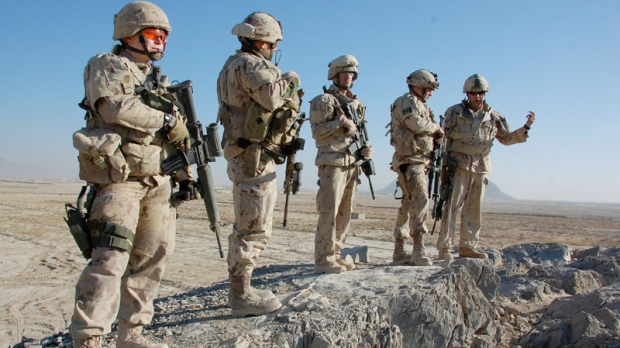
Between the late fall of 2001 and the summer of 2011, Canadians served in Afghanistan, suffered more than 165 killed, and kept their fingers in the dyke in Kandahar province – barely – but could accomplish little by way of “fixing” Afghanistan because Afghanistan is probably unfixable by outsiders. We in the west don’t like to believe that some of the world’s greatest and most persistent geo-political issues do not lend themselves to Western forms of resolution. Unfortunately, that is the reality we must accept.
The Israeli-Palestinian problem is one example. If we look at the micro level in places such as Kashmir, or northeast India, or the southern Philippines we will see conflicts that have been ongoing for years if not centuries because the long-ago movement of peoples, religions, ideologies, and so on, have pushed some outside their “natural” boundaries and sloughed over into nearby territories where they ran into conflict with indigenous peoples, ideologies and religions who were not compatible or didn’t want to be compatible.
Afghanistan is such a place. As long ago as Alexander the Great – long before the arrival of Islam – the different tribes who lived in that essential power vacuum between Persia and India, and later between India and Russia, provided foreign invaders with a less-than-warm welcome. It is not true, however, that Afghanistan is the place where empires go to die. In fact, Britain won the second Anglo-Afghan war quite handily. But victory, as defined by the then developing western concept of statecraft, was intended either to occupy, hold, colonize and assimilate the indigenous, or to hold on as long as politics made it necessary, and then give it up in return for other concessions elsewhere.
Such practices didn’t work in Afghanistan because it was, and is, essentially “too far up the line” and its people too independent to allow either forms of occupation to work. Over time, the Greeks, the Persians, the Indians, the British, the Russians simply had to decide at some point that Afghanistan was simply not worth the effort. They all fought in Afghanistan with one hand behind their back, and it wasn’t enough. Then again, two hands was not worth the price. That was as true of the United States and NATO as it was of any of their predecessors.
It is true of Canada, and also true of Donald Trump.
The renewed effort of the United States in Afghanistan will fail because it is not a serious effort to defeat the Taliban and win the war. Such an effort would mean a half a million troops and a ready willingness to end Pakistan’s role of continuing to this day to be the Taliban’s number one supporter and haven.
Why then should Canada go there? To support the Americans? To show the flag? That is what we did the first three times we were there. Yes, we were there once, but this time we have neither the troops nor the treasure to do anything even in a token way. We have deployed a handful of troops to the Baltic, another handful to the middle east, and we are running the danger of fracturing our military as we did continuously during the peacekeeping operations of the Cold War and post-Cold War period.
If we are serious about projecting Canadian power where it matters, and where our most important ally – the United States – takes notice, we should resist the temptation to send a few hundred Canadians hither and thither without any mass and with no chance of making any tactical or strategic difference.
If the Afghan government and the bulk of the Afghan people don’t want to be ruled again by the Taliban, they will find a will and a way to avoid it.
Militarily, Canada is a small country and must pick its military engagements with great care and with an eye firmly fixed on serving its own national interests.
----
– David Bercuson is Research Director of the Canadian Global Affairs Institute.
Showing posts with label Return to Afghanistan. Show all posts
Showing posts with label Return to Afghanistan. Show all posts
Monday, September 18, 2017

Khan: Why Canada should Return to Afghanistan
By: Adnan R. Khan, Macleans Magazine
The Iraq mission wasn’t all it was pumped up to be. In retrospect, Canada shouldn’t have left Afghanistan, which badly needs help.
In April 2016, while on a tour of the frontlines in the fight against the so-called Islamic State in Iraq’s Kurdistan Region, General Jonathan Vance, Chief of Defence Staff of the Canadian armed forces, made forceful pitch for why Canada needed to train Iraq’s Kurds.
“I believe [the offensive to re-take] Mosul will start this year,” he told CTV News. “The Zeravani commando isn’t formed yet. So as we form it and train it, they’ll have the weapons necessary to do the job they need to do. When the campaign to re-take Mosul will start and end, it would be ideal if we have the Zeravani commando ready for operations.”
Vance was referring to the Kurdish forces that were receiving the bulk of the training and assistance Canada’s Special Operations Forces had been providing since 2014. At the time, the Zeravani were expected to be at the forefront of the impending battle for Mosul. After withdrawing Canadian fighter jets from the international coalition in February 2016, the Liberal government had doubled-down on the Kurds, announcing it would send an additional 200 special forces to the region with the express mission of getting the Zeravani ready for what everyone knew would be a brutal fight.
It seemed like a prudent decision. Since it emerged in 2014, ISIS had proven itself to be the most dangerous terrorist group the world had ever seen. It had injected new blood into the global jihadist movement, attracting unprecedented recruits who either joined the group in Syria and Iraq or were inspired to carry out devastating attacks at home.
Mosul was its crown jewel, the place where its leader, Abu Bakr al Baghdadi, had declared a caliphate and the largest city under its control, with an estimated population of one million. Retaking Mosul would deal a near-fatal blow to the movement.
Meanwhile, in March 2014, Canada had officially ended its military mission to Afghanistan after 12 years and 158 dead soldiers. It was a bitter-sweet end to a mission that had pushed Canada into territory it had not ventured into since the Korean War: direct involvement in war fighting. Canadians had fought bravely in Kandahar, despite the overwhelming odds stacked against them. They had built up a reputation for fielding one of the best-trained militaries in the world.
By 2014, however, that mission had been reduced to a small contingent tasked with training Afghan security forces and was floundering in obscurity.
Under the Harper Conservatives, Canada’s military sights had begun to drift westward in 2011, away from Afghanistan and toward the Arab Spring in the Middle East and the conflicts arising from it. The Conservatives, with an almost obsessive focus on terrorism, had decided to go all-in, playing a key role in the mission to topple the Ghaddafi regime in Libya and, at least initially, supporting the Syrian opposition against Bashar al Assad.
History will judge the wisdom of those decisions but the early signs are discouraging. From 2011 onward, Canada’s stated mission—assisting democratic movements in the region—collided with the complexities of nation building. Libya fractured into mini-states ruled by tribal militias. Syria devolved into a civil war pitting dozens of armed groups against each other. By the fall of 2014, as ISIS rose out of the ashes of the Syrian civil war, the Conservatives shifted their focus again.
“Let me be clear on the objectives of this intervention,” Harper said of the decision to deploy special forces trainers, along with the fighter jets, to Iraq in a speech to parliament in early October 2014. “We intend to significantly degrade the capabilities of ISIL… Specifically, its ability either to engage in military movements of scale or to operate bases in the open.”
At the same time, the breakdown of security in Afghanistan had accelerated, particularly after the U.S. pulled its troops later in October. Many started to see Afghanistan as a lost cause, despite the significant progress that had been made in developing the country’s infrastructure and institutions.
Was this Canada’s WMD moment? In 2003, the U.S. under George W. Bush turned away from Afghanistan and poured its military resources into Iraq. The shift is now blamed for giving the Taliban the time it needed to regroup and rebound as an insurgent movement. Bush’s cohorts in the Republican Party initially used the spectre of weapons of mass destruction as justification for the shift. When those failed to turn up, it recast Iraq as a mission to bring democracy to the Middle East.
Canada has also struggled to find meaning in its Middle East pivot. Democracy in Libya, Syria and Egypt appears further away today than ever and even though the mission to destroy ISIS is succeeding, Canada’s contribution to the fight is looking more and more superficial.
Initially, things were going according to plan. The expertise Canadian special forces brought to the table was a valuable asset to the Kurds. While other NATO countries provided training to the Kurdish Peshmerga in purpose-built centres scattered around the Kurdistan Region, the Canadians embedded with Zeravani forces on the ground, at or near the frontlines, providing real-time guidance and support in real-life combat situations.
Not surprisingly, the Zeravani were transformed into a capable fighting force, arguably the best fighters Kurdistan now fields. They took the lead at the launch of the Mosul offensive in October last year, punching through ISIS frontlines and retaking territory north and east of the city. And Canadians were right there with them.
But then they stopped. In a deal brokered with Iraq’s central government, the Kurds agreed not to fight in Mosul. Instead, they set up their own positions kilometers away, watching as elite fighters from the Iraqi special forces confronted the bulk of ISIS forces.
Compared to what the Iraqis faced inside the city, the Kurdish advance was a cakewalk. The initial resistance they met collapsed quickly as ISIS fighters retreated to Mosul and dug in for the gruelling battles to come. Airstrikes helped the Kurds roll through largely emptied towns and villages and avoid the kinds of street-by-street, house-by-house confrontations the Iraqis would have to contend with.
Politically, things were not much better. Canada’s train and assist mission had a destabilizing effect on the Kurdistan Region. The focus on the Zeravani, a specialized commando force attached to the Interior Ministry, angered some Kurdish politicians. The ministry, like many of Kurdistan’s power centres, is controlled by the dominant Kurdistan Democratic Party, a family affair run by the Barzani clan. Opposition parties, and some Canadian diplomats, complained to Maclean’s in 2015 that Canada, under the Harper Conservatives, was favouring one political party and, perhaps unwittingly, playing into the deep-rooted Kurdish divides that have plagued the region for decades.
More broadly, the support for the Kurds ratcheted up tensions with Baghdad, which accused foreign governments like Canada of stoking Kurdistan’s independence aspirations. In June, Kurdistan’s president Masoud Barzani announced a non-binding referendum on independence scheduled for Sept. 25, raising concerns that Canada may have armed and trained the military of a future breakaway state.
The Liberal government now appears to be coming around to the problems associated with supporting the Kurds. In March, Canada’s special forces shifted some of their focus to helping the Iraqi army in Mosul and a February 2016 deal to provide weapons to the Kurdish Peshmerga has been put on hold indefinitely.
Still, the grand vision articulated by Harper, and later by General Vance, where Canadian-trained Zeravani commandoes would take the fight to the Islamic State, largely came to naught. In the process, Canada abandoned a mission in Afghanistan in which it had invested millions of dollars and where Canadians had sacrificed their lives.
Chris Kilford, a retired Canadian artillery officer and now a fellow at the Queen’s University Centre for International and Defence Policy, argues that Canada’s turn to the Middle East was probably inevitable given the public fatigue over the war in Afghanistan. And neither the Harper government nor the Liberals, he adds, could have predicted how events would unfold in Mosul.
“Should we have left [Afghanistan] when we did?” he says. “No. Should we still have trainers on the ground? Yes. But we have a bit of momentum now. We’ve put a lid on this massive issue known as the Islamic State. We can turn our attention to other places such as Mali, Libya and Afghanistan.”
It’s impossible to judge if Afghanistan would be different today if, instead of pulling trainers out, Canada had sent its special forces there instead of Iraq. What’s certain is that Afghan security forces have come to rely on their own special forces, largely trained by the U.S., to take the fight to the Taliban. According to Afghan defense ministry officials, their special forces only make up seven per cent of the Afghan military but have led 80 per cent of offensives. U.S. commanders say they are the most successful fighters on the battlefield, but they are being pushed to their limits.
Earlier this year, President Ashraf Ghani announced a plan to double the existing 17,000 special forces troops over the next four years. Kilford warns such an expansion will require a massive mobilization of resources.
“In Canada, the Liberals have decided to increase special forces personnel by around 600 over the coming years,” he says. “That means taking on around 1,800 recruits and whittling them down to the best.”
It was a mistake to turn away from Afghanistan and Afghans have paid the price for it. Canada should not compound the mistake by continuing to withhold the support the Afghan military needs at a time when successes in Afghanistan hangs precariously in the balance.
Training for the Kurds has only produced elite fighters without a war to fight. In Afghanistan, the war is still raging. And they need Canada’s help.
The Iraq mission wasn’t all it was pumped up to be. In retrospect, Canada shouldn’t have left Afghanistan, which badly needs help.
In April 2016, while on a tour of the frontlines in the fight against the so-called Islamic State in Iraq’s Kurdistan Region, General Jonathan Vance, Chief of Defence Staff of the Canadian armed forces, made forceful pitch for why Canada needed to train Iraq’s Kurds.
“I believe [the offensive to re-take] Mosul will start this year,” he told CTV News. “The Zeravani commando isn’t formed yet. So as we form it and train it, they’ll have the weapons necessary to do the job they need to do. When the campaign to re-take Mosul will start and end, it would be ideal if we have the Zeravani commando ready for operations.”
Vance was referring to the Kurdish forces that were receiving the bulk of the training and assistance Canada’s Special Operations Forces had been providing since 2014. At the time, the Zeravani were expected to be at the forefront of the impending battle for Mosul. After withdrawing Canadian fighter jets from the international coalition in February 2016, the Liberal government had doubled-down on the Kurds, announcing it would send an additional 200 special forces to the region with the express mission of getting the Zeravani ready for what everyone knew would be a brutal fight.
It seemed like a prudent decision. Since it emerged in 2014, ISIS had proven itself to be the most dangerous terrorist group the world had ever seen. It had injected new blood into the global jihadist movement, attracting unprecedented recruits who either joined the group in Syria and Iraq or were inspired to carry out devastating attacks at home.
Mosul was its crown jewel, the place where its leader, Abu Bakr al Baghdadi, had declared a caliphate and the largest city under its control, with an estimated population of one million. Retaking Mosul would deal a near-fatal blow to the movement.
Meanwhile, in March 2014, Canada had officially ended its military mission to Afghanistan after 12 years and 158 dead soldiers. It was a bitter-sweet end to a mission that had pushed Canada into territory it had not ventured into since the Korean War: direct involvement in war fighting. Canadians had fought bravely in Kandahar, despite the overwhelming odds stacked against them. They had built up a reputation for fielding one of the best-trained militaries in the world.
By 2014, however, that mission had been reduced to a small contingent tasked with training Afghan security forces and was floundering in obscurity.
Under the Harper Conservatives, Canada’s military sights had begun to drift westward in 2011, away from Afghanistan and toward the Arab Spring in the Middle East and the conflicts arising from it. The Conservatives, with an almost obsessive focus on terrorism, had decided to go all-in, playing a key role in the mission to topple the Ghaddafi regime in Libya and, at least initially, supporting the Syrian opposition against Bashar al Assad.
History will judge the wisdom of those decisions but the early signs are discouraging. From 2011 onward, Canada’s stated mission—assisting democratic movements in the region—collided with the complexities of nation building. Libya fractured into mini-states ruled by tribal militias. Syria devolved into a civil war pitting dozens of armed groups against each other. By the fall of 2014, as ISIS rose out of the ashes of the Syrian civil war, the Conservatives shifted their focus again.
“Let me be clear on the objectives of this intervention,” Harper said of the decision to deploy special forces trainers, along with the fighter jets, to Iraq in a speech to parliament in early October 2014. “We intend to significantly degrade the capabilities of ISIL… Specifically, its ability either to engage in military movements of scale or to operate bases in the open.”
At the same time, the breakdown of security in Afghanistan had accelerated, particularly after the U.S. pulled its troops later in October. Many started to see Afghanistan as a lost cause, despite the significant progress that had been made in developing the country’s infrastructure and institutions.
Was this Canada’s WMD moment? In 2003, the U.S. under George W. Bush turned away from Afghanistan and poured its military resources into Iraq. The shift is now blamed for giving the Taliban the time it needed to regroup and rebound as an insurgent movement. Bush’s cohorts in the Republican Party initially used the spectre of weapons of mass destruction as justification for the shift. When those failed to turn up, it recast Iraq as a mission to bring democracy to the Middle East.
Canada has also struggled to find meaning in its Middle East pivot. Democracy in Libya, Syria and Egypt appears further away today than ever and even though the mission to destroy ISIS is succeeding, Canada’s contribution to the fight is looking more and more superficial.
Initially, things were going according to plan. The expertise Canadian special forces brought to the table was a valuable asset to the Kurds. While other NATO countries provided training to the Kurdish Peshmerga in purpose-built centres scattered around the Kurdistan Region, the Canadians embedded with Zeravani forces on the ground, at or near the frontlines, providing real-time guidance and support in real-life combat situations.
Not surprisingly, the Zeravani were transformed into a capable fighting force, arguably the best fighters Kurdistan now fields. They took the lead at the launch of the Mosul offensive in October last year, punching through ISIS frontlines and retaking territory north and east of the city. And Canadians were right there with them.
But then they stopped. In a deal brokered with Iraq’s central government, the Kurds agreed not to fight in Mosul. Instead, they set up their own positions kilometers away, watching as elite fighters from the Iraqi special forces confronted the bulk of ISIS forces.
Compared to what the Iraqis faced inside the city, the Kurdish advance was a cakewalk. The initial resistance they met collapsed quickly as ISIS fighters retreated to Mosul and dug in for the gruelling battles to come. Airstrikes helped the Kurds roll through largely emptied towns and villages and avoid the kinds of street-by-street, house-by-house confrontations the Iraqis would have to contend with.
Politically, things were not much better. Canada’s train and assist mission had a destabilizing effect on the Kurdistan Region. The focus on the Zeravani, a specialized commando force attached to the Interior Ministry, angered some Kurdish politicians. The ministry, like many of Kurdistan’s power centres, is controlled by the dominant Kurdistan Democratic Party, a family affair run by the Barzani clan. Opposition parties, and some Canadian diplomats, complained to Maclean’s in 2015 that Canada, under the Harper Conservatives, was favouring one political party and, perhaps unwittingly, playing into the deep-rooted Kurdish divides that have plagued the region for decades.
More broadly, the support for the Kurds ratcheted up tensions with Baghdad, which accused foreign governments like Canada of stoking Kurdistan’s independence aspirations. In June, Kurdistan’s president Masoud Barzani announced a non-binding referendum on independence scheduled for Sept. 25, raising concerns that Canada may have armed and trained the military of a future breakaway state.
The Liberal government now appears to be coming around to the problems associated with supporting the Kurds. In March, Canada’s special forces shifted some of their focus to helping the Iraqi army in Mosul and a February 2016 deal to provide weapons to the Kurdish Peshmerga has been put on hold indefinitely.
Still, the grand vision articulated by Harper, and later by General Vance, where Canadian-trained Zeravani commandoes would take the fight to the Islamic State, largely came to naught. In the process, Canada abandoned a mission in Afghanistan in which it had invested millions of dollars and where Canadians had sacrificed their lives.
Chris Kilford, a retired Canadian artillery officer and now a fellow at the Queen’s University Centre for International and Defence Policy, argues that Canada’s turn to the Middle East was probably inevitable given the public fatigue over the war in Afghanistan. And neither the Harper government nor the Liberals, he adds, could have predicted how events would unfold in Mosul.
“Should we have left [Afghanistan] when we did?” he says. “No. Should we still have trainers on the ground? Yes. But we have a bit of momentum now. We’ve put a lid on this massive issue known as the Islamic State. We can turn our attention to other places such as Mali, Libya and Afghanistan.”
It’s impossible to judge if Afghanistan would be different today if, instead of pulling trainers out, Canada had sent its special forces there instead of Iraq. What’s certain is that Afghan security forces have come to rely on their own special forces, largely trained by the U.S., to take the fight to the Taliban. According to Afghan defense ministry officials, their special forces only make up seven per cent of the Afghan military but have led 80 per cent of offensives. U.S. commanders say they are the most successful fighters on the battlefield, but they are being pushed to their limits.
Earlier this year, President Ashraf Ghani announced a plan to double the existing 17,000 special forces troops over the next four years. Kilford warns such an expansion will require a massive mobilization of resources.
“In Canada, the Liberals have decided to increase special forces personnel by around 600 over the coming years,” he says. “That means taking on around 1,800 recruits and whittling them down to the best.”
It was a mistake to turn away from Afghanistan and Afghans have paid the price for it. Canada should not compound the mistake by continuing to withhold the support the Afghan military needs at a time when successes in Afghanistan hangs precariously in the balance.
Training for the Kurds has only produced elite fighters without a war to fight. In Afghanistan, the war is still raging. And they need Canada’s help.
Subscribe to:
Posts (Atom)