Translate

Showing posts with label Police Trainers. Show all posts

Friday, June 23, 2017

Canadian Trainers Would Face Risk in Afghanistan

By: Evan Dyer, CBC News 

As the security situation in Afghanistan continues to slip, NATO has asked Canada to help with its Resolute Support mission by sending trainers to help build an Afghan military and police force capable of defending the country.

For the past three years, Canadian soldiers have been training and mentoring Kurdish Peshmerga fighters in Iraq with great success and only one fatality: Sgt. Andrew Doiron was killed in a "friendly fire" incident that all sides agree was a tragic but honest mistake.

The Canadians have developed a relationship of mutual trust and even affection with their Kurdish hosts, according to Canadian military commanders.

So the Afghan training and mentoring mission NATO is now asking Canada to take on, might also seem to be a relatively safe assignment.

But bitter experience has taught NATO that the Afghan frontline runs through every army base, police detachment and training classroom. Western soldiers have died not only on the battlefield, but on the parade ground, the firing range and even sitting down to dinner with their Afghan counterparts.

"Insider attacks" have been a constant of the Afghan war, and many have taken the form of so-called "green-on-blue" shootings, in which foreign instructors are deliberately killed by their own students.

Opinion: Canada should join its closest allies and return to Afghanistan

In August 2012, an Afghan police commander called Asadullah sat down to a pre-dawn meal with three U.S. marines in Helmand province. The marines were there to train Afghan national police. Asadullah invited them, he told them, to discuss security arrangements.

Partway through the meal, Asadullah produced a pistol and shot the three marines dead. He then fled the base in the dark.

"He is with us now," Taliban spokesperson Qari Yusuk Ahmadi later confirmed to Agence France-Presse by phone.
Insider attacks

Sixty foreign advisers were killed by Afghan soldiers and police that same year, according to figures compiled by the International Security Assistance Force. The attacks prompted new measures by ISAF to protect trainers from their trainees.

The changes included strengthened identity vetting for Afghan security forces members.

That's no simple matter in a country where the typical recruit is an illiterate villager with no real birth certificate and often, no family name (many Afghans use only a first name).

The Afghan military is now using biometric scans, with equipment and supervision provided by ISAF, on all new recruits. Recruits must also provide references from two trusted elders from their home district.

Western trainers also instituted a system of "guardian angels," where a coalition soldier is assigned to stand guard over Afghan recruits at all times.
Afghan police demonstrate their skills during a graduation ceremony at a police training centre in the Adraskan district of Herat province, Afghanistan, in March, 2011. (Reza Shirmohammadi/Associated Press)
Not getting safer

On military bases where Afghan soldiers and police mix with foreign forces, the Afghans are required to be unarmed inside the gates, or have the firing pins removed from their rifles.

It was partly because of that rule that a recent Taliban attack on an Afghan army base in Mazar-e-Sharif was so deadly, says Bill Roggio, a former U.S. soldier who today edits the Long War Journal, published by the Washington think-tank the Foundation for the Defence of Democracies.

In that incident, about 10 attackers were recently able to kill about 140 mostly unarmed recruits.

"It tells you just how the Taliban strategy of conducting insider attacks has second and third order effects that people often don't consider," said Roggio. "They just aren't being trusted right now and trust is the first thing you need when you're partnering with foreign forces.

"You have cases where Afghan soldiers have gone through the vetting process, they didn't have any problems and then after a couple years in service, or a couple of months or weeks, they've been pressured or talked to by the Taliban and recruited to conduct attacks," he said.

Roggio says the countermeasures taken by NATO forces are not the main reason for the reduction in insider attacks.

"The primary reason for the reduction over the last several years is there's been less coalition forces partnered" with Afghan forces, he says, and fewer Westerners in Afghanistan generally.
Police forces clash with protesters during a demonstration in Kabul earlier this month. Hundreds of demonstrators demanded better security in the Afghan capital in the wake of a powerful truck bomb attack that killed scores of people. (Massoud Hossaini/Associated Press)
Yet three more U.S. soldiers fell victim to such an attack on June 12. The men of the 101st Airborne were killed in Nangarhar province by an Afghan National Army soldier who was immediately killed by return fire.

A week later, seven more Americans were shot by an Afghan soldier inside the Mazar-e-Sharif base. All seven survived.


An Ottawa cop remembers

Canada has been involved in training Afghan police before.

Ottawa police Sgt. Colin Stokes, who trained Afghan police in Kandahar from 2009 to 2010, operated mostly out of Camp Nathan Smith.

He says his experience was mostly positive, but remembers the precautions he and his fellow police officers took, particularly when their students were armed at the firing range.
Ottawa police Sgt. Colin Stokes oversees an Afghan police trainee during weapons training in Kandahar. Stokes was posted with the Canadian Armed Forces as a trainer in 2009 and 2010. (Colin Stokes )
"When we were on the range with them, we always ensured there were other police officers, basically, very hands on and close to all the Afghan soldiers and constables that were on the line," he says.

Stokes said his Afghan trainees were mostly keen to learn, but says it's impossible to prevent all green-on-blue killings when dealing with armed recruits.

"Mistakes are made, things slip through the cracks. Everybody tries to do the best we can to vet personnel, but it's a war zone and you can't be too surprised when people get killed."

He says he'd be willing to return under certain circumstances.

"If Canada does go back, if I was to go back, I'd want to mentor Afghans that have the capacity to absorb the type of police training that we have to give."

Thursday, June 15, 2017

Walkom: Canada Mulling a return to the Unwinnable Afghan War

By THOMAS WALKOM, Toronto Star 

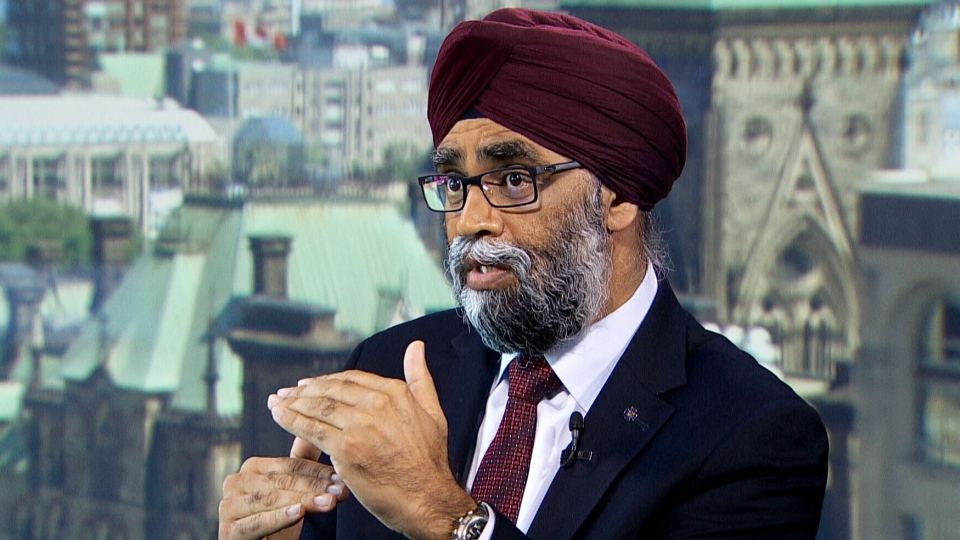
A return to the Afghan War is one step closer. Defence Minister Harjit Sajjan has confirmed that NATO has asked Canada to send police trainers to assist Afghanistan’s struggling government in the fight against Taliban insurgents. He said Ottawa is seriously considering the request.

The trainers, if sent, could be either soldiers or police officers.

The NATO request is part of an effort by the alliance to quietly beef up its role in the Afghan war without inflaming public opinion back home.

Technically, the roughly 13,000 troops under NATO command in Afghanistan do not engage in combat. Their role is to train, advise and assist local Afghan forces.

But the war in Afghanistan is going badly for the government in Kabul. It faces not only its traditional Taliban foes but the terrorist group Daesh, also known as ISIS.

High-profile suicide bombings have rocked Kabul. The Taliban effectively controls large swaths of the countryside. The central government is shaky.

American Gen. John Nicholson, who heads NATO operations in Afghanistan, says he needs at least 3,000 to 5,000 more “advisers” to meet his military needs there.

In Washington, President Donald Trump’s administration is mulling over the question of how many more American troops to commit to Afghanistan (it already has roughly 8,400 soldiers there).

But Trump has also made it clear that he expects other NATO countries to pick up part of the slack.

Currently, Canada and France are the only NATO countries without troops in Afghanistan.

Canadian troops entered the Afghan War in 2001 and stayed for just over 12 years. Over that period, 158 Canadian soldiers were killed and hundreds more wounded.

It was the longest-running war in Canadian history. By the end, it was also one of the most unpopular.

In 2014, with an election year looming, Stephen Harper’s Conservative government ordered the last Canadian troops home.

Prime Minister Justin Trudeau’s Liberal government is careful to couch any return to Afghanistan in minimalist terms.

Sajjan first raised the possibility in a CTV interview on Saturday, volunteering that NATO had made an “ask” for Canadian advisers to help train Afghan police and that Canada was actively considering the request.

He repeated this again Monday to reporters in Halifax. But he noted that Ottawa’s real military focus now is on the war against Daesh in Iraq and that, in any case, Canada’s military operations in Afghanistan ended three years ago.

Translation: Even if we accede to the NATO request, this will not be as bad as before.

But of course that’s the kind of optimistic thing governments always say at the outset of armed conflict.

When Canada first entered the Afghan War after the 9/11 attacks on New York and Washington, the stated aim was to honour its NATO obligations to the U.S. When Canada upped its military commitment in 2006, the stated aim was to ensure that Afghan girls could go to school.

Throughout, the experts told us that we had to take part in this war to maintain our credibility in NATO and to avoid irritating the U.S. In fact, what we became involved in was a complicated, vicious and ultimately unwinnable conflict where the line between friend and enemy was too often blurred.

So we shall see what the Trudeau Liberals have in mind this time. They have already expanded Canada’s role in the ground war in Iraq. Foreign Affairs Minister Chrystia Freeland talks glowingly of using Canadian “muscle” to promote Canadian values,

They plan to increase defence spending overall.

Perhaps they will remember how difficult it was to extricate ourselves the last time we involved ourselves in the Afghan War. Sajjan should. He fought in it.

Or perhaps they will calculate that the political benefits of satisfying a U.S. and NATO request are worth the risk.

After all, they could say, it’s just training. What’s so dangerous about that?

Monday, June 12, 2017

Canada Considering NATO Request for Police Trainers in Afghanistan

By: Laura Payton, CTVNews Online 

OTTAWA -- Canada is considering a NATO request to send police trainers to Afghanistan, three years after the military mission officially ended, Defence Minister Harjit Sajjan says.

The request came from the U.S. through NATO, and could involve either civilian police trainers like the RCMP, or military trainers working with Afghan police, a defence official added.

Sajjan says Canada is "looking at all aspects of support" for Afghanistan -- though he ruled out the country as a destination for Canadian peacekeepers since it's not a UN mission.
Defence Minister Harjit Sajjan speaks on CTV's Question Period. (CTV)
"We've actually had an ask, but it was for police trainers in Afghanistan," Sajjan said in an interview with Evan Solomon, host of CTV's Question Period.

"We are actually still committed to Afghanistan. We've provided the funding, whether it's for development" or salaries for security forces in the country, he said.

From 2014 to 2017, Canada committed $227 million in international development programs in Afghanistan, and $330 million from 2015 to 2018 in support for the Afghan National Security Forces, which include the Afghan National Army and the Afghan National Police.

Sajjan says Canada can't look at any country in isolation.

"This is what coalitions are for, multilateralism is for. I'm in constant discussions with my counterparts on all the various threats, whether it's at NATO or the counter-DAESH meetings," he said, using another name for the Islamic State.

"We will always look at the various requests, but the thing is when we have the discussions, it's not about just one nation ... stepping up and saying, 'I'll do this.' It's about working together."

Peacekeeping mission 'on the table'

Last August, Sajjan announced Canada would devote 600 troops and $450 million over three years to a peacekeeping mission. He later toured several African countries and said he would announce the mission by the end of the year, but six months into 2017 there is still no word on where it will be.

A mission somewhere in the world "is on the table. We're committed to peace support operations," Sajjan said, citing a change in leadership at the UN and the new president of the U.S. as reasons for the delay.

"I've had discussions with [the UN], things looked very good... It's not about just sending troops. How can we now look at the current environment and bring our unique skillset to the table?"

While Sajjan ruled out Afghanistan as a peacekeeping destination, Richard Fadden, a former top civil servant at the Department of National Defence and former national security adviser to the prime minister, says having shed blood and spent a great deal of money on the country, it would make sense to return.

"Afghanistan has deteriorated quite a bit over the last few years," he said.

"I think if we were going anywhere to make a contribution, broadly speaking, to peace in the world, Afghanistan would be a good place to go. There are not that many other places where we could make a difference that would not result in ... our being involved in a massive quagmire."

Retired Gen. Tom Lawson, a former chief of the defence staff, says he prefers Afghanistan to some of the African countries Canada could end up, like Mali or the Democratic Republic of Congo. Both would carry significant risks for Canadian Armed Forces personnel.

"If it keeps us out of other places, [like] in Africa, I'd be delighted as a former chief of defence," Lawson told Solomon.

"So Afghanistan is a place that Canadians have invested both money and blood. We continue to invest money there. If a return was in Canadian defence future, it would be to a familiar zone."

Over the 12-year mission, 158 Canadian troops were killed, as well as a diplomat, a journalist and two civilian contractors, according to a tally by The Canadian Press.