Translate

Showing posts with label Canada and NATO. Show all posts

Thursday, March 28, 2019

Canada extends Iraq and Ukraine military missions to 2021 and 2022

By: The Canadian Press

Canada is extending its military missions in Ukraine and Iraq, both of which were due to expire at the end of the month.
Related image

The extensions shore up Canada’s contributions to the global effort to curb Russian aggression in Eastern Europe and to the fight against Islamic militants in the Middle East.

Defence Minister Harjit Sajjan and Foreign Affairs Minister Chrystia Freeland say the mission of about 200 Canadian Forces personnel in Ukraine will be extended to the end of March 2022.


The Forces have been involved in Ukraine since September 2015, helping train the country’s military, which is battling Russian-backed separatist forces.

Canada will extend the Canadian Forces’ contribution to the Global Coalition Against Daesh and the NATO mission in Iraq, until the end of March 2021.

Canada has about 500 military members in Iraq, including 200 who are part of a NATO training mission and 120 special forces who have been helping Iraqi forces root out Islamic State insurgents around the northern city of Mosul.

Those are parts of Canada’s larger Middle East strategy, which also includes humanitarian assistance and diplomatic engagement in Iraq, Syria and the surrounding region.

The decision to extend Canada’s commitment in Ukraine will be welcome news to that country as it continues to cope with Russia’s annexation of its Crimea region in 2014, and the continuing unrest in its eastern Donbass region, which is plagued by separatist rebels backed by Moscow.

“The people of Ukraine know they can count on Canada,” Freeland said in a statement. “We are steadfast in our commitment to Ukraine’s sovereignty and territorial integrity, as it works toward a stable, democratic and prosperous future.”

Ukraine is bracing for Russian interference in its upcoming presidential election on March 31.

Former foreign-affairs minister Lloyd Axworthy is leading a delegation of Canadian election monitors to Ukraine.

Freeland said Canada will host an international conference on Ukraine’s economy and political reforms in July that will include foreign ministers from the European Union, the G7 and NATO countries.

Tuesday, November 27, 2018

CF-18 Replacement Delay Fueling Exodus of Pilots from RCAF

By: Bruce Campion-Smith, The Toronto Star

OTTAWA—The oft-delayed purchase of new fighter jets is contributing to a flight of pilots out of the Air Force to the civilian sector, causing a critical shortage of skilled aviators to fly Canada’s ageing fleet of CF-18s, insiders say.

Flying a 30-year-old jet holds less appeal for pilots who are no longer prepared to sacrifice quality of life and are instead quitting for airline careers, where demand for experienced personnel is sky-high.

Frustration over the oft-delayed purchase of new fighter jets is contributing to a flight of pilots out of the Air Force to the civilian sector, causing a critical shortage of skilled aviators to fly Canada’s aging fleet of CF-18s, insiders say. (Andrew Vaughan / THE CANADIAN PRESS FILE PHOTO)

The rush out the door has left the Royal Canadian Air Force coping with less experienced pilots flying increasingly outdated jets, former fighter pilots tell the Star.

“It’s not a winning proposition,” one veteran former pilot told the Star.

In a recent report, the auditor general turned a spotlight on the crisis, noting that the Air Force only had 64 per cent of the CF-18 pilots it needs. Between April 2016 and March 2018, 40 fighter pilots left and the Air Force was only able to train 30 new ones. Since then, 17 more pilots have indicated they are out the door.

If that pace continues, there won’t be enough experienced pilots to train new ones and the Air Force won’t be able to meet its obligations to NATO and NORAD, the report said.

The Star spoke to several former fighter pilots about the situation. They spoke on background because of sensitivities around their current jobs.

They say several factors are at play in the exodus of pilots. These include exasperation over the delayed purchase of replacement jets that are now not expected for a decade or more, as well as a desire for better quality of life away from the two main fighter bases in Cold Lake, Alta., and Bagotville, Que.

But the biggest factor is the huge demand for pilots across Canada and the world, offering military pilots an easy path to the cockpits of commercial airliners.

“There’s not enough pilots globally ... so companies are very aggressive in recruiting wherever they can find them. Military pilots are prime candidates, so they get offered good deals and off they go,” one former pilot said.


The broader pilot shortage problem could soon be the topic of parliamentary study. Liberal MP Steve Fuhr, a former Air Force pilot who flew the CF-18, has proposed a motion to have the Commons transport committee examine the challenges facing flight schools in training new pilots.

Speaking to the motion earlier this month, Fuhr (Kelowna-Lake Country) said the industry-wide shortage is already having an effect on the civilian sector and the military, and noted that Canada could be short 3,000 pilots by 2025.

“As the pilot shortage percolates up, both scheduled and nonscheduled commercial air service will be negatively affected,” Fuhr told a meeting of the committee on Nov. 21.

The CF-18s were last deployed in a combat role in Iraq against Daesh, and remain potent fighters. Able to fly at almost twice the speed of sound, they continue to hold appeal for young military pilots.

But delays in purchasing new fighters, first by the Conservative government and now the Liberals, means replacement aircraft are 10 years or more away. With no prospect of flying the next generation of fighter, some pilots see little incentive to stick around and are opting to quit the Armed Forces when their flying tours are complete.

“They make the calculation that I’m never going to fly anything other than an old 40-year-old F-18 in my entire career,” the former pilot said.

However, another veteran pilot downplayed the delayed procurement as a reason for the departures. “Realistically, I don’t think that’s driving people out the door,” he said.

After two tours of flying — typically about six years — pilots usually move to a desk job. That’s the point where military pilots who are keen to keep flying decide to jump to the private sector, which offers the promise of a good career and the chance to live closer to big cities.

“That’s why guys get out. What’s ultimately driving them out is opportunity,” he said.

Whatever the reason, the departures are hitting the RCAF hard. The Air Force has 76 CF-18s and just over 100 pilots qualified to fly them, insiders say. As a result, having almost 60 quit the forces in just over two years marks a huge loss in experience, they say.

The former Air Force veterans stressed that training is good and that the young pilots arriving at the front-line squadrons are well-qualified. Yet they are considered “minimum combat-ready,” able to initially fly only as wingmen and require another one or two years of experience to be considered qualified to fly all missions and serve as flight leaders.

“That’s the danger of this cycle. They’re not regenerating the same numbers as they’re losing,” the pilot said. “The experience level is dropping ... With that goes an increase in risk.”

By the time they are replaced, the CF-18s will have been in the Air Force fleet for almost half a century, 30 years longer than planned. The auditor general noted that it’s been 10 years since there was any significant upgrade to their combat capabilities. The Air Force had been relying on the experience of its pilots to overcome shortfalls caused by the age of the aircraft.

“You can still fight OK with an old jet if you have very, very skilled individuals flying it. We invest a lot in our training and therefore our people are very capable, adaptive, innovative,” the pilot said.

“The problem is that those guys are leaving,” he said.

In response to the auditor general findings, Lt.-Gen. Al Meinzinger, commander of the RCAF, said the Air Force is taking steps to help retain aircrews, including measures to improve the quality of life along with changes to how the Air Force trains its pilots to give it “greater flexibility to better meet future personnel demands.”

Wednesday, November 21, 2018

Auditor General Slams Government Plan to Maintain CF-18 Fleet Until 2032

By: Murray Brewster, CBC News 

Canada's auditor general has shot down the Liberal government's handling of the air force's aging CF-18s in a blistering report that raises questions about national security, and even long-term safety, regarding the viability of the country's frontline fighter jets.

Auditor General Michael Ferguson's fall report, tabled Tuesday, methodically picks apart the recent policy change at the Department of National Defence, which requires the military to have enough warplanes to meet Canada's commitments to both NORAD and NATO at the same time.

Watch Power & Politics take a look at the ups and downs of Canada's fighter jet program
The RCAF is currently facing a shortage of both qualified pilots and technicians. Those pilots the RCAF does have on active roster are struggling to maintain the minimum 140 flight hours per year. 

From the get-go the policy was a non-starter, and the federal government knew it, said Ferguson.

"The fighter force could not meet the requirement because National Defence was already experiencing a shortage in personnel, and the CF-18 was old and increasingly hard to maintain," said the audit.

As of April 2018, the air force's CF-18 squadrons faced a 22 per cent shortage in technical positions — and a startling number of technicians were not fully qualified to do maintenance.

Fighter pilots are also in short supply. The air force is losing more of them than it is training each year; among those who do remain, almost one third do not get the required 140 hours of flying time per year.

At a news conference following the release of the report, Defence Minister Harjit Sajjan conceded that personnel shortages were identified "early on" after the Liberals took over in 2015.

"This is a problem we knew we had," he said, pointing the finger at budget cuts made by the previous Conservative government. "This is what happens when you don't put enough resources into the military."

Watch Defence Minister Harjit Sajjan react to the AG report on fighter jets on Power & Politics


The extent of Liberals' own efforts to boost recruiting and retention of pilots and technicians in the three years since the election was the subject of some confusion Tuesday.

A written statement from Sajjan said the government "will launch new efforts to recruit and retain pilots and technicians."

During the news conference, the minister said the military's top commander had been directed to deal with the problem and that recruiting pilots is "a priority."

Pressed for specifics on recruitment, Sajjan said he's "going to leave it to the experts to figure out."

Proposed solution 'will not help solve' issues

The auditor's report took issue with the Liberal government's strategy to fill the so-called capability gap by buying additional interim aircraft.

The current proposal is to buy used Australian F-18s — of approximately the same vintage as Canada's CF-18s — and convert them for further use until the federal government completes the purchase of brand-new aircraft.

This plan, the auditor's report said, "will not help solve either the personnel shortage or the aging fleet."

Ferguson said an earlier, $6.3 billion plan to buy 18 brand new Super Hornet fighter jets on an interim basis would have been even worse — and the government was told so in no uncertain terms by the air force.

"National Defence's analysis showed that buying the Super Hornet alone would not allow the department to meet the new operational requirement," said the audit.

"The department stated that the Super Hornet would initially decrease, not increase, the daily number of aircraft available because technicians and pilots would have to be pulled away from the CF-18s to train on the new aircraft."

The proposal to buy Super Hornets was scrapped last spring after the manufacturer, Chicago-based Boeing, angered the Trudeau government in a separate trade dispute involving the sale of Bombardier passenger jets.

The Opposition Conservatives have long claimed the 'capability gap' was concocted by the Liberals as a way to push off a decision on a permanent replacement for the CF-18s. In the last election, Prime Minister Justin Trudeau pledged not to buy the F-35 stealth fighter, the preferred option of the Harper government.
Sparring in the House

The report led to sparring in the House of Commons, with the Conservatives seeing the auditor general's assessment as vindication.

"Today's report confirms what we have been saying all along," said James Bezan, the defence critic.

"Justin Trudeau deliberately misled Canadians by manufacturing a 'capability gap' to fulfil a misguided campaign promise, and in the process has put the safety and security of Canadians at risk."

Sajjan, however, believed the report supported the government's position.

"The report confirms what we have always known: The Harper Conservatives mismanaged the fighter jet files and misled Canadians for over a decade," he said.

"The report confirms a capability gap exists, and started under the Conservatives."

In fact, what the report said was that "Canada's fighter force could not meet the government's new operational requirement." It contained objective analysis of how many aircraft would be required to meet various contingencies.
Fleet 'will become more vulnerable'

Meanwhile, the auditor is warning that the Liberal government has no plan to upgrade the combat capabilities of the CF-18s to keep them current over the next decade while the air force waits for replacements.

The last major refurbishment of the war-fighting equipment on the jets happened in 2008, and Department of National Defence planners have done little since because they had been expecting new planes by 2020.

"National Defence did not have a plan to upgrade the combat capability of the CF-18 even though it will now have to fly until 2032," said the audit.

"Without these upgrades, according to the department, the CF-18 will become more vulnerable as advanced combat aircraft and air defence systems continue to be developed and used by other nations."

The fact that the CF-18s are not up to date means they will not be able to operate in certain environments where the risk of surface-to-air missiles or advanced enemy planes is great.

That, in turn, "would limit Canada's contribution to NORAD and NATO operations," Ferguson said.

Sajjan said the department is looking at an upgrade to the combat systems.

"We would love to be able to solve this problem immediately," he said.

Tuesday, November 20, 2018

Canada's Defence Spending Questioned at NATO Meeting

The Canadian Press 

The deputy minister of national defence has told a NATO meeting in Halifax that Canada is satisfied it is spending what it requires to meet its alliance and other military commitments.

Jody Thomas held fast to the government's stance on defence spending on Saturday, despite some pointed questioning about Canada's commitment following her presentation before NATO's defence and security committee, part of the NATO Parliamentary Assembly in Halifax.

U.S. Republican Rep. Michael Turner, the committee's acting chairman, asked whether Canada intends to table a plan for meeting the two per cent of GDP standard for defence spending that was agreed to by alliance members at a summit in Wales in 2014.

"Many of the nations that are here are either meeting their two per cent or have in place a plan to reach the two per cent," said Turner. "Canada is one of those countries who has not yet put forward a commitment to reach the two per cent although that is a commitment that Canada joined in making at Wales."

Thomas stuck to the Liberal government's line, saying Canada intends to increase its defence budget by 1.46 per cent by the end of 2024.

"Canada's defence budget is growing by 70 per cent as a result of Strong, Secure, Engaged (Canada's defence policy)," said Thomas. "We also on the ground are leading a significant number of operations, and we have never not participated in a NATO commitment or operation."

She also reiterated that Canada believes it contributes to the alliance in a "qualitative" way through an active participation in the alliance.

"The defence budget is a significant increase in funding for national defence and our prime minister is very satisfied with that contribution," Thomas said.
'It's not enough'

But Bob Stewart, a member of the United Kingdom delegation, reminded Thomas that Canada agreed to the commitment, adding that it's "crucial" it be honoured.

Stewart, a Conservative MP, then questioned Canada's current defence spending commitment.

"It's something like 1.12 per cent at the moment and honestly, it's not enough," said Stewart. "There are many nations that are not doing enough and I include my own nation ... we have all got to contribute more and help the United States that bears the burden."

Thomas shot back that Canada's funding includes its commitment to North American Air Defence (NORAD) and she stated that there are "inconsistencies" in the way the military budgets of member countries are assessed.

"The fact is that who counts what differs from country to country," she said.
Canadian contributions

Later in the day, Defence Minister Harjit Sajjan said budget numbers don't necessarily reflect a country's actual contributions to NATO.

"The NATO Parliamentary Association may not be fully briefed about what is actually discussed at NATO," he said in an interview with The Canadian Press.

"All of this is useless if you don't make contributions," he said, citing a list of Canadian contributions that include leading a battle group in Latvia, providing air policing over Romania, leading a NATO training mission in Iraq and building a new fleet of Canadian warships.

A report released by NATO ahead of last July's alliance summit in Brussels predicted Canada would spend 1.23 per cent of its GDP on defence this year — less than last year's level of 1.36 per cent. That leaves Canada ranked 18th out of the alliance's 29 members.

The decline is largely attributed to two one-time expenses last year:
a retroactive pay increase for service members that was included in the government's defence policy, and;
a $1.8-billion payment into the account that provides pensions for Forces members and their dependents.

In an interview with The Canadian Press, British Air Chief Marshal Stuart Peach, who is chairman of the NATO Military Committee, praised Canada for its "very strong support for the alliance."

Peach pointed to ongoing naval exercises and Canada's support for NATO's forward deployment in the Baltic states along with its support for the training mission in Iraq.

With regards to the two per cent target he remained diplomatic, saying that NATO officials have maintained there are three elements to the overall funding conversation.

"There is defence spending which is about the money, there's then a description and important modernization adaptation of NATO's capabilities of which Canada plays an important role," Peach said.

"And then there's the question of contributions and I've already set out how pleased we are with the range of Canada's contributions."

Friday, October 12, 2018

Taylor: Our Missions Lack Clear and Achievable Objectives

By: Scott Taylor, Editor and Chief of Esprit-de-Corps Magazine 

The Canadian Armed Forces are currently committed and deployed on five oversees missions, none of which have a clear cut or achievable objective.

Of course, the old Cold War warhorses will claim that our battle group stationed in Latvia has been successfully deterring Russian aggression into the Baltic States. One could similarly argue that a tinfoil cap is proper protection against alien brain removal, proven by the fact that you still have your brain.

I would think that Latvia, Estonia and Lithuania’s membership in NATO, with that alliance’s pledge of collective defence, coupled with the nuclear arsenals of the U.S., U.K. and France would serve as ample deterrent to even the most ambitious of Russian dictators.

Canadian officers who have served in Latvia know that it was nothing like our decade-long experience in Afghanistan. There will be no letters to the next-of-kin to inform them of a soldier’s death in combat. If the Russians don’t attack, nobody gets killed, and if Russia does trigger nuclear conflagration with NATO in the Baltic, there will be no one left alive to write the letters.

Keeping a battalion of Canadian soldiers in Latvia is an unnecessary waste of $400 million per year, and an added strain on the family lives of those personnel deployed abroad, unaccompanied, for either six months or one year.

We also have about 200 Canadian soldiers deployed in Ukraine as trainers. This is a bit of a sticky wicket (as the cricketers say) in that Ukraine is not a NATO member. Since 2014 Ukraine has been embroiled in a simmering civil war between the Western-backed regime in Kiev and the largely ethnic Russian breakaway regions of Donetsk and Luhansk.

Russian President Vladimir Putin has been soundly demonized for supplying military personnel, weapons and equipment to the ethnic Russian separatists. If Putin is evil for interfering militarily in a civil war in a neighbouring country in support of rebels of Russian ethnicity, how can we paint ourselves as angels for training and equipping more young Ukrainian men to kill in that same civil war?

Then we have not one, but two separate missions committed to the mess that once was the nation of Iraq.

One group of special forces operatives and helicopters remain in support of the U.S.-led alliance to defeat Daesh (aka ISIS or ISIL) while the second mission will be a Canadian-led, NATO effort to train more young Iraqi men how to kill. These Iraqis will in turn prop the corrupt regime in Baghdad.

For the record, and to silence those who prattle on about how the West is democratizing Iraq, the last round of elections failed to produce a verifiable result. A recount was ordered, but before that could happen, somehow, the warehouse containing the ballots burned down. You could not make this stuff up. As a result, the next regime will be headed up by a Shiite cleric and warlord named Muqtada Al-Sadr.

In 2004, this guy was considered public enemy No. 1 by the U.S. when he mobilized his militia to combat the American occupation.

Canada has no seat at the big boy table that will eventually seek to resolve the multifaceted conflict that engulfs Syria, Iraq and eastern Turkey. It will probably require a redrawing of existing maps and perhaps even the creation of new states, but none of that will be concluded with any Canadian say in the matter. In the meantime, we somehow justify the fact that our elite soldiers are teaching more young Iraqi men to kill more effectively.

In Mali, we can at least boast that we are under the UN banner, wearing blue berets, and using our helicopters for medical evacuation missions.

Unfortunately there is also no end game objective in Mali. Canada’s present commitment of one year will expire long before the fundamental causes of the Malian conflict have been resolved. In other words, our Canadian troops are doing a lot all around the world but achieving very little.

Friday, July 20, 2018

Final Canadian Surface Combatant Bids Due Today

By: David Pugliese, Defence Watch 

The final bids are being submitted Friday by various consortiums for the Canadian Surface Combatant program.

The bids going in Friday involve the finalized portions of the bids on designs (the technical design bids were originally submitted in November but today marks the deadline for responses that deal with any questions the federal government may have had/changes needed to be made) as well as proposals for the financial elements for the project.

The new ships will be the backbone of the future Royal Canadian Navy.

The groups bidding include:

-Lockheed Martin Canada, who will be the prime on the team that includes BAE Systems, CAE, L3 Technologies, MDA, and Ultra Electronics. The team is offering the BAE Type 26 warship for the Canadian program. The proposal will include Lockheed Martin Canada’s combat management system, CMS 330, which is currently on board the modernized Halifax-class frigates. A scaled down version of the system will be used on the Royal Canadian Navy’s new Arctic Offshore Patrol Ship fleet. The United Kingdom is acquiring 8 of the Type 26 ships. Australia has also identified the Type 26 as the design for its future warship.

Gary Fudge, Vice President and General Manager, Lockheed Martin Canada Rotary and Mission Systems told Defence Watch that the group’s bid was submitted earlier this week. He noted that the Type 26 would be excellent in an anti-submarine warfare role as it is designed to be extremely quiet. The vessel also has room to future modernization, unlike older designs, he added. The Lockheed Martin team, which is making $17 billion in value proposition commitments to Canada, will commit to spending billions in innovation across Canada’s priority areas, including $2 billion in supplier development and $2 billion in research and development, and $200 million in advanced manufacturing, the company noted.

-Alion Science and Technology, along with its subsidiary Alion Canada, submitted their proposal based on the Dutch De Zeven Provinciën Air Defence and Command (LCF) frigate. “Our solution delivers an effective, affordable, production-ready 21st century naval capability to meet Canada’s defence needs,” Bruce Samuelsen, Chief Operating Officer for Alion, said last year while promoting the firm’s bid. The De Zeven Provinciën-class frigate is a proven NATO vessel, built by Damen Schelde Naval Shipbuilding, with more than 10 years of operational excellence, the company added.

Alion’s combat system solution is based on the world-class capabilities of ATLAS-Elektronik and Hensoldt Sensors. ATLAS brings an open architecture Combat Management System that readily accepts new and evolving technologies, the firm noted. Hensoldt’s capability and experience in developing and fielding state-of-the art radars was central to meeting the unique Canadian requirements with a fielded, non-developmental radar, the Alion team added in an earlier news release. Other key suppliers include L3 Technologies Canada, Raytheon Canada Limited, DRS Technologies Canada Limited (DRS TCL) and Rheinmetall Canada Inc.

-Navantia of Spain is leading a team that includes Saab Australia and CEA Technologies. Its proposal is based on the F-105 frigate design, a ship in service with the Spanish navy. The design has also already been exported to Norway and Australia. Saab, which would provide the combat management system, has support on the CSC program from Lockheed Martin (Moorestown, New Jersey), General Dynamic Mission Systems – Canada, DRS Technologies Limited Canada, OSI Maritime Service and Rheinmetall Canada, according to Navantia.

The F-105 Anti-Submarine Warfare ship will incorporate Saab’s 9LV Combat Management Systems, elements of which are in service on over 240 platforms in 16 navies across the globe, including Canada’s own Halifax-class frigates, the company has said.

The budget for the Canadian Surface Combatant project is estimated by the federal government to be between $55 billion and $60 billion. That is a range but specific costs won’t be known until contacts are signed and more details worked out. Fifteen warships will be built.

Pat Finn, assistant deputy minister for materiel at the Department of National Defence, told Defence Watch he expects a winning bid to be selected by the end of this year.

After that negotiations would start and a contract is expected to be signed sometime early 2019. If an agreement can’t be reached then negotiations would begin with the group that came second in the competition.

About half of the cost of the surface combatant price-tag is for systems and equipment that will go on the 15 ships, according to federal documents obtained by Postmedia through the Access the Information law. “Approximately one-half of the CSC build cost is comprised of labour in the (Irving’s) Halifax yard and materials,” the documents added.

Jean-Denis Fréchette, the Parliamentary Budget Officer, estimated the CSC program would cost $61.82 billion. He also warned that every year the awarding of the contract is delayed beyond 2018, taxpayers will spend an extra $3 billion because of inflation.

CH-148 Cyclone Deploys on First International Deployment with HMCS Ville de Quebec

By BRETT BUNDALE, The Canadian Press

HALIFAX— Hundreds of people gathered on a jetty at Halifax’s naval base Wednesday to bid farewell to 240 military members aboard HMCS Ville de Quebec as it headed to the Mediterranean as part of Canada’s ongoing contribution to a NATO mission in central and eastern Europe.

Under pouring rain, family, friends and dignitaries waved goodbye as the warship sounded a fog horn and departed through a heavy mist in Halifax harbour.
HMCS Ville de Quebec in Halifax last December. Hundreds of people gathered on a jetty at Halifax's naval base today to bid farewell to 240 military members aboard the vessel. (ANDREW VAUGHAN / THE CANADIAN PRESS FILE PHOTO)

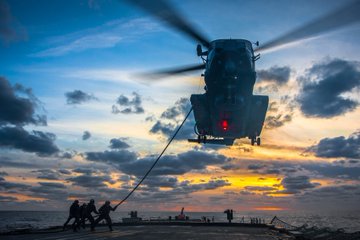
An RCAF CH-148 Cyclone maritime helicopter flies past a luxury yacht in Halifax on Friday, July 13, 2018. It departed for its first international deployment with the frigate HMCS Ville de Quebec today. (ANDREW VAUGHAN / THE CANADIAN PRESS)
Children in brightly-coloured rain boots waved Canadian flags and homemade signs, one saying, “Bye Mommy, see you later” while another said, “Bon Voyage Daddy.”

Couples shielded from the rain under large umbrellas hugged and kissed goodbye before the six-month mission.

“It’s overwhelming,” said Vanessa Picard, standing on the jetty with her two young children after her husband departed. She called the experience of watching him sail off “surreal.”

It’s a familiar scene here at HMC Dockyard Halifax, as the commanding officer of the warship noted.

“It’s really hard on families,” said Cmdr. Scott Robinson, adding he was leaving behind his wife and two young children. “I’m not the only one. It weighs on you.”

Several ships deploy from the east coast base every year, but the HMCS Ville de Quebec send off was a significant milestone for the Canadian military.

On board the frigate was a CH-148 Cyclone helicopter — the first international mission for the new twin-engine machine.

Defence Minister Harjit Sajjan said the state-of-the-art technology adds to the “tremendous capability” of the country’s armed forces and its contribution to Operation Reassurance.

The retired lieutenant-colonel also said it “sends a very strong message of deterrence” to countries like Russia, which he said is starting to go against “a rule-based order.”

Sajjan pointed to Russian actions under Vladimir Putin, such as the annexation of Crimea, its support for rebel forces in eastern Ukraine and Bashar al-Assad’s government in Syria.

“It’s something that we will not stand for,” he told reporters following the warship’s departure. “This is one of the reasons why Canada will continue to step up not only as part of NATO, but as part of a coalition.”

He added that Canada “will not take threats lightly” and that the multinational, “fully combat ready” battle groups send a strong message.

Indeed, the commander of the HMCS Ville de Quebec said he expects to run training exercises with his crew to “keep our combat capability at a high level in case the government calls upon us to react to some sort of world event,” Robinson said.

“We want to maintain our proficiency as much as we can at the highest level in case the government of Canada calls on us to do something.”

Meanwhile, the Royal Canadian Navy commander called it an “exciting moment” for the first-ever Cyclone helicopter to be sent on a mission.

Vice-Admiral Ron Lloyd said Canada’s contribution to the NATO mission will help “enhance regional maritime security and stability.”

The Halifax-class warship HMCS Ville de Quebec is slated to relieve HMCS St. John’s, which returns to Halifax later this month after a six-month mission.


Today the first CH-148 Cyclone helicopter and aircrew embark aboard HMCS Ville de Québec for Op REASSURANCE, @CanadianForces support to #NATO defence and deterrence measures in Central and Eastern Europe.#RCAF #RCAFProud

The deployment of the Cyclone marks a major milestone for the 17-metre, 13,000-kilogram aircraft.

In January, the East Coast fleet of Sea Kings was retired after 54 years of service.

The Cyclone fleet will be tasked with surface and sub-surface surveillance, and search and rescue missions, while providing “tactical transport for national and international security efforts,” according to the military. Its aluminum and composite airframe is built with lightning-strike and high-intensity radio frequency pulse protection.

Monday, July 16, 2018

Eggleton: CAF Pulling Its Own Weight

By: Art Eggleton, Toronto Star - Opinions 

As NATO leaders prepare for their upcoming summit in Brussels, U.S. President Donald Trump is complaining about Canada and other allies not spending enough on their military operations. This brings into play the goal from past summits of each country spending 2 per cent of Gross Domestic Product (GDP) on defence.

There are two problems with this 2 per cent of GDP figure. First, meeting it would increase defence spending by approximately two thirds in Canada, and secondly, it is the wrong measurement for capabilities and contributions to NATO.
The UN Mali patch is shown on a Canadian forces member's uniform before boarding a plane at CFB Trenton on Thursday. The soldiers are heading to Mali for Operation Presence, the military operation to support the United Nations peace mission. (LARS HAGBERG / THE CANADIAN PRESS)
A two thirds defence expenditure hike would necessitate either substantial tax increases and/or significant reductions in other government programs and services, including social support measures. I consider that unrealistic and unacceptable.

GDP can go up or down, or it can be stagnant. If we have robust economic growth over the next decade, getting to 2 per cent will become even more expensive and challenging. If we unfortunately experience a recession, then our percentage of GDP for military expenditure can increase without spending a dollar more.

What sense does that make in terms of measuring capabilities and contributions? Also, only four of 29 NATO countries currently meet the 2 per cent goal. And the goal is not compulsory; or, as the Harper government said after the last summit in Wales, it is “aspirational.”

In my five years serving as Minister of National Defence in the Chrétien cabinet, I never came to appreciate that 2 per cent of GDP was the appropriate way to measure our contributions as a member of the alliance.

That was verified by NATO officials Simon Lunn and Nicholas Williams, who wrote: “the 2 per cent takes no account of the ebbs and flows of economic fortunes; is vulnerable to changing circumstances and domestic pressure, both in terms of the security requirements and the economic base; encourages creative accounting to satisfy targets; and provides zero guidance concerning precisely what capabilities are needed to counter the threats and challenges that NATO faces.”

If not 2 per cent of GDP then what?

We could, for example, measure per capita expenditures, in which case Canada ranks ninth out of 29 member states. Or a percentage of the federal government expenditures, in which case Canada ranks sixth. In either case, we rank above the NATO average if you exclude the United States, which is really in a league of its own, spending more than double on defence than all the other NATO countries combined.

Better still, shouldn’t we be measuring outputs and outcomes rather than input percentages? As Lunn and Williams suggest, the important measurement should be based on capabilities and contributions.

When it comes to capabilities, our Canadian Forces personnel are some of the best in the world. They are motivated, highly skilled and dedicated to their roles. Our allies around the world, including the U.S. military, recognize this.

We are no laggard when it comes to joint military exercises and contributing to multilateral missions. We don’t need all the equipment in the world — we work with our allies — but what’s important is the interoperability with them that strengthens the capabilities of our troops.

On the issue of equipment, NATO does want member countries to update their assets and the government has started to implement that request with budget increases this year and thereafter. This commitment is real investment in the equipment of our forces, one that is not tied to GDP but reflects actual military expenditures, and again contributes to capabilities.

When it comes to recent contributions, we have sent troops and equipment, along with our NATO allies, to operations in Afghanistan, Bosnia, Kosovo and are currently leading a mission in Latvia. And now with the United Nations, they are headed to Mali.

It is these and other capabilities and contributions to the defining conflicts of our time that armed forces should be measured by — not something as flawed as a financial yardstick that is tied to GDP.
---
Senator Art Eggleton is a member of the Canadian Senate from Toronto. He currently serves as chair of the Standing Committee on Social Affairs, Science and Technology.

Thursday, July 12, 2018

RCAF Back in NATO AWACS program

By: David Pugliese, The Ottawa Citizen 

Canada will provide up to 25 personnel over the next five years to NATO’s Airborne Warning and Control System program, Prime Minister Justin Trudeau announced at the NATO summit.

In February, the Liberal government announced it was reversing a 2011 decision by the previous Conservative government that saw Canada withdraw from NATO’s AWACS program.

The Conservative government decided at that time to end participation in the airborne early warning plane program to save money. Canada’s NATO allies were surprised and angered about the pullout. The Royal Canadian Air Force warned at the time that the decision could put overseas operations at risk.

Over the last several years, however, NATO has significantly increased the use of its AWACS, including in areas like Central and Eastern Europe where Canada is leading a multinational NATO battlegroup based in Latvia.

The original shutdown of Canada’s contribution to NATO’s AWACS saved about $50 million a year, according to the records obtained under the Access to Information law by Defence Watch.


Canada will also contribute to the new NATO Command Structure and support the new United States Readiness Initiative. Canada is now a member of the European Centre of Excellence for Countering Hybrid Threats and will join the Cooperative Cyber Defence Centre of Excellence.

In addition, Canada will extend its contribution to NATO’s enhanced Forward Presence through Operation REASSURANCE for another four years and increase the number of personnel taking part in this mission in Latvia from 455 to 540, Trudeau said.

Wednesday, July 11, 2018

Trudeau announces new Canada-led training mission in Iraq

The Canadian Press

Prime Minister Justin Trudeau has announced that Canada will assume command of a new NATO training mission in Iraq.

This will include the deployment of up to 250 Canadian Armed Forces personnel for one year beginning in the fall of 2018.

They will be deployed to Baghdad and the surrounding vicinity along with up to four Griffon helicopters to support NATO activities.

Trudeau made the announcement this morning at a discussion session as part of the NATO summit in Brussels.

He described the mission as a natural next step for Canada in the fight against Islamic State militants by continuing to help build institutional capacity in Iraq.

Canada’s leadership of this new NATO training mission will complement existing efforts in the global coalition against ISIL.

Under Operation IMPACT, the Canadian army is already providing training and assistance to the Iraqi security forces and helping regional forces build their capacity.

Canada also contributes mobile training teams to NATO’s counter-improvised explosive device capacity building efforts for Iraq.

Friday, July 6, 2018

Trudeau to rebut Trump’s charge of defence-spending lag with Latvia visit

STEVEN CHASE
Canadian Army soldiers attack during Silver Arrow 2017, the multinational military drills involving eleven NATO member countries in Adazi, Latvia on Oct 29, 2017.

The Canadian government is defending itself against accusations from U.S. President Donald Trump that Canada is falling short on defence spending, saying there are big military expenditure increases planned in future years and that this country always contributes to NATO deployments.

This rejoinder from Canada comes as Prime Minister Justin Trudeau heads to the Baltic country of Latvia to showcase a Canadian military deployment aimed at deterring Russian aggression.

One military analyst, however, says Canada is dodging, rather than answering, justified criticism by changing the subject to deployments from funding levels.

The Prime Minister will visit Latvia for two days, starting on July 9, before proceeding to a NATO meeting of heads of state and government in Belgium on July 11 and 12 – a gathering that promises to be fraught with tension over Russia.

Mr. Trudeau’s Baltic visit comes after Canada, and several other NATO allies, received letters from the Trump administration complaining they are not meeting a NATO commitment to undertake military spending equivalent to 2 per cent of annual economic output.

The Globe and Mail confirmed that Mr. Trudeau received a letter from Mr. Trump. Letters were also sent to Germany, according to The New York Times, and Reuters confirmed letters were sent to Britain, Belgium and Norway.

In the letter to Britain – the Americans’ staunch partner in Iraq and Afghanistan – the Trump administration went further. U.S. Defence Secretary James Mattis, the author of this letter, warned London it risks losing the ability to project power worldwide if it doesn’t boost military spending – despite the fact Britain already meets the 2 per cent target.

Russia’s 2014 annexation of Ukraine’s Crimean Peninsula and its support for pro-Moscow separatists in the war in eastern Ukraine have disrupted relations between Moscow and the West and have revitalized the NATO military alliance.

For the past year, Canada has been leading a NATO battle group in Latvia that includes 450 Canadian soldiers, part of a significant buildup of troops and assets on the easternmost flank of the North Atlantic Treaty Organization to counter Russian expansionism. Canada’s leadership of the battle group represents Canada’s largest sustained military presence in Europe in over a decade.

After the annexation of Crimea, NATO allies agreed that year to end defence-budget cuts, to start spending more as their economies grew and move toward a goal of 2 per cent of GDP for defence spending within a decade.

A spokesman for Defence Minister Harjit Sajjan defended Canada’s military commitment in the face of this latest criticism from the Trump administration, noting that the Trudeau government has promised to boost spending.

“In 2017, as part of a comprehensive review of Canadian defence spending, the Government of Canada committed to increasing [the Department of National Defence]’s funding by more than 70 per cent over the next decade,” Renée Filiatrault, director of communications to Mr. Sajjan, said in a statement.

“This plan has been rigorously costed, is fully funded, and serves Canada’s defence needs. It also upholds our long-standing role as an active contributor to global peace and security,” she said.

The Sajjan spokeswoman also underlined Canada’s long-standing contributions.

“The Canadian Army, Royal Canadian Navy and Royal Canadian Air Force are among the most engaged, agile, deployable and responsive armed forces within NATO. Canada is proud to have contributed to every NATO operation since the founding of the Alliance more than six decades ago,” Ms. Filiatrault said.

However, Charles Davies, a research fellow at the Conference of Defence Associations Institute, said that even with new budgetary commitments made in recent years, Canada is still not on track to hit the 2 per cent defence-spending target.

“The Canadian government obviously sees itself being on the wrong side of this discussion … because it refuses to engage in a direct conversation about the issue,” Mr. Davies said. “Instead, it continues to play bait-and-switch, trying to divert attention towards the entirely different subject of the politics around the commitment of forces to NATO operations. This is an intellectually dishonest response to valid criticism.”

This week, other NATO allies also pushed back at U.S. criticism.

In an e-mail on July 3 to the Associated Press, Norwegian Defence Minister Frank Bakke-Jensen said, “Norway stands by its decision of the NATO Summit in 2014 and is following up on this.”

Norway has spent “far beyond” NATO’s target on new military equipment, he added.

German Defence Minister Ursula von der Leyen said on Tuesday, “We stand by the 2-per cent-goal we’ve set.” She added that “we’re on the path there. And we’re prepared … to take substantial responsibility within the alliance.”

When faced with the suggestion that such German explanations for not spending 2 per cent of GDP yet might not make an impression on Mr. Trump, she retorted: “We don’t want to impress anyone.”

Mr. Trump’s pre-NATO meeting letter-writing campaign is further ratcheting up geopoliticial tensions in the 69-year-old NATO alliance. The U.S. President is planning a controversial summit with Russian President Vladimir Putin for immediately after the NATO meeting. Mr. Trump, who has previously defended Russia’s annexation of Crimea, in recent days has left the door open to recognizing this land seizure.

Mr. Trudeau’s visit to Latvia follows a January, 2018, trip by Governor-General Julie Payette. He will be accompanied by Foreign Affairs Minister Chrystia Freeland, Mr. Sajjan and General Jonathan Vance, Chief of the Defence Staff.

With files from Reuters and Associated Press

Tuesday, May 1, 2018

CF-18 Replacement Program Does Not Account for Losses from Attrition

By: David Pugliese, Defence Watch

A Canadian government project to buy new fighter jets does not include replacement aircraft to deal with those lost to attrition.

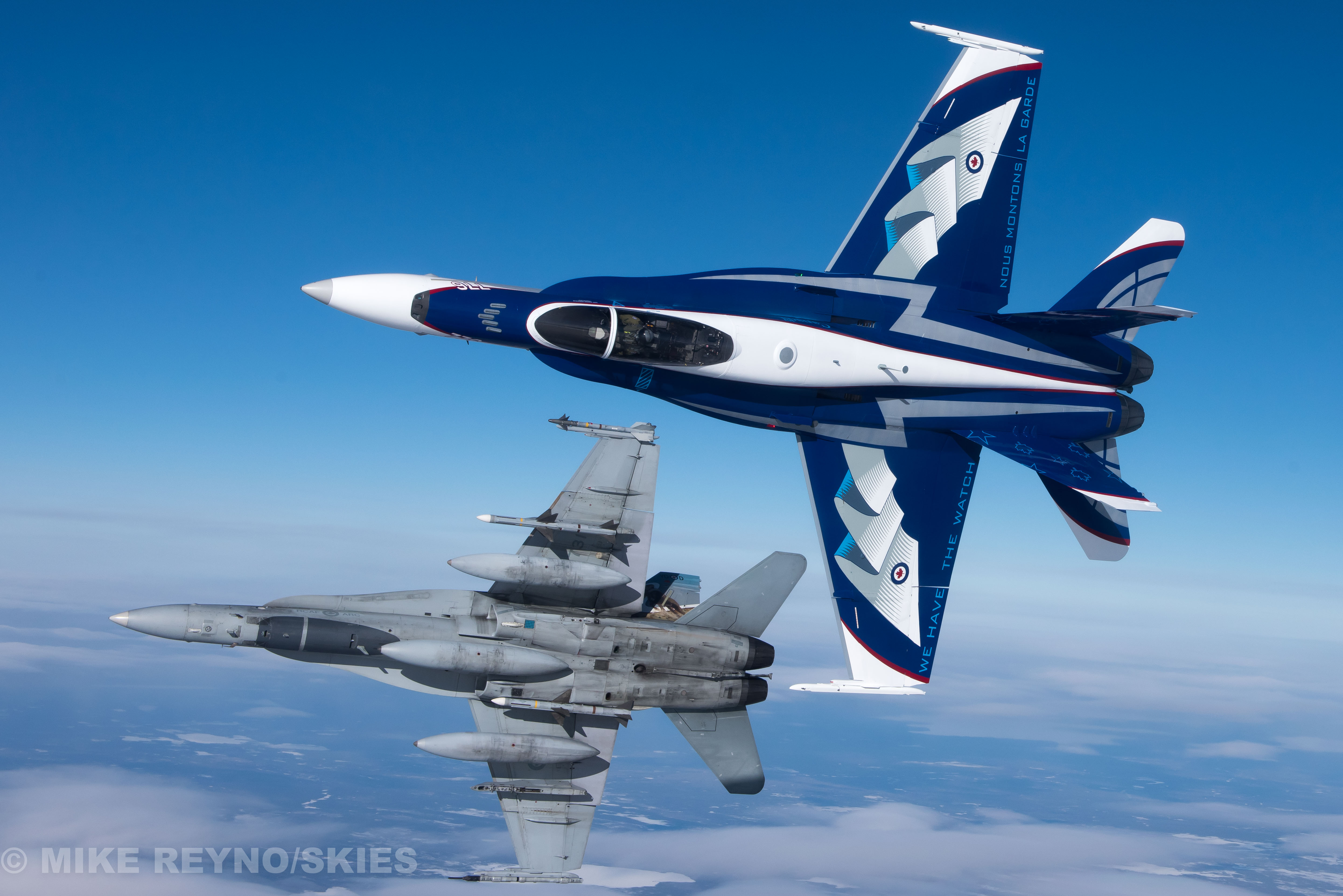
The 2017 Demonstration Hornet (foreground) flies with a CF-188 Hornet from 401 Squadron. The Demo Hornet pays tribute to the 60th anniversary of NORAD.
The 2018 Demonstration Hornet (foreground) flies with a CF-188 Hornet from 401 Squadron. The Demo Hornet pays tribute to the 60th anniversary of NORAD. Mike Reyno Photo
The Liberal government says it will acquire 88 advanced fighter jets to replace the current fleet of CF-18s.

The fleet size is based on the Canadian Armed Forces requirement to have sufficient fighter aircraft to fulfill Canada’s NORAD and NATO commitments simultaneously, based on planned aircraft serviceability rates and aircraft required for training, said RCAF spokesman Maj. Scott Spurr.

“If the RCAF loses any future fighters due to attrition, it would be a policy decision on whether attrition aircraft would be replaced, and if so how,” Spurr told Defence Watch.

The RCAF did not answer whether it had projected any estimates on how many aircraft are expected to be lost to attrition over the course of the program.

Thursday, April 26, 2018

Time for Canadian NATO Secretary General?

Originally published on FrontlineDefence Blog -Up For Debate 

Arguing the affirmative is Tim Dunne

The North Atlantic Treaty Organization is about to appoint its 14th secretary general and it appears that Canada, a founding member of NATO and one of the principal architects of the alliance, is not even being considered for the job. Read Tim's submission on this topic here:http://defence.frontline.online/article/2018/3/9691-Is-it-Time-for-a-Canadian-as-NATO-SecGen%3F

Arguing against is Brett Boudreau

The ‘decade of disdain’ for NATO, under the Harper / MacKay / Hillier period, marked a nadir for Canada-Alliance relations. Recently, there have been earnest efforts to repair the bond, but Canada remains far from any serious consideration as the prospective source of a future NATO Secretary-General. Read Brett's submission on this topic here:
http://defence.frontline.online/article/2018/3/9690-Is-it-Time-for-a-Canadian-as-NATO-SecGen%3F

Wednesday, February 28, 2018

Is NATO’s Relationship with Democracy at Risk?

By: David Bercuson, PhD 
© 2018 FrontLine Defence (Vol 15, No 1)

Image result for NATO

Disquieting events are beginning to shake the North Atlantic Treaty Organization from within, and no sign yet that NATO is preparing itself to deal with the rise of political autarchy in states such as Romania, Poland and Turkey and perhaps a few more, mostly from what used to be Warsaw Pact countries.

In the early days of NATO, there was little concern among the alliance leaders over which members were authoritarian, police states, or anti-democratic. With the Cold War at its full height in the 1950s and 1960s, all it took for membership was a commitment to Article 5 of the NATO treaty, a half decent military, and an anti-communist government. So, Franco’s Spain, Salazar’s Portugal, Greece under the colonels, and Turkey (enduring a military coup almost every year), were just fine as alliance members.

With the end of the Cold War and the collapse of military government in Greece and Turkey, the rules changed. Member countries now had to be democracies (or aspiring democracies in some form), and for former Warsaw Pact countries, NATO membership practically became a precursor for joining the European Union. Thus, until a few years ago, a NATO country was considered to be a democracy in some form – and could be trusted on our side to receive military aid or assistance and even, in some cases, to share military secrets with.

In the last several years, driven partly by the refugee crisis in Europe – and the rise of far-right leaders in several NATO countries – the old NATO is starting to resemble something of a squabbling yard full of chickens arguing over their bird seed.

The most serious example is Turkey, which clamped down very hard on virtually every civil institution after the failed coup attempt in the summer of 2016. President Recep Tayyip Erdogan had been increasingly authoritarian as to how he handles his political opposition, but in the two years after the coup collapsed, he has become the virtual dictator of Turkey. More recently, he has invaded Syria in a military campaign against Kurdish nationalists who were so instrumental in driving ISIS out of the region. These Kurds are, or were, aligned with the United States, which, needless to say, is not happy with Turkey’s military adventure.

In Poland, a government recently took power under symbols and using tropes of pre-Second World War Polish nationalism. They are unhappy at what they see as the United States’ reneging on an agreement to provide them with anti-missile protection, but they are also backing away from serious efforts initiated under the immediate post-Cold War regime to take responsibility for the roles many Poles took in the Holocaust of European Jewry in the Second World War. The bill recently passed by the Polish legislature, and signed by the president, makes it illegal to discuss “Polish death camps” – of which there were none (they were all German) – but also appears to make it a crime to discuss acts of Polish anti-Semitism during the war, of which there were more than enough.

The Government of Hungary has also showed several authoritarian signs recently as it took a sharp turn to the right after recent elections. In April 2017 the government passed a law to close the liberal-oriented Central European University, which was funded by Hungarian-born American philanthropist George Soros. At the time of the vote, Human Resources Minister Zoltan Balog allowed that the government was committed to stopping education carried out by “pseudo-civil society spy groups such as the ones funded by George Soros.”

The move to the right has even found fertile ground in eastern Germany, where the last election saw right-wing “Alternative for Germany” members elected to the Bundestag for the first time.

There are two paths open to NATO right now. First, it can ignore these disturbing tendencies and return to the days when the only qualification needed to join NATO was a willingness to fight Russia and its allies if a new major war broke out. Under these circumstances, it would be hard for a country like Canada to pretend there is anything noble about NATO.

The other is to begin to either suspend the NATO status of states that drift from democratic norms, such as Turkey or Poland and give them time to renew themselves and re-join the fold or throw them out. The problem with this solution is that it probably won’t work and, in the case of Turkey, keeping Russia as constricted as possible in its effort to find warm water ports would be permanently impaired.

The reality is that the world is not perfect and that NATO today is more constrained in what it can do in Europe than it was a decade ago. In the next year or so, these internal pressures on NATO will increase. At that time Canada, and the other NATO stalwarts who put the alliance together in the first place will have to take a hard look at a possible alternative.

===
Dr. Bercuson is a Research Fellow at the Canadian Global Affairs Institute (CGAI) and Director of the Centre for Military and Strategic Studies at the University of Calgary.

Is There a New Role for CAF in Iraq?

By: David Pugliese, Defence Watch

The Canadian military is currently examining how it can contribute to a new NATO training mission in Iraq.

More NATO troops will be headed to that country but NATO Secretary General Jens Stoltenberg says they will not be involved in combat.

A Canadian Forces Griffon helicopter passes the Monastery of Mar Mattai/St Matthew, February 20, 2017 in northern Iraq. THE CANADIAN PRESS/Ryan Remiorz ORG XMIT: RYR111
Most of the NATO effort appears to be aimed at training ground forces and police.

At the same time, the U.S.-led coalition is decreasing its air support in Iraq.

American and Iraqi air force commanders say the coalition will launch fewer airstrikes in support of Iraqi forces and instead focus more on training Iraqi pilots. Currently, Iraqi F-16 pilots are trained in America and the maintenance and security of Iraq’s F-16s is largely carried out by U.S. contractors.


In addition, Iraq’s air force will assume more of the “missions, duties and responsibilities” against any effort against the Islamic State, according to a statement released by U.S. Air Forces Central Command.

Will Canadian Forces planners consider a role for the RCAF in the NATO mission?

The RCAF still has a presence in the region as the Polaris refueller has supported coalition fighter jets. C-130J Hercules have delivered supplies. Griffon helicopters are also attached to the mission, although since Canadian special forces are on the sidelines when it comes to training Kurdish forces it’s unclear how much support the helicopters are providing. (Details about Griffon flights are considered secret for security reasons.)

Canada could offer to continue using RCAF C-130Js to support cargo runs for a NATO training mission. The Griffons could be used to support in-country transportation for ground forces.

The Liberal government has committed the Canadian military to the Iraq mission until next year.

Defence Minister Harjit Sajjan has not given any indication when a potential Canadian NATO mission contribution could be decided.

On Friday, Chief of the Defence Staff Gen. Jon Vance told reporters that work on various options is still underway. “We are working diligently on plans including conducting reconnaissance and examining various options that I would ultimately be able to bring to the minister,” he said. “The timeline is to try and stay as relevant and with the flow of this conflict as we possibly can. So, there’s no point in adopting certain postures before it’s time to adopt that posture. We’re looking at all options. We’re certainly going to make certain that we stay as relevant and useful to the ultimate success of this conflict that we can.”

(With files from the Associated Press)