By: David Puligese,
The Royal Canadian Air Force will be operating the first nine aircraft from its new fleet of fighter jets starting in 2026, Department of National Defence officials say.
But at least one member of parliament questions whether the federal government will be able to meet its timetable to replace the CF-18 fighter fleet with advanced aircraft.
MPs on the Standing Committee on Public Accounts received more details on Monday about the Liberal government’s plan to buy 88 new fighter jets. Aircraft expected in the competition include Lockheed Martin’s F-35, the Eurofighter Typhoon, Saab’s Gripen and the Boeing Super Hornet.
Pat Finn, assistant deputy minister for material at the DND, told MPS that the formal request for proposals will go out in the spring of 2019. Negotiations would be held in 2021 and a contract awarded in 2022.
“We have tried to be very judicious and not have too risky a schedule to try to achieve some of that,” Finn explained to MPs. “But from the bids until the signing of the contract is where we’ve given ourselves two years for the competitive dialogue, the final negotiations and the various approvals we need to get, signing the contract in 2022.”
The first aircraft would be delivered in 2025. Finn said this schedule has been shared with all the potential bidders and “they’re comfortable with that approach.”
Jody Thomas, the DND deputy minister, told MPs that the plan is to “achieve initial operating capability by 2026 with nine advanced fighters ready to fulfill the NORAD mission.”
But one committee member, Conservative MP Pat Kelly, was wary of whether the aircraft acquisition would proceed as scheduled.
The plan, he told Finn, doesn’t leave a lot of margin for error. Everything would have to run like clockwork to meet the timetable and Kelly questioned if that would even be possible given the track record of defence procurement over the years. “We just don’t have time in this for the kinds of delays and the kinds of failures of procurement that we have seen in other programs,” Kelly said. “I shudder to think of what many Canadians listening to this hearing might think about. What has the potential to go wrong to get to 2025? I’m going to leave it at that.”
Showing posts with label Future of RCAF. Show all posts
Showing posts with label Future of RCAF. Show all posts
Wednesday, December 12, 2018

Tuesday, November 27, 2018
CF-18 Replacement Delay Fueling Exodus of Pilots from RCAF
By: Bruce Campion-Smith, The Toronto Star
OTTAWA—The oft-delayed purchase of new fighter jets is contributing to a flight of pilots out of the Air Force to the civilian sector, causing a critical shortage of skilled aviators to fly Canada’s ageing fleet of CF-18s, insiders say.
Flying a 30-year-old jet holds less appeal for pilots who are no longer prepared to sacrifice quality of life and are instead quitting for airline careers, where demand for experienced personnel is sky-high.
The rush out the door has left the Royal Canadian Air Force coping with less experienced pilots flying increasingly outdated jets, former fighter pilots tell the Star.
“It’s not a winning proposition,” one veteran former pilot told the Star.
In a recent report, the auditor general turned a spotlight on the crisis, noting that the Air Force only had 64 per cent of the CF-18 pilots it needs. Between April 2016 and March 2018, 40 fighter pilots left and the Air Force was only able to train 30 new ones. Since then, 17 more pilots have indicated they are out the door.
If that pace continues, there won’t be enough experienced pilots to train new ones and the Air Force won’t be able to meet its obligations to NATO and NORAD, the report said.
The Star spoke to several former fighter pilots about the situation. They spoke on background because of sensitivities around their current jobs.
They say several factors are at play in the exodus of pilots. These include exasperation over the delayed purchase of replacement jets that are now not expected for a decade or more, as well as a desire for better quality of life away from the two main fighter bases in Cold Lake, Alta., and Bagotville, Que.
But the biggest factor is the huge demand for pilots across Canada and the world, offering military pilots an easy path to the cockpits of commercial airliners.
“There’s not enough pilots globally ... so companies are very aggressive in recruiting wherever they can find them. Military pilots are prime candidates, so they get offered good deals and off they go,” one former pilot said.
The broader pilot shortage problem could soon be the topic of parliamentary study. Liberal MP Steve Fuhr, a former Air Force pilot who flew the CF-18, has proposed a motion to have the Commons transport committee examine the challenges facing flight schools in training new pilots.
Speaking to the motion earlier this month, Fuhr (Kelowna-Lake Country) said the industry-wide shortage is already having an effect on the civilian sector and the military, and noted that Canada could be short 3,000 pilots by 2025.
“As the pilot shortage percolates up, both scheduled and nonscheduled commercial air service will be negatively affected,” Fuhr told a meeting of the committee on Nov. 21.
The CF-18s were last deployed in a combat role in Iraq against Daesh, and remain potent fighters. Able to fly at almost twice the speed of sound, they continue to hold appeal for young military pilots.
But delays in purchasing new fighters, first by the Conservative government and now the Liberals, means replacement aircraft are 10 years or more away. With no prospect of flying the next generation of fighter, some pilots see little incentive to stick around and are opting to quit the Armed Forces when their flying tours are complete.
“They make the calculation that I’m never going to fly anything other than an old 40-year-old F-18 in my entire career,” the former pilot said.
However, another veteran pilot downplayed the delayed procurement as a reason for the departures. “Realistically, I don’t think that’s driving people out the door,” he said.
After two tours of flying — typically about six years — pilots usually move to a desk job. That’s the point where military pilots who are keen to keep flying decide to jump to the private sector, which offers the promise of a good career and the chance to live closer to big cities.
“That’s why guys get out. What’s ultimately driving them out is opportunity,” he said.
Whatever the reason, the departures are hitting the RCAF hard. The Air Force has 76 CF-18s and just over 100 pilots qualified to fly them, insiders say. As a result, having almost 60 quit the forces in just over two years marks a huge loss in experience, they say.
The former Air Force veterans stressed that training is good and that the young pilots arriving at the front-line squadrons are well-qualified. Yet they are considered “minimum combat-ready,” able to initially fly only as wingmen and require another one or two years of experience to be considered qualified to fly all missions and serve as flight leaders.
“That’s the danger of this cycle. They’re not regenerating the same numbers as they’re losing,” the pilot said. “The experience level is dropping ... With that goes an increase in risk.”
By the time they are replaced, the CF-18s will have been in the Air Force fleet for almost half a century, 30 years longer than planned. The auditor general noted that it’s been 10 years since there was any significant upgrade to their combat capabilities. The Air Force had been relying on the experience of its pilots to overcome shortfalls caused by the age of the aircraft.
“You can still fight OK with an old jet if you have very, very skilled individuals flying it. We invest a lot in our training and therefore our people are very capable, adaptive, innovative,” the pilot said.
“The problem is that those guys are leaving,” he said.
In response to the auditor general findings, Lt.-Gen. Al Meinzinger, commander of the RCAF, said the Air Force is taking steps to help retain aircrews, including measures to improve the quality of life along with changes to how the Air Force trains its pilots to give it “greater flexibility to better meet future personnel demands.”
OTTAWA—The oft-delayed purchase of new fighter jets is contributing to a flight of pilots out of the Air Force to the civilian sector, causing a critical shortage of skilled aviators to fly Canada’s ageing fleet of CF-18s, insiders say.
Flying a 30-year-old jet holds less appeal for pilots who are no longer prepared to sacrifice quality of life and are instead quitting for airline careers, where demand for experienced personnel is sky-high.
/https://www.thestar.com/content/dam/thestar/politics/federal/2018/11/24/fighter-jet-delays-fuelling-exodus-of-pilots-from-air-force-insiders-say/cf_18.jpg) |
| Frustration over the oft-delayed purchase of new fighter jets is contributing to a flight of pilots out of the Air Force to the civilian sector, causing a critical shortage of skilled aviators to fly Canada’s aging fleet of CF-18s, insiders say. (Andrew Vaughan / THE CANADIAN PRESS FILE PHOTO) |
The rush out the door has left the Royal Canadian Air Force coping with less experienced pilots flying increasingly outdated jets, former fighter pilots tell the Star.
“It’s not a winning proposition,” one veteran former pilot told the Star.
In a recent report, the auditor general turned a spotlight on the crisis, noting that the Air Force only had 64 per cent of the CF-18 pilots it needs. Between April 2016 and March 2018, 40 fighter pilots left and the Air Force was only able to train 30 new ones. Since then, 17 more pilots have indicated they are out the door.
If that pace continues, there won’t be enough experienced pilots to train new ones and the Air Force won’t be able to meet its obligations to NATO and NORAD, the report said.
The Star spoke to several former fighter pilots about the situation. They spoke on background because of sensitivities around their current jobs.
They say several factors are at play in the exodus of pilots. These include exasperation over the delayed purchase of replacement jets that are now not expected for a decade or more, as well as a desire for better quality of life away from the two main fighter bases in Cold Lake, Alta., and Bagotville, Que.
But the biggest factor is the huge demand for pilots across Canada and the world, offering military pilots an easy path to the cockpits of commercial airliners.
“There’s not enough pilots globally ... so companies are very aggressive in recruiting wherever they can find them. Military pilots are prime candidates, so they get offered good deals and off they go,” one former pilot said.
The broader pilot shortage problem could soon be the topic of parliamentary study. Liberal MP Steve Fuhr, a former Air Force pilot who flew the CF-18, has proposed a motion to have the Commons transport committee examine the challenges facing flight schools in training new pilots.
Speaking to the motion earlier this month, Fuhr (Kelowna-Lake Country) said the industry-wide shortage is already having an effect on the civilian sector and the military, and noted that Canada could be short 3,000 pilots by 2025.
“As the pilot shortage percolates up, both scheduled and nonscheduled commercial air service will be negatively affected,” Fuhr told a meeting of the committee on Nov. 21.
The CF-18s were last deployed in a combat role in Iraq against Daesh, and remain potent fighters. Able to fly at almost twice the speed of sound, they continue to hold appeal for young military pilots.
But delays in purchasing new fighters, first by the Conservative government and now the Liberals, means replacement aircraft are 10 years or more away. With no prospect of flying the next generation of fighter, some pilots see little incentive to stick around and are opting to quit the Armed Forces when their flying tours are complete.
“They make the calculation that I’m never going to fly anything other than an old 40-year-old F-18 in my entire career,” the former pilot said.
However, another veteran pilot downplayed the delayed procurement as a reason for the departures. “Realistically, I don’t think that’s driving people out the door,” he said.
After two tours of flying — typically about six years — pilots usually move to a desk job. That’s the point where military pilots who are keen to keep flying decide to jump to the private sector, which offers the promise of a good career and the chance to live closer to big cities.
“That’s why guys get out. What’s ultimately driving them out is opportunity,” he said.
Whatever the reason, the departures are hitting the RCAF hard. The Air Force has 76 CF-18s and just over 100 pilots qualified to fly them, insiders say. As a result, having almost 60 quit the forces in just over two years marks a huge loss in experience, they say.
The former Air Force veterans stressed that training is good and that the young pilots arriving at the front-line squadrons are well-qualified. Yet they are considered “minimum combat-ready,” able to initially fly only as wingmen and require another one or two years of experience to be considered qualified to fly all missions and serve as flight leaders.
“That’s the danger of this cycle. They’re not regenerating the same numbers as they’re losing,” the pilot said. “The experience level is dropping ... With that goes an increase in risk.”
By the time they are replaced, the CF-18s will have been in the Air Force fleet for almost half a century, 30 years longer than planned. The auditor general noted that it’s been 10 years since there was any significant upgrade to their combat capabilities. The Air Force had been relying on the experience of its pilots to overcome shortfalls caused by the age of the aircraft.
“You can still fight OK with an old jet if you have very, very skilled individuals flying it. We invest a lot in our training and therefore our people are very capable, adaptive, innovative,” the pilot said.
“The problem is that those guys are leaving,” he said.
In response to the auditor general findings, Lt.-Gen. Al Meinzinger, commander of the RCAF, said the Air Force is taking steps to help retain aircrews, including measures to improve the quality of life along with changes to how the Air Force trains its pilots to give it “greater flexibility to better meet future personnel demands.”
Friday, October 12, 2018
New RCAF Spy Planes to cost upwards of $300 Million
By: David Pugliese, Post Media
The cost of three small surveillance aircraft Canada is buying from the U.S. could be $140 million more than the Canadian military had originally estimated.
The three Beechcraft King Air planes, to be based at CFB Trenton in Ontario, will be outfitted with sensors and equipment to intercept cell phone and other electronic transmissions. Canadian special forces and, potentially, other government departments will use them for missions overseas and in Canada.
On Oct. 1 the Canadian Forces told Postmedia the three outfitted planes and initial in-service support would cost between $100 million and $249 million, as outlined in the Liberal government’s defence policy documents.
However, on Oct. 4 the U.S. Defense Security Cooperation Agency revealed the final tally, informing Congress that the deal was underway with an estimated cost of US $300 million — around $389 million.
Canadian companies had wanted to provide the aircraft and on-board equipment, and several have formed alliances with U.S. firms who supply the Pentagon with the same or similar aircraft.
We will work to more clearly define our interests and requirements for the purchase, and negotiate an acceptable price with the U.S.
But the Canadian military decided it needed the planes more quickly than they believed Canadian companies could deliver, and that U.S. security regulations governing the on-board sensor equipment might cause delays. As a result, it determined the U.S. government was the only supplier capable of providing the planes.
The Canadian Forces says it hopes to get a better deal. The cost the U.S. government agency presented to Congress is not the final tally and the “final cost is anticipated to be much lower,” the Canadian Forces claimed in an email. “Over the coming months, we will work to more clearly define our interests and requirements for the purchase, and negotiate an acceptable price with the U.S.,” the email said.
Department of National Defence spokeswoman Ashley Lemire said in an email to Postmedia that the delivery of the first plane would take place sometime between 2020 and 2021. The final delivery of the three aircraft would be wrapped up by 2022.
The main contractor is Beechcraft in Wichita, Kan.
The Canadian government will run a separate program to allow companies to compete to provide in-service support for the planes. The government expects to ask for bids for that 20-year contract sometime in the spring of 2019, said Lemire. DND declined to provide an estimate of what that long-term support would cost taxpayers.
Industry representatives have complained over the years that the Canadian Forces cut domestic firms out of the project and reduced the role they could play. Lemire rejected that claim, saying Canadian firms would have a role in servicing the planes.
It is unclear at this point whether the aircraft will be under the command of the Royal Canadian Air Force or special forces. “The Manned Airborne Intelligence, Surveillance and Reconnaissance project will deliver a rapidly deployable, airborne intelligence, surveillance and reconnaissance capability to Canadian Special Operations Forces Command to support domestic and overseas operations,” Lemire said in her email. “The command and control arrangement of this capability has yet to be finalized.”
RCAF pilots will fly the aircraft but special forces personnel will operate the specialized equipment in the planes.
The planes will be outfitted with electro-optical sensors that would allow the aircraft to track the movement of individuals and vehicles on the ground. Canadian special forces had access to similar aircraft in Afghanistan to track and target insurgents.
The cost of three small surveillance aircraft Canada is buying from the U.S. could be $140 million more than the Canadian military had originally estimated.
The three Beechcraft King Air planes, to be based at CFB Trenton in Ontario, will be outfitted with sensors and equipment to intercept cell phone and other electronic transmissions. Canadian special forces and, potentially, other government departments will use them for missions overseas and in Canada.
On Oct. 1 the Canadian Forces told Postmedia the three outfitted planes and initial in-service support would cost between $100 million and $249 million, as outlined in the Liberal government’s defence policy documents.
However, on Oct. 4 the U.S. Defense Security Cooperation Agency revealed the final tally, informing Congress that the deal was underway with an estimated cost of US $300 million — around $389 million.
Canadian companies had wanted to provide the aircraft and on-board equipment, and several have formed alliances with U.S. firms who supply the Pentagon with the same or similar aircraft.
We will work to more clearly define our interests and requirements for the purchase, and negotiate an acceptable price with the U.S.
But the Canadian military decided it needed the planes more quickly than they believed Canadian companies could deliver, and that U.S. security regulations governing the on-board sensor equipment might cause delays. As a result, it determined the U.S. government was the only supplier capable of providing the planes.
The Canadian Forces says it hopes to get a better deal. The cost the U.S. government agency presented to Congress is not the final tally and the “final cost is anticipated to be much lower,” the Canadian Forces claimed in an email. “Over the coming months, we will work to more clearly define our interests and requirements for the purchase, and negotiate an acceptable price with the U.S.,” the email said.
 |
| A Beechcraft Super King Air 200 sits in the Air Transportation Services hangar at the City Centre Airport in Edmonton on Tuesday, Aug. 7, 2012. EDMONTON SUN/QMI AGENCY |
Department of National Defence spokeswoman Ashley Lemire said in an email to Postmedia that the delivery of the first plane would take place sometime between 2020 and 2021. The final delivery of the three aircraft would be wrapped up by 2022.
The main contractor is Beechcraft in Wichita, Kan.
The Canadian government will run a separate program to allow companies to compete to provide in-service support for the planes. The government expects to ask for bids for that 20-year contract sometime in the spring of 2019, said Lemire. DND declined to provide an estimate of what that long-term support would cost taxpayers.
Industry representatives have complained over the years that the Canadian Forces cut domestic firms out of the project and reduced the role they could play. Lemire rejected that claim, saying Canadian firms would have a role in servicing the planes.
It is unclear at this point whether the aircraft will be under the command of the Royal Canadian Air Force or special forces. “The Manned Airborne Intelligence, Surveillance and Reconnaissance project will deliver a rapidly deployable, airborne intelligence, surveillance and reconnaissance capability to Canadian Special Operations Forces Command to support domestic and overseas operations,” Lemire said in her email. “The command and control arrangement of this capability has yet to be finalized.”
RCAF pilots will fly the aircraft but special forces personnel will operate the specialized equipment in the planes.
The planes will be outfitted with electro-optical sensors that would allow the aircraft to track the movement of individuals and vehicles on the ground. Canadian special forces had access to similar aircraft in Afghanistan to track and target insurgents.
Friday, September 7, 2018
August Recap
Welcome back Canadian Forces Dispatch readers. I took an extended break from posting in August, and now that the school year is up and running again; here is what has happened over the past four-weeks. All original reporting is linked to the headline.
Canada's special forces kept too many secrets about Afghan missions
Grounded cruise ship rescue in Nunavut cost Canada's Armed Forces $513K
Craig Manufacturing lands $25 million Canadian Forces contract
Canada's special forces kept too many secrets about Afghan missions
Monday, June 18, 2018
RCAF Ups Used-Aussie F-18 Purchase to 25
By: David Pugliese, Defence Watch
Canada has boosted the number of used Australian fighter jets it is purchasing to 25 but the deal to acquire those aircraft still hinges on approval from the U.S. government.
Canada has boosted the number of used Australian fighter jets it is purchasing to 25 but the deal to acquire those aircraft still hinges on approval from the U.S. government.
 |
| A Royal Canadian Air Force CF-188 Hornet departs Marine Corps Air Station Miramar, California to conduct a mission as part of Exercise PUMA STRIKE 16-B on November 16, 2016. Photo: Cpl Manuela Berger, 4 Wing Imaging CK01-2016-1124-014 |
The Liberal government originally announced it would buy 18 used Australian F-18 jets to augment the Royal Canadian Air Force’s CF-18s until new aircraft can be purchased in the coming years.
But it has added seven more used Australian F-18 aircraft to the deal, the Department of National Defence has confirmed.
Those extra aircraft will be stripped down for parts, Dan Blouin, a spokesman for the DND, said Friday.
It is not known yet if the seven aircraft will be flown to Canada or shipped, he added.
The exact cost of purchasing the 25 aircraft, along with weapons and other equipment is not yet known as negotiations are still underway on the deal, Procurement Minister Carla Qualtrough recently told journalists. The Liberal government has set aside up to $500 million for the project.
An Australian Senate hearing was recently told that Canada was presented with a cost proposal from the Australian government last year. “They accepted our offer in December, but they have also put in a further request for some seven aircraft for system testing, training and spares,” Australian Air Vice Marshal Cath Roberts told the hearing.
The U.S. government is examining the deal and will have to give its approval to Australia before that country can sell the F-18s to Canada.
Approval is needed because the F-18s were built in the U.S. with American technology.
Canada is hoping for the U.S. approval sometime in the summer.
Although U.S.-Canada relations have hit a slump, with American President Donald Trump vowing to punish Canadians because of ongoing economic disputes, the DND does not expect that situation to affect approval for the fighter jet deal to proceed.
Pat Finn, the Department of National Defence’s assistant deputy minister of materiel, has said he expects that a deal will be in place by the end of the year with deliveries of the Australian planes to begin in the summer of 2019. The Liberal government originally planned for the arrival of the first used aircraft in January 2019.
The Liberal government had originally planned to buy 18 new Super Hornet fighter jets from U.S. aerospace giant Boeing.
But last year Boeing complained to the U.S. Commerce Department that Canadian subsidies for Quebec-based Bombardier allowed it to sell its C-series civilian passenger aircraft in the U.S. at cut-rate prices. As a result, the Trump administration brought in a tariff of almost 300 per cent against the Bombardier aircraft sold in the U.S.
In retaliation, Canada cancelled the deal to buy the 18 Super Hornets. That project would have cost more than US$5 billion.
But it has added seven more used Australian F-18 aircraft to the deal, the Department of National Defence has confirmed.
Those extra aircraft will be stripped down for parts, Dan Blouin, a spokesman for the DND, said Friday.
It is not known yet if the seven aircraft will be flown to Canada or shipped, he added.
The exact cost of purchasing the 25 aircraft, along with weapons and other equipment is not yet known as negotiations are still underway on the deal, Procurement Minister Carla Qualtrough recently told journalists. The Liberal government has set aside up to $500 million for the project.
An Australian Senate hearing was recently told that Canada was presented with a cost proposal from the Australian government last year. “They accepted our offer in December, but they have also put in a further request for some seven aircraft for system testing, training and spares,” Australian Air Vice Marshal Cath Roberts told the hearing.
The U.S. government is examining the deal and will have to give its approval to Australia before that country can sell the F-18s to Canada.
Approval is needed because the F-18s were built in the U.S. with American technology.
Canada is hoping for the U.S. approval sometime in the summer.
Although U.S.-Canada relations have hit a slump, with American President Donald Trump vowing to punish Canadians because of ongoing economic disputes, the DND does not expect that situation to affect approval for the fighter jet deal to proceed.
Pat Finn, the Department of National Defence’s assistant deputy minister of materiel, has said he expects that a deal will be in place by the end of the year with deliveries of the Australian planes to begin in the summer of 2019. The Liberal government originally planned for the arrival of the first used aircraft in January 2019.
The Liberal government had originally planned to buy 18 new Super Hornet fighter jets from U.S. aerospace giant Boeing.
But last year Boeing complained to the U.S. Commerce Department that Canadian subsidies for Quebec-based Bombardier allowed it to sell its C-series civilian passenger aircraft in the U.S. at cut-rate prices. As a result, the Trump administration brought in a tariff of almost 300 per cent against the Bombardier aircraft sold in the U.S.
In retaliation, Canada cancelled the deal to buy the 18 Super Hornets. That project would have cost more than US$5 billion.
Tuesday, May 1, 2018
CF-18 Replacement Program Does Not Account for Losses from Attrition
By: David Pugliese, Defence Watch
A Canadian government project to buy new fighter jets does not include replacement aircraft to deal with those lost to attrition.
The Liberal government says it will acquire 88 advanced fighter jets to replace the current fleet of CF-18s.
The fleet size is based on the Canadian Armed Forces requirement to have sufficient fighter aircraft to fulfill Canada’s NORAD and NATO commitments simultaneously, based on planned aircraft serviceability rates and aircraft required for training, said RCAF spokesman Maj. Scott Spurr.
“If the RCAF loses any future fighters due to attrition, it would be a policy decision on whether attrition aircraft would be replaced, and if so how,” Spurr told Defence Watch.
The RCAF did not answer whether it had projected any estimates on how many aircraft are expected to be lost to attrition over the course of the program.
A Canadian government project to buy new fighter jets does not include replacement aircraft to deal with those lost to attrition.
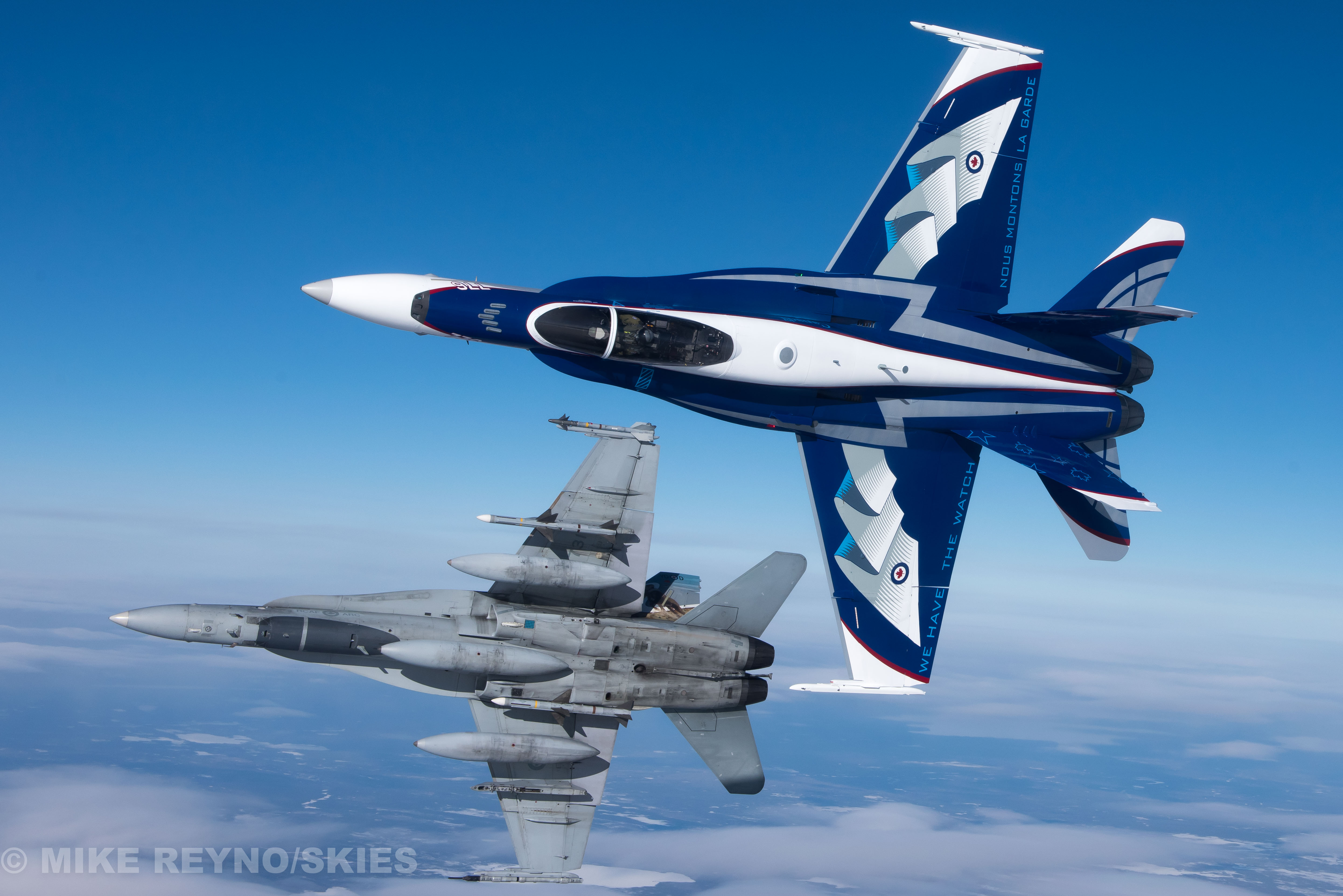 |
| The 2018 Demonstration Hornet (foreground) flies with a CF-188 Hornet from 401 Squadron. The Demo Hornet pays tribute to the 60th anniversary of NORAD. Mike Reyno Photo |
The fleet size is based on the Canadian Armed Forces requirement to have sufficient fighter aircraft to fulfill Canada’s NORAD and NATO commitments simultaneously, based on planned aircraft serviceability rates and aircraft required for training, said RCAF spokesman Maj. Scott Spurr.
“If the RCAF loses any future fighters due to attrition, it would be a policy decision on whether attrition aircraft would be replaced, and if so how,” Spurr told Defence Watch.
The RCAF did not answer whether it had projected any estimates on how many aircraft are expected to be lost to attrition over the course of the program.
Wednesday, April 25, 2018
Dassault & Airbus Team-Up - What Does it Mean for the CF-18 Replacement
By: Daniel Maillet, CAF Dispatch Author
Breaking news was announced today from the Berlin Airshow that Dassault Aviation and Airbus are teaming up to build what can only be considered a "Fifth" or "Fifth & Half" Generation Fighter Jet - what does this news mean for the future of both companies attempt to export the Rafael and the Typhoon?
In the brief announcement, Dassault and Airbus indicated that they would be starting work immediately on a new fighter jet that will at first supplement both the Dassault Rafael and the Eurofighter Typhoon; but the long-term goal is for this new fighter to replace both jets between 2030-2040.
That leaves one question for those us of on the other side of the Atlantic. What does this mean for the RCAF CF-18 Replacement?
The official list of approved bidders in the process are: (In Alphabetical Order)
Breaking news was announced today from the Berlin Airshow that Dassault Aviation and Airbus are teaming up to build what can only be considered a "Fifth" or "Fifth & Half" Generation Fighter Jet - what does this news mean for the future of both companies attempt to export the Rafael and the Typhoon?
 |
| French air force flies Rafale B fighter jets like this one photographed in operations over Mali last year. Dassault Aviation wants Canada to choose the Rafale as a replacement for the CF-18, and is willing to have the planes assembled in Canada. (Anthony Jeuland/French Air Force) |
That leaves one question for those us of on the other side of the Atlantic. What does this mean for the RCAF CF-18 Replacement?
The official list of approved bidders in the process are: (In Alphabetical Order)
- France—Dassault Aviation (Thales DMS France SAS and Safran Aircraft Engines)
- Sweden—SAAB AB (publ)—Aeronautics
- United Kingdom and Northern Ireland—Airbus Defense and Space GmbH
- United States—Lockheed Martin Corporation (Lockheed Martin Aeronautics Company)
- United States—The Boeing Company
In Canada's search for a new fighter jet - the Dassault Rafael and the Eurofighter Typhoon are among the options. While many consider the Typhoon too expensive, and the Rafael too limited in its use - they are not top contenders. This is despite Dassault having repeatedly offering to transfer technologies to Canada and build the Rafael aircraft in Canada. Others argue that both aircraft are also incapable of interoperability with the US and Canada's NORAD commitments. This argument seems weak - especially when you consider Rafael aircraft were used alongside USAF fighters in the recent bombing of Syria. I digress...
Canada has recently announced that it will extend the life-expectancy of its current fleet of CF-18s from 2025-2030. Will this announcement mean Canada might look to supplement its current CF-18 fleet until this new aircraft arrives? Will Dassault and Airbus be able to pitch or even offer it to the Canadian Government as a viable option?
Wednesday, March 7, 2018
USAF to Take 136 F-18s Out of Service; But Don't Count on Any for Canada
By: David Pugliese, Defence Watch
The U.S. Navy is removing from service 136 of its older F-18s. That has immediately prompted suggestions in some parts of the Canadian defence community that the aircraft could be used to bolster Canada’s aging CF-18 fleet.
But don’t count on that happening.
The USN is hoping to provide the U.S. Marines with the best of the surplus aircraft to bolster the Marines’ fighter capability. And then it intends to use the others for spare parts for its F-18s still operating. The 136 aircraft will be removed from service between now and 2020.
Canadian defence sources say discussions between Canada and Australia for the purchase of 18 surplus F-18s are moving smoothly along. There is no need to look at U.S. surplus aircraft even if the USN was interested in providing them to Canada, they added.

The U.S. Navy is removing from service 136 of its older F-18s. That has immediately prompted suggestions in some parts of the Canadian defence community that the aircraft could be used to bolster Canada’s aging CF-18 fleet.
But don’t count on that happening.
The USN is hoping to provide the U.S. Marines with the best of the surplus aircraft to bolster the Marines’ fighter capability. And then it intends to use the others for spare parts for its F-18s still operating. The 136 aircraft will be removed from service between now and 2020.
Canadian defence sources say discussions between Canada and Australia for the purchase of 18 surplus F-18s are moving smoothly along. There is no need to look at U.S. surplus aircraft even if the USN was interested in providing them to Canada, they added.
Subscribe to:
Posts (Atom)