By: David Puligese,
The Royal Canadian Air Force will be operating the first nine aircraft from its new fleet of fighter jets starting in 2026, Department of National Defence officials say.
But at least one member of parliament questions whether the federal government will be able to meet its timetable to replace the CF-18 fighter fleet with advanced aircraft.
MPs on the Standing Committee on Public Accounts received more details on Monday about the Liberal government’s plan to buy 88 new fighter jets. Aircraft expected in the competition include Lockheed Martin’s F-35, the Eurofighter Typhoon, Saab’s Gripen and the Boeing Super Hornet.
Pat Finn, assistant deputy minister for material at the DND, told MPS that the formal request for proposals will go out in the spring of 2019. Negotiations would be held in 2021 and a contract awarded in 2022.
“We have tried to be very judicious and not have too risky a schedule to try to achieve some of that,” Finn explained to MPs. “But from the bids until the signing of the contract is where we’ve given ourselves two years for the competitive dialogue, the final negotiations and the various approvals we need to get, signing the contract in 2022.”
The first aircraft would be delivered in 2025. Finn said this schedule has been shared with all the potential bidders and “they’re comfortable with that approach.”
Jody Thomas, the DND deputy minister, told MPs that the plan is to “achieve initial operating capability by 2026 with nine advanced fighters ready to fulfill the NORAD mission.”
But one committee member, Conservative MP Pat Kelly, was wary of whether the aircraft acquisition would proceed as scheduled.
The plan, he told Finn, doesn’t leave a lot of margin for error. Everything would have to run like clockwork to meet the timetable and Kelly questioned if that would even be possible given the track record of defence procurement over the years. “We just don’t have time in this for the kinds of delays and the kinds of failures of procurement that we have seen in other programs,” Kelly said. “I shudder to think of what many Canadians listening to this hearing might think about. What has the potential to go wrong to get to 2025? I’m going to leave it at that.”
Showing posts with label F/A-18 Super Hornet. Show all posts
Showing posts with label F/A-18 Super Hornet. Show all posts
Wednesday, December 12, 2018

Thursday, June 22, 2017
Liberals Limiting Options for Interim Fighter Solution
By: Murray Brewster, CBC News
Talks with the Pentagon about filling the Canadian air force's short-term need for jet fighters remain on track, said Defence Minister Harjit Sajjan.
Those negotiations for a so-called "interim capability" continue despite the Liberal government making a very public display at the Paris Air Show this week of snubbing Boeing executives.
The U.S. aerospace giant's commercial trade complaint against Montreal-based Bombardier has thrown the military contract into limbo.
Boeing wants trade regulators in Washington to investigate subsidies for Bombardier's CSeries aircraft, claiming they allow the Canadian company to export planes at well below cost.
The Liberals had intended to purchase 18 Super Hornet fighters — at a potential total program cost of between $5 billion and $7 billion — from Boeing. The deal was supposed to be a stopgap until the government can finalize the purchase of 88 permanent replacements for the aging CF-18 fleet.
After Boeing filed the trade complaint earlier this year, the government broke off contact with the U.S. company and said it was reviewing the "interim" fighter deal. It heightened the rhetoric last month, saying the aircraft maker was no longer the "trusted partner" it had been.
Sajjan said that, regardless of the trade dispute, the urgent requirement for fighters has not gone away and must be filled somehow.
"We're still continuing our discussions with the U.S. government, making sure that we fill this capability gap," Sajjan said.
Other options?
If Boeing has been frozen out, what is the Liberal government talking about with the Pentagon?
Sajjan said there are "other options," but refused to explain what they might be.
There are limited choices for a government-to-government purchase with the U.S. if the Super Hornet has been excluded.
During a recent trip to Singapore, Sajjan met with the CEO of Lockheed Martin, which is eager to sell Canada its advanced, but often maligned, F-35 — a plane the Liberals promised not to buy during the last election.
A defence industry source with knowledge of the file said Lockheed Martin has sent a letter to the Liberal government, expressing interest in providing its jets as the "interim solution."
Defence Minister Harjit Sajjan unveiled the government's long-awaited vision for the Canadian Armed Forces last week. The new policy calls for the purchase of 88 new jet fighters but also says the government will continue to explore a stopgap purchase until the full fleet arrives. (Adrian Wyld/Canadian Press)
Sajjan dismissed the notion of making the stealth fighter the "interim" solution and seemed to place his faith in the trade dispute being settled.
"No, right now for us we need to fill this interim capability gap and keep on with these discussions with the U.S. government on this," he told CBC News. "We are going to be looking at other options as well. We are looking for this to be resolved by the U.S. Department of Commerce quickly, so we can get back to business."
During an appearance before the Commons defence committee late Tuesday, the country's top military commander also dangled that possibility.
"What I would tell you is that, as the minister has said, the option for the Super Hornet is still open," said Gen. Jonathan Vance.
Referring to Boeing, he said: "They're a bad partner now. Maybe they [could] become a good partner again."
New versus used
But if the dispute drags on, it is unclear what the Liberal government can do if both the Super Hornet and the F-35 are ruled out as the gap-filler.
Talks with the Pentagon about filling the Canadian air force's short-term need for jet fighters remain on track, said Defence Minister Harjit Sajjan.
Those negotiations for a so-called "interim capability" continue despite the Liberal government making a very public display at the Paris Air Show this week of snubbing Boeing executives.
The U.S. aerospace giant's commercial trade complaint against Montreal-based Bombardier has thrown the military contract into limbo.
Boeing wants trade regulators in Washington to investigate subsidies for Bombardier's CSeries aircraft, claiming they allow the Canadian company to export planes at well below cost.
The Liberals had intended to purchase 18 Super Hornet fighters — at a potential total program cost of between $5 billion and $7 billion — from Boeing. The deal was supposed to be a stopgap until the government can finalize the purchase of 88 permanent replacements for the aging CF-18 fleet.
After Boeing filed the trade complaint earlier this year, the government broke off contact with the U.S. company and said it was reviewing the "interim" fighter deal. It heightened the rhetoric last month, saying the aircraft maker was no longer the "trusted partner" it had been.
Sajjan said that, regardless of the trade dispute, the urgent requirement for fighters has not gone away and must be filled somehow.
"We're still continuing our discussions with the U.S. government, making sure that we fill this capability gap," Sajjan said.
Other options?
If Boeing has been frozen out, what is the Liberal government talking about with the Pentagon?
Sajjan said there are "other options," but refused to explain what they might be.
There are limited choices for a government-to-government purchase with the U.S. if the Super Hornet has been excluded.
During a recent trip to Singapore, Sajjan met with the CEO of Lockheed Martin, which is eager to sell Canada its advanced, but often maligned, F-35 — a plane the Liberals promised not to buy during the last election.
A defence industry source with knowledge of the file said Lockheed Martin has sent a letter to the Liberal government, expressing interest in providing its jets as the "interim solution."
Defence Minister Harjit Sajjan unveiled the government's long-awaited vision for the Canadian Armed Forces last week. The new policy calls for the purchase of 88 new jet fighters but also says the government will continue to explore a stopgap purchase until the full fleet arrives. (Adrian Wyld/Canadian Press)
Sajjan dismissed the notion of making the stealth fighter the "interim" solution and seemed to place his faith in the trade dispute being settled.
"No, right now for us we need to fill this interim capability gap and keep on with these discussions with the U.S. government on this," he told CBC News. "We are going to be looking at other options as well. We are looking for this to be resolved by the U.S. Department of Commerce quickly, so we can get back to business."
During an appearance before the Commons defence committee late Tuesday, the country's top military commander also dangled that possibility.
"What I would tell you is that, as the minister has said, the option for the Super Hornet is still open," said Gen. Jonathan Vance.
Referring to Boeing, he said: "They're a bad partner now. Maybe they [could] become a good partner again."
New versus used
But if the dispute drags on, it is unclear what the Liberal government can do if both the Super Hornet and the F-35 are ruled out as the gap-filler.
 |
| There is a possibility that the Liberals could purchase refurbished F/A-18; which would be similar to the current CF-18's flown by the RCAF. |
Defence experts have suggested there is a remote possibility the U.S. could sell Canada refurbished F-18s, similar to the current CF-18s.
The Pentagon recently had modernized F-16s on the market, which the Polish air force considered but eventually declined. That would be an even more unlikely fit, since Canada has never flown the single-seat fighters, which were the backbone of the U.S. air force for decades.
The Pentagon recently had modernized F-16s on the market, which the Polish air force considered but eventually declined. That would be an even more unlikely fit, since Canada has never flown the single-seat fighters, which were the backbone of the U.S. air force for decades.
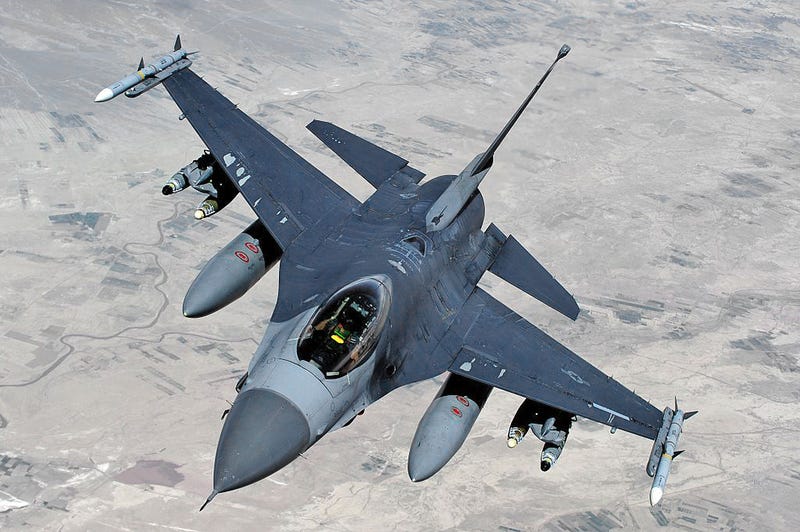 |
| The US Government also has surplus F-16s available, but it is highly unlikely Canada would purchase these jets. |
The "interim" fleet is meant to fill the gap until the Liberal government decides on a permanent replacement for the CF-18s.
Conservative MP James Bezan, his party's defence critic, wants the government to proceed to an open competition to buy fighter jets. (Adrian Wyld/Canadian Press)
Conservative defence critic James Bezan said he doesn't understand why the Liberals are twisting themselves into knots for a temporary solution when they can simply proceed to the open competition they promised for the full fleet.
Sajjan said that is still in the cards, but federal procurement officials have said a competition could take up to five years to run.
"If you look at what other states, other countries are doing in their recent procurement to replace their tactical fighters, none of them are taking five years to do this competition," Bezan said.
"If you look right now, Denmark is doing theirs in two years; Belgium means to complete theirs right now in 18 months; and just earlier this week, Finland started their F-18 replacement program, and they plan to have their first deliveries in 2021 and the entire fleet replaced by 2025, which coincidentally is the same time that our life extension on our CF-18s run out."
Conservative MP James Bezan, his party's defence critic, wants the government to proceed to an open competition to buy fighter jets. (Adrian Wyld/Canadian Press)
Conservative defence critic James Bezan said he doesn't understand why the Liberals are twisting themselves into knots for a temporary solution when they can simply proceed to the open competition they promised for the full fleet.
Sajjan said that is still in the cards, but federal procurement officials have said a competition could take up to five years to run.
"If you look at what other states, other countries are doing in their recent procurement to replace their tactical fighters, none of them are taking five years to do this competition," Bezan said.
"If you look right now, Denmark is doing theirs in two years; Belgium means to complete theirs right now in 18 months; and just earlier this week, Finland started their F-18 replacement program, and they plan to have their first deliveries in 2021 and the entire fleet replaced by 2025, which coincidentally is the same time that our life extension on our CF-18s run out."
Wednesday, June 14, 2017
Defence Experts Reject "Capability-Gap" and Interim Fighter Plan

In a new survey, 88 percent of the country’s top experts on defence and security agreed the government should cancel its proposed interim Super Hornet purchase and proceed with a permanent fighter jet replacement
OTTAWA, June 13, 2017 – Nearly nine in 10 experts in Canada’s security and defence community say the federal government’s proposal to purchase Super Hornet fighters on an interim basis is a bad idea.
That’s the finding from a new paper from the Macdonald-Laurier Institute.
An overwhelming majority of defence and security thought leaders believe “the government’s plan lacks merit, is strategically unsound, and ultimately should be cancelled”, write authors David McDonough and Brian Lee Crowley.
To read the full paper, titled “Should We Purchase Interim Super Hornets? A survey of the experts”, click here.
In November 2016, the Canadian government announced plans to acquire an interim fleet of 18 Super Hornet fighter jets as a stopgap measure to supplement the existing fleet of 76 CF-18s. In addition, it announced an “open and transparent” competition for a permanent fighter aircraft replacement for its CF-18s, which would take up to five years to complete.
According to one respondent, if the government continues with this plan, “The damage to the RCAF and Canada’s defence posture would be devastating and permanent.” Indeed, 88% of the experts surveyed said the government should cancel the Super Hornet purchase and proceed with a permanent fighter jet replacement. In the words of another respondent, “it would show the Government has the courage to correct a significant error.” Only 6.6% were in favour of the purchase, with the rest unsure on this fundamental question.
The Macdonald-Laurier Institute surveyed the country’s foremost security and defence policy thinkers and practitioners to get an independent, dispassionate and expert assessment on the merits of the interim Super Hornet plan and its underlying rationale. Potential respondents were selected for their expertise in security and defence generally, although procurement and airpower experts and practitioners were well represented among them.
In total, more than 100 people were initially contacted to undertake the survey, and we received survey responses from 75 individuals (for more information on respondents, see the paper). Participants came from across the political spectrum, and included noted scholars and think tank experts, former senior military officers from all three services, including many former RCAF commanders, and former government officials. Many also had widely differing opinions on such issues as the need for a permanent fighter aircraft competition or what particular aircraft was most suitable for Canadian defence requirements.
In other words, the diverse range of participants encompassed a large part of the security and defence community in Canada, which allowed us to gain access to their collective wisdom on this vital matter.
The survey itself consisted of 8 questions to be answered yes, no, or unsure, which allowed us to aggregate the responses. In so doing, we were able to assess their collective views on this matter and gauge, in an “evidence-based” manner, whether there is any broad consensus on the wisdom of the government’s plan – from its key justifications to its costs to whether the decision should be reversed.
Today, the government is in a very public spat with Boeing, the Super Hornet manufacturer, owing to its decision to ask the US Commerce Department and International Trade Commission to investigate subsidies for Bombardier’s CSeries aircraft. As a result, Ottawa suspended talks with Boeing on the interim Super Hornet purchase. The government’s recent defence policy statement also now only refers to the “potential” acquisition of an interim aircraft, omitting even a reference to the Super Hornet.
“Both of these developments provide a welcome opportunity for the government to reconsider this hasty procurement decision”, write McDonough and Crowley. “As a government publicly committed to ‘evidence-based decision making,’ it should consider the opinions of the vast majority of experts in the field”.
***
David McDonough is Deputy Editor at the Macdonald-Laurier Institute and a Research Fellow at Dalhousie University’s Centre for the Study of Security and Development.
Brian Lee Crowley is the Managing Director of the Macdonald-Laurier Institute.
The Macdonald-Laurier Institute is the only non-partisan, independent national public policy think tank in Ottawa focusing on the full range of issues that fall under the jurisdiction of the federal government.
For more information, please contact Mark Brownlee, communications manager, at 613-482-8327 x105 or email at mark.brownlee@macdonaldlaurier.ca.
Friday, June 2, 2017
Ottawa suspends talks with Boeing over Super Hornet jet purchase
By: STEVEN CHASE AND NICOLAS VAN PRAET The Globe and Mail
The Trudeau government has suspended negotiations with Boeing Co. to purchase fighter planes as it continues to play hardball with the Chicago company over a U.S. trade complaint the firm lodged against Montreal aircraft maker Bombardier Inc.
Steven MacKinnon, parliamentary secretary to Public Services and Procurement Minister Judy Foote, announced Thursday that Canada has paused talks with Boeing as the dispute shows no signs of winding down.
The Liberals have long planned to buy 18 Boeing Super Hornet jet fighters to fill what they say is a gap in Royal Canadian Air Force capabilities while Ottawa deliberates on a longer-term plan to replace this country's aging CF-18 warplanes.
"We have a capability gap, we outlined a process, our partner in that process is not acting like a valued partner right now, so we've suspended discussions with that partner," Mr. MacKinnon told reporters after a speech at the CANSEC arms fair in Ottawa, sponsored by the Canadian Association of Defence and Security Industries.
There have been no meetings between the Trudeau Liberals and Boeing since the company first threatened to jettison the contract, a person familiar with the matter told The Globe and Mail.
Scott Day, a spokesman for Boeing, said direct communication is important but the company would not necessarily be communicating regularly with the Canadian government on the Super Hornet purchase in any case because it is a government-to-government transaction.
"There are different avenues to get to a foreign military sale," Mr. Day said. "Sometimes, the contractor is involved in those sale purchases and sometimes they're not."
Mr. Day said Boeing continues to work with the U.S. Navy, its American government partner, on concluding the sale to Canada. "We've not been told to stop producing materials for the Navy," Mr. Day said. "We're happy to answer questions when the government of Canada has them for us."
News of the impasse comes one day after Canada's Defence Minister doubled down on Ottawa's threat to jettison the multibillion-dollar purchase if Boeing doesn't withdraw a complaint with U.S. trade regulators that could lead to duties being slapped on Bombardier planes. Harjit Sajjan suggested in a speech Wednesday that Boeing – which has benefited from billions of dollars of sales to Canada over the decades – is not behaving like a "trusted partner" of Canada .
On Thursday, Boeing cancelled an announcement it was going to make about the Super Hornet jets at the arms fair in Ottawa. The plane maker was set to provide details about Canadian-based suppliers benefiting if the contract was finalized, but scrapped the announcement "due to the current climate," it said in a statement. Boeing has roughly 560 aerospace suppliers in Canada and says its commitment to the country remains unwavering.
In May, the U.S. Department of Commerce announced it will investigate accusations from Boeing that sales of Bombardier's new C Series jetliner constitute dumping into the U.S. market at "absurdly low prices," because the plane is subsidized by the Canadian and Quebec governments.
The Department of Commerce and the U.S. International Trade Commission are probing the allegations. A preliminary determination on Boeing's petition is expected by June 12.
In a written response to Mr. Sajjan's speech Wednesday, Boeing offered no indication that it was considering backing down on its trade complaint against Bombardier. The company said its complaint is a commercial matter that it is seeking to address through proper channels.
Canada's initial purchase of these Super Hornets could cost $2-billion, but their maintenance, support and upgrades could cost as much as $10-billion over the full period of their use. That could mean billions of dollars more in parts and support for Boeing beyond the initial capital investment.
The Trudeau government has suspended negotiations with Boeing Co. to purchase fighter planes as it continues to play hardball with the Chicago company over a U.S. trade complaint the firm lodged against Montreal aircraft maker Bombardier Inc.
Steven MacKinnon, parliamentary secretary to Public Services and Procurement Minister Judy Foote, announced Thursday that Canada has paused talks with Boeing as the dispute shows no signs of winding down.
The Liberals have long planned to buy 18 Boeing Super Hornet jet fighters to fill what they say is a gap in Royal Canadian Air Force capabilities while Ottawa deliberates on a longer-term plan to replace this country's aging CF-18 warplanes.
"We have a capability gap, we outlined a process, our partner in that process is not acting like a valued partner right now, so we've suspended discussions with that partner," Mr. MacKinnon told reporters after a speech at the CANSEC arms fair in Ottawa, sponsored by the Canadian Association of Defence and Security Industries.
There have been no meetings between the Trudeau Liberals and Boeing since the company first threatened to jettison the contract, a person familiar with the matter told The Globe and Mail.
Scott Day, a spokesman for Boeing, said direct communication is important but the company would not necessarily be communicating regularly with the Canadian government on the Super Hornet purchase in any case because it is a government-to-government transaction.
"There are different avenues to get to a foreign military sale," Mr. Day said. "Sometimes, the contractor is involved in those sale purchases and sometimes they're not."
Mr. Day said Boeing continues to work with the U.S. Navy, its American government partner, on concluding the sale to Canada. "We've not been told to stop producing materials for the Navy," Mr. Day said. "We're happy to answer questions when the government of Canada has them for us."
News of the impasse comes one day after Canada's Defence Minister doubled down on Ottawa's threat to jettison the multibillion-dollar purchase if Boeing doesn't withdraw a complaint with U.S. trade regulators that could lead to duties being slapped on Bombardier planes. Harjit Sajjan suggested in a speech Wednesday that Boeing – which has benefited from billions of dollars of sales to Canada over the decades – is not behaving like a "trusted partner" of Canada .
On Thursday, Boeing cancelled an announcement it was going to make about the Super Hornet jets at the arms fair in Ottawa. The plane maker was set to provide details about Canadian-based suppliers benefiting if the contract was finalized, but scrapped the announcement "due to the current climate," it said in a statement. Boeing has roughly 560 aerospace suppliers in Canada and says its commitment to the country remains unwavering.
In May, the U.S. Department of Commerce announced it will investigate accusations from Boeing that sales of Bombardier's new C Series jetliner constitute dumping into the U.S. market at "absurdly low prices," because the plane is subsidized by the Canadian and Quebec governments.
The Department of Commerce and the U.S. International Trade Commission are probing the allegations. A preliminary determination on Boeing's petition is expected by June 12.
In a written response to Mr. Sajjan's speech Wednesday, Boeing offered no indication that it was considering backing down on its trade complaint against Bombardier. The company said its complaint is a commercial matter that it is seeking to address through proper channels.
Canada's initial purchase of these Super Hornets could cost $2-billion, but their maintenance, support and upgrades could cost as much as $10-billion over the full period of their use. That could mean billions of dollars more in parts and support for Boeing beyond the initial capital investment.
Friday, May 19, 2017
Bombardier-Boeing Fight Could Kill Super-Hornet Buy: Freeland
By: Ross Marowits and Alexander Panetta, The Canadian Press
The federal government hinted Thursday that Boeing should not take future military contracts with Canada for granted, a veiled threat that coincided with a spat between the aerospace giant and rival Bombardier.
Foreign Affairs Minister Chrystia Freeland's comment that it's "reviewing current military procurement that relates to Boeing" appeared to be a not-so-subtle hint that the government would revisit its purchase of Super Hornets.
The government has said it plans to sole-source 18 Super Hornets as a stop-gap measure before running a full competition to replace its aging CF-18 fleet.
The Liberals say the Super Hornets, which internal estimates suggest could cost as much as $2 billion, are urgently needed.
Military officials and defence industry representatives contacted by The Canadian Press on Thursday were united in assuming that Freeland's warning related to the planned Super Hornet purchase.
Freeland's comments came as the next potential Canada-U.S. trade dispute unfolded Thursday with the aerospace giants clashing at a Washington hearing.
"The U.S. market is the most open in the world, but we must take action if our rules are being broken," U.S. Commerce Secretary Wilbur Ross said in a statement after the hearing began into Boeing's claim that Bombardier received subsidies allowing it to sell its CSeries planes at below-market prices.
Aerospace analyst Richard Aboulafia of the Teal Group said the Canadian government's move was inevitable, putting into question Boeing's strategy in taking on Bombardier.
"If Boeing is smart it'll press the do-over button and walk away," he said in an interview, adding the aeronautics powerhouse has much more to risk from losing military contracts than the tiny gain from a successful trade complaint.
"Boeing values Canada as a customer and supplier-partner for both our commercial and defence businesses," said company spokesman Dan Curran.
"Two of Canada's most recent acquisitions of Boeing military products, the C-17 Globemaster and CH-47 Chinook, were delivered on-time and/or ahead of schedule."
In an emailed statement Boeing also pointed out that it places substantial amounts of commercial and defence work in Canada and has a supply chain that "leverages the breadth and depth of the Canadian aerospace industry."
Lobbyists, lawyers and aerospace executives crowded a room in Washington for a little battle playing out in the broader context of the day's larger trade news: the U.S. announcement that NAFTA renegotiations will start in the next 90 days.
Bombardier has made it clear that its true goal is to grab half the international market share for 100-to-150-seat aircraft, according to Boeing, which argues its rival has received an unfair head start from Canadian taxpayers.
Boeing vice-president Raymond Conner said the sale of cheap, subsidized planes to Delta Air Lines helped build momentum for Bombardier to enter a new market. If Bombardier reaches its stated goal, he said, it would squeeze Boeing from that market and cost the company US$330 million a year in annual sales.
"Today we are at a critical moment," Conner told the seven-member U.S. International Trade Commission. "If you don't fix it now, it will be too late to do anything about it later."
Boeing has petitioned the U.S. Commerce Department and the U.S. International Trade Commission to investigate subsidies of Bombardier's CSeries aircraft that it says have allowed the company to export planes at well below cost. A preliminary determination on the petition is expected by June 12.
If the ITC determines there is a threat of injury to the U.S. industry, preliminary countervailing duties could be announced in July, followed in October by preliminary anti-dumping duties, unless the deadlines are extended. Final determinations are scheduled for October and December.
Boeing is calling for countervailing duties of 79.41 per cent and anti-dumping charges of 79.82 per cent.
It complains that Bombardier has received more than US$3 billion in government subsidies so far that have allowed it to engage in "predatory pricing."
Lawyers for the U.S. aerospace giant argued Thursday that Bombardier's own words prove it was rescued financially by multibillion-dollar assistance from the Quebec government, which last year invested US$1 billion in exchange for a 49.5 per cent stake in the CSeries. The company also shored up its finances by selling a 30 per cent stake in its railway division to pension fund manager Caisse de depot for US$1.5 billion.
Bombardier representatives countered that their planes never competed with Boeing in a sale to Delta -- which the American rival describes as a seminal moment.
Bombardier lawyer Peter Lichtenbaum said the plaintiff is a global powerhouse that hasn't lost any sales as a result of Bombardier, has an enviable order backlog and doesn't even compete with Bombardier in the sales campaigns it has complained about because the CSeries is smaller than Boeing's 737-800 and Max 8 planes.
"Boeing's petition in this case is unprecedented in its overreach," he said. "If this is a case of David vs. Goliath, Boeing has cast itself in the wrong role."
Boeing's annual sales were US$94.6 billion last year. That means the US$330 million Conner expressed concern about amounts to one-third of one per cent of its annual sales. Bombardier revenues last year were US$16.3 billion, including US$9.9 billion from aerospace activities.
Monday, March 6, 2017
Bids For Permanent Fleet to Replace CF-18s Expected in 2019
By: David Pugliese, The National Post
The Liberal government plans to request bids for a new fleet of fighter jets as early as 2019, which would coincide with the next federal election.
That move, along with the push by the Liberals to have the first of the interim Super Hornet fighter aircraft delivered by that year, could help blunt criticism about bungled military procurements and delays in buying a new jet, say military insiders and analysts.
Public Services and Procurement Canada confirmed the 2019 date for the release to industry of the request for proposals for the permanent fighter fleet.
The department also noted the government expects a deal in place by the end of 2017 or early 2018 to acquire the 18 Boeing Super Hornets as an interim measure. The Liberal government has been pushing to get the first of those planes delivered some time in 2019, industry sources say.
Defence analyst Martin Shadwick said such moves could provide political cover for the Liberals. “It could be politically useful in an election year to have both in the works,” said Shadwick, who teaches strategic studies at York University in Toronto. “That’s a pretty good way to buy some political insulation.”
Shadwick said if the first Super Hornets arrive during the election year, that in particular would be a tangible event the Liberal government could highlight.
The Liberals had promised during the last campaign to purchase a replacement for the CF-18 jet fleet, pointing out that it would go for a cheaper alternative to the controversial F-35 stealth fighter that had been selected by the Conservative government.
That’s a pretty good way to buy some political insulation
Defence Minister Harjit Sajjan announced in November the government’s decision to begin negotiations to buy 18 Boeing Super Hornets as “interim” fighter jets until a permanent fleet for the existing CF-18 aircraft could be bought.
The Liberals said Canada is facing a capability gap because it doesn’t have enough jets to fulfil its military missions, a situation Sajjan has blamed on the previous Conservative government for bungling the project to replace the aging CF-18s.
The Liberals’ upcoming Defence Policy Review will also contain details on the project to acquire a permanent replacement fleet for the CF-18s.
“These requirements will include the number of aircraft needed, the level of in-service support required and the estimated time of delivery,” noted the recently released update from Public Services and Procurement Canada. “Planning for the competition is already underway, and we anticipate a request for proposals will be issued in 2019.”
But the Liberal plan to buy the Super Hornets has come under fire from retired Royal Canadian Air Force generals, who say it is too costly. They argue the Liberals should cancel the Super Hornet deal and proceed immediately to a competition to buy permanent replacements for the CF-18s.
Jordan Owens, a spokeswoman for Sajjan, said the government is continuing with its negotiations on the Super Hornets. “The Royal Canadian Air Force faces a significant challenge because it does not have the number of fighter aircraft available to meet Canada’s NORAD and NATO obligations if called to do so simultaneously,” Owens said.
Critics, including the Conservatives and some retired officers, have disputed that position and questioned whether there is such a gap.
The Liberals have reversed their position somewhat on the F-35. They now say they will hold an open competition for the permanent fleet of fighter jets and that Lockheed Martin is welcome to propose the F-35.
The Liberal government plans to request bids for a new fleet of fighter jets as early as 2019, which would coincide with the next federal election.
That move, along with the push by the Liberals to have the first of the interim Super Hornet fighter aircraft delivered by that year, could help blunt criticism about bungled military procurements and delays in buying a new jet, say military insiders and analysts.
Public Services and Procurement Canada confirmed the 2019 date for the release to industry of the request for proposals for the permanent fighter fleet.
The department also noted the government expects a deal in place by the end of 2017 or early 2018 to acquire the 18 Boeing Super Hornets as an interim measure. The Liberal government has been pushing to get the first of those planes delivered some time in 2019, industry sources say.
Defence analyst Martin Shadwick said such moves could provide political cover for the Liberals. “It could be politically useful in an election year to have both in the works,” said Shadwick, who teaches strategic studies at York University in Toronto. “That’s a pretty good way to buy some political insulation.”
Shadwick said if the first Super Hornets arrive during the election year, that in particular would be a tangible event the Liberal government could highlight.
The Liberals had promised during the last campaign to purchase a replacement for the CF-18 jet fleet, pointing out that it would go for a cheaper alternative to the controversial F-35 stealth fighter that had been selected by the Conservative government.
That’s a pretty good way to buy some political insulation
Defence Minister Harjit Sajjan announced in November the government’s decision to begin negotiations to buy 18 Boeing Super Hornets as “interim” fighter jets until a permanent fleet for the existing CF-18 aircraft could be bought.
The Liberals said Canada is facing a capability gap because it doesn’t have enough jets to fulfil its military missions, a situation Sajjan has blamed on the previous Conservative government for bungling the project to replace the aging CF-18s.
 |
| Canadian CF-18 Hornet flies beside two Portuguese F16 Flying Falcons over Lithuania on Sept. 15, 2014. Cpl Gabrielle DesRochers/DNDA |
“These requirements will include the number of aircraft needed, the level of in-service support required and the estimated time of delivery,” noted the recently released update from Public Services and Procurement Canada. “Planning for the competition is already underway, and we anticipate a request for proposals will be issued in 2019.”
But the Liberal plan to buy the Super Hornets has come under fire from retired Royal Canadian Air Force generals, who say it is too costly. They argue the Liberals should cancel the Super Hornet deal and proceed immediately to a competition to buy permanent replacements for the CF-18s.
Jordan Owens, a spokeswoman for Sajjan, said the government is continuing with its negotiations on the Super Hornets. “The Royal Canadian Air Force faces a significant challenge because it does not have the number of fighter aircraft available to meet Canada’s NORAD and NATO obligations if called to do so simultaneously,” Owens said.
Critics, including the Conservatives and some retired officers, have disputed that position and questioned whether there is such a gap.
The Liberals have reversed their position somewhat on the F-35. They now say they will hold an open competition for the permanent fleet of fighter jets and that Lockheed Martin is welcome to propose the F-35.
Wednesday, March 1, 2017
Hawn: Choosing Super Hornet will Ground Canada's Air Force
By: Lt.-Col. (Retired) Hon. Laurie Hawn, The Ottawa Citizen
“Per Ardua Ad Dis-Astra.” This altered RCAF motto sums up what the federal the government’s convoluted process to buy 18 “interim” Super Hornets to fill a “capability gap” really means. It will kill Canada’s fighter force.
Everything can be traced to the prime minister’s election campaign promise to never buy the F-35 fighter jet, allegedly because it is too expensive and doesn’t work.
His conclusions are being proven wrong, but he seems determined to proceed without a timely competition, thanks to a politically created “capability gap.” That gap was based on aircraft numbers that have never been demanded simultaneously; by fudging actual CF-18 operational serviceability history; and by the false narrative that the CF-18 cannot keep operating until we start getting new aircraft.
Any imagined gap, however, could be filled by 27 available Kuwaiti F-18C/D aircraft for $330 million US. Or, we could upgrade our entire fleet of 76 CF-18s to close to Super Hornet systems status for about 20 per cent of what we’ll pay for 18 Super Hornets. Neither option was explored.
We don’t have technicians and support capacity for today. Eighteen Super Hornets will cost about $7 billion Cdn and add 350 non-existent personnel and Super Hornet-specific infrastructure. We are already losing pilots to voluntary release at rates we can’t re-generate, and we certainly don’t have extras for the Super Hornet.
Many real experts were never consulted, and 240 were forced to sign lifetime non-disclosure agreements, which hides the truth. The Auditor General, the Ethics Commissioner and the Parliamentary Budget Officer should take an interest.
Competitions don’t take five years, and to satisfy everyone, we need to start one immediately. Denmark did one quickly, and Canada already has a (now suppressed) options analysis that points to the F-35. As in the past, the F-35 will win any competition not rigged against it.
The Super Hornet is a fine aircraft for its roles and time, but we need a fighter for projected threats into the 2050s. The Super Hornet also has a thorny safety issue in its oxygen system, which has resulted in 297 incidents and permanent grounding for some aircrews.
One argument that doesn’t stand up is that the F-35 doesn’t work. Its operational development continues and in every exercise where F-35 participates, its effectiveness is very evident. In our own primary aim of air sovereignty, the F-35’s clean configuration will allow it to conduct higher-altitude intercepts that the Super Hornet cannot.
Another argument that doesn’t stand up is cost. The latest cost for the F-35A is $8.5 billion US for 90 aircraft, or $94.6 million per aircraft. But as predicted, that cost will continue to decrease and in 2020, when we should start receiving our aircraft, it will be about $85 Million. The F-35 is cheaper than the Super Hornet.
The Super Hornet will not be interim. Even if the F-35 were to win a competition, we would suddenly realize that we can’t afford two small fleets, due to duplication of everything. That will apply to the Super Hornet and CF-18, and assuredly to the Super Hornet and F-35. The Aussies are doing it, but we are not them, and we would be stuck buying more Super Hornets.
Canadian aerospace industries, jobs and the economy will also be losers on our current path. We will lose out on billions in contracts and be out of step with future technology. This will be an industry-killing Avro Arrow redux and/or a costly Sea King redux.
We cannot afford to continue on the current path for many reasons: Canadian sovereignty and security, taxpayers, technical, personnel, moral, commonality with allies and Canadian industry. I have received virtually unanimous support for my position, most importantly from members of the RCAF at all rank levels.
----
Lt.-Col. (Retired) Hon. Laurie Hawn, PC, CD is a former RCAF CF-18 Squadron Commander and member of Parliament.
“Per Ardua Ad Dis-Astra.” This altered RCAF motto sums up what the federal the government’s convoluted process to buy 18 “interim” Super Hornets to fill a “capability gap” really means. It will kill Canada’s fighter force.
Everything can be traced to the prime minister’s election campaign promise to never buy the F-35 fighter jet, allegedly because it is too expensive and doesn’t work.
His conclusions are being proven wrong, but he seems determined to proceed without a timely competition, thanks to a politically created “capability gap.” That gap was based on aircraft numbers that have never been demanded simultaneously; by fudging actual CF-18 operational serviceability history; and by the false narrative that the CF-18 cannot keep operating until we start getting new aircraft.
Any imagined gap, however, could be filled by 27 available Kuwaiti F-18C/D aircraft for $330 million US. Or, we could upgrade our entire fleet of 76 CF-18s to close to Super Hornet systems status for about 20 per cent of what we’ll pay for 18 Super Hornets. Neither option was explored.
We don’t have technicians and support capacity for today. Eighteen Super Hornets will cost about $7 billion Cdn and add 350 non-existent personnel and Super Hornet-specific infrastructure. We are already losing pilots to voluntary release at rates we can’t re-generate, and we certainly don’t have extras for the Super Hornet.
Many real experts were never consulted, and 240 were forced to sign lifetime non-disclosure agreements, which hides the truth. The Auditor General, the Ethics Commissioner and the Parliamentary Budget Officer should take an interest.
Competitions don’t take five years, and to satisfy everyone, we need to start one immediately. Denmark did one quickly, and Canada already has a (now suppressed) options analysis that points to the F-35. As in the past, the F-35 will win any competition not rigged against it.
The Super Hornet is a fine aircraft for its roles and time, but we need a fighter for projected threats into the 2050s. The Super Hornet also has a thorny safety issue in its oxygen system, which has resulted in 297 incidents and permanent grounding for some aircrews.
One argument that doesn’t stand up is that the F-35 doesn’t work. Its operational development continues and in every exercise where F-35 participates, its effectiveness is very evident. In our own primary aim of air sovereignty, the F-35’s clean configuration will allow it to conduct higher-altitude intercepts that the Super Hornet cannot.
Another argument that doesn’t stand up is cost. The latest cost for the F-35A is $8.5 billion US for 90 aircraft, or $94.6 million per aircraft. But as predicted, that cost will continue to decrease and in 2020, when we should start receiving our aircraft, it will be about $85 Million. The F-35 is cheaper than the Super Hornet.
The Super Hornet will not be interim. Even if the F-35 were to win a competition, we would suddenly realize that we can’t afford two small fleets, due to duplication of everything. That will apply to the Super Hornet and CF-18, and assuredly to the Super Hornet and F-35. The Aussies are doing it, but we are not them, and we would be stuck buying more Super Hornets.
Canadian aerospace industries, jobs and the economy will also be losers on our current path. We will lose out on billions in contracts and be out of step with future technology. This will be an industry-killing Avro Arrow redux and/or a costly Sea King redux.
We cannot afford to continue on the current path for many reasons: Canadian sovereignty and security, taxpayers, technical, personnel, moral, commonality with allies and Canadian industry. I have received virtually unanimous support for my position, most importantly from members of the RCAF at all rank levels.
----
Lt.-Col. (Retired) Hon. Laurie Hawn, PC, CD is a former RCAF CF-18 Squadron Commander and member of Parliament.
Thursday, February 2, 2017
A Deeper look at the necessity of a mixed RCAF Fighter Fleet
By: Alexis Amini, NATO Association
Despite the military and economic benefits of having a mixed fighter fleet composed of the 5th generation stealthy F-35 and the 4th generation non-stealthy Super Hornet, some critics argue that Canada cannot afford such an aerial force structure. Therefore, some experts suggest that the RCAF should opt for a sole purchase of either the Super Hornet or the F-35. Nonetheless, with the return of great power competition, by having a single fighter fleet, Canada will have difficulties in upholding its two mandates defined in its current defense policy: the defense of North America in cooperation with the US and contributing to international security through expeditionary operations within coalitions like NATO.
Regarding expeditionary operations, peer and near-peer competitors are looking to counter Western air forces’ supremacy by developing land and air-based weapon systems that can be used in an Anti Access/Area denial (A2/AD) fashion aimed at making an airspace off-limits to an enemy air force including stealth fighters. Indeed, it is necessary to bear in mind that stealth has been developed to avoid detection from high frequency radars optimized for targeting, against which non-stealthy aircrafts are vulnerable. However, stealth planes with tail fins like the F-35 are visible to low-frequency radars used for early warning and surveillance. Being aware of this F-35 vulnerability, revisionist countries like Russia and China are developing low frequency surveillance radars able to cue high frequency targeting radar toward the F-35’s location in the sky. Such a radar system can detect and target both non-stealth and stealth aircrafts at greater distances. It is being integrated into ground A2/AD weapons like surface-to-air missiles (SAMs) batteries as well as aerial A2/AD assets like fighters such as the Russian non-stealthy Flanker and the stealthy T-50 PAK-FA. Such a development is quite revolutionary since low frequency radars are voluminous compared to their high frequency counterparts. Usually, airborne low frequency radars are installed as radar dishes on top of large airframes acting as Airborne Early Warning (AEW) platforms such as the E-3 Sentry or the E-2 Hawkeye. That said, the Russian aerospace industry managed to miniaturize these low frequency radars and fit them on fighters in addition to their onboard high frequency targeting radar. Current Western fighters like the 4thgeneration Super Hornet and the 5th generation F-35s are only equipped with high frequency targeting radars which only permits them to detect and engage non-stealthy platforms while enemy stealth jets may operate unopposed.
To counter this rising A2/AD threat in the context of expeditionary operations, a mixed fighter fleet composed of a single type of stealth jet and a series of non-stealth aircrafts is essential. The non-stealth component would include Electronic Warfare (EW) aircrafts, airborne missile platforms (or arsenal planes) and dedicated AEW planes equipped with low frequency radars capable of detecting both stealthy and non-stealthy enemy jets. The stealth component would be composed of the F-35 that will mainly act as a survivable Intelligence, Surveillance, Target Acquisition and Reconnaissance (ISTAR) platform as well as an airborne Command and Control (C2) node. Indeed, since near peer and peer competitors will possess a vast amount of military capabilities employed in an A2/AD fashion, stealth fighters cannot destroy those in a swift manner given their limited payload due to their stealth design. The F-35 would be armed with missiles for mostly self-defense. Therefore, to degrade these A2/AD military capabilities in the swiftest way possible, a non-stealthy platform that can act as an arsenal plane is required. As a first step to degrade the air defenses, an EW aircraft operating at a safe distance from the A2/AD envelope will jam low-frequency surveillance radars equipping SAM batteries and airborne enemy fighters. Once the low frequency radars are jammed thus preventing the cueing of high frequency targeting radars designed to guide missiles launched from opposing SAMs or jets, the F-35 can safely enter the A2/AD envelope and identify land and airborne non-stealthy targets (ISTAR role) whose coordinates will be transmitted to far-flying arsenal planes armed with long-range missiles (C2 role). Parallel to that, an AEW platform equipped with a low-frequency radar would be operating at a safe distance from the A2/AD envelope and would be tasked with searching and detecting airborne stealth fighters and then cue in F-35s and non-stealthy arsenal planes’ high frequency targeting radar toward the enemy stealth jet’s location so that they may eliminate them.
Despite the advantages of such a mixed fighter fleet in facing the A2/AD threat posed by revisionist powers, critics argue that Canada cannot afford such a force structure. Indeed, a mixed fighter fleet entails high costs given the need for distinct supply chains and training regimens, something Ottawa can ill afford with a limited defense budget. Therefore, the case is being made for a RCAF exclusively composed of either the 4thgeneration non-stealthy Super Hornets or the 5th generation F-35. However, in developing a single type force structure, Canada will not have the full spectrum of capabilities mentioned above that are necessary to degrade an A2/AD envelope. The RCAF would have to rely on other partners for certain capabilities it will not have in its arsenal. Thus, Canada will only be a second-tier partner in any future coalition in the context of expeditionary operations. Such an outcome would dash Canada’s aspiration to be an invaluable coalition partner by having military capabilities in high demand.
In addition, a single type fighter fleet would complicate Canada’s task in defending North American airspace in the context of NORAD. Since Russian aerospace forces possess 4th generation Flankers and 5th generation T-50s are equipped with a low and high frequency radar able to detect and engage both non-stealthy and stealthy jets at great distances, a single type RCAF fighter fleet composed exclusively of either the F-35 or a Super Hornet will be unable to effectively counter Russian incursions thus warranting American intervention as per the NORAD treaty.
Nonetheless, Canada can afford a mixed fighter fleet composed of a single type of stealth jets and a series of non-stealth planes if it’s a combination of one manned platform and several types of Unmanned Combat Aerial Vehicles (UCAV) given the relative low cost of drones compared to their manned counterparts.
Despite the military and economic benefits of having a mixed fighter fleet composed of the 5th generation stealthy F-35 and the 4th generation non-stealthy Super Hornet, some critics argue that Canada cannot afford such an aerial force structure. Therefore, some experts suggest that the RCAF should opt for a sole purchase of either the Super Hornet or the F-35. Nonetheless, with the return of great power competition, by having a single fighter fleet, Canada will have difficulties in upholding its two mandates defined in its current defense policy: the defense of North America in cooperation with the US and contributing to international security through expeditionary operations within coalitions like NATO.
Regarding expeditionary operations, peer and near-peer competitors are looking to counter Western air forces’ supremacy by developing land and air-based weapon systems that can be used in an Anti Access/Area denial (A2/AD) fashion aimed at making an airspace off-limits to an enemy air force including stealth fighters. Indeed, it is necessary to bear in mind that stealth has been developed to avoid detection from high frequency radars optimized for targeting, against which non-stealthy aircrafts are vulnerable. However, stealth planes with tail fins like the F-35 are visible to low-frequency radars used for early warning and surveillance. Being aware of this F-35 vulnerability, revisionist countries like Russia and China are developing low frequency surveillance radars able to cue high frequency targeting radar toward the F-35’s location in the sky. Such a radar system can detect and target both non-stealth and stealth aircrafts at greater distances. It is being integrated into ground A2/AD weapons like surface-to-air missiles (SAMs) batteries as well as aerial A2/AD assets like fighters such as the Russian non-stealthy Flanker and the stealthy T-50 PAK-FA. Such a development is quite revolutionary since low frequency radars are voluminous compared to their high frequency counterparts. Usually, airborne low frequency radars are installed as radar dishes on top of large airframes acting as Airborne Early Warning (AEW) platforms such as the E-3 Sentry or the E-2 Hawkeye. That said, the Russian aerospace industry managed to miniaturize these low frequency radars and fit them on fighters in addition to their onboard high frequency targeting radar. Current Western fighters like the 4thgeneration Super Hornet and the 5th generation F-35s are only equipped with high frequency targeting radars which only permits them to detect and engage non-stealthy platforms while enemy stealth jets may operate unopposed.
To counter this rising A2/AD threat in the context of expeditionary operations, a mixed fighter fleet composed of a single type of stealth jet and a series of non-stealth aircrafts is essential. The non-stealth component would include Electronic Warfare (EW) aircrafts, airborne missile platforms (or arsenal planes) and dedicated AEW planes equipped with low frequency radars capable of detecting both stealthy and non-stealthy enemy jets. The stealth component would be composed of the F-35 that will mainly act as a survivable Intelligence, Surveillance, Target Acquisition and Reconnaissance (ISTAR) platform as well as an airborne Command and Control (C2) node. Indeed, since near peer and peer competitors will possess a vast amount of military capabilities employed in an A2/AD fashion, stealth fighters cannot destroy those in a swift manner given their limited payload due to their stealth design. The F-35 would be armed with missiles for mostly self-defense. Therefore, to degrade these A2/AD military capabilities in the swiftest way possible, a non-stealthy platform that can act as an arsenal plane is required. As a first step to degrade the air defenses, an EW aircraft operating at a safe distance from the A2/AD envelope will jam low-frequency surveillance radars equipping SAM batteries and airborne enemy fighters. Once the low frequency radars are jammed thus preventing the cueing of high frequency targeting radars designed to guide missiles launched from opposing SAMs or jets, the F-35 can safely enter the A2/AD envelope and identify land and airborne non-stealthy targets (ISTAR role) whose coordinates will be transmitted to far-flying arsenal planes armed with long-range missiles (C2 role). Parallel to that, an AEW platform equipped with a low-frequency radar would be operating at a safe distance from the A2/AD envelope and would be tasked with searching and detecting airborne stealth fighters and then cue in F-35s and non-stealthy arsenal planes’ high frequency targeting radar toward the enemy stealth jet’s location so that they may eliminate them.
Despite the advantages of such a mixed fighter fleet in facing the A2/AD threat posed by revisionist powers, critics argue that Canada cannot afford such a force structure. Indeed, a mixed fighter fleet entails high costs given the need for distinct supply chains and training regimens, something Ottawa can ill afford with a limited defense budget. Therefore, the case is being made for a RCAF exclusively composed of either the 4thgeneration non-stealthy Super Hornets or the 5th generation F-35. However, in developing a single type force structure, Canada will not have the full spectrum of capabilities mentioned above that are necessary to degrade an A2/AD envelope. The RCAF would have to rely on other partners for certain capabilities it will not have in its arsenal. Thus, Canada will only be a second-tier partner in any future coalition in the context of expeditionary operations. Such an outcome would dash Canada’s aspiration to be an invaluable coalition partner by having military capabilities in high demand.
In addition, a single type fighter fleet would complicate Canada’s task in defending North American airspace in the context of NORAD. Since Russian aerospace forces possess 4th generation Flankers and 5th generation T-50s are equipped with a low and high frequency radar able to detect and engage both non-stealthy and stealthy jets at great distances, a single type RCAF fighter fleet composed exclusively of either the F-35 or a Super Hornet will be unable to effectively counter Russian incursions thus warranting American intervention as per the NORAD treaty.
Nonetheless, Canada can afford a mixed fighter fleet composed of a single type of stealth jets and a series of non-stealth planes if it’s a combination of one manned platform and several types of Unmanned Combat Aerial Vehicles (UCAV) given the relative low cost of drones compared to their manned counterparts.
----
Alexis Amini – editor for the Canadian Armed Forces program – is a graduate student in public and international affairs at Université de Montréal (UdeM), Québec. He has a BSc in political science from the same university. Having lived in Djibouti and the United Arab Emirates where he witnessed major geopolitical events, Alexis developed a passion for international security. His research focus revolves around geopolitics, defense policies and political risk analysis. Upon completion of his master’s program, Alexis intends to join the strategic intelligence industry.
RCAF to Face Challenge with Old and New fighter Fleets
By: Murray Brewster, CBC News
A team of U.S. warplane experts has been invited to brief Canadian officials on what the Royal Canadian Air Force can expect when it takes delivery of a fleet of Super Hornet jets.
The briefing, expected to take place this week at the Canadian embassy in Washington, D.C., is crucial for the Liberal government as it grapples with introducing a new fighter jet into service and its impact on Canada's air defences.
The Trudeau government has begun talks with the Pentagon for a foreign military sale of 18 Super Hornets, at a cost of $5-$7 billion.
The Super Hornet is a larger, more advanced version of the CF-18, which the Liberal government hopes to replace entirely starting in the early 2020s.
"It's the same kind of jet with much different stuff connected to it," said Capt. Steve Boyle, wing commodore of the U.S Navy Strike Fighter Wing, Atlantic.
A team of U.S. warplane experts has been invited to brief Canadian officials on what the Royal Canadian Air Force can expect when it takes delivery of a fleet of Super Hornet jets.
The briefing, expected to take place this week at the Canadian embassy in Washington, D.C., is crucial for the Liberal government as it grapples with introducing a new fighter jet into service and its impact on Canada's air defences.
The Trudeau government has begun talks with the Pentagon for a foreign military sale of 18 Super Hornets, at a cost of $5-$7 billion.
The Super Hornet is a larger, more advanced version of the CF-18, which the Liberal government hopes to replace entirely starting in the early 2020s.
"It's the same kind of jet with much different stuff connected to it," said Capt. Steve Boyle, wing commodore of the U.S Navy Strike Fighter Wing, Atlantic.
Read More:
Stopgap Super Hornet purchase could cost $5–$7B
New Liberal policy means there aren't enough fighter jets to go around
CBC News had the opportunity to speak with U.S. Navy pilots and commanders last week about what the RCAF can expert operating different generations of what is arguably the same fighter.
It will take a CF-18 pilot about three months to learn to fly the new fighter, while training an entire squadron of pilots will take about six months — relatively short time frames, which is considered one of the advantages of the Super Hornets over the rival F-35.
"From the pilot's perspective, it's easy to fly a legacy Hornet [like a CF-18] in the morning and a Super Hornet in the afternoon," said Boeing executive Steve Brennan, who commanded the same fighter wing as Boyle over a decade ago.
The two aircraft have different maintenance needs but Brennan and other Boeing executives said the Super Hornet costs less to operate than any other tactical aircraft in the U.S. military.
Even so, there will be extra costs for the RCAF — an important point because the Trudeau government promised to properly fund the air force, something that did not happen under the previous Conservative government.
One of the pressing questions on the minds of Canadian defence officials is so-called interoperability with allies, mostly the Americans.
The U.S. Air Force, the U.S. Marine Corps and eventually the U.S,. Navy will all fly the advanced F-35 stealth fighter. So will many of Canada's other allies.
Data sharing
Many of the concerns relate to the ability of the F-35 to share electronic data and surveillance with older designs, such as the Super Hornet, said former Canadian chief of defence staff, retired general Tom Lawson.
"New aircraft like the F-35 come furnished with some residual ability to be interoperable with legacy aircraft such as the F-18 and other older fighters — a responsibility the designers of new systems share with those who maintain and upgrade older systems," said Lawson, a longtime supporter of the stealth fighter purchase who used to work for F-35 maker Lockheed Martin.
Equipment and software upgrades will be crucial for the jets to maintain "as much relevancy as possible," he said.
The issue of data sharing is crucial for the modern battlefield, said Ricardo Traven, a former Canadian fighter pilot, now working for Boeing.
The Super Hornet does have the ability to receive certain data and target imaging from the F-35 and the F-22 Raptor, but there is need for improvement.
Traven placed the onus on Lockheed Martin to ensure better protocols are developed, not only for other aircraft but for communication with ships and ground troops.
"It's always like trying to start a monopoly by saying: 'OK, the only way to communicate with us is if you are one of us,'" said Traven.
"The reality is, the whole world isn't going to be one of them." Traven says they're going to have to use common protocols with the rest of the world "or they're not going to be communicating with anyone."
Boyle said the U.S. Navy is also seized with the issue and has been pushing the Pentagon to ensure there is a solution because the Super Hornet is slated to keep operating with the navy, alongside the F-35, until at least 2040.
Tainted fighter debate
The previous Conservative government, under Stephen Harper, said the F-35 was the "best" choice to defend the country's sovereignty and fight in overseas missions.
The Liberals disagreed, and during the last federal election campaign promised to buy a "cheaper" aircraft and plow the savings back into rebuilding the navy — a plan Harper described as "living in a dream world."
The recent decision to wait until the early 2020s to fully replace the current fleet of CF-18s and to sole-source the purchase of up to 18 Super Hornets in the interim almost certainly means there will be no savings.
Proponents of the F-35 have argued the fighter is a generational leap forward in terms of technology and the ability to operate seamlessly with Canada's allies, and provides added protection because its stealth technology makes it less visible on enemy radar than so-called legacy fighters, such as the Super Hornet.
Stopgap Super Hornet purchase could cost $5–$7B
New Liberal policy means there aren't enough fighter jets to go around
CBC News had the opportunity to speak with U.S. Navy pilots and commanders last week about what the RCAF can expert operating different generations of what is arguably the same fighter.
It will take a CF-18 pilot about three months to learn to fly the new fighter, while training an entire squadron of pilots will take about six months — relatively short time frames, which is considered one of the advantages of the Super Hornets over the rival F-35.
"From the pilot's perspective, it's easy to fly a legacy Hornet [like a CF-18] in the morning and a Super Hornet in the afternoon," said Boeing executive Steve Brennan, who commanded the same fighter wing as Boyle over a decade ago.
The two aircraft have different maintenance needs but Brennan and other Boeing executives said the Super Hornet costs less to operate than any other tactical aircraft in the U.S. military.
 |
| Maintenance workers service a U.S. Navy Super Hornet. (CBC News/Murray Brewster) |
One of the pressing questions on the minds of Canadian defence officials is so-called interoperability with allies, mostly the Americans.
The U.S. Air Force, the U.S. Marine Corps and eventually the U.S,. Navy will all fly the advanced F-35 stealth fighter. So will many of Canada's other allies.
Data sharing
Many of the concerns relate to the ability of the F-35 to share electronic data and surveillance with older designs, such as the Super Hornet, said former Canadian chief of defence staff, retired general Tom Lawson.
"New aircraft like the F-35 come furnished with some residual ability to be interoperable with legacy aircraft such as the F-18 and other older fighters — a responsibility the designers of new systems share with those who maintain and upgrade older systems," said Lawson, a longtime supporter of the stealth fighter purchase who used to work for F-35 maker Lockheed Martin.
Equipment and software upgrades will be crucial for the jets to maintain "as much relevancy as possible," he said.
The issue of data sharing is crucial for the modern battlefield, said Ricardo Traven, a former Canadian fighter pilot, now working for Boeing.
 |
| A U.S. Navy flight line technician prepares a Super Hornet for flight. |
Traven placed the onus on Lockheed Martin to ensure better protocols are developed, not only for other aircraft but for communication with ships and ground troops.
"It's always like trying to start a monopoly by saying: 'OK, the only way to communicate with us is if you are one of us,'" said Traven.
"The reality is, the whole world isn't going to be one of them." Traven says they're going to have to use common protocols with the rest of the world "or they're not going to be communicating with anyone."
Boyle said the U.S. Navy is also seized with the issue and has been pushing the Pentagon to ensure there is a solution because the Super Hornet is slated to keep operating with the navy, alongside the F-35, until at least 2040.
Tainted fighter debate
The previous Conservative government, under Stephen Harper, said the F-35 was the "best" choice to defend the country's sovereignty and fight in overseas missions.
The Liberals disagreed, and during the last federal election campaign promised to buy a "cheaper" aircraft and plow the savings back into rebuilding the navy — a plan Harper described as "living in a dream world."
The recent decision to wait until the early 2020s to fully replace the current fleet of CF-18s and to sole-source the purchase of up to 18 Super Hornets in the interim almost certainly means there will be no savings.
Proponents of the F-35 have argued the fighter is a generational leap forward in terms of technology and the ability to operate seamlessly with Canada's allies, and provides added protection because its stealth technology makes it less visible on enemy radar than so-called legacy fighters, such as the Super Hornet.
Tuesday, December 20, 2016
US Navy Grounds all F/A-18 Super Hornets
By: David Pugliese, The Ottawa Citizen
The U.S. Navy temporarily grounded all its Super Hornet fighter jets — the same type of plane Canada intends to purchase — after aircrew were injured in an incident last week.
A pilot and an electronic warfare officer were taken to hospital Friday after something went wrong with the canopy of their jet just before it was to take off from the naval station at Whidbey Island, Wash., some 220 kilometres south of Vancouver.
The two-seater aircraft involved was an E/A-18G, an electronic warfare plane that is a variant of the Super Hornet.
The U.S. Navy is not releasing details about the incident, but as a safety precaution it suspended flight operations for its Boeing Super Hornets and for its Boeing EA-18/G Growler jets, which are a variant of the Super Hornet.
The Liberal government intends to buy 18 of the Super Hornets as what they describe as a stop-gap measure to augment Canada’s aging fleet of CF-18 fighter jets, a measure defence minister Harjit Sajjan says is needed so Canada can fulfill its various military obligations. A competition to replace the entire CF-18 fleet will be held years later.
A search-and-resuce helicopter airlifted the pilot and the electronic warfare officer to Seattle on Friday, where they were admitted to hospital.
“We are working closely with the Navy to assist in the investigation, and our thoughts are with the aircrew and their families,” Boeing said in a statement Monday.
On Monday the U.S. Navy issued a directive that the planes have now been approved for future flight operations once individual squadrons put in place new safety and emergency measures. Some media reports, citing the navy’s safety centre, noted the closed canopy of the aircraft “exploded on flight line during normal operations.”
An investigation into the incident identified a number of different issues that likely contributed to the accident, the navy stated, but it did not provide details.
Conservative defence critic James Bezan has questioned the Super Hornet deal and the Liberal government’s claim the CF-18s need urgently to be replaced, pointing out they can operate effectively until 2025. The “Liberal suggestions that our fighters are literally on their last legs is patently false,” he added.
In June, Postmedia reported that the U.S. Navy was also trying to deal with an increase in the number of pilots reporting oxygen problems while flying Super Hornets. The problem has become so severe that a U.S. navy spokesman said it is the force’s top safety priority.
The problems with oxygen loss and depressurization, which first came to light in February, when a U.S. congressional subcommittee raised the issue. The U.S. military has since revealed that there have been dozens of “physiological episodes” since 2010 — with the rate increasing in recent years.
The issue has afflicted the U.S. Navy’s Super Hornets and its older F-18 Hornets, which are similar to Canada’s CF-18s, at an almost equal rate. While it’s believed the problem on the older planes relates to their advanced age, the issue with the newer Super Hornets is believed to be with their onboard oxygen system.
Testifying before the congressional subcommittee in February, Rear-Admiral Michael Manazir said trying to pinpoint the exact the source of the problem in the oxygen system was like “chasing a ghost.”
“We can’t figure out … whether there was a smaller oxygen content than we needed or a carbon monoxide event or poison in the gas (or) something that came off of a bearing so you’re breathing toxic air.”
Symptoms associated with hypoxia, or loss of oxygen to the body’s tissues, come on gradually. Rather than passing out right away, pilots will often feel dizzy or confused at first, as if they are drunk, before losing consciousness. That has raised fears that pilots might not recognize signs of hypoxia until it’s too late.
The U.S. Navy temporarily grounded all its Super Hornet fighter jets — the same type of plane Canada intends to purchase — after aircrew were injured in an incident last week.
A pilot and an electronic warfare officer were taken to hospital Friday after something went wrong with the canopy of their jet just before it was to take off from the naval station at Whidbey Island, Wash., some 220 kilometres south of Vancouver.
The two-seater aircraft involved was an E/A-18G, an electronic warfare plane that is a variant of the Super Hornet.
The U.S. Navy is not releasing details about the incident, but as a safety precaution it suspended flight operations for its Boeing Super Hornets and for its Boeing EA-18/G Growler jets, which are a variant of the Super Hornet.
The Liberal government intends to buy 18 of the Super Hornets as what they describe as a stop-gap measure to augment Canada’s aging fleet of CF-18 fighter jets, a measure defence minister Harjit Sajjan says is needed so Canada can fulfill its various military obligations. A competition to replace the entire CF-18 fleet will be held years later.
A search-and-resuce helicopter airlifted the pilot and the electronic warfare officer to Seattle on Friday, where they were admitted to hospital.
“We are working closely with the Navy to assist in the investigation, and our thoughts are with the aircrew and their families,” Boeing said in a statement Monday.
On Monday the U.S. Navy issued a directive that the planes have now been approved for future flight operations once individual squadrons put in place new safety and emergency measures. Some media reports, citing the navy’s safety centre, noted the closed canopy of the aircraft “exploded on flight line during normal operations.”
An investigation into the incident identified a number of different issues that likely contributed to the accident, the navy stated, but it did not provide details.
Conservative defence critic James Bezan has questioned the Super Hornet deal and the Liberal government’s claim the CF-18s need urgently to be replaced, pointing out they can operate effectively until 2025. The “Liberal suggestions that our fighters are literally on their last legs is patently false,” he added.
In June, Postmedia reported that the U.S. Navy was also trying to deal with an increase in the number of pilots reporting oxygen problems while flying Super Hornets. The problem has become so severe that a U.S. navy spokesman said it is the force’s top safety priority.
The problems with oxygen loss and depressurization, which first came to light in February, when a U.S. congressional subcommittee raised the issue. The U.S. military has since revealed that there have been dozens of “physiological episodes” since 2010 — with the rate increasing in recent years.
The issue has afflicted the U.S. Navy’s Super Hornets and its older F-18 Hornets, which are similar to Canada’s CF-18s, at an almost equal rate. While it’s believed the problem on the older planes relates to their advanced age, the issue with the newer Super Hornets is believed to be with their onboard oxygen system.
Testifying before the congressional subcommittee in February, Rear-Admiral Michael Manazir said trying to pinpoint the exact the source of the problem in the oxygen system was like “chasing a ghost.”
“We can’t figure out … whether there was a smaller oxygen content than we needed or a carbon monoxide event or poison in the gas (or) something that came off of a bearing so you’re breathing toxic air.”
Symptoms associated with hypoxia, or loss of oxygen to the body’s tissues, come on gradually. Rather than passing out right away, pilots will often feel dizzy or confused at first, as if they are drunk, before losing consciousness. That has raised fears that pilots might not recognize signs of hypoxia until it’s too late.
Wednesday, November 23, 2016
Perry: 5-year search for Canada's new fighter jets 'ridiculous'
By: Graham Slaughter, CTVNews.ca Writer
An expert on defence budgeting says the federal government’s plan to hold a five-year competition to scout out a replacement for the military’s aging aircraft fleet is “ridiculous” and could be done much quicker.
“The question of why we need five years I think is one that hasn’t really been fully answered,” David Perry, a senior analyst and fellow with Canadian Global Affairs Institute, told CTV’s Power Play.
The Liberal government announced Tuesday that it plans to “explore the acquisition” of 18 Boeing Super Hornet jets until it has settled on a new, permanent aircraft purchase to replace the current fighter jets, which are more than 30 years old.
RELATED STORIES
A timeline of Canada's march to getting new fighter jets
An expert on defence budgeting says the federal government’s plan to hold a five-year competition to scout out a replacement for the military’s aging aircraft fleet is “ridiculous” and could be done much quicker.
“The question of why we need five years I think is one that hasn’t really been fully answered,” David Perry, a senior analyst and fellow with Canadian Global Affairs Institute, told CTV’s Power Play.
The Liberal government announced Tuesday that it plans to “explore the acquisition” of 18 Boeing Super Hornet jets until it has settled on a new, permanent aircraft purchase to replace the current fighter jets, which are more than 30 years old.
RELATED STORIES
A timeline of Canada's march to getting new fighter jets
_115_makes_an_arrested_landing_on_the_flight_deck_of_the_aircraft_carrier_USS_George_Washington_(CVN_73)_Aug._20,_2013,_while_130820-N-GC965-276.jpg) |
| A US Navy Super Hornet aircraft assigned to Strike Fighter Squadron (VFA) 115 makes an arrested landing on the flight deck of the aircraft carrier USS George Washington (CVN 73) Aug 20 2013 |
A competition will be held to allow the federal government to consider a variety of jet models. Defence Minister Harjit Sajjan said the process is expected to last five years.
It’s hardly the first time the issue has been studied, Perry said.
“The air force leading up to 2010 had made a recommendation, after which point the last government was unhappy with how that proceeded, and basically went through a full analysis starting from scratch. This government came in and has done the same thing,” he said.
“So since 2012, there’s basically been four years of looking at this issue. So I just find it incredulous that it would then take five years in addition to this to actually run a competition.”
Perry also cast doubt on the government’s proposed timeline to purchase the Super Hornets, which are considered a temporary placeholder until a permanent solution is made.
“If you look at the past two big aircraft we’ve purchased through non-competitive processes -- our Hercules and our Chinook aircraft -- those took three and five years, respectively,” he said.
Asked whether Canada could receive the Super Hornet jets by the time the five-year competition is over, Perry said: “I don’t think that’s out of the question.”
Perry insisted that the government could slash the competition’s timeline to as short as one to three years.
“I think five years to actually compete this thing sometime starting next spring is ridiculous. It could start today,” he said.
Sajjan: Jets should arrive by late 2020s
Sajjan defended the government’s time-frame, saying the process must be done “in a thorough manner.”
“By having an open competition that we don’t cut corners on allows us to make sure that we can look at every aspect,” Sajjan told CTV’s Power Play. “This is a significant investment, so we’re going to make sure that we get this right.”
Sajjan said the timeline was developed based on the advice of government officials with knowledge of the fighter jets.
“We’d love to be able to move it faster, but we want to make sure that the process itself is going to be thorough.”
But the five-year competition doesn’t mean Canada’s new jets will be in the sky by 2021. Sajjan said the new aircraft will require new training for pilots and mechanics, and the fleet will be gradually phased in.
“It’ll start as early as in five years, but it will take until the late 2020s to get the full fleet in,” the minister said.
The minister also slammed the previous Conservative government for failing to solve the problem while it was in power.
“We should have replaced our jets a long time ago. The previous government should have done this. Our fighters are over 30 years old,” he said. “We cannot take a chance with flying older aircraft.”
It’s hardly the first time the issue has been studied, Perry said.
“The air force leading up to 2010 had made a recommendation, after which point the last government was unhappy with how that proceeded, and basically went through a full analysis starting from scratch. This government came in and has done the same thing,” he said.
“So since 2012, there’s basically been four years of looking at this issue. So I just find it incredulous that it would then take five years in addition to this to actually run a competition.”
Perry also cast doubt on the government’s proposed timeline to purchase the Super Hornets, which are considered a temporary placeholder until a permanent solution is made.
“If you look at the past two big aircraft we’ve purchased through non-competitive processes -- our Hercules and our Chinook aircraft -- those took three and five years, respectively,” he said.
Asked whether Canada could receive the Super Hornet jets by the time the five-year competition is over, Perry said: “I don’t think that’s out of the question.”
Perry insisted that the government could slash the competition’s timeline to as short as one to three years.
“I think five years to actually compete this thing sometime starting next spring is ridiculous. It could start today,” he said.
Sajjan: Jets should arrive by late 2020s
Sajjan defended the government’s time-frame, saying the process must be done “in a thorough manner.”
“By having an open competition that we don’t cut corners on allows us to make sure that we can look at every aspect,” Sajjan told CTV’s Power Play. “This is a significant investment, so we’re going to make sure that we get this right.”
Sajjan said the timeline was developed based on the advice of government officials with knowledge of the fighter jets.
“We’d love to be able to move it faster, but we want to make sure that the process itself is going to be thorough.”
But the five-year competition doesn’t mean Canada’s new jets will be in the sky by 2021. Sajjan said the new aircraft will require new training for pilots and mechanics, and the fleet will be gradually phased in.
“It’ll start as early as in five years, but it will take until the late 2020s to get the full fleet in,” the minister said.
The minister also slammed the previous Conservative government for failing to solve the problem while it was in power.
“We should have replaced our jets a long time ago. The previous government should have done this. Our fighters are over 30 years old,” he said. “We cannot take a chance with flying older aircraft.”
Plan for stop-gap Super Hornets leaves question of Cost Unanswered
By: Lee Berthiaume and Steve Lambert, Canadian Press
OTTAWA — The federal government unveiled its interim steps Tuesday in the long-fraught effort to replace Canada's aging fleet of fighter jets, but key questions — how much it would cost taxpayers and the impact on the military — remained up in the air.
Following a closed-door cabinet meeting on Parliament Hill, three Liberal cabinet ministers held a news conference to announce plans to enter into discussions with U.S. aerospace giant Boeing to purchase 18 Super Hornet jets.
At the same time, however, the government intends to launch an open competition starting next year to replace all 77 of the air force's CF-18s — a process that's expected to last up to five years.
The ministers described buying the 18 Super Hornets as a necessary stop-gap to ensure Canada has enough planes to fill a so-called "capability gap" — enabling it to both fulfil its NATO obligations and to defend North American interests.
"We need additional planes as soon as possible for an interim period," said Defence Minister Harjit Sajjan, flanked by Public Procurement Minister Judy Foote and Innovation Minister Navdeep Bains.
"Having a new squadron of interim aircraft will mitigate those risks significantly as we address the capability gap."
The Hornet, the ministers said, is both compatible with the U.S. and currently operational — the unspoken implication being that the F-35 remains in development, even though the U.S. Air Force declared it operational in the summer.
And even as they repeatedly highlighted the urgent need for new planes, the ministers refused to say much the government expects the Super Hornets to cost to buy and operate.
During last year's election campaign, the Liberals pegged the cost of a single F-35 — the vaunted and controversial stealth fighter favoured by the previous Conservative government — at $175 million, compared with $65 million for one Super Hornet.
But Kuwait recently announced plans to buy 40 Super Hornets for $13 billion. Even with eight of them specially equipped for electronic warfare, that still works out to $335 million per plane.
At the same time, Denmark is moving ahead with plans to buy 27 F-35s at a cost of $4 billion, which amounts to about $148 million per plane.
Then there's the compatibility issue: a government-appointed expert panel and the military's research branch determined in separate reports that it would be extremely expensive for Canada to operate two types of fighter jets, given the different training, infrastructure and supporting equipment required.
Sajjan sidestepped questions about the supposed savings promised by the Liberals during last year's election campaign.
"We want to go through an appropriate process to determine all the costings," he said, "but at the same time, making sure that we fill the capability gap while we look to the long term of replacing our fighter fleet as well."
Foote, meanwhile, wouldn't say what would happen if Boeing tried playing hardball with the government, stating only that it was in the company's interest to come up with a good deal for Canada.
The ministers also deflected questions over whether buying Super Hornets now would give the plane a leg-up on its competitors in the upcoming competition.
"We're having an open, transparent, competitive process," Foote said. "The more we have engaging in that process, the more competitors we have, the better it will be for Canada."
Air force officials were reportedly dead-set against the plan to purchase Super Hornets, which they consider outdated technology compared with the state-of-the-art — albeit largely unproven — F-35.
The government has also been accused of manufacturing a "capability gap" to allow for the purchase of the aircraft without a competition.
But the Liberal plan was praised by defence chief Gen. Jonathan Vance, who stated categorically that the military desperately needed new planes immediately.
"With this investment in the Royal Canadian Air Force over the short and long term, Canadian air space will be better defended," he said.
Opposition parties seized on the announcement as a waste of taxpayer dollars at best, and a case of political interference at worst.
"The prime minister is making a political decision about what fighter jets to buy our pilots," interim Conservative leader Rona Ambrose said during question period.
"Instead of telling our fighter pilots what jets they are allowed to have, why does he not let them make the decision?"
Prime Minister Justin Trudeau blamed the Conservatives for "completely botching" the procurement effort.
NDP defence critic Randall Garrison openly mocked the notion of an open competition with 18 new Super Hornets stationed at Canadian bases.
"I don't think anyone can take seriously that after we replace a third of our fleet with the Super Hornets there can possibly be a level playing field for some kind of open competition after that."
Rival Lockheed Martin, which makes the F-35, said it was "disappointed" by the news, but struck a conciliatory tone by saying it was looking forward to an open competition.
The government made a point of saying it would remain a member of the program that produced the F-35, and that the aircraft would be allowed to compete.
Manitoba Premier Brian Pallister expressed concern about the fate of Manitoba companies that have been supplying parts for the F-35.
"I take this as a very obvious departure from the stated commitments the federal government has made in respect to our aerospace industry here in Manitoba," Pallister said.
"We are not impressed or happy with the announcement this morning," he added.
— With files from Steve Lambert in Winnipeg
Lee Berthiaume , The Canadian Press
OTTAWA — The federal government unveiled its interim steps Tuesday in the long-fraught effort to replace Canada's aging fleet of fighter jets, but key questions — how much it would cost taxpayers and the impact on the military — remained up in the air.
Following a closed-door cabinet meeting on Parliament Hill, three Liberal cabinet ministers held a news conference to announce plans to enter into discussions with U.S. aerospace giant Boeing to purchase 18 Super Hornet jets.
At the same time, however, the government intends to launch an open competition starting next year to replace all 77 of the air force's CF-18s — a process that's expected to last up to five years.
The ministers described buying the 18 Super Hornets as a necessary stop-gap to ensure Canada has enough planes to fill a so-called "capability gap" — enabling it to both fulfil its NATO obligations and to defend North American interests.
"We need additional planes as soon as possible for an interim period," said Defence Minister Harjit Sajjan, flanked by Public Procurement Minister Judy Foote and Innovation Minister Navdeep Bains.
"Having a new squadron of interim aircraft will mitigate those risks significantly as we address the capability gap."
The Hornet, the ministers said, is both compatible with the U.S. and currently operational — the unspoken implication being that the F-35 remains in development, even though the U.S. Air Force declared it operational in the summer.
And even as they repeatedly highlighted the urgent need for new planes, the ministers refused to say much the government expects the Super Hornets to cost to buy and operate.
During last year's election campaign, the Liberals pegged the cost of a single F-35 — the vaunted and controversial stealth fighter favoured by the previous Conservative government — at $175 million, compared with $65 million for one Super Hornet.
But Kuwait recently announced plans to buy 40 Super Hornets for $13 billion. Even with eight of them specially equipped for electronic warfare, that still works out to $335 million per plane.
At the same time, Denmark is moving ahead with plans to buy 27 F-35s at a cost of $4 billion, which amounts to about $148 million per plane.
Then there's the compatibility issue: a government-appointed expert panel and the military's research branch determined in separate reports that it would be extremely expensive for Canada to operate two types of fighter jets, given the different training, infrastructure and supporting equipment required.
Sajjan sidestepped questions about the supposed savings promised by the Liberals during last year's election campaign.
"We want to go through an appropriate process to determine all the costings," he said, "but at the same time, making sure that we fill the capability gap while we look to the long term of replacing our fighter fleet as well."
Foote, meanwhile, wouldn't say what would happen if Boeing tried playing hardball with the government, stating only that it was in the company's interest to come up with a good deal for Canada.
The ministers also deflected questions over whether buying Super Hornets now would give the plane a leg-up on its competitors in the upcoming competition.
"We're having an open, transparent, competitive process," Foote said. "The more we have engaging in that process, the more competitors we have, the better it will be for Canada."
Air force officials were reportedly dead-set against the plan to purchase Super Hornets, which they consider outdated technology compared with the state-of-the-art — albeit largely unproven — F-35.
The government has also been accused of manufacturing a "capability gap" to allow for the purchase of the aircraft without a competition.
But the Liberal plan was praised by defence chief Gen. Jonathan Vance, who stated categorically that the military desperately needed new planes immediately.
"With this investment in the Royal Canadian Air Force over the short and long term, Canadian air space will be better defended," he said.
Opposition parties seized on the announcement as a waste of taxpayer dollars at best, and a case of political interference at worst.
"The prime minister is making a political decision about what fighter jets to buy our pilots," interim Conservative leader Rona Ambrose said during question period.
"Instead of telling our fighter pilots what jets they are allowed to have, why does he not let them make the decision?"
Prime Minister Justin Trudeau blamed the Conservatives for "completely botching" the procurement effort.
NDP defence critic Randall Garrison openly mocked the notion of an open competition with 18 new Super Hornets stationed at Canadian bases.
"I don't think anyone can take seriously that after we replace a third of our fleet with the Super Hornets there can possibly be a level playing field for some kind of open competition after that."
Rival Lockheed Martin, which makes the F-35, said it was "disappointed" by the news, but struck a conciliatory tone by saying it was looking forward to an open competition.
The government made a point of saying it would remain a member of the program that produced the F-35, and that the aircraft would be allowed to compete.
Manitoba Premier Brian Pallister expressed concern about the fate of Manitoba companies that have been supplying parts for the F-35.
"I take this as a very obvious departure from the stated commitments the federal government has made in respect to our aerospace industry here in Manitoba," Pallister said.
"We are not impressed or happy with the announcement this morning," he added.
— With files from Steve Lambert in Winnipeg
Lee Berthiaume , The Canadian Press
Ivison: Super Hornet Interim Buy a Political Decision
By: John Ivison, The National Post
In choosing to buy 18 Boeing Super Hornet fighters, the federal government has brought forward a political solution to solve a political problem of its own making, John Ivison writes.
The Liberals had campaigned on a promise that they would not purchase Lockheed Martin’s F-35 fighter jet to replace its aging and dwindling fleet of CF18s, which now numbers 77.
It would instead launch an open and transparent competition for a new fighter.
A former Defence official said a competition could produce an answer within a year. But that would carry the risk that the F-35 could win before the next election.
The commander of the air force has previously said he needs just 65 fighters to fulfil Canada’s NATO and Norad requirements.
But the government says it needs 18 new fighters and that any future competition would exclude “firststrike stealth capabilities.”
The solution: sole-source the interim Super Hornets purchase and delay the competition to replace the CF18 fleet for five years. The uncomfortable attempting to justify the indefensible. That was how it looked as government ministers Harjit Sajjan, Judy Foote and Navdeep Bains delivered the news that Ottawa will sole source the interim purchase of 18 Boeing Super Hornet fighter jets. They appeared to be secretly ashamed at the trumpery of it all, as well they should have been.
The Liberal government had a political problem: it campaigned on the promise that it would not purchase Lockheed Martin’s F-35 fighter jet, and that it would “immediately” launch an open and transparent competition to replace the aging CF18 fighter fleet.
But it could not risk being too open, transparent or immediate, lest the F-35 win before the next election.
So political operatives in the Prime Minister’s Office came up with a plan so cunning, you could put a tail on it and call it a fox: buy a small number of the F-35’s competitor and push off the competition to replace the fleet for five years.
Sajjan, the defence minister, decried the mismanagement of the previous Conservative government — “a highly politicized process” — that has left just 77 CF-18s in the fleet and no replacement jets on order. In this, he’s right but it hardly excuses instigating a repeat of history as farce.
By sole sourcing the interim purchase, the Liberals will be doing exactly what the Conservatives did when they chose the F-35 in the first place.
Sajjan waved away such suggestions. Canada has a “capability gap,” he argued, and is unable to meet its Norad and NATO commitments.
He presented the new plan as a political solution to a national security problem.
The reality, of course, is that the Liberals have brought forward a political solution to solve a political problem of their own making.
The commander of the air force, Lt.-Gen Mike Hood, who was noticeable by his absence, previously told Parliament he needs just 65 aircraft to fulfil Canada’s commitments, so the capability gap argument is unconvincing.
Chief of the Defence Staff, Jonathan Vance, was present at Tuesday’s press conference and said the Air Force cannot meet its current missions and have the ability to respond to unforeseen circumstances. But really, what else was he going to say? This is a political decision and Vance is obliged to suck it up or resign.)
Hood told a parliamentary committee last spring that he was confident the Air Force could cope, if a decision on a replacement fleet was taken “in the next five years.”
That was why Foote, the procurement minister, said the government will undertake a lengthy competition “to avoid the mistakes of the past; we will not cut corners.”
Does that mean her department is cutting corners with the new warships that just went out to tender? A winner for the Canadian Surface Combatant program will be chosen by 2017.
Ottawa has already held two rounds of consultations with industry on the fighters. How much more is there to learn? Alan Williams, former assistant deputy minister of matériel at the Department of National Defence, has said a competition could produce results within a year.
But that would mean a winner could be chosen before the next election — an unacceptable political outcome for the Liberals.
Hence the curious solution of Canada now “exploring” the acquisition of 18 new Super Hornets with Boeing.
“Before proceeding, the government reserves the right to decide if they can provide the interim fleet at a cost, time, level of capability and economic value that is acceptable to Canada,” said the official news release.
But surely that decision has already been taken. If there were any doubts about Boeing’s ability to deliver or about the price, why make the announcement?
Foote said the Super Hornet was chosen because it is “not in development,” a veiled reference to the F-35, even though the U.S. air force declared its first squadron of F-35A fighters combat ready in August.
What is clear is that the interim purchase will reduce the amount available to buy a replacement fleet. The government had previously earmarked $9 billion for 65 new jets. Foote could not say what the interim purchase would cost and Sajjan would not say how many jets the Air Force might still need, after the interim purchase of 18 new planes.
But we do know Kuwait bought 40 full-loaded Super Hornets, with support, equipment and training, for US$10.1 billion this week.
We also know that the 18 jets will be more expensive than they might have been, had the downward pressure on costs of a competition not been removed.
By sole sourcing from Boeing, the government may well have skewed the outcome of any future competition. The purchase of new Super Hornets will mean the RCAF will be operating a mixed fleet. The two jets share common weapons systems but have different engines, radar and electronics. Is the government willing to complicate things further, with the attendant cost implications, of adding a third jet to the mix?
Foote said, “Anyone who meets the criteria and wants to compete will be able to compete.” Yet the Liberal platform was clear that the CF-18 replacement competition “will exclude requirements that do not reflect Canada’s interests such as first strike stealth capabilities” — for which read the F-35.
Yet what is apparent to anyone with eyes is that Canada’s interests have been supplanted by the Liberal Party of Canada’s interests.
We may never know which aircraft best suits Canada’s needs. But we can be in no doubt about which best favours Liberal fortunes.
In choosing to buy 18 Boeing Super Hornet fighters, the federal government has brought forward a political solution to solve a political problem of its own making, John Ivison writes.
It would instead launch an open and transparent competition for a new fighter.
A former Defence official said a competition could produce an answer within a year. But that would carry the risk that the F-35 could win before the next election.
The commander of the air force has previously said he needs just 65 fighters to fulfil Canada’s NATO and Norad requirements.
But the government says it needs 18 new fighters and that any future competition would exclude “firststrike stealth capabilities.”
The solution: sole-source the interim Super Hornets purchase and delay the competition to replace the CF18 fleet for five years. The uncomfortable attempting to justify the indefensible. That was how it looked as government ministers Harjit Sajjan, Judy Foote and Navdeep Bains delivered the news that Ottawa will sole source the interim purchase of 18 Boeing Super Hornet fighter jets. They appeared to be secretly ashamed at the trumpery of it all, as well they should have been.
The Liberal government had a political problem: it campaigned on the promise that it would not purchase Lockheed Martin’s F-35 fighter jet, and that it would “immediately” launch an open and transparent competition to replace the aging CF18 fighter fleet.
But it could not risk being too open, transparent or immediate, lest the F-35 win before the next election.
So political operatives in the Prime Minister’s Office came up with a plan so cunning, you could put a tail on it and call it a fox: buy a small number of the F-35’s competitor and push off the competition to replace the fleet for five years.
Sajjan, the defence minister, decried the mismanagement of the previous Conservative government — “a highly politicized process” — that has left just 77 CF-18s in the fleet and no replacement jets on order. In this, he’s right but it hardly excuses instigating a repeat of history as farce.
By sole sourcing the interim purchase, the Liberals will be doing exactly what the Conservatives did when they chose the F-35 in the first place.
Sajjan waved away such suggestions. Canada has a “capability gap,” he argued, and is unable to meet its Norad and NATO commitments.
He presented the new plan as a political solution to a national security problem.
The reality, of course, is that the Liberals have brought forward a political solution to solve a political problem of their own making.
The commander of the air force, Lt.-Gen Mike Hood, who was noticeable by his absence, previously told Parliament he needs just 65 aircraft to fulfil Canada’s commitments, so the capability gap argument is unconvincing.
Chief of the Defence Staff, Jonathan Vance, was present at Tuesday’s press conference and said the Air Force cannot meet its current missions and have the ability to respond to unforeseen circumstances. But really, what else was he going to say? This is a political decision and Vance is obliged to suck it up or resign.)
Hood told a parliamentary committee last spring that he was confident the Air Force could cope, if a decision on a replacement fleet was taken “in the next five years.”
That was why Foote, the procurement minister, said the government will undertake a lengthy competition “to avoid the mistakes of the past; we will not cut corners.”
Does that mean her department is cutting corners with the new warships that just went out to tender? A winner for the Canadian Surface Combatant program will be chosen by 2017.
Ottawa has already held two rounds of consultations with industry on the fighters. How much more is there to learn? Alan Williams, former assistant deputy minister of matériel at the Department of National Defence, has said a competition could produce results within a year.
But that would mean a winner could be chosen before the next election — an unacceptable political outcome for the Liberals.
Hence the curious solution of Canada now “exploring” the acquisition of 18 new Super Hornets with Boeing.
“Before proceeding, the government reserves the right to decide if they can provide the interim fleet at a cost, time, level of capability and economic value that is acceptable to Canada,” said the official news release.
But surely that decision has already been taken. If there were any doubts about Boeing’s ability to deliver or about the price, why make the announcement?
Foote said the Super Hornet was chosen because it is “not in development,” a veiled reference to the F-35, even though the U.S. air force declared its first squadron of F-35A fighters combat ready in August.
What is clear is that the interim purchase will reduce the amount available to buy a replacement fleet. The government had previously earmarked $9 billion for 65 new jets. Foote could not say what the interim purchase would cost and Sajjan would not say how many jets the Air Force might still need, after the interim purchase of 18 new planes.
But we do know Kuwait bought 40 full-loaded Super Hornets, with support, equipment and training, for US$10.1 billion this week.
We also know that the 18 jets will be more expensive than they might have been, had the downward pressure on costs of a competition not been removed.
By sole sourcing from Boeing, the government may well have skewed the outcome of any future competition. The purchase of new Super Hornets will mean the RCAF will be operating a mixed fleet. The two jets share common weapons systems but have different engines, radar and electronics. Is the government willing to complicate things further, with the attendant cost implications, of adding a third jet to the mix?
Foote said, “Anyone who meets the criteria and wants to compete will be able to compete.” Yet the Liberal platform was clear that the CF-18 replacement competition “will exclude requirements that do not reflect Canada’s interests such as first strike stealth capabilities” — for which read the F-35.
Yet what is apparent to anyone with eyes is that Canada’s interests have been supplanted by the Liberal Party of Canada’s interests.
We may never know which aircraft best suits Canada’s needs. But we can be in no doubt about which best favours Liberal fortunes.
Tuesday, November 22, 2016
Government to Buy 18 F/A-18 Super Hornets as Stop Gap before Competition
By: Daniel Maillet, CAF Dispatch Author
This afternoon the Government of Canada announced that it will pursue the purchase of 18 Boeing F/A-18 Super Hornets as a "stop-gap" measure on the CF-18 Replacement Procurement file which has been laden with issues for years.

During the 2015 Election, the Liberals promised to quickly launch a competition to replace the ageing fleet of the RCAF CF-18 Hornets. Originally purchased in the 1980s, the RCAF intended to fly the CF-18 for 20 years, and replace the fleet in the early 2000s. Many of the 77 serviceable CF-18s are older than 35 years and are flying much longer than the manufacturer intended.
Therefore, according to Minister of Defence Sajjan and General Vance a capability gap has arisen. Sajjan said that Canada has commitments to NATO and NORAD to have a specific number of serviceable aircraft on any given day, and when combined the RCAF is not currently able to meet these requirements.
To address this capability gap, the Government intends to enter into negotiations with Boeing on the F/A-18, and will purchase the aircraft as long as the purchase is cost and benefit effective to Canada. Yet the Government has no plan should these benefits not benefit Canada. Sajjan indicated that due to national security; he could not provide numbers of required jets, or if Canada had declined missions due to the gap. General Vance indicated that yes some missions were declined but did not go into details; while reiterating the importance of the RCAFs role in deterrence in the defence of Canada.
Sajjan and Minister of Procurement Canada Foote both blamed the previous Government for the delay on the CF-18 replacement. Both indicated that the replacement of the CF-18 should be months away if the Conservatives had actually closed the file.
Sajjan and Foote diverted away from any discussions of sole-sourcing the interim purchase.
The Government will open an open and transparent competition for a permanent fleet at some point in 2017 - a process that will take a minimum fo 5 years. A term that seems extremely long, especially as the file has been partially open for nearly a decade. Sajjan announced that the Canada will remain part of the JSF-Consortium, and Foote did not say that Lockheed Martin would be excluded - so therefore, the JSF F-35 will be allowed to bid.
The government believes that once the 5-year competition is complete, the delivery of the new fleet of fighter aircraft will be by late 2020. Therefore the current CF-18s will undergo further life-extension plans to keep flying until at least 2030. Canada is entering into the unknown with the CF-18 lifespan; no other country will have flown the "legacy" model of the F-18 this long.
Foote defended the length of the competition, by saying the Government does not want any mistakes. Foote confirmed that the Government is working with the American government on this file - almost indicating that the F/A-18 or the F-35 will be selected during the 5 years competition.
When asked why the F/A-18 was selected as the interim option Foote and Sajjan both indicated that the RCAF could not select an aircraft in development, and therefore the F/A-18 was the best option. When asked about the numerous European models that are in-service; they reiterated the interoperability with the American forces. Further, strengthening what many believe will be a 2 horse race - the F/A-18 or the F-35.
The announcement today indicated that investments will be made into the "legacy" CF-18s to ensure that they can safely operate for the RCAF and the safety of Canada and global security.
Foote indicated that the Government does not believe that the purchase of the F/A-18 Super Hornet will not stack the deck in favour of Boeing anymore than it does Lockheed Martin by remaining in the JSF-Consortium.
The government has not made any plans on what to do with the "interim" aircraft once a permanent fleet is selected. Any decisions on the disposal of the interim fleet will only be made in the future according to General Vance.
This announcement will invest billions of dollars into the interim fleet, as well as billions into a future permanent fleet. So where the savings will come for the future of the Royal Canadian Navy will be made is anyone's guess.
This afternoon the Government of Canada announced that it will pursue the purchase of 18 Boeing F/A-18 Super Hornets as a "stop-gap" measure on the CF-18 Replacement Procurement file which has been laden with issues for years.
During the 2015 Election, the Liberals promised to quickly launch a competition to replace the ageing fleet of the RCAF CF-18 Hornets. Originally purchased in the 1980s, the RCAF intended to fly the CF-18 for 20 years, and replace the fleet in the early 2000s. Many of the 77 serviceable CF-18s are older than 35 years and are flying much longer than the manufacturer intended.
Therefore, according to Minister of Defence Sajjan and General Vance a capability gap has arisen. Sajjan said that Canada has commitments to NATO and NORAD to have a specific number of serviceable aircraft on any given day, and when combined the RCAF is not currently able to meet these requirements.
To address this capability gap, the Government intends to enter into negotiations with Boeing on the F/A-18, and will purchase the aircraft as long as the purchase is cost and benefit effective to Canada. Yet the Government has no plan should these benefits not benefit Canada. Sajjan indicated that due to national security; he could not provide numbers of required jets, or if Canada had declined missions due to the gap. General Vance indicated that yes some missions were declined but did not go into details; while reiterating the importance of the RCAFs role in deterrence in the defence of Canada.
Sajjan and Minister of Procurement Canada Foote both blamed the previous Government for the delay on the CF-18 replacement. Both indicated that the replacement of the CF-18 should be months away if the Conservatives had actually closed the file.
Sajjan and Foote diverted away from any discussions of sole-sourcing the interim purchase.
The Government will open an open and transparent competition for a permanent fleet at some point in 2017 - a process that will take a minimum fo 5 years. A term that seems extremely long, especially as the file has been partially open for nearly a decade. Sajjan announced that the Canada will remain part of the JSF-Consortium, and Foote did not say that Lockheed Martin would be excluded - so therefore, the JSF F-35 will be allowed to bid.
The government believes that once the 5-year competition is complete, the delivery of the new fleet of fighter aircraft will be by late 2020. Therefore the current CF-18s will undergo further life-extension plans to keep flying until at least 2030. Canada is entering into the unknown with the CF-18 lifespan; no other country will have flown the "legacy" model of the F-18 this long.
Foote defended the length of the competition, by saying the Government does not want any mistakes. Foote confirmed that the Government is working with the American government on this file - almost indicating that the F/A-18 or the F-35 will be selected during the 5 years competition.
When asked why the F/A-18 was selected as the interim option Foote and Sajjan both indicated that the RCAF could not select an aircraft in development, and therefore the F/A-18 was the best option. When asked about the numerous European models that are in-service; they reiterated the interoperability with the American forces. Further, strengthening what many believe will be a 2 horse race - the F/A-18 or the F-35.
The announcement today indicated that investments will be made into the "legacy" CF-18s to ensure that they can safely operate for the RCAF and the safety of Canada and global security.
Foote indicated that the Government does not believe that the purchase of the F/A-18 Super Hornet will not stack the deck in favour of Boeing anymore than it does Lockheed Martin by remaining in the JSF-Consortium.
The government has not made any plans on what to do with the "interim" aircraft once a permanent fleet is selected. Any decisions on the disposal of the interim fleet will only be made in the future according to General Vance.
This announcement will invest billions of dollars into the interim fleet, as well as billions into a future permanent fleet. So where the savings will come for the future of the Royal Canadian Navy will be made is anyone's guess.
New fighter jets could cost more than Liberals Projected
By: DANIEL LEBLANC AND STEVEN CHASE, The Globe and Mail
The Liberal Party promised massive savings on the purchase of new fighter jets in the last election, but the recent purchase of Boeing F/A-18 Super Hornets by Kuwait suggests bargains will be hard to find.
The federal government is nearing a decision on the replacement of its fleet of CF-18s, facing pressure to deliver a better deal than the previous, Conservative government had put together.
While straight comparisons are never easy in military procurement, Kuwait’s recent purchase of 40 Super Hornets for $13.5-billion raises questions about Canada’s ability to meet its own financial targets for new fighter jets.
Related
Read more: Breaking down the dogfight for Canada’s next fighter jet
Read more: U.S. pitches F-35 jet to Ottawa as Liberals aim to replace fleet
The deal means Kuwait will be paying an average of $335-million per aircraft, a price that includes training, spare parts and engines, weaponry and logistical support.
During the 2015 election campaign, the Liberals said they could acquire their own fleet of Super Hornets at a flyaway price (which does not include training or spare parts) of $65-million per unit; by way of comparison, the Liberals said the Lockheed Martin F-35, which had been favoured by the Conservatives, had a flyaway price of $175-million per aircraft.
Military analyst David Perry said the Kuwaiti deal suggests the Liberals were overly optimistic before they came to power.
“This cements my skepticism about the assumption that some fighter options are horrendously expensive and others are dirt cheap,” said the senior analyst at the Canadian Global Affairs Institute.
The previous government had set aside an envelope of $9-billion to acquire a fleet of 65 fighter jets.
Mr. Perry said it is impossible to determine how much Canada would pay for a fleet of Super Hornets or F-35s today, but the numbers out of Kuwait show “all of these aircraft are expensive.
“Some of them may be relatively more or less costly, but there is no such thing as cheap fighter aircraft.”
The federal government is promising a decision on the final process to replace its CF-18s by the end of the year. The matter will go to cabinet shortly.
“We have a lot of credible information and analysis that were done over the summertime and we’re putting the final touches onto that,” Defence Minister Harjit Sajjan said in an interview.
“At the end of the day, I want to make sure that our men and women have the right type of aircraft and that we have the right benefits as a nation, because we’re making a very big decision here and I want to make sure we get this right,” the minister added.
During the campaign, the Liberals said they would change the requirements for the new fighter jets to place less emphasis on “first-strike stealth capabilities” and greater emphasis on the ability to contribute to the “defence of North America.”
“We will reduce the financial procurement envelope for replacing the CF-18s. Instead of budgeting for the acquisition of 65 F-35s, we will plan to purchase an equal or greater number of lower-priced, but equally effective, replacement aircraft,” they said.
Still, they promised to launch an “open and transparent competition” for new fighter jets, which officials at both Lockheed Martin and Boeing continue to advocate.
Sources said there are three options before the cabinet: launching a competition, buying a new fleet through a sole-source process or acquiring a few aircraft to form an “interim fleet” and finalizing the fleet at a later date.
The Department of National Defence predicts that its fleet of CF-18s will be able to fly into the next decade, with some aircraft due to be retired in 2023; but the Canadian Armed Forces will need a new fleet of fighter jets by 2025.
The Liberal Party promised massive savings on the purchase of new fighter jets in the last election, but the recent purchase of Boeing F/A-18 Super Hornets by Kuwait suggests bargains will be hard to find.
The federal government is nearing a decision on the replacement of its fleet of CF-18s, facing pressure to deliver a better deal than the previous, Conservative government had put together.
While straight comparisons are never easy in military procurement, Kuwait’s recent purchase of 40 Super Hornets for $13.5-billion raises questions about Canada’s ability to meet its own financial targets for new fighter jets.
 |
| During the 2015 election campaign, the Liberals said they could acquire their own fleet of Super Hornets for $65-million per unit - a figure far less than then $335-million Kuwait just agreed to pay. |
Related
Read more: Breaking down the dogfight for Canada’s next fighter jet
Read more: U.S. pitches F-35 jet to Ottawa as Liberals aim to replace fleet
The deal means Kuwait will be paying an average of $335-million per aircraft, a price that includes training, spare parts and engines, weaponry and logistical support.
During the 2015 election campaign, the Liberals said they could acquire their own fleet of Super Hornets at a flyaway price (which does not include training or spare parts) of $65-million per unit; by way of comparison, the Liberals said the Lockheed Martin F-35, which had been favoured by the Conservatives, had a flyaway price of $175-million per aircraft.
Military analyst David Perry said the Kuwaiti deal suggests the Liberals were overly optimistic before they came to power.
“This cements my skepticism about the assumption that some fighter options are horrendously expensive and others are dirt cheap,” said the senior analyst at the Canadian Global Affairs Institute.
The previous government had set aside an envelope of $9-billion to acquire a fleet of 65 fighter jets.
Mr. Perry said it is impossible to determine how much Canada would pay for a fleet of Super Hornets or F-35s today, but the numbers out of Kuwait show “all of these aircraft are expensive.
“Some of them may be relatively more or less costly, but there is no such thing as cheap fighter aircraft.”
The federal government is promising a decision on the final process to replace its CF-18s by the end of the year. The matter will go to cabinet shortly.
“We have a lot of credible information and analysis that were done over the summertime and we’re putting the final touches onto that,” Defence Minister Harjit Sajjan said in an interview.
“At the end of the day, I want to make sure that our men and women have the right type of aircraft and that we have the right benefits as a nation, because we’re making a very big decision here and I want to make sure we get this right,” the minister added.
During the campaign, the Liberals said they would change the requirements for the new fighter jets to place less emphasis on “first-strike stealth capabilities” and greater emphasis on the ability to contribute to the “defence of North America.”
“We will reduce the financial procurement envelope for replacing the CF-18s. Instead of budgeting for the acquisition of 65 F-35s, we will plan to purchase an equal or greater number of lower-priced, but equally effective, replacement aircraft,” they said.
Still, they promised to launch an “open and transparent competition” for new fighter jets, which officials at both Lockheed Martin and Boeing continue to advocate.
Sources said there are three options before the cabinet: launching a competition, buying a new fleet through a sole-source process or acquiring a few aircraft to form an “interim fleet” and finalizing the fleet at a later date.
The Department of National Defence predicts that its fleet of CF-18s will be able to fly into the next decade, with some aircraft due to be retired in 2023; but the Canadian Armed Forces will need a new fleet of fighter jets by 2025.
Cabinet could decide fighter jet plan as early as Today
By: Lee Berthiaume, The Canadian Press
OTTAWA — Industry sources expect the Liberal government to decide as early as Tuesday whether to purchase a new fighter jet without a competition.
Federal cabinet ministers are reportedly considering three options for replacing Canada's CF-18s, one of which they are expected to pick during their weekly closed-door meeting on Parliament Hill.
The options include holding a competition, buying a new warplane without a competition, or purchasing an "interim" aircraft as a stop-gap measure until a future competition.
The government was eyeing the third option in the spring, with the intention of buying Boeing Super Hornets, until an outcry from industry and the opposition forced them back to the drawing board.
But while Defence Minister Harjit Sajjan held consultations with different industry players in the summer, industry sources say the interim option is back as the preferred choice.
Sajjan's office refused to comment on Monday, with a spokeswoman saying only that a decision still has not been made.
In the House of Commons, Conservative defence critic James Bezan called for an open competition to replace Canada's CF-18s.
Purchasing Super Hornets without a competition would "be foolishly putting billions of taxpayer money at risk," he said.
Sajjan would only say that the government had done "a considerable amount of work" on the file.
"We will make a decision on replacing the fighters and will pick a process that will meet the needs of Canada."
Anything short of an open competition, which the Liberals promised during last year's election, is sure to stoke anger from industry players as well as the opposition.
Part of the problem for the Liberals is that while they promised an open competition, they also promised not to buy the F-35 stealth fighter.
But the government has been struggling with how to fulfil that promise for fear any attempt to exclude the stealth fighter from a competition would result in a multibillion-dollar lawsuit.
Prime Minister Justin Trudeau nonetheless made his views of the F-35 known in June, when he panned the stealth fighter as a plane that "does not work and is far from working."
Recent memos and reports within the U.S. military appear to back up that assessment, with the Pentagon's top weapons tester warned last month that the aircraft was being rushed too fast through testing.
There is precedent for buying Super Hornets on an interim basis. Australia paid $2.5 billion for 24 of the aircraft to replace antiquated F-111 jets until newer F-35s were ready.
However, the idea of Canada needing to follow suit was largely dismissed by a government-appointed expert panel and the military's research branch as too expensive, since the air force would be operating two types of aircraft, demanding different training, infrastructure and supporting equipment.
Rival companies have argued that purchasing Super Hornets on an "interim" basis would stack the deck in its favour in any future competition.
There are also concerns that Canada would fall behind the rest of its allies — as well as potential foes Russia and China — by purchasing the older Super Hornet rather than the state-of-the-art F-35.
The Liberals have emphasized the need for speed since Sajjan warned in the spring that Canada did not have enough CF-18s to meet its commitments to NATO and North American defence.
Critics, however, accused the Liberals of manufacturing a crisis to justify buying a new fighter jet other than the F-35 stealth fighter without a competition.
— Follow @leeberthiaume on Twitter
Lee Berthiaume, The Canadian Press
_FA_18F_Super_Hornet_landing.jpg) |
| An RAAF F/A-18 Super Hornet. Australia recently purchased the Super Hornet as a stop-gap measure until their new F-35s are delivered. |
Federal cabinet ministers are reportedly considering three options for replacing Canada's CF-18s, one of which they are expected to pick during their weekly closed-door meeting on Parliament Hill.
The options include holding a competition, buying a new warplane without a competition, or purchasing an "interim" aircraft as a stop-gap measure until a future competition.
The government was eyeing the third option in the spring, with the intention of buying Boeing Super Hornets, until an outcry from industry and the opposition forced them back to the drawing board.
But while Defence Minister Harjit Sajjan held consultations with different industry players in the summer, industry sources say the interim option is back as the preferred choice.
Sajjan's office refused to comment on Monday, with a spokeswoman saying only that a decision still has not been made.
In the House of Commons, Conservative defence critic James Bezan called for an open competition to replace Canada's CF-18s.
Purchasing Super Hornets without a competition would "be foolishly putting billions of taxpayer money at risk," he said.
Sajjan would only say that the government had done "a considerable amount of work" on the file.
"We will make a decision on replacing the fighters and will pick a process that will meet the needs of Canada."
Anything short of an open competition, which the Liberals promised during last year's election, is sure to stoke anger from industry players as well as the opposition.
Part of the problem for the Liberals is that while they promised an open competition, they also promised not to buy the F-35 stealth fighter.
But the government has been struggling with how to fulfil that promise for fear any attempt to exclude the stealth fighter from a competition would result in a multibillion-dollar lawsuit.
Prime Minister Justin Trudeau nonetheless made his views of the F-35 known in June, when he panned the stealth fighter as a plane that "does not work and is far from working."
Recent memos and reports within the U.S. military appear to back up that assessment, with the Pentagon's top weapons tester warned last month that the aircraft was being rushed too fast through testing.
There is precedent for buying Super Hornets on an interim basis. Australia paid $2.5 billion for 24 of the aircraft to replace antiquated F-111 jets until newer F-35s were ready.
However, the idea of Canada needing to follow suit was largely dismissed by a government-appointed expert panel and the military's research branch as too expensive, since the air force would be operating two types of aircraft, demanding different training, infrastructure and supporting equipment.
Rival companies have argued that purchasing Super Hornets on an "interim" basis would stack the deck in its favour in any future competition.
There are also concerns that Canada would fall behind the rest of its allies — as well as potential foes Russia and China — by purchasing the older Super Hornet rather than the state-of-the-art F-35.
The Liberals have emphasized the need for speed since Sajjan warned in the spring that Canada did not have enough CF-18s to meet its commitments to NATO and North American defence.
Critics, however, accused the Liberals of manufacturing a crisis to justify buying a new fighter jet other than the F-35 stealth fighter without a competition.
— Follow @leeberthiaume on Twitter
Lee Berthiaume, The Canadian Press
Saturday, November 19, 2016
Government Again Considering Sole-Source Super Hornet Buy
By: David Pugliese, National Post
A Liberal government proposal to buy Super Hornet fighter jets as a replacement for the air force’s aging CF-18s is back on the table.
But whether it will move ahead is still unclear.
In June the government proposed the purchase of Boeing Super Hornets as an interim measure, but that option disappeared as it faced intense criticism from the aerospace industry and opposition MPs.
Aerospace industry officials say they believed the Liberals were moving towards an open competition for a fighter replacement. But the option to buy the Super Hornets on a sole source basis and forgo a competition until around 2030 has again resurfaced, industry sources now say.
Prime Minister Justin Trudeau’s office, with advice from Defence Minister Harjit Sajjan, has been pushing the option, despite opposition from some leaders in the Royal Canadian Air Force, sources add.
Jordan Owens, a spokeswoman for Sajjan, said Thursday that no decision has been taken yet on replacing the CF-18s.
Sajjan has repeatedly stated there is a need to immediately replace the CF-18s but his comments have been undercut by air force officers who point out the aircraft can keep flying until at least 2025.
Related
Boeing , Lockheed pull out all the stops to woo Canadian defence officials looking to replace CF-18s
A cautionary tale for Canada? Boeing preps legal challenge after Denmark rejects Super Hornet for F-35
John Ivison: By sole-sourcing Super Hornets, Liberals now look identical to Tories on fighter-jets file
The acquisition of an interim fleet of 20 Super Hornets would push off the need to acquire a new fleet of fighter jets for more than a decade.
Such a deal, if it proceeds, would give breathing room to the Liberals. During last year’s election campaign, Trudeau promised Canada would not purchase the controversial F-35, an aircraft he said was unnecessary for the country’s needs and too expensive. Trudeau promised his government would hold a competition.
By moving ahead with a sole source purchase of Boeing Super Hornets – and promising a competition in the late 2020s — the Liberals will still be able to claim they kept their election promise, industry sources say.
In July, the government asked for initial information from fighter jet manufacturers so it could determine how to proceed with a replacement program. Five companies responded.
Boeing submitted information on its Super Hornet, Lockheed Martin provided information on the F-35A, Dassault responded with the data on the Rafale, Eurofighter with the Typhoon, and the Saab Group offered details on the Gripen aircraft.
The re-emergence of the proposal to sole source the Super Hornets appears to have caught industry off guard.
Marillyn Hewson, Lockheed Martin’s CEO, was in Ottawa Tuesday at an aerospace conference highlighting both the F-35 and Canada’s participation in the project. She pitched the aircraft as a way to bring more jobs to Canada.
“Since the beginning of the program in 2001, more than 110 Canadian companies have contributed to the development and production of the F-35, bringing advanced technology and engineering work to Canada,” Hewson told the audience. “Today, Canadian-built components are on every F-35 produced. Canadian industry has been awarded over $1 billion in industrial work to date, and I’m confident the F-35 will bring significant economic benefits for decades to come.”
In August, two U.S. Air Force F-35s travelled to Canada to highlight the capabilities of the aircraft. At the time, Lockheed Martin officials said it looked like a competition would be held and their aircraft would be invited to take part.
But Trudeau is not a fan of the F-35.
When the National Post first reported on the Liberals’ proposal in early June to proceed with a sole source deal for the Super Hornets, Trudeau responded to criticism in the Commons by slamming the F-35. He dismissed the F-35, claiming the jet “does not work and is far from working.”
But a short time later the U.S. Air Force declared the jet as ready for combat.
Conservative defence critic James Bezan said in an email Thursday that “the Liberals have completely politicized this purchase by promising in the election they would exclude the F-35.
“Justin Trudeau and his friends are not fighter jet experts. Only an open and fair competition will clear-up the political mess they’ve created,” Bezan wrote.
Sajjan has said a decision on how the government will proceed on replacing the CF-18s will be made shortly, suggesting it could come by the end of the year.
The F-35 became a major political headache several years ago for the Conservative government. Although a Liberal government originally signed on to a research and development program for the plane, the Conservatives significantly expanded the commitment and later agreed to buy 65 of the planes.
The program was dogged by controversy and the aircraft faced numerous technical problems.
Aerospace industry officials say the declaration that the F-35A is ready for combat is good news for the aircraft program. But others point out that more development of the plane is needed.
A Liberal government proposal to buy Super Hornet fighter jets as a replacement for the air force’s aging CF-18s is back on the table.
But whether it will move ahead is still unclear.
 |
| A U.S. Navy F/A 18 Super Hornet performs at the Canadian International Air Show at the CNE in Toronto, Sept. 4, 2016. |
Aerospace industry officials say they believed the Liberals were moving towards an open competition for a fighter replacement. But the option to buy the Super Hornets on a sole source basis and forgo a competition until around 2030 has again resurfaced, industry sources now say.
Prime Minister Justin Trudeau’s office, with advice from Defence Minister Harjit Sajjan, has been pushing the option, despite opposition from some leaders in the Royal Canadian Air Force, sources add.
Jordan Owens, a spokeswoman for Sajjan, said Thursday that no decision has been taken yet on replacing the CF-18s.
Sajjan has repeatedly stated there is a need to immediately replace the CF-18s but his comments have been undercut by air force officers who point out the aircraft can keep flying until at least 2025.
Related
Boeing , Lockheed pull out all the stops to woo Canadian defence officials looking to replace CF-18s
A cautionary tale for Canada? Boeing preps legal challenge after Denmark rejects Super Hornet for F-35
John Ivison: By sole-sourcing Super Hornets, Liberals now look identical to Tories on fighter-jets file
The acquisition of an interim fleet of 20 Super Hornets would push off the need to acquire a new fleet of fighter jets for more than a decade.
Such a deal, if it proceeds, would give breathing room to the Liberals. During last year’s election campaign, Trudeau promised Canada would not purchase the controversial F-35, an aircraft he said was unnecessary for the country’s needs and too expensive. Trudeau promised his government would hold a competition.
By moving ahead with a sole source purchase of Boeing Super Hornets – and promising a competition in the late 2020s — the Liberals will still be able to claim they kept their election promise, industry sources say.
In July, the government asked for initial information from fighter jet manufacturers so it could determine how to proceed with a replacement program. Five companies responded.
Boeing submitted information on its Super Hornet, Lockheed Martin provided information on the F-35A, Dassault responded with the data on the Rafale, Eurofighter with the Typhoon, and the Saab Group offered details on the Gripen aircraft.
The re-emergence of the proposal to sole source the Super Hornets appears to have caught industry off guard.
Marillyn Hewson, Lockheed Martin’s CEO, was in Ottawa Tuesday at an aerospace conference highlighting both the F-35 and Canada’s participation in the project. She pitched the aircraft as a way to bring more jobs to Canada.
“Since the beginning of the program in 2001, more than 110 Canadian companies have contributed to the development and production of the F-35, bringing advanced technology and engineering work to Canada,” Hewson told the audience. “Today, Canadian-built components are on every F-35 produced. Canadian industry has been awarded over $1 billion in industrial work to date, and I’m confident the F-35 will bring significant economic benefits for decades to come.”
In August, two U.S. Air Force F-35s travelled to Canada to highlight the capabilities of the aircraft. At the time, Lockheed Martin officials said it looked like a competition would be held and their aircraft would be invited to take part.
But Trudeau is not a fan of the F-35.
When the National Post first reported on the Liberals’ proposal in early June to proceed with a sole source deal for the Super Hornets, Trudeau responded to criticism in the Commons by slamming the F-35. He dismissed the F-35, claiming the jet “does not work and is far from working.”
But a short time later the U.S. Air Force declared the jet as ready for combat.
Conservative defence critic James Bezan said in an email Thursday that “the Liberals have completely politicized this purchase by promising in the election they would exclude the F-35.
“Justin Trudeau and his friends are not fighter jet experts. Only an open and fair competition will clear-up the political mess they’ve created,” Bezan wrote.
Sajjan has said a decision on how the government will proceed on replacing the CF-18s will be made shortly, suggesting it could come by the end of the year.
The F-35 became a major political headache several years ago for the Conservative government. Although a Liberal government originally signed on to a research and development program for the plane, the Conservatives significantly expanded the commitment and later agreed to buy 65 of the planes.
The program was dogged by controversy and the aircraft faced numerous technical problems.
Aerospace industry officials say the declaration that the F-35A is ready for combat is good news for the aircraft program. But others point out that more development of the plane is needed.
Tuesday, November 15, 2016
Canada Expected to Launch new Fighter Competition
By: David Pugliese, National Post
Canadian firms have now won $1 billion worth of work on the F-35 fighter jet, a selling point that aircraft manufacturer Lockheed Martin hopes to use as it prepares for an expected competition to replace the CF-18 fleet.
Cabinet officials met recently to discuss the way forward on a CF-18 fighter replacement and industry sources say they now expect the Liberal government to eventually proceed to a competition to buy new aircraft.
Aerospace firms are shifting into high gear for that event, although the timing of an announcement is unknown.
Marillyn Hewson, Lockheed Martin’s CEO, will be in Ottawa Tuesday for a major aerospace conference and various meetings, while Pratt and Whitney officials will be highlighting details about the F-35 engine the firm builds.
Shelley Lavender, the president of Boeing Military Aircraft, will be in Ottawa on Thursday for the same conference. Lavender was program manager for Boeing’s Super Hornet aircraft, one of the F-35’s rivals in any Canadian competition.
Jordan Owens, spokeswoman for Defence Minister Harjit Sajjan, said Monday that work is still underway on determining how to replace the CF-18. Sajjan has said the procurement strategy would be decided in months, not years, as the CF-18s need to be replaced quickly.
The minister has noted he prefers an open competition.
Prime Minister Justin Trudeau came to power pledging the Liberals would hold a competition for a new fighter jet but, at the same time, said it would not buy the F-35. Trudeau has yet to explain that contradiction.
Lockheed Martin said Monday that while in Canada, Hewson will meet with company employees and “numerous Canadian stakeholders to Lockheed Martin.”
Jack Crisler, one of Lockheed Martin’s senior F-35 officials, told Postmedia in August that it looked like the F-35 would be included in any competition.
The stealth fighter became a political nightmare for the Conservative government after it pledged to buy 65 of the planes. The F-35 was plagued with technology problems. U.S. lawmakers were complaining about its cost.
Last year Donald Trump, then one of a number of Republican presidential candidates, complained about the cost of the F-35 and the technology issues affecting the aircraft. “I do hear that it’s not very good,” he said during an October 2015 radio interview. “I’m hearing that our existing planes are better.”
But Trump, now president-elect, has not indicated what, if anything, he will do about the F-35 program.
Related
Canadian military to ask Ottawa to approve up to $500 million in spending for CF-18 upgrades
A cautionary tale for Canada? Boeing preps legal challenge after Denmark rejects Super Hornet for F-35
F-35 exit strategy: Canada could pay about $313M to pull out of jet program, defence documents show
However, stock market analysts are seeing positive news for defence company stocks, including Lockheed Martin, because of Trump’s election, as he has promised to revamp the U.S. military.
Lockheed Martin officials are keen for a competition since they believe their aircraft can readily beat other planes. The F-35 won in competitions in Denmark, Japan and South Korea, they add.
In June, Lockheed Martin almost saw its hopes of selling planes to Canada disappear completely. The government was close to moving on an interim purchase of Super Hornet jets from Boeing and Trudeau claimed the F-35 “does not work and is far from working.”
That prompted Lockheed Martin to warn that Canadian companies who had contracts on the F-35 would suffer. After that, plans for a Super Hornet interim deal seemed to disappear.
The F-35 has been declared ready for combat by the U.S. Air Force although critics have pointed out that much work still needs to be done on the aircraft. Two F-35s visited Canada for the first time at the August airshow in Abbotsford, B.C.
Canadian firms have now won $1 billion worth of work on the F-35 fighter jet, a selling point that aircraft manufacturer Lockheed Martin hopes to use as it prepares for an expected competition to replace the CF-18 fleet.
Cabinet officials met recently to discuss the way forward on a CF-18 fighter replacement and industry sources say they now expect the Liberal government to eventually proceed to a competition to buy new aircraft.
Aerospace firms are shifting into high gear for that event, although the timing of an announcement is unknown.
Marillyn Hewson, Lockheed Martin’s CEO, will be in Ottawa Tuesday for a major aerospace conference and various meetings, while Pratt and Whitney officials will be highlighting details about the F-35 engine the firm builds.
Shelley Lavender, the president of Boeing Military Aircraft, will be in Ottawa on Thursday for the same conference. Lavender was program manager for Boeing’s Super Hornet aircraft, one of the F-35’s rivals in any Canadian competition.
Jordan Owens, spokeswoman for Defence Minister Harjit Sajjan, said Monday that work is still underway on determining how to replace the CF-18. Sajjan has said the procurement strategy would be decided in months, not years, as the CF-18s need to be replaced quickly.
The minister has noted he prefers an open competition.
 |
| Jack Boland/Postmedia NetworkA U.S. Navy F/A 18 Super Hornet performs at the Canadian International Air Show at the CNE in Toronto, Sept. 4, 2016. |
Lockheed Martin said Monday that while in Canada, Hewson will meet with company employees and “numerous Canadian stakeholders to Lockheed Martin.”
Jack Crisler, one of Lockheed Martin’s senior F-35 officials, told Postmedia in August that it looked like the F-35 would be included in any competition.
The stealth fighter became a political nightmare for the Conservative government after it pledged to buy 65 of the planes. The F-35 was plagued with technology problems. U.S. lawmakers were complaining about its cost.
Last year Donald Trump, then one of a number of Republican presidential candidates, complained about the cost of the F-35 and the technology issues affecting the aircraft. “I do hear that it’s not very good,” he said during an October 2015 radio interview. “I’m hearing that our existing planes are better.”
But Trump, now president-elect, has not indicated what, if anything, he will do about the F-35 program.
Related
Canadian military to ask Ottawa to approve up to $500 million in spending for CF-18 upgrades
A cautionary tale for Canada? Boeing preps legal challenge after Denmark rejects Super Hornet for F-35
F-35 exit strategy: Canada could pay about $313M to pull out of jet program, defence documents show
However, stock market analysts are seeing positive news for defence company stocks, including Lockheed Martin, because of Trump’s election, as he has promised to revamp the U.S. military.
Lockheed Martin officials are keen for a competition since they believe their aircraft can readily beat other planes. The F-35 won in competitions in Denmark, Japan and South Korea, they add.
In June, Lockheed Martin almost saw its hopes of selling planes to Canada disappear completely. The government was close to moving on an interim purchase of Super Hornet jets from Boeing and Trudeau claimed the F-35 “does not work and is far from working.”
That prompted Lockheed Martin to warn that Canadian companies who had contracts on the F-35 would suffer. After that, plans for a Super Hornet interim deal seemed to disappear.
The F-35 has been declared ready for combat by the U.S. Air Force although critics have pointed out that much work still needs to be done on the aircraft. Two F-35s visited Canada for the first time at the August airshow in Abbotsford, B.C.
Thursday, September 29, 2016
U.S. approves Boeing, Lockheed fighter jet sales to Middle East Allies
Announced late yesterday, the US has approved sales of both the F-15, F-16, and F/A-18 Super Hornet to three Middle Eastern allies. This news might help Canada in its search for a replacement for the CF-18 Hornet's as it could possibly extend the Boeing Super Hornet production line to allow Canada time to buy the aircraft before it is official retired by the manufacturer.
Here is the article announcing the sale:
The United States on Wednesday began notifying lawmakers that it has approved $7 billion in long-stalled sales of Boeing Co (BA.N) fighter jets to Kuwait and Qatar, and more than $1 billion in Lockheed Martin Corp (LMT.N) jets to Bahrain, sources familiar with the decision said.
The sales had been pending for more than two years amid concerns raised by Israel, Washington's closest Middle East ally, that arms sold to Gulf Arab states could be used against it, and criticism of Qatar for alleged ties to armed Islamist groups.
U.S. officials began notifying lawmakers informally about the sale of 36 Boeing F-15 fighter jets to Qatar valued at around $4 billion, and 28 F/A- 18E/F Super Hornets, plus options for 12 more, to Kuwait for around $3 billion, the sources said.
They also told lawmakers about plans to sell 17 Lockheed F-16 fighter jets to Bahrain, plus upgrades of up to 20 additional aircraft.
The deals will be formally announced once the 40-day informal notification process has ended. Then lawmakers will have 30 days to block the sales, although such action is rare.
Reuters reported earlier this month that the U.S. government was poised to approve the long-delayed sales to Kuwait and Qatar.
The State Department said it could not comment on any ongoing government-to-government arms sales.
Delays in the process had caused frustration among U.S. defense officials and industry executives, who warned that Washington’s foot-dragging could cost them billions of dollars of business if buyers grew impatient and sought other suppliers.
The approval of the fighter jet sales comes as the White House tries to bolster relations with Gulf Arab allies who want to upgrade their military capabilities. They fear the United States is drawing closer to Iran, their arch-rival, after Tehran's nuclear deal with world powers last year.
Sources said officials at both the State Department and Pentagon had largely agreed to the deals some time ago, but had been awaiting final approval from the White House.
Qatar, home to the largest U.S. air base in the Middle East, and Kuwait have ramped up military spending after uprisings across the Arab world and amid rising tensions between Sunni Muslim Gulf Arab states and Iran, the region's Shi'ite power.
Both Qatar and Kuwait are part of a 34-nation alliance announced by Saudi Arabia in December aimed at countering Islamic State and al Qaeda militants in Iraq, Syria, Libya, Egypt and Afghanistan.
The sales will boost fighter production for both companies.
Boeing's F-15 line is set to close in 2019 after Boeing completes work on a large order for Saudi Arabia, unless a follow-on order is approved.
As orders slow, Boeing is increasingly relying on technology upgrades and services sales to maintain its revenue stream from fighter jets, Shelley Lavender, president of Boeing's military aircraft division, said in an interview.
The company is adding new technology to the F-15 and F/A-18 and other aircraft, and is refurbishing them on the same assembly lines use to build new aircraft, she said.
When the current fighter jet lines end, that loss of revenue will be offset by upgrade efforts. "We're blurring the traditional lines of new aircraft builds and sustainment," Lavender said.
Boeing's broad portfolio from commercial derivatives rotocraft, autonomous vehicles, fighters and weapons "will allow us to remain healthy for the decades to come," she said.
Byron Callan with Capital Alpha Partner said he expected all three sales to be approved.
Subscribe to:
Posts (Atom)