Translate

Showing posts with label Dassault Rafael. Show all posts

Wednesday, April 25, 2018

Dassault & Airbus Team-Up - What Does it Mean for the CF-18 Replacement

By: Daniel Maillet, CAF Dispatch Author

Breaking news was announced today from the Berlin Airshow that Dassault Aviation and Airbus are teaming up to build what can only be considered a "Fifth" or "Fifth & Half" Generation Fighter Jet - what does this news mean for the future of both companies attempt to export the Rafael and the Typhoon?

French air force flies Rafale B fighter jets like this one photographed in operations over Mali last year. Dassault Aviation wants Canada to choose the Rafale as a replacement for the CF-18, and is willing to have the planes assembled in Canada. (Anthony Jeuland/French Air Force)
In the brief announcement, Dassault and Airbus indicated that they would be starting work immediately on a new fighter jet that will at first supplement both the Dassault Rafael and the Eurofighter Typhoon; but the long-term goal is for this new fighter to replace both jets between 2030-2040.

That leaves one question for those us of on the other side of the Atlantic. What does this mean for the RCAF CF-18 Replacement?

The official list of approved bidders in the process are: (In Alphabetical Order)
  • France—Dassault Aviation (Thales DMS France SAS and Safran Aircraft Engines)
  • Sweden—SAAB AB (publ)—Aeronautics 
  • United Kingdom and Northern Ireland—Airbus Defense and Space GmbH 
  • United States—Lockheed Martin Corporation (Lockheed Martin Aeronautics Company)
  • United States—The Boeing Company
In Canada's search for a new fighter jet - the Dassault Rafael and the Eurofighter Typhoon are among the options. While many consider the Typhoon too expensive, and the Rafael too limited in its use - they are not top contenders. This is despite Dassault having repeatedly offering to transfer technologies to Canada and build the Rafael aircraft in Canada. Others argue that both aircraft are also incapable of interoperability with the US and Canada's NORAD commitments. This argument seems weak - especially when you consider Rafael aircraft were used alongside USAF fighters in the recent bombing of Syria. I digress... 

Canada has recently announced that it will extend the life-expectancy of its current fleet of CF-18s from 2025-2030. Will this announcement mean Canada might look to supplement its current CF-18 fleet until this new aircraft arrives? Will Dassault and Airbus be able to pitch or even offer it to the Canadian Government as a viable option? 

Dassault & Airbus Team up to Build Next European Fighter Jet

By: The Associated Press - Originally Published on Defense News 
Airbus and Dassault Aviation have joined forces to develop and produce Europe’s Future Combat Air System. (Airbus Defence and Space)
BERLIN — European plane-maker Airbus and France’s Dassault Aviation have agreed to join forces to develop and produce a new European fighter jet.

The two companies’ announcement at an air show in Berlin on Wednesday follows a decision in principle last year by the French and German governments to develop a new fighter jet together.

The new aircraft is slated at first to complement and then replace the Eurofighter and Rafale aircraft currently in use, between 2035 and 2040.

Dirk Hoke, the CEO of Airbus Defence and Space, said that “never before has Europe been more determined to safeguard and foster its political and industrial autonomy and sovereignty in the defense sector.”

He said the “schedule is tight” and the companies need to start work immediately on a project road map.

Monday, June 27, 2016

Why BREXIT Might Make a Difference to the CF-18 Replacement


Image result for brexit


For many, the possibility of a European fighter jet replacing the RCAF's ageing fleet of CF-18 Hornets stands at zero chance - while others; like myself believe the Dassault Rafale provides the best options for the RCAF in operations in the Arctic and our responsibilities to both NORAD and NATO. This is especially true if Dassault agrees to built part of the fleet in Canada as previously announced.

That all sounds nice and good; then came last weeks BREXIT. With the 17+ million people of the United Kingdom voting to leave the European Union, Europe is left with one major anchor economy: Germany (sorry France; you don't qualify as a anchor economy). What does this mean for Canada's CF-18 Replacement? It could mean a lot - or absolutely nothing. We don't know yet.

With the BREXIT, similar sentiment in several other European nations might cause a domino effect, and see numerous countries leave the EU - which might mean a lower likely hood of not only military exports, but lower likely hood that nations will not send manufacturing jobs outside their borders; and this could mean no option to built Rafale's in Canada.

I have heard from some that Dassault will not establish a manufacturing chain in North America for 65 Aircraft. While that might be true - other companies have set up a base of operation in Canada for a lot smaller orders. Take a look a TEXTRON; who opened offices in Ottawa after receiving the contract for Tactican  Armoured Patrol Vehicles (TAPV) for the Canadian Army; and that was only a a $1.2 Billion agreement. The CF-18 replacement will be above $15 Billion.

Why is this all a problem? This might make the F-35 or the F/A-18 Super Hornet Canada's only options (not that either would be built in Canada).

Wednesday, April 27, 2016

Dassault Rafale Ranks No. 4 in terms of BVR

By: Daniel Maillet, CAF Dispatch author

I have posted on several occasions that I believe the Dassault Rafale is an ideal candidate as a replacement to the ageing CF-18 Hornets of the RCAF.

Well here is yet another reason by the Rafale stands out; in a recent update to its annual ranking of fighter-jets, Hush-Kit  has ranked the Rafale as the no. 4 fighter in the world in terms of Beyond Visual Range (BVR).


According to Hush-Kit, "[t]o excel in Beyond Visual Range air combat a fighter must be well-armed and equipped with capable avionics. It must be able to fly high and fast to impart the maximum range to its missiles, allowing them to hit the enemy before he is even aware of their presence. The aircraft must give its crews good enough situational awareness not to shoot their friends down, and be easy to operate so it can deploy its weapons quickly and accurately. The black magic of the aircraft’s electronic warfare suite can also come in to its own, reducing the opponent’s situation awareness."

In its original BVR ranking in 2013, Hush-Kit ranked the Rafale no. 7.  "The Rafale has leapt from no. 7 to no. 4 thanks to the new RBE2 AESA radar. The Rafale has great agility, one of the lowest radar cross sections of a ‘conventional’ aircraft and its defensive systems are generally considered superior to those of its arch-rival, the Typhoon. It falls down in its main armament, the MICA, which is generally considered to have a lower maximum range than later model AMRAAMs. It has a little less poke than the Typhoon in terms of thrust-to-weight ratio leading some potential customers in hot countries to demand an engine upgrade. It has yet to be integrated with a helmet cueing system in operational service." 

If/when Dassault upgrades to a helmet that includes a cueing system - it will only make the Rafale a stronger aircraft.

One more reason for the Rafale  to be the next fighter for Canada. I think it is pertinent to note, the other leading contender to replace the CF-18's; the F/A-18 Super Hornet ranked no. 9. In terms of BVR - the Super Hornet is already beginning to show its age; and will need expensive upgrades added to any purchase to keep it competitive.

The top 5 BVR fighters were:
5. Sukhoi Su-35S
4. Dassault Rafale
3. Eurofighter Typhoon
2. Saab Gripen C/D
1. Lockheed Martin F-22 Raptor

You can read the entire top 10 ranking here:
https://hushkit.net/2016/04/24/the-top-bvr-fighters-of-2016/

Tuesday, March 29, 2016

Canadian Rafale Cost Could be as low as $15 Billion for RCAF

Written by JDR - CAFDispatch Author
Published: March 29, 2016

As the debate continues as to which aircraft the Royal Canadian Air Force should choose as it's replacement to the McDonall-Douglas CF-18's a report came out today from Europe that France has agreed to sell Qatar the Rafale fighter at a fairly reasonable cost.

It should be noted that the costs estimates present in this post for the RCAF are my estimates based on information available.

The Dassault Rafale deal to Qatar includes 24 Rafale fighters (specific model details were not released), MBDA missiles and training for 36 pilots and 100 mechanics. The agreed cost, $7.5 Billion. It is assumed that these 24 fighters will be built in France, as with the smaller deal previously made with India.

What makes this deal interesting is that Dassault has previously stated that it would allow the majority of Rafael's to be built in Canada should the RCAF choose its aircraft. This could greatly reduce the cost of purchasing the aircraft; and it would create jobs in the Canadian aerospace industry which desperately needs a boost.

Canada's original F-35 purchase estimate was for 65 fighters, at a cost of $14.7 Billion (a 2012 figure) This number we know was a complete lie - it was discovered within a year that the purchase price would be closer to $25 Billion. That didn’t include Canada-specific modifications, ongoing maintenance and other costs

However by 2014, the purchase price had ballooned to nearly $56 Billion, and once you considered the maintenance costs and life-cycle management of the F-35 - it was going to cost an estimated $126 Billion over the 30 estimated lifespan of the Joint Strike Fighter.

With all the hidden costs, lies, and general distaste for the way the Harper Government was managing the seemingly "secrete" purchase - the F-35 purchase was put on hold. (Where it still stands today)

If we take the cost estimate of the Qatar deal and calculate it according to the 65 fighter plan Canada wants - it seems it could possibly cost $22 Billion - but this figure includes the cost of the MBDA missiles Qatar wants. Canada could opt out of this option. This estimates a cost of around $312 Million per aircraft (including training). But let's be honest - sales to Middle East countries always seem to be inflated. Egypt purchased 24 fighters for $5.6 billion. India just announced it will purchase 36 for $8.8 billion.

If we consider that the Rafale was built in Canada - the price (including intellectual property rights transfers) might get closer to the flyaway cost of around $150 million per air frame. Canada has been training Commonwealth pilots since the Second World War, and would therefore also require less training from the French Air Force. Even at a higher estimate of around $240 million per air frame, Canada would only be paying $15 billion for an aircraft that entered service nearly 20 years after the CF-18's and  2 years after the Boeing F/A-18 Super Hornet which is also being considered.

One snag in this wheel is that despite potential delays to the F-35 IOC, the Pentagon recently dropped the estimated price of its acquisition of 2,457 fighters by $12.1 billion. The drop marks a 3% decrease on the expected costs declared a year ago. This could potentially dissuade the program’s nay-sayers who have often derided the program’s soaring costs, potentially persuading Denmark and Canada who are currently on the fence, to perhaps continue with their participation in the Joint Strike Fighter Program.

For those who long for the days when we purchased the CF-18's (which had a flyaway cost of around $40 Million - those days are long over. Any fighter purchase will be into the tens of billions. Let's just buy the right one - and one that

Friday, March 18, 2016

RCAF CF-18 Replacement: Update

Written by JDM, CAFDispatch Author
Published March 18, 2016

I have previously written and reposted on this topic before; which fighter jet best fits Canada's needs for a replacement to the ageing CF-18s.

Canada's current fleet of Macdonald-Douglas F/A-18 (known as CF-18 in Canada) began arriving in 1982. More than half the original fleet has been retired. The RCAF originally had a fleet of 138 CF-18s, but now maintains around 67 CF-18 Hornet's in active duty. This is why, whatever fighter is chosen as a replacement, the Canadian Government is only looking at purchasing 65 new fighter jets.

Personally, I believe the best choice for Canada is the made in Canada-option of the Dassault Rafael. Dassault offered to export the design to Canadian aerospace agencies to built the fighters in Canada. No only does the Rafael out-perform a number of other fighters, it also out performs the Boeign F/A 18 Super Hornert that now seems to be the front runner for the CF-18 replacement.

Doug Allen of The Best Fighter for Canada recently wrote the following:

"Most mainstream media (I hate that term) sources label the Super Hornet as the odds-on favorite to replace the CF-18. The reasoning is simple enough, it is the only obvious American alternative to the F-35. It is also seen (right or wrong) as an "upgraded" version to the current CF-18.

"The Super Hornet is bound to be the most popular choice. It is cheap (as modern fighters go), capable, twin-engined, and will see service in the US and Australia well into the 2040s. The "Rhino" is certainly the safest choice.

"It helps that both Boeing and the Pentagon would very much like to keep the Super Hornet's assembly line going. That can only happen with new orders. With the JSF being the priority right now for the USA, those orders are going to have to come from non-American buyers. This is easier said than done however. Expect the USA to push the Rhino with almost the same fervor as the F-35 if Canada passes on the latter." 

Personally while I see the political reasoning for purchase the Super Hornet - I fear purchasing an aircraft that is based on a late 1980s design update of the F/A-18. The Boeing Super Hornet, had its first flight in 1995, and entered service in 1999.  Therefore it is already nearly 2 decades old. While the US and Australian Air Force plan to fly their Super Hornet's into the 2040s, that would mean Canada would need to look at replacing its fleet again in the next twenty years...the CF-18s (by the time they are retired in mid-2020) will have flown for nearly 40 years...

We should be looking for an aircraft that will give us a 40 year lifespan; if not; a minimum of 30 years...but to go through this whole process again in 20 years seems redundant. 

Tuesday, November 10, 2015

Rafale For RCAF - it Outperforms the F/A-18

Yesterday I published a repost by Doug Allan of bestfighter4canada showing that the Dassault Rafale is a better aircraft that the JSF F-35.

A few people pointed out that the comparison should be between the Rafale and the Boeing F/A-18 Super Hornet - widely thought to be the front runner in the CF-18 Replacement. I disagree - and think the Rafale should be the front runner - especially as they can be built in Canada.

My biggest argument here is that the Super Hornet, while more modern than the standard Hornet is still outdated and based on late 1970s early 1980s designs and ideas. Why replace our CF-18s with slightly newer models of CF-18s?

Here now is another comparison by Doug Allan; this time between the Rafale and the Super Hornet - I'll provide you with a spoiler - the Rafale outperforms the F/A-18 Super Hornet. The only way the Hornet wins is if it is the EA-18 Growler variant is used - which Canada is not looking at buying.
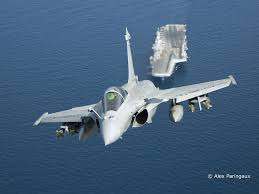
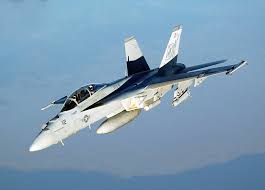
Image of Dassault RafaleImage of Boeing F/A-18E/F Super Hornet

AIR-TO-GROUND:
Interdiction/Penetration: While not a stealth aircraft per se, the Rafale does have a lower radar signature than older "4th generation" fighters like the F-18 or legacy F/A-18. This is an added benefit to using nonmetallic composites in much of its construction. Some other "tricks", like burying the engine inlets and mild reshipping of the fuselage also help reduce radar signature. Much has been said about the Rafale's SPECTRA electronic warfare suite, capable of detecting hostile threats and either jamming enemy radar or deploying decoys and countermeasures.

The Super Hornet, while larger than older F/A-18 Hornets, offers a much reduced radar cross section. (RCS). Like the Rafale, this is done through increased use of composite construction, as well as paying close attention to body panel alignment as well as the engine inlet design. Like the Rafale, the Super Hornet carries an impressive electronic warfare suite. If the EA-18G Growler variant of the F/A-18 is considered, the Rhino wins this portion easily. The near single purpose Growler, equipped with powerful ALQ-99 ECM jamming pods and ALQ-218 tactical jamming receivers is custom made for seeking out ground based threats and eliminating them. Since the Growler is a single-purpose electronic attack aircraft, with only self-defense air-to-air capabilities, it is considered disqualified from FJFC for comparison purposes.

Since both aircraft have similar RCS combined with similar electronic warfare suites, there is little choice but to declare this one a draw. Advantage: Tie... Unless you count the EA-18G Growler.

Deep Strike: Both aircraft have similar combat radii, and any significant differences in ferry ranges or the like may benefit the Rafale based on using figures from the ground based Rafale C instead of the carrier based Rafale M. Both aircraft are capable of mounting up to five external fuel tanks. Dassault and Boeing have both studied the potential of adding CFT capability as well. Whatever the case, both aircraft can be described as having more than sufficient range.

With both aircraft being more or less tied for range, we have to look at their long range air-to-ground weaponry. Namely, stand-off missiles, also know as ALCMs. The Rafale equips the impressive SCALP EG (also known as the Storm Shadow) missile, which can deliver a 450kg warhead about 500km away. The Super Hornet's new AGM-158 JASSM-ER (Joint Air-to-Surface Standoff Missile - Extended Range) delivers a similar sized warhead, but can do so at roughly twice the range. This give the Rhino a significant advantage here.
Advantage: Super Hornet

Payload: French Air Force versions of the Rafale have a remarkable 14 hard points capable of handling 20,900lbs of ordinance. Of these, four (two wingtip, two flush with the rear fuselage) are usually dedicated to air-to-air missiles, leaving 10 hard points for fuel, bombs, or air-to-ground missiles. The Rafale is capable of handling nuclear ordinance as well.

The Super Hornet is capable of handling a slightly lower, but still impressive 17,750lbs worth of weapons. It is slightly more limited in how it carries it however, with only 11 total hard points, including two wingtip missile rails and two conformal hard points built for the AIM-120 AMRAAM.

With more payload capability combined with additional hard point options, the Rafale wins this round. Advantage: Rafale

Close-air-support: The Rafale and the Super Hornet are both easy to handle at lower speeds and altitudes. As carrier capable aircraft, they have to be. Picking a winner here is difficult, as both aircraft have similar weapon capability, but without a "killer app" like the Brimstone missile. The Rafale might have Brimstone capability in the future, but nothing is certain at the present. What the Rafale does have is the option to equip both rocket pods and a twin 30mm gun pod to supplement its built in 30mm GIAT 30 cannon.

The Super Hornet's most impressive weapon in the close-air-support arsenal is the precision SDB II (Small Diameter Bomb) which carries a 250lb warhead for minimal collateral damage.

With both fighters being incredibly competent for close-air-support, this one ends up as a draw. Advantage: Tie

Air-to-ground winner: Tie Both aircraft are more than capable ground pounders, with only minor differences in maximum payload and weapon types.

AIR-TO-AIR:
[Note: In the Super Hornet's last FJFC appearance, it lost some points due to a lack of a built-in IRST. As some have mentioned, there is a combination IRST/external fuel tank being tested. I have decided to include it here, and will continue to do so in the future. Its presence against the F-35 would likely have made a little difference (the Rhino won the WVR section, where IRSTs work best), but the outcome would have likely been the same.]

First-look, first-kill: Again, these different-looking fighters have remarkably similar capability. Both have similarly sized AESA radars and, with the F/A-18E/F's fuel tank/IRST in place, both aircraft have modern IRSTs. Neither aircraft is truly "stealth" but both have reduced radar signatures compared to older fighters.

Comparing the aircraft's EW and countermeasures pose a similar challenge. The Rafale has its famous SPECTRA, which looks to become more impressive in the future. Two infra-red sensors on either side of the tail fin will give the Rafale pilot a near 360 degree view of the airspace. Not to be outdone, Boeing is contemplating installing the EA-18G's sensors (but not jammers) on the Super Hornet. This would enable the Super Hornet pilot to detect radio emissions not normally detected.

Neither fighter has a clear advantage in detection or stealth. There may be significantly different details, but not enough for me to declare one superior to the other. Advantage: Tie

Beyond-Visual-Range: While both aircraft have a theoretical top speed of Mach 1.8, the Rafale is faster where it counts. Capable of supercruise, the Rafale is just as comfortable going supersonic as is it is subsonic. It that was not enough, the Super Hornet gets considerably draggy when weapons and fuel tanks are mounted. Both aircraft have similar service ceilings, but the Rafale has a much higher rate of climb and can get there much faster. If both aircraft are considered to have similar BVR missiles, than the Rafale has a clear advantage by being able to add more energy to them through speed and altitude.

Then, there is the real kicker. The Rafale will soon be cleared for the MBDA Meteor, while the Super Hornet will stick with the AMRAAM for the foreseeable future. While one could argue about the effectiveness of both missiles' guidance systems and the like, the big difference here is the Meteor's ramjet engine. While the ranges might be listed as similar, the Meteor's ramjet gives it more flexibility and a much larger "no-escape-zone".

Even without the MBDA Meteor, the Rafale has a clear advantage in long-range combat. It is faster and it climbs better. In air combat, speed + altitude = energy, and energy is life. Advantage: Rafale, clear winner

Within-visual-range: Assuming both aircraft have IRSTs and decent WVR missiles, like the AIM-9X Sidewinder or the MBDA MICA IR, this one gets a little tougher to call. The Rafale is the acrobat of the two, with better wing loading numbers, a higher thrust-to-weight, and higher g-load numbers. To put it quite simply, it is more agile than the Rhino.

Good thing for the F/A-18E/F that it has its vaunted "nose authority". This enables it to conduct high AoA (angle of attack) maneuvers and point its missiles where they need to go. Thanks to its helmet-mounted-display, the Super Hornet doesn't need to be as agile, however. If the pilot can see it, it can be shot. This is the one area that always seems to haunt the Rafale, while an HMD has been tested for it, there has yet to be any firm plans.

If the Rafale had an HMD, it would run away with this. That being said, shooting a HOBS (high-off foresight) missile to the side or even behind an aircraft to its intended target is certainly impressive, but not ideal. This is a tough one to call, (and I'm sure some will disagree) but I have to declare this one a draw. The Rhino has the better aim, but the Rafale is the tougher target. Advantage: Tie (if only the Rafale had an HMD!)

Dogfight: When the missiles are gone and the gloves come off, which aircraft is left standing? Both aircraft do quite well in the low speed/low altitude/high-AoA regime. The Rafale's close-coupled canard design helps put more air over the big delta wings, producing more lift. The Super Hornet's twin canted tails and trapezoidal wings help it perform seemingly gravity defying maneuvers.

With low-speed maneuverability pretty much a dead heat, the dogfight winner will likely be the one able to bring the bigger boom. Here, the Super Hornet is let down somewhat by its venerable M61 20mm Vulcan cannon. While there is nothing wrong with the M61 per se, it does take a few moments to get up to its 6,000 rounds per minute firing rate. In reality, its true firing rate is much closer to the 2,500 rounds per minute of the Rafale's GIAT 30. There is also the not-so-insignificant difference in calibre. With similar muzzle velocities, the Rafale's 30mm cannon wins this one. The Super Hornet may carry more ammunition, but it is easy to imagine which Dirty Harry would prefer.

Both aircraft are excellent gunfighters. Knowing that, I would put my money on the one with the bigger gun. Advantage: Rafale

Air-to-air winner: The Boeing Super Hornet was originally intended to replace both the F-14 Tomcat and the A-6 Intruder. Clearly, some air-to-air compromise needed to be made, but the developers seem to have erred more towards the ground attack role. While the Super Hornet is an acceptable air-superiority fighter, it does not have the same balanced approach as the Rafale. As France's sole front line fighter, the Rafale cannot have any glaring weaknesses. It succeeds in this regard with the exception of one minor detail, a HMD. Even without the HMD, the Rafale is fast enough, agile enough, and powerful enough to handle the Super Hornet. Winner: Rafale

Versatility/Logistics:
Versatility: The Rafale is marketed as an "Omnirole" fighter, and with good reason. It seems to be equally adept at either the strike or air-superiority roles. While other fighters may be better at one role or the other, the Rafale is possibly the most balanced solution out there. With the carrier capable Rafale M, alongside a choice of either single-seat or two-seat versions, the Rafale can handle just about any role given to it.

Take a look at the United States Navy, however and you will notice that they currently operating a strictly "Hornet only" fighter fleet. While some air-superiorty capability was lost with the retirement of the F-14, the USN has made do. In fact, with the legacy Hornet F/A-18C/D, Super Hornet F/A-18E/F, and the EA-18G Growler, the USN is quite happy, thank you. Senior USN brass have even gone on the records stating that they could cope just fine with a Super Hornet/Growler fleet if the F-35C does not pan out. The prospect of an "Advanced Super Hornet" with CFT's, enclosed weapon pods, and upgraded engines is being looked at with great interest. Even without future improvements, the Super Hornet and Growler provide a great "one-two-punch" for the USN. The Growler variant offering a EW/ECM capability seen nowhere else in the world.

The Rafale is a great single-type solution, but the Growler variant of the Super Hornet makes up for any faults the F/A-18E/F has as an air-superiority fighter. Advantage: Tie

Logistics: With a carrier version available, the Rafale should have no problem adapting to rough landing strips or the like. It fuels up using the "probe-and-drogue" aerial refueling system, much like Canada's current CF-18s. In all, the Rafale would be an easy aircraft to live with... If you do not mind your parts and weapons supply coming strictly from France.

The Super Hornet can go anywhere and do just about anything the CF-18 does. It is slightly larger, but other that that its logistics are the same, if not better. It uses standard American NATO weaponry. Considering that the USN operate the Super Hornet all over the world, it is pretty soon that wherever you are, parts can be made available. Advantage: Super Hornet

Versatility/Logistics winner: Both aircraft are excellent workhorse, capable of performing whatever role thrown at them. The Rafale is a better air-superiority fighter, but the existence of the EA-18G Growler easily remedies this. Any military committed to the Super Hornet should take advantage of the commonality with the Growler, much like Australia has. What really wins this for the Super Hornet is its use with the USN and the existing support for the aircraft. Winner: Super Hornet


Final Score:
Air-to-Ground: Rafale=3 - Super Hornet=3 (4 if you count the Growler)
Air-to-Air: Rafale=4 - Super Hornet=2
Versatility/Logistics: Rafale=1 - Super Hornet =2

Final Result: Rafale=8 - Super Hornet=7 (8 if you count the Growler)

Even with the Growler, I am declaring a win for the Rafale. Since the emphasis on which is the best fighter, air-to-air capability acts as a tie breaker whenever possible.

Both aircraft are excellent "Jack-of-all-trades" aircraft, with the Rafale coming out slightly ahead due to its stronger emphasis on air-superiorty without sacrificing the strike role. The Rafale would have likely done even better with the addition of an HMD.

Since the topic of price is bound to come up... Yes, the Super Hornet is indeed a cheaper aircraft. (Because it is the older aircraft)  As I have said before, it is likely the "safest" replacement for Canada's CF-18, but it lacks some of the other options' capabilities.

The Rafale on the other hand, would be a fantastic selection with only three simple stipulations: 1) HMD installation. 2) Standard NATO weapon integration. 3) Canadian manufacturing and intellectual rights.

Monday, November 9, 2015

Rafale Should be Next Fighter for RCAF

I would like to first give credit to Doug Allan of bestfighter4canada for his assessment here for the Dassault Rafale compared to the JSF F-35.

Many people claim that Canada should remain in the F-35 program despite the promise by Justin Trudeau to withdraw from the program. They say that the F-35 is a far better aircraft that any out there. Well that is just not the case. In a direct comparison to the Dassault Rafale, which better meets Canada's needs for a fighter jet - the Rafale clearly has an edge - despite it's lack of stealth.

Not only is the Rafale cheaper than the JSF F-35; it is faster; flies higher; has a larger operational radius than the F-35; and it has dual engines. Just a few reasons why the Rafale should be the RCAF's next fighter.

Oh, and a bonus - Dassault says it will allow the majority of the order to be built in Canada.

Now onto the comparison.


Air-to-ground:


Interdiction/Penetration: The Rafale's SPECTRA suite has gained notoriety for being one of the best EW suites available. Given that benchmarks for these sort of things are classified, and not available to a part-time blogger like myself, I cannot say just how good it is. There is a good chance it is the next best thing to a purpose built stealth aircraft.

The F-35 is a purpose built stealth aircraft, however. There may be some debate over whether it offers sufficient protection against current and future threats, but the truth is that the JSF is currently the stealthiest aircraft available. This may change in the future, but right now the F-35 is the best choice for sneaking past enemy ground radar. Advantage: F-35

Deep strike: Well... This one is easy. Both aircraft have a similar combat radius and ferry range using internal fuel only. So it simply comes down to which one can carry more external fuel.

The Rafale can carry massive amounts of fuel in external drop tanks. It can also be utilized for "buddy" refueling. If that was not enough, every Rafale has the plumbing to mount CFTs, which have been tested but not implemented.

As of now, the F-35 has no external fuel tanks. Some concepts exist, but problems with separation have pushed external tank capability back indefinitely. The JSF will carry the AGM-158 JASSM-ER, but that missile's extra range cannot make up the difference from having no external fuel options. Advantage: Rafale

Payload: The Rafale makes for an impressive bomber, able to carry over 20,000lbs of ordinance on 14 hardpoints. While its not a bomber per se, it certainly comes close.

The F-35 has only 10 hardpoints and carries one ton less than the Rafale. The JSF also has the limitation of its internal weapon bays. While those bays are necessary for stealth, their size limits the type of weapon that can be mounted inside. Anything longer, wider, or heavier than a 2,000lb JDAM will have to step outside.

This one goes to the French. The Rafale offers nearly the same ground-pounding capabilities as the much larger (and more expensive) F-15E Strike Eagle. Advantage: Rafale

Close air support: The F-35 is destined to replace the A-10 its iconic role. Not many are buying that. It is simply too fragile an aircraft and it burns through its fuel too fast to spend any time on station. To its credit, its EOTS acts as a built-in targeting pod and it will be outfitted with MBDA Brimstone missiles. This means it will likely be able to take out a few targets as it zips buy. 25mm cannons will be built into the A model, and available in external pods in the B and C model.

While it currently lacks a low collateral damage weapon like the Brimstone, the Rafale still gets by okay. Its airframe is more durable than the JSF, has twin-engine redundancy, and it does quite well flying low and slow, thanks to its carrier-friendly design. While it has a 30mm cannon like the A-10, it is not the same weapon and it carries far less ammo (125 rounds).

If the Rafale had Brimstone missile (or similar) capability it would get an easy win here. Even still, its ability to loiter more with external tanks give it a slight advantage. A Rafale pilot is also far more likely to fly closer to the battlefield, confident that a stray bullet will not bring the fighter down. Advantage: Rafale

Air-to-ground winner: Rafale. While the F-35 may do a fine job at slipping through enemy defenses, the Rafale does a better job at just about everything else when it comes to ground attack. It flies further, can carry more bombs, and its more likely to mix it up with the troops.

Air-to-air:

First look, first kill: The JSF is being marketed with a massive emphasis on its ability "see" everything around it without being detected itself. With an advanced AESA radar, EOTS, and DAS (which replicates IRST) the F-35 certainly will be able to get a good look at what is around it.

While the Rafale lacks the F-35's stealth, but it has a similarly sized AESA radar and a IRST. Part of its SPECTRA suite puts IR sensors high up on both sides of the tail, giving a similar "god's eye view".

The Rafale is certainly good in this department, but the F-35 is just as good if not better, plus it has its stealthy design. Advantage: F-35

Beyond Visual Range: The F-35 pilot better hope it gets a successful sneak attack in, because after that first shot, all bets are off. The Rafale is not just faster in a straight line dash, but it climbs faster and cruises faster as well. On top of that, it will carry the ramjet powered Meteor BVR missiles, which look to be superior to the F-35's AMRAAMs.

Unfortunately for the F-35, it may not even get the chance for that sneak attack. It would likely have to enter into the Rafale's passive sensor range before it gets a clear shot. Its stealth may keep it safer from radar, but not much can be done to shield its big, hot engine.

The Rafale's better high speed performance and better BVR missile make it the easy pick here. Advantage: Rafale

Within Visual Range: By now most have realized my disappointment with the Rafale's current lack of HMD. One has been tested, but it has yet to go operational with one. HMD's really do help a fighter's WVR capability when combined with HOBS missiles. Despite all this, the Rafale is still a very good WVR fighter, with impressive maneuverability, thrust-to-weight, and the ability to fire HOBS missiles with the help of data links and LOAL (lock on after launch capability).
While the F-35 has excellent HOBS potential thanks to its various sensors, it misses the mark somewhat with its disappointing wing loading and thrust to weight numbers. This alone is not enough to delegate it to second-rate WVR status. What does is the fact the F-35 cannot carry an internally mounted WVR weapon. Plans to carry the ASRAAM internally have been shelved. Any F-35 in "stealth" configuration will have to rely strictly on 2 to 4 AMRAAMs.

This is really an "either/or" scenario. If the Rafale had an HMD, it wins. If the F-35 is carrying external WVR missiles, it wins. If we give a "best case scenario" for both aircraft (HMD for the Rafale and WVR missiles for the F-35), then the Rafale wins based on its superior maneuverability and thrust-to-weight ratio. Advantage: Rafale

Dogfight: Thanks to its close-coupled canard design, the Rafale is just as happy playing it low and slow as it is supercruising. It has plenty of thrust and a big gun. No problems here.

The F-35... Notsomuch. While the F-35 said to match the low speed performance of the F/A-18, there are still concerns about its fragility and its lack of cockpit visibility.

If the JSF pilot finds themselves in a dogfight... They are going to have a bad time. Advantage: Rafale

Air-to-air winner: Rafale. The supercruising, Meteor slinging, tighter turning Rafale gets a clear win here. The F-35 will need to rely on guile and sneak attacks, a tall order given the Rafale's excellent sensors and defensive capabilities.

Versatility/Logistics:

Versatility: Hoo boy... Both of these fighters were designed as "all-in-one" systems capable of fulfilling all of your fighter needs... With a few caveats.

The Rafale has three different flavors available. A single-seat CTOL air force variant, a two-seat CTOL variant, and a single-seat naval variant capable of CATOBAR operations. All versions carry similar weapon loads, with the naval Rafale M sacrificing a weapon pylon.

The Joint Strike Fighter has three versions, the CTOL capable F-35A, the STOVL F-35B, and the CATOBAR F-35C. Sadly, no two-seater versions are available.

So which one is more versatile? If you need a STOVL, then the F-35 is the way to go. Otherwise, a two-seater version may be preferable for both training and high workload tasks. I'm going to give this one to the Rafale since STOVL operations are ratherlimited in real-world usefulness. Advantage: Rafale

Logistics: Long term support is where these two aircraft differ the most. The Rafale is completely single sourced. It is currently in use by a single nation with maybe a second coming soon. Parts and maintenance could be an issue, but Dassault is willing to grant complete access to the Rafale's software and intellectual property. Customer nations have the option of producing any and all spare parts and modifying the software as they see fit.

The F-35 is the polar opposite of this. Parts should be plentiful with JSF squadrons located all over the world. The Pentagon and Lockheed Martin are keeping close tabs on F-35's hardware and software, however. Any modifications to the JSF's hardware or software has to be done through them. This is like taking your laptop back to where you bought it in order to add an external hard drive or to install a new app. Something as simple (yet necessary) as a drag chute might have to wait until Lockheed Martin gets around to it.

Both aircraft have their advantages and disadvantages here. Advantage: Tie

Versatility/Logistics winner: Rafale. It is close, but the availability of a two-seat Rafale gives it a slight edge here.


Final result:


Air-to-ground: F-35 = 1 - Rafale = 3


Air-to-air: F-35 = 1 - Rafale = 3


Versatility/Logistics: F-35 = 1 - Rafale = 2


Final Result: F-35 = 3 - Rafale = 8


Ouch. The F-35 certainly is stealthier than the Rafale, but that is about the only real advantage it has. The makes for a better bomber or air-superiority fighter. The JSF is also hindered by its proprietary maintenance model and its lack of two-seater variant. Sure, it has a STOVL version, but few have need (or the budget) for that capability. Canada was not even considering the STOVL version of the F-35.

The real kicker for the Rafale is how much potential it has. A few simple upgrades and modifications would really put it at the head of the pack. A more "open source" model, with user selected weapons, engines, and avionics would really make it a dream machine for just about any air force in the world.

Wednesday, October 28, 2015

Dassault Aviation Congratulates Trudeau and Pitches Rafale

In the days following the 2015 Federal Election, and the election of a Majority Liberal Government, there were congratulations pouring in from around the world for Prime Minister-Elect Justin Trudeau.

One of those letters came from the Chairman of Dassault Aviation, Eric Trappier who in his congratulations letter pitched the Rafael fighter jet as a potential replacement to Canada's aging fleet of CF-18s. While it is considered by many highly unlikely that Canada will buy a non-America fighter jet - many see the Dassault Rafael as a contender. Many, including me, see a built in Canada Rafael as the ideal replacement. It is cheaper than the F-35, combat proven, and has a dual-engine; something that is essential when operating in remote locations like Canada's arctic region.

While the Rafael is a little more expensive than purchasing new(er) F/A-18 Super Hornets from Boeing, the Rafael is a new aircraft, and Boeing will only pitch the F/A-18 to keep its assembly line open. If the assembly line is closing, that should be an indication that the aircraft is out of date.

Dassault has already agreed to export the Rafael to Egypt, Qatar (sale not final), and India (sale not final). They are hopeful that next year they will also sell to Belgium, Switzerland, and the United Arab Emirates.

A French Air Force Rafael in action over Libya in 2011. 
When the RAFALE programme was launched, the French Air Force and French Navy published a joint requirement for an omnirole aircraft that would have to replace the seven types of combat aircraft then in operation.

The Rafael aircraft is now able to carry out a very wide range of missions:

- Air-defence / air-superiority;
- Anti-Access/Area Denial;
- Reconnaissance;
- Close air support;
- Dynamic Targeting;
- Air-to-ground precision strike / interdiction;
- Anti-ship attacks;
- Nuclear deterrence;
- buddy-buddy refuelling.

These requirements were taken into account from the start of the RAFALE’s development, leading engineers to invent an aircraft which goes beyond the needs of each type of mission.

Versatile and best in all categories of missions, the RAFALE is a true “Force Multiplier”.

The RAFALE has exhibited a remarkable survivability rate during the latest French Air Force and Navy operations, thanks to an optimized airframe and to a wide range of smart and discrete sensors. It is slated to be the French armed forces prime combat aircraft until 2040 at least.  That would give Canada at least 20 years of a combat ready aircraft - and it will be capable to fly well past that date. 

Thanks to its outstanding reliability, the RAFALE has lower maintenance costs. Its unique maintenance concept results in a lighter scheduled maintenance plan with less man-hours and a smaller number of maintenance technicians.

For all its service life, the RAFALE does not have to leave its operational base for maintenance purposes. It does away with costly and time-consuming airframe and engine depot level inspections required on other types of fighter aircraft, with “shop replaceable units” (SRUs) the only items to be shipped for maintenance / repair.

Here is the original article about Dassault's pitch to Trudeau.

Below Written by Pierre Tran of defensenews.com 

PARIS — Dassault Aviation Chairman Eric Trappier said Thursday he had written a letter of congratulations to Justin Trudeau, the newly elected Canadian prime minister, and pitched an offer of the Rafale fighter if Ottawa pulled out of the US F-35 program.

“We have to wait and see what he decides now he is in office,” Trappier told the association of aerospace journalists. “I wrote a letter to congratulate him and to remind him that if the F-35 were canceled, the Rafale would be potentially proposed." The letter was sent in the last two days.

Dassault sees India as the next export client for the Rafale, he said.

We’re on the right track, discussions are going well,” he said.

The French aircraft builder hopes a deal for 36 Rafales will be sealed with India by the end of the calendar rather than the financial year.

“We’re coming fast to the end of the calendar year but I remain hopeful for the end of the calendar year,” he said. “But I am a major optimist.”

Negotiations have moved relatively swiftly on a government-to-government level, and there is agreement on an industrial offset with local Indian partners to comply with the Make in India drive. Under the proposed deal, Dassault would be free to choose the local partner rather than accept the government’s pick, although New Delhi will likely ask for its right to approve the selection, he said.

Dassault could also set up joint ventures in India, which could help the Rafale gain additional orders, as the Indian Air Force is keen to acquire 126 aircraft rather than settle for 36. Russia is also active in the Indian market.

Qatar, which in May signed an order for 24 Rafales, has still not paid a deposit for the €6.3 billion (US $7 billion) deal but the payment is in the process of being made, he said.

Dassault does not expect any “specific announcements” at the upcoming Dubai Air Show, he said. Dassault has sold Mirages in the Arabian Gulf, an important region for fighter sales, and hopes to sell twin-engined Rafales as a replacement.

Talks are continuing with the United Arab Emirates, which is engaged in combat in Yemen, with the UAE Mirages being flown in that conflict, he said. Dassault is getting close to local industry to help provide support. Egypt and Qatar are the two foreign clients of the Rafale, and the order from Cairo surprised Dassault as the first customer.

Belgium and Switzerland are among long-term prospects, he said. Dassault opened a Belgian office last year and is seeking local partners for an expected fighter competition for when Belgium replaces the F-16.

Switzerland, which canceled a pick of the Saab Gripen, still must eventually replace its F-5s and also the F-18. The family-controlled aircraft builder sees the multirole Rafale as fitting the requirements for replacing two types of aircraft.

Dassault expects a “snowball effect” in foreign orders and the company hopes to sign more deals in coming months. But it looked less likely a fourth client would sign this year, he said.

The company, in anticipation of further export sales, has agreed with Tier 2 subcontractors to increase output by the end of 2018 to deliver three aircraft per month from the present one per month, with the line closed for the month of August for an annual holiday.

“We’re taking a risk, a measured risk,” he said. If there were a lack of foreign orders, then production will return to the current production rate.

A speeded up dispatch of the first six Rafales for Egypt came out of the slots intended for the French Air Force, which is keen to see a return of delivery as the service is forming a second nuclear squadron, as confirmed in the revised multiyear budget law, he said.

Malaysia is another export prospect, Trappier told Defense New. Low oil prices weakens the budget for Kuala Lumpur, but “it will be a political decision.”

On the proposed European medium-altitude, long-endurance (MALE) drone, Dassault would accept an appointment of Airbus as prime contractor.

“It could be Airbus, there’s no problem for us,” he said.

A key factor in the project is the mission payload with electro-optics, radar, and datalink, he said. Thales is a key supplier of these systems.

Spain and Poland have shown interest.

Laurent Collet-Billon, head of procurement office Direction Générale de l’Armement, told the defense committee of the National Assembly lower house Oct. 7 that Germany will hold just over 30 percent of the European MALE UAV project, with France, Italy and Spain each holding 23 percent. A technical study contract is due to be signed by March.

Airbus, Dassault and Finmeccanica pitched the MALE UAV project to France, Germany and Italy, and French Defense Minister Jean-Yves Le Drian has backed the plan.

Le Drian “more than helped” on the Rafale exports, Trappier said. There were geopolitics, a fading US influence in the gulf, direct and indirect support from the French armed forces, and the president's influence. A 20-25 percent fall in the euro/dollar exchange rate also helped.

“There is the minister who works the relations, on which Jean-Yves Le Drian served well,” he said. Once the French companies saw the close bilateral ties, they could focus the sales effort.

“The minister does not interfere in the sale, he leaves that to us. That’s fundamental,” he said.

Dassault is happy to see Thales improve its profitability and welcomed the acquisition of a US cybersecurity firm, a key area for the defense electronics company, he said.

“Thales is a company that we follow with close attention, and in which we will stay for a long time," he said. Dassault is the industrial shareholder in Thales and is pleased with its investment in a high-technology company with a large international reach.

On Wednesday, Thales reported a 74 percent rise in orders in the July-to-September quarter, with the defense and security orders jumping 43 percent. The third quarter sales were stable at €2.79 billion compared with €2.72 billion a year ago.