Translate

Showing posts with label Canada. Show all posts

Wednesday, October 28, 2015

Dassault Aviation Congratulates Trudeau and Pitches Rafale

In the days following the 2015 Federal Election, and the election of a Majority Liberal Government, there were congratulations pouring in from around the world for Prime Minister-Elect Justin Trudeau.

One of those letters came from the Chairman of Dassault Aviation, Eric Trappier who in his congratulations letter pitched the Rafael fighter jet as a potential replacement to Canada's aging fleet of CF-18s. While it is considered by many highly unlikely that Canada will buy a non-America fighter jet - many see the Dassault Rafael as a contender. Many, including me, see a built in Canada Rafael as the ideal replacement. It is cheaper than the F-35, combat proven, and has a dual-engine; something that is essential when operating in remote locations like Canada's arctic region.

While the Rafael is a little more expensive than purchasing new(er) F/A-18 Super Hornets from Boeing, the Rafael is a new aircraft, and Boeing will only pitch the F/A-18 to keep its assembly line open. If the assembly line is closing, that should be an indication that the aircraft is out of date.

Dassault has already agreed to export the Rafael to Egypt, Qatar (sale not final), and India (sale not final). They are hopeful that next year they will also sell to Belgium, Switzerland, and the United Arab Emirates.

A French Air Force Rafael in action over Libya in 2011. 
When the RAFALE programme was launched, the French Air Force and French Navy published a joint requirement for an omnirole aircraft that would have to replace the seven types of combat aircraft then in operation.

The Rafael aircraft is now able to carry out a very wide range of missions:

- Air-defence / air-superiority;
- Anti-Access/Area Denial;
- Reconnaissance;
- Close air support;
- Dynamic Targeting;
- Air-to-ground precision strike / interdiction;
- Anti-ship attacks;
- Nuclear deterrence;
- buddy-buddy refuelling.

These requirements were taken into account from the start of the RAFALE’s development, leading engineers to invent an aircraft which goes beyond the needs of each type of mission.

Versatile and best in all categories of missions, the RAFALE is a true “Force Multiplier”.

The RAFALE has exhibited a remarkable survivability rate during the latest French Air Force and Navy operations, thanks to an optimized airframe and to a wide range of smart and discrete sensors. It is slated to be the French armed forces prime combat aircraft until 2040 at least.  That would give Canada at least 20 years of a combat ready aircraft - and it will be capable to fly well past that date. 

Thanks to its outstanding reliability, the RAFALE has lower maintenance costs. Its unique maintenance concept results in a lighter scheduled maintenance plan with less man-hours and a smaller number of maintenance technicians.

For all its service life, the RAFALE does not have to leave its operational base for maintenance purposes. It does away with costly and time-consuming airframe and engine depot level inspections required on other types of fighter aircraft, with “shop replaceable units” (SRUs) the only items to be shipped for maintenance / repair.

Here is the original article about Dassault's pitch to Trudeau.

Below Written by Pierre Tran of defensenews.com 

PARIS — Dassault Aviation Chairman Eric Trappier said Thursday he had written a letter of congratulations to Justin Trudeau, the newly elected Canadian prime minister, and pitched an offer of the Rafale fighter if Ottawa pulled out of the US F-35 program.

“We have to wait and see what he decides now he is in office,” Trappier told the association of aerospace journalists. “I wrote a letter to congratulate him and to remind him that if the F-35 were canceled, the Rafale would be potentially proposed." The letter was sent in the last two days.

Dassault sees India as the next export client for the Rafale, he said.

We’re on the right track, discussions are going well,” he said.

The French aircraft builder hopes a deal for 36 Rafales will be sealed with India by the end of the calendar rather than the financial year.

“We’re coming fast to the end of the calendar year but I remain hopeful for the end of the calendar year,” he said. “But I am a major optimist.”

Negotiations have moved relatively swiftly on a government-to-government level, and there is agreement on an industrial offset with local Indian partners to comply with the Make in India drive. Under the proposed deal, Dassault would be free to choose the local partner rather than accept the government’s pick, although New Delhi will likely ask for its right to approve the selection, he said.

Dassault could also set up joint ventures in India, which could help the Rafale gain additional orders, as the Indian Air Force is keen to acquire 126 aircraft rather than settle for 36. Russia is also active in the Indian market.

Qatar, which in May signed an order for 24 Rafales, has still not paid a deposit for the €6.3 billion (US $7 billion) deal but the payment is in the process of being made, he said.

Dassault does not expect any “specific announcements” at the upcoming Dubai Air Show, he said. Dassault has sold Mirages in the Arabian Gulf, an important region for fighter sales, and hopes to sell twin-engined Rafales as a replacement.

Talks are continuing with the United Arab Emirates, which is engaged in combat in Yemen, with the UAE Mirages being flown in that conflict, he said. Dassault is getting close to local industry to help provide support. Egypt and Qatar are the two foreign clients of the Rafale, and the order from Cairo surprised Dassault as the first customer.

Belgium and Switzerland are among long-term prospects, he said. Dassault opened a Belgian office last year and is seeking local partners for an expected fighter competition for when Belgium replaces the F-16.

Switzerland, which canceled a pick of the Saab Gripen, still must eventually replace its F-5s and also the F-18. The family-controlled aircraft builder sees the multirole Rafale as fitting the requirements for replacing two types of aircraft.

Dassault expects a “snowball effect” in foreign orders and the company hopes to sign more deals in coming months. But it looked less likely a fourth client would sign this year, he said.

The company, in anticipation of further export sales, has agreed with Tier 2 subcontractors to increase output by the end of 2018 to deliver three aircraft per month from the present one per month, with the line closed for the month of August for an annual holiday.

“We’re taking a risk, a measured risk,” he said. If there were a lack of foreign orders, then production will return to the current production rate.

A speeded up dispatch of the first six Rafales for Egypt came out of the slots intended for the French Air Force, which is keen to see a return of delivery as the service is forming a second nuclear squadron, as confirmed in the revised multiyear budget law, he said.

Malaysia is another export prospect, Trappier told Defense New. Low oil prices weakens the budget for Kuala Lumpur, but “it will be a political decision.”

On the proposed European medium-altitude, long-endurance (MALE) drone, Dassault would accept an appointment of Airbus as prime contractor.

“It could be Airbus, there’s no problem for us,” he said.

A key factor in the project is the mission payload with electro-optics, radar, and datalink, he said. Thales is a key supplier of these systems.

Spain and Poland have shown interest.

Laurent Collet-Billon, head of procurement office Direction Générale de l’Armement, told the defense committee of the National Assembly lower house Oct. 7 that Germany will hold just over 30 percent of the European MALE UAV project, with France, Italy and Spain each holding 23 percent. A technical study contract is due to be signed by March.

Airbus, Dassault and Finmeccanica pitched the MALE UAV project to France, Germany and Italy, and French Defense Minister Jean-Yves Le Drian has backed the plan.

Le Drian “more than helped” on the Rafale exports, Trappier said. There were geopolitics, a fading US influence in the gulf, direct and indirect support from the French armed forces, and the president's influence. A 20-25 percent fall in the euro/dollar exchange rate also helped.

“There is the minister who works the relations, on which Jean-Yves Le Drian served well,” he said. Once the French companies saw the close bilateral ties, they could focus the sales effort.

“The minister does not interfere in the sale, he leaves that to us. That’s fundamental,” he said.

Dassault is happy to see Thales improve its profitability and welcomed the acquisition of a US cybersecurity firm, a key area for the defense electronics company, he said.

“Thales is a company that we follow with close attention, and in which we will stay for a long time," he said. Dassault is the industrial shareholder in Thales and is pleased with its investment in a high-technology company with a large international reach.

On Wednesday, Thales reported a 74 percent rise in orders in the July-to-September quarter, with the defense and security orders jumping 43 percent. The third quarter sales were stable at €2.79 billion compared with €2.72 billion a year ago.

Friday, October 23, 2015

8 Arctic Countries to Sign Coast Guard Treaty

Article Written by By Bob Weber, The Canadian Press

All eight Arctic nations — including Canada and Russia — are to sign a historic deal next week for their coast guards to work together in the treacherous and increasingly accessible waters of the North.

Creating the Arctic Coast Guard Forum is considered a significant step forward for international co-operation in the region and will flesh out previous search and rescue agreements.

"(The forum) will be an operationally focused organization that strengthens maritime co-operation and co-ordination in the Arctic," said an emailed statement from the United States Coast Guard.

"The impetus for creating (it) grew out of the concerns of Arctic Council member countries over the increasing need to ensure safety, security, and stewardship of Arctic waters."
The Canadian Coast Guard Ship Des Groseilliers travels to the Canadian Arctic in summer to escort cargo ships and conduct search and rescue operations. All eight Arctic nations — including Canada and Russia — are to sign a historic deal next week for their coast guards to work together in the  waters of the North.
Canadian Coast Guard Ship Des Groseilliers in Canadian Arctic Waters in this undated photo.
Photo (Canadian Coast Guard)

The forum will also discuss emergency response, icebreaking and collaboration, said a statement from the Canadian government.

"The heads of the eight coast guard agencies, including Canada, have agreed that collaboration on such operational matters is to everyone's benefit," said Carole Swaindon of the Department of Fisheries and Oceans, which runs the Canadian Coast Guard.

The forum was to have been created in Canada in March 2014.

An agreement in principle had been reached and the final deal was supposed to have been signed. But negotiations were delayed when the Harper government refused to allow Russian officials to take part.

"The (Prime Minister's Office) insisted the Russians not be invited because of the Ukraine," said John Higginbotham, who attended that meeting as a fellow of Carleton University's Centre for International Governance Innovation.

Canada's allies were not pleased at the refusal, Higginbotham said.

"That really put the cat among the pigeons."

Russians were allowed into the U.S. to complete the talks after the Americans assumed the lead. The deal will be signed at the U.S. Coast Guard Academy in New London, Conn., at a meeting between the leaders of all eight services.

The signatories include Canada, the U.S., Russia, Denmark, Finland, Iceland, Norway and Sweden. The meeting takes place next Wednesday through Friday.

In most countries, coast guards are a branch of the military. That means the new forum will also provide a venue for high-ranking officers from different countries to meet regularly and open channels of communication, say experts.

"It will create another channel of communication, especially between the United States and Russia," said international law professor Michael Byers. "This is part of a larger Russian and American strategy to maintain and build these back channels so as to provide some stability to the larger relationship."

Under the deal, the coast guard heads are to meet yearly.

The deal also puts meat on the bones of the 2011 treaty on Arctic search and rescue, negotiated through the Arctic Council. That treaty committed signatories to providing search and rescue in their sector of the North.

One of the forum's first actions next week in Connecticut will be to run a tabletop search and rescue simulation. That will establish communications protocols and determine who responds to what.

The head of the U.S. Coast Guard, Admiral Paul Zukunft, has said an actual exercise could be mounted as early as next year.

The forum, although it will involve military personnel, will steer clear of security issues. That will follow the lead of other coast guard forums that already exist, such as those for the North Atlantic and North Pacific.

The forum is separate from the Arctic Council, the chief international diplomatic body on northern issues. However, its leadership will rotate in concert with the council, which is now led by the U.S.

Friday, October 16, 2015

RCN In Talks To Lease Spanish AOR in 2016

By David Pugliese and Esteban Villarejo of defensenews.com 

Spain and Canada are negotiating a mutual logistic arrangement (MLSA) to deploy a Spanish replenishment ship with the Canadian fleet in the North Atlantic, both navies confirmed.

The ship deployed "during some periods of 2016" could be the auxiliary oiler and replenishment ship (AOR) Cantabria or Patiño, Spanish Navy sources said. The logistic arrangement is "to cover the Canadian navy's temporary need of logistic support vessels."

635805212912307023-aor-Cantabria-spanish-navy
The Spanih AOR Cantabria Photo: Spanish Navy

The Cantabria or Patiño would support training for the Royal Canadian Navy’s Atlantic fleet starting in January. "No end date for the use of that support ship has been established," said Royal Canadian Navy spokeswoman Lt. Linda Coleman. “Negotiations are still ongoing and the MLSA is not yet finalized.”

But starting on Oct. 18, Royal Canadian Navy sailors will be serving on the Spanish Navy supply ship Cantabria. Navy spokesman Lt. Len Hickey said 28 sailors will be on the ship to conduct training during NATO's TRIDENT JUNCTURE 15 exercise. Hickey said the training is focused on replenishment-at-sea activities as well as familiarity of engineering systems on the ship. The Canadians will be on the ship until Nov. 10, Hickey said.

The Spanish AOR Cantabria deployed with the Royal Australian Navy in 2013. The government of Australia paid the expenses of that deployment during the year. The Spanish Ministry of Defense is expected to reach a similar arrangement with the Royal Canadian Navy.

This year Canada selected the German Navy's Berlin-class design to replace its two Protecteur-class supply ships, which have been removed from service.

Wednesday, September 23, 2015

France announces sale of Mistral-Class ships to Egypt

Earlier this week news came out that Canada had been actively persuing the purchase of the two Mistral-Class Heli-Carriers from France for the Royal Canadian Navy. These vessels, once converted to Canadian Navy standards could have been thhe backbone to humanitarian missions around the word for the next thirty to forty years. That will not happen now.
635739371000269124-mistral-getty
 GEORGES GOBET/AFP/Getty Images
France announced today that they have come to terms with Egypt to sell the two warships. This deal comes a little more than 6 weeks after France finalized the repayment of $1.2 Billion Euro deal with Russia, after the West entered a Cold War like standoff with Russia over the Ukraine last year.

As the warships are being sold to Egypt, a close ally of both Russia and the West, the Russian technology that was installed on the two Mistral's will most likely be left aboard the ships. This technology would have been removed if they were sold to a NATO member, like Canada.

So the Royal Canadian Navy will continue to suffer waiting for its Canadian Surface Combatant Fleet, which are not yet fully designed, and not set to be in the water before the mid to late 2020s.
This would have been a huge bargain for the RCN, and it missed out because of the early call for the 2015 Election.

Friday, September 4, 2015

Refugee Crisis: CAF Can Help - Deploy Them

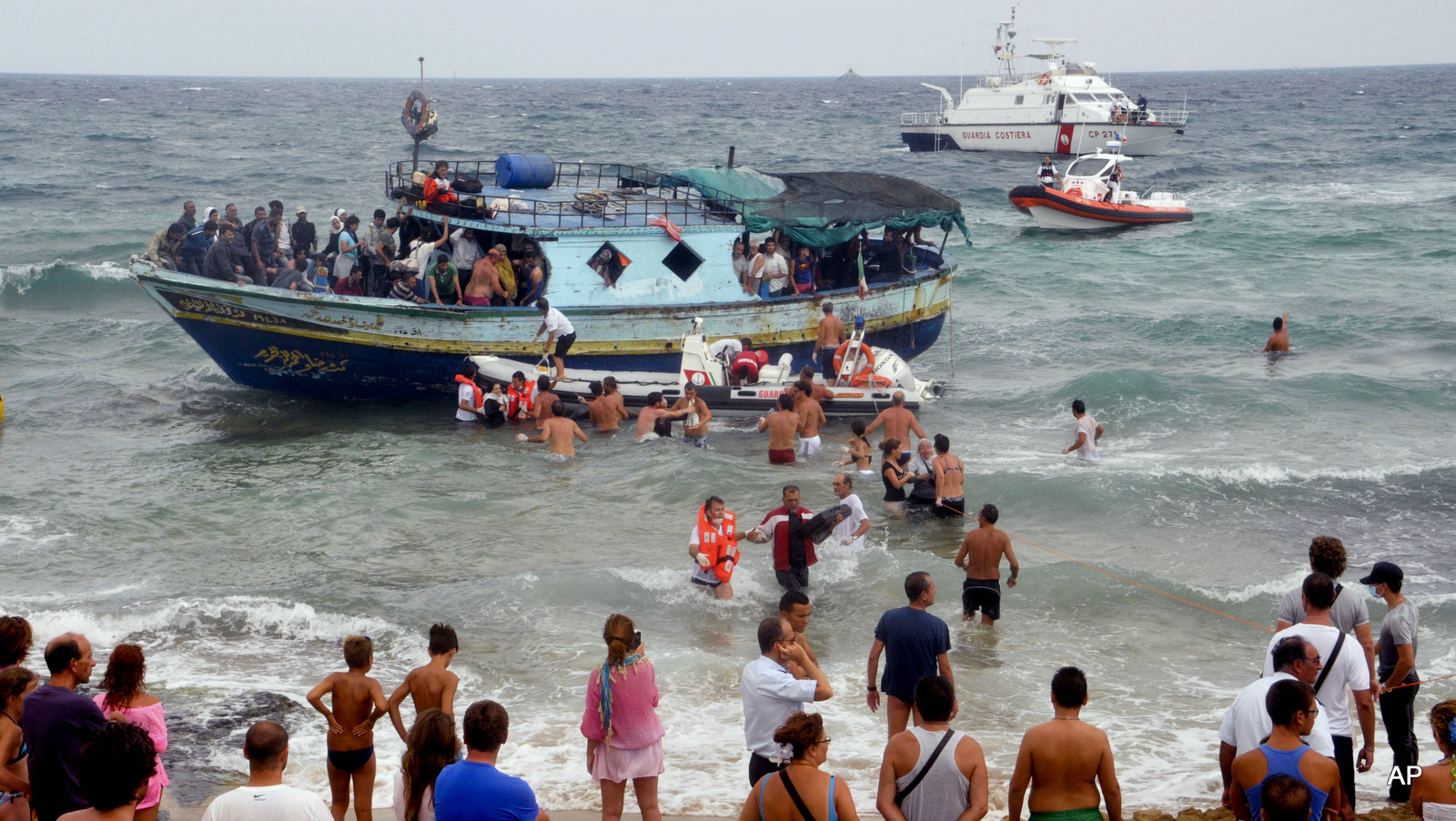
In the wake of the recent tragic death of 3 year old Alan Kurdi, his brother and mother - there have been calls for Canada and the World do to more to help Syrian and Iraqi refugees fleeing the Middle East. Minister of Defence Jason Kenney comes out and said that Canada has no responsibility to help the migrant issue. We had no 'onus' to help.

What about the human responsibility? While I have always been a proponent of the Peacekeeping Myth - that Canada became a Peacekeeping country as a war by other means during the Cold War. Canada has always cared about those in need.

According to the UN an estimated 350,000 refugees crossed the Mediterranean fleeing the Middle East in the last year - and approximately 2,500 have died trying. Earlier this year Italy made a global outcry for help on the migrant problem, as their Navy is baring the brunt of the rescue.


Other European nations have send support. In May Great Britain deployed HMS Bulwark to help. It rescued 500 migrants off of Libya earlier this year. The Irish Naval service also deployed a ship, and it has rescued some 2,000 migrants. As of August 22, 2015, the Italian Navy has rescued more than 3,000 migrants.

Canada has had a Naval vessel deployed to the Mediterranean since 2014, and could have went to the aid of migrants. But, according to the Royal Canadian Navy, they were never given the order to intervene by the Conservative Government.

My question is why not? Why does Canada not have any military responsibility to help European nations struggling with the thousands of migrants?

It would not cost any extra money to have the RCN vessel that is already deployed to help support Eastern Europe. Not sending help when it is the vicinity, is like not stopping at the scene of a horrific car accident on a back road, when you know paramedics will not make it in time.

Why not help at the refugee centers? Hungary has thousands of migrants blockaded in their train station. While this situation needs political help to help move the trains to locations willing to accept the migrants - the camps in Turkey and Jordan are huge, and quickly outgrow their boundaries. Canada could easily deploy the DART (Disaster Assistance Response Team) to one of the regions to help. This team specializes in setting up and helping in humanitarian crisises. They are usually deployed for a month long period, but with added support - the team could be deployed for a longer period of time.

In the current election campaign, the Liberals and NDP have both said they will do more to help the humanitarian issue caused by ISIS and the Syrian Civil War - neither are willing to continue to stand up and confront ISIS. Yet, now it seems the Conservatives are unwilling to help through  humanitarianism. What we need is a government that will step up on both fronts - the CAF can help in the refugee crisis all we need is a leader who will deploy them to do so.


Tuesday, April 14, 2015

United for Ukraine: CAF to deploy 200 Troops to the Ukraine

Defence Minister Jason Kenney and Chief of Defence Staff General Tom Lawson announced with Prime Minister Stephen Harper that the Canadian Armed Forces and Canada is United for Ukraine; and will deploy approximately 200 troops to the Ukraine to help train local forces, who are fighting the Russian-backed separatists. Approximately 10-12 Military Police will be part of the deployment - to better train the police forces in the region as well.

The CAF members will be deployed both on a sustained and periodic basis, depending on the type of training, which will last until the end of March 2017.

Kenney said that this is yet another step in Canada's efforts to help the Ukraine maintain its territorial integrity against Russian aggression.

It was announced that Canadian troops will be as far removed from the conflict in Eastern Ukraine.

The training mission will begin during the summer of 2015 - and will take place primarily at the NATO training facility in Yavoriv, in Western Ukraine, near the Polish border. Other training will take place at the Ukrainian Defence De-mining Centre  in Kamyanets-Podilsky - also located in Western Ukraine. The Polish border is Canada's exit strategy, should the unthinkable happen, and Canadian troops are required to exit the Ukraine in a hurry.

Since January 2014, Canada has been sending non-lethal aid to the Ukraine, and has continued to refuse lethal aid. The Ukrainian embassy in Canada has said Canada's training assistance is highly appreciated.


Wednesday, April 8, 2015

Canada in Syria: CF-18's Conduct First Strike in Syria

DND today informed Canadians that two RCAF CF-18's conducted their first air strikes against ISIS in Syria.

Two CF-18's  used precision-guided munitions to strike an ISIS garrison near Ar Raqqah, Syria. Following the strike, the CF-18s returned safely to their base in Kuwait.

A total of 10 coalition aircraft, including 6 from the US were involved in today's strikes.

DND also released that while this was the first air strike - it was not the first air sortie. Three previous sorties have been flown over Syria.

CAF hands over CTF-150 Command

DND announced yesterday that the CAF handed over command of Combined Task Force 150 (CTF-150) to France in a ceremony Manama, Bahrain. This was Canada's second command of one of the Combined Maritime Forces  (CMF); multinational forces that operate in the greater Middle East region.

CTF-150 was part of the deployment under the name OP ARTEMIS, which is the CAF's ongoing contribution to counter-terrorism and maritime security operations. OP ARTEMIS operates across the Red Sea, Gulf of Aden, Arabian Sea, Gulf of Oman, and the Western Indian Ocean. CTF-150 is 1 of 3 CMF multinational naval forces.

Canada commanded CTF-150 from December 4, 2014 to April 6, 2015. The deployment consisted of 24 CAF and DND personnel, stationed mainly in Bahrain. Canada's command was joined by several members of the Australian Defence Forces.

Canada is a long time contributor to CTF-150 - regularly deploying warships and or staff/personnel to the mission since 2001.

To learn more about the mission please click: OP ARTEMIS

Exercise Cutlass Express 2015
A member of the CAF boarding party specialist, deployed to OP ARTEMIS observes Tanzania Maritime Forces practice boarding techniques during Exercise CUTLASS EXPRESS, in January 2015.
 Photo: CF Combat Camera 

Monday, April 6, 2015

CAF's Armoured Patrol Vehicle Delayed

In 2009 the government announced a $1.2 billion program to purchase upwards to 500 new Tactical Armoured Patrol Vehicles (TAPV) for the Canadian Armed Forces. The contract was awarded to Textron, a U.S. based firm, which has since set up offices in Ottawa to help facilitate the purchase.

The CAF was supposed to begin delivery of the Armoured Vehicles in 2014, but testing delays in the vehicles caused an initial delay. Now, a further delay, will add another 15 months to the time table before the CAF begins to take delivery.

The TAPV's are experiencing significant technical problems when it comes to manoeuvrability and handling, which has halted the vehicles testing. That was in August of 2014.

According to information released by the Ottawa Citizen through access to information laws - there are still problems with the vehicles suspension, steering and other items vital to the vehicle.

This is a major problem when the TAPV was purchased to give troops an increase in protection, and a high level of mobility on any battlefield.

The contract allows Canada to decide to purchase an additional 100 TAPV's if we choose. The contract includes building infrastructure for the vehicles, support, and ammunition for its weapons systems.

DND provided no further details, other than the challenges Textron faces redesigning the suspension, and steering of the vehicle so it can provide what is necessary to keep troops safe while keeping a high level of mobility in various environments.

Wednesday, February 25, 2015

HMCS Fredericton visits Agira War Cemetery


Casualty Record Detail

The Royal Canadian Navy released news today that while deployed in the Mediterranean, the crew of HMCS Fredericton took an opportunity to visit the Canadian Agira War Cemetary in Sicily.  The visit took place on January 23 2015.

During the Invasion of Sicily in 1943, the 1st Canadian Infantry and 1st Canadian Tank Brigade captured Agira. The cemetery is located on a hill side in the commune of Agira, located in the Province of Ennn - right in the heart of Sicily. Following the fall of Sicily, a decision was made to consecrate one cemetery for all Canadians killed in action in Sicily. The Agira Cemetery contains the resting place of 490 (6 are still unidentified) Canadians killed in 1943. (Another 58 who drowned while en route to Sicily are commemorated on the Cassino Memorial, in mainland Italy.

The crew of HMCS Fredericton held a small rememberance ceremony in memory of those who gave their lives during the Second World War, and where given time to wonder the site and pay their individual respects to those buried there.

"Greater love hath no man than this, that a man lay down his life for his friends" John 15:13

Canadian Spec. Ops wrap up in Malaysia

Canadian Special Forces members have been in Malaysia, helping train Malaysian special forces for a while, and the closing ceremonies for the training mission where held on February 19th 2015.

These training missions have been the go to for the Canadian Special Forces Regiment (CSFR) in recent years, training in; Mali, Niger, Jamaica, Belize, Kenya, Jordan, Afghanistan, and most recently in Iraq. The CSFR is considered one of the best in the world for what they do. CSFR included the Petawawa based regiment and JTF2 just outside Ottawa.

Malaysian forces have been invited, and are currently in Canada, training in Cold weather operations and techniques.

A rotation of training exercises between Canada and Malaysia will continue for the next two years.

Wednesday, February 18, 2015

CAF Upgrades Leopard-2 Tanks for Germany

It was in April 2007 that the CAF agreed to purchase/lease 120 Leopard-2 Tanks from Germany and the Netherlands. At the time, the purchase of the second-hand tanks and shipping them to Afghanistan from Europe, was cheaper than shipping the ones Canada owned back in Canada.

Part of the purchase/lease deal, Canada would upgrade 20 of the the tanks and return a number of them to Germany. These tanks were under a government-to-government use agreement and used for direct support operations while in Afghanistan.

The first upgraded tanks began to arrive in Germany in December and other are to follow very soon. The upgrades where completed by the original Leopard-2 manufacturer, Krauss-Maffei Wegmann.

Desert conditions have a way of deteriorating military equipment, and to be able to return the leased Leopard's in the same quality as they borrowed them, Canada agreed to pay for the work to convert the tanks into serviceable condition.

Some may ask why we are paying to upgrade and not just ensure they are in 100% operating condition - Germany paid to upgrade the Leopard-2 A6M tanks to the A7 variant before lending them to Canada in order to better support Canadian troops while in Afghanistan. Canada agreed to complete further upgrades once they finished using the tanks.

The upgrades Canada has paid for include:

  • auxiliary power units to help cool the turret and crew and ensure operations continue with the main engine running. 
  • A new drivers hatch
  • All-electric turret control equipment 
  • Modifications to fire fuse-programmable high explosives (use against Bunkers and fortifications) 
Original Source: Ottawa Citizen 
English/Anglais
IS2010-3030-28 
15 October 2010
Panjwa'i District, Afghanistan

A Leopard 2A6M Main Battle Tank from The Lord Strathcona’s Horse (Royal Canadians) and part of the 1st Battalion, The Royal Canadian Regiment Battle Group, provides over-watch during recent operations in the volatile Panjwa’i and Zhari Districts of Kandahar Province. The sheer size and firepower of the Leopard 2A6M Main Battle Tank makes it a formidable force and a huge deterrent to enemy insurgents. 

In close cooperation with Afghan National Security Forces, 1st Battalion, The Royal Canadian Regiment Battle Group provides security by conducting counter-insurgency operations throughout Panjwa’i District located south-west of Kandahar City. The Battle Group conducts partnered operations with the 2nd Kandak of the 1st Brigade, 205 Corps of the Afghan National Army, Afghan National Police and the Panjwa’i District Governor in order to advance governance, reconstruction and security in the area.

Operation ATHENA is Canada’
A Canadian Leopard A6M tank in Panjwa'i District Afghanistan in October 2010. Photo: DND Combat Camera

Canada in Iraq - CF-18s Bomb ISIS IED Factory

DND Released this afternoon that RCAF CF-18's bombed an ISIS Improvised Explosive Device factory on February 13 2015 near Hit, Iraq.

IS01-2015-0002-042
A RCAF CC-130 Polaris refuels an RAAF (Australian Air Force) Super Hornet F/A-18 on Feb 13 2015. Photo: CF Combat Camera DND

Thursday, February 12, 2015

CAF to the Ukraine? New Minister Hints at possibility

The new Defence Minister Jason Kenney hinted late Wednesday that Canada is considering joining the United States in training the Ukrainian Military. Kenney also left the option open to extending Canada's mission against ISIS.

Kenney did not confirm anything, and nothing from DND has anything being official yet, but US forces are considering deploying to the Ukraine to help train the military on how to better defend themselves against Russian weaponry, including artillery and rockets.

The US mission would not begin until March of 2015, and by that point Canada's mission in Iraq is set to expire - but the Conservatives are likely to extend the mission, especially now that President Obama has asked congress for a limited ground war - and the wording he used is very similar to the mission Canadian Special Forces are doing right now.

So perhaps come March, Canadian Forces will be adding another training mission in the Ukraine to their list of deployments.

Original Article from Maclean's Magazein.


Tuesday, February 10, 2015

Canada in Iraq - CF-18's Bomb Four ISIS Fighting Positions

DND updated Canadians on Tuesday on its progress against ISIS in Iraq.

On Feb 6 2015, CF-18's while supporting Iraqi security forces on the ground near Mosul, struck an ISIS fighting position using precision guided munitions.

Early on Feb 7 2015, CF-18s while supporting Iraqi security forces on the ground near Baiji, struck an ISIS fighting position using precision guided munitions.

Also on Feb 7, 2015, CF-18's while supporting Iraqi security forces on the ground near Mosul, struck two ISIS fighting positions using precision guided munitions.

IS01-2015-0002-028
Two CF-18 Hornets prepare to resume their mission after being refueled by a CC-150 Polaris during Op IMPACT - Feb 4 2015. - Photo DND Combat Camera

Monday, February 9, 2015

RCAF Hopeful for New SAR planes

It has been more than 10 years since it was announced that the Canadian Governent would being looking at options to replace the DeHavilland CC-115 Buffalo aircraft used on the West Coast as Search and Rescue (SAR) planes for nearly 50 years!

But, hold your breath, that doesn't mean the Buffalo can retire yet - it will mass the half-a-centrury of service mark before new aircraft are purchased and delivered to the RCAF.

The RCAF is hopeful that Treasury Board will follow its schedule, which it currently plans on February 19, to send the bidding request to aerospace corporations for the estimated $3.1 Billion program.

With the looming Federal Election, do not expect a purchase announcement this year - even the aerospace industry knows this - but they have been ready for years and are just waiting for the official invitation to start bidding.

Alenia Aermacchi is pushing the C-27J Spartan which can be seen here at its Canadian website - painted in Canadian SAR colors to show why it is the best fit.

Airbus Military is pushing its C295 which can be seen here describing why they believe it is the best fit for Canada.

Lockheed Martin is promoting the C-130J Super Hercules (of which Canada already owns previous models)

Look for all of these companies to begin heavy lobbying for their aircraft - this has been in the planning since 2004 - and all three will push hard - and other companies may want to join the party.
C295
C-130J 135th AS Maryland ANG in flight.jpg
C-130J Super Hercules

C-27J Spartan 


Misplaced or Misused in Kandahar? $513,000 Artillery Rounds Missing

The Canadian Press released yesterday that during Canada's exit from Kandahar in 2011, not everything was accounted for. While there where many things the Government wrote off, and either gave to the Afghan National Army or destroyed because they where not worth the cost of shipping to return them home; that is not the case with 3 Excalibur GPS Guided Artillery Rounds worth $177,224 each!

Original reports showed that 5 of the rounds were missing, but that was later amended to 3. Unlike single riffle bullets that can easily go missing from miscounting, misfires, and extra firing on ranges or that go unaccounted in combat is easy, as they cost pennies, but 3 large rounds that weigh 48 kilograms and are accurate within 20 meters even when fired from 40 kilometres away - don't just accidentally get fired.

While theft is a possibility - given the size of the rounds, and the fact that they where located in theatre, it is highly unlikely. The issue is, the loss still has major repercussions.  The rounds GPS technology is managed by the International Traffic in Arms Regulation, which meant an awkward report by DND to its Controlled Technology Access Office.

So where they lost, stolen or used without reporting?

One consideration is that they were lent to US forces operating in the same area in 2009. A request was made at the Canadian Munitions depot for several of the rounds for US forces, which was later denied, but were the rounds provided before authorization was given? That is unknown.

The loss of $513,000 was officially put on the books by DND as they have no record of where the Excalibur rounds went.

Friday, February 6, 2015

Canada, Ukraine,and Russia; Georgia as part of NATO?

Following the NATO Summit yesterday, Defence Minister Rob Nicholson again told Russia to back off in Ukraine.

NATO announced that it will establish six regional command posts (in Estonia, Latvia, Lithuania, Poland, Romania, and Bulgaria) and expand the current Rapid Response Unit from 13,000 troops to 30,000 troops.

When asked if he thought the Rapid Response Unit would provoke Russia, and cause a larger conflict instead of ending the current situation in the Ukraine, Nicholson shrugged off the question. "Take a look at the way NATO is runs and has always run." Nicholson did stand firm on Canada not arming the Ukrainian Forces, but mentioned that the U.S. is still considering it.

It is true NATO has always encroached onto Russia territory, and pushed to have its defensive forces as close to Russia as possible. Now Georgia (which went to war in 2008 against Russia) is pushing for membership to NATO, and Canada fully supports the inclusion of the former Soviet state.

Russia on the other hand, has not yet backed down to any NATO placement in Europe, and believes the Rapid Response Unit will only cause further conflict.

To read the original Ottawa Citizen article:
Defence Minister Nicholson not worried about Russia

Thursday, February 5, 2015

Canada in Iraq - CF-18's Bomb Two ISIS Strategic Facilities

February 5th 2015,

It was revealed today by Defence Minister Rob Nicholson following the NATO meeting, that Canadian CF-18 Hornets had bombed two strategic ISIS facilities in the past few days.

The first strike took place on February 3, 2015 CF-18s in support of Iraqi ground troops bombed an ISIS IED factory and a munitions storage facility.

The second strike took place in the early hours of February 5, 2015 while participating in a Coalition effort to support Iraqi forces on the ground Northwest of Baghdad, CF-18's successfully stuck an ISIS compound that has been used as a staging area for strategic munitions.

Both these strikes took out strategic ISIS capabilities. 


Wednesday, February 4, 2015

New Franco-Canadian Defence Cooperation Council

Defence Minister Nicholson and Minister of Defence Le Drian of France announced on Wednesday that Canada and France signed a technical arrangement establishing a Franco-Canadian Defence Cooperation Council.

This agreement will ensure a continued growth in high-level military and security dialogue between Canadian and French.  Strategic and operational dialogue between all levels of both armed forces will increase. Further cooperation and capability development, in order to enhance interoperability between Canada and France. It will also help further develop defence material, research and provide leverage to governmental operations.  

To read the original DND Press release: 
Franco-Canadian Defence Cooperation Council Signed