Translate

Showing posts with label Iraq. Show all posts

Thursday, May 19, 2016

CAF Expansion of OP IMPACT and RCAF Griffon's Head to Iraq


DND Press Release
May 19, 2016 – Ottawa – National Defence / Canadian Armed Forces

As part of the Government of Canada’s expanded contribution to multinational efforts to degrade and defeat the so-called Islamic State of Iraq and the Levant (ISIL), the Canadian Armed Forces (CAF) recently added three CH-146 Griffon helicopters, an all-source intelligence centre, and additional trainers to Operation IMPACT.

The three CH-146 Griffon helicopters will enhance in-theatre tactical transport, including medical evacuations if required. The Griffons and their crews excel in the tactical transportation of troops and materiel. A variety of self-defence weapons are fitted to the aircraft for the deployment.
CH-146 Griffon helicopters
Members of the Canadian Armed Forces load CH-146 Griffon helicopters, which are deploying as part of Operation IMPACT, into a CC-177 Globemaster aircraft at Canadian Forces Base Trenton, Ontario, on May 4, 2016.
As a part of Joint Task Force-Iraq, the CAF officially opened an all-source intelligence centre, responsible for collecting, synthesizing, and analyzing information derived from a variety of sources. This intelligence is then used to inform operational planning, ultimately contributing to the protection of Coalition forces and the conduct of Coalition operations.

The additional tactical aviation, intelligence and training personnel are part of Canada’s enhanced mission that will eventually see around 830 CAF members deployed as part of Canada’s contribution to Coalition efforts to improve the security of Iraq and the region. These adjustments of personnel and capabilities are expected to be completed by late summer.

Under the enhanced mission, Canada is tripling the size of its train, advise, and assist mission to help Iraqi Security Forces plan and conduct military operations against ISIL.

“These new capabilities underscore Canada’s unwavering commitment to the Global Coalition and the fight against ISIL. Canada’s expanded mission is setting the conditions for Iraqi security forces and regional partners to achieve long-term success by enabling them to effectively plan and execute military operations aimed at defeating ISIL and improving security and stability in the region.” - Harjit S. Sajjan, Defence Minister

“The fight against ISIL depends on credible, integrated, and timely intelligence, which is essential in planning and executing military operations. The all-source intelligence centre will enhance our situational awareness along with that of the Coalition. Griffon helicopters will provide effective in-theatre tactical transport, and will enhance the capabilities of our trainers in Iraq. All of these Canadian assets will make significant contributions to Coalition operations.” - General Jonathan Vance, Chief of the Defence Staff

Friday, April 29, 2016

Canada's Military mission in Iraq: A close-up look at the fight against ISIS

Bruce Campion-Smith, Ottawa Bureau Chief for The Toronto Star
Originally Published to CTV News Online 

ERBIL, Iraq -- Abandoned villages, a shattered bridge, hidden bombs and a steady stream of fighters headed to the frontline.

That’s the scene that greeted Canada’s top general as he paid a dramatic visit to northern Iraq Thursday to the area where Canadian special operations forces soldiers are aiding Peshmerga fighters.

Gen. Jonathan Vance, chief of defence staff, said the Islamic State is doomed to defeat and predicted that Canadian forces and their Peshmerga allies will play a key role in the coming battle for Mosul, the Iraqi city that remains a key extremist stronghold.

RELATED STORIES
ISIS a dangerous but 'defeatable' enemy: Canada's top soldier
Lisa LaFlamme in northern Iraq: The Survivor's Camp

“We are on key terrain with a key partner as what is being billed as the final coup de grace of ISIL in Iraq occurs on Mosul,” Vance said.

 Lisa LaFlamme speaks to Canada's top soldier in I
CDS General Vance in Erbil, Iraq April 2016.

CTV News and The Toronto Star were on hand as Vance came to take stock of Canada’s military mission, to “get eyes on as we contemplate next steps in the campaign.”

For more than a year, a small group of Canadian special operations forces soldiers have been working here, teaching Peshmerga troops skills that range from the basics -- map reading and shooting -- to calling in airstrikes.

That mission will get bigger in the coming months with the Liberal decision to end airstrikes and instead triple the number of troops on the ground to act as advisors.

The United States has also committed Apache attack helicopters, more cash and more troops as Western nations lay the groundwork for a final push to defeat ISIS, which has wreaked havoc across Iraq and Syria since 2014.

With the extra personnel, Canada will stretch its reach in this area west of Erbil, assisting Peshmerga along a line more than 100 kilometres long.

All of it is key terrain, some within sight of Mosul.

Vance predicts the battle for the city will unfold over the coming year, a battle delayed as Iraqi forces first seek to oust Islamic extremists from other sites across the country.

“There’s no question that Iraq and the coalition, they all want to get on with it but there’s other things that have to get done,” said Vance, who was making his first visit to Iraq since taking over as chief of defence staff in 2015.

“For a battle that must be started correctly and finished correctly, you don’t want to necessarily rush it,” Vance said.

But when that battle comes, Iraqi forces will squeeze Mosul from the south and it will be up to the Peshmerga soldiers, mentored by Canadian special operations forces troops, to protect the northern flank -- and block the ISIS’s path of escape.

“At some point, the coalition and Iraqi security forces will deal with Mosul and our forces will be on vital ground, key to the containment of ISIL,” Vance said.

Vance stressed that the Peshmerga -- not Canadians -- will be on the frontline to hold Islamic State fighters in place. “We are responsible to train and support them. They’re responsible to hold,” Vance said.

Canadian forces and their Peshmerga allies are already eroding the Islamic State’s capabilities in Mosul, thanks to their proximity to the city which enables intelligence collection and targeting, said Col. Andrew Milburn of the U.S. Marines, who commands coalition special operations forces.

“It’s very careful targeting. Your guys are not causing civilian casualties here. I can affirm that,” Milburn told the Star in an interview earlier this week.

“That’s a hard claim to make but these guys are doing this very well. They’re deliberately going after what we call key nodes in ISIS infrastructure, leadership, (command and control) nodes,” he said.

It was Vance’s first visit to Iraq since taking over as top general last summer and he saw firsthand the devastation caused by Daesh and the ongoing disruption caused by the conflict.

Vance visited a key stretch of the highway linking Erbil and Mosul where it crosses the Khazir River.

In 2014, this territory was all held by ISIS. With Erbil at risk, Peshmerga forces counterattacked, pushing ISIS fighters back. In their retreat, the militants blew up the bridge to stall the Peshmerga counterattack.

Today, two spans of the bridge are nothing more than smashed concrete and twisted metal, resting in the river.

An improvised single-lane, steel girder bridge has been erected in its place. On Thursday afternoon, a steady of cars passed by carrying Peshmerga fighters headed to and from the front, just a short distance to the west. Lacking military transport, they are forced to rely on their personal vehicles to move about.

Three villages, all within eyesight, have been largely abandoned and the buildings and terrain remain littered with explosive devices.

“Anything in the bushes, avoid it. The last thing I want is for you guys is to step on something that goes boom,” a Canadian special operations sergeant cautioned journalists as they awaited Vance’s arrival.

Indeed, the general’s visit -- done under a tight cordon of security provided by Canadian special operations forces troops -- was not without risk. ISIS militants are just a few kilometres away and their rockets and mortars land on the riverside villages every day, the sergeant said.

Vance cast an expert eye on the demolished bridge and said it highlights the capabilities of ISIS. “That’s a professional military act to drop that bridge,” he said.

But while still dangerous, Vance painted a picture of ISIS as a faltering force, starved of financing, losing terrain and forced to put inexperienced personnel into battle as “cannon fodder.”

“There’s no doubt in my mind -- and I don’t want to overplay this -- they will lose militarily in Iraq. It’s inevitable,” Vance said.

“But between now and the time they lose militarily they still have the power to generate big events that can cause a lot of problems,” he said.

That’s why local commanders like Maj.-Gen. Aziz Waisi, commander of the Zeravini forces, express gratitude for the work of Canadian soldiers -- and appeal for more.

“The Canadian people should be proud of their forces on the ground. They’re doing excellent work with us,” said Waisi, who accompanied Vance.

But like others here, he pressed home their need for better weapons to replace decades-old military gear, equipment like vehicles, anti-tank weapons, night-vision goggles, robots to help defuse improvised explosive devices and drones.

“We are hoping that Canada can assist us more,” Waisi said.

As part of its retooled mission, Canada has committed to providing arms for a new Zeravini commando force. “As we form it and train it, they’ll have the weapons necessary to do the job,” Vance said.

But he quickly adds, “we are not doing a wholesale re-equipping of the Peshmerga.”

Canadian commanders have conceded that more troops on the ground means more risk.

But Vance is hoping Canadians get behind the expanded mission.

“Just because it’s hard and dangerous doesn’t mean it’s bad,” Vance said.

“We do danger. That’s what a military force is for. Canada’s military goes to dangerous places all the time. It’s always for a good cause. I’d like very much for Canadians to put their shoulder behind what we’re doing here,” Vance said.

“Despite the dangers, it is for a good cause,” he said.

Wednesday, February 24, 2016

Canada in Iraq: U.S. General sad to see CF-18s leave Mideast

Written by Matthew Fisher, National Post 

US General would welcome back Canadian fighter jets if they returned.

"IDEALLY, I WOULD LIKE THE CANADIANS TO COME BACK AT SOME POINT."
— U.S. LT.-GEN. CHARLES BROWN

The American general running the coalition air campaign against ISIL jihadists in Iraq and Syria says Canada’s CF-18s, which the Trudeau government ordered home last week, are welcome to return to the fight at any time.
Photo: Getty Images / Don Mackinnon

While Belgium and Denmark brought their fighter jets home, they did so for financial reasons, Matthew Fisher writes. Canada pulled its jets because of a campaign pledge.

“Ideally, I would like the Canadians to come back at some point, but I know that there are local decisions that have to be made in Canada for that to happen,” Lt.-Gen. Charles Brown told the National Post from his headquarters at Al Udeid Air Base in Qatar.

“It is kind of sad to see them go. I realize that for your operators who fly the F18s, your pilots, I think they are a little disappointed because I know if I was one of them at the squadron level and much younger, I would probably be feeling the same way.”

The three- star U. S. air force general, who commands several hundred attack aircraft, spy planes and in-air refuellers spread across half a dozen countries in the Middle East, found out Canada’s new government intended to withdraw its jets from Kuwait while watching CNN.

“It was kind of news to me. I wasn’t watching the campaign to understand all the dynamics,” the former F-16 fighter pilot said. “But I understand. We welcome them back if the opportunity presents itself, if the minds there change and the political leadership changes its mind.”

Judging by Prime Minister Justin Trudeau’s recent statements, there is virtually no chance of that happening. But Brown noted Canada was not the first country to bring its fighter jets home. Other countries, such as Belgium and Denmark, had done so because of the size of their air forces or for financial reasons.

While it was not “a foregone coalition” that they would return, “it was their intent to come back,” he said.

Canada’s decision to withdraw its fighters was not based on financial considerations. Rather, it was to honour a Liberal campaign pledge to end the combat mission. But having fighter jets drop precision-guided high-tech weapons is a hugely expensive undertaking.

Without saying which countries he was talking about, Ashton Carter, the U. S. secretary of defence, said in January some U.S. allies were “free-riders” in the war against the Islamic State of Iraq and the Levant because of their unwillingness to commit combat forces to the fight against Islamic extremism.

But he might as well also have been speaking about how deeply disappointed the U.S., Britain and France are at how little Canada spends on defence.

NATO’s target for defence spending is two per cent of gross domestic product. Canada spends less than half that, the least of any major nation in the 28-country alliance. With a budget deficit that will likely grow from nearly zero to as much as $30 billion this year, it is highly unlikely Canada will increase what it spends on defence any time soon.

Nonetheless, the Royal Canadian Air Force’s modest contribution of six CF-18 Hornets has been useful because Canada was “one of a handful of countries” to allow its aircraft to launch airstrikes in both Iraq and Syria, Brown said. “Because of their flexibility ... we were able to act on specific targets and in specific areas.”

It was good for the coalition Canada was keeping two spy planes (CP-140 Auroras) and an in-air refueller (a CC-150 Polaris) in the Middle East and increasing the number of its trainers in Iraq.

“With time we understand this adversary (ISIL) more and more,” Brown said.

“We have gone very hard against them here the past several months at their ability to resource themselves, hitting some of their oil facilities as well as some of their bank facilities and cash collection points. I know for a fact from the ‘intel’ that this is hurting them. When they have difficulty paying their fighters, their morale gets lower.”

Canadian and other coalition aircraft have been “pounding these guys so hard,” ISIL has been unable to launch any major offensives since last spring and is slowly losing territory in Iraq, he said, adding as a result resistance on the ground has been less than had been expected.

Thursday, January 28, 2016

RCAF Targets ISIS Positions in Syria and Iraq

In a press release on it's OP IMPACT webpage, DND announced that the RCAF was active over the skies of Syria and Iraq earlier this week. This marks just the fifth time RCAF CF-18s have targeted ISIS in Syria since March 2015, when the previous Conservative government expanded airstrikes into Syria. During this weeks airstrikes, the RCAF targeted three ISIS positions.

On 27 January 2016, while taking part in coalition operations, two CF-18 Hornets successfully struck an ISIS Improvised Explosive Device (IED) production factory East of Palmyra, Syria, using precision guided munitions.
26 Jan 2016

On 26 January 2016, while taking part in coalition operations in support of Iraqi security forces, two CF-18 Hornets successfully struck an ISIS fighting position and an ISIS compound used as a staging area in an airstrike West of Fallujah using precision guided munitions.

KW04-2016-0026-004
An RCAF CC-150T Polaris refuels an RAF Tornado over Iraq, as part of OP IMPACT, January 26, 2016.
Photo; CAF OP IMPACT

Tuesday, January 26, 2016

Canada in Iraq: Sajjan - Government will Vote on New Iraq Mission

By: Tim Naumetz, The Hill Times 

The Liberal government will bring a decision on renewing and changing Canada’s participation in the U.S.-led campaign against Islamic State combatants in Iraq to the House of Commons for a vote, says Defence Minister Harjit Sajjan.

“We promised to be an open and transparent government. We will be discussing it in Cabinet, and we will be bringing it to the House as well,” Mr. Sajjan (Vancouver South, B.C.) told The Hill Times Monday in response to questions as the March 30, 2016, expiry date approaches for a year-long extension to the Iraq mission by the previous Conservative government.

While Prime Minister Justin Trudeau (Papineau, Que.) and his Cabinet have indicated the government intends to continue Canada’s role in a U.S.-led military campaign against ISIL, Mr. Trudeau as late as last week signaled the government will stick to a Liberal election promise that it would withdraw six Canadian CF-18 fighter bombers that have been part of air-strike operations along with the U.S. and 11 other countries.

Despite Mr. Sajjan’s statement, NDP Leader Thomas Mulcair (Outremont, Que.) continued to criticize Mr. Trudeau and his government over the time that has passed with no change to Canada’s Iraq mission since the Liberals took office last Nov. 4.

Air strikes by Canada's CF-18s have continued, while operations by Canadian Special Forces soldiers attached to Iraqi security forces also continue.

"Mr. Trudeau made a crystal clear commitment to withdraw Canada's CF-18s from the bombing mission. Instead of making good on that promise, the bombings increased and then his Defence minister mused about extending the mission without consulting with Parliament,” Mr. Mulcair said Monday.

“The Liberal government must bring any change to the mission before Parliament and finally come clean with their plans for our military. It is unacceptable to have this much confusion when it comes to our troops in combat,” he said through his top media aide, George Smith.

The motion passed on March 30, 2015 stated that the Commons supported the previous Conservative government’s decision to extend the mission, which the Conservatives first approved for a six-month period in October, 2014, to “a date not beyond March 30, 2016.”

The motion also stated that the House of Commons “continues to support the government's decision to contribute Canadian military assets to the fight against ISIL, and terrorists aligned with ISIL, including air strike capability with authorisation to conduct airstrikes in Iraq and Syria."

Canadian CF-18s took part in only four air strikes against ISIL targets in Syria up to last July and have not conducted air strikes in Syria since then, but the wording of the March 30, 2015, motion suggests withdrawal of the CF-18s by this coming March 30 would have to be included in a new motion, as well as continuance of Canadian refuelling, surveillance and cargo aircraft in the mission.

As well, considering the Liberal commitment to Parliamentary reform and consultation with Parliament, any increase in the number of Canadian Special Operations Regiment soldiers as advisers and trainers for Kurdish Peshmerga Iraqi security forces would likely also be included in the motion.

Mr. Trudeau reiterated the Liberal CF-18 withdrawal plans at the World Economy Forum summit in Davos, Switzerland, last week.

“We are committed to withdrawing our six CF-18 fighter jets and looking for another way to continue in the efforts against these global terrorists,” he said.

Relatives of six Canadians who were killed in an Al Qaeda terrorist attack in Burkina Faso last week—all from Quebec and four from the same family—called on the government to maintain Canada’s role in the bombing campaigns.

Mr. Sajjan suggested Monday the Canadian mission could continue as it is until the March 30 deadline, as Mr. Trudeau and his Cabinet map out the new Canadian contribution.

“We do need to look at how we're going to evolve in terms of the next, you know, what the next year may look like or even beyond that, and this is where it's extremely important,” Mr. Sajjan told reporters outside the Commons after Question Period.

He said Canada’s new mission has to be “synchronized” approach involving several departments. “The decision will be coming soon,” he said.

tnaumetz@hilltimes.com
The Hill Times

Canada in Iraq: What Role Will CAF Play?

By: David Pugliese, Defence Watch 

RCAF personnel and Canadian special forces have played the key roles for Canada’s Iraq mission so far.

But there are reports that the Liberal government could be looking at a deployment of up to 300 military personnel to conduct training.

If they proceed with that number there could be a role for the regular Canadian Army to play in Iraq.

A Canadian Army deployment would dovetail into some of the Liberal government’s messaging on the future mission. Prime Minister Justin Trudeau and Defence Minister Harjit Sajjan have repeatedly used the example of the Canadian Army in Afghanistan to explain that Canada has specialized expertise in training foreign forces.

There had been an earlier view that the Canadian Army could take too long to get its training personnel into position. But if larger numbers are required, then the government might not have a choice as special forces tends to provide its capabilities in smaller numbers/training packages.

Australia’s contribution could provide Canada with a template. Australia has both special forces and regular Army in Iraq. A combined training force, known as Task Group Taji, consists of around 300 Australian soldiers and 110 New Zealand soldiers. The photo below shows those troops conducting training (photo courtesy of ADF).


A further 20 Australian Defence Force personnel serve within coalition headquarters in Iraq (another option for Canada)

In addition, Iraq’s prime minister has asked the U.S. for more police to help conduct training of the country’s police.

That too could factor into the Liberal government’s plan. Foreign Affairs Minister Stephane Dion has already acknowledged that Italy has requested Canadian help in training Kurdish police.

When will a decision on the new mission be made and announced? That was the question journalists tried to get Sajjan to answer Monday, without luck.

“The decision will be coming soon,” Sajjan said.

“Which means?,” asked a reporter.

Sajjan didn’t answer.

Thursday, January 21, 2016

Is the Answer to ISIS to Create Sunnistan?

Published by the CDA Institute, Blogger - David Law

CDA Institute Security & Defence Blogger David Law, a Senior Associate/​Fellow at the Security Governance Group/​Centre for Security Governance in Kitchener, comments on proposals of creating a Sunni state (Sunnistan).


On 25 November 2015, John Bolton, US representative to the UN from 2005–2006, neo-​con par excellence, published a piece in the New York Times that advocated the creation of a Sunni state in those areas presently occupied by the Islamic State.

There is very little that Mr. Bolton and I share politically but on the issue of the future of this region, we have some common ground. I share his concern that Iraq and Syria are Humpty-​Dumpty states that may not be possible to put back together again. The former ambassador argues for the creation of a Sunnistan once IS has been defeated. My approach would be to consider its creation as part of the process of defeating IS.

I am generally not in favour of separating communities and splitting states. The world now counts over 200 statal actors, roughly six times more than at the beginning of World War I. This has allowed many communities, previously cosseted in structures that they had not become part of by choice, to establish their own jurisdictions – and bravo for that that. But we may be close to a point where the benefits to be gained by creating new states designed to resolve identity conflicts are becoming counterproductive. Working with 200-​odd states in the international community is difficult enough. Pretty well all of them have significant minorities in their midst. It probably makes more sense to think more creatively about how to deal more effectively with the relationships among states rather than creating new ones.

That said, there come times when it becomes necessary to accept that a state has outlived its usefulness and needs to make way for a new statal structure. For example, while the disappearance of Yugoslavia was a tragic event in a great many respects, there was an objective need, for example, to end Serbia’s control over Kosovo. The Belgrade of the erstwhile Serbian leader Milosevic wanted to maintain its domination over the territory of Kosovo, lands that had been in Serb hands for centuries, but it did not want to accept the Albanian population residing there as people deserving equal treatment with their Serb co-​citizens.

The situation in Iraq and Syria is not dissimilar. Syria’s President Assad has relinquished any right to continue to preside over his country. He has lost the allegiance of most of its many ethnic and religious entities. He has made it crystal clear through four years of civil war and over a quarter of a million deaths that his prime objective is to maintain the grip of the Alawite community on the Syrian system of governance. This is what unleashed the peaceful protests in the first place, to which he responded with unbridled force. So, he expects that a minority of some 15 percent of the population can continue to prevail over the vast majority of the rest? There are, of course, minority national and religious communities in Syria that have traditionally enjoyed the protection of the Alawi-​dominated government but the overall arithmetic behind the Assad approach is obscene.

The situation in Iraq needs nuance. After decades of dominance of the Sunni minority over the country’s Kurds and Shiites, the former enjoy a more or less functioning administration of their own while the latter preside over the central government of Iraq. Shiite-​dominated Bagdad is politically schizophrenic, on the one hand sucking up to Tehran, using the Shiite militias it sponsors to bolster its dominance, on the other, recently bending to US pressure to accept policies that have the potential of giving Sunnis a renewed stake in the country.

The situation in the currently-​embattled Ramadi is instructive. This is the main city of Iraq’s Anbar province. Fewer than a hundred kilometres from Baghdad, Ramadi is 90 percent Sunni, the historical heartland of Saddam Hussein’s Iraq, and hence that part of Iraq most viscerally opposed to the American intervention. The Iraqi army, in a joint effort with local Sunni tribesmen and US aerial firepower, seems now to have succeeded in dislodging IS from the city. But note that in this battle Baghdad agreed not to employ Shiite militias supported by Iran in the campaign, in response to Washington’s concern that their presence would scuttlebutt the effort to roll back the IS.

Assuming that the battle for Ramadi has been won, the decisive question now is whether Baghdad will allow the local Sunni actors that have opposed IS to assume responsibility for the city’s administration. Whether it does or not will send signals across that large part of Sunni Iraq presently under IS occupation.

The bottom line is that Iraq, if it is to survive, needs to move towards a federalist arrangement among its Shiites, Sunnis, and Kurds. I fear, however, that the victory in Ramadi is too little, too late. For Iraq, the train may have already left the station.

So, my take is that in certain respects John Bolton is spot on. Syria and Iraq may very well be done states. Have a look at the current situation in Afghanistan and see how the Taliban has made major inroads as the NATO coalition reduced its responsibilities and cut back on its fighting forces. After almost fifteen years of engagement in this beleaguered country, the Western project has been declared bankrupt by events on the ground. The budget for this has been over seven hundred billion USD for the United States alone. To expect one can do better with many fewer resources in Syria and Iraq does not convince.

The West has to do a serious rethink of its role in Syria and Iraq. One needs to find convincing arguments for keeping intact structures whose borders were drawn about a hundred years ago on the back of an envelope by the British and French diplomats, Sykes and Picot. This did not necessarily condemn these states from the outset but their failure to develop adequate power-​sharing arrangements for their constituent parts in the interim and the colossal violence this has now engendered may well spell their downfall.

A further consideration is that if the West were to come out in favour of the creation of a Sunnistan, it might just put a fox among the pigeons. The fox would be the idea of an alternative to the IS-​championed notion of an international caliphate that would solidify Sunni supremacy not only over other Muslims but over also those of other faiths. The pigeons would be the different groupings that populate the areas currently under IS control. These are essentially three: former Baathists, Sunni tribal groups and the tens of thousands of diaspora jihadists that have joined the ranks of the would-​be world caliphate. While some of the Baathists and tribalists may have now accepted the IS discourse, I expect that a broad majority of them just want to step out from under the Alawite domination perpetuated by Damascus or the Shiite one championed by Iraq. They do not need an international caliphate to do so.

Assuming this analysis is correct, where do we go from here? If Damascus and Bagdad fail to adopt formulae giving their main minority communities an effective share of power, the West should profess support for a reordering of statal realities in the region. It should commit itself to helping the new states that would likely emerge – Sunnistan, one or more Kurdish states, an Alawi-​dominated entity on the future former Syrian soil – to assume their sovereignty with as much grace and justice as can be assumed under the conditions prevailing in this part of the world, supporting consensual formation of borders, protection for minorities, universal suffrage, and all those other good things that the West has been historically identified with. This would not be a simple or short or easy struggle. But it could be the least painful one.

David Law, a former Head of the NATO Policy Planning Unit, is currently a Senior Associate with the Kitchener-​based Security Governance Group, and a Senior Fellow with its sister organization, the Centre for Security Governance. (Image courtesy of Daily Mail.)

Friday, January 15, 2016

Canada in Iraq: RCAF Target ISIS Position near Tikrit

In a press release on it's OP IMPACT webpage, DND announced that, On 14 January 2016, while taking part in coalition operations in support of Iraqi security forces, two CF-18 Hornets successfully struck an ISIL fighting position northeast of Tikrit using precision guided munitions.

Tuesday, January 12, 2016

25 Years Ago: 416 Squadron joins the Gulf War

News Article / January 11, 2016

By Jeff Gaye

Twenty-five years ago, Iraq invaded Kuwait, triggering the 1990-1991 Persian Gulf War. The invasion, and the international response, sparked a series of events that is playing out in the region to this day.

A coalition of countries was formed to liberate Kuwait from Saddam Hussein’s Iraqi forces, and Canada participated with its navy, army and air force.
Senior non-commissioned officers and officers from the “Desert Cats” groundcrew pause for a photo in Qatar during Operation Friction, Canada’s contribution to the first Gulf War.
Part of the CAF contingent, based in Qatar during OP FRICTION: Photo: DND
416 Tactical Fighter “Lynx” Squadron* deployed from 4 Wing Cold Lake, Alberta, in late fall 1990 on Operation Friction, and participated in combat from January to February 1991. They were accompanied by support personnel and infrastructure. The deployment was a departure for Canadian Armed Forces personnel, whose role since the Korean War had been Cold War activities and international peacekeeping.

The 1991 Gulf War was Canada’s first aerial combat since 1953. The decision to send CF-188s from Cold Lake caused excitement and an equal share of trepidation in a community not accustomed to seeing its people go off to war. National media turned their attention to Cold Lake to capture the tension in town and to document how the base and the community at large came together to support the families of the deployed.

Canada did not lose any personnel on the operation, reinforcing the idea that warfare can be conducted over a great distance by fighter-bombers with a minimum of casualties.

But there were casualties.

Bob McKinnon was a warrant officer in 416 Squadron at the time, in charge of a 40-person servicing crew. He remembers the uncertainty he and his comrades felt before deploying. “I was already a Legion member, but I joined every organization I could before we left,” he says. “‘I might as well have as many organizations as I can to look after my family in case something happens to me over there’, I remember thinking.”

He had a nightmare before he left, that someone was trying to steal his wedding ring by cutting off his finger. He left the ring at home when he shipped out.

When the fighting began in earnest in January 1991, “I knew we were going that night,” he says. “I had 40 people in my crew. How do I brief them, how do I look after them? What happens if I freeze up?”

From their operating base in Doha, Qatar, the 416 Squadron “Desert Cats” performed well in the campaign. But many personnel exhibited unusual symptoms when they returned. There was talk among returning United States troops of a mysterious “Gulf War Syndrome”, which was attributed to everything from chemical weapons to battle stress.

Most of the symptoms displayed by Canadian personnel were eventually ascribed to Post-Traumatic Stress Disorder, or PTSD. The Canadian Armed Forces has gained considerable knowledge and experience in preventing and treating PTSD as a result of the Gulf War experience, though recent campaigns such as Afghanistan show there is much yet to be learned.

McKinnon has participated in many commissions, committees and organizations dedicated to Gulf War veterans and their difficulties. “I’d say we were the leaders on PTSD,” he says. The disorder has been documented in previous wars as ‘shell shock’ and ‘battle fatigue’, and McKinnon says peacekeeping troops almost certainly experienced it as well. But the Gulf War veterans were the first to have a PTSD diagnosis certified.

Canada has been involved in a number of military campaigns since the end of the Gulf War, most notably Afghanistan, where we lost 159 personnel over 10 years. Because of this, and the high incidence of physical and mental injuries troops have suffered through combat over the years, McKinnon says many Gulf War veterans feel they have been forgotten.

Upon their return from the first Gulf War (1990-1991), Canadian Armed Forces CF-188 Hornet fighters, led by a CC-137 (Boeing 707) aircraft transporting groundcrew and support personnel, approach downtown Ottawa, Ontario, over the bank of the frozen Ottawa River, in February 1991 to carry out a flyover marking their successful participation in Operation Desert Storm. PHOTO: Sergeant Norm Marion
The CAF contingent returning to Canada, on final approach to Ottawa. 8 RCAF CF-18s were deployed; led by CC-137 (Boeing 707) caring ground and support crew.  Photo: DND

The veterans are making plans for commemorative events in 2016, McKinnon says.

*416 Tactical Fighter Squadron and 441 Tactical Fighter Squadron amalgamated on July 6, 2006, to form 409 Tactical Fighter Squadron.

This article first appeared in the Tuesday, December 1, 2015, edition of the 4 Wing Cold Lake, Alberta, newspaper The Courier.

Wednesday, December 23, 2015

Den Tandt: Why Trudeau should keep CF-18’s in the fight against ISIS

Michael Den Tandt outlines here a great argument for why the Liberal Majority should reconsider its withdrawal of RCAF CF-18s from the US-led coalition against ISIS in Iraq and Syria.

KW02-2015-0353-006
An RCAF CF-18 flies over Iraq during a sortie on OP IMPACT. November 7, 2015. Photo: CAF Combat Camera, OP IMPACT, DND 

By: Michael Den Tandt, National Post 

There is a straightforward way for the Liberal government to get beyond the tangle in which it now finds itself over its pledge to pull Canada’s CF-18 fighters from the air war against the Islamic State of Iraq and the Levant. That would be to break its promise, make a U-turn and keep them in the fight. This is not only the responsible thing to do; it is the politically smart thing to do, given the other options.

Since the Oct. 19 federal election, the debate has raged. Throughout the back and forth, the claims and counterclaims, Royal Canadian Air Force jets have continued to contribute to the U.S.-led campaign by, yes, dropping bombs on enemy targets. Late last week, Canadian forces took part in a battle that involved CF-18s and special forces ground troops.

In a year-end interview with the Huffington Post, Defence Minister Harjit Sajjan committed to withdrawing the fighters within six months, though a parliamentary resolution calls for the air-combat mission to end in March. The reason for not pulling out immediately, Sajjan has said, is that the government does not wish to contribute to a loss of capacity for its allies. Translation: The CF-18s are making a valuable contribution to the overall effort, albeit a small one. If this were not the case, withdrawing them would make no difference to anyone and would have occurred already.

The arguments for keeping the CF-18s in the fight, or not, fall loosely into three groupings: tactical/strategic, philosophical/moral and political. In every case, based on a careful and fair-minded reading of the facts, the case for keeping the previous Conservative government’s policy in place is unassailable.

In military terms, simply put, the Liberals in crafting their policy and sticking to it doggedly have misunderstood the role of aerial combat in modern warfare. Repeatedly, Prime Minister Justin Trudeau has spoken dismissively of “dropping bombs,” as though it’s indiscriminate carpet-bombing of residential areas, like something out of the Second World War or Vietnam.

That assumption is false. In this campaign, which even now is modest in scope compared with the rate of missions flown in both Gulf wars and in Yugoslavia in the late 1990s, air power is being used precisely by the allies to degrade and destroy ISIL’s capabilities and allow allied local ground troops to take back territory more easily.

To dismiss the air war as indiscriminate “combat” is shallow in the extreme. On the contrary, the aerial campaign is arguably the last, best hope for the North Atlantic Treaty Organization powers to avoid sending in their own ground troops in large numbers. It is an alternative to a ground war – not a necessary prelude to one. U.S. President Barack Obama, a lifelong pacifist, and French President François Hollande, a socialist, are not war hawks. They are advancing this strategy because they can see no other way of defeating ISIL, short of all-out war.

The philosophical and moral arguments essentially resolve into a discussion of failed foreign involvements in various Middle Eastern and South Asian wars extending centuries back. Many Canadians wonder what was achieved by 12 years of war in Afghanistan. The quagmire in Iraq and Syria, it is often noted, has its roots in president George W. Bush’s failed U.S. invasion of Iraq in 2003. Gen. Colin Powell’s famous admonition, “if you break it, you own it,” went unheeded. The result has been one catastrophe after another, one of which was the rise of al-Qaida in Iraq, which metastasized into ISIL. Yes. Point understood and accepted.


The fact remains that 2015 is not 2003. In 2003, Iraqi dictator Saddam Hussein, beyond being an annoying blowhard and a demented tyrant to his people, threatened no one beyond Iraq’s borders. He had no weapons of mass destruction. Had he had them, he had no will to use them.

ISIL’s self-anointed caliph, Abu Bakr al-Baghdadi, is no Saddam. He’s something much worse. He and his jihadists believe — and this is not opinion, but fact, available to anyone with stomach enough to do the research — that they are warriors for God on a sacred mission to bring about the end of the world. They believe that in the interim, it is their sacred obligation to wipe out all other iterations of Islam, re-introduce slavery and extend their caliphate worldwide. And they pose, as has been demonstrated repeatedly now, a clear and present danger to every pluralistic society, including Canada’s. Pearsonian Liberalism would opt for engagement.

That leaves the political argument, which is this: As long as withdrawing the CF-18s remains government policy, because it is incoherent, it will be a thorn in its side and a fundraising tool for the Conservatives. A flip-flop would cause short-term bruising. Longer term, it would validate the Liberals’ pledge to base policy on evidence, not ideology. And it would help establish them as responsible managers, rather than wishful thinkers.

National Post

Twitter.com/mdentandt

Wednesday, December 9, 2015

Canada in Iraq: RCAF Strikes Two ISIS Compounds Near Makhmur

In a press release on it's OP IMPACT webpage, DND announced that on 8 December 2015, while taking part in coalition operations in support of Iraqi security forces, two CF-18 Hornets successfully struck two ISIS compounds used as staging areas and weapons caches during two separate airstrikes west of Makhmur using precision guided munitions.

The RCAF has continued its airstrikes against ISIS targets in Iraq following the 2015 Election, and the Liberal Government's announcement that the CF-18s will be withdrawn before the end of the current March 2016 mandate.
KW02-2015-0353-021
A RCAF CF-18 Flies over Iraq during OP IMPACT on November 7, 2015. Photo: CAF Combat Camera

Thursday, November 26, 2015

Fighting ISIS: UK PM Cameron Tries to Push for Expansion into Syria

While Canada is planning on withdrawing from the Coalition Airstrikes against ISIS in Iraq and Syria, the UK is looking to expand their attacks into Syria. Although  Canada has expanded into Syria, the RCAF CF-18s have only targeted ISIS in Syria twice since March 2015...so it is hardly the expansion the former Conservative Government was looking for. 

Written by Jill Lawless, The Associated Press Published Originally by CBC

Prime Minister David Cameron tried to persuade reluctant lawmakers to back airstrikes on the Islamic State group in Syria, saying Thursday that the Paris attacks have given the fight new urgency and Britain owes it to key allies to act.

Cameron told the House of Commons that U.S. President Barack Obama and French President François Hollande had urged Britain to join the military campaign in Syria.

"These are our closest allies and they want our help," he said.

Cameron said if Britain didn't act after ISIS-claimed attacks in Paris that killed 130 people, friendly nations might well ask, "if not now, when?"

The Royal Air Force is part of a U.S.-led coalition attacking the militants in Iraq, but not in Syria. Cameron has been reluctant to seek backing for strikes in Syria since lawmakers voted down his 2013 plan to launch RAF strikes against the forces of President Bashar Assad.

Earlier this month Parliament's Foreign Affairs Select Committee urged caution, saying British airstrikes would be "incoherent" and ineffective without a plan to end Syria's four-year civil war.

Cameron replied Thursday with a 36-page letter, arguing that Britain should act to deny the Islamic State group a "safe haven" in Syria from which to plot mass-casualty attacks around the world.

He said airstrikes should be part of a "comprehensive overall strategy" to destroy IS, end the Syrian war and help rebuild the country.

Attempting to allay legislators' concerns, he argued that military action is legal under the UN charter's right to self-defence. And he said that while ground forces would be needed as well, they would not be British.

Cameron said airstrikes will not increase the danger of attack in Britain, already considered high. He said British authorities have foiled seven attacks in the past year either planned or inspired by ISIS.

Cameron wants to hold a vote in Parliament, but said he would only do so if "there is a clear majority for action, because we will not hand a publicity coup to ISIL" — another acronym for the militant group.

He's likely to decide after Thursday's Commons debate whether to hold a vote next week.
Cautious reaction

Initial reaction from opposition lawmakers was cautious. Jeremy Corbyn, the left-wing leader of the main opposition Labour Party, said military action could have "unintended consequences" — as it did in Iraq, Libya and Afghanistan.

Angus Robertson of the Scottish National Party said his legislators would not support "a bombing campaign without effective ground support in place or a fully costed reconstruction and stability plan."

The debate is shadowed by the legacy of Parliament's divisive 2003 decision to join the U.S.-led invasion of Iraq. That decision was made on the basis of flawed intelligence about Saddam Hussein's alleged weapons of mass destruction, and in the absence of an adequate plan for postwar reconstruction.

"This is about learning the lessons of Iraq," Cameron said, stressing that "we are not in the business of dismantling the Syrian state or its institutions."

Tuesday, November 17, 2015

Canada in Iraq: RCAF Strikes 3 ISIS Positions near Ramadi

Written by The Associated Press

Two Canadian fighter jets successfully struck three Islamic State fighting positions near the Iraqi city of Ramadi on Tuesday, according to the Department of Defence.

The CF-18 Hornets struck the ISIS positions with precision-guided munitions during two separate airstrikes, the department said in a statement.

The Canadian aircraft are part taking part in the U.S.-led coalition campaign against ISIS. The airstrikes are being conducted in support of Iraqi security forces. 
KW02-2015-0163-001
A Royal Canadian Air Force Air Weapon Systems Technician, deployed as part of Air Task Force – Iraq, prepares munitions for loading to a CF-188 Hornet, at the Camp Patrice Vincent flight line in Kuwait, during Operation IMPACT on August 1, 2015. Photo: CAF Combat Camera - OP IMPACT KW02-2015-0163-001
Tuesday's airstrikes are the second round involving Canadian jets since the Nov. 13 terror attacks in Paris killed at least 129 people and wounded at least 350 others. ISIS has claimed responsibility for Friday's attacks in the French capital. The extremist group also claimed responsibility for twin suicide bombings in Beirut, which killed 43 people the day before.

After the terror attacks, many questioned whether Prime Minister Justin Trudeau would keep his election campaign promise to withdraw the jets before the end of the government’s previously set commitment of March 2016.

Trudeau reiterated his position on Monday, stating that Canada will focus its efforts on training local troops to fight ISIS, instead of continuing to participate in the air campaign. He added that Canada will increase the number of special trainers it has in Iraq, up from the current number of 69.

The prime minister's announcement came as French President Francois Hollande and U.S. President Barack Obama pledged to ramp up the assault against ISIS.

On Monday, Hollande spoke during a special session of Parliament, where he said the country was at war.

During the speech, he asked French lawmakers to vote on a bill extending the state of emergency for three months, and asked for changes to the constitution to help "destroy terrorism."

France has launched more airstrikes in the wake of the violence that rippled across Paris last Friday. Hollande said Monday that he would be meeting with Obama and Russian President Vladimir Putin later this month to discuss how to combat ISIS.

Meanwhile, Obama acknowledged Monday that the attacks in Paris represented a "sickening setback," but said he won't commit to a large-scale presence of U.S. troops on the ground. He said sending in a large military presence would result in a permanent occupation in Syria and Iraq.

Currently, Canada has contributed six CF-18 Hornet fighter jets, two Aurora surveillance planes and approximately 600 Canadian Armed Forces personnel to the coalition.

Monday, November 16, 2015

Canada in Iraq: CF-18's Strike ISIS after Paris Attack

In the wake of the Paris attacks, where 129 people have been confirmed killed, and more than 300 injured, the US-led Coalition carried out a number of airstrikes against ISIS, and I am proud to report Canadian CF-18s played a part in these strikes (although a relatively small part)

According to a release from DND, On 15 November, while taking part in coalition airstrikes in support of Iraqi security forces offensive operations, two CF-18 Hornets successfully struck an ISIS fighting position southeast of Haditha, Iraq using precision guided munitions.

An RCAF CF-18 takes off from its airbase in Kuwait, heading on a mission over Iraq. Photo: CAF Combat Camera 

Monday, November 2, 2015

Canada in Iraq: RCAF CF-18s Pre-Halloween Strike

With Justin Trudeau, and his cabinet being sworn in on Wednesday, the looming stand-down of Air Task Force Iraq is assumed to be getting closer. 

That has not stopped RCAF CF-18's from continuing their fight against ISIS. 

On 30 October 2015, while taking part in coalition operations in support of Iraqi security forces, two CF-18 Hornets successfully struck an ISIS fighting position northeast of Tal Afar using precision guided munitions.

Monday, October 12, 2015

Canada in Iraq: 4 RCAF Thanksgiving Airstrikes against ISIS

This Thanksgiving Weekend, the RCAF has struck 4 ISIS positions. 

On 11 Oct 2015, while taking part in coalition operations in support of Iraqi security forces, two CF-18 Hornets successfully struck an ISIS fighting position northeast of Tal Afar using precision guided munitions.

On 10 October 2015, while taking part in coalition operations in support of Iraqi security forces, two CF-18 Hornets successfully struck two vehicle-borne Improvised Explosive Devices (IED) northeast of Ramadi using precision guided munitions.

On 10 October 2015, while taking part in coalition operations in support of Iraqi security forces, two CF-18 Hornets successfully struck an ISIS fighting position northeast of Tal Afar using precision guided munitions

Tuesday, September 22, 2015

Canada in Iraq: August 2015 Airstrikes

With the 2015 Election ongoing, and less media attention following OP IMPACT, my coverage has also dwindled, and is a little out of date.

Here are the August 2015 airstrikes undertaken by RCAF CF-18s in Iraq. No strikes in Syria.

Information from forces.gc.ca

Friday, September 4, 2015

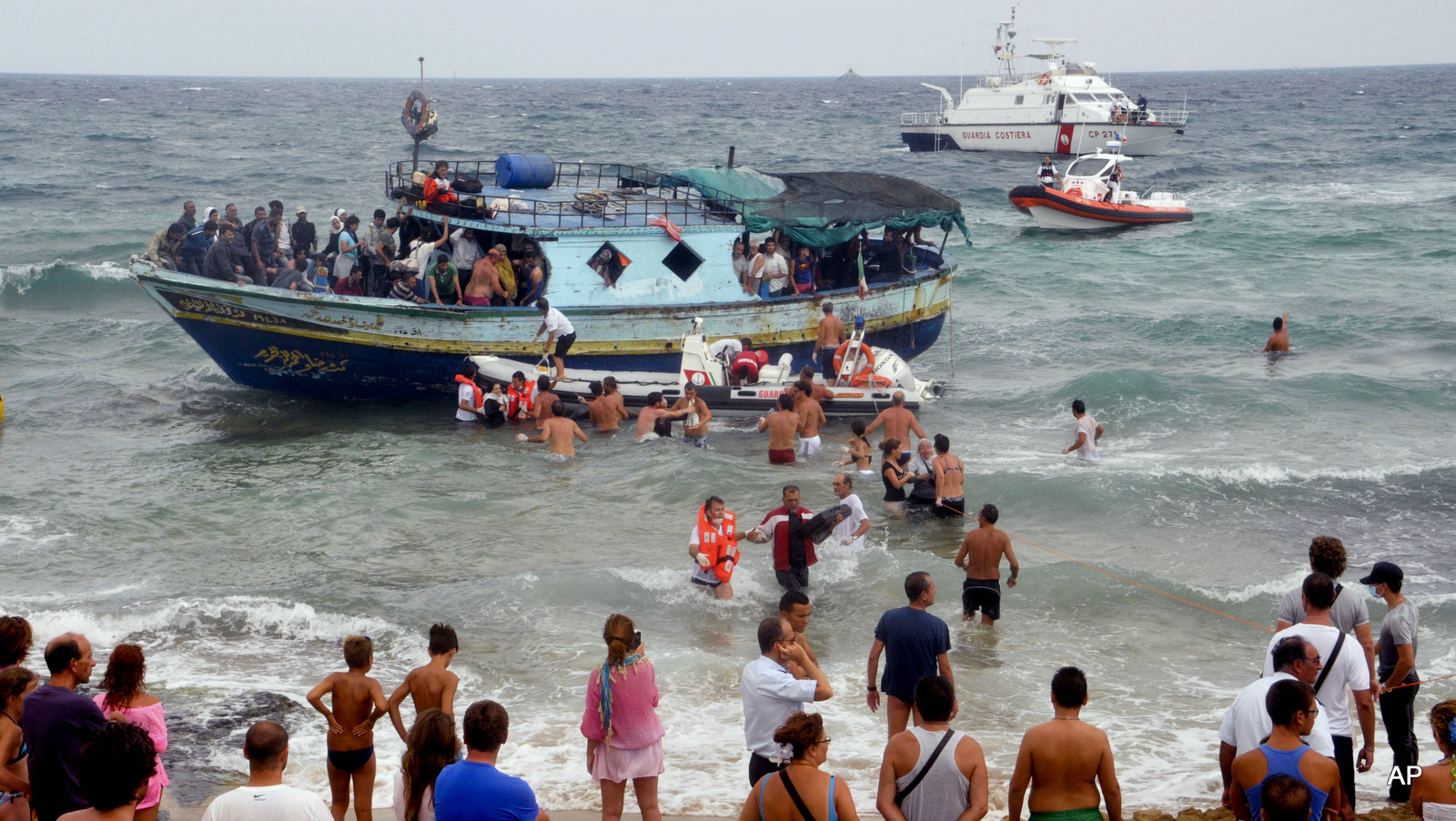
Refugee Crisis: CAF Can Help - Deploy Them

In the wake of the recent tragic death of 3 year old Alan Kurdi, his brother and mother - there have been calls for Canada and the World do to more to help Syrian and Iraqi refugees fleeing the Middle East. Minister of Defence Jason Kenney comes out and said that Canada has no responsibility to help the migrant issue. We had no 'onus' to help.

What about the human responsibility? While I have always been a proponent of the Peacekeeping Myth - that Canada became a Peacekeeping country as a war by other means during the Cold War. Canada has always cared about those in need.

According to the UN an estimated 350,000 refugees crossed the Mediterranean fleeing the Middle East in the last year - and approximately 2,500 have died trying. Earlier this year Italy made a global outcry for help on the migrant problem, as their Navy is baring the brunt of the rescue.


Other European nations have send support. In May Great Britain deployed HMS Bulwark to help. It rescued 500 migrants off of Libya earlier this year. The Irish Naval service also deployed a ship, and it has rescued some 2,000 migrants. As of August 22, 2015, the Italian Navy has rescued more than 3,000 migrants.

Canada has had a Naval vessel deployed to the Mediterranean since 2014, and could have went to the aid of migrants. But, according to the Royal Canadian Navy, they were never given the order to intervene by the Conservative Government.

My question is why not? Why does Canada not have any military responsibility to help European nations struggling with the thousands of migrants?

It would not cost any extra money to have the RCN vessel that is already deployed to help support Eastern Europe. Not sending help when it is the vicinity, is like not stopping at the scene of a horrific car accident on a back road, when you know paramedics will not make it in time.

Why not help at the refugee centers? Hungary has thousands of migrants blockaded in their train station. While this situation needs political help to help move the trains to locations willing to accept the migrants - the camps in Turkey and Jordan are huge, and quickly outgrow their boundaries. Canada could easily deploy the DART (Disaster Assistance Response Team) to one of the regions to help. This team specializes in setting up and helping in humanitarian crisises. They are usually deployed for a month long period, but with added support - the team could be deployed for a longer period of time.

In the current election campaign, the Liberals and NDP have both said they will do more to help the humanitarian issue caused by ISIS and the Syrian Civil War - neither are willing to continue to stand up and confront ISIS. Yet, now it seems the Conservatives are unwilling to help through  humanitarianism. What we need is a government that will step up on both fronts - the CAF can help in the refugee crisis all we need is a leader who will deploy them to do so.


Monday, August 17, 2015

Continue to Support for Air Task Force Iraq

You may know this already (perhaps because of this webpage) - but I am a strong supporter of the military. There have been recent calls for changes to Canada's contribution to the fight against ISIS. In Canada, our mission is titled, Operation IMPACT. The US led coalition name is Operation INHERENT RESOLVE.  We need to continue to support Air Task Force Iraq (ATFI)

Those who call for changes say Canada has only contributed to approximately 3% of coalition air strikes. They argue that 3% of strikes will not hurt ISIS - and therefore, Canada should withdraw our fighter jets (as both the NDP and Liberal's propose) and withdraw our Special Forces training mission (as the NDP propose). But when you look at the breakdown of military forces in the region, it becomes extremely clear why Canada has only contributed to about 3% of airstrikes...we have 1% of the forces involved. If you want more of a Canadian contribution, you have to be willing to deploy more Canadian assets.

I agree with both the Liberal and NDP calls for more humanitarian aid - Canada has a Disaster Assistance Response Team (DART) - that I believe could be deployed for a longer mission to the UN refugee camps being set up in Jordan or Turkey. The DART team does amazing work when they deploy to disaster zones; just look at what they were able to do in Nepal on a month long deployment.

But to those who want Canada to be a bigger contributor to the fight against ISIS (which I think we should be at least maintaining our current contribution) you need to be willing to deploy more Canadian assets.

Canada currently has the following assets in place to help the coalition against ISIS;
(Numbers of Aircraft only - not support personnel)

  • 6 CF-188 Super Hornet Strike Aircraft 
  • 1 CC-150T Polaris Areal refueller to support Canada and Coalition allies 
  • 2 CP-140M Aurora Surveillance aircraft to target and examine airstrike effectiveness for Canada and Coalition allies. 
  • Numerous trips with a CC-177 Globemaster III for transport of Goods to Canadian Forces, Coalituon Allies and military and humanitarian aid to Iraq. 
Between August and September 2014 - RCAF aircraft delivered 1.6 million pounds of military supplies to Iraq.  The donations from coalition allies included small arms, ammunition and other equipment. Military equipment was delivered to Security forces working in Baghdad and Erbil. 

As of August 12, 2015 - Air Task Force Iraq (ATFI)
  • CF-188 Hornets have conducted more than 861 sorties, and more than 1000 Airstrikes 
  • CC-150T Polaris has conducted more than 228 sorties, and delivering close to 14 million pouds of fuel to coalition aircraft 
  • CP-140 Aurora aircraft have conducted more than 248 reconnaissance missions. 
  • CC-177 Globemaster aircraft have conducted dozens of flights. 
Canada has close to 700 personnel deployed to Iraq - a relatively small number compared to out allies. Don't believe me? Take a look. (Some American breakdowns are not public) 

The USAF Assets in Iraq 
  • Multiple B-1B Lancer Bombers operating out of Qatar 
  • Dozens of F-22 Raptor Strike Aircraft 
  • Dozens of F-15E Strike Eagles Aircraft
  • Dozens of F-16C Fighting Falcons Aircraft
  • Numerous F-16CJ Anti-Radar Aircraft 
  • Numerous A-10C Thunderbolt "Warthogs" Close Air support aircraft
  • Numerous KC-135 Stratotankers - areal refueling aircraft 
  • Numerous KC-10 Extenders - areal refueling aircraft 
  • Numerous C-130J Hercules strategic lift aircraft 
  • Numerous Drones (Including MQ-1 Predator and MQ-9 Reaper Attack drones) 
The US Navy Assets in Iraq 
  • 12 F/A-18E Super Hornet Strike Aircraft 
  • 22 F/A-18F Super Hornet Strike Aircraft 
  • Between 20 and 24 F/A-18C/D Super Hornet Strike Aircraft 
  • 5 EA-18G Growler Anti-Radar Aircraft 
  • 4 EA-6B Prowlers Anti-Radar Aircraft 
  • 4 E-2D Hakweye AWACS aircraft 
  • 3 E-2C Hakweye AWACS Aircraft 
  • Numerous SH-60B and SH-60F Seahawk Helicopters for support 
  • 11 MH-60R Seahawk Support Helicopters 
  • 2 C-2A Greyhound Strategic Transport Aircraft 
The US Marine Corps Assets in Iraq 

  • 6 F/A-18 Super Hornet Strike Aircraft
  • 10 F/A-18C (Navy) Super Hornet Strike Aircraft 
  • 6 AV-8B Harrier Strike Aircraft 
  • Numerous EA-6B Prowler Electronic Warfare 
  • Numerous KC-130 areal refueling aircraft 
  • 8 to 10 MV-22B Osprey Tilt-Rotor Assault aircraft 
  • At least 4 AH-1Z Super Cobra Attack helicopters 
  • At least 3 UH-1Y Hueys attack helicopters 
  • At least 3 CH-53E Super Stallion Transport Helicopters 
Iraqi Air Force Assets 
  • 3 Cessna AC-208Bs - Armed Scout Aircraft 
  • 3 Cessna RC-208B - Reconnaissance Aircraft 
  • 15 Su-25 "Frogfoot" Attack Aircraft 
  • 6 Mi-35M "Hind" Attack Helicopters 
  • 15 Mi-28NE Night Hunter attack helicopters 
  • 19 Airbus EC635 Helicopters (Armed Scout) 
  • 23 Bell 407 JetRanger Armed Scout Aircraft 
  • 6 SA342 Gazelle Scout Helicopters 
French Air Force Assets in Iraq 
  • 9 Rafales Reconnaissance/Attack Aircraft 
  • 6 Mirage 2000D Attack Aircraft 
  • 1 C135FR areal refueling aircraft 
  • 1 Breguet Atlantique 2 Reconnaissance Aircraft 
Royal Australian Air Force Assets in Iraq 
  • 6 to 8 F/A-18F Super Hornet Strike aircraft 
  • 1 E-7A Wedgetail AWACS Aircraft 
  • 1 KC-30A areal refueling aircraft 
  • 1 C-17A Globemaster III Strategic Lift Aircraft 
Royal Air Force (Great Britain) Assets in Iraq 
  • 8 Tornado Strike Aircraft 
  • 1 RC-135W surveillance Aircraft 
  • 1 Raytheon Sentital surveillance aircraft 
  • Numerous MQ-9 Reaper Surveillance Drones  
Royal Danish Air Force Assets in Iraq 
  • 7 F-16AMs Strike Aircraft 
  • 1 C-130J Hercules Strategic Lift Aircraft 

Italian Air Force Assets in Iraq 
  • 4 Tornado Tactical Recon aircraft 
  • 1 KC-767A areal refueling aircraft 
  • 2 MQ-1 Predator Attack Drones 
Royal Saudi Air Force Assets in Iraq 
  • At least 4 Tornado IDS Strike Aircraft 
  • Possibly 4 F-15S Strike Eagles 
  • Numerous EF2000 Typhoon Multi-Role Aircraft 

Other Air Assets in Iraq 
  • The UAE has at least 6 F-16s or Mirage 2000s deployed against targets in both Iraq and Syria
  • The Royal Bahraini Air Force has at least 3 F-16s against targets in Syria
  • Royal Jordanian Air Force has at least 3 F-16s against targets in Syria 
  • Belgian Air Component has at least 6 F-16 involved active in Iraq 
  • The Royal Netherlands Air Force has at least 8 F-16s active in Iraq 
  • The US Army has numerous AH-64D Apache Attack Helicopters for security of the US Embassy in Baghdad. 
  • The Iranian Air Force has possibly 4 to 8 F-4 Phantom IIs and possibly 5 Su-24MKs (They are however not part of the US Led Coalition) 
  • The Royal Moroccon Air Force has 6 F-16s active in Iraq. 
  • The Turkish Air Force have 3 F-16s operating against targets in Syria. 
So when looking at the overall air assets in place against ISIS it is no wonder the RCAF has such a small role to play. If critics of Operation IMPACT (or OP INHERENT RESOLVE) want Canada to play a larger role - deploy more aircraft. Canada could easily deploy another 6 to 10 CF-18s without compromising our Sovereignty flights. (This calculation is based on the fact that at the outset of OP IMPACT, Canada had 6 (with one spare) CF-18s involved in the NATO Baltic Air Policing Mission in Eastern Europe. 

Continue to Support Air Task Force Iraq - are a small part of the overall picture, but they are making a difference.  

RCAF July 2015 Airstrike Update

An Update on the RCAF's Airstrikes against ISIS for July 2015. All in Iraq, with one in Syria.

On July 2, 2015 - RCAF CF-18s struck three ISIS fighting positions; one Northwest of Tal Afar; one Northeast of Tal Afar; and one in the vicinity of Sinjar.

On July 3, 2015- RCAF CF-18s struck three ISIS fighting positions; one in the vicinity of Sinjar; one Southeast of Mosul; and one Northwest of Mosul.

On July 4, 2015 - RCAF CF-18s targeted an ISIS fighting position Southeast of Fallujah.

On July 5, 2015 - RCAF CF-18s targeted an ISIS fighting position Southeast of Fallujah.

On July 10, 2015 - RCAF CF-18s targeted and ISIS fighting position Northeast of Fallujah.

On July 11, 2015 - RCAF CF-18s targeted two ISIS fighting positions; one Northeast of Fallujah; and one Southeast of Fallujah.

On July 12, 2015 - RCAF CF-18s struck an ISIS fighting position in the vicinity of Ramadi.

On July 15, 2015- RCAF CF-18s struck an ISIS fighting position Northwest of Tal Afar.

On July 16, 2015 - RCAF CF-18s struck an ISIS fighting position Northwest of Mosul.

On July 17, 2015 - RCAF CF-18s struck an ISIS fighting position Northwest of Tal Afar.

On July 18, 2015 - RCAF CF-18s struck two ISIS fighting positions; one within the vicinity of Ramadi; and another Northeast of Sinjar.

On July 19, 2015 - RCAF CF-18s targeted an ISIS transport vehicle Northwest of Tal Afar.

On July 21, 2015 - RCAF CF-18s targeted an ISIS fighting position Southeast of Haditha.

On July 22, 2015 - RCAF CF-18s targeted an ISIS fighting position Southeast of Mosul.

On July 23, 2015 - RCAF CF-18s struck and ISIS fighting position East of Mosul.

On July 24, 2015 - RCAF CF-18s struck an ISIS fighting position Northwest of Mosul.

On July 25, 2015 - RCAF CF-18s struck an ISIS staging area in Kirkuk.

On July 26, 2015 - RCAF CF-18s targeted two ISIS fighting positions in Sinjar and Tal Afar.

On July 29, 2015 - RCAF CF-18s struck an ISIS fighting position Northwest of Haditha.

On July 30, 2015 - RCAF CF-18s struck and ISIS compound and an ISIS fighting position Northwest of Haditha.

On July 30, 2015 - RCAF CF-18s targeted an ISIS compound in Al Qa'am

On July 30, 2015 -  RCAF CF-18s targeted an ISIS compound North of Al Bukamal, Syria.