BY MARIE-DANIELLE SMITH
OTTAWA — The former Conservative government quietly helped fund improvements for a Vancouver shipyard that was scrambling to get ready for shipbuilding, despite saying it would not do so.
Seaspan’s Vancouver Shipyards received about $40 million in 2014-15 to get its engineering systems up to speed as it prepared to build non-combat vessels for the Canadian Coast Guard, documents suggest.
But one of the premises underlying the Conservative government’s enormous National Shipbuilding Procurement Strategy (NSPS) — lauded by prime minister Stephen Harper’s government as the biggest defence program in Canadian history — is that shipyards would have to fund improvements to their shipbuilding infrastructure at no cost to Ottawa.
The existence of a government-funded program to help Seaspan, an association of western Canadian marine transportation companies, was revealed at a House of Commons committee meeting in December 2014.
Marty Muldoon, assistant deputy minister and chief financial officer at Fisheries and Oceans, told committee members $9.5 million of his department’s money was going to the “horizontal engineering program plan,” an initiative shared with the Department of National Defence.
That money was to help Seaspan “hit full stride in manufacturing capability or construction capability for our vessels,” he said.
“Basically, what we’re doing is investing in the shipyard’s capability to get itself up to capacity, to start churning out vessels.”
(Seaspan) went from a very small shipyard to a very large shipyard in a very short amount of time.
Though Public Services and Procurement Canada admits the contract is being used to help Seaspan create “material, engineering and production standards” for its yard, making systems consistent across “multiple projects,” it says this doesn’t count as the type of shipyard improvement forbidden under the agreement governing NSPS.
Jessica Kingsbury, a spokeswoman for PSPC, said this contract is “clearly distinguished” from capital investments Seaspan made to ready its yard for shipbuilding.
The horizontal engineering program plan is “in no way related to the criteria which the shipyards were required to meet, at their own cost, to achieve target-state,” she added.
Rather, it aims to co-ordinate and manage Seaspan’s non-combat package “more strategically,” through building a “program management capability.”
All three bids for NSPS contracts — from Halifax-based Irving, Seaspan and Quebec-based Davie — orginally included the guarantee that Ottawa wouldn’t pay to help the shipyards get ready for shipbuilding. Federal money would only go towards the shipbuilding projects.
But successful bidders Irving and Seaspan lacked capacity to start building ships when umbrella agreements were announced in 2011. Both negotiated to include clauses in the agreements, saying Ottawa would reimburse them for shipyard infrastructure if it decided to spend less than promised on new ships.
Irving and Seaspan also went to the provinces for money. Irving got a $304-million loan from Nova Scotia, $260 million of it forgivable, while Seaspan got only $40 million, for training from British Columbia.
No federal money was officially announced for either shipyard.
The agreement between Ottawa and Seaspan, dated Feb. 14, 2012, obtained by the National Post, says Seaspan agreed any improvements to shipyard capacity would be “paid for by the company entirely at its own expense” — unless Canada reneged on its commitments.
In November 2014, Seaspan announced a two-year, $170-million project to modernize its shipyard had finished “ahead of schedule and under-budget,” according to its website.
Still, recent job postings show it has continued hiring people to work on the “horizontal engineering program plan.”
The plan does not include improvements to physical infrastructure, but focuses on improving engineering systems, technical programs and management, says a consultant who worked for Seaspan from April to October 2014.
“It covered the whole spectrum of trying to stand up an engineering organization that was robust enough to support the overall shipbuilding objectives,” said Matt von Ruden, now director of vessels at Washington State Ferries.
Employees believed Ottawa was helping fund this work, he confirmed. “The government understood the need for this program, as far as I understand,” he said.
“(Seaspan) went from a very small shipyard to a very large shipyard in a very short amount of time.”
The fact government money was used for “systems” and “programs,” not physical infrastructure, may have made this a grey area under NSPS guidelines.
Several unusual contracts posted on the government’s Buy and Sell website from June 2014 to October 2015 appear to show money flowing into such programs.
For example, Public Services and Procurement Canada sourced just under $40 million in “engineering services” from the Vancouver shipyard.
Contracts are labelled as noncompetitive, representing the “best interests” and “value” to government. They differ from other contracts held by Seaspan, which are usually identified as being tied to a shipbuilding project.
The NSPS has an official budget of $39 billion, with $8 billion set aside for non-combat vessels.
Construction is expected to take at least 20 to 30 years, says the procurement department.
Seaspan began building the first of three offshore fisheries science vessels in June 2015 and the second in March. The three vessels, the first NSPS ships to come out of the improved Vancouver shipyard, are scheduled to be delivered by the end of 2017.
• Email: mdsmith@postmedia.com |
© Copyright (c) National Post
Showing posts with label Conservative. Show all posts
Showing posts with label Conservative. Show all posts
Thursday, May 5, 2016

Thursday, April 21, 2016
Conservative and Liberal MPs trade blame for failed Military Procurement
By: David Pugliese, The Ottawa Citizen
OTTAWA — The Conservatives and Liberals traded barbs in the Commons Wednesday, arguing about who was to blame for failed military equipment purchases after an Ottawa Citizen article revealed some of the Canadian Forces key acquisitions will see their funding delayed.
The Liberal government’s budget, released in late March, calls for $3.7 billion in spending on equipment to be delayed until 2021 or later.
But the Citizen revealed that some of the military’s top equipment programs — including projects to buy new Cyclone maritime helicopters and Arctic patrol vessels — will be among the projects to see their funding delayed.
Citing the Citizen article, a trio of Conservative MPs launched attacks on the government, accusing the Liberals of cutting the defence budget.
“Unfortunately, here in Ottawa our military is entering another era of darkness,” said Tory defence critic James Bezan.
But John McKay, parliamentary secretary to Defence Minister Harjit Sajjan, said it was the Conservative government that left military procurement and funding in a mess.
McKay said no money is being cut from the defence budget. Instead of fixing procurement and financial problems, he said the Conservatives were “climbing in and out of fake airplanes,” a reference to former defence minister Peter MacKay’s $40,000 press conference during which he posed in a model F-35 jet.
OTTAWA — The Conservatives and Liberals traded barbs in the Commons Wednesday, arguing about who was to blame for failed military equipment purchases after an Ottawa Citizen article revealed some of the Canadian Forces key acquisitions will see their funding delayed.
The Liberal government’s budget, released in late March, calls for $3.7 billion in spending on equipment to be delayed until 2021 or later.
But the Citizen revealed that some of the military’s top equipment programs — including projects to buy new Cyclone maritime helicopters and Arctic patrol vessels — will be among the projects to see their funding delayed.
Citing the Citizen article, a trio of Conservative MPs launched attacks on the government, accusing the Liberals of cutting the defence budget.
“Unfortunately, here in Ottawa our military is entering another era of darkness,” said Tory defence critic James Bezan.
But John McKay, parliamentary secretary to Defence Minister Harjit Sajjan, said it was the Conservative government that left military procurement and funding in a mess.
McKay said no money is being cut from the defence budget. Instead of fixing procurement and financial problems, he said the Conservatives were “climbing in and out of fake airplanes,” a reference to former defence minister Peter MacKay’s $40,000 press conference during which he posed in a model F-35 jet.
 |
| THE CANADIAN PRESS/Adrian Wyld/File - Then-defence minister Peter MacKay checks out the cockpit of a mock F-35 Joint Strike Fighter following an announcement in July 2010 that the federal government would be purchasing a number of the jets. The purchase never went through. |
“Had the former government actually done its work, then the procurement cycle would have matched the fiscal cycle and accordingly we possibly would have had some procurements met,” McKay said.
Besides delays in funding for the Arctic patrol ships and Cyclone helicopters, the budget plan would affect the CF-18 replacement, the modernization of the Halifax-class frigates and a program to provide new communications equipment to soldiers. Another $2.6 billion in equipment funding – not yet earmarked for specific gear — will also be withheld until 2021 or beyond.
It is unclear how some of the programs, such as the Cyclone helicopters, which are now being delivered, might be affected by the decision.
Conservative MP Cheryl Gallant said the plan to delay funding for the Cyclones is similar to then Liberal prime minister Jean Chéetien’s decision in the 1990s to cancel the EH-101 maritime helicopters.
Some analysts have voiced concern the $3.7 billion won’t be returned to the DND.
But Ashley Lemire, a DND spokeswoman, noted in an email, “some major projects experienced delays in their original timelines, which resulted in funds needing to be moved forward to future years.”
Besides delays in funding for the Arctic patrol ships and Cyclone helicopters, the budget plan would affect the CF-18 replacement, the modernization of the Halifax-class frigates and a program to provide new communications equipment to soldiers. Another $2.6 billion in equipment funding – not yet earmarked for specific gear — will also be withheld until 2021 or beyond.
It is unclear how some of the programs, such as the Cyclone helicopters, which are now being delivered, might be affected by the decision.
Conservative MP Cheryl Gallant said the plan to delay funding for the Cyclones is similar to then Liberal prime minister Jean Chéetien’s decision in the 1990s to cancel the EH-101 maritime helicopters.
Some analysts have voiced concern the $3.7 billion won’t be returned to the DND.
But Ashley Lemire, a DND spokeswoman, noted in an email, “some major projects experienced delays in their original timelines, which resulted in funds needing to be moved forward to future years.”
Wednesday, January 20, 2016
Canada’s Weapons exports grew more than 89 per cent under Harper
Written by Elizabeth Thompson, iPolitics
Canada’s arms exports shot up while Prime Minister Stephen Harper’s Conservative government was in office, fuelled by higher sales to countries like Saudi Arabia, Jordan, Mexico and Austria, an analysis by iPolitics has found.
Between 2006 and 2013, the last year for which numbers are available, Canada’s exports of military goods to countries outside the United States rose 89 per cent. However, that number is likely to hit a new high once figures for 2014 become available and a controversial $15 billion General Dynamics armoured vehicle sale to Saudi Arabia is added to the totals.
While the United Kingdom was the top destination outside of the United States for military equipment manufactured in Canada when the Liberals left office in 2005, that title now goes to Saudi Arabia, whose human rights record — particularly the recent beheading of a Shiite cleric — has made the armoured vehicle deal a target for opposition critics, including the Conservatives who approved of it in government.
During the election campaign, Harper defended the deal, saying that while Saudi Arabia may have committed significant human rights violations, it is an ally in the fight against the Islamic State and cancelling the deal would punish Canadian workers.
The Liberal government has said it has no plans to cancel the deal.
The Middle Eastern country accounts for near a quarter of the military goods exported by Canada to countries other than the U.S. in 2013. In 2012, a year that Canada set a record for arms exports with $1 billion worth of sales, Saudi Arabia accounted for 40 per cent of military exports.
Ken Epps, a policy advisor to Project Ploughshares, a peace group that monitors Canada’s arms sales, says the destination of Canada’s military exports has shifted.
“In recent years it is clear that the government has been trying to promote arms exports to outside of the more typical markets of the U.S and Europe and NATO in particular because defence spending has declined in both the U.S. and Europe and in order to try and sustain the Canadian arms industry new markets have been sought,” he said.
“In the case of the Conservatives, they were almost indiscriminate in the markets they were seeking because they were looking at the Middle East, they were looking at Latin America, they were looking at South Asia and in many cases at countries where there are very legitimate concerns – either about regional security or human rights violations."
Christyn Cianfarani, president of the Canadian Association of Defence and Security Industries (CADSI) agrees that sales to Europe and the U.S. are down – in part because of Buy America policies and budget sequestration in Washington. However, she disagrees that there has been any loosening of the rules in selling to countries with questionable records.
“The export regime has been in place and is quite vigorous,” said Cianfarani. “So the rules, to my knowledge, have not changed and they have not loosened with respect to the countries where we have been allowed to sell controlled goods to.”
She adds that it’s a mistake to say that because other areas were softening that the government was more lackadaisical on the export regime. “We certainly haven’t seen any evidence of that whatsoever.”
The Trudeau government is taking a closer look at Canada’s arms sales, trying to determine what steps Canada must take to accede to the United Nations Arms Trade Treaty. The landmark multilateral treaty, which entered into force in December 2014, seeks to regulate the international trade in conventional weapons.
Former Prime Minister Stephen Harper’s government refused to sign the treaty, making Canada one of only a handful of countries — and the only NATO member — that wasn’t a signatory.
Foreign Affairs Minister Stéphane Dion’s ministerial mandate letter calls for him to take the steps necessary to accede to the treaty and Tania Assaly, spokesman for the department of Global Affairs, says that is underway.
“Before acceding to the treaty, Canada must ensure that it has put in place domestically all legislation or regulations that would be required to ensure that we can fully meet the obligations under the treaty,” she wrote. “Officials are currently undertaking internal legislative and policy reviews in order to identify those changes that might be necessary before Canada accedes to the ATT.”
Epps believes that the shipments of military goods to Saudi Arabia, including the $15 billion armoured vehicle deal, could be called into question if Canada accedes to the arms trade treaty.
“Our view is that the provisions of the arms trade treaty, if interpreted correctly, would require Canada to reassess and even deny sales of armoured vehicles to the Saudi National Guard,” he said.
If political parties are reluctant to touch the Saudi deal, it could be in part because of the role the defence industry plays in Canada’s economy.
A 2012 study by the accounting firm KPMG commissioned by CADSI estimated Canada’s defence and security industries generated $12.6 billion in revenue in 2011 and employed 71,000 Canadians. While nearly half of the goods and services produced remained in Canada, 50.4 percent or $6.4 billion was exported.
The federal government’s Report on Exports of Military Goods from Canada lists a far more modest number — $1.04 billion for 2012 and $681.4 million for 2013. However, the report does not include sales of military goods to the United States, which the government estimates account for half of Canada’s military exports each year.
Cianfarini points out that the federal government numbers also don’t include Canada’s growing service support industry.
“Traditionally, things that end up getting collected under the controlled goods regime are of a product nature because they’re trackable. What people don’t understand about the defence industry in Canada is that it has a very large service component which has been growing over the past 10 years as Canadian industry diversifies its business.”
For example, the government’s statistics wouldn’t include contracts Canadian companies have to service and maintain military aircraft from countries like Mexico where the aircraft is flown to Canada for maintenance, she said.
Exports by Canadian defence manufacturers also benefit Canada in other ways as well, Cianfarini pointed out. Foreign sales of equipment lead to lower prices for the Canadian Armed Forces and many innovations or new developments in military equipment can have non-military applications that also create jobs.
While the numbers can vary widely from year to year because of the nature of defence contracts, figures show that Canada’s exports of military goods has crept steadily upwards since 2005 when sales totaled $322 million under former Liberal Prime Minister Paul Martin’s government. The exports reached a high of $1 billion in 2012 before slipping down to $681.3 million – the third highest level since 2003 when exports under former Liberal Prime Minister Jean Chrétien reached $723.5 million.
One of the countries where Canadian military exports rose the most during Harper’s government was Jordan – a country whose human rights record has been questioned by groups like Amnesty International. Military exports jumped from only $6,580 in 2006 to $15 million in 2011 before falling back to $888,467 in 2013 — the year that Harper named the head of his RCMP security detail, Bruno Saccomani, as Canada’s ambassador.
According to government figures, Jordan’s biggest buys are in imaging equipment.
Sales to Mexico also grew during those years. In 2006, when Harper came to power, Mexico’s purchases of military goods had dropped to $15,573 from $1 million in 2003. By 2012, military exports to Mexico had risen to $1.2 million before dropping back to $889,854 in 2013. Mexico’s biggest spending is on ground vehicles and imaging equipment.
Austria, which was already a strong customer for Canadian military goods, had the third largest rise between 2006 and 2013 – particularly during the last two years, when it jumped to $11.3 million then $88.6 million. According to federal government figures, the growth was in guns and ground vehicles.
Sales to a number of other countries, however, have declined. For example, Greece, which bought $8.4 million worth of military goods in 2006 dropped to a fraction of that amount the following year and in 2013 it only bought $56,875 worth of goods – much of it aircraft equipment. Oman, which imported $3.5 million in Canadian military goods in 2006 and $24 million in 2008, spent only $266,512 in 2013 – largely for simulators.
The top five buyers for Canada’s military goods also changed almost completely from 2006 to 2013. In the Liberals last year in power in 2005, the United Kingdom led the list, buying aircraft and parts, followed by Australia buying ground vehicles, France, South Korea and Singapore.
By 2013 the top buyers came from Saudi Arabia, principally purchasing ground vehicles, then the United Kingdom shopping for aviation and imaging equipment, followed by Austria, Italy and Germany.
Cianfarini says Canadian defence manufacturers have been shipping goods to Saudi Arabia since the 1990s and consider it a good market.
“Canada has nurtured a long-standing relationship with Saudi Arabia, because the Middle East is particularly important to us – not only from an oil perspective but also from a regional politics perspective going way back,” she said. “You’re seeing that from a Canadian business community point of view — it has a relatively open market, in that there aren’t great impediments. If you put those two together it’s logical that it would be perceived by Canadian companies as a market that has opportunity for us.”
Hélène Laverdière, NDP foreign affairs critic and a former Canadian diplomat, says Canada needs more transparency and consistency in its reporting on military exports.
“It is absolutely essential that parliamentarians and Canadian have that information,” said Laverdière.
Laverdière would like to see the Liberal government make public the evaluation that would have been done before the Conservative government agreed to allow armoured vehicles to be sold to Saudi Arabia. She also wants Canada to accede to the arms trade treaty.
“We will continue to push the Trudeau government to assure that we do that as soon as possible. We are the only NATO country that hasn’t signed.”
Conservative Foreign Affairs Critic Tony Clement has not yet responded to requests for an interview.
elizabeththompson@ipolitics.ca
Wednesday, October 14, 2015
Election 2015: Kenney - Conservatives to Increase CANSOFCOM
In an election promise that was made about 2 weeks ago - but went unnoticed by many - Defence Minister Jason Kenney who is running for re-election in Calgary-Midnapore announced in Regina that if the Conservatives are re-elected, they will increase the size of the Canadian Armed Forces Special Forces by 35% over the next several years.
 |
| CAF JTF2 Members in Jamaica; helpin train the Jamaican Military on counter-insurgency engagement. Photo: Ottawa Citizen December 2014 |
The Canadian Armed Forces Special Operations Command (CANSOFCOM) is currently made up of five units; composed of just over 1,900 personnel. The Conservatives want to increase the Special Forces community by some 665 members by 2022.
Such a plan, according to Kenney would require $75 million over the next four years. Kenney said that the Conservatives would invest $10 million in 2016-17, increasing to $30 million in 2019-20. Once the expansion was complete, the new CANSOFCOM would require $50 million a year to maintain the troop levels.
Increasing the Special Forces community would help the CAF meet all its operational requirements, within Canada and Internationally. "Expansion of the Special Forces units will ensure that our Armed Forces are prepared to respond to the terror threat posed by groups such as the so-called Islamic State of Iraq and Syria (ISIS)," Kenney said.
Monday, September 21, 2015
Harper Claims F-35s Needed to Defeat ISIS
Over the weekend the F-35 debate was brought into the 2015 Canadian election. Justin Trudeau said that the Liberal Party would scrap the plan to purchase the JSF F-35; whose budget continues to go overboard, and continues to prove not to be the aircraft it claims. The NDP have said they would reopen the bidding process, and if the F-35 wins that process, than it is fair game.
Prime Minister Stephen Haper shot back at the Liberals by saying Canada needs the F-35 to defeat ISIS, and replace the aging CF-18 Hornets that are currently being used against ISIS. (Lets rewind about a year) What happened to the Government shelving the replacement of the CF-18s until a later date, and committing to spend the hundreds of millions to upgrade them to fly until at least 2025? Obviously Harper is back peddling yet again...and his statement that the F-35s are needed to defeat ISIS is ridiculous.
Why is it ridiculous? There are NO F-35s currently deployed by any coalition member against ISIS. The F-22's have only just deployed on their first combat support roles in both Eastern Europe and Iraq/Syria. So how can one claim the F-35s are needed to defeat ISIS? Also, if the life extension of the CF-18s will allow them to fly until well past 2025, will we still be fighting ISIS in 10 years? If so, maybe that is the bigger problem.
If the Americans (or any other ally who has already agreed to purchase the JSF) were using the F-35s against ISIS with a higher success rate than our CF-18s then I could potentially agree - but there are none deployed.
For a list of coalition aircraft currently involved against ISIS, please see my previous post "Continue to Support Air Task Force Iraq"
Prime Minister Stephen Haper shot back at the Liberals by saying Canada needs the F-35 to defeat ISIS, and replace the aging CF-18 Hornets that are currently being used against ISIS. (Lets rewind about a year) What happened to the Government shelving the replacement of the CF-18s until a later date, and committing to spend the hundreds of millions to upgrade them to fly until at least 2025? Obviously Harper is back peddling yet again...and his statement that the F-35s are needed to defeat ISIS is ridiculous.
Why is it ridiculous? There are NO F-35s currently deployed by any coalition member against ISIS. The F-22's have only just deployed on their first combat support roles in both Eastern Europe and Iraq/Syria. So how can one claim the F-35s are needed to defeat ISIS? Also, if the life extension of the CF-18s will allow them to fly until well past 2025, will we still be fighting ISIS in 10 years? If so, maybe that is the bigger problem.
If the Americans (or any other ally who has already agreed to purchase the JSF) were using the F-35s against ISIS with a higher success rate than our CF-18s then I could potentially agree - but there are none deployed.
For a list of coalition aircraft currently involved against ISIS, please see my previous post "Continue to Support Air Task Force Iraq"
Sunday, September 20, 2015
Canada was Actively Pursuing Mistral Purchase
A recent report to the Canadian Press the Canadian Government was actively pursuing a purchase of the French built Mistral class helicopter carriers. The plan has been put on hold due to the election.
This 'hold' puts the Royal Canadian Navy in a tough spot - as it might lose an opportunity to bid officially on the Mistral ships, as France has begin taking bids from other interested parties for the 220,000 ton ships.
According to the Canadian Press, Canada has been seriously negotiating at a political level with the French with regards to the two Mistral ships originally built for Russia.
The source spoke on the condition of anonymity because they were not authorized to speak publicly on the matter said that Conservative Minister of Defence Jason Kenney was actively engaged in sounding out the French. This also included a face-to-face exchange at the most recent NATO meeting in June. This has all stopped now since the Election Call.
Saudi Arabia, Egypt, and Singapore have all expressed interest in the two Mistral ships. Canada has long been short listed by many nations as a potential buyer. The issue was France was not able to take monetary bids until the issue with Russia was officially settled. Now that has happened, France can start receiving bids - and Canada is in an Election.
The Two mistrals can sell for anywhere from $1.6 to $1.9 billion - and would then need hundreds of millions of dollars for upgrades to bring them in line with the Royal Canadian Navy Standards. The problem is Egypt and Saudi Arabia are extremely interested and considered in the running to buy them very shortly.
While the Mistrals are technically Heli-carriers, the French Navy has exclusively used theirs for humanitarian and evacuation missions since 2006. This is something the RCN could clearly use. The Mistrals are capable of carrying 16 helicopters, 59 armoured vehicles, and 450 troops (inclusive of its crew).
The Mistral class ships saga continues. What is clear is the Conservative Government has made a serious pitch to the French Government, and has allowed the French shipyard DCNS to set up an office in Ottawa, as they want to be part of the RCN frigate replacement program. Maybe that will be enough for France to hold off selling the Mistrals, and wait for Canada to say yes.
This 'hold' puts the Royal Canadian Navy in a tough spot - as it might lose an opportunity to bid officially on the Mistral ships, as France has begin taking bids from other interested parties for the 220,000 ton ships.
According to the Canadian Press, Canada has been seriously negotiating at a political level with the French with regards to the two Mistral ships originally built for Russia.
The source spoke on the condition of anonymity because they were not authorized to speak publicly on the matter said that Conservative Minister of Defence Jason Kenney was actively engaged in sounding out the French. This also included a face-to-face exchange at the most recent NATO meeting in June. This has all stopped now since the Election Call.
Saudi Arabia, Egypt, and Singapore have all expressed interest in the two Mistral ships. Canada has long been short listed by many nations as a potential buyer. The issue was France was not able to take monetary bids until the issue with Russia was officially settled. Now that has happened, France can start receiving bids - and Canada is in an Election.
The Two mistrals can sell for anywhere from $1.6 to $1.9 billion - and would then need hundreds of millions of dollars for upgrades to bring them in line with the Royal Canadian Navy Standards. The problem is Egypt and Saudi Arabia are extremely interested and considered in the running to buy them very shortly.
While the Mistrals are technically Heli-carriers, the French Navy has exclusively used theirs for humanitarian and evacuation missions since 2006. This is something the RCN could clearly use. The Mistrals are capable of carrying 16 helicopters, 59 armoured vehicles, and 450 troops (inclusive of its crew).
The Mistral class ships saga continues. What is clear is the Conservative Government has made a serious pitch to the French Government, and has allowed the French shipyard DCNS to set up an office in Ottawa, as they want to be part of the RCN frigate replacement program. Maybe that will be enough for France to hold off selling the Mistrals, and wait for Canada to say yes.
Friday, September 4, 2015
Refugee Crisis: CAF Can Help - Deploy Them
In the wake of the recent tragic death of 3 year old Alan Kurdi, his brother and mother - there have been calls for Canada and the World do to more to help Syrian and Iraqi refugees fleeing the Middle East. Minister of Defence Jason Kenney comes out and said that Canada has no responsibility to help the migrant issue. We had no 'onus' to help.
What about the human responsibility? While I have always been a proponent of the Peacekeeping Myth - that Canada became a Peacekeeping country as a war by other means during the Cold War. Canada has always cared about those in need.
According to the UN an estimated 350,000 refugees crossed the Mediterranean fleeing the Middle East in the last year - and approximately 2,500 have died trying. Earlier this year Italy made a global outcry for help on the migrant problem, as their Navy is baring the brunt of the rescue.
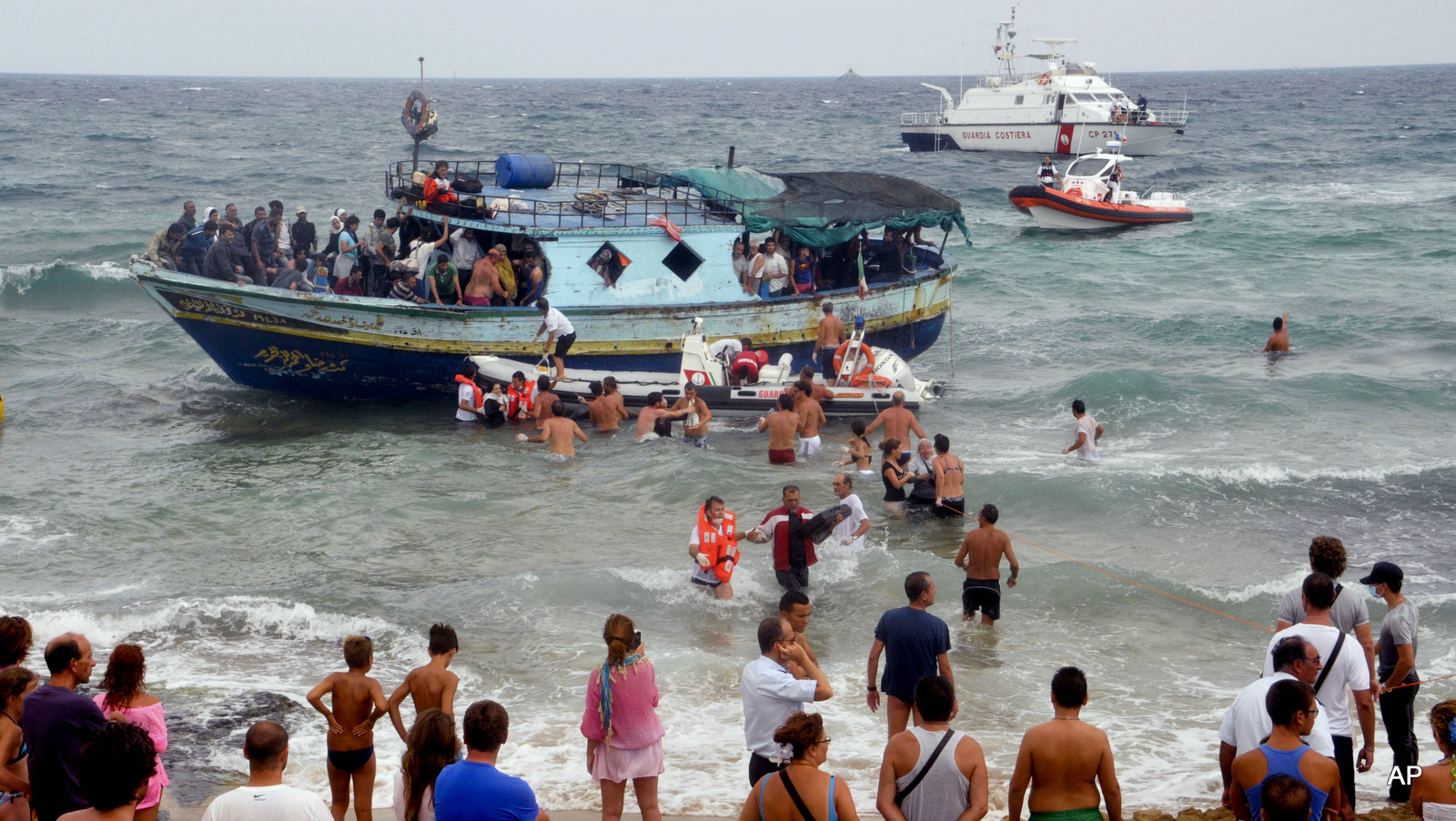
Other European nations have send support. In May Great Britain deployed HMS Bulwark to help. It rescued 500 migrants off of Libya earlier this year. The Irish Naval service also deployed a ship, and it has rescued some 2,000 migrants. As of August 22, 2015, the Italian Navy has rescued more than 3,000 migrants.
Canada has had a Naval vessel deployed to the Mediterranean since 2014, and could have went to the aid of migrants. But, according to the Royal Canadian Navy, they were never given the order to intervene by the Conservative Government.
My question is why not? Why does Canada not have any military responsibility to help European nations struggling with the thousands of migrants?
It would not cost any extra money to have the RCN vessel that is already deployed to help support Eastern Europe. Not sending help when it is the vicinity, is like not stopping at the scene of a horrific car accident on a back road, when you know paramedics will not make it in time.
Why not help at the refugee centers? Hungary has thousands of migrants blockaded in their train station. While this situation needs political help to help move the trains to locations willing to accept the migrants - the camps in Turkey and Jordan are huge, and quickly outgrow their boundaries. Canada could easily deploy the DART (Disaster Assistance Response Team) to one of the regions to help. This team specializes in setting up and helping in humanitarian crisises. They are usually deployed for a month long period, but with added support - the team could be deployed for a longer period of time.
In the current election campaign, the Liberals and NDP have both said they will do more to help the humanitarian issue caused by ISIS and the Syrian Civil War - neither are willing to continue to stand up and confront ISIS. Yet, now it seems the Conservatives are unwilling to help through humanitarianism. What we need is a government that will step up on both fronts - the CAF can help in the refugee crisis all we need is a leader who will deploy them to do so.
What about the human responsibility? While I have always been a proponent of the Peacekeeping Myth - that Canada became a Peacekeeping country as a war by other means during the Cold War. Canada has always cared about those in need.
According to the UN an estimated 350,000 refugees crossed the Mediterranean fleeing the Middle East in the last year - and approximately 2,500 have died trying. Earlier this year Italy made a global outcry for help on the migrant problem, as their Navy is baring the brunt of the rescue.
Other European nations have send support. In May Great Britain deployed HMS Bulwark to help. It rescued 500 migrants off of Libya earlier this year. The Irish Naval service also deployed a ship, and it has rescued some 2,000 migrants. As of August 22, 2015, the Italian Navy has rescued more than 3,000 migrants.
Canada has had a Naval vessel deployed to the Mediterranean since 2014, and could have went to the aid of migrants. But, according to the Royal Canadian Navy, they were never given the order to intervene by the Conservative Government.
My question is why not? Why does Canada not have any military responsibility to help European nations struggling with the thousands of migrants?
It would not cost any extra money to have the RCN vessel that is already deployed to help support Eastern Europe. Not sending help when it is the vicinity, is like not stopping at the scene of a horrific car accident on a back road, when you know paramedics will not make it in time.
Why not help at the refugee centers? Hungary has thousands of migrants blockaded in their train station. While this situation needs political help to help move the trains to locations willing to accept the migrants - the camps in Turkey and Jordan are huge, and quickly outgrow their boundaries. Canada could easily deploy the DART (Disaster Assistance Response Team) to one of the regions to help. This team specializes in setting up and helping in humanitarian crisises. They are usually deployed for a month long period, but with added support - the team could be deployed for a longer period of time.
In the current election campaign, the Liberals and NDP have both said they will do more to help the humanitarian issue caused by ISIS and the Syrian Civil War - neither are willing to continue to stand up and confront ISIS. Yet, now it seems the Conservatives are unwilling to help through humanitarianism. What we need is a government that will step up on both fronts - the CAF can help in the refugee crisis all we need is a leader who will deploy them to do so.
Monday, August 17, 2015
Election 2015: Harper Promises Increase in Reserve Force
Today at a Campaign stop in Fredericton, New Brunswick Prime Minister Stephen Harper announced that if the Conservatives are re-elected, they would increase the number of Reserves in the Canadian Armed Forces from 24,000 to 30,000 within the next four years. That is almost a decade faster than the current Canadian Defense Strategy, which lists 2028 as the date for the Reserves to hit the 30,000 troop level.
The Prime Minister announced that a Conservative government would streamline the recruitment process for Reserves, and more to a more Central training system in Ontario and the Great Lakes region, so Reserves can train closer to home.
Such a surge will help increase the effectiveness of the Canadian Armed Forces, especially in response to Canada's Sovereignty needs, national emergencies (floods, and forest fires), and to help protect Canada's coastal and offshore waters.
In the 2011 Election the Conservatives took 8 of the 10 Seats in New Brunswick, and he is hoping to do just as well this time around. Canada's largest Eastern Military Base is CFB Gagetown located just outside of Fredericton.
To read the original CBC News Article: Stephen Harper Pledges Reserve Increase
The Prime Minister announced that a Conservative government would streamline the recruitment process for Reserves, and more to a more Central training system in Ontario and the Great Lakes region, so Reserves can train closer to home.
Such a surge will help increase the effectiveness of the Canadian Armed Forces, especially in response to Canada's Sovereignty needs, national emergencies (floods, and forest fires), and to help protect Canada's coastal and offshore waters.
In the 2011 Election the Conservatives took 8 of the 10 Seats in New Brunswick, and he is hoping to do just as well this time around. Canada's largest Eastern Military Base is CFB Gagetown located just outside of Fredericton.
To read the original CBC News Article: Stephen Harper Pledges Reserve Increase
Thursday, June 18, 2015
RCAF to start to receive CH-148 Cyclone
The government of Canada will announce Friday, June 19, 2015 at CFB Shearwater that the RCAF will begin to accept delivery of the CH-148 Cyclone helicopters built by Sikorsky.
Not all 28 helicopters will be delivered at once, and the delivery schedule has not been completely released. It is also important to note that those that are delivered will not be 100% functional - that will happen with upgrades to systems as other aircraft are delivered.
The CH-148 is set to replace the CH-124 Seaking Helicopter's that are retiring.
The entire project has been plagued by politics; started in 2004 by the Liberal government the project fell apart - and the Conservatives renegotiated with Sikosky, who paid penalties, has also agreed to a $115 Million for future upgrades. The Liberals remain attimant that the program fell apart under the watch of the Conservatives when they took power in 2006. The RCAF was supposed to take full delivery of the 28 CH-148 Cyclones by 2011. It is now 2015, and the first deliveries are taking place.
Not all 28 helicopters will be delivered at once, and the delivery schedule has not been completely released. It is also important to note that those that are delivered will not be 100% functional - that will happen with upgrades to systems as other aircraft are delivered.
The CH-148 is set to replace the CH-124 Seaking Helicopter's that are retiring.
The entire project has been plagued by politics; started in 2004 by the Liberal government the project fell apart - and the Conservatives renegotiated with Sikosky, who paid penalties, has also agreed to a $115 Million for future upgrades. The Liberals remain attimant that the program fell apart under the watch of the Conservatives when they took power in 2006. The RCAF was supposed to take full delivery of the 28 CH-148 Cyclones by 2011. It is now 2015, and the first deliveries are taking place.
Tuesday, March 31, 2015
Canada to begin Bombing Campaign in Syria
Yesterday, after several hours of debate in the House of Commons in Ottawa, the Conservative majority voted in favour (142-129) to extend Canada's mission against ISIS for one year (until the end of March 2016) and to expand our aerial campaign into neighbouring Syria.
Much of the debate centred around the international legal issues with conducting bombing in a sovereign country. Canada says it is following the same legal authority the United States is using to bomb ISIS positions in Syria. The opposition NDP, who are against the mission, believe that the campaign will indirectly aid the Syrian dictator in continuing his civil war. The 3rd party Liberals, believe that Canada should be doing more humanitarian aid, and accept another 25,000 refugees. One former Liberal, who was expelled from Caucus late last year, broke ranks with his former party and voted with the Conservatives.
The United Kingdom's Secretary of State for Foreign and Commonwealth Affairs praised Canada's actions in the Middle East, and Canada's expansion against ISIS in Syria. He said however, the UK would not be expanding into Syria, as they are conducting the most aerial attacks in Iraq behind the US.
Much of the debate centred around the international legal issues with conducting bombing in a sovereign country. Canada says it is following the same legal authority the United States is using to bomb ISIS positions in Syria. The opposition NDP, who are against the mission, believe that the campaign will indirectly aid the Syrian dictator in continuing his civil war. The 3rd party Liberals, believe that Canada should be doing more humanitarian aid, and accept another 25,000 refugees. One former Liberal, who was expelled from Caucus late last year, broke ranks with his former party and voted with the Conservatives.
The United Kingdom's Secretary of State for Foreign and Commonwealth Affairs praised Canada's actions in the Middle East, and Canada's expansion against ISIS in Syria. He said however, the UK would not be expanding into Syria, as they are conducting the most aerial attacks in Iraq behind the US.
Subscribe to:
Posts (Atom)