Translate

Showing posts with label Sikorsky. Show all posts

Wednesday, May 30, 2018

Cormorant SAR Helicopters to be Modernized

By: David Pugliese, Defence Watch 

The Canadian military is moving ahead with plans to upgrade its Cormorant search-and-rescue helicopter fleet and will also examine whether to buy or lease more of the same aircraft.

The federal government notified industry Thursday morning of the sole source deal to modernize the 14 helicopters. There was no cost attached to the plan but a previous estimate on the upgrade put the price-tag anywhere between $500 million to $1.5 billion.

A Search and Rescue Technician is hoisted down from a CH-149 Cormorant helicopter over a confined area in Cloud Lake, NS during a training flight on January 8, 2016. Photo: Master Corporal Johanie Maheu, 14 Wing Imaging GD2016-0039-33 ~ Un technicien en recherche et sauvetage est descendu par treuil depuis un hélicoptère CH-149 Cormorant au dessus d’une zone restreinte, à Cloud Lake, en N. É., lors d’un vol d’entraînement, le 8 janvier 2016. Photo : Caporal chef Johanie Maheu, Services d’imagerie de la 14e Escadre GD2016-0039-33 
The deal is with Leonardo, the Italian aerospace firm whose subsidiaries originally built the CH-149 Cormorants.

Last year Defence Minister Harjit Sajjan suggested that the upgrade program for the Cormorants would be a key program for the Royal Canadian Air Force in the future.

The government will also examine a number of options to expand the search-and-rescue helicopter fleet. Those will include leasing AW-101 helicopters, a variant of the Cormorant, buying AW-101s or upgrading former U.S. presidential helicopters so they can join the search-and-rescue flight line.

Canada purchased the nine VH-71 presidential helicopters, which are similar to the Cormorant, as well as 800,000 spare parts in 2012 after then U.S. President Barack Obama shut down the multi-billion dollar program and decided that existing aircraft were good enough for his needs.

The Department of National Defence stated at the time of the purchase that the VH-71 helicopters would not be put into service but instead stripped down for parts to supply the Cormorant fleet.

Although Canada is entering into a sole-source deal with Leonardo, the government is considering holding a competition among other companies to provide in-service support for the helicopters, according to Department of National Defence officials.

The modernization project comes as the U.S. helicopter firm Sikorsky was trying to interest Canada in buying its S-92 choppers for search and rescue. The S-92 is a civilian version of the Cyclone maritime helicopter the RCAF is putting into service. Sikorsky officials have argued that buying new S-92s would cost less than upgrading the older Cormorants.
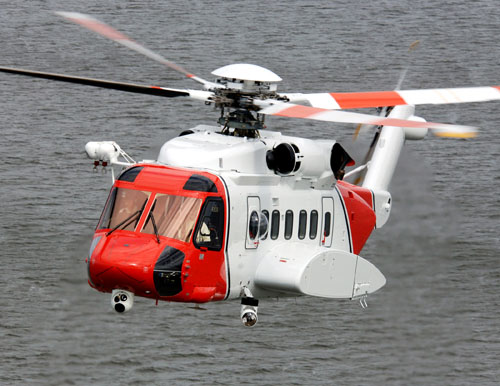
Related image
A Sikorsky S-92 in Coast Guard Colours. The Irish Coast Guard currently operates the S-92. The RCN operates the CH-148 Cyclone - the military version of the S-92. 
Department of National Defence sources, however, say it was determined that it was more cost effective to stay with the Cormorant fleet as it is a proven aircraft the RCAF knows well. In addition, existing infrastructure can continue to be used.

The RCAF also hopes to purchase a simulator for the Cormorant fleet to help train crews.

The upgrade program is expected to include the latest avionic and mission systems, advanced radars and sensors, vision enhancement and tracking systems. The CH-149 Cormorant fleet entered service in the year 2000 and the modernization would allow the helicopters to operate for another 25 years at least.

Canada originally bought 15 Cormorants, but one crashed in 2006.

Powered by three engines, the Cormorants are known for their long-range capability, large cargo space and rear-ramp. The helicopter can carry up to 12 stretchers, according to the RCAF.

The decision to sole-source the deal appears to have caught some in the air force off guard. On April 20, the RCAF spokesman Maj. Scott Spurr claimed the air force was still examining options on how to proceed and that the next phase of the project wouldn’t come until 2019.

Defence sources say some inside the RCAF have argued that since seven of the nine U.S. presidential helicopters are already airworthy, it makes sense to use them. Preparing those helicopters for search-and-rescue duty would include installing a side door as well as upgrading the cockpits.

Parts obtained in the U.S. presidential helicopter deal have also played a critical role in keeping the RCAF Cormorants flying, according to documents obtained by Postmedia through the Access to Information law. The U.S. helicopters and spare parts were originally purchased for $168 million.

Friday, December 22, 2017

RCAF Sea King 50 Year Life Span Coming to A Close


By: Brett Ruskin · Reporter/Videojournalist · CBC News
The outgoing Sea King helicopter, right, and its replacement, the Cyclone, at their East Coast headquarters at 12 Wing Shearwater near Halifax. (Brett Ruskin/CBC)
Canada's half-century-old Sea King helicopters will take a step closer to retirement next month, with the last official East Coast flight planned for Jan. 26, CBC News has learned.

West Coast operations will continue until December 2018, military officials said, at which point the new Cyclone aircraft will officially take over as Canada's Maritime helicopter.

There still may be some Sea King flights on the East Coast past January, but only for logistical reasons, such as repositioning the aircraft locally or sending them to other parts of the country.

Sea Kings have been operating in Canada since 1963.

The multipurpose workhorse aircraft is paired with every Royal Canadian Navy frigate. Its tail and rotors fold so it fits inside the ship. Its hull is designed to perform emergency water landings, and it can be outfitted as a submarine hunter, with sonar systems and torpedoes.
Cyclone helicopters still being tweaked

The Sea King's replacement is the Cyclone, a military variant of the Sikorsky S-92.

The federal government has accepted delivery of more than a dozen Cyclone aircraft, but not all of them are currently in Canada.
A Canadian military Sikorsky CH-148 Cyclone conducts test flights with HMCS Montreal in Halifax Harbour on April 1, 2010. (Andrew Vaughan/Canadian Press)
Each new batch of helicopters is flown and tested by Canadian aircraft experts. If changes are needed, the helicopters are sent back to Sikorsky to re-enter the production cycle and the improvements are made for future versions.

There have been at least three different batches or "blocks" delivered to Canada.
New issue discovered

The navy recently discovered a new problem with the latest block of Cyclones.

Just like the Sea Kings, these helicopters are designed to land on ships at sea. To test the Cyclone's limits, the crew of HMCS Montreal spent months seeking the worst weather and highest seas.

In extreme conditions, the Cyclone can use a cable to safely land on a ship. While the helicopter hovers above the surging and tilting vessel, the cable slowly winches the aircraft down.

The method is highly effective, but officials found it can cause problems for another important system.

The Cyclone is also equipped with a sonar system that it lowers into the water on a tether. It dips beneath the surface and sends out pings to search for submarines.

Sonar could hit ship during landings

"Analyses have shown that, in theory, it is possible for the sonar submersible unit to contact the ship-mounted assisted-recovery system when operating in high sea state condition," said an emailed statement from Department of National Defence officials.

Put simply, both the sonar and landing systems work fine. But due to the sonar's position, it could hit the ship when the helicopter uses the cable landing system.

The long-term fix will be to reposition the sonar system. Until Sikorsky makes that change, the current group of helicopters can either be used as shore-based aircraft, or have the sonar system removed for ship-based operations.

Even without the tethered sonar system, the Cyclone can still search beneath the surface. An additional sonar system sends remote buoys into the ocean that transmit acoustic information wirelessly back to the helicopter.

The next block of Cyclones will fix the sonar issue by repositioning the mechanism. That block should be delivered by June 2018.

Thursday, April 20, 2017

Sikorsky and RCAF no closer to finding fault on Cyclones

BY: LEIGH GIANGRECO, Flight Global 

The Royal Canadian Air Force and Sikorsky appear no closer to finding the root cause of a failure with a flight control computer that has left its fleet of CH-148 Cyclone maritime patrol helicopters grounded since 10 March.

Sikorsky has delivered 11 Cyclones to the RCAF, with three operating as test and evaluation aircraft. The commander of the Canadian Air Division ordered an "operational pause" with the helicopters after a failure in the flight control computers on one test aircraft caused a momentary, uncommanded pitch change during a 10 March training sortie.

The incident marks yet another hurdle for the Sea King replacement programme, which has faced ballooning costs and technical glitches over its lifetime.

While the incident did not affect core operations, operational test and evaluation has been suspended during the investigation. The air force does not know when the grounding will be lifted and test and evaluation will resume, Ottawa's Department of National Defence (DND) tells FlightGlobal.

“In the meantime, RCAF pilots are doing increased ground training and simulator work, but the temporary flying operations pause will delay the overall pilot training program,” it says. “The extent of that delay, and any subsequent impacts, are not yet known.”

It addition, until the root cause of the fault is identified, it is too early to say if Sikorsky will be liable for any penalty, the DND adds.

Maintenance training on the CH-148 is unaffected, it adds.

The first 11 helicopters comprise the Cyclones’ Block 1 configuration. The RCAF expects Block 2 deliveries to begin next June and wrap up in 2021, with the final fleet of 28 helicopters also scheduled to be complete that year.

Wednesday, January 11, 2017

RCAF grounds Cyclone helicopters due to potential safety issues

By: David Pugliese, Defence Watch 

The Canadian Forces has grounded its Cyclone helicopters after aerospace firm Sikorsky issued a worldwide notice for safety checks to be conducted on the aircraft’s civilian variant.

The Sikorsky notice to ground all S-92 helicopters followed an incident last month on a North Sea oil platform. Operators of the aircraft are being told to carry out immediate checks on the tail rotor section of the helicopters.

The Royal Canadian Air Force’s Cyclone helicopters are a variant of the S-92.

The number of Cyclones in Canada fluctuates depending on the testing schedule at 12 Wing Shearwater, NS and other evaluations conducted by Sikorsky. At this point there are five Cyclones in Canada, said Capt. Peter Ryan, spokesman for 12 Wing Shearwater.

It is not known how long the aircraft will be grounded. “Our inspectors will work with the Sikorsky folks and that will determine how long this will take,” Ryan noted. “Obviously we want to resume as soon as possible.”

During the oil platform incident Dec. 28 in the North Sea, a S-92 experienced technical issues as it was coming in for a landing. The helicopter left “significant gouge marks” on the deck of the platform, a BBC report noted.

The aerospace firm has issued a statement noting that, “Safety is our top priority, and Sikorsky is working closely with our customer and investigative authorities.”

“We are committed to keeping our customers informed,” it added. We will further communicate findings if the investigation reveals any safety or airworthiness issues that affect the S-92 helicopter fleet.”

In 2009 a S-92 crashed off the coast of Newfoundland, killing 17 people. The helicopter was transporting personnel to the White Rose oil fields and the Hibernia platform.

In October the Canadian military announced that a CH-148 Cyclone helicopter was involved in its first Royal Canadian Navy exercise as the helicopter continued to undergo testing and evaluation.

Canada has ordered 28 Cyclones but the program has been hit with continual delays. The aircraft are not expected to be fully operational until 2021.

Sikorsky was supposed to deliver the Cyclones to the Canadian military starting in November 2008. Deliveries of all 28 aircraft, to replace the air force’s Sea Kings, were to be completed by early 2011.

The Conservative government looked at cancelling the program but decided to instead re-negotiate the contract with Sikorksy. It laid blame on the Liberals for the problem procurement because the Cyclone contract was awarded by Liberal Prime Minister Paul Martin’s government in 2004. The Conservatives also pointed out that the Liberal Chretien government had also cancelled the EH-101 helicopter program, kicking off a new procurement that led to the eventual purchase of the Cyclones.

The Liberals, however, have countered that the mismanagement occurred under Conservative watch, adding that there were substantial penalties in the original contract the Conservative government did not enforce.

Government documents obtained by the Ottawa Citizen show that the Conservative government could have hit Sikorsky with up to $89 million in fines for missing its deadlines but it decided to waive those penalties.

Instead the government renegotiated with Sikorsky and under a new deal, Canada is paying the U.S. aerospace firm $117 million extra for improvements to be made to the Cyclone, as well as changes to the long-term in-service support package for the aircraft.

Thursday, October 1, 2015

Sea King Helicopters not going Quietly

It was earlier this year when Defence Minister Jason Kenney announced that the RCAF would be receiving its first delivery of Sikorsky Cyclone maritime helicopters; and that the RCAF would move forward with the retirement of the dated Sikorsky Sea King helicopters originally purchased in the 1960s. Now it seems that they will be flying until at least 2018; perhaps as long as 2021.

CH-124 Sea King.jpg
A RCAF CH-124 Sea King Helicopter landing on the USS Pearl Harbor during Exercise PANAMAX 2007. 

The government announced that the Cyclone delivery would mean a 2015 retirement date for much of the Sea King fleet as promised, but that just is not the case. Only 2 of the RCAF's 26 Sea King fleet have been retired, and they were taken out of flying serving a while ago due to damage. Another 4 are set to be retired by March 2016. The remaining 20 will most likely keep flying well into 2018, and perhaps as long as 2021.

Sikorsky has missed several deadlines with the delivery of the Cyclone - and after a renegotiation in 2014, agreed to deliver all 28 helicopters by the end of 2018 - but they would not be fully combat operational until 2021.

Sikorsky is still working on the final combat software needed for the helicopters to work at the full capacity, and the engines earlier this year were considered weaker  than expected. So the Cyclones that are delivered will be limited to training flights, and ground search and rescue. The update due in 2021 will allow the Cyclones to operate at Sea in all weather conditions and partake in Anti-Submarine Warfare; something the Sea King excelled at.

In order to keep the Sea Kings 'current', DND quietly approved a $500,000 update program to the fleets infrared, optic and digital sensor systems. This program is required - especially if Sikorsky falls behind on the final 2021 fully operational deadline. According to the RCAF - more than half that budget has already been spent, and the remainder will be spent on deliveries expected in the next 12 to 18 months; which in it self puts the Sea Kings quietly active into 2017.

Friday, June 19, 2015

First 6 of 28 CH-148 Cyclones Delivered...sort of

Defence Minister Kenney announced the RCAF's acceptance of the first 6 CH-148 Cyclones in Halifax.
(Photo: Canadian Press)

The RCAF has officially accepted delivery of 6 of the ordered 28 CH-148 Cyclone helicopters, however they are not 100% operational. That will come with further upgrades as more aircraft are delivered. 

The next batch of helicopters will be delivered in 2018, but they too will not be 100% operational, that will not come until the final deliveries are expected in 2021. A full 10 years after the project was supposed to be complete. 

Reports released yesterday are now saying the RCAF is already worried about the amount of engine power the Cyclone is capable of producing. Stating that it produces less than the Operational Requirements called for in a replacement for the Seaking helicopters. Sikoski says the aircraft will be able to do more as upgrades become available. 

So, despite the fact that the RCAF now has 6 new helicopters in its inventory - many are left wondering, was the delivery of helicopters political? How could it not be - why accept helicopters that are not 100% operational to the requirements established in the contract? Oh right...there is an election in October. 

Fingers crossed the RCAF doesn't begin retiring the Seakings before the Cyclones are 100% operational, or SAR may take a hit in Canada. 

Thursday, June 18, 2015

RCAF to start to receive CH-148 Cyclone

The government of Canada will announce Friday, June 19, 2015 at CFB Shearwater that the RCAF will begin to accept delivery of the CH-148 Cyclone helicopters built by Sikorsky.

Not all 28 helicopters will be delivered at once, and the delivery schedule has not been completely released. It is also important to note that those that are delivered will not be 100% functional - that will happen with upgrades to systems as other aircraft are delivered.

The CH-148 is set to replace the CH-124 Seaking Helicopter's that are retiring.

The entire project has been plagued by politics; started in 2004 by the Liberal government the project fell apart - and the Conservatives renegotiated with Sikosky, who paid penalties, has also agreed to a $115 Million for future upgrades. The Liberals remain attimant that the program fell apart under the watch of the Conservatives when they took power in 2006. The RCAF was supposed to take full delivery of the 28 CH-148 Cyclones by 2011. It is now 2015, and the first deliveries are taking place.

Monday, February 9, 2015

Cyclone's Not Here Yet...

The Ottawa Citizen's Defence Watch had a reader report that the RCAF had taken delivery of 4 Sikorsky Cyclone helicopters at 12 Wing Shearwater.

While this is true...they are not an official delivery - the Ottawa Citizen inquired with DND and where told that the 4 Cyclone helicopters at 12 Wing Shearwater are here for Sikorsky fir Initial Cadre Training for Air Crew members.

Official delivery of the Cyclone helicopters by Sikorsky to the RCAF is set for Summer 2015