Translate

Showing posts with label CAF Deployment. Show all posts

Friday, November 6, 2015

Canada concludes participation in largest NATO exercise since 2002

News Release from DND: 

Canada concludes participation in largest NATO exercise since 2002

November 6, 2015

OTTAWA – Today, 1650 Canadian Armed Forces (CAF) sailors, soldiers, airmen and airwomen, and Special Operations Forces personnel, in Portugal, Spain, Italy, and at sea, completed the live exercise portion of JOINTEX 15.

JOINTEX is a biennial Canadian exercise and a keystone for Canadian Armed Forces posture and readiness activity aimed at enhancing operational mission preparedness. The live exercise (LIVEX) phase occurred between October 21 and November 6 in Western Europe. Activities leading up to the LIVEX included senior staff officer training during a Table Top Exercise in Ottawa, in January and February, and Combined Joint Inter-Agency Task Force Headquarters staff training during a Command Post Exercise in Meaford, Ont., in September and October.
Quick Facts

For the LIVEX portion of JOINTEX 15 as part of NATO’s Trident Juncture 15, Canada has contributed a Canadian Multinational Task Force headquarters, a Canadian Army Brigade with multinational elements attached, four ships, one submarine, Canadian Special Forces elements and three CC-130 Hercules aircraft.

JOINTEX 15 provided an opportunity to create and exercise our ability to command Canadian and international forces in the most challenging international contingency operations, in a scale and scope rarely seen in recent history.

JOINTEX 15 demonstrated Canadian leadership and capability in headquarters, and in deployed formations, units, and elements which serve to strengthen Alliance integration and interoperability capabilities.

JOINTEX had four general objectives:

Practice, evaluate, and improve Canadian Armed Forces capacity and ability to command and conduct Joint Combined Integrated Forces in complex operations.

Practice, evaluate, and further develop national contingency plans.

Advance, integrate, and evaluate force development and joint force capability enhancements.

Develop, document, and institutionalize the Canadian Armed Forces Distributed Training and Simulation Capability.

The JOINTEX series serves to advance CAF mission preparedness by practicing Joint Combined and Integrated Expeditionary Full Spectrum Operations, developing concepts and procedures, and providing a focus for force development.

Quotes:

“The Canadian Armed Forces is considered to be one of the most responsive armed forces within the Alliance. As such, Canada has been a major contributor to NATO operations. Our participation in Exercise TRIDENT JUNCTURE 15 is another example of our commitment to supporting NATO by providing modern, deployable capabilities to allied missions and highly trained personnel.” General Jonathan Vance, Chief of the Defence Staff


“I am proud of the contribution our sailors, soldiers, airmen and airwomen have made to this historic training event. Thanks to their efforts in developing our interoperability, they are improving the Canadian Armed Forces’ ability to conduct successful joint and multinational operations in the future.” Lieutenant-General Steve Bowes, Commander Canadian Joint Operations Command

Tuesday, September 29, 2015

Election 2015: We Continue to Debate the Peacekeeping Myth

In light of last nights Debate on Foreign policy - I decided to re-blog about a subject I have blogged about numerous times in the past - the Peacekeeping Myth that revolves around the Canadian Armed Forces. 

The Truth is, Canada was never a Peacekeeper to just keep the peace. We have stepped into Peacekeeping roles in order to protect our own interests and the interests of out Allies (NATO). Our Peacekeeping missions were a strategic warfare strategy that developed during the Cold War, and has died down since, 1991. This is why we are no longer a "Peacekeeping" nation. Canada's participation has always been in some way to bolster the North Atlantic Treaty Organisation; albeit under a United Nations flag. 

The best place to start a review of Canada's so called Peacekeeping Past is with Dr. Sean M. Maloney's “Canada and UN Peacekeeping—Cold War by Other Means, 1945-1970” This book is not an operation history of each mission, but was put together in order to clearly outline that Canada was peacekeeping in order to win the Cold War, and not peacekeeping in order to keep the peace. 


The Canadian Military Journal has also debated this subject, while the current page has been archived, because this debate is (believe it or not) that old - and supposed to be OVER!  http://www.journal.forces.gc.ca/vo7/no4/wagner-eng.asp
The Article, entitled "The Peaceable Kingdom?" used Maloney's work as a basis, as well as one of the greatest Canadian Historians, J.L. Granatstein's work “Canada and Peacekeeping: Image and Reality.” 

Friday, September 4, 2015

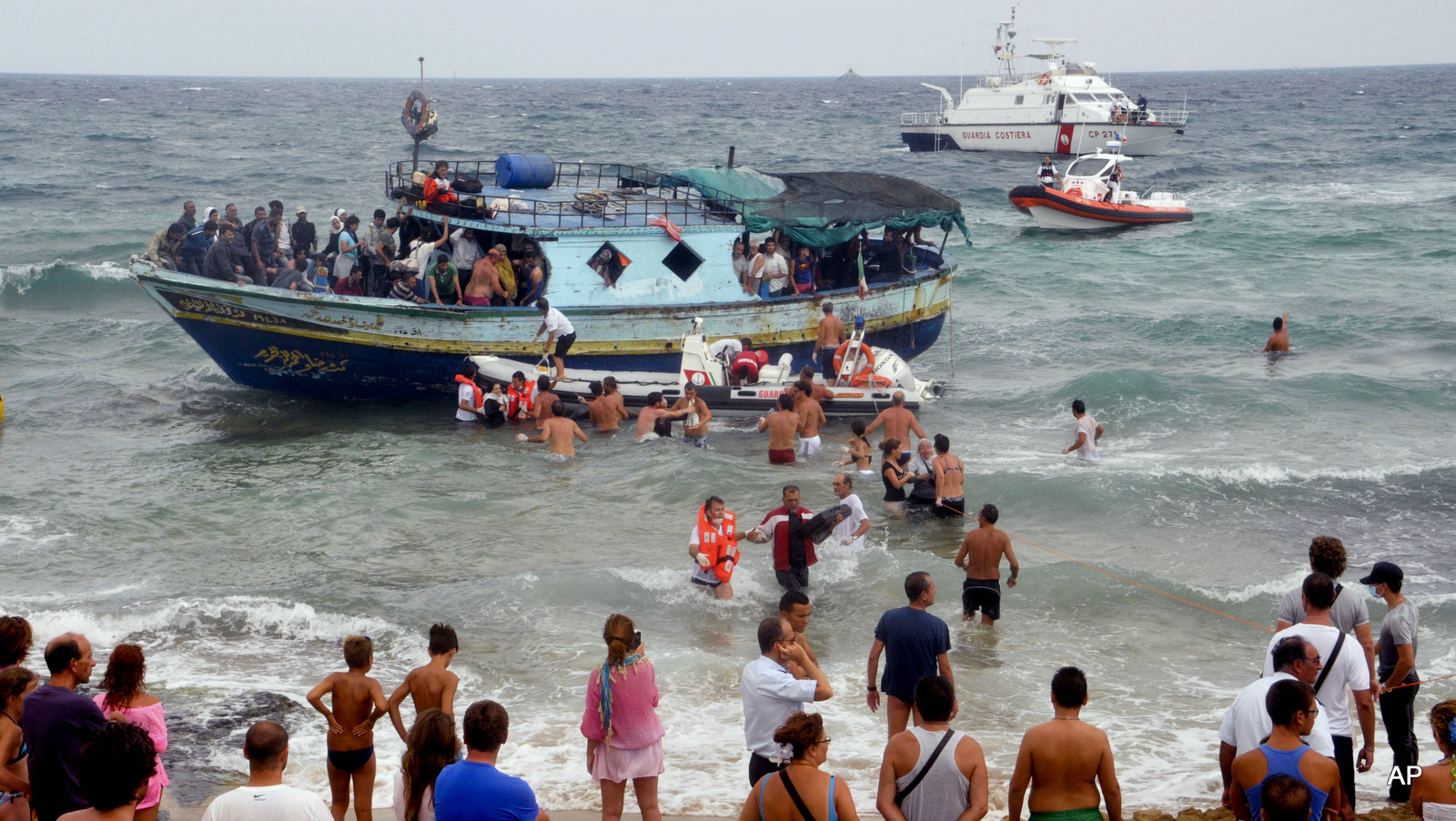
Refugee Crisis: CAF Can Help - Deploy Them

In the wake of the recent tragic death of 3 year old Alan Kurdi, his brother and mother - there have been calls for Canada and the World do to more to help Syrian and Iraqi refugees fleeing the Middle East. Minister of Defence Jason Kenney comes out and said that Canada has no responsibility to help the migrant issue. We had no 'onus' to help.

What about the human responsibility? While I have always been a proponent of the Peacekeeping Myth - that Canada became a Peacekeeping country as a war by other means during the Cold War. Canada has always cared about those in need.

According to the UN an estimated 350,000 refugees crossed the Mediterranean fleeing the Middle East in the last year - and approximately 2,500 have died trying. Earlier this year Italy made a global outcry for help on the migrant problem, as their Navy is baring the brunt of the rescue.


Other European nations have send support. In May Great Britain deployed HMS Bulwark to help. It rescued 500 migrants off of Libya earlier this year. The Irish Naval service also deployed a ship, and it has rescued some 2,000 migrants. As of August 22, 2015, the Italian Navy has rescued more than 3,000 migrants.

Canada has had a Naval vessel deployed to the Mediterranean since 2014, and could have went to the aid of migrants. But, according to the Royal Canadian Navy, they were never given the order to intervene by the Conservative Government.

My question is why not? Why does Canada not have any military responsibility to help European nations struggling with the thousands of migrants?

It would not cost any extra money to have the RCN vessel that is already deployed to help support Eastern Europe. Not sending help when it is the vicinity, is like not stopping at the scene of a horrific car accident on a back road, when you know paramedics will not make it in time.

Why not help at the refugee centers? Hungary has thousands of migrants blockaded in their train station. While this situation needs political help to help move the trains to locations willing to accept the migrants - the camps in Turkey and Jordan are huge, and quickly outgrow their boundaries. Canada could easily deploy the DART (Disaster Assistance Response Team) to one of the regions to help. This team specializes in setting up and helping in humanitarian crisises. They are usually deployed for a month long period, but with added support - the team could be deployed for a longer period of time.

In the current election campaign, the Liberals and NDP have both said they will do more to help the humanitarian issue caused by ISIS and the Syrian Civil War - neither are willing to continue to stand up and confront ISIS. Yet, now it seems the Conservatives are unwilling to help through  humanitarianism. What we need is a government that will step up on both fronts - the CAF can help in the refugee crisis all we need is a leader who will deploy them to do so.


Wednesday, June 24, 2015

Canada in Ukraine: Trainers to be in place by August

Despite the fact that the CAF's mission to the Ukraine was announced in April - very little has taken place to put the CAF on the ground in the Ukraine.

According to DND, a reconnaissance team has only just arrived in the Ukraine according to Lauren Armstrong, a spokeswomen for Defence Minister Kenney. They are scouting a location for the deployment of Canadian trainers.

Some 200 CAF trainers will help train the Ukrainian military in modern tactics. There has been no information given as to the delay in deploying the troops. Now troops will deploy on their two year mission in mid to late August, right in the heat of an Election campaign in Canada, which is set to vote in October 19.

Thursday, April 30, 2015

Current CAF Deployments Around the World (2014)

This map was released in late 2014 to show the stretch of the Canadian Armed Forces around the World. The number of troops deployed on Op IMPACT has increased from 100 to closer to 670 (including Spec. Forces and Air Crew in Kuwait). The CAF will be deploying 200 troops to the Ukraine, and an unknown number will be headed to Jordan in the coming months. There are also now close to 250 CAF members in Nepal. These numbers also do not include NATO/NORAD exercises (such as OP CARIBBE) or the current deployment of HMCS Fredericton.