By: Mike Blanchfield, The Canadian Press
OTTAWA — The Trudeau Liberals are facing criticism at home and abroad for not closing a controversial legal loophole that allows the Canadian Forces to operate alongside allies, such as the United States, which use cluster bombs.
The previous Conservative government faced widespread international condemnation because the law it used to ratify the United Nations treaty banning cluster bombs contained a controversial clause that allowed joint military operations with countries outside the treaty.
The Conservatives said Canada couldn't compromise its ability to conduct military missions with its key ally, the U.S. — which has not signed the Convention on Cluster Munitions (CCM) — but pledged never to use the weapons.
That sparked widespread criticism that Canada was undermining the legal basis of the treaty, including complaints from the normally neutral International Committee of the Red Cross.
In opposition, the Liberals along with the NDP pushed unsuccessfully for amendments to the bill that would categorically rule out any connection to the use of cluster bombs — tennis-ball sized submunitions that can lie dormant for decades and have maimed or killed civilians, often young children, in dozens of post-war countries.
After almost a year in power, the Liberal government has yet to change the law and faces the same criticism as the Conservatives.
While the Conservatives never worried about snubbing the UN treaty system, the stance could have implications for the Liberals, who are pursuing closer ties with the world body, including a temporary seat on the Security Council.
"Canada's implementing legislation meets our obligations under the CCM and we currently have no plans to amend it," Chantal Gagnon, a spokeswoman for Foreign Affairs Minister Stephane Dion told The Canadian Press.
"Canada believes that our legislation, like the CCM, strikes an appropriate balance between humanitarian considerations and security interests in addressing the impact of cluster munitions."
Gagnon reiterated what the government told the annual international meeting of state parties to the treaty in Geneva last week.
Canada has a "special responsibility" to encourage countries that have not ratified the treaty to join it. "As such, we are demarching all states outside the convention with whom we operate militarily to remind them of our responsibilities as a CCM state party and to strongly call upon them to join the convention," she added.
But Canada was singled out at the Genva meeting by the international Cluster Munition Coalition for not doing enough.
"We also call on countries to strengthen weak implementation legislation. For example, Canada's new government should amend its 2014 statute in order to prohibit assistance with the use of cluster munitions in joint military operations," said Bonnie Docherty, of the New York-based Human Rights Watch, on behalf of the coalition.
Earl Turcotte, Canada's former chief negotiator for the treaty, said he is "surprised and disappointed" by the government's inaction.
Turcotte quit the federal government in protest five years ago over the then Conservative government's decision to include the controversial clause.
"I had expected far more from Mr. Trudeau's government," Turcotte said. "I will continue to advocate for amendments to avoid further loss of civilian life from these indiscriminate weapons."
The World Federalist Movement urged Dion last month to use the Geneva meeting to "initiate a process to review and repair" the cluster bomb law.
The same letter reminded Dion how MP Marc Garneau — now the Liberal transport minister — argued in opposition for amendments, once proclaiming: "You're either against cluster bombs or you're not."
In August 2015, the campaigning Liberal party told Mines Action Canada in a letter that the "ratification legislation for the treaty passed by the Conservative government did not adequately promote the stigmatization of the use of cluster bombs. Liberals believe that the legislation should have been more in line with both the spirit and the letter of the Convention on Cluster Munitions."
Paul Hannon, the executive director of Mines Action Canada, said it is "curious" the Liberals have not amended the "flawed legislation" given that Garneau and two Liberal senators "gave a very spirited, comprehensive and logical case for amending the legislation" during parliamentary hearings while in opposition.
Hannon said he realizes the first year of a new government can be busy, so his organization is being patient.
"But the government missed a significant opportunity" at the Geneva meeting, he said, to signal "a new approach."
Showing posts with label NDP. Show all posts
Showing posts with label NDP. Show all posts
Monday, September 12, 2016

Thursday, June 16, 2016
NDP renews call for inquiry into Afghan detainee abuse
By: Amanda Connolly, iPolitics
The NDP repeated calls Wednesday for a full public inquiry into the Afghan detainee abuse scandal amid fresh allegations by former military police officers who served in Afghanistan in a letter to La Presse.
The NDP repeated calls Wednesday for a full public inquiry into the Afghan detainee abuse scandal amid fresh allegations by former military police officers who served in Afghanistan in a letter to La Presse.
 |
| Canadian soldiers with the NATO-led International Security Assistance Force (ISAF) walk during a patrol in Panjwayi district 30 km in the west of Kandahar province on March 28, 2008. |
“We’ve called for a public inquiry for a number of years and the Liberals supported that call when they were in opposition,” said NDP defence critic Randall Garrison. “When we asked the minister of defence on Monday, there was no response so we’re repeating the call today for a full public inquiry.”
La Presse posted the letter online Wednesday morning (it can be read here) alleging that almost half of the Afghans captured and detained by Canadian soldiers had nothing to do with the Taliban.
It also says that most of them were released for lack of evidence after spending an average of two months in detention.
The former Conservative government had said the prisoners were held by Canadians for between 48 and 96 hours.
“What we have here is a potential stain on Canada’s international reputation through possible violations of international law, and also a stain on the reputations of all those Canadians who went there and served,” Garrison said.
Garrison, along with NDP foreign affairs critic Helene Laverdiere, called for an inquiry focused on whether there was a clear policy created to deal with the transfer of detainees after the lack of one was identified as a problem, and how the Afghans held in Canadian custody were treated.
Conservative defence critic James Bezan said Wednesday he doesn’t think there is evidence to suggest the need for an inquiry, calling the letter in La Presse “one person’s opinion.”
“It all comes back that our troops have conducted themselves honourably,” said Bezan. “I don’t believe that the evidence is there. As you know, there was a special parliamentary committee that went through all the documentation and again came up that there was no reason to pursue any further inquiry.”
The Liberals and NDP both called for an inquiry while in opposition during the Conservatives’ minority mandate in 2009.
The government formed an all-party committee to go through documents on the issue but refused to release unredacted records to the committee.
The government was ultimately voted in contempt of Parliament by the opposition parties for their refusal and Prime Minister Stephen Harper prorogued Parliament before disbanding the committee after their 2011 majority win.
La Presse posted the letter online Wednesday morning (it can be read here) alleging that almost half of the Afghans captured and detained by Canadian soldiers had nothing to do with the Taliban.
It also says that most of them were released for lack of evidence after spending an average of two months in detention.
The former Conservative government had said the prisoners were held by Canadians for between 48 and 96 hours.
“What we have here is a potential stain on Canada’s international reputation through possible violations of international law, and also a stain on the reputations of all those Canadians who went there and served,” Garrison said.
Garrison, along with NDP foreign affairs critic Helene Laverdiere, called for an inquiry focused on whether there was a clear policy created to deal with the transfer of detainees after the lack of one was identified as a problem, and how the Afghans held in Canadian custody were treated.
Conservative defence critic James Bezan said Wednesday he doesn’t think there is evidence to suggest the need for an inquiry, calling the letter in La Presse “one person’s opinion.”
“It all comes back that our troops have conducted themselves honourably,” said Bezan. “I don’t believe that the evidence is there. As you know, there was a special parliamentary committee that went through all the documentation and again came up that there was no reason to pursue any further inquiry.”
The Liberals and NDP both called for an inquiry while in opposition during the Conservatives’ minority mandate in 2009.
The government formed an all-party committee to go through documents on the issue but refused to release unredacted records to the committee.
The government was ultimately voted in contempt of Parliament by the opposition parties for their refusal and Prime Minister Stephen Harper prorogued Parliament before disbanding the committee after their 2011 majority win.
Tuesday, April 19, 2016
NDP blast Liberals’ decision to re-consider joining U.S. "Star Wars" System
By: Lee Berthiaume, Ottawa Citizen
OTTAWA — Defence Minister Harjit Sajjan stood by the Liberal government’s plan to re-examine ballistic missile defence following a flurry of NDP references to "Star Wars" — both the movie franchise and Ronald Reagan’s controversial plan to militarize space.
OTTAWA — Defence Minister Harjit Sajjan stood by the Liberal government’s plan to re-examine ballistic missile defence following a flurry of NDP references to "Star Wars" — both the movie franchise and Ronald Reagan’s controversial plan to militarize space.
 |
| A long-range ground-based interceptor missile is launched from Vandenberg Air Force Base in California. The U.S. spent about $100 billion over the last decade to develop land- and sea-based systems that would stop a limited ballistic missile attack from a rogue state like North Korea or Iran. |
The issue erupted on the floor of the House of Commons on Monday, after the Ottawa Citizen revealed that the government’s defence review includes questions about whether Canada should join the U.S. in building a shield to protect it from foreign-launched missiles.
Missile defence had been largely off the public and political radar since then-prime minister Paul Martin famously opted not to join the U.S. program following a heated and extremely divisive national debate in 2005. However, the military and others have been pushing for years for Canada to re-consider the decision.
Sajjan insisted last week that the Liberals would not privatize military search and rescue, after it was revealed the idea had been raised during the defence review. But he defended the decision to take a second look at missile defence. The review is expected to culminate in a new defence policy early next year.
Related
Matt Gurney: A Canadian role in ballistic missile defence
Liberals reopen debate 11 years after Martin government opted not to join U.S. ballistic missile defence
Defence cuts have left Canadian military in ‘fragile’ shape: Rick Hillier
“The government wants to ensure that Canada and North America are well defended from all threats,” he said. “We want to make sure that the defence review is open and wide. By not opening up the discussion on ballistic missile defence, allowing Canadians to have a say in this, it would not be an open defence review.”
But the NDP, which opposed Canadian participation in ballistic missile defence in 2005, immediately attacked the Liberals for re-opening the debate. NDP defence critic Randall Garrison linked missile defence to Reagan’s controversial Star Wars program in the 1980s, before saying he had “a bad feeling about this.”
Fellow NDP MP Alexandre Boulerice also referenced the Star Wars project in French, saying Canadians rejected the proposal 10 years ago, and adding: “Can’t the prime minister just watch the movie, instead of getting us into this useless thing that will cost us billions?”
The U.S. spent about $100 billion over the last decade to develop land- and sea-based systems that would stop a limited ballistic missile attack from a rogue state like North Korea or Iran. (They would not protect against an all-out attack by Russia or China.) The systems have had mixed success.
Supporters of ballistic missile defence have long disputed suggestions the program would militarize space by noting the equipment used to detect and intercept ballistic missiles from foreign states are all based on land or at sea. Critics, however, say it is only a matter of time until weapons are deployed in space.
Garrison told the Ottawa Citizen he remains concerned about ballistic missile defence touching off an arms race with other countries, and that he intends to make sure all viewpoints are heard during the defence review and not just those in favour of Canadian participation.
“I think it will be a very spirited debate if we reverse that policy,” he said.
Missile defence had been largely off the public and political radar since then-prime minister Paul Martin famously opted not to join the U.S. program following a heated and extremely divisive national debate in 2005. However, the military and others have been pushing for years for Canada to re-consider the decision.
Sajjan insisted last week that the Liberals would not privatize military search and rescue, after it was revealed the idea had been raised during the defence review. But he defended the decision to take a second look at missile defence. The review is expected to culminate in a new defence policy early next year.
Related
Matt Gurney: A Canadian role in ballistic missile defence
Liberals reopen debate 11 years after Martin government opted not to join U.S. ballistic missile defence
Defence cuts have left Canadian military in ‘fragile’ shape: Rick Hillier
“The government wants to ensure that Canada and North America are well defended from all threats,” he said. “We want to make sure that the defence review is open and wide. By not opening up the discussion on ballistic missile defence, allowing Canadians to have a say in this, it would not be an open defence review.”
But the NDP, which opposed Canadian participation in ballistic missile defence in 2005, immediately attacked the Liberals for re-opening the debate. NDP defence critic Randall Garrison linked missile defence to Reagan’s controversial Star Wars program in the 1980s, before saying he had “a bad feeling about this.”
Fellow NDP MP Alexandre Boulerice also referenced the Star Wars project in French, saying Canadians rejected the proposal 10 years ago, and adding: “Can’t the prime minister just watch the movie, instead of getting us into this useless thing that will cost us billions?”
 |
| THE CANADIAN PRESS/Adrian WyldDefence Minister Harjit Sajjan in the House of Commons on Monday: “The government wants to ensure that Canada and North America are well defended from all threats.” |
Supporters of ballistic missile defence have long disputed suggestions the program would militarize space by noting the equipment used to detect and intercept ballistic missiles from foreign states are all based on land or at sea. Critics, however, say it is only a matter of time until weapons are deployed in space.
Garrison told the Ottawa Citizen he remains concerned about ballistic missile defence touching off an arms race with other countries, and that he intends to make sure all viewpoints are heard during the defence review and not just those in favour of Canadian participation.
“I think it will be a very spirited debate if we reverse that policy,” he said.
Wednesday, October 7, 2015
Eelction 2015: NDP Promise to Maintain Spending; Increase Peacekeeping
As the NDP continues to slide in the polls - they are releasing their partial Defence policy plan.
If elected on October 19th (which seems less and less likely, daily) the NDP promise to maintain stable defence spending (but provided no details on what that number is) and plan on returning Canada to the Peacekeeping table. The NDP eye to make Canada the top troop contributor among Western nations in a few years - all according to Murray Brewster of the Canadian Press.
I won't even go into the Peacekeeping aspect of the promise - as my regular readers know - Canada's Peacekeeping image is a Myth that has stood for too long. I am not against it, or the UN, but only in the right circumstances.
Also included in the NDPs Defence policy is a very pricey ($$$$) around the clock response time for Canada's Search and Rescue Squadrons. The problem with such a proposal - the RCAF has long said that such a plan is too costly and labour intensive - let alone the fact that the RCAF does not operate enough aircraft for such an endeavor in our vast landscape - especially in the North. The NDP claim that this would move Canada into the international standards with regards to SAR.
While Mulcair said earlier in September that the party would not kill the F-35; the party admits that the F-35 does not fit into the Defence strategy it sees for Canada; and such a review would discover the same thing.
The biggest issue is the "maintain" stable defence spending. The Parliamentary Budget Office says that the $20 Billion budget for the Department of National Defence needs to be increased to maintain current troop and equipment levels. The NDP have only said they would maintain a budget for our existing commitments - not new ones or possibly future ones.
To increase transparency throughout DND, the NDP have said they would also create an Inspector Generals Office.
If elected on October 19th (which seems less and less likely, daily) the NDP promise to maintain stable defence spending (but provided no details on what that number is) and plan on returning Canada to the Peacekeeping table. The NDP eye to make Canada the top troop contributor among Western nations in a few years - all according to Murray Brewster of the Canadian Press.
I won't even go into the Peacekeeping aspect of the promise - as my regular readers know - Canada's Peacekeeping image is a Myth that has stood for too long. I am not against it, or the UN, but only in the right circumstances.
Also included in the NDPs Defence policy is a very pricey ($$$$) around the clock response time for Canada's Search and Rescue Squadrons. The problem with such a proposal - the RCAF has long said that such a plan is too costly and labour intensive - let alone the fact that the RCAF does not operate enough aircraft for such an endeavor in our vast landscape - especially in the North. The NDP claim that this would move Canada into the international standards with regards to SAR.
While Mulcair said earlier in September that the party would not kill the F-35; the party admits that the F-35 does not fit into the Defence strategy it sees for Canada; and such a review would discover the same thing.
The biggest issue is the "maintain" stable defence spending. The Parliamentary Budget Office says that the $20 Billion budget for the Department of National Defence needs to be increased to maintain current troop and equipment levels. The NDP have only said they would maintain a budget for our existing commitments - not new ones or possibly future ones.
To increase transparency throughout DND, the NDP have said they would also create an Inspector Generals Office.
Monday, September 21, 2015
Harper Claims F-35s Needed to Defeat ISIS
Over the weekend the F-35 debate was brought into the 2015 Canadian election. Justin Trudeau said that the Liberal Party would scrap the plan to purchase the JSF F-35; whose budget continues to go overboard, and continues to prove not to be the aircraft it claims. The NDP have said they would reopen the bidding process, and if the F-35 wins that process, than it is fair game.
Prime Minister Stephen Haper shot back at the Liberals by saying Canada needs the F-35 to defeat ISIS, and replace the aging CF-18 Hornets that are currently being used against ISIS. (Lets rewind about a year) What happened to the Government shelving the replacement of the CF-18s until a later date, and committing to spend the hundreds of millions to upgrade them to fly until at least 2025? Obviously Harper is back peddling yet again...and his statement that the F-35s are needed to defeat ISIS is ridiculous.
Why is it ridiculous? There are NO F-35s currently deployed by any coalition member against ISIS. The F-22's have only just deployed on their first combat support roles in both Eastern Europe and Iraq/Syria. So how can one claim the F-35s are needed to defeat ISIS? Also, if the life extension of the CF-18s will allow them to fly until well past 2025, will we still be fighting ISIS in 10 years? If so, maybe that is the bigger problem.
If the Americans (or any other ally who has already agreed to purchase the JSF) were using the F-35s against ISIS with a higher success rate than our CF-18s then I could potentially agree - but there are none deployed.
For a list of coalition aircraft currently involved against ISIS, please see my previous post "Continue to Support Air Task Force Iraq"
Prime Minister Stephen Haper shot back at the Liberals by saying Canada needs the F-35 to defeat ISIS, and replace the aging CF-18 Hornets that are currently being used against ISIS. (Lets rewind about a year) What happened to the Government shelving the replacement of the CF-18s until a later date, and committing to spend the hundreds of millions to upgrade them to fly until at least 2025? Obviously Harper is back peddling yet again...and his statement that the F-35s are needed to defeat ISIS is ridiculous.
Why is it ridiculous? There are NO F-35s currently deployed by any coalition member against ISIS. The F-22's have only just deployed on their first combat support roles in both Eastern Europe and Iraq/Syria. So how can one claim the F-35s are needed to defeat ISIS? Also, if the life extension of the CF-18s will allow them to fly until well past 2025, will we still be fighting ISIS in 10 years? If so, maybe that is the bigger problem.
If the Americans (or any other ally who has already agreed to purchase the JSF) were using the F-35s against ISIS with a higher success rate than our CF-18s then I could potentially agree - but there are none deployed.
For a list of coalition aircraft currently involved against ISIS, please see my previous post "Continue to Support Air Task Force Iraq"
Friday, September 4, 2015
Refugee Crisis: CAF Can Help - Deploy Them
In the wake of the recent tragic death of 3 year old Alan Kurdi, his brother and mother - there have been calls for Canada and the World do to more to help Syrian and Iraqi refugees fleeing the Middle East. Minister of Defence Jason Kenney comes out and said that Canada has no responsibility to help the migrant issue. We had no 'onus' to help.
What about the human responsibility? While I have always been a proponent of the Peacekeeping Myth - that Canada became a Peacekeeping country as a war by other means during the Cold War. Canada has always cared about those in need.
According to the UN an estimated 350,000 refugees crossed the Mediterranean fleeing the Middle East in the last year - and approximately 2,500 have died trying. Earlier this year Italy made a global outcry for help on the migrant problem, as their Navy is baring the brunt of the rescue.
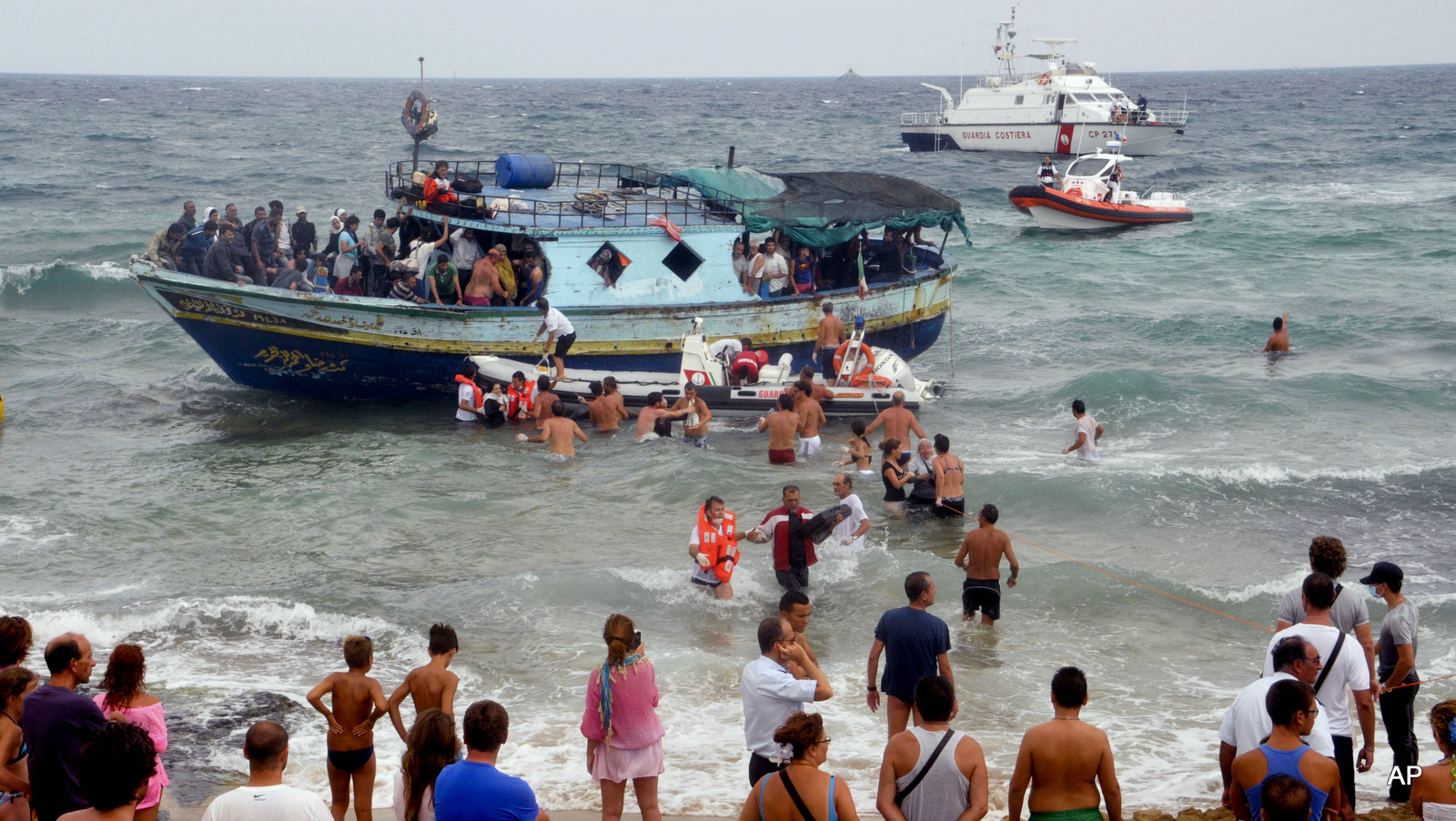
Other European nations have send support. In May Great Britain deployed HMS Bulwark to help. It rescued 500 migrants off of Libya earlier this year. The Irish Naval service also deployed a ship, and it has rescued some 2,000 migrants. As of August 22, 2015, the Italian Navy has rescued more than 3,000 migrants.
Canada has had a Naval vessel deployed to the Mediterranean since 2014, and could have went to the aid of migrants. But, according to the Royal Canadian Navy, they were never given the order to intervene by the Conservative Government.
My question is why not? Why does Canada not have any military responsibility to help European nations struggling with the thousands of migrants?
It would not cost any extra money to have the RCN vessel that is already deployed to help support Eastern Europe. Not sending help when it is the vicinity, is like not stopping at the scene of a horrific car accident on a back road, when you know paramedics will not make it in time.
Why not help at the refugee centers? Hungary has thousands of migrants blockaded in their train station. While this situation needs political help to help move the trains to locations willing to accept the migrants - the camps in Turkey and Jordan are huge, and quickly outgrow their boundaries. Canada could easily deploy the DART (Disaster Assistance Response Team) to one of the regions to help. This team specializes in setting up and helping in humanitarian crisises. They are usually deployed for a month long period, but with added support - the team could be deployed for a longer period of time.
In the current election campaign, the Liberals and NDP have both said they will do more to help the humanitarian issue caused by ISIS and the Syrian Civil War - neither are willing to continue to stand up and confront ISIS. Yet, now it seems the Conservatives are unwilling to help through humanitarianism. What we need is a government that will step up on both fronts - the CAF can help in the refugee crisis all we need is a leader who will deploy them to do so.
What about the human responsibility? While I have always been a proponent of the Peacekeeping Myth - that Canada became a Peacekeeping country as a war by other means during the Cold War. Canada has always cared about those in need.
According to the UN an estimated 350,000 refugees crossed the Mediterranean fleeing the Middle East in the last year - and approximately 2,500 have died trying. Earlier this year Italy made a global outcry for help on the migrant problem, as their Navy is baring the brunt of the rescue.
Other European nations have send support. In May Great Britain deployed HMS Bulwark to help. It rescued 500 migrants off of Libya earlier this year. The Irish Naval service also deployed a ship, and it has rescued some 2,000 migrants. As of August 22, 2015, the Italian Navy has rescued more than 3,000 migrants.
Canada has had a Naval vessel deployed to the Mediterranean since 2014, and could have went to the aid of migrants. But, according to the Royal Canadian Navy, they were never given the order to intervene by the Conservative Government.
My question is why not? Why does Canada not have any military responsibility to help European nations struggling with the thousands of migrants?
It would not cost any extra money to have the RCN vessel that is already deployed to help support Eastern Europe. Not sending help when it is the vicinity, is like not stopping at the scene of a horrific car accident on a back road, when you know paramedics will not make it in time.
Why not help at the refugee centers? Hungary has thousands of migrants blockaded in their train station. While this situation needs political help to help move the trains to locations willing to accept the migrants - the camps in Turkey and Jordan are huge, and quickly outgrow their boundaries. Canada could easily deploy the DART (Disaster Assistance Response Team) to one of the regions to help. This team specializes in setting up and helping in humanitarian crisises. They are usually deployed for a month long period, but with added support - the team could be deployed for a longer period of time.
In the current election campaign, the Liberals and NDP have both said they will do more to help the humanitarian issue caused by ISIS and the Syrian Civil War - neither are willing to continue to stand up and confront ISIS. Yet, now it seems the Conservatives are unwilling to help through humanitarianism. What we need is a government that will step up on both fronts - the CAF can help in the refugee crisis all we need is a leader who will deploy them to do so.
Tuesday, March 31, 2015
Canada to begin Bombing Campaign in Syria
Yesterday, after several hours of debate in the House of Commons in Ottawa, the Conservative majority voted in favour (142-129) to extend Canada's mission against ISIS for one year (until the end of March 2016) and to expand our aerial campaign into neighbouring Syria.
Much of the debate centred around the international legal issues with conducting bombing in a sovereign country. Canada says it is following the same legal authority the United States is using to bomb ISIS positions in Syria. The opposition NDP, who are against the mission, believe that the campaign will indirectly aid the Syrian dictator in continuing his civil war. The 3rd party Liberals, believe that Canada should be doing more humanitarian aid, and accept another 25,000 refugees. One former Liberal, who was expelled from Caucus late last year, broke ranks with his former party and voted with the Conservatives.
The United Kingdom's Secretary of State for Foreign and Commonwealth Affairs praised Canada's actions in the Middle East, and Canada's expansion against ISIS in Syria. He said however, the UK would not be expanding into Syria, as they are conducting the most aerial attacks in Iraq behind the US.
Much of the debate centred around the international legal issues with conducting bombing in a sovereign country. Canada says it is following the same legal authority the United States is using to bomb ISIS positions in Syria. The opposition NDP, who are against the mission, believe that the campaign will indirectly aid the Syrian dictator in continuing his civil war. The 3rd party Liberals, believe that Canada should be doing more humanitarian aid, and accept another 25,000 refugees. One former Liberal, who was expelled from Caucus late last year, broke ranks with his former party and voted with the Conservatives.
The United Kingdom's Secretary of State for Foreign and Commonwealth Affairs praised Canada's actions in the Middle East, and Canada's expansion against ISIS in Syria. He said however, the UK would not be expanding into Syria, as they are conducting the most aerial attacks in Iraq behind the US.
Tuesday, March 24, 2015
Canada's War against ISIS to expand to Syria
Prime Minister Stephen Harper has asked the Canadian Parliament to support a motion that will be put forward to debate on Thursday March 26, 2015 to extend and expand Canada's current support for Op IMPACT. PM Harper has asked for a 1 year extension through March of 2016, and an expansion of the RCAF Air campaign into neighbouring Syria.
The current mission is set to end on April 7, 2015. Both opposition parties have responded with their disapproval of the motion, and have clearly said they will not support the mission. The NDP says they will pull the plug on the military mission if they get elected. This is despite the fact a majority of Canadians support the mission. With the Conservative majority - the vote is expected to be the same as it was last fall when the Conservatives all voted in favour of the mission. The debate on Thursday will be symbolic if little else.
PM Harper clearly outlined that they will not ask for Syrian permission to invade its airspace, but follow the lead of the US who are currently the only coalition member bombing ISIS targets in Syria. The RCAF will be able to target ISIS's heavy equipment which has been moved out of Iraq to hide from coalition strikes. Canada will become the first Coalition member to bomb targets alongside the US in Syria.
Last Friday in was announced the CF-18s had bombed two more ISIS positions in Iraq, a weapons facility and a fighting position.
Defence Minister Jason Kenney said late last night that the RCAF is looking to increase the number of air strikes possible, which will be possible in Syria, as several other nations are also bombing ISIS targets in Iraq, leaving few for Canadian fighters.
No details we given whether an increase in air-strikes means an increase in the number of CF-18s in the region will increase, or what the increase in flight time means for the governments current life extension of the CF-18s through 2025.
The expansion of the RCAF air campaign into Syria will not include Canada's 69 Special forces members who are currently training Kurdish forces in Northern Iraq.
The current mission is set to end on April 7, 2015. Both opposition parties have responded with their disapproval of the motion, and have clearly said they will not support the mission. The NDP says they will pull the plug on the military mission if they get elected. This is despite the fact a majority of Canadians support the mission. With the Conservative majority - the vote is expected to be the same as it was last fall when the Conservatives all voted in favour of the mission. The debate on Thursday will be symbolic if little else.
PM Harper clearly outlined that they will not ask for Syrian permission to invade its airspace, but follow the lead of the US who are currently the only coalition member bombing ISIS targets in Syria. The RCAF will be able to target ISIS's heavy equipment which has been moved out of Iraq to hide from coalition strikes. Canada will become the first Coalition member to bomb targets alongside the US in Syria.
Last Friday in was announced the CF-18s had bombed two more ISIS positions in Iraq, a weapons facility and a fighting position.
Defence Minister Jason Kenney said late last night that the RCAF is looking to increase the number of air strikes possible, which will be possible in Syria, as several other nations are also bombing ISIS targets in Iraq, leaving few for Canadian fighters.
No details we given whether an increase in air-strikes means an increase in the number of CF-18s in the region will increase, or what the increase in flight time means for the governments current life extension of the CF-18s through 2025.
The expansion of the RCAF air campaign into Syria will not include Canada's 69 Special forces members who are currently training Kurdish forces in Northern Iraq.
 |
| Two RCAF CF-18's taxi in Kuwait before their next mission, January 2015. Photo: Op IMPACT CF Combat Camera |
Subscribe to:
Posts (Atom)