Translate

Showing posts with label Syria. Show all posts

Thursday, January 28, 2016

RCAF Targets ISIS Positions in Syria and Iraq

In a press release on it's OP IMPACT webpage, DND announced that the RCAF was active over the skies of Syria and Iraq earlier this week. This marks just the fifth time RCAF CF-18s have targeted ISIS in Syria since March 2015, when the previous Conservative government expanded airstrikes into Syria. During this weeks airstrikes, the RCAF targeted three ISIS positions.

On 27 January 2016, while taking part in coalition operations, two CF-18 Hornets successfully struck an ISIS Improvised Explosive Device (IED) production factory East of Palmyra, Syria, using precision guided munitions.
26 Jan 2016

On 26 January 2016, while taking part in coalition operations in support of Iraqi security forces, two CF-18 Hornets successfully struck an ISIS fighting position and an ISIS compound used as a staging area in an airstrike West of Fallujah using precision guided munitions.

KW04-2016-0026-004
An RCAF CC-150T Polaris refuels an RAF Tornado over Iraq, as part of OP IMPACT, January 26, 2016.
Photo; CAF OP IMPACT

Thursday, January 21, 2016

Is the Answer to ISIS to Create Sunnistan?

Published by the CDA Institute, Blogger - David Law

CDA Institute Security & Defence Blogger David Law, a Senior Associate/​Fellow at the Security Governance Group/​Centre for Security Governance in Kitchener, comments on proposals of creating a Sunni state (Sunnistan).


On 25 November 2015, John Bolton, US representative to the UN from 2005–2006, neo-​con par excellence, published a piece in the New York Times that advocated the creation of a Sunni state in those areas presently occupied by the Islamic State.

There is very little that Mr. Bolton and I share politically but on the issue of the future of this region, we have some common ground. I share his concern that Iraq and Syria are Humpty-​Dumpty states that may not be possible to put back together again. The former ambassador argues for the creation of a Sunnistan once IS has been defeated. My approach would be to consider its creation as part of the process of defeating IS.

I am generally not in favour of separating communities and splitting states. The world now counts over 200 statal actors, roughly six times more than at the beginning of World War I. This has allowed many communities, previously cosseted in structures that they had not become part of by choice, to establish their own jurisdictions – and bravo for that that. But we may be close to a point where the benefits to be gained by creating new states designed to resolve identity conflicts are becoming counterproductive. Working with 200-​odd states in the international community is difficult enough. Pretty well all of them have significant minorities in their midst. It probably makes more sense to think more creatively about how to deal more effectively with the relationships among states rather than creating new ones.

That said, there come times when it becomes necessary to accept that a state has outlived its usefulness and needs to make way for a new statal structure. For example, while the disappearance of Yugoslavia was a tragic event in a great many respects, there was an objective need, for example, to end Serbia’s control over Kosovo. The Belgrade of the erstwhile Serbian leader Milosevic wanted to maintain its domination over the territory of Kosovo, lands that had been in Serb hands for centuries, but it did not want to accept the Albanian population residing there as people deserving equal treatment with their Serb co-​citizens.

The situation in Iraq and Syria is not dissimilar. Syria’s President Assad has relinquished any right to continue to preside over his country. He has lost the allegiance of most of its many ethnic and religious entities. He has made it crystal clear through four years of civil war and over a quarter of a million deaths that his prime objective is to maintain the grip of the Alawite community on the Syrian system of governance. This is what unleashed the peaceful protests in the first place, to which he responded with unbridled force. So, he expects that a minority of some 15 percent of the population can continue to prevail over the vast majority of the rest? There are, of course, minority national and religious communities in Syria that have traditionally enjoyed the protection of the Alawi-​dominated government but the overall arithmetic behind the Assad approach is obscene.

The situation in Iraq needs nuance. After decades of dominance of the Sunni minority over the country’s Kurds and Shiites, the former enjoy a more or less functioning administration of their own while the latter preside over the central government of Iraq. Shiite-​dominated Bagdad is politically schizophrenic, on the one hand sucking up to Tehran, using the Shiite militias it sponsors to bolster its dominance, on the other, recently bending to US pressure to accept policies that have the potential of giving Sunnis a renewed stake in the country.

The situation in the currently-​embattled Ramadi is instructive. This is the main city of Iraq’s Anbar province. Fewer than a hundred kilometres from Baghdad, Ramadi is 90 percent Sunni, the historical heartland of Saddam Hussein’s Iraq, and hence that part of Iraq most viscerally opposed to the American intervention. The Iraqi army, in a joint effort with local Sunni tribesmen and US aerial firepower, seems now to have succeeded in dislodging IS from the city. But note that in this battle Baghdad agreed not to employ Shiite militias supported by Iran in the campaign, in response to Washington’s concern that their presence would scuttlebutt the effort to roll back the IS.

Assuming that the battle for Ramadi has been won, the decisive question now is whether Baghdad will allow the local Sunni actors that have opposed IS to assume responsibility for the city’s administration. Whether it does or not will send signals across that large part of Sunni Iraq presently under IS occupation.

The bottom line is that Iraq, if it is to survive, needs to move towards a federalist arrangement among its Shiites, Sunnis, and Kurds. I fear, however, that the victory in Ramadi is too little, too late. For Iraq, the train may have already left the station.

So, my take is that in certain respects John Bolton is spot on. Syria and Iraq may very well be done states. Have a look at the current situation in Afghanistan and see how the Taliban has made major inroads as the NATO coalition reduced its responsibilities and cut back on its fighting forces. After almost fifteen years of engagement in this beleaguered country, the Western project has been declared bankrupt by events on the ground. The budget for this has been over seven hundred billion USD for the United States alone. To expect one can do better with many fewer resources in Syria and Iraq does not convince.

The West has to do a serious rethink of its role in Syria and Iraq. One needs to find convincing arguments for keeping intact structures whose borders were drawn about a hundred years ago on the back of an envelope by the British and French diplomats, Sykes and Picot. This did not necessarily condemn these states from the outset but their failure to develop adequate power-​sharing arrangements for their constituent parts in the interim and the colossal violence this has now engendered may well spell their downfall.

A further consideration is that if the West were to come out in favour of the creation of a Sunnistan, it might just put a fox among the pigeons. The fox would be the idea of an alternative to the IS-​championed notion of an international caliphate that would solidify Sunni supremacy not only over other Muslims but over also those of other faiths. The pigeons would be the different groupings that populate the areas currently under IS control. These are essentially three: former Baathists, Sunni tribal groups and the tens of thousands of diaspora jihadists that have joined the ranks of the would-​be world caliphate. While some of the Baathists and tribalists may have now accepted the IS discourse, I expect that a broad majority of them just want to step out from under the Alawite domination perpetuated by Damascus or the Shiite one championed by Iraq. They do not need an international caliphate to do so.

Assuming this analysis is correct, where do we go from here? If Damascus and Bagdad fail to adopt formulae giving their main minority communities an effective share of power, the West should profess support for a reordering of statal realities in the region. It should commit itself to helping the new states that would likely emerge – Sunnistan, one or more Kurdish states, an Alawi-​dominated entity on the future former Syrian soil – to assume their sovereignty with as much grace and justice as can be assumed under the conditions prevailing in this part of the world, supporting consensual formation of borders, protection for minorities, universal suffrage, and all those other good things that the West has been historically identified with. This would not be a simple or short or easy struggle. But it could be the least painful one.

David Law, a former Head of the NATO Policy Planning Unit, is currently a Senior Associate with the Kitchener-​based Security Governance Group, and a Senior Fellow with its sister organization, the Centre for Security Governance. (Image courtesy of Daily Mail.)

Thursday, January 7, 2016

Cabinet Reviewing Options to Bolster OP IMPACT

Written by Robert Fife With a report from Campbell Clark, The Globe and Mail 

The federal cabinet is reviewing options to bolster Canada’s role in the U.S.-led coalition against the Islamic State that run the gamut from maintaining surveillance and refuelling aircraft to clandestine operations, military and government officials say.

Prime Minister Justin Trudeau promised during the election to pull Canada’s CF-18 fighter jets out of the bombing mission but pledged a more robust training mission for the Canadian military.

Military sources, speaking on background, say General John Vance, Chief of the Defence Staff, has placed at least six options before the cabinet for vetting that include a substantial role for Canadian Special Operations Forces but also for the regular army.

Cabinet is expected to make a decision within the next 30 days.

“We have a lot of choices to make and we have our own means, and we must conduct a rigorous selection with the Minister of Defence, the Minister of International Development, the Prime Minister. We are looking at that very attentively,” the Minister of Foreign Affairs, Stéphane Dion, told The Globe and Mail Tuesday.

Canada has 69 special forces training Kurdish soldiers and 600 Air Force personnel in Kuwait, where six CF-18s are based along with two surveillance planes and one refuelling tanker.

Sources say the wide-ranging recommendations to cabinet include:
  • Retaining surveillance and refuelling aircraft in Kuwait;
  • Sending up to 150 special forces to train Kurdish peshmerga fighters;
  • Using regular Canadian army trainers for Iraqi security forces;
  • Training Iraqi troops in nearby Jordan;
  • Training Iraqi police and increasing humanitarian assistance;
  • Using elite Joint Task Force 2 commandos in black ops in Iraq and Syria like Canada did in Afghanistan.
Military experts say cabinet is almost certain to accede to the Pentagon’s request for Canada to continue to provide its refuelling tanker and Aurora spy aircraft.

Retired Lieutenant-General Ken Pennie, a former commander of the Royal Canadian Air Force, said Canada’s refuelling aircraft allows coalition fighter jets to operate 24-7 while the Auroras are outfitted with sophisticated radar and optical systems to identify Islamic State militants on the ground.

“The enemy forces out there don’t present a really easy target. They are hiding in schools and in hospitals. They don’t move around in large concentrated groups … so the Auroras are really value-added because they can find these targets,” he said.

Retired Major-General David Fraser, a former commander of Canadian troops in Afghanistan, said the proposal to conduct training exercises in Jordan would face opposition from the coalition and within Iraq.

“Politically, it makes a lot more sense to us because you don’t have to worry about Canadian Forces getting in firefights, but from an operational point of view the Iraqis and Kurds won’t like that at all.”

Mr. Fraser said Gen. Vance would almost certainly propose clandestine operations by Canada’s elite JTF2 commandos, although the Foreign Affairs Minister was quick to rule that out.

“We said very clearly during the election campaign that we wanted to end direct combat activities. So if that’s the question, it’s not part of what we are considering doing. But what is left to do is so enormous anyway, we won’t be short,” Mr. Dion said.

Mr. Dion said Canada can play a role in helping to stabilize liberated Iraqi towns and cities by helping to train police and local militias.

Regardless of what the government decides, Mr. Fraser said it’s unlikely to win Canada many accolades from the United States and Western allies whose fighter jet pilots are bombing Islamic State targets.

“If we don’t have our fighter jets, we are not going to have much of a voice,” he said. “We won’t get much recognition. Strategically, at the political level, we are going to lose here.”

Wednesday, December 23, 2015

Den Tandt: Why Trudeau should keep CF-18’s in the fight against ISIS

Michael Den Tandt outlines here a great argument for why the Liberal Majority should reconsider its withdrawal of RCAF CF-18s from the US-led coalition against ISIS in Iraq and Syria.

KW02-2015-0353-006
An RCAF CF-18 flies over Iraq during a sortie on OP IMPACT. November 7, 2015. Photo: CAF Combat Camera, OP IMPACT, DND 

By: Michael Den Tandt, National Post 

There is a straightforward way for the Liberal government to get beyond the tangle in which it now finds itself over its pledge to pull Canada’s CF-18 fighters from the air war against the Islamic State of Iraq and the Levant. That would be to break its promise, make a U-turn and keep them in the fight. This is not only the responsible thing to do; it is the politically smart thing to do, given the other options.

Since the Oct. 19 federal election, the debate has raged. Throughout the back and forth, the claims and counterclaims, Royal Canadian Air Force jets have continued to contribute to the U.S.-led campaign by, yes, dropping bombs on enemy targets. Late last week, Canadian forces took part in a battle that involved CF-18s and special forces ground troops.

In a year-end interview with the Huffington Post, Defence Minister Harjit Sajjan committed to withdrawing the fighters within six months, though a parliamentary resolution calls for the air-combat mission to end in March. The reason for not pulling out immediately, Sajjan has said, is that the government does not wish to contribute to a loss of capacity for its allies. Translation: The CF-18s are making a valuable contribution to the overall effort, albeit a small one. If this were not the case, withdrawing them would make no difference to anyone and would have occurred already.

The arguments for keeping the CF-18s in the fight, or not, fall loosely into three groupings: tactical/strategic, philosophical/moral and political. In every case, based on a careful and fair-minded reading of the facts, the case for keeping the previous Conservative government’s policy in place is unassailable.

In military terms, simply put, the Liberals in crafting their policy and sticking to it doggedly have misunderstood the role of aerial combat in modern warfare. Repeatedly, Prime Minister Justin Trudeau has spoken dismissively of “dropping bombs,” as though it’s indiscriminate carpet-bombing of residential areas, like something out of the Second World War or Vietnam.

That assumption is false. In this campaign, which even now is modest in scope compared with the rate of missions flown in both Gulf wars and in Yugoslavia in the late 1990s, air power is being used precisely by the allies to degrade and destroy ISIL’s capabilities and allow allied local ground troops to take back territory more easily.

To dismiss the air war as indiscriminate “combat” is shallow in the extreme. On the contrary, the aerial campaign is arguably the last, best hope for the North Atlantic Treaty Organization powers to avoid sending in their own ground troops in large numbers. It is an alternative to a ground war – not a necessary prelude to one. U.S. President Barack Obama, a lifelong pacifist, and French President François Hollande, a socialist, are not war hawks. They are advancing this strategy because they can see no other way of defeating ISIL, short of all-out war.

The philosophical and moral arguments essentially resolve into a discussion of failed foreign involvements in various Middle Eastern and South Asian wars extending centuries back. Many Canadians wonder what was achieved by 12 years of war in Afghanistan. The quagmire in Iraq and Syria, it is often noted, has its roots in president George W. Bush’s failed U.S. invasion of Iraq in 2003. Gen. Colin Powell’s famous admonition, “if you break it, you own it,” went unheeded. The result has been one catastrophe after another, one of which was the rise of al-Qaida in Iraq, which metastasized into ISIL. Yes. Point understood and accepted.


The fact remains that 2015 is not 2003. In 2003, Iraqi dictator Saddam Hussein, beyond being an annoying blowhard and a demented tyrant to his people, threatened no one beyond Iraq’s borders. He had no weapons of mass destruction. Had he had them, he had no will to use them.

ISIL’s self-anointed caliph, Abu Bakr al-Baghdadi, is no Saddam. He’s something much worse. He and his jihadists believe — and this is not opinion, but fact, available to anyone with stomach enough to do the research — that they are warriors for God on a sacred mission to bring about the end of the world. They believe that in the interim, it is their sacred obligation to wipe out all other iterations of Islam, re-introduce slavery and extend their caliphate worldwide. And they pose, as has been demonstrated repeatedly now, a clear and present danger to every pluralistic society, including Canada’s. Pearsonian Liberalism would opt for engagement.

That leaves the political argument, which is this: As long as withdrawing the CF-18s remains government policy, because it is incoherent, it will be a thorn in its side and a fundraising tool for the Conservatives. A flip-flop would cause short-term bruising. Longer term, it would validate the Liberals’ pledge to base policy on evidence, not ideology. And it would help establish them as responsible managers, rather than wishful thinkers.

National Post

Twitter.com/mdentandt

Thursday, December 3, 2015

Fighting ISIS: Britain Expands Air Campaign into Syria

As Canada prepares to withdraw its CF-18 fighter jets from the fight against ISIS sometime during the winter of 2016 - the US Led Coalition is gaining more strength this morning - The British Parliament voted yesterday to expand its mission from Iraq into Syria.

British fighter jets based out of Cyprus are already flying past Syria to bomb ISIS targets in Iraq - and by a vote of 397 to 223; the Parliament votes to allow the RAF to begin targeting ISIS in Syria. It did not take long for the RAF to begin its newly mandated mission - striking ISIS in Syria last night.

An RAF Tornado Fighter takes off from Cyprus on its way to Iraq. Photo BBC 

Below is the article written by  Michele Kambas and Guy Faulconbridge of Reuters

AKROTIRI, Cyprus/LONDON - British bombers made their first strikes on Syria on Thursday, just hours after Britain's parliament voted to target Islamic State targets in Syria, a government source said.

Tornado bombers took off from the RAF Akrotiri air base in Cyprus and made strikes on targets in Syria, the source said. The bombers were back at base.

"A strike was made from over Syria," said the source, who spoke on condition of anonymity.

The source declined to give further operational information about the targets or the number of aircraft involved, citing national security.

A Reuters witness in Cyprus saw four jets leaving in pairs from the air base within an hour of each other. All four had since returned.

RAF Akrotiri has been used as a launchpad for attacks on Islamic State targets in Iraq for just over a year, and late on Wednesday Britain's parliament broadened its scope for targets within Syria.

After more than 10 hours of tense debate, members of parliament voted in favour of the air strikes by 397 to 223.

Addressing parliament on Wednesday, Prime Minister David Cameron said high-precision, laser-guided Brimstone missiles attached to the Tornado GR4 bombers would help to make a real difference by hitting the de facto Islamic State capital of Raqqa and its oil-trading business.

France and the United States are already bombing Islamist militants in Syria, while Russia has bombed mainly other rebels, according to conflict monitors and Western officials, in an intervention launched on Sept. 30 to bolster its ally, Syrian President Bashar al-Assad. The West says Assad must go.

Cyprus, 100 km (60 miles) from Syria, is the closest European Union member state to turmoil in the Middle East.

In October, two boatloads of Middle Eastern migrants, including Syrian refugees, washed ashore at Akrotiri, a jutting peninsula on Cyprus's southern coast.

Britain, a former colonial power, retains two sovereign military bases in Cyprus.

Thursday, November 26, 2015

Fighting ISIS: UK PM Cameron Tries to Push for Expansion into Syria

While Canada is planning on withdrawing from the Coalition Airstrikes against ISIS in Iraq and Syria, the UK is looking to expand their attacks into Syria. Although  Canada has expanded into Syria, the RCAF CF-18s have only targeted ISIS in Syria twice since March 2015...so it is hardly the expansion the former Conservative Government was looking for. 

Written by Jill Lawless, The Associated Press Published Originally by CBC

Prime Minister David Cameron tried to persuade reluctant lawmakers to back airstrikes on the Islamic State group in Syria, saying Thursday that the Paris attacks have given the fight new urgency and Britain owes it to key allies to act.

Cameron told the House of Commons that U.S. President Barack Obama and French President François Hollande had urged Britain to join the military campaign in Syria.

"These are our closest allies and they want our help," he said.

Cameron said if Britain didn't act after ISIS-claimed attacks in Paris that killed 130 people, friendly nations might well ask, "if not now, when?"

The Royal Air Force is part of a U.S.-led coalition attacking the militants in Iraq, but not in Syria. Cameron has been reluctant to seek backing for strikes in Syria since lawmakers voted down his 2013 plan to launch RAF strikes against the forces of President Bashar Assad.

Earlier this month Parliament's Foreign Affairs Select Committee urged caution, saying British airstrikes would be "incoherent" and ineffective without a plan to end Syria's four-year civil war.

Cameron replied Thursday with a 36-page letter, arguing that Britain should act to deny the Islamic State group a "safe haven" in Syria from which to plot mass-casualty attacks around the world.

He said airstrikes should be part of a "comprehensive overall strategy" to destroy IS, end the Syrian war and help rebuild the country.

Attempting to allay legislators' concerns, he argued that military action is legal under the UN charter's right to self-defence. And he said that while ground forces would be needed as well, they would not be British.

Cameron said airstrikes will not increase the danger of attack in Britain, already considered high. He said British authorities have foiled seven attacks in the past year either planned or inspired by ISIS.

Cameron wants to hold a vote in Parliament, but said he would only do so if "there is a clear majority for action, because we will not hand a publicity coup to ISIL" — another acronym for the militant group.

He's likely to decide after Thursday's Commons debate whether to hold a vote next week.
Cautious reaction

Initial reaction from opposition lawmakers was cautious. Jeremy Corbyn, the left-wing leader of the main opposition Labour Party, said military action could have "unintended consequences" — as it did in Iraq, Libya and Afghanistan.

Angus Robertson of the Scottish National Party said his legislators would not support "a bombing campaign without effective ground support in place or a fully costed reconstruction and stability plan."

The debate is shadowed by the legacy of Parliament's divisive 2003 decision to join the U.S.-led invasion of Iraq. That decision was made on the basis of flawed intelligence about Saddam Hussein's alleged weapons of mass destruction, and in the absence of an adequate plan for postwar reconstruction.

"This is about learning the lessons of Iraq," Cameron said, stressing that "we are not in the business of dismantling the Syrian state or its institutions."

Tuesday, November 17, 2015

Canadian Killed fighting ISIS to be repatriated Thursday


Published by CTVnews

The body of John Gallagher, a Canadian soldier who was killed while fighting Islamic State militants in Syria, will be flown back to Canada this week.

Gallagher's mother, Valerie Carder, told CTVNews.ca that her son's body is set to arrive in Montreal on Thursday morning. She said the flight between Montreal and Toronto is not yet booked.

“The amount of time he will spend in Montreal depends on paperwork and things that are required officially," Carder said in a Facebook message on Tuesday. "Hopefully, he will get to Toronto fairly soon after that."
Facebook Photo of John Gallagher.
"You are encouraged to line the bridges and streets were safely possible, wave your flags and bring any messages of support that you may have for the family," the group wrote on its website.Meanwhile, the Canadian Heroes Foundation, a group that supports front-line responders, is encouraging Canadians to welcome Gallagher home by lining Hwy. 401 between Toronto Pearson International Airport and Blenheim, Ont., which is located about 100 kilometers west of London, Ont.

The Ontario Provincial Police told CTVNews.ca earlier on Tuesday that the police service will not be involved with the convoy.

Gallagher, 32, was killed in Syria earlier this month while fighting with a U.S.-backed Kurdish militia known as the YPG.

Shortly after his death, Carder said Canadian diplomats were working with the YPG to bring his body home.

Gallagher had once served in Bosnia under the Canadian Armed Forces. He left the military in 2005.

Wednesday, October 7, 2015

Canada in Syria: No Coalition Cooperation with Russia


U.S. Defense Secretary Ash Carter said Wednesday the U.S.-led coalition has not agreed to cooperate with Russia in the fight against the Islamic State and no collaboration is possible as long as Moscow continues to strike other targets, the Associated Press writes.

Here is the rest of the Associated Press article:

He said the U.S. will conduct basic, technical talks with Russia about efforts to ensure that flights over Syria are conducted safely, and, “That’s it.”

Carter spoke during a press conference in Rome with Italian Defense Minister Roberta Pinotti. A Russian official has called for broader talks on cooperation in the Syrian conflict.

The United States, Carter said, is not prepared to cooperate with a strategy of Russia’s that is “tragically flawed.”

“They continue to hit targets that are not ISIL,” Carter said, using an acronym for the Islamic State group. “We believe that is a fundamental mistake.”

Carter said he is concerned about the Syrian ground offensive that began Wednesday backed by Russian airpower. Russia, which backs Syrian President Bashar Assad, has hit Western-backed rebels fighting Assad. The U.S. maintains that the only route to peace in Syria is to remove Assad from power.

The US was still waiting Wednesday for a formal response from Russia on a draft document laying out proposed technical safety procedures for the aircraft flights, said a senior U.S. defense official, speaking on condition of anonymity because the official wasn’t authorized to discuss the situation publicly.

Russia on Tuesday informed the United States that Moscow is willing to continue talks to ensure that the two countries’ aircraft don’t interfere with each other. But Russian Deputy Defense Minister Anatoly Antonov said the talks should be much broader and also cover potential international cooperation between Russia and the U.S.-led coalition fighting the Islamic State group.

The Pentagon only wants talks aimed at making sure there are no conflicts, collisions or other problems as the U.S.-led coalition and the Russians fly over Syria. The U.S. side has proposed a number of safety measures, including using specific international radio frequencies for distress calls by military pilots flying in Syrian airspace.

Carter had called on Russian leaders to discuss Moscow’s military activities in Syria, reflecting urgent concerns about Russian aircraft violating Turkish airspace. NATO on Monday denounced Russia for “irresponsible behavior” for allowing its warplanes to cross into Turkey.

U.S. and Russian officials met once by video conference late last week, before the Russian incursion into Turkish airspace.

Carter and other NATO defense ministers are expected to discuss how to deal with the problem when they meet in Brussels Thursday.

The U.S.-led coalition has been routinely conducting airstrikes on Islamic State militants in Syria.

Russia says the airstrikes it began last week are directed against the Islamic State group, as well as al-Qaida’s Syrian affiliates. But the U.S. and France say at least some of the strikes appear to have hit Western-backed rebel factions fighting government troops, with the real goal of protecting Assad.

On a week long trip to Europe, Carter is focused on reassuring European allies of U.S. support as they face growing security threats from a more aggressive Russia and militant extremists from north Africa.

(the above was written by the Associated Press)

Friday, September 4, 2015

Refugee Crisis: CAF Can Help - Deploy Them

In the wake of the recent tragic death of 3 year old Alan Kurdi, his brother and mother - there have been calls for Canada and the World do to more to help Syrian and Iraqi refugees fleeing the Middle East. Minister of Defence Jason Kenney comes out and said that Canada has no responsibility to help the migrant issue. We had no 'onus' to help.

What about the human responsibility? While I have always been a proponent of the Peacekeeping Myth - that Canada became a Peacekeeping country as a war by other means during the Cold War. Canada has always cared about those in need.

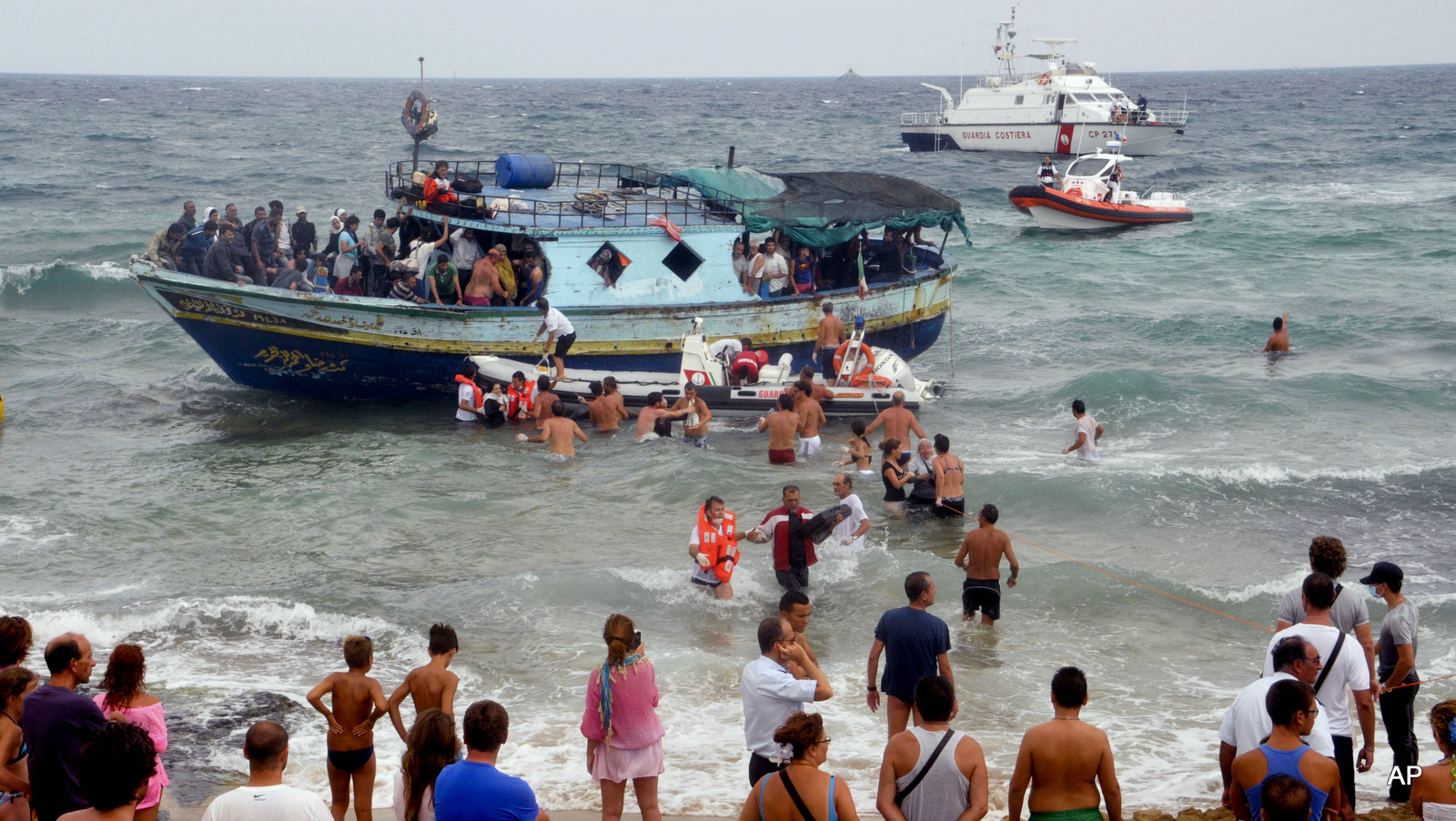
According to the UN an estimated 350,000 refugees crossed the Mediterranean fleeing the Middle East in the last year - and approximately 2,500 have died trying. Earlier this year Italy made a global outcry for help on the migrant problem, as their Navy is baring the brunt of the rescue.


Other European nations have send support. In May Great Britain deployed HMS Bulwark to help. It rescued 500 migrants off of Libya earlier this year. The Irish Naval service also deployed a ship, and it has rescued some 2,000 migrants. As of August 22, 2015, the Italian Navy has rescued more than 3,000 migrants.

Canada has had a Naval vessel deployed to the Mediterranean since 2014, and could have went to the aid of migrants. But, according to the Royal Canadian Navy, they were never given the order to intervene by the Conservative Government.

My question is why not? Why does Canada not have any military responsibility to help European nations struggling with the thousands of migrants?

It would not cost any extra money to have the RCN vessel that is already deployed to help support Eastern Europe. Not sending help when it is the vicinity, is like not stopping at the scene of a horrific car accident on a back road, when you know paramedics will not make it in time.

Why not help at the refugee centers? Hungary has thousands of migrants blockaded in their train station. While this situation needs political help to help move the trains to locations willing to accept the migrants - the camps in Turkey and Jordan are huge, and quickly outgrow their boundaries. Canada could easily deploy the DART (Disaster Assistance Response Team) to one of the regions to help. This team specializes in setting up and helping in humanitarian crisises. They are usually deployed for a month long period, but with added support - the team could be deployed for a longer period of time.

In the current election campaign, the Liberals and NDP have both said they will do more to help the humanitarian issue caused by ISIS and the Syrian Civil War - neither are willing to continue to stand up and confront ISIS. Yet, now it seems the Conservatives are unwilling to help through  humanitarianism. What we need is a government that will step up on both fronts - the CAF can help in the refugee crisis all we need is a leader who will deploy them to do so.


Monday, August 17, 2015

Continue to Support for Air Task Force Iraq

You may know this already (perhaps because of this webpage) - but I am a strong supporter of the military. There have been recent calls for changes to Canada's contribution to the fight against ISIS. In Canada, our mission is titled, Operation IMPACT. The US led coalition name is Operation INHERENT RESOLVE.  We need to continue to support Air Task Force Iraq (ATFI)

Those who call for changes say Canada has only contributed to approximately 3% of coalition air strikes. They argue that 3% of strikes will not hurt ISIS - and therefore, Canada should withdraw our fighter jets (as both the NDP and Liberal's propose) and withdraw our Special Forces training mission (as the NDP propose). But when you look at the breakdown of military forces in the region, it becomes extremely clear why Canada has only contributed to about 3% of airstrikes...we have 1% of the forces involved. If you want more of a Canadian contribution, you have to be willing to deploy more Canadian assets.

I agree with both the Liberal and NDP calls for more humanitarian aid - Canada has a Disaster Assistance Response Team (DART) - that I believe could be deployed for a longer mission to the UN refugee camps being set up in Jordan or Turkey. The DART team does amazing work when they deploy to disaster zones; just look at what they were able to do in Nepal on a month long deployment.

But to those who want Canada to be a bigger contributor to the fight against ISIS (which I think we should be at least maintaining our current contribution) you need to be willing to deploy more Canadian assets.

Canada currently has the following assets in place to help the coalition against ISIS;
(Numbers of Aircraft only - not support personnel)

  • 6 CF-188 Super Hornet Strike Aircraft 
  • 1 CC-150T Polaris Areal refueller to support Canada and Coalition allies 
  • 2 CP-140M Aurora Surveillance aircraft to target and examine airstrike effectiveness for Canada and Coalition allies. 
  • Numerous trips with a CC-177 Globemaster III for transport of Goods to Canadian Forces, Coalituon Allies and military and humanitarian aid to Iraq. 
Between August and September 2014 - RCAF aircraft delivered 1.6 million pounds of military supplies to Iraq.  The donations from coalition allies included small arms, ammunition and other equipment. Military equipment was delivered to Security forces working in Baghdad and Erbil. 

As of August 12, 2015 - Air Task Force Iraq (ATFI)
  • CF-188 Hornets have conducted more than 861 sorties, and more than 1000 Airstrikes 
  • CC-150T Polaris has conducted more than 228 sorties, and delivering close to 14 million pouds of fuel to coalition aircraft 
  • CP-140 Aurora aircraft have conducted more than 248 reconnaissance missions. 
  • CC-177 Globemaster aircraft have conducted dozens of flights. 
Canada has close to 700 personnel deployed to Iraq - a relatively small number compared to out allies. Don't believe me? Take a look. (Some American breakdowns are not public) 

The USAF Assets in Iraq 
  • Multiple B-1B Lancer Bombers operating out of Qatar 
  • Dozens of F-22 Raptor Strike Aircraft 
  • Dozens of F-15E Strike Eagles Aircraft
  • Dozens of F-16C Fighting Falcons Aircraft
  • Numerous F-16CJ Anti-Radar Aircraft 
  • Numerous A-10C Thunderbolt "Warthogs" Close Air support aircraft
  • Numerous KC-135 Stratotankers - areal refueling aircraft 
  • Numerous KC-10 Extenders - areal refueling aircraft 
  • Numerous C-130J Hercules strategic lift aircraft 
  • Numerous Drones (Including MQ-1 Predator and MQ-9 Reaper Attack drones) 
The US Navy Assets in Iraq 
  • 12 F/A-18E Super Hornet Strike Aircraft 
  • 22 F/A-18F Super Hornet Strike Aircraft 
  • Between 20 and 24 F/A-18C/D Super Hornet Strike Aircraft 
  • 5 EA-18G Growler Anti-Radar Aircraft 
  • 4 EA-6B Prowlers Anti-Radar Aircraft 
  • 4 E-2D Hakweye AWACS aircraft 
  • 3 E-2C Hakweye AWACS Aircraft 
  • Numerous SH-60B and SH-60F Seahawk Helicopters for support 
  • 11 MH-60R Seahawk Support Helicopters 
  • 2 C-2A Greyhound Strategic Transport Aircraft 
The US Marine Corps Assets in Iraq 

  • 6 F/A-18 Super Hornet Strike Aircraft
  • 10 F/A-18C (Navy) Super Hornet Strike Aircraft 
  • 6 AV-8B Harrier Strike Aircraft 
  • Numerous EA-6B Prowler Electronic Warfare 
  • Numerous KC-130 areal refueling aircraft 
  • 8 to 10 MV-22B Osprey Tilt-Rotor Assault aircraft 
  • At least 4 AH-1Z Super Cobra Attack helicopters 
  • At least 3 UH-1Y Hueys attack helicopters 
  • At least 3 CH-53E Super Stallion Transport Helicopters 
Iraqi Air Force Assets 
  • 3 Cessna AC-208Bs - Armed Scout Aircraft 
  • 3 Cessna RC-208B - Reconnaissance Aircraft 
  • 15 Su-25 "Frogfoot" Attack Aircraft 
  • 6 Mi-35M "Hind" Attack Helicopters 
  • 15 Mi-28NE Night Hunter attack helicopters 
  • 19 Airbus EC635 Helicopters (Armed Scout) 
  • 23 Bell 407 JetRanger Armed Scout Aircraft 
  • 6 SA342 Gazelle Scout Helicopters 
French Air Force Assets in Iraq 
  • 9 Rafales Reconnaissance/Attack Aircraft 
  • 6 Mirage 2000D Attack Aircraft 
  • 1 C135FR areal refueling aircraft 
  • 1 Breguet Atlantique 2 Reconnaissance Aircraft 
Royal Australian Air Force Assets in Iraq 
  • 6 to 8 F/A-18F Super Hornet Strike aircraft 
  • 1 E-7A Wedgetail AWACS Aircraft 
  • 1 KC-30A areal refueling aircraft 
  • 1 C-17A Globemaster III Strategic Lift Aircraft 
Royal Air Force (Great Britain) Assets in Iraq 
  • 8 Tornado Strike Aircraft 
  • 1 RC-135W surveillance Aircraft 
  • 1 Raytheon Sentital surveillance aircraft 
  • Numerous MQ-9 Reaper Surveillance Drones  
Royal Danish Air Force Assets in Iraq 
  • 7 F-16AMs Strike Aircraft 
  • 1 C-130J Hercules Strategic Lift Aircraft 

Italian Air Force Assets in Iraq 
  • 4 Tornado Tactical Recon aircraft 
  • 1 KC-767A areal refueling aircraft 
  • 2 MQ-1 Predator Attack Drones 
Royal Saudi Air Force Assets in Iraq 
  • At least 4 Tornado IDS Strike Aircraft 
  • Possibly 4 F-15S Strike Eagles 
  • Numerous EF2000 Typhoon Multi-Role Aircraft 

Other Air Assets in Iraq 
  • The UAE has at least 6 F-16s or Mirage 2000s deployed against targets in both Iraq and Syria
  • The Royal Bahraini Air Force has at least 3 F-16s against targets in Syria
  • Royal Jordanian Air Force has at least 3 F-16s against targets in Syria 
  • Belgian Air Component has at least 6 F-16 involved active in Iraq 
  • The Royal Netherlands Air Force has at least 8 F-16s active in Iraq 
  • The US Army has numerous AH-64D Apache Attack Helicopters for security of the US Embassy in Baghdad. 
  • The Iranian Air Force has possibly 4 to 8 F-4 Phantom IIs and possibly 5 Su-24MKs (They are however not part of the US Led Coalition) 
  • The Royal Moroccon Air Force has 6 F-16s active in Iraq. 
  • The Turkish Air Force have 3 F-16s operating against targets in Syria. 
So when looking at the overall air assets in place against ISIS it is no wonder the RCAF has such a small role to play. If critics of Operation IMPACT (or OP INHERENT RESOLVE) want Canada to play a larger role - deploy more aircraft. Canada could easily deploy another 6 to 10 CF-18s without compromising our Sovereignty flights. (This calculation is based on the fact that at the outset of OP IMPACT, Canada had 6 (with one spare) CF-18s involved in the NATO Baltic Air Policing Mission in Eastern Europe. 

Continue to Support Air Task Force Iraq - are a small part of the overall picture, but they are making a difference.  

RCAF July 2015 Airstrike Update

An Update on the RCAF's Airstrikes against ISIS for July 2015. All in Iraq, with one in Syria.

On July 2, 2015 - RCAF CF-18s struck three ISIS fighting positions; one Northwest of Tal Afar; one Northeast of Tal Afar; and one in the vicinity of Sinjar.

On July 3, 2015- RCAF CF-18s struck three ISIS fighting positions; one in the vicinity of Sinjar; one Southeast of Mosul; and one Northwest of Mosul.

On July 4, 2015 - RCAF CF-18s targeted an ISIS fighting position Southeast of Fallujah.

On July 5, 2015 - RCAF CF-18s targeted an ISIS fighting position Southeast of Fallujah.

On July 10, 2015 - RCAF CF-18s targeted and ISIS fighting position Northeast of Fallujah.

On July 11, 2015 - RCAF CF-18s targeted two ISIS fighting positions; one Northeast of Fallujah; and one Southeast of Fallujah.

On July 12, 2015 - RCAF CF-18s struck an ISIS fighting position in the vicinity of Ramadi.

On July 15, 2015- RCAF CF-18s struck an ISIS fighting position Northwest of Tal Afar.

On July 16, 2015 - RCAF CF-18s struck an ISIS fighting position Northwest of Mosul.

On July 17, 2015 - RCAF CF-18s struck an ISIS fighting position Northwest of Tal Afar.

On July 18, 2015 - RCAF CF-18s struck two ISIS fighting positions; one within the vicinity of Ramadi; and another Northeast of Sinjar.

On July 19, 2015 - RCAF CF-18s targeted an ISIS transport vehicle Northwest of Tal Afar.

On July 21, 2015 - RCAF CF-18s targeted an ISIS fighting position Southeast of Haditha.

On July 22, 2015 - RCAF CF-18s targeted an ISIS fighting position Southeast of Mosul.

On July 23, 2015 - RCAF CF-18s struck and ISIS fighting position East of Mosul.

On July 24, 2015 - RCAF CF-18s struck an ISIS fighting position Northwest of Mosul.

On July 25, 2015 - RCAF CF-18s struck an ISIS staging area in Kirkuk.

On July 26, 2015 - RCAF CF-18s targeted two ISIS fighting positions in Sinjar and Tal Afar.

On July 29, 2015 - RCAF CF-18s struck an ISIS fighting position Northwest of Haditha.

On July 30, 2015 - RCAF CF-18s struck and ISIS compound and an ISIS fighting position Northwest of Haditha.

On July 30, 2015 - RCAF CF-18s targeted an ISIS compound in Al Qa'am

On July 30, 2015 -  RCAF CF-18s targeted an ISIS compound North of Al Bukamal, Syria.


Thursday, June 11, 2015

RCAF continues to strike ISIS in Syria and Iraq

DND announced today that Two RCAF CF-18 Hornet jets successfully led their third airstrike against ISIS in Syria. Using precision guided munitions the CF-18's hit an ISIS compound near Al Hasakah, Syria on June 9th 2015. The Aircrew returned safely to base.

Furthermore, DND announced that on June 10, 2015, two CF-18s bombed an ISIS fighting position near Bayji, Iraq.

Wednesday, June 10, 2015

RCAF surpasses 1000 sorties against ISIS and exceeds 100 Airstrikes

Yesterday DND announced that the RCAF has recently reached two milestones in the coalition campaign against ISIS.

Two CF-188 Hornet fighters prepare to resume their activities after being refueled by a CC-150T Polaris on February 4, 2015 during Operation Impact. PHOTO: Canadian Forces Combat Camera, DND
RCAF CF-18 Hornets prepare for aerial refuelling over Iraq in February 2015. Photo: CF Combat Camera 
The RCAF's contribution to OP IMPACT includes, 6 CF-18 Hornet fighter aircraft, a CC-150T Polaris Air-to-Air refuelling tankers, and 2 CP-140 Aurora long-range patrol Aircraft. This grouping of aircraft provide the coalition with intelligence, surveillance, reconnaissance, aerial refuelling capabilities, and airstrike capabilities using precision guided munitions.

As of June 6th 2015, the RCAF had surpassed the 1000 sortie mark, flying its 1016th sortie. This includes 661 sorties by CF-18s, 185 by the CP-140 Aurora, and 170 by the CC-150T Polaris.

Also attained this month, CF-18s have now delivered more than 100 airstrikes against ISIS in Iraq and Syria with their most recent strikes on June 8th.


Monday, June 8, 2015

x15 RCAF CF-18 Airstrikes Against ISIS in Iraq and Syria


4 June 2015
On 4 June 2015, while taking part in coalition operations in support of Iraqi security forces, CF-18 Hornets successfully struck an ISIS fighting position northwest of Tal Afar using precision guided munitions.
On 4 June 2015, while taking part in coalition operations in support of Iraqi security forces, CF-18 Hornets successfully struck an ISIS fighting position in the vicinity of Sinjar using precision guided munitions.
3 June 2015
On June 3, 2015, while taking part in coalition operations in support of Iraqi security forces, two CF-18 Hornets successfully struck an ISIS fighting position south of Haditha using precision guided munitions.
2 June 2015
On 2 June 2015, while taking part in coalition operations in support of Iraqi security forces, two CF-18 Hornets successfully struck two ISIS fighting positions in the vicinity of Mosul using precision guided munitions.
31 May 2015
On 31 May 2015, while taking part in coalition operations in support of Iraqi security forces, two CF-18 Hornets successfully struck an ISIS fighting position in the vicinity of Bayji using precision guided munitions.
30 May 2015
On 30 May 2015, while taking part in coalition operations in support of Iraqi security forces, two CF-18 Hornets successfully struck an ISIS fighting position in the vicinity of Sinjar using precision guided munitions.
On 30 May 2015, while taking part in coalition operations in support of Iraqi security forces, two CF-18 Hornets successfully struck an ISIS fighting position south east of Mosul using precision guided munitions.
29 May 2015
On 29 May 2015, while taking part in coalition operations in support of Iraqi security forces, two CF-18 Hornets successfully struck two ISIS fighting positions northwest of Tal Afar using precision guided munitions.
On 29 May 2015, while taking part in coalition operations in support of Iraqi security forces, two CF-18 Hornets successfully struck an ISIS fighting position northwest of Mosul using precision guided munitions.
27 May 2015
On 27 May 2015, while taking part in coalition operations in support of Iraqi security forces, two CF-18 Hornets successfully struck an ISIS fighting position south of Mosul using precision guided munitions.
26 May 2015
On 26 May 2015, while taking part in coalition operations in support of Iraqi security forces, two CF-18 Hornets successfully struck an ISIS fighting position north of Bayji using precision guided munitions.
On 26 May 2015, while taking part in coalition operations in support of Iraqi security forces, two CF-18 Hornets successfully struck two ISIS fighting positions west of Mosul using precision guided munitions.
23 May 2015
On 23 May 2015, while taking part in coalition operations in support of Iraqi security forces, two CF-18 Hornets successfully struck an ISIS fighting position east of Mosul using precision guided munitions.
22 May 2015
On 22 May 2015, while taking part in coalition operations in support of Iraqi security forces, two CF-18 Hornets successfully struck an ISIS fighting position southeast of Mosul using precision guided munitions.
20 May 2015
On 20 May 2015, while taking part in coalition operations against ISIS, two CF-18 Hornets successfully struck an ISIS staging area north of Ar-Raqqah, Syria, using precision guided munitions.

Thursday, May 21, 2015

RCAF Bomb ISIS Target in Syria

The Royal Canadian Air Force has bombed more ISIS targets in Syria. This is only the second time since the extention and expansion of Canada's mission that CF-18s have engaged targets in Syria.

On Wednesday May 20, 2015, two RCAF CF-18s bombed an ISIS staging area north of Ar-Raqqah, Syria. No further details were released, other than the two fighter jets returned to base safely without incident.


Wednesday, April 8, 2015

Canada in Syria: CF-18's Conduct First Strike in Syria

DND today informed Canadians that two RCAF CF-18's conducted their first air strikes against ISIS in Syria.

Two CF-18's  used precision-guided munitions to strike an ISIS garrison near Ar Raqqah, Syria. Following the strike, the CF-18s returned safely to their base in Kuwait.

A total of 10 coalition aircraft, including 6 from the US were involved in today's strikes.

DND also released that while this was the first air strike - it was not the first air sortie. Three previous sorties have been flown over Syria.

Wednesday, April 1, 2015

Canada's Mission Costs Partly Revealed

Following yesterday's announcement that the Conservative Government would classify OP IMPACT and OP REASSURANCE's budget as classified, for the purpose of National Security. This caused both opposition parties to cry foul.

Today, Defence Minister Jason Kenney, announced that Canada's one year extension in Iraq and expansion into Syria will cost tax payers $406 million, and has instructed DND to include the figure in federal budget reports.

But the remaining details for the price of the missions may still be classified - which would be the first time since 1996/97 that such figures have been classified.

OP IMPACT has 600 troops in Kuwait, 6 CF-18s, 1 CC-150 Polaris, and 2 CP-140 Aurora Aircraft.

OP REASSURANCE has seen CF-18s patrol the Baltic's, RCN frigates deployed to the Black Sea and the Mediterranean, as well as several rotations of troops preforming training with Baltic States as well as the Polish Army.

Tuesday, March 24, 2015

Canada's War against ISIS to expand to Syria

Prime Minister Stephen Harper has asked the Canadian Parliament to support a motion that will be put forward to debate on Thursday March 26, 2015 to extend and expand Canada's current support for Op IMPACT. PM Harper has asked for a 1 year extension through March of 2016, and an expansion of the RCAF Air campaign into neighbouring Syria.

The current mission is set to end on April 7, 2015. Both opposition parties have responded with their disapproval of the motion, and have clearly said they will not support the mission. The NDP says they will pull the plug on the military mission if they get elected. This is despite the fact a majority of Canadians support the mission. With the Conservative majority - the vote is expected to be the same as it was last fall when the Conservatives all voted in favour of the mission. The debate on Thursday will be symbolic if little else.

PM Harper clearly outlined that they will not ask for Syrian permission to invade its airspace, but follow the lead of the US who are currently the only coalition member bombing ISIS targets in Syria. The RCAF will be able to target ISIS's heavy equipment which has been moved out of Iraq to hide from coalition strikes. Canada will become the first Coalition member to bomb targets alongside the US in Syria.

Last Friday in was announced the CF-18s had bombed two more ISIS positions in Iraq, a weapons facility and a fighting position.

Defence Minister Jason Kenney said late last night that the RCAF is looking to increase the number of air strikes possible, which will be possible in Syria, as several other nations are also bombing ISIS targets in Iraq, leaving few for Canadian fighters.

No details we given whether an increase in air-strikes means an increase in the number of CF-18s in the region will increase, or what the increase in flight time means for the governments current life extension of the CF-18s through 2025.

The expansion of the RCAF air campaign into Syria will not include Canada's 69 Special forces members who are currently training Kurdish forces in Northern Iraq.

GD2015-0062-01
Two RCAF CF-18's taxi in Kuwait before their next mission, January 2015.
Photo: Op IMPACT CF Combat Camera

Friday, March 6, 2015

Canada in Iraq - Will it become Canada in Syria?

The last CF-18 bombs were dropped on February 24 2015. Prior to that, there was an 11-day lull in activity. That lull is not just for Canadian jets, but for most of the coalition.

The Iraqi Air Force is bombing multiple targets around Tikrit, but coalition forces are standing this offensive out, largely due to the fact it is being led by a controversial Iranian General.

The question now is, will Canadian CF-18s cross the boarder and bomb ISIS targets in Syria? There was a large debate in Canada about the possibility if Assad asked for Canadian help. The concern was, why would you help Assad when the Western World is calling for his dismissal because of the human rights violations in the ongoing civil war. The discussion revolved around, why we would respond to a request from Assad, but not around if we just started bombing targets in Syria.

The CAF's are ready to move into Syria should the government decide that is what they want to do. If the next step is bombing ISIS targets in Syria Capt. Paul Forget says the CAF can easily accommodate such a request.  A request Forget says will be a government decision. Forget predicts a lull in coalition activities for a while, as Iraqi forces move forward with offenses not supported by the coalition.

An announcement of an extension of Canada's Operation IMPACT is expected within the next few days, but everyone will be looking to see if the mission perimeters will be expanded and if more Special Forces trainers will be deployed.