Canada's special forces kept too many secrets about Afghan missions
Showing posts with label RCN. Show all posts
Showing posts with label RCN. Show all posts
Friday, September 7, 2018
August Recap
Welcome back Canadian Forces Dispatch readers. I took an extended break from posting in August, and now that the school year is up and running again; here is what has happened over the past four-weeks. All original reporting is linked to the headline.
Canada's special forces kept too many secrets about Afghan missions
Grounded cruise ship rescue in Nunavut cost Canada's Armed Forces $513K
Craig Manufacturing lands $25 million Canadian Forces contract
Canada's special forces kept too many secrets about Afghan missions

Friday, May 11, 2018
RCN Facing Mold Problems
By: Murray Brewster, CBC News
A newly released report blames a build-up of potentially hazardous mold aboard Canada's frontline warships squarely on a lack of upkeep by the navy.
The engineering analysis — obtained by CBC News under access to information after an almost two-year battle — said shipboard heating and air conditioning structures (HVAC) and their associated controls were allowed to deteriorate over the years to the point where they became almost useless.
The systems have "significantly degraded," said a March 2015 engineering report prepared for the navy by an outside contractor. "Little maintenance has been performed and the state of equipment is old and unsupportable."
Thermostats and pneumatic devices, meant to control airflow and humidity, were "failing, outdated and unsupportable," said the engineering analysis by the firm Bronswerk.
The report is the first clear effort to assign blame for a hazard the navy has tried to control. It could even have legal ramifications.
A former sailor, retired lieutenant Alan Doucette, is suing the federal government over the "staggering mold growth" aboard navy destroyers in the early 2000s. He alleges exposure to the mold ruined his health and that the navy "failed to take appropriate action in order to ensure the health and wellness" of serving men and women.
Retired chief petty officer Patrick MacLaughlin said the failure to keep the ships' HVAC systems up-to-date should not be laid at the feet of individual sailors or those responsible for day-to-day maintenance.
The equipment, he said, should have been swapped out at least 15 years ago — particularly the thermostat controls, which regulate humidity and condensation buildup.
"We tried to get things done," said MacLaughlin, who has been a vocal critic of the navy's approach to the problem. The leadership "needed to go to NDHQ (National Defence Headquarters) and ask for the funding. They didn't."
A newly released report blames a build-up of potentially hazardous mold aboard Canada's frontline warships squarely on a lack of upkeep by the navy.
The engineering analysis — obtained by CBC News under access to information after an almost two-year battle — said shipboard heating and air conditioning structures (HVAC) and their associated controls were allowed to deteriorate over the years to the point where they became almost useless.
The systems have "significantly degraded," said a March 2015 engineering report prepared for the navy by an outside contractor. "Little maintenance has been performed and the state of equipment is old and unsupportable."
Thermostats and pneumatic devices, meant to control airflow and humidity, were "failing, outdated and unsupportable," said the engineering analysis by the firm Bronswerk.
The report is the first clear effort to assign blame for a hazard the navy has tried to control. It could even have legal ramifications.
A former sailor, retired lieutenant Alan Doucette, is suing the federal government over the "staggering mold growth" aboard navy destroyers in the early 2000s. He alleges exposure to the mold ruined his health and that the navy "failed to take appropriate action in order to ensure the health and wellness" of serving men and women.
Retired chief petty officer Patrick MacLaughlin said the failure to keep the ships' HVAC systems up-to-date should not be laid at the feet of individual sailors or those responsible for day-to-day maintenance.
The equipment, he said, should have been swapped out at least 15 years ago — particularly the thermostat controls, which regulate humidity and condensation buildup.
"We tried to get things done," said MacLaughlin, who has been a vocal critic of the navy's approach to the problem. The leadership "needed to go to NDHQ (National Defence Headquarters) and ask for the funding. They didn't."
Blame the navy
Commodore Simon Page, the navy's director general of maritime equipment, denied the navy is solely responsible for the problem.
"My personal assessment is that is this not a problem of our own making," said Page, adding warship interiors tend to be humid spaces.
He pushed back against the claim that "little maintenance" was performed, saying the navy does its "due diligence" and carries out the necessary work.
"It is possible sometimes that maintenance is deferred, but if it is deferred we have a measure to catch up," said Page.
The Bronswerk report was prepared after the contractor surveyed several Halifax-class frigates — which were, at the time, being modernized under a $4.3 billion, multi-year program.
CBC News was the first to reveal the navy's struggle with mold in pictures and video broadcast in the summer of 2016 — a situation a former fleet commander tried to downplay at the time by saying there was "absolutely no concern."
Rear-Admiral Craig Baines, who in 2016 was the commodore in charge of the East Coast fleet, acknowledged mold was a problem but insisted the navy was conducting regular air quality monitoring and there had been no reports of illness.
CBC News requested copies of engineering and health assessment reports under access to information legislation in August 2016.
Just last week, National Defence released technical assessments and minutes of fleet operations and maintenance meetings dating back several years, but did not produce any monitoring reports.
The department also has yet to produce evidence that health monitoring took place after the issue of mold growth in various compartments was flagged as a concern aboard HMCS St. John's in the fall of 2011.
Officials in the access to information branch insisted Wednesday those reports are forthcoming.
Page said he could not speak to the withholding of documents, but said he stands by Baines' assessment of two years ago and insisted "the small amount of mold" they see in the warships is not a significant source of concern.
The 'AC flu'
Sailors have complained informally for years about a myriad of health issues while serving on deployed ships, describing recurring colds and breathing trouble as "AC flu" or the "CPF hack" — CPF being an abbreviation for Canadian Patrol Frigate.
The records show there was considerable internal debate among top naval engineers, particularly over 2014-15, about how to deal with the mold problem.
Some ships bought dehumidifiers. MacLaughlin said they were often purchased at Canadian Tire. That approach, however, was criticized internally as an attempt to "treat the symptom rather than the cause."
Navy officials were also seriously divided about whether to issue a fleet-wide technical bulletin giving warship crews instructions on mold cleaning.
"The info is very simple/easy and there is concern that releasing a [technical bulletin] on mold cleaning procedures may cause undo (sic) panic for such [a] minor instruction," said a Dec. 8, 2015.
That directive was finally issued last year.
The navy has started a series of engineering fixes on each of the frigates to address the ventilation issues. Part of the plan is a program to swap out the thermostats.
Page said two of the frigates have had the work done already and four more are slated for it in the near future.
The navy also has conducted hazardous air quality assessments.
A report on HMCS Winnipeg obtained by CBC News said mold was found in four compartments, including the ship's galley.
"It was a surface sample," said Page. "Surface mold can be addressed in a very aggressive and immediate manner, which was done."
Commodore Simon Page, the navy's director general of maritime equipment, denied the navy is solely responsible for the problem.
"My personal assessment is that is this not a problem of our own making," said Page, adding warship interiors tend to be humid spaces.
He pushed back against the claim that "little maintenance" was performed, saying the navy does its "due diligence" and carries out the necessary work.
"It is possible sometimes that maintenance is deferred, but if it is deferred we have a measure to catch up," said Page.
The Bronswerk report was prepared after the contractor surveyed several Halifax-class frigates — which were, at the time, being modernized under a $4.3 billion, multi-year program.
CBC News was the first to reveal the navy's struggle with mold in pictures and video broadcast in the summer of 2016 — a situation a former fleet commander tried to downplay at the time by saying there was "absolutely no concern."
Rear-Admiral Craig Baines, who in 2016 was the commodore in charge of the East Coast fleet, acknowledged mold was a problem but insisted the navy was conducting regular air quality monitoring and there had been no reports of illness.
CBC News requested copies of engineering and health assessment reports under access to information legislation in August 2016.
Just last week, National Defence released technical assessments and minutes of fleet operations and maintenance meetings dating back several years, but did not produce any monitoring reports.
The department also has yet to produce evidence that health monitoring took place after the issue of mold growth in various compartments was flagged as a concern aboard HMCS St. John's in the fall of 2011.
Officials in the access to information branch insisted Wednesday those reports are forthcoming.
Page said he could not speak to the withholding of documents, but said he stands by Baines' assessment of two years ago and insisted "the small amount of mold" they see in the warships is not a significant source of concern.
The 'AC flu'
Sailors have complained informally for years about a myriad of health issues while serving on deployed ships, describing recurring colds and breathing trouble as "AC flu" or the "CPF hack" — CPF being an abbreviation for Canadian Patrol Frigate.
The records show there was considerable internal debate among top naval engineers, particularly over 2014-15, about how to deal with the mold problem.
Some ships bought dehumidifiers. MacLaughlin said they were often purchased at Canadian Tire. That approach, however, was criticized internally as an attempt to "treat the symptom rather than the cause."
Navy officials were also seriously divided about whether to issue a fleet-wide technical bulletin giving warship crews instructions on mold cleaning.
"The info is very simple/easy and there is concern that releasing a [technical bulletin] on mold cleaning procedures may cause undo (sic) panic for such [a] minor instruction," said a Dec. 8, 2015.
That directive was finally issued last year.
The navy has started a series of engineering fixes on each of the frigates to address the ventilation issues. Part of the plan is a program to swap out the thermostats.
Page said two of the frigates have had the work done already and four more are slated for it in the near future.
The navy also has conducted hazardous air quality assessments.
A report on HMCS Winnipeg obtained by CBC News said mold was found in four compartments, including the ship's galley.
"It was a surface sample," said Page. "Surface mold can be addressed in a very aggressive and immediate manner, which was done."
Wednesday, March 28, 2018
RCN Reservists Experience life on New Zealand Warship
By Darlene Blakeley
Eleven members of Canada’s Naval Reserve are experiencing a once-in-a-lifetime opportunity to see first-hand what service is like in a Royal New Zealand Navy (RNZN) warship.
Nine bo’suns and two cooks from Naval Reserve Divisions across the country are sailing aboard the RNZN’s Anzac-class frigate Te Kaha as it transits from Honolulu, Hawaii to Victoria.
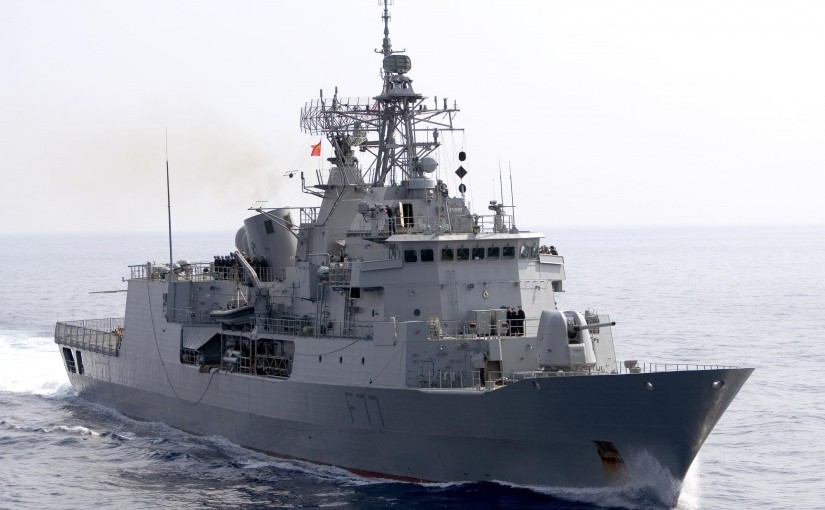 |
| The New Zealand Navy RNZN Te Kaha |
The sailors joined the ship as part of the REGULUS program, which facilitates exchanges with partner navies from around the world, providing unique training opportunities and exposing sailors to the diverse cultures of allied navies. While sharpening sailors’ skills, the REGULUS program also helps strengthen relationships with allied nations, increasing interoperability and reinforcing the Royal Canadian Navy’s commitment to international peace and security.
Master Seaman Kaitlin Braithwaite from the Naval Reserve Division HMCS Prevost in London, Ont., was the catalyst for this group’s deployment. While working and training as a civilian primary school teacher in Auckland, NZ, she was given the opportunity to consolidate her skills as a bo’sun in the Naval Reserve as well. Through the REGULUS program, she requested and was authorized to sail aboard the Te Kaha when it departed Devonport, NZ, en route to Victoria where it will be undergoing a frigate system upgrade.
“Joining a new ship is always a bit daunting but I could not have been welcomed any better,” she says. “Every sailor welcomed me on board and helped me become a member of the crew.”
MS Braithwaite was able to join the RNZN gunners (similar to bo’suns) on bridge watches and says that functions such as lookouts and officer-of-the-watch duties are the same.
“However, once we left New Zealand there was not much for the lookout to see – open ocean with no contacts for over nine days,” she says. “All of my experience sailing in Canada has been on the Kingston-class maritime coastal defence vessels, which mainly keep to the coast for calmer waters. As soon as we departed New Zealand it was a straight course north to Canada experiencing sea state seven [six to nine metre waves].”
By mid February, Te Kaha had come alongside Pearl Harbour Naval Base in Honolulu en route to Canada.
“This was a welcome R&R stop that showed me just how welcoming the New Zealand navy could be. Their crew was always planning activities such as surfing, sky diving, and cage diving,” explains MS Braithwaite.
It was in Honolulu that 10 additional naval reservists joined MS Braithwaite in the ship as part of the REGULUS program.
“I was happy to see some familiar faces and was encouraged that I could help them adjust to ship life onboard the Te Kaha,” she says.
She explains that the name “Te Kaha” is Maori, meaning “fighting prowess” or “strength.” The ship’s motto is “He Ponanga Kaha” or “Service with Strength”, embodying the strength of the ship, the RNZN and service to country.
“This experience has shown me that even though thousands of nautical miles separate New Zealand and Canada, we are much the same,” says MS Braithwaite. “Our values and traditions as sailors translate across oceans.”
Her time with the crew of Te Kaha ended when the ship reached Victoria on March 5, but, she says, “The new friendships and lessons I learned while onboard Te Kaha will last a lifetime.”
Master Seaman Kaitlin Braithwaite from the Naval Reserve Division HMCS Prevost in London, Ont., was the catalyst for this group’s deployment. While working and training as a civilian primary school teacher in Auckland, NZ, she was given the opportunity to consolidate her skills as a bo’sun in the Naval Reserve as well. Through the REGULUS program, she requested and was authorized to sail aboard the Te Kaha when it departed Devonport, NZ, en route to Victoria where it will be undergoing a frigate system upgrade.
“Joining a new ship is always a bit daunting but I could not have been welcomed any better,” she says. “Every sailor welcomed me on board and helped me become a member of the crew.”
MS Braithwaite was able to join the RNZN gunners (similar to bo’suns) on bridge watches and says that functions such as lookouts and officer-of-the-watch duties are the same.
“However, once we left New Zealand there was not much for the lookout to see – open ocean with no contacts for over nine days,” she says. “All of my experience sailing in Canada has been on the Kingston-class maritime coastal defence vessels, which mainly keep to the coast for calmer waters. As soon as we departed New Zealand it was a straight course north to Canada experiencing sea state seven [six to nine metre waves].”
By mid February, Te Kaha had come alongside Pearl Harbour Naval Base in Honolulu en route to Canada.
“This was a welcome R&R stop that showed me just how welcoming the New Zealand navy could be. Their crew was always planning activities such as surfing, sky diving, and cage diving,” explains MS Braithwaite.
It was in Honolulu that 10 additional naval reservists joined MS Braithwaite in the ship as part of the REGULUS program.
“I was happy to see some familiar faces and was encouraged that I could help them adjust to ship life onboard the Te Kaha,” she says.
She explains that the name “Te Kaha” is Maori, meaning “fighting prowess” or “strength.” The ship’s motto is “He Ponanga Kaha” or “Service with Strength”, embodying the strength of the ship, the RNZN and service to country.
“This experience has shown me that even though thousands of nautical miles separate New Zealand and Canada, we are much the same,” says MS Braithwaite. “Our values and traditions as sailors translate across oceans.”
Her time with the crew of Te Kaha ended when the ship reached Victoria on March 5, but, she says, “The new friendships and lessons I learned while onboard Te Kaha will last a lifetime.”
Friday, January 12, 2018
RCN Revising Policy on Wi-Fi
By: Murray Brewster, CBC News
For the navy's most senior enlisted man it was a seminal moment.
It was — in today's terms — the most ordinary of scenes, but the fact it was taking place in a mess aboard the frigate HMCS Charlottetown was extraordinary.
Chief Petty Officer 1st Class Michel Vigneault was amazed to see a sailor having a Facetime conversation with family back home on a smartphone.
The moment neatly captured the conundrum he and the top brass have faced in making the navy, which has for a decade been perpetually short of sailors, an appealing place to work.
The moment encapsulated two issues: the longstanding prohibition on Wi-Fi coverage aboard warships and the amount of time sailors are away from home.
Both have become central to the retention and recruiting makeover that is underway as part of the Liberal government's recently introduced defence strategy.
The ban on Wi-Fi was an obvious irritant.
"I realized then how important it is. Maybe not for my generation, because we didn't grow up with that, but for younger sailors, being connected is very, very important," Vigneault told CBC News is a recent interview. "Everything we can do to enable that for the benefit of the sailor and his or her family is very, very important."
Infrequent chats
The navy has dropped what its top sailor called the "draconian" policy on the technology and has embarked on a program to install Wi-Fi on each of its warships.
"There are other navies that operate with NATO that have Wi-Fi in far more spaces than we do." said Vice-Admiral Ron Lloyd, commander of the Royal Canadian Navy. "And we're saying 'No you can't have it aboard' — period? That's crazy."
The U.S. navy began installing 4G LTE networks aboard its ships in 2012, while Canadians sailors have over the same period of time been forced to stow their cellphones while at sea — particularly when in secured areas — and rely on the occasional satellite phone conversation with family at home.
Those infrequent chats conducted through "morale phones" were largely dependant on the warship's jammed-up operational network.
Lloyd said last summer the crew of HMCS Toronto bought a Wi-Fi kit and installed it for use in non-secure locations aboard the ship, demonstrating it could be done expeditiously.
The coastal patrol ship HMCS Summerside had done the same, according to a navy publication.
The Wi-Fi works while a warship is in port — home or otherwise — and Lloyd said they are working on creating access while the ship is at sea, in much the same manner airlines now offer connectivity for passengers in the air.
Aside from obvious security issues, which the navy insists it has a handle on, the introduction of Wi-Fi brings with it questions about privacy, social media addiction and, potentially, policing of content. Many of those issues are covered by the military's overall social media policy, but until recently they were not matters individual ship commanders had to routinely consider.
Getting the quality of work-life balance right has also forced the navy to revisit and revise long-standing deployment policies.
The shortage of sailors has meant an increase in what is known as "attached postings," which has seen crew members do back-to-back deployments at sea for months on end.
Lloyd says they are now measuring, down to the sailor, how many attached postings there are.
"There is nothing worse than going from ship to ship," he said.
A flag officer — namely a fleet admiral or task force commander — will now have to sign off on deploying a sailor for more than 180 days per year.
And ideally, Lloyd said, the navy is trying to avoid sending someone to sea for that length of time years in a row.
It is a sea change for an institution that, for decades, gauged its effectiveness not by how long individual sailors were away but by the numbers of days its individual ships spent on the ocean.
Just how far out of step the navy has been with the rest of society was underlined when senior brass met recently with pollsters to discuss, among other things, getting millennials interested in a career at sea.
Lloyd said the research found the navy was — in some instances — going in precisely the opposite direction to the expectations of the next generation.
For the navy's most senior enlisted man it was a seminal moment.
It was — in today's terms — the most ordinary of scenes, but the fact it was taking place in a mess aboard the frigate HMCS Charlottetown was extraordinary.
Chief Petty Officer 1st Class Michel Vigneault was amazed to see a sailor having a Facetime conversation with family back home on a smartphone.
The moment neatly captured the conundrum he and the top brass have faced in making the navy, which has for a decade been perpetually short of sailors, an appealing place to work.
The moment encapsulated two issues: the longstanding prohibition on Wi-Fi coverage aboard warships and the amount of time sailors are away from home.
Both have become central to the retention and recruiting makeover that is underway as part of the Liberal government's recently introduced defence strategy.
The ban on Wi-Fi was an obvious irritant.
"I realized then how important it is. Maybe not for my generation, because we didn't grow up with that, but for younger sailors, being connected is very, very important," Vigneault told CBC News is a recent interview. "Everything we can do to enable that for the benefit of the sailor and his or her family is very, very important."
Infrequent chats
The navy has dropped what its top sailor called the "draconian" policy on the technology and has embarked on a program to install Wi-Fi on each of its warships.
"There are other navies that operate with NATO that have Wi-Fi in far more spaces than we do." said Vice-Admiral Ron Lloyd, commander of the Royal Canadian Navy. "And we're saying 'No you can't have it aboard' — period? That's crazy."
The U.S. navy began installing 4G LTE networks aboard its ships in 2012, while Canadians sailors have over the same period of time been forced to stow their cellphones while at sea — particularly when in secured areas — and rely on the occasional satellite phone conversation with family at home.
Those infrequent chats conducted through "morale phones" were largely dependant on the warship's jammed-up operational network.
Lloyd said last summer the crew of HMCS Toronto bought a Wi-Fi kit and installed it for use in non-secure locations aboard the ship, demonstrating it could be done expeditiously.
The coastal patrol ship HMCS Summerside had done the same, according to a navy publication.
The Wi-Fi works while a warship is in port — home or otherwise — and Lloyd said they are working on creating access while the ship is at sea, in much the same manner airlines now offer connectivity for passengers in the air.
Aside from obvious security issues, which the navy insists it has a handle on, the introduction of Wi-Fi brings with it questions about privacy, social media addiction and, potentially, policing of content. Many of those issues are covered by the military's overall social media policy, but until recently they were not matters individual ship commanders had to routinely consider.
 |
| The navy is examining how much time sailors spend at sea as part of a strategy to be more family friendly. (Private Dan Bard/Canadian Forces Combat Camera) |
Getting the quality of work-life balance right has also forced the navy to revisit and revise long-standing deployment policies.
The shortage of sailors has meant an increase in what is known as "attached postings," which has seen crew members do back-to-back deployments at sea for months on end.
Lloyd says they are now measuring, down to the sailor, how many attached postings there are.
"There is nothing worse than going from ship to ship," he said.
A flag officer — namely a fleet admiral or task force commander — will now have to sign off on deploying a sailor for more than 180 days per year.
And ideally, Lloyd said, the navy is trying to avoid sending someone to sea for that length of time years in a row.
It is a sea change for an institution that, for decades, gauged its effectiveness not by how long individual sailors were away but by the numbers of days its individual ships spent on the ocean.
Just how far out of step the navy has been with the rest of society was underlined when senior brass met recently with pollsters to discuss, among other things, getting millennials interested in a career at sea.
Lloyd said the research found the navy was — in some instances — going in precisely the opposite direction to the expectations of the next generation.
Wednesday, December 13, 2017
Alion submits proposal for Canadian Surface Combatant
Alion Press Release
Alion Science and Technology, along with its subsidiary Alion Canada, is pleased to confirm that it submitted a proposal for the Canadian Surface Combatant program on November 30. “Our solution delivers an effective, affordable, production-ready 21st century naval capability to meet Canada’s defence needs,” said Bruce Samuelsen, Chief Operating Officer for Alion. “Underlying the Alion offering is an unrelenting focus on affordability, risk reduction and Canadian content, grounded in nearly 50 years of experience designing and producing combatants. We feel confident this ship provides a secure and supportive foundation for the objectives of the National Shipbuilding Strategy.”
Canada selected a Military-Off-the-Shelf (MOTS) procurement model to reduce cost, improve delivery schedules and meet performance requirements. In addition, the Royal Canadian Navy (RCN) developed an objective, comprehensive evaluation model to assess the ship and combat system. “In our proposal, we wanted to ensure the offering covered the RCN’s requirements while also delivering the flexibility to adapt to emerging missions in the coming decades,” said Samuelsen,
The Alion solution is based on the De Zeven Provinciën-class frigate— a proven NATO vessel, built by Damen Schelde Naval Shipbuilding, with more than 10 years of operational excellence. Damen’s knowledge and design-for-production experience is made available to Canada through their key role as part of Alion’s team.
Alion’s combat system solution is based on the world-class capabilities of ATLAS-Elektronik and Hensoldt Sensors. ATLAS brings an outstanding, globally renowned open architecture Combat Management System that readily accepts new and evolving technologies. Hensoldt’s capability and experience in developing and fielding state-of-the art radars was central to meeting the unique Canadian requirements with a fielded, non-developmental radar. Other key suppliers include L3 Technologies Canada, Raytheon Canada Limited, DRS Technologies Canada Limited (DRS TCL) and Rheinmetall Canada Inc.
“Each decision we made for equipment selection and systems integration focused on delivering cost-effective solutions that meet the requirements while delivering robust Canadian content,” said Samuelsen. “Many original system suppliers are building systems in Canada, but our combat system partners are actually creating manufacturing jobs for Canadians.” In fact, Alion Canada provides the only domestic surface combatant ship design capability that will create additional high technology jobs through the CSC program, by including dozens of Canadian companies.
By selecting a ship with proven operational and combat experience, Alion’s solution also eliminates the risk associated with the typical lead-ship transition from design to production. “Our bid focused on reducing development and design activities, which delivers a lower overall cost,” said Samuelsen. “This is also significant from the standpoint of accelerating production.”
Using a locally developed, globally delivered business model, Alion is proud to leverage its permanent presence in Canada and a long history in advanced technologies and ship design to maximize Canadian content and further grow new, permanent, high-value skills and jobs in Canada.
About Alion Science and Technology and Alion Canada
At Alion, we combine large company resources with small business responsiveness to design and deliver engineering solutions across six core capability areas. With an 80-year technical heritage and more than 40 years as a trusted partner for the United States Navy, we bridge invention and action to support military readiness from the lab to the battle space. Our engineers, technologists, and program managers bring together an agile engineering methodology and the best tools on the market to deliver mission success faster and at lower costs. Committed to maintaining the highest standards, Alion is ISO 9001:2008 certified and maintains CMMI Level 3-appraised development facilities. Based just outside of Washington, D.C., we help our clients turn big ideas into real solutions. To see the De Zeven Provinciën-class frigate in action, visit www.alion.ca.
Alion Science and Technology, along with its subsidiary Alion Canada, is pleased to confirm that it submitted a proposal for the Canadian Surface Combatant program on November 30. “Our solution delivers an effective, affordable, production-ready 21st century naval capability to meet Canada’s defence needs,” said Bruce Samuelsen, Chief Operating Officer for Alion. “Underlying the Alion offering is an unrelenting focus on affordability, risk reduction and Canadian content, grounded in nearly 50 years of experience designing and producing combatants. We feel confident this ship provides a secure and supportive foundation for the objectives of the National Shipbuilding Strategy.”
Canada selected a Military-Off-the-Shelf (MOTS) procurement model to reduce cost, improve delivery schedules and meet performance requirements. In addition, the Royal Canadian Navy (RCN) developed an objective, comprehensive evaluation model to assess the ship and combat system. “In our proposal, we wanted to ensure the offering covered the RCN’s requirements while also delivering the flexibility to adapt to emerging missions in the coming decades,” said Samuelsen,
The Alion solution is based on the De Zeven Provinciën-class frigate— a proven NATO vessel, built by Damen Schelde Naval Shipbuilding, with more than 10 years of operational excellence. Damen’s knowledge and design-for-production experience is made available to Canada through their key role as part of Alion’s team.
Alion’s combat system solution is based on the world-class capabilities of ATLAS-Elektronik and Hensoldt Sensors. ATLAS brings an outstanding, globally renowned open architecture Combat Management System that readily accepts new and evolving technologies. Hensoldt’s capability and experience in developing and fielding state-of-the art radars was central to meeting the unique Canadian requirements with a fielded, non-developmental radar. Other key suppliers include L3 Technologies Canada, Raytheon Canada Limited, DRS Technologies Canada Limited (DRS TCL) and Rheinmetall Canada Inc.
“Each decision we made for equipment selection and systems integration focused on delivering cost-effective solutions that meet the requirements while delivering robust Canadian content,” said Samuelsen. “Many original system suppliers are building systems in Canada, but our combat system partners are actually creating manufacturing jobs for Canadians.” In fact, Alion Canada provides the only domestic surface combatant ship design capability that will create additional high technology jobs through the CSC program, by including dozens of Canadian companies.
By selecting a ship with proven operational and combat experience, Alion’s solution also eliminates the risk associated with the typical lead-ship transition from design to production. “Our bid focused on reducing development and design activities, which delivers a lower overall cost,” said Samuelsen. “This is also significant from the standpoint of accelerating production.”
Using a locally developed, globally delivered business model, Alion is proud to leverage its permanent presence in Canada and a long history in advanced technologies and ship design to maximize Canadian content and further grow new, permanent, high-value skills and jobs in Canada.
About Alion Science and Technology and Alion Canada
At Alion, we combine large company resources with small business responsiveness to design and deliver engineering solutions across six core capability areas. With an 80-year technical heritage and more than 40 years as a trusted partner for the United States Navy, we bridge invention and action to support military readiness from the lab to the battle space. Our engineers, technologists, and program managers bring together an agile engineering methodology and the best tools on the market to deliver mission success faster and at lower costs. Committed to maintaining the highest standards, Alion is ISO 9001:2008 certified and maintains CMMI Level 3-appraised development facilities. Based just outside of Washington, D.C., we help our clients turn big ideas into real solutions. To see the De Zeven Provinciën-class frigate in action, visit www.alion.ca.
Thursday, September 7, 2017
HMCS St. John's on Stand-By for Irma Relief
The Canadian Forces says it is ready if called upon by the Canadian government to respond to any relief effort in the wake of Hurricane Irma.
“The Canadian Armed Forces remains on high alert and monitors the situation closely,” said Department of National Defence spokesman Daniel Le Bouthillier. “As a precautionary measure, the CAF has identified Her Majesty’s Canadian Ship ST. JOHN’S to be ready to support any potential relief efforts, should they be directed by the Government of Canada.”
Friday, June 9, 2017
Liberal Defence Review Unveiled
Ken Pole, Frontline Defence Magazine
The federal government announced June 7 that it plans to nearly double the Department of National Defence annual budget over the next decade, to $32.7 billion in 2026-2027 from $17.1 billion in the fiscal year just ended. It would begin decreasing at the end of that period as major capital projects are completed.
Detailed in a new Strong, Secure, Engaged policy document, the commitment would still fall short of what some allies – notably the United States and other members of NATO – say should be two per cent of gross domestic product, the government said it is “affordable, achievable and . . . informed by a rigorous, evidence-based analysis.”
Achieving two per cent would require an increase in the annual budget to more than $40 billion, but a senior DND official suggested in a background briefing that the annual budget would amount to at least 1.4 per cent of GDP by 2024-2025.
At the official announcement later, in a downtown Ottawa DND drill hall, Defence Minister Harjit Sajjan told a mixed audience of uniformed and civilian personnel that the commitment reversed “a pattern of decline” in that it would see funding grow by more than $70 billion in 10 years. However, the total did not include unspecified and understandably uncalculable future costs associated with modernizing NORAD.
Flowing from a 14-month review and extensive public consultations which have cost at least $6 million, the policy document sets out specific plans for modernizing all elements of the Canadian Armed Forces and increasing Regular Force personnel by 3,500 to 71,500 and the Reserves by 1,500 to 30,000.
“These investments will provide the necessary flexibility . . . to operate across the spectrum of operations,” the document states, adding that it also would enable the CAF to “leverage new technologies to maintain . . . interoperability with allies and an operational advantage over potential adversaries.”
Among other things, the Royal Canadian Air Force is being promised 88 new fighters through an open competition, an increase from an earlier requirement for 65 aircraft, enabling simultaneous NORAD and NATO deployments. A senior DND official said during a background briefing that the current projected capital cost of that acquisition is $15-19 billion.
The RCAF also would have the resources to replace its Airbus CC-150 Polaris tankers, deHavilland CC-138 Twin Otter utility transport aircraft, and Lockheed Martin CP-140 Aurora intelligence, surveillance and reconnaissance platforms.
Other RCAF commitments include enhanced space-based surveillance capability, upgraded tactical command, communications and navigation systems, more remotely-piloted platforms, modern air-to-air missiles, life extension of its Leonardo CH-139 Cormorant search and rescue helicopters.
The policy also promises to “operationalize” new fixed-wing search and rescue aircraft, a process which could be delayed because the government’s decision to award a contract to Airbus is being challenged in court by the Leonardo group.
Meanwhile, the Royal Canadian Navy is on track to receive a “full complement” of 15 surface combatant replacements for its current frigates and retired destroyers 56-60 billion! as well as two support ships and up to six Arctic Offshore Patrol Ships. It also press on with upgrades to its four Victoria-class diesel-electric submarines.
Naval Task Groups remain the preferred RCN operational core, and would comprise up to four surface combatants and a support vessel, backed “where warranted” by a submarine. “Configured and crewed to provide its own command and control, a Naval Task Group can lead allied or coalition forces for sustained periods anywhere in the world.”
A DND official told FrontLine after the media briefing that the task group approach essentially will work the same way it does now in that the RCN will be able to draw assets from any of its bases to make up the necessary strength.
The Army, in addition to upgrading its fleet of General Dynamics Land Systems light armoured vehicles, will be able to replace its family of armoured combat vehicles and acquired modern logistics vehicles and heavy engineering equipment a light utility trucks.
Other new Army assets expected to flow from the policy include ground-based air defence systems, modernized Improvised Explosive Device Detection and Defeat capabilities, state-of-the art communications hardware, shelters, and equipment for austere environments such as the Arctic.
Special Operations also are up for more money as well as 605 more personnel. They would be equipped with new airborne ISR platforms, armoured sports-utility vehicles and other platforms, modernized command, control and communications systems and computer defence networks and enhanced “next generation” integrated soldier systems.
Focusing on a particularly sensitive issue for the entire CAF community, the policy document provides for what the government describes as “unprecedented support to our people and their families.” This would include physical, psychological and social support from recruitment to retirement and beyond.
“Offering steadfast support . . . not only builds a strong and agile defence organization, but also acknowledges the sacred obligation the government . . . has to our military personnel, veterans and their families,” it adds. “Military families . . . are the strength behind the uniform.
Sajjan pointed out in his speech that Canada has asked “a lot . . . time and again” from its troops. “They delivery every time. And yet, governments have not invested adequately and predictably in their equipment, in their care and their well-being. In an increasingly unpredictable world, we will continue to rely on them in the years ahead. It’s time for government to hold up to its end of the bargain.”
A challenge which continues to face DND is actually spending the money it is allocated, mostly as capital project times are extended beyond their original projected time-line. The policy document acknowledges that problem, noting that “there are, and will continue to be, periods in which Defence does not use all of the funds allocated in a given year.”
DND, which has the largest capital budget of any federal institution, is permitted to carry forward only up to 2.5 per cent of its annual budget to the next fiscal year when this happens. However, the document says, DND has been improving its forecasting models in an attempt to ensure that it doesn’t have to keep going back for parliamentary approval authority.
“Since 2015-2016, the department has closely monitored in-year capital projects to identify slippage and delays earlier in the year,” it says. “During the year, new projects may be approved, which would have new demands for capital funding. In order to reduce the lapse, National Defence will fund these new projects from surplus in-year funding rather than request additional funding from Parliament.”
While Sajjan called the policy “the most rigorously costs, fully- and transparently-funded defence policy ever produced in Canada,” he declined to speculate on how the current and future governments would actually pay for its promises, possibly even resorting to budgetary deficits.
The federal government announced June 7 that it plans to nearly double the Department of National Defence annual budget over the next decade, to $32.7 billion in 2026-2027 from $17.1 billion in the fiscal year just ended. It would begin decreasing at the end of that period as major capital projects are completed.
Detailed in a new Strong, Secure, Engaged policy document, the commitment would still fall short of what some allies – notably the United States and other members of NATO – say should be two per cent of gross domestic product, the government said it is “affordable, achievable and . . . informed by a rigorous, evidence-based analysis.”
Achieving two per cent would require an increase in the annual budget to more than $40 billion, but a senior DND official suggested in a background briefing that the annual budget would amount to at least 1.4 per cent of GDP by 2024-2025.
At the official announcement later, in a downtown Ottawa DND drill hall, Defence Minister Harjit Sajjan told a mixed audience of uniformed and civilian personnel that the commitment reversed “a pattern of decline” in that it would see funding grow by more than $70 billion in 10 years. However, the total did not include unspecified and understandably uncalculable future costs associated with modernizing NORAD.
Flowing from a 14-month review and extensive public consultations which have cost at least $6 million, the policy document sets out specific plans for modernizing all elements of the Canadian Armed Forces and increasing Regular Force personnel by 3,500 to 71,500 and the Reserves by 1,500 to 30,000.
“These investments will provide the necessary flexibility . . . to operate across the spectrum of operations,” the document states, adding that it also would enable the CAF to “leverage new technologies to maintain . . . interoperability with allies and an operational advantage over potential adversaries.”
Among other things, the Royal Canadian Air Force is being promised 88 new fighters through an open competition, an increase from an earlier requirement for 65 aircraft, enabling simultaneous NORAD and NATO deployments. A senior DND official said during a background briefing that the current projected capital cost of that acquisition is $15-19 billion.
The RCAF also would have the resources to replace its Airbus CC-150 Polaris tankers, deHavilland CC-138 Twin Otter utility transport aircraft, and Lockheed Martin CP-140 Aurora intelligence, surveillance and reconnaissance platforms.
Other RCAF commitments include enhanced space-based surveillance capability, upgraded tactical command, communications and navigation systems, more remotely-piloted platforms, modern air-to-air missiles, life extension of its Leonardo CH-139 Cormorant search and rescue helicopters.
The policy also promises to “operationalize” new fixed-wing search and rescue aircraft, a process which could be delayed because the government’s decision to award a contract to Airbus is being challenged in court by the Leonardo group.
Meanwhile, the Royal Canadian Navy is on track to receive a “full complement” of 15 surface combatant replacements for its current frigates and retired destroyers 56-60 billion! as well as two support ships and up to six Arctic Offshore Patrol Ships. It also press on with upgrades to its four Victoria-class diesel-electric submarines.
Naval Task Groups remain the preferred RCN operational core, and would comprise up to four surface combatants and a support vessel, backed “where warranted” by a submarine. “Configured and crewed to provide its own command and control, a Naval Task Group can lead allied or coalition forces for sustained periods anywhere in the world.”
A DND official told FrontLine after the media briefing that the task group approach essentially will work the same way it does now in that the RCN will be able to draw assets from any of its bases to make up the necessary strength.
The Army, in addition to upgrading its fleet of General Dynamics Land Systems light armoured vehicles, will be able to replace its family of armoured combat vehicles and acquired modern logistics vehicles and heavy engineering equipment a light utility trucks.
Other new Army assets expected to flow from the policy include ground-based air defence systems, modernized Improvised Explosive Device Detection and Defeat capabilities, state-of-the art communications hardware, shelters, and equipment for austere environments such as the Arctic.
Special Operations also are up for more money as well as 605 more personnel. They would be equipped with new airborne ISR platforms, armoured sports-utility vehicles and other platforms, modernized command, control and communications systems and computer defence networks and enhanced “next generation” integrated soldier systems.
Focusing on a particularly sensitive issue for the entire CAF community, the policy document provides for what the government describes as “unprecedented support to our people and their families.” This would include physical, psychological and social support from recruitment to retirement and beyond.
“Offering steadfast support . . . not only builds a strong and agile defence organization, but also acknowledges the sacred obligation the government . . . has to our military personnel, veterans and their families,” it adds. “Military families . . . are the strength behind the uniform.
Sajjan pointed out in his speech that Canada has asked “a lot . . . time and again” from its troops. “They delivery every time. And yet, governments have not invested adequately and predictably in their equipment, in their care and their well-being. In an increasingly unpredictable world, we will continue to rely on them in the years ahead. It’s time for government to hold up to its end of the bargain.”
A challenge which continues to face DND is actually spending the money it is allocated, mostly as capital project times are extended beyond their original projected time-line. The policy document acknowledges that problem, noting that “there are, and will continue to be, periods in which Defence does not use all of the funds allocated in a given year.”
DND, which has the largest capital budget of any federal institution, is permitted to carry forward only up to 2.5 per cent of its annual budget to the next fiscal year when this happens. However, the document says, DND has been improving its forecasting models in an attempt to ensure that it doesn’t have to keep going back for parliamentary approval authority.
“Since 2015-2016, the department has closely monitored in-year capital projects to identify slippage and delays earlier in the year,” it says. “During the year, new projects may be approved, which would have new demands for capital funding. In order to reduce the lapse, National Defence will fund these new projects from surplus in-year funding rather than request additional funding from Parliament.”
While Sajjan called the policy “the most rigorously costs, fully- and transparently-funded defence policy ever produced in Canada,” he declined to speculate on how the current and future governments would actually pay for its promises, possibly even resorting to budgetary deficits.
Tuesday, April 11, 2017
RCN Sea King Buzzes Tourists in Guam
By: Isa Baza, Guam News
KUAM.com-KUAM News: On Air. Online. On Demand.
The US military is investigating a Canadian helicopter that flew low over Guam's tourism center on Sunday, in a flight that one Federal Aviation Administration official says does not adhere to standard regulations.
Hundreds of people were sprawled along Tumon Bay on Sunday morning. The United Airlines Guam Marathon - which boasted over 4,000 runners - had just come to a close when a RCN CH-124 Sea King helicopter flew just 50 feet above the shoreline. Swimmers could be seen below the chopper which was spotted both in Tumon and Ritidian just before 11am.
According to military officials, the helicopter did not belong to the local military or the National Guard. Joint Region Marianas spokesperson Lieutenant Tim Gorman later confirmed it belonged to the Royal Canadian Navy. He said the chopper had taken off from HMCS Winnipeg, one of two Royal Canadian Navy Destroyers currently visiting Naval Base Guam, and was en route to Andersen Air Force Base.

Lieutenant Gorman said, "Although the helicopter was in FAA approved airspace, we have reminded our partners to be good neighbors and to avoid disturbing heavily-populated areas."
A representative from the FAA - Agana Tower air traffic control manager Stephen Carter - said because he was not aware of the specific circumstances surrounding this incident, he could not conclude whether or not it violated FAA regulations. However, after reviewing the video he did confirm that standard regulations dictate that a helicopter should not be flying over highly-congested areas at an altitude below 500 feet, adding the regulation is in place to ensure safety in case an aircraft needs to make an emergency landing.
Lieutenant Gorman confirmed the incident is under investigation.
The US military is investigating a Canadian helicopter that flew low over Guam's tourism center on Sunday, in a flight that one Federal Aviation Administration official says does not adhere to standard regulations.
Hundreds of people were sprawled along Tumon Bay on Sunday morning. The United Airlines Guam Marathon - which boasted over 4,000 runners - had just come to a close when a RCN CH-124 Sea King helicopter flew just 50 feet above the shoreline. Swimmers could be seen below the chopper which was spotted both in Tumon and Ritidian just before 11am.
According to military officials, the helicopter did not belong to the local military or the National Guard. Joint Region Marianas spokesperson Lieutenant Tim Gorman later confirmed it belonged to the Royal Canadian Navy. He said the chopper had taken off from HMCS Winnipeg, one of two Royal Canadian Navy Destroyers currently visiting Naval Base Guam, and was en route to Andersen Air Force Base.
Lieutenant Gorman said, "Although the helicopter was in FAA approved airspace, we have reminded our partners to be good neighbors and to avoid disturbing heavily-populated areas."
A representative from the FAA - Agana Tower air traffic control manager Stephen Carter - said because he was not aware of the specific circumstances surrounding this incident, he could not conclude whether or not it violated FAA regulations. However, after reviewing the video he did confirm that standard regulations dictate that a helicopter should not be flying over highly-congested areas at an altitude below 500 feet, adding the regulation is in place to ensure safety in case an aircraft needs to make an emergency landing.
Lieutenant Gorman confirmed the incident is under investigation.
Friday, February 17, 2017
Deadline for Surface Combatant RFPs Extended
GoC Press Release
The Government of Canada and Irving Shipbuilding Inc. (ISI) are extending the Canadian Surface Combatant Request for Proposal (CSC RFP) submission deadline. Originally due on April 27, 2017, submissions will now be received until June 22, 2017.
In order to meet the requirements of the Royal Canadian Navy and provide economic benefits to Canada it is important to ensure that the Government receives the maximum number of bids that meet technical requirements and offer high quality economic benefits to Canada. At this point, based on feedback from industry, an extension is the best course of action. It is not unusual for bidding periods to be extended, particularly for complex initiatives such as this one, which is the most complex procurement project in recent history.
This RFP was developed based on extensive engagement with industry. The 12 pre-qualified bidders had the opportunity to provide input on drafts of the RFP as well as the final version, prior to its release on Oct. 27, 2016.
With this extension, targeted completion for the procurement process remains Fall of 2017, with ship construction starting in the early 2020’s.
In addition to requests for an extension to the closing date, bidders have submitted a range of questions about the procurement. As of February 10, 2017, bidders submitted 164 questions and received 88 responses. Bidders have until March 10, 2017 to submit additional questions. All questions received prior to this date will receive a response.
The Government of Canada is committed to an open, fair and transparent procurement process, and providing the Royal Canadian Navy with the vessels they need to do their important work and at the best possible value for Canadians.
The Government of Canada and Irving Shipbuilding Inc. (ISI) are extending the Canadian Surface Combatant Request for Proposal (CSC RFP) submission deadline. Originally due on April 27, 2017, submissions will now be received until June 22, 2017.
In order to meet the requirements of the Royal Canadian Navy and provide economic benefits to Canada it is important to ensure that the Government receives the maximum number of bids that meet technical requirements and offer high quality economic benefits to Canada. At this point, based on feedback from industry, an extension is the best course of action. It is not unusual for bidding periods to be extended, particularly for complex initiatives such as this one, which is the most complex procurement project in recent history.
This RFP was developed based on extensive engagement with industry. The 12 pre-qualified bidders had the opportunity to provide input on drafts of the RFP as well as the final version, prior to its release on Oct. 27, 2016.
With this extension, targeted completion for the procurement process remains Fall of 2017, with ship construction starting in the early 2020’s.
In addition to requests for an extension to the closing date, bidders have submitted a range of questions about the procurement. As of February 10, 2017, bidders submitted 164 questions and received 88 responses. Bidders have until March 10, 2017 to submit additional questions. All questions received prior to this date will receive a response.
The Government of Canada is committed to an open, fair and transparent procurement process, and providing the Royal Canadian Navy with the vessels they need to do their important work and at the best possible value for Canadians.
Tuesday, January 31, 2017
New Canadian Naval Security Team prepares for deployment
By: David Pugliese, Defence Watch
The Royal Canadian Navy has created a new unit, largely staffed by reservists, who will provide protection for RCN ships.
The Naval Security Team or NST expects to be ready for an Initial Operational Capability phase sometime in the spring, with its first deployment overseas at that time, according to the RCN website.
Lieutenant-Commander Jeff Chura, officer in charge of the unit, writes on the RCN website that the organization is currently based within Canadian Fleet Pacific. Orders are making their way up the CAF’s chain-of-command for “eventual Minister of National Defence signature, and at that point NST will become an official unit of the RCN,” he added.
The NST will deploy a small force protection team to defend RCN ships and assets overseas. The unit is mainly made up of reservists, with the idea of strengthening fleet protection and aiding the ship’s company on its watch rotations. The unit will also be able to provide a tactical boat section and intelligence support.
A team of between 30 and 50 military personnel is planned, according to information provided earlier by the RCN.
Chura noted that in November 2016 the Naval Board and the Royal Canadian Navy Dress Committee approved a new “morale” qualification badge for the fledgling unit. “Members of NST’s core leadership team have already begun to wear the badge, and new members will be presented with it once they successfully complete the team’s Collective and Validation training,” he wrote.

The Royal Canadian Navy has created a new unit, largely staffed by reservists, who will provide protection for RCN ships.
The Naval Security Team or NST expects to be ready for an Initial Operational Capability phase sometime in the spring, with its first deployment overseas at that time, according to the RCN website.
Lieutenant-Commander Jeff Chura, officer in charge of the unit, writes on the RCN website that the organization is currently based within Canadian Fleet Pacific. Orders are making their way up the CAF’s chain-of-command for “eventual Minister of National Defence signature, and at that point NST will become an official unit of the RCN,” he added.
The NST will deploy a small force protection team to defend RCN ships and assets overseas. The unit is mainly made up of reservists, with the idea of strengthening fleet protection and aiding the ship’s company on its watch rotations. The unit will also be able to provide a tactical boat section and intelligence support.
A team of between 30 and 50 military personnel is planned, according to information provided earlier by the RCN.
Chura noted that in November 2016 the Naval Board and the Royal Canadian Navy Dress Committee approved a new “morale” qualification badge for the fledgling unit. “Members of NST’s core leadership team have already begun to wear the badge, and new members will be presented with it once they successfully complete the team’s Collective and Validation training,” he wrote.
Tuesday, November 8, 2016
HMCS Montréal begins first deployment as X-Ship
Royal Canadian Navy Press Release
Her Majesty’s Canadian Ship (HMCS) Montréal is now at sea on its first deployment as the Royal Canadian Navy’s (RCN) experimental ship.
Her Majesty’s Canadian Ship (HMCS) Montréal is now at sea on its first deployment as the Royal Canadian Navy’s (RCN) experimental ship.
 |
| A Cyclone helicopter approaches HMCS Montréal during SPARTAN WARRIOR 2016 off the east coast of North America in October 2016. |
The modernized Halifax-class frigate deployed October 24, 2016 with a full schedule of missions including combat enhancement training, crew trials and operational testing and evaluation of the new Cyclone shipborne helicopter.
The experimental ship – or X-Ship – program is designed to advance innovative and leading-edge naval concepts in all areas of warship deployment, crewing and sustainment. Many of the trials conducted will focus on human factors such as variations of crew size and impacts on crew rest and performance, as well as some operational trials.
“We have been given the extremely important mission of setting the course for the future fleet in manning, innovation and air operations,” says Commander Chris Sherban, who adds “it’s an honour” to be Captain of the X-Ship.
As the sea portion of the X-Ship program gets under way, Montréal is transiting south with the rest of the Canadian Task Group – HMC Ships Fredericton, St. John’s and Athabaskan – along with Spanish Navy replenishment oiler ship Patino, conducting force generation and force development work.
According to Cdr Sherban, the first part of this trial is called the SCORE 217 trial, which will be used to validate a crewing model used by defence research scientists in Toronto.
This evaluation will require X-Ship to conduct a modified work-ups scenario with its full crew of 217. The scenario was specifically developed by the Directorate of Naval Personnel and Training in Ottawa, with experts from Sea Training (Pacific). Outside of the evolutions in the scenario, the crew will be asked to conduct watches, departmental work (including maintenance), meetings, fitness, meals, and so on, in accordance with their regular shipboard routine.
The crew will fill out daily questionnaires on their activities and wear actigraphs (sensors that measure activity) to monitor work/rest balance. The intent is to confirm that estimates made with respect to the time needed to complete evolutions and the time available for activities other than watches and evolutions is consistent with reality. This data will enable improvements to be made to the SCORE model and provide greater confidence in crew requirements for future platforms.
“The crew is very excited that their efforts will directly influence the structure and shape of the future fleet,” says Cdr Sherban. “As an example, defence scientists hoped that we would have 150 officers and sailors willing to conduct sleep and fatigue studies. We had 178 sailors volunteer.”
Although Montréal has a dedicated trial program, it will not be completely removed from everyday naval requirements and will continue to participate in scheduled engineering repair, docking work periods and fleet training exercises. The ship will increase its operational readiness with other RCN ships, as well as USN ships and Patino during exercise SPARTAN WARRIOR 16 in November.
“I have been blessed with an amazing bunch of young, dedicated and thoroughly professional men and women who understand how important our mission is and are equally as passionate as I to achieve mission success,” says Cdr Sherban. “The success of the X-Ship program rests on their shoulders and I could not have asked for a better crew to achieve it.”
After this deployment, Montréal will enter a work period until early January when it will return to sea in support of the Cyclone project. “We will be searching for the worst weather in the North Atlantic so that we can test the operating limits of the helicopter,” Cdr Sherban says.
Montréal is expected to continue trials as part of the RCN’s experimental program for five years.
The experimental ship – or X-Ship – program is designed to advance innovative and leading-edge naval concepts in all areas of warship deployment, crewing and sustainment. Many of the trials conducted will focus on human factors such as variations of crew size and impacts on crew rest and performance, as well as some operational trials.
“We have been given the extremely important mission of setting the course for the future fleet in manning, innovation and air operations,” says Commander Chris Sherban, who adds “it’s an honour” to be Captain of the X-Ship.
As the sea portion of the X-Ship program gets under way, Montréal is transiting south with the rest of the Canadian Task Group – HMC Ships Fredericton, St. John’s and Athabaskan – along with Spanish Navy replenishment oiler ship Patino, conducting force generation and force development work.
According to Cdr Sherban, the first part of this trial is called the SCORE 217 trial, which will be used to validate a crewing model used by defence research scientists in Toronto.
This evaluation will require X-Ship to conduct a modified work-ups scenario with its full crew of 217. The scenario was specifically developed by the Directorate of Naval Personnel and Training in Ottawa, with experts from Sea Training (Pacific). Outside of the evolutions in the scenario, the crew will be asked to conduct watches, departmental work (including maintenance), meetings, fitness, meals, and so on, in accordance with their regular shipboard routine.
The crew will fill out daily questionnaires on their activities and wear actigraphs (sensors that measure activity) to monitor work/rest balance. The intent is to confirm that estimates made with respect to the time needed to complete evolutions and the time available for activities other than watches and evolutions is consistent with reality. This data will enable improvements to be made to the SCORE model and provide greater confidence in crew requirements for future platforms.
“The crew is very excited that their efforts will directly influence the structure and shape of the future fleet,” says Cdr Sherban. “As an example, defence scientists hoped that we would have 150 officers and sailors willing to conduct sleep and fatigue studies. We had 178 sailors volunteer.”
Although Montréal has a dedicated trial program, it will not be completely removed from everyday naval requirements and will continue to participate in scheduled engineering repair, docking work periods and fleet training exercises. The ship will increase its operational readiness with other RCN ships, as well as USN ships and Patino during exercise SPARTAN WARRIOR 16 in November.
“I have been blessed with an amazing bunch of young, dedicated and thoroughly professional men and women who understand how important our mission is and are equally as passionate as I to achieve mission success,” says Cdr Sherban. “The success of the X-Ship program rests on their shoulders and I could not have asked for a better crew to achieve it.”
After this deployment, Montréal will enter a work period until early January when it will return to sea in support of the Cyclone project. “We will be searching for the worst weather in the North Atlantic so that we can test the operating limits of the helicopter,” Cdr Sherban says.
Montréal is expected to continue trials as part of the RCN’s experimental program for five years.
Friday, November 4, 2016
RCN sent in to investigate object found off Haida Gwaii - Possible Lost Cold War Nuclear Weapon
By: George Baker, Andrew Kurjata, CBC News
The Canadian navy is on its way to Haida Gwaii to find out if a diver has discovered "the lost nuke" — a Mark IV bomb that went missing after an American bomber crashed off B.C.'s north coast in the early days of the Cold War.
Sean Smyrichinsky found the mystery object during a recent diving trip near Banks Island.
My god, I found a UFO. I found the strangest thing I'd ever seen!- Sean Smyrichinsky
"I got a little far from my boat and I found something that I'd never ever seen before," he recalled. "It resembled, like, a bagel cut in half, and then around the bagel these bolts molded into it."
When he got back to the ship he tried to describe the object to his crew.
"I came out from the dive and I came up and I started telling my crew 'my god, I found a UFO. I found the strangest thing I'd ever seen!'"
Smyrichinsky started asking around and was told the story of Convair B-36B, a US Air Force bomber that crashed off B.C.'s north coast in 1950.
In a book published earlier this year, historian Dirk Septer traces the story of that flight, summarizing it in publicity documents as a Cold War drama:
"Just before midnight on February 13, 1950, three engines of a US Air Force B-36 intercontinental bomber caught fire over Canada's northwest coast. The crew jumped, and the plane ditched somewhere in the Pacific Ocean. Almost four years later, the wreck of the bomber was found accidentally in a remote location in the coastal mountains of British Columbia, three hours' flying time in the opposite direction of where it was supposed to have crashed.
"After years of silence, the United States finally admitted to losing its very first nuclear bomb; the incident was its first Broken Arrow, the code name for accidents involving nuclear weapons. But was the bomb dropped and exploded over the Inside Passage, or was it blown up at the aircraft's resting place in the mountains?"
The lost bomb was a Mark IV.

The Canadian navy is on its way to Haida Gwaii to find out if a diver has discovered "the lost nuke" — a Mark IV bomb that went missing after an American bomber crashed off B.C.'s north coast in the early days of the Cold War.
Sean Smyrichinsky found the mystery object during a recent diving trip near Banks Island.
My god, I found a UFO. I found the strangest thing I'd ever seen!- Sean Smyrichinsky
"I got a little far from my boat and I found something that I'd never ever seen before," he recalled. "It resembled, like, a bagel cut in half, and then around the bagel these bolts molded into it."
When he got back to the ship he tried to describe the object to his crew.
"I came out from the dive and I came up and I started telling my crew 'my god, I found a UFO. I found the strangest thing I'd ever seen!'"
Smyrichinsky started asking around and was told the story of Convair B-36B, a US Air Force bomber that crashed off B.C.'s north coast in 1950.
In a book published earlier this year, historian Dirk Septer traces the story of that flight, summarizing it in publicity documents as a Cold War drama:
"Just before midnight on February 13, 1950, three engines of a US Air Force B-36 intercontinental bomber caught fire over Canada's northwest coast. The crew jumped, and the plane ditched somewhere in the Pacific Ocean. Almost four years later, the wreck of the bomber was found accidentally in a remote location in the coastal mountains of British Columbia, three hours' flying time in the opposite direction of where it was supposed to have crashed.
"After years of silence, the United States finally admitted to losing its very first nuclear bomb; the incident was its first Broken Arrow, the code name for accidents involving nuclear weapons. But was the bomb dropped and exploded over the Inside Passage, or was it blown up at the aircraft's resting place in the mountains?"
The lost bomb was a Mark IV.
As soon as Smyrichinsky looked it up on Google Images, he recognized it as the object he had found.
"It was a piece that looked very much like what I saw," he said. "The plane that was carrying the bomb, it crashed 50 miles south of where I found that object."
"What else could it possibly be? I was thinking UFO, but probably not a UFO, right?"
"It was a piece that looked very much like what I saw," he said. "The plane that was carrying the bomb, it crashed 50 miles south of where I found that object."
"What else could it possibly be? I was thinking UFO, but probably not a UFO, right?"
Accordingt to the Navy, the Bomb is probably not nuclear.
Major Steve Netta of the Canadian Armed Forces confirmed the location of Snyrichinsky's find does coincide with the site of the 1950 crash.
Netta also said records indicate the lost bomb was a dummy capsule and so there is little risk of the object being a nuclear weapon.
"Nonetheless we do want to be sure and we do want to investigate it further," he said.
A Canadian navy ship has been deployed to investigate and should arrive in Haida Gwaii shortly.
Major Steve Netta of the Canadian Armed Forces confirmed the location of Snyrichinsky's find does coincide with the site of the 1950 crash.
Netta also said records indicate the lost bomb was a dummy capsule and so there is little risk of the object being a nuclear weapon.
"Nonetheless we do want to be sure and we do want to investigate it further," he said.
A Canadian navy ship has been deployed to investigate and should arrive in Haida Gwaii shortly.
Wednesday, November 2, 2016
HMCS Vancouver arrives in Brisbane
Royal Canadian Navy Press Release
Her Majesty’s Canadian Ship (HMCS) Vancouver arrives in Brisbane today to conduct a goodwill visit as part of WESTPLOY 16.
WESTPLOY 16 is HMCS Vancouver’s deployment aimed at building strong ties between the Royal Canadian Navy (RCN) and the navies of Asia-Pacific countries while also promoting peace and security in the region.
"I am very proud of the interoperability our navies have recently displayed during both RIMPAC and KAKADU," said Rear-Admiral Art McDonald, Commander Maritime Forces Pacific. "Through community engagement, HMCS Vancouver’s port visit in Australia is an opportunity to build upon our cooperative relationship as key partners in the Asia-Pacific region. One of the Royal Canadian Navy’s newly upgraded Halifax-class frigates, HMCS Vancouver and its crew are proud ambassadors for Canada, showcasing the enhanced capabilities of our modernized ship and the professionalism of our Canadian sailors."
HMCS Vancouver is engaging in a variety of training opportunities with foreign navies, as well as visiting several countries in the Asia-Pacific region. WESTPLOY 16 provides a unique opportunity that allows the RCN to foster and sustain cooperative relationships that are critical to ensuring the safety of sea lanes and security on the world’s oceans.
This deployment allows HMCS Vancouver, along with an embarked CH-124 Sea King helicopter and air detachment, to test and evolve the capabilities of the Halifax-Class warships after upgrades to equipment that were made as part of the Halifax-Class Modernization/Frigate Life Extension project.
HMCS Vancouver’s deployment underlines the strategic importance of the Asia-Pacific region, of increasing international interest in the area, and of the unique opportunities to demonstrate interoperability with partner navies.
·Since departing its home port of Esquimalt, British Columbia, in June, HMCS Vancouver has operated extensively throughout the Pacific region, including participation in RIMPAC and KAKADU.
KAKADU, held September 12-24, 2016, is a joint, biennial exercise hosted by the Royal Australian Navy and supported by the Royal Australian Air Force, with the following 20 nations participating: Australia, Brunei, Canada, Fiji, France, India, Indonesia, Japan, Malaysia, New Zealand, Pakistan, Papua New Guinea, Philippines, Republic of Korea, Singapore, Thailand, Timor-Leste, Tonga, United States of America, and Vietnam.
RIMPAC, conducted June 30 to August 4, in and around the Hawaiian Islands and Southern California, is the world's largest international maritime exercise, involving 26 nations, more than 40 ships and submarines, more than 200 aircraft, and over 25,000 personnel participating this year.
The Halifax-Class Modernization/Frigate Life Extension project is providing state-of-the-art upgrades, allowing Canada’s fleet of 12 Halifax-Class frigates to meet 21st century threats. The modernization of this fleet includes a new Combat Management System procured from Lockheed Martin Canada, as well as new radar capability, a new electronic warfare system, and upgraded communications technologies and missiles. The modernized frigates also boast new systems that offer better damage control, as well as more modern electrical and machinery control.
The RCN remains very active internationally by conducting maritime security operations including intercepting narcotics shipments in the Caribbean and conducting counter-terrorism patrols in the Arabian Sea. Operation CARIBBE, Operation REASSURANCE, and Operation ARTEMIS are examples of how we protect Canada's interests on the international stage.
Her Majesty’s Canadian Ship (HMCS) Vancouver arrives in Brisbane today to conduct a goodwill visit as part of WESTPLOY 16.
WESTPLOY 16 is HMCS Vancouver’s deployment aimed at building strong ties between the Royal Canadian Navy (RCN) and the navies of Asia-Pacific countries while also promoting peace and security in the region.
"I am very proud of the interoperability our navies have recently displayed during both RIMPAC and KAKADU," said Rear-Admiral Art McDonald, Commander Maritime Forces Pacific. "Through community engagement, HMCS Vancouver’s port visit in Australia is an opportunity to build upon our cooperative relationship as key partners in the Asia-Pacific region. One of the Royal Canadian Navy’s newly upgraded Halifax-class frigates, HMCS Vancouver and its crew are proud ambassadors for Canada, showcasing the enhanced capabilities of our modernized ship and the professionalism of our Canadian sailors."
HMCS Vancouver is engaging in a variety of training opportunities with foreign navies, as well as visiting several countries in the Asia-Pacific region. WESTPLOY 16 provides a unique opportunity that allows the RCN to foster and sustain cooperative relationships that are critical to ensuring the safety of sea lanes and security on the world’s oceans.
This deployment allows HMCS Vancouver, along with an embarked CH-124 Sea King helicopter and air detachment, to test and evolve the capabilities of the Halifax-Class warships after upgrades to equipment that were made as part of the Halifax-Class Modernization/Frigate Life Extension project.
HMCS Vancouver’s deployment underlines the strategic importance of the Asia-Pacific region, of increasing international interest in the area, and of the unique opportunities to demonstrate interoperability with partner navies.
·Since departing its home port of Esquimalt, British Columbia, in June, HMCS Vancouver has operated extensively throughout the Pacific region, including participation in RIMPAC and KAKADU.
KAKADU, held September 12-24, 2016, is a joint, biennial exercise hosted by the Royal Australian Navy and supported by the Royal Australian Air Force, with the following 20 nations participating: Australia, Brunei, Canada, Fiji, France, India, Indonesia, Japan, Malaysia, New Zealand, Pakistan, Papua New Guinea, Philippines, Republic of Korea, Singapore, Thailand, Timor-Leste, Tonga, United States of America, and Vietnam.
RIMPAC, conducted June 30 to August 4, in and around the Hawaiian Islands and Southern California, is the world's largest international maritime exercise, involving 26 nations, more than 40 ships and submarines, more than 200 aircraft, and over 25,000 personnel participating this year.
The Halifax-Class Modernization/Frigate Life Extension project is providing state-of-the-art upgrades, allowing Canada’s fleet of 12 Halifax-Class frigates to meet 21st century threats. The modernization of this fleet includes a new Combat Management System procured from Lockheed Martin Canada, as well as new radar capability, a new electronic warfare system, and upgraded communications technologies and missiles. The modernized frigates also boast new systems that offer better damage control, as well as more modern electrical and machinery control.
The RCN remains very active internationally by conducting maritime security operations including intercepting narcotics shipments in the Caribbean and conducting counter-terrorism patrols in the Arabian Sea. Operation CARIBBE, Operation REASSURANCE, and Operation ARTEMIS are examples of how we protect Canada's interests on the international stage.
Monday, October 31, 2016
Canada Expanding OP REASSURANCE to Black Sea Region
By: Zane Schwartz, National Post
Canada will send troops to the Black Sea region to combat Russian influence there, NATO Secretary General Jens Stoltenberg announced Wednesday.
“I’m pleased to confirm that several nations indicated their willingness to contribute to our presence in the Black Sea region, on land, at sea and in the air,” said Stoltenberg, adding that the countries involved include: “Canada, Germany, the Netherlands, Poland, Turkey and the United States.”
The deployment is in addition to the troops Canada has already committed to Operation Reassurance in Eastern Europe.
Department of National Defence spokesperson Evan Koronewski confirmed the Black Sea deployment. It will include CF-18s stationed in Romania and a RCN frigate in the Black Sea.
Stoltenberg said he intends to confirm the plans by the next meeting of NATO defence ministers in February.
Stoltenberg also announced a land brigade in Romania, but Canada will not be part of that, Jordan Owens, press secretary of Defence Minister Harjit Sajjan, said Thursday.
Romania, Russia, Ukraine and Turkey are among the countries that border the
Black Sea. Turkish President Recep Tayyip Erdogan has described it as “almost a Russian lake” as a result of the Russian military presence there.
Related
U.S., Russia and other global rivals unite against a UN call to shed their nuclear weapons
Russia drops request to refuel Syrian-bound battle group at Spanish port after NATO uproar
Russia taunts U.S. on eve of election with biggest military deployment since the Cold War
Canada has 220 armed forces members deployed in Poland as well as about 250 aboard HMCS Charlottetown as part a maritime task force formed by NATO. HMCS Charlottetown could deploy to the Black Sea or, if its rotation is up by the time the order to move comes, the frigate replacing it will go.
Rona Ambrose, the interim Conservative leader, criticized Justin Trudeau’s government this week for its failure to disclose basic facts about Canadian troops fighting ISIL.
Stoltenberg’s announcement comes on the heels of rising tensions between Russia and NATO following the breakdown of a ceasefire on Oct. 3 brokered by the two countries in Syria.
For Operation Reassurance, about 4,000 soldiers divided into four battalions will deploy in Poland, Lithuania, Estonia and Latvia. Canada is leading the battalion based in Latvia.
Stoltenberg announced that Albania, Italy, Poland, and Slovenia would contribute to the Latvia battalion.
Canada will send troops to the Black Sea region to combat Russian influence there, NATO Secretary General Jens Stoltenberg announced Wednesday.
“I’m pleased to confirm that several nations indicated their willingness to contribute to our presence in the Black Sea region, on land, at sea and in the air,” said Stoltenberg, adding that the countries involved include: “Canada, Germany, the Netherlands, Poland, Turkey and the United States.”
The deployment is in addition to the troops Canada has already committed to Operation Reassurance in Eastern Europe.
Department of National Defence spokesperson Evan Koronewski confirmed the Black Sea deployment. It will include CF-18s stationed in Romania and a RCN frigate in the Black Sea.
Stoltenberg said he intends to confirm the plans by the next meeting of NATO defence ministers in February.
Stoltenberg also announced a land brigade in Romania, but Canada will not be part of that, Jordan Owens, press secretary of Defence Minister Harjit Sajjan, said Thursday.
Romania, Russia, Ukraine and Turkey are among the countries that border the
Black Sea. Turkish President Recep Tayyip Erdogan has described it as “almost a Russian lake” as a result of the Russian military presence there.
Related
U.S., Russia and other global rivals unite against a UN call to shed their nuclear weapons
Russia drops request to refuel Syrian-bound battle group at Spanish port after NATO uproar
Russia taunts U.S. on eve of election with biggest military deployment since the Cold War
Canada has 220 armed forces members deployed in Poland as well as about 250 aboard HMCS Charlottetown as part a maritime task force formed by NATO. HMCS Charlottetown could deploy to the Black Sea or, if its rotation is up by the time the order to move comes, the frigate replacing it will go.
Rona Ambrose, the interim Conservative leader, criticized Justin Trudeau’s government this week for its failure to disclose basic facts about Canadian troops fighting ISIL.
Stoltenberg’s announcement comes on the heels of rising tensions between Russia and NATO following the breakdown of a ceasefire on Oct. 3 brokered by the two countries in Syria.
For Operation Reassurance, about 4,000 soldiers divided into four battalions will deploy in Poland, Lithuania, Estonia and Latvia. Canada is leading the battalion based in Latvia.
Stoltenberg announced that Albania, Italy, Poland, and Slovenia would contribute to the Latvia battalion.
Tuesday, October 18, 2016
Will CSC need anti-ballistic missile capability?
By: Danny Lam, Frontline Defence Blog
The Minister I can't help wondering if the new Canadian Surface Combatants (CSC) will be obsolete by 2018 if we purchase an off-the-shelf design, as announced on 13 June 2016 by the Honourable Judy Foote, Minister of Public Services and Procurement Canada (PSPC).
Currently, there are no anti-ballistic missile requirements for the CSC, and yet North Korea’s latestnuclear test, on 9 September 2016, and its growing thermonuclear and intercontinental ballistic missile (ICBM) capability (likely capable of reaching North America as early as 2020), materially altered many assumptions behind Canadian defense policy.
Emerging threats like ICBMs and strategic cruise missiles tipped with credible thermonuclear warheads will become major threats to Canada by the time the new Surface Combattants enter service. Canada will need ballistic and cruise missile defences to deter states like North Korea. Shore based anti-ballistic missile systems will not be sufficient if the threat evolves into submarine-launched missiles, as happened in August.
The Liberal government announced that its new approach is to buy an “off-the-shelf” design for theCanadian Surface Combatant Program – and modify it to save time and money. Will the existing designs be upgradeable enough to deal with the threats and mission profiles expected in their lifetime – both at the high and low end?
Critical to an anti-ballistic missile role by 2025, will be tight integration with NORAD systems and sensors applying a combat cloud concept. This enables many platforms to cue missiles on the CSC with Cooperative Engagement Capability.
Rogue states like North Korea will foreseeably develop the capability to simultaneously fire volleys of missiles, some with dummy warheads and penetration aids to increase the likelihood of reaching target. This places a premium on vessels with large Vertical Launch Systems (VLS) that are compatible with expected upgrades in missiles.
Inventories of missiles are expensive to maintain in peacetime, and subject to wear and aging at sea. This results in many vessels sailing with partially filled magazines. Moreover, missiles obsolete rapidly and require frequent updates as the threats are better understood. Hardware updates are difficult to do with deployed missiles.
Based on such new threats, a critical issue for the CSC candidates will be the capability of the supplier to supply missiles from inventory as needed, and continuously update and upgrade them to deal with the latest threats are a concern.
Given Canada’s vast territory with few major ports, and extremes of climate, forward VLS rearming and field service / upgrades can potentially become a capability where Canada can excel in. Canada does not have a program for a specialized vessels with this capability. Such a vessel, if developed with supporting and rearming a range of NATO vessels in mind, will likely find a ready market abroad providing that the CSC VLS system is not a niche product.
Finally, there is the question of how Canada would field an anti-ballistic missile deterrent by 2020 – the time when the CSCs are scheduled to come into service. A capability may be required that cannot be met via upgrading the existing Canadian fleet. Acquiring an interim capability that plug the gap and give more time for technologies to mature and craft a clean-sheet design based on 2018 requirements may be a lower lifecycle cost alternative to the modified “off-the-shelf” option.
Canadians are complacent about threats to the homeland because we have been safely sheltered under the US nuclear umbrella for a half century. That is no longer the case in the second nuclear age with many new and emerging nuclear weapons powers like North Korea, Iran, Pakistan, etc. that challenge the status quo. Canadians have to do their part in anti-ballistic missile defense and deterrence. That may not be possible in the penny-pinching style dating from the end of the cold war.
The Minister I can't help wondering if the new Canadian Surface Combatants (CSC) will be obsolete by 2018 if we purchase an off-the-shelf design, as announced on 13 June 2016 by the Honourable Judy Foote, Minister of Public Services and Procurement Canada (PSPC).
Currently, there are no anti-ballistic missile requirements for the CSC, and yet North Korea’s latestnuclear test, on 9 September 2016, and its growing thermonuclear and intercontinental ballistic missile (ICBM) capability (likely capable of reaching North America as early as 2020), materially altered many assumptions behind Canadian defense policy.
Emerging threats like ICBMs and strategic cruise missiles tipped with credible thermonuclear warheads will become major threats to Canada by the time the new Surface Combattants enter service. Canada will need ballistic and cruise missile defences to deter states like North Korea. Shore based anti-ballistic missile systems will not be sufficient if the threat evolves into submarine-launched missiles, as happened in August.
The Liberal government announced that its new approach is to buy an “off-the-shelf” design for theCanadian Surface Combatant Program – and modify it to save time and money. Will the existing designs be upgradeable enough to deal with the threats and mission profiles expected in their lifetime – both at the high and low end?
Critical to an anti-ballistic missile role by 2025, will be tight integration with NORAD systems and sensors applying a combat cloud concept. This enables many platforms to cue missiles on the CSC with Cooperative Engagement Capability.
Rogue states like North Korea will foreseeably develop the capability to simultaneously fire volleys of missiles, some with dummy warheads and penetration aids to increase the likelihood of reaching target. This places a premium on vessels with large Vertical Launch Systems (VLS) that are compatible with expected upgrades in missiles.
Inventories of missiles are expensive to maintain in peacetime, and subject to wear and aging at sea. This results in many vessels sailing with partially filled magazines. Moreover, missiles obsolete rapidly and require frequent updates as the threats are better understood. Hardware updates are difficult to do with deployed missiles.
Based on such new threats, a critical issue for the CSC candidates will be the capability of the supplier to supply missiles from inventory as needed, and continuously update and upgrade them to deal with the latest threats are a concern.
Given Canada’s vast territory with few major ports, and extremes of climate, forward VLS rearming and field service / upgrades can potentially become a capability where Canada can excel in. Canada does not have a program for a specialized vessels with this capability. Such a vessel, if developed with supporting and rearming a range of NATO vessels in mind, will likely find a ready market abroad providing that the CSC VLS system is not a niche product.
Finally, there is the question of how Canada would field an anti-ballistic missile deterrent by 2020 – the time when the CSCs are scheduled to come into service. A capability may be required that cannot be met via upgrading the existing Canadian fleet. Acquiring an interim capability that plug the gap and give more time for technologies to mature and craft a clean-sheet design based on 2018 requirements may be a lower lifecycle cost alternative to the modified “off-the-shelf” option.
Canadians are complacent about threats to the homeland because we have been safely sheltered under the US nuclear umbrella for a half century. That is no longer the case in the second nuclear age with many new and emerging nuclear weapons powers like North Korea, Iran, Pakistan, etc. that challenge the status quo. Canadians have to do their part in anti-ballistic missile defense and deterrence. That may not be possible in the penny-pinching style dating from the end of the cold war.
Wednesday, October 12, 2016
HMCS Vancouver arrives in Singapore
By: David Pugliese, Defence Watch
HMCS Vancouver arrived today in Singapore to conduct a goodwill visit as part of WESTPLOY 16.
WESTPLOY 16 is HMCS Vancouver’s deployment aimed at building strong ties between the Royal Canadian Navy and the navies of Asia-Pacific countries while also promoting peace and security in the region, according to RCN.
HMCS Vancouver arrived today in Singapore to conduct a goodwill visit as part of WESTPLOY 16.
WESTPLOY 16 is HMCS Vancouver’s deployment aimed at building strong ties between the Royal Canadian Navy and the navies of Asia-Pacific countries while also promoting peace and security in the region, according to RCN.
 |
| HMCS Vancouver (FFH 331) departs Joint Base Pearl Harbor-Hickam following the conclusion of Rim of the Pacific 2016. (U.S. Navy Photo By Mass Communication Specialist 2nd Class Johans Chavarro/Released) - August 8, 2016 |
More from the RCN news release:
HMCS Vancouver is engaging in a variety of training opportunities with foreign navies as well as visiting several countries in the Asia-Pacific region. WESTPLOY 16 provides a unique opportunity that allows the RCN to foster and sustain cooperative relationships that are critical to ensuring the safety of sea lanes and security on the world’s oceans.
This deployment allows HMCS Vancouver, along with an embarked CH-124 Sea King helicopter and air detachment, to test and evolve the warfighting capabilities of the Halifax-Class warships after upgrades to equipment that were made as part of the Halifax-Class Modernization/Frigate Life Extension project.
Since departing its home port of Esquimalt, British Columbia, in June, HMCS Vancouver has operated extensively throughout the Pacific region, including participation in RIMPAC and KAKADU.
KAKADU, held September 12-24, 2016, is a joint, biennial exercise hosted by the Royal Australian Navy and supported by the Royal Australian Air Force, with 20 nations participating: Australia, Brunei, Canada, Fiji, France, India, Indonesia, Japan, Malaysia, New Zealand, Pakistan, Papua New Guinea, Philippines, Republic of Korea, Singapore, Thailand, Timor-Leste, Tonga, United States of America, and Vietnam.
HMCS Vancouver is engaging in a variety of training opportunities with foreign navies as well as visiting several countries in the Asia-Pacific region. WESTPLOY 16 provides a unique opportunity that allows the RCN to foster and sustain cooperative relationships that are critical to ensuring the safety of sea lanes and security on the world’s oceans.
This deployment allows HMCS Vancouver, along with an embarked CH-124 Sea King helicopter and air detachment, to test and evolve the warfighting capabilities of the Halifax-Class warships after upgrades to equipment that were made as part of the Halifax-Class Modernization/Frigate Life Extension project.
Since departing its home port of Esquimalt, British Columbia, in June, HMCS Vancouver has operated extensively throughout the Pacific region, including participation in RIMPAC and KAKADU.
KAKADU, held September 12-24, 2016, is a joint, biennial exercise hosted by the Royal Australian Navy and supported by the Royal Australian Air Force, with 20 nations participating: Australia, Brunei, Canada, Fiji, France, India, Indonesia, Japan, Malaysia, New Zealand, Pakistan, Papua New Guinea, Philippines, Republic of Korea, Singapore, Thailand, Timor-Leste, Tonga, United States of America, and Vietnam.
Thursday, October 6, 2016
HMCS Brandon, Edmonton and Kingston departing for Op CARIBBE
DND Press Release
Over the next two days, Her Majesty’s Canadian Ships (HMCS) Brandon, Edmonton and Kingston are departing to participate in Operation CARIBBE, Canada’s contribution the multinational campaign against illicit trafficking by transnational criminal organizations in the Eastern Pacific Ocean and Caribbean.
Operation CARIBBE is one of the many activities undertaken by the Government of Canada and DND/CAF as part of Canada's broader commitment to engagement in the Americas. This annual operation directly supports the CAF's mission to defend against threats and security challenges to Canada, North America, and our defence and security partners.
"One of the Royal Canadian Navy’s most fundamental responsibilities is protecting and maintaining maritime security at home and abroad," said Rear-Admiral Art McDonald, Commander, Maritime Forces Pacific. "We are committed to working with our partners who share our common values and goals in promoting regional stability while supressing criminal activity at sea. Operation CARIBBE builds upon and strengthens existing relationships and this is what enables our sailors to continue their success during this operation now and well into the future."
HMCS Brandon and Edmonton depart Esquimalt, B.C. on October 6 to participate in Operation CARIBBE in the Eastern Pacific Ocean. HMCS Kingston is planned to depart Halifax on October 7 to conduct operations in the Caribbean area of operations. Following readiness training at-sea, the ships will formally join Operation CARIBBE in the coming days.
"On behalf of all the personnel in Maritime Forces Atlantic, I wish the ship's company of HMCSKingston a safe deployment to the Caribbean Sea," said Rear-Admiral John Newton, Commander Joint Task Force Atlantic and Commander Maritime Forces Atlantic. "This cooperation with fourteen like-minded nations to stem flows of illicit drugs on the international sea lanes is a valuable contribution to regional stability. Moreover, the professionalism at sea and ashore will reinforce Canada's contributions to confidence and capacity building measures in the region. To all aboard Kingston, I know you will make us proud."
This deployment will look to build upon the success of HMC Ships Moncton, Summerside, Edmonton, Saskatoon, and Vancouver, which so far in 2016 have seized and disrupted a total of approximately 2,930 kg of cocaine and 1,520 kg of marijuana while working with the United States Coast Guard and embedded Law Enforcement Detachments.
The Canadian Armed Forces (CAF) have conducted Operation CARIBBE since November 2006 and remain committed to working with Western Hemisphere and European partners to address security challenges in the region and to disrupt illicit trafficking operations
Over the next two days, Her Majesty’s Canadian Ships (HMCS) Brandon, Edmonton and Kingston are departing to participate in Operation CARIBBE, Canada’s contribution the multinational campaign against illicit trafficking by transnational criminal organizations in the Eastern Pacific Ocean and Caribbean.
Operation CARIBBE is one of the many activities undertaken by the Government of Canada and DND/CAF as part of Canada's broader commitment to engagement in the Americas. This annual operation directly supports the CAF's mission to defend against threats and security challenges to Canada, North America, and our defence and security partners.
"One of the Royal Canadian Navy’s most fundamental responsibilities is protecting and maintaining maritime security at home and abroad," said Rear-Admiral Art McDonald, Commander, Maritime Forces Pacific. "We are committed to working with our partners who share our common values and goals in promoting regional stability while supressing criminal activity at sea. Operation CARIBBE builds upon and strengthens existing relationships and this is what enables our sailors to continue their success during this operation now and well into the future."
HMCS Brandon and Edmonton depart Esquimalt, B.C. on October 6 to participate in Operation CARIBBE in the Eastern Pacific Ocean. HMCS Kingston is planned to depart Halifax on October 7 to conduct operations in the Caribbean area of operations. Following readiness training at-sea, the ships will formally join Operation CARIBBE in the coming days.
"On behalf of all the personnel in Maritime Forces Atlantic, I wish the ship's company of HMCSKingston a safe deployment to the Caribbean Sea," said Rear-Admiral John Newton, Commander Joint Task Force Atlantic and Commander Maritime Forces Atlantic. "This cooperation with fourteen like-minded nations to stem flows of illicit drugs on the international sea lanes is a valuable contribution to regional stability. Moreover, the professionalism at sea and ashore will reinforce Canada's contributions to confidence and capacity building measures in the region. To all aboard Kingston, I know you will make us proud."
This deployment will look to build upon the success of HMC Ships Moncton, Summerside, Edmonton, Saskatoon, and Vancouver, which so far in 2016 have seized and disrupted a total of approximately 2,930 kg of cocaine and 1,520 kg of marijuana while working with the United States Coast Guard and embedded Law Enforcement Detachments.
The Canadian Armed Forces (CAF) have conducted Operation CARIBBE since November 2006 and remain committed to working with Western Hemisphere and European partners to address security challenges in the region and to disrupt illicit trafficking operations
Friday, September 23, 2016
If Government is Thinking Stimulus; Then Invest in Defence
By: Daniel Maillet, CAF Dispatch Author
It was revealed today that the Government of Canada is looking to boost the slowly growing, perhaps almost faltering Canadian economy. More specifically the Government is looking to invest another $1 billion into Alberta and Saskatchewan. That makes some sense, as these are the two provinces that have been the hardest hit with the decrease in Oil prices over the last two years. There is one problem with this plan - both Alberta and Saskatchewan's financial planning assumes the return of $80+ oil barrels. Forecast don't see that happening anytime soon. If the Government is seriously looking to boost the economy invest in Defence.
Don't get me wrong, there are other areas that are just as important (Education and Health, just to name two) but Defence is an industry that is at the cusp of its existence. Much of the Canadian Forces equipment is on borrowed time and replacements are decades behind. The Canadian Forces easily needs $100 Billion now, and if not soon that number is sure to balloon.

The Royal Canadian Navy
With the recent public awareness campaign about the Canadian Surface Combatant (CSC) fleet set to replace the Royal Canadian Navy's Halifax-Class Frigates; the Arctic Offshore Patrol Ships (AOPS); and the Navy's need for new Auxilliary Oil Replenishment (AOR) vessels, the public is well aware of the fact that the Canadian Navy is in great despair. The government has already committed $26 Billion to the Navy; but industry experts keep saying the Navy alone needs more than $40 Billion to build the planned 15 CSC vessels, the six AOPS, and the two AORs.
That $40 Billion does not include the $1 billion needed to modernize the four Victoria-Class submarines that will require another retrofit to keep operating until the mid-2020s.
The Navy is also facing a shortage of skilled members. More members of the Navy, especially officers, retire each year than those who are hired to replace them. This has left the Navy struggling to maintain capabilities.
Clearly the Navy would benefit from stimulus - boost recruitment and training funding, and increase the dedicated funds to build the new fleet for the Navy; perhaps expanding the number of shipyards involved, such as Davie, which was not in a financial position to bid on the CSC fleet, but is now building an Interim AOR (iAOR) for the Navy, and has said they could provide a second iAOR faster than Seaspan can provide the two new AORs. Recently on this blog, there was a call for a Hospital Ship for the RCN, Davie could easily fill this order, and for a fraction of the cost of a new vessel.
The Royal Canadian Air Force
Oh where to begin...The Air Force is struggling, just like the Navy.
The Canadian Forces aerobatic team, The Snowbirds are a national symbol of Canadian freedom and perseverance. Yet they are flying an albeit great Canadair aircraft, one that that is approaching 60 years old; performing some of the best and most complicated aerobatic displays in the world. The program to replace the CT-114 Tutor jet began in early 2000; with active proposals starting in 2008.
It is now 2016 and there has been no movement on the file. In fact this year the Government announced that it is looking to continue flying the 1960s jet well into the 2020s; with a replacement before 2030. The replacement cost is pegged at close to $1 Billion - up from an original estimate of $400 million. That cost will only continue to grow the longer the project is delayed.
The Tutor was retired as the Canadian Forces main training aircraft in 2000, replaced by the BAE CT-155 Hawk and CT-156 Harvard II. Canada did not purchase these jets outright, but put them on long-term lease from BAE. As of 2016; many of these jets (and turboprop for the Harvard's) have reached their original lifespans and have undergone extensions. This is because No. 2 Canadian Forces Flying School at 15 Wing Moose Jaw is also the NATO Flying School. Meaning, these aircraft rack up the flight hours very quickly. The Hawk; originally designed in the late 1970s is becoming obsolete in the fighter jet world. Thoughts about replacing the Harvard and Hawk began in 2012 but have not gone anywhere.
The RCAF is also operating it's CF-18 Fighter Jets dangerously close to the end of their lifespan. The CF-18s have already undergone two life-extensions. Originally purchased in the 1980s, the RCAF intended to fly the CF-18s until around 2010-2015; with a replacement delivered by 2017-2018. That is not happening, as 2016 counts down no replacement has been selected. Even if one was selected shortly Canada would be at the end of any delivery schedule that is already established by the manufacturers. Therefore, the RCAF is now undergoing studies to fly the CF-18s to at least 2025; with options as far as 2030. Flying fighter jets that are 40 years old seems counterintuitive to National Defence does it not?
The Search and Rescue (SAR) division of the RCAF has also struggled. The CH-113 Labrador's were retired and replaced by the CH-149 Cormorant's but the project was plagued with issues, and the Cormorant while performing its duties has never lived up to what it could have been. The Air Force does not have enough Cormorants or spare parts, forced to purchase former US Presidential helicopters for use.
The CH-146 Griffon, which performs double duty for SAR and the Canadian Army, has been in active duty since 1995, and there is no plan currently to replace it. Yet the American Forces are already working on retiring their models. The Griffons are currently slated to be retired in 2021; yet no replacement contract has been awarded. Therefore, their extension date of 2025 is more likely; but with that falling at the same time as the CF-18 replacement it seems likely that the Griffon will have to wait; putting Canadian Forces at risk in a combat or SAR helicopter that is over 40 years old. This replacement project is close to $3 Billion (depending on the replacement selected)
The CH-124 Sea King has been on the verge of retirement since 1983. That is not a typo. The RCAF only recently announced that all remaining Sea Kings will be retired by 2018, 35 years past their "best before date." Even with this retirement, the replacement CH-148 Cyclone will not be fully operational, nor will the RCAF possess enough Cyclones to fully replace the Sea Kings causing a Naval Helicopter Capabilities gap.
The RCAF has also been trying to procure a new Fixed-Wing SAR aircraft for two decades. Only this past summer was the project officially restarted. The final costs have not been made public, but in all likelihood, a fleet of at least 10 aircraft will be needed, and maintenance costs over a 20 year period will be $1 Billion at the minimum.
Therefore, it is evident by the nearly $6 Billion in known replacement costs (CT-114, CH-146; and FWSAR) plus the unknown costs of the CF-18 replacement ($60 Billion if we move forward on the JSF F-35 according to the Auditor Generals cost analysis) and the Harvard and Hawk replacements; that the RCAF would also drastically benefit from Government stimulus.
The Royal Canadian Army
I will not spend a great deal of time on the Army; you can read my recent posts about the state of the Reserves for more details. But as the Government plans to deploy 400 Troops to head a NATO battalion in Latvia, and 600 troops to a peacekeeping missing in Africa, the Army (and Reserve) will bear the brunt of this deployment. Much of the Army's equipment past its "best before" dates on deployment in Afghanistan between 2002-2014. Those that did not, were used quicker than expected because of the conditions, conditions which will be again faced in Africa. This equipment also needs replacement, training needs to increase, and so too do Regular force and Reserve numbers. Something that stimulus will help.
It was revealed today that the Government of Canada is looking to boost the slowly growing, perhaps almost faltering Canadian economy. More specifically the Government is looking to invest another $1 billion into Alberta and Saskatchewan. That makes some sense, as these are the two provinces that have been the hardest hit with the decrease in Oil prices over the last two years. There is one problem with this plan - both Alberta and Saskatchewan's financial planning assumes the return of $80+ oil barrels. Forecast don't see that happening anytime soon. If the Government is seriously looking to boost the economy invest in Defence.
Don't get me wrong, there are other areas that are just as important (Education and Health, just to name two) but Defence is an industry that is at the cusp of its existence. Much of the Canadian Forces equipment is on borrowed time and replacements are decades behind. The Canadian Forces easily needs $100 Billion now, and if not soon that number is sure to balloon.
The Royal Canadian Navy
With the recent public awareness campaign about the Canadian Surface Combatant (CSC) fleet set to replace the Royal Canadian Navy's Halifax-Class Frigates; the Arctic Offshore Patrol Ships (AOPS); and the Navy's need for new Auxilliary Oil Replenishment (AOR) vessels, the public is well aware of the fact that the Canadian Navy is in great despair. The government has already committed $26 Billion to the Navy; but industry experts keep saying the Navy alone needs more than $40 Billion to build the planned 15 CSC vessels, the six AOPS, and the two AORs.
That $40 Billion does not include the $1 billion needed to modernize the four Victoria-Class submarines that will require another retrofit to keep operating until the mid-2020s.
The Navy is also facing a shortage of skilled members. More members of the Navy, especially officers, retire each year than those who are hired to replace them. This has left the Navy struggling to maintain capabilities.
Clearly the Navy would benefit from stimulus - boost recruitment and training funding, and increase the dedicated funds to build the new fleet for the Navy; perhaps expanding the number of shipyards involved, such as Davie, which was not in a financial position to bid on the CSC fleet, but is now building an Interim AOR (iAOR) for the Navy, and has said they could provide a second iAOR faster than Seaspan can provide the two new AORs. Recently on this blog, there was a call for a Hospital Ship for the RCN, Davie could easily fill this order, and for a fraction of the cost of a new vessel.
The Royal Canadian Air Force
Oh where to begin...The Air Force is struggling, just like the Navy.
The Canadian Forces aerobatic team, The Snowbirds are a national symbol of Canadian freedom and perseverance. Yet they are flying an albeit great Canadair aircraft, one that that is approaching 60 years old; performing some of the best and most complicated aerobatic displays in the world. The program to replace the CT-114 Tutor jet began in early 2000; with active proposals starting in 2008.
It is now 2016 and there has been no movement on the file. In fact this year the Government announced that it is looking to continue flying the 1960s jet well into the 2020s; with a replacement before 2030. The replacement cost is pegged at close to $1 Billion - up from an original estimate of $400 million. That cost will only continue to grow the longer the project is delayed.
The Tutor was retired as the Canadian Forces main training aircraft in 2000, replaced by the BAE CT-155 Hawk and CT-156 Harvard II. Canada did not purchase these jets outright, but put them on long-term lease from BAE. As of 2016; many of these jets (and turboprop for the Harvard's) have reached their original lifespans and have undergone extensions. This is because No. 2 Canadian Forces Flying School at 15 Wing Moose Jaw is also the NATO Flying School. Meaning, these aircraft rack up the flight hours very quickly. The Hawk; originally designed in the late 1970s is becoming obsolete in the fighter jet world. Thoughts about replacing the Harvard and Hawk began in 2012 but have not gone anywhere.
The RCAF is also operating it's CF-18 Fighter Jets dangerously close to the end of their lifespan. The CF-18s have already undergone two life-extensions. Originally purchased in the 1980s, the RCAF intended to fly the CF-18s until around 2010-2015; with a replacement delivered by 2017-2018. That is not happening, as 2016 counts down no replacement has been selected. Even if one was selected shortly Canada would be at the end of any delivery schedule that is already established by the manufacturers. Therefore, the RCAF is now undergoing studies to fly the CF-18s to at least 2025; with options as far as 2030. Flying fighter jets that are 40 years old seems counterintuitive to National Defence does it not?
The Search and Rescue (SAR) division of the RCAF has also struggled. The CH-113 Labrador's were retired and replaced by the CH-149 Cormorant's but the project was plagued with issues, and the Cormorant while performing its duties has never lived up to what it could have been. The Air Force does not have enough Cormorants or spare parts, forced to purchase former US Presidential helicopters for use.
The CH-146 Griffon, which performs double duty for SAR and the Canadian Army, has been in active duty since 1995, and there is no plan currently to replace it. Yet the American Forces are already working on retiring their models. The Griffons are currently slated to be retired in 2021; yet no replacement contract has been awarded. Therefore, their extension date of 2025 is more likely; but with that falling at the same time as the CF-18 replacement it seems likely that the Griffon will have to wait; putting Canadian Forces at risk in a combat or SAR helicopter that is over 40 years old. This replacement project is close to $3 Billion (depending on the replacement selected)
The CH-124 Sea King has been on the verge of retirement since 1983. That is not a typo. The RCAF only recently announced that all remaining Sea Kings will be retired by 2018, 35 years past their "best before date." Even with this retirement, the replacement CH-148 Cyclone will not be fully operational, nor will the RCAF possess enough Cyclones to fully replace the Sea Kings causing a Naval Helicopter Capabilities gap.
The RCAF has also been trying to procure a new Fixed-Wing SAR aircraft for two decades. Only this past summer was the project officially restarted. The final costs have not been made public, but in all likelihood, a fleet of at least 10 aircraft will be needed, and maintenance costs over a 20 year period will be $1 Billion at the minimum.
Therefore, it is evident by the nearly $6 Billion in known replacement costs (CT-114, CH-146; and FWSAR) plus the unknown costs of the CF-18 replacement ($60 Billion if we move forward on the JSF F-35 according to the Auditor Generals cost analysis) and the Harvard and Hawk replacements; that the RCAF would also drastically benefit from Government stimulus.
The Royal Canadian Army
I will not spend a great deal of time on the Army; you can read my recent posts about the state of the Reserves for more details. But as the Government plans to deploy 400 Troops to head a NATO battalion in Latvia, and 600 troops to a peacekeeping missing in Africa, the Army (and Reserve) will bear the brunt of this deployment. Much of the Army's equipment past its "best before" dates on deployment in Afghanistan between 2002-2014. Those that did not, were used quicker than expected because of the conditions, conditions which will be again faced in Africa. This equipment also needs replacement, training needs to increase, and so too do Regular force and Reserve numbers. Something that stimulus will help.
Tuesday, September 20, 2016
RCN to Deploy New Naval Security Teams
Royal Canadian Navy Press Release
By Darlene Blakeley
In an effort to enhance the safety and security of its ships and personnel while on deployment, the Royal Canadian Navy (RCN) is developing a new capability called the Naval Security Team (NST), designed to support specific missions.

The NST will be composed primarily of naval reservists and will include a full-time command team to ensure personnel, training and equipment are available for deployment.
“The NST starts with a command and support cell, and then has other teams attached like Lego blocks as the mission dictates,” explains Commander Jeffrey White, Officer-in-Charge of the NST concept. “These attached layers will include a security or 'force protection' section, a tactical boat section, a mobile repair team and intelligence support.”
The team’s task will include port force protection and host nation liaison, along with support and intelligence requirements in foreign ports.
After selection, the team of approximately 30 to 50 personnel will be trained to meet specific mission requirements. For most force protection missions, this will include use of force, rules of engagement training, more advanced weapons training, small boat tactics, communications, deployed logistics and liaison skills.
Cdr White says that the force protection burden placed on a ship’s company when deployed can be challenging to maintain over time and reduces the availability of personnel to support other tasks, such as maintenance.
“NST seeks to support and help address this deficiency by providing an extra layer of force protection,” he says. “This capability requires short-term commitments that fit well into the lifestyle of part-time reservists, allowing our Naval Reserve to fulfill another role in the defence of Canada.”
During the recent Rim of the Pacific (RIMPAC) exercise, a small group of naval reservists was embedded with a U.S. Navy (USN) team similar to the NST called Coastal Riverine Squadron 1, to learn about its operations. These squadrons, part of the USN Expeditionary Combat Command, provide layered defence for ships at home and in foreign waters.
“This was a unique experience,” says Cdr White. “RCN sailors were afforded the opportunity to better understand how USN reservists assist their Regular Force colleagues through annual training events and pre-deployment readiness checks. RIMPAC 2016 was an outstanding chance for our sailors to dig in and identify specific best practices and lessons learned from our USN counterparts to assist in the development of the NST.”
The inaugural NST will be deployed in the Spring/Summer of 2017 to support ships as part of Westploy, an operation aimed at building strong ties between the RCN and the navies of Asia-Pacific countries, while also promoting peace and security in the Pacific region.
By Darlene Blakeley
In an effort to enhance the safety and security of its ships and personnel while on deployment, the Royal Canadian Navy (RCN) is developing a new capability called the Naval Security Team (NST), designed to support specific missions.
The NST will be composed primarily of naval reservists and will include a full-time command team to ensure personnel, training and equipment are available for deployment.
“The NST starts with a command and support cell, and then has other teams attached like Lego blocks as the mission dictates,” explains Commander Jeffrey White, Officer-in-Charge of the NST concept. “These attached layers will include a security or 'force protection' section, a tactical boat section, a mobile repair team and intelligence support.”
The team’s task will include port force protection and host nation liaison, along with support and intelligence requirements in foreign ports.
After selection, the team of approximately 30 to 50 personnel will be trained to meet specific mission requirements. For most force protection missions, this will include use of force, rules of engagement training, more advanced weapons training, small boat tactics, communications, deployed logistics and liaison skills.
Cdr White says that the force protection burden placed on a ship’s company when deployed can be challenging to maintain over time and reduces the availability of personnel to support other tasks, such as maintenance.
“NST seeks to support and help address this deficiency by providing an extra layer of force protection,” he says. “This capability requires short-term commitments that fit well into the lifestyle of part-time reservists, allowing our Naval Reserve to fulfill another role in the defence of Canada.”
During the recent Rim of the Pacific (RIMPAC) exercise, a small group of naval reservists was embedded with a U.S. Navy (USN) team similar to the NST called Coastal Riverine Squadron 1, to learn about its operations. These squadrons, part of the USN Expeditionary Combat Command, provide layered defence for ships at home and in foreign waters.
“This was a unique experience,” says Cdr White. “RCN sailors were afforded the opportunity to better understand how USN reservists assist their Regular Force colleagues through annual training events and pre-deployment readiness checks. RIMPAC 2016 was an outstanding chance for our sailors to dig in and identify specific best practices and lessons learned from our USN counterparts to assist in the development of the NST.”
The inaugural NST will be deployed in the Spring/Summer of 2017 to support ships as part of Westploy, an operation aimed at building strong ties between the RCN and the navies of Asia-Pacific countries, while also promoting peace and security in the Pacific region.
Thursday, September 15, 2016
Maritime Coastal Defence Vessels to continue to operate even with delivery of AOPS
By: David Pugliese, Defence Watch
There has been a lot of speculation over the years on the fate of the Maritime Coastal Defence Vessels. Much of it has centered on concerns they will they be pulled from service as the Arctic Offshore Patrol Ships come [into service]. Defence Watch asked that question of Vice Admiral Ron Lloyd, the head of the Royal Canadian Navy.
Here’s what he had to say:
“No. We’ll continue to operate the MCDVs. The MCDVs are providing yeoman’s service for us. As we’ve gone through the Halifax Class modernization, we’re having tremendous success with their ability to participate in Joint Interagency Task Force South, the counter-narcotics operation. They are also a vehicle by which we can introduce our sailors to leadership opportunities early in their career. And the MCDVs do a marvellous job of doing that going forward.”
“We have two in a deep maintenance period at any given time,” he added. “And then we have ten at various levels of readiness available for operations.”
There has been a lot of speculation over the years on the fate of the Maritime Coastal Defence Vessels. Much of it has centered on concerns they will they be pulled from service as the Arctic Offshore Patrol Ships come [into service]. Defence Watch asked that question of Vice Admiral Ron Lloyd, the head of the Royal Canadian Navy.
Here’s what he had to say:
“No. We’ll continue to operate the MCDVs. The MCDVs are providing yeoman’s service for us. As we’ve gone through the Halifax Class modernization, we’re having tremendous success with their ability to participate in Joint Interagency Task Force South, the counter-narcotics operation. They are also a vehicle by which we can introduce our sailors to leadership opportunities early in their career. And the MCDVs do a marvellous job of doing that going forward.”
“We have two in a deep maintenance period at any given time,” he added. “And then we have ten at various levels of readiness available for operations.”
 |
| HMCS Brandon is a Canadian Kingston-class maritime coastal defence vessel commissioned in 1999. |
Subscribe to:
Posts (Atom)