Translate

Showing posts with label AOPS. Show all posts

Tuesday, November 20, 2018

Government Announces Purchase of 6th AOPS

By: Mairin Prentiss · CBC News

The federal government is purchasing another ship to be built in Halifax, the defence minister says a day after Ottawa awarded $7 billion in contracts to three shipyards for work on Royal Canadian Navy frigates — leaving concerns over an 18-month gap in work for Irving Shipyard employees.

Image result for aops
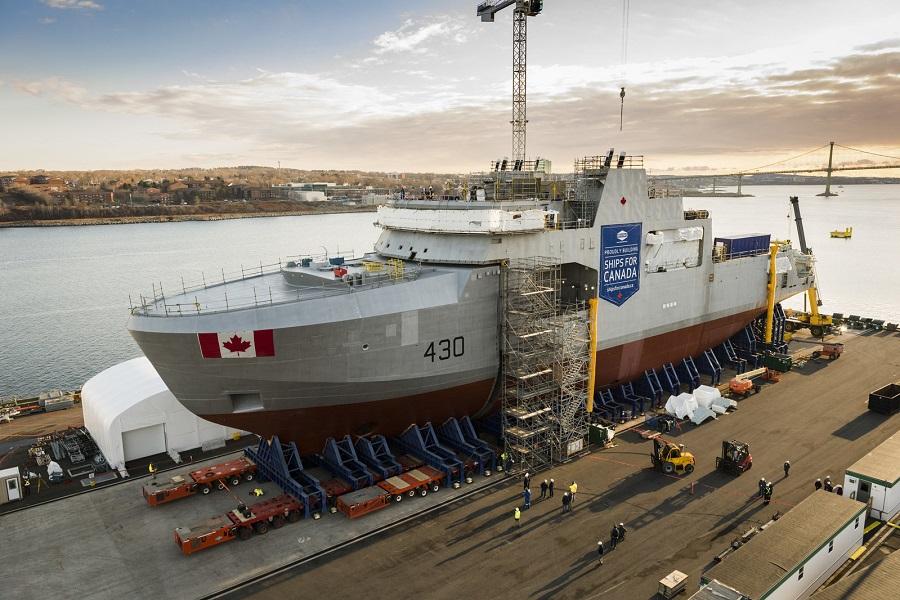
The First Arctic and Offshore Patrol Ship assembled at Halifax Shipyard - Irving Shipbuilding
The government will buy a sixth Arctic and offshore patrol ship for the navy, Harjit Sajjan said to a crowd at the Irving Shipyard in Halifax on Friday.

"The women and men of the Irving Shipyard build incredible ships and are essential for enabling the success of the Royal Canadian Navy," said Sajjan.

The government planned to purchase five Arctic and offshore patrol ships — with a possibility of a sixth — after scaling back its original plan of buying between six and eight vessels in 2014.

Public Services and Procurement Canada announced Thursday in a news release that it intends to sign contracts worth $7 billion with Davie in Lévis, Que., Irving Shipbuilding Inc. in Halifax and Seaspan Victoria Shipyards in Victoria for maintenance on 12 Canadian navy ships.

With the maintenance program split between three yards, workers in Halifax feared they would be laid off in between the end of the patrol ships program and the start of the Canadian Surface Combatant program.

Last month, Irving employees held a march in Halifax to protest the Liberal government's intention to split the contracts with other yards, saying it would result in job losses.

Irving Shipyard workers say sharing the work will mean layoffs. (Robert Short/CBC)

Friday's announcement appears to be aimed at allaying those fears.

In a news release, the Department of National Defence said the sixth ship will help sustain hundreds of jobs at Irving shipyards.

"Today's announcement is good news for the Royal Canadian Navy, but it is also good news for Canadians, our economy and the city of Halifax. This is a region with deep ties to our navy," said Sajjan.

"By adding a sixth Arctic and offshore patrol ship, we are ensuring that our Royal Canadian Navy remains an agile and responsive force for years to come, so that Canada can continue to assert and enforce our Arctic sovereignty," he said.

Irving officials had meetings in Ottawa on Thursday where they said they received the news.

But building another ship doesn't mean there won't be layoffs, said Kevin McCoy, the president of Irving Shipbuilding.

"Nothing is guaranteed until we have contracts in hand and I know hearing that might make some folks a little uneasy, but I am encouraged by our discussions yesterday particularly around Halifax class maintenance work. This is a big piece of solving about a three-year problem, but we now have about half the problem solved."

Irving will begin construction on the fourth Arctic and offshore patrol vessel later this year.

Thursday, May 3, 2018

RCN and Irving Look to Sell AOPS Internationally to Fill Construction Gap

By: David Pugliese, National Post

The gap between the building of new ships for the navy could be as much as 18 months, opening the possibility of east coast shipyard employees to be laid off.

But the Defence department’s top equipment official says changes to the shipbuilding procurement process will reduce some, but not all, of that gap. Workers that could be affected would be blue-collar shipyard employees at Irving Shipbuilding.

The 18-month gap between finishing construction of the fleet of Arctic Offshore Patrol Ships or AOPS and starting the new Canadian Surface Combatant vessels at Irving shipyards in Halifax is outlined in documents obtained by Postmedia through the Access to Information law.

Image result for AOPS

“We are still concerned about a gap,” Pat Finn, assistant deputy minister for materiel at the Department of National Defence, acknowledged in a recent interview.

The engineering workforce in the Irving yard is about to ramp up dramatically, he added, so there are no concerns there. “The issue is on what we call the blue‑collar workforce, and particularly (in) the early stages of construction,” Finn explained. “Those are the people that, once you’ve finished cutting steel in the last AOPS, ideally the next day you start cutting steel on the first surface combatant. Well, right now we’re not lined up to do that.”

Construction of the first surface combatants isn’t scheduled to begin until the early 2020s.

The first AOPS will be in the water in the summer and the other vessels are expected to follow fairly quickly.

“The gap is still a few years away, but clearly if we’re going to make sure there’s continuous flow of work, we’ve got to be dealing with that now,” Finn said.

He said the Royal Canadian Navy is lending its support to help promote the AOPS to international customers in the hopes of drumming up more work to shrink the size of the construction gap.

Procurement Minister Carla Qualtrough has also said she is open to the idea of additional AOPS being purchased for Canada.

Irving spokesman Sean Lewis said Wednesday that the company, the federal government and a third-party expert continue to look at the issue. “The construction of additional AOPS for Canada or international export opportunities is being considered and various options pursued,” he explained. “At this time it is premature to comment further.”

It’s way too early to talk about layoffs

In November federal government and Irving officials acknowledged their worry that highly skilled employees and their expertise could be lost in any potential gap between construction of AOPS and the surface combatants. “It’s way too early to talk about layoffs,” Irving Shipbuilding president Kevin McCoy said at the time.

The same problem has emerged in the federal shipbuilding program on the west coast and unions there warn that layoffs are coming. Seaspan Shipyards in Vancouver acknowledges there will be a gap between the construction of coast guard vessels, a situation it is trying to deal with by drumming up more work from the federal government or from the commercial marketplace.

Such gaps were supposed to be prevented by the federal government’s national shipbuilding strategy, which called for the continuous build of vessels, ensuring steady employment for a skilled labour force.

The Canadian Surface Combatant program will cost between $55 billion and $60 billion. Fifteen ships will be eventually built. Three consortiums have bid on the program.

Image result for Type 26 Canadian Surface Combatant proposal
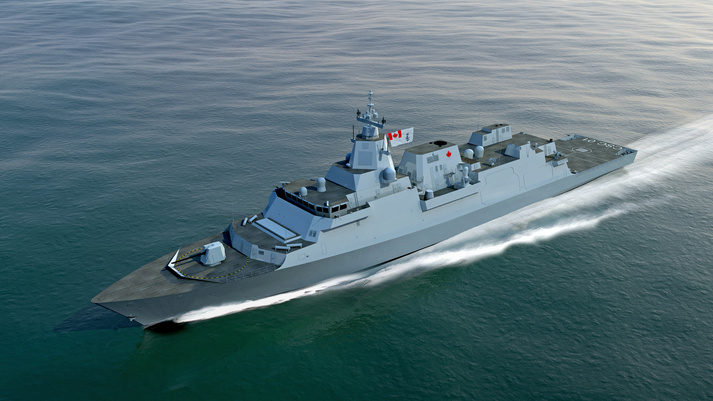
Artits Rendering of the BAE Type-26 Global Combat Ship; which many believe is the frontrunner in the CSC Fleet Proposal.
Finn said a contract is expected to be awarded by the end of the year.

About half of the cost of the surface combatants is for systems and equipment that will go on the 15 ships, according to federal documents obtained by Postmedia through the Access the Information law. “Approximately one-half of the CSC build cost is comprised of labour in the (Irving’s) Halifax yard and materials,” the documents added.

Last year, Jean-Denis Fréchette, the Parliamentary Budget Officer, estimated the CSC program would cost $61.82 billion. He also warned that every year the awarding of the contract is delayed beyond 2018, taxpayers will spend an extra $3 billion because of inflation.

Tuesday, April 17, 2018

Clement: It's Time to Change Course on Shipbuilding


By Tony Clement, Special to Postmedia Network

Canada’s National Shipbuilding Strategy was announced with the goal of delivering vessels for the Canadian Coast Guard and the Royal Canadian Navy that were affordable, modern and effective. It was expected that the strategy would create world class, competitive yards that could produce vessels which could be exported.
Image result for aops
The Royal Canadian Navy's first Arctic and Offshore Patrol Ship (AOPS), the future HMCS Harry DeWolf, assembled at Irving Shipbuilding's Halifax Shipyard.
Two shipyards were selected under the plan in 2010 – Irving Shipbuilding of Halifax and Seaspan of Vancouver – and they were to be capable to start building ships immediately, and close gaps over time at “no cost to Canada” under a non-binding umbrella agreement.

Irving Shipbuilding in Nova Scotia was chosen to build the five Arctic Off-Shore Patrol Vessels (AOPS) and the future fleet of up to 15 Canadian Surface Combatants (CSC). Seaspan in Vancouver was selected to build five coast guard vessels and two Joint Support Ships (JSS) for the Navy.

Under the strategy, the two yards were guaranteed this work provided they could close their capability gaps within a specific period of time and at no cost to taxpayers. So where do we stand after almost eight years?

To date, millions in government subsidies have poured into the two selected shipyards; costs to taxpayers are‎ soaring and vessel delivery dates are pushed further back. Seven years later, not one ship has been delivered. When it comes to costs:

— The budget for the three Off-Shore Fisheries Science Vessels has grown from $244 million to $687 million.

— The Off-Shore Oceanographic Science Vessel, which is still in the design phase, has seen its budget grow from $108 million to $144 million, and speculation abounds that the budget will grow to over $275 million in the coming year.

— The two JSS originally budgeted at $2.6 billion are now expected to cost $4.13 billion according to the Parliamentary Budget Office (PBO).

Add to the list of shipbuilding woes, the John G. Diefenbaker, Canada’s planned polar class icebreaker for $1.3 billion. The vessel was designed in 2012; however it may not be contracted until 2030, meaning its design will already be obsolete before the keel is laid.

The Liberal government has no plans for the second polar class icebreaker, and no actions are being taken to build the three high endurance multi-tasked icebreakers or the five ocean patrol vessels for which funding has been allocated.

When it comes to the five AOPS, progress is being made, yet taxpayers will not know the cost of the vessels until at least six months after the first ship is delivered.

The budget for the future fleet of 15 surface combatants has grown from $26 billion to $60 billion and the procurement is in question, as many bidders have backed away from a process is that has been amended over 50 times.

Under the Liberals, the National Shipbuilding Program is failing. It is time for a course correction. Here are a few suggestions:

— All vessels under the NSS must come under a fixed-price contract.

— The government must return to selecting a proven design for the future fleet of surface combatants, rather than spending billions more and taking significant risks, and delays with an unproven ship design.

— Expand the shipbuilding strategy to add capacity and commercial pressure by including Davie Shipbuilding of Quebec in ongoing planning, including building additional coast guard vessels which are urgently needed, and for which funding was allocated years ago.

— The government should also follow up on the success of the Astérix, and accept Davie’s offer to build the second interim supply ship at $650M, (significantly cheaper than JSS) so the Navy can get on with having the capability to refuel the Atlantic and Pacific fleet simultaneously at sea.

Without some drastic changes in this program, all signs point to taxpayers getting soaked; our navy and coast guard being hobbled, and our security and sovereignty being put at risk.
---
— Tony Clement is a Conservative MP and Official Opposition Public Services and Procurement Critic

Tuesday, April 3, 2018

Danish Arctic Patrol Ship coming to Halifax

By: David Pugliese, Defence Watch 


Representatives from Canada’s defence industry are being invited to tour a Danish Arctic patrol ship that will be in Halifax April 4-5.

The EJNAR MIKKELSEN (EJMI) is one of three KNUD RASMUSSEN-class Arctic vessels, supplementing the four units of the larger THETIS-class, Lt. Col. Per Lyse Rasmussen of the Danish embassy in Washington, pointed out to Canadian industry.

The ship is similar in design to Canada’s Arctic Offshore Patrol Ships being built by Irving but it is smaller. What is also significantly smaller is the cost. Each AOPS is estimated to cost $700 million. The Danish ships are estimated to cost $70 million to $80 million each.

Here are some more details about the ship provided by Rasmussen to Canadian industry representatives:

EJMI is primarily used in the Arctic and specifically in the waters around Greenland as an Arctic Patrol Vessel. Main missions are surveillance, sovereignty enforcement, search and rescue, fishery protection and support to the local community. Other tasks include environmental monitoring, assistance to research and scientific studies, navigational tasks, ice reconnaissance, collection of weather and oceanographic data, icebreaking, explosive ordinance disposal and transportation of personnel and materiel. Additionally, EJMI also offers assistance to Greenland’s Home Rule Government, the Danish Meteorological Institute, the National Police of Denmark, Customs Authorities and many others.

Some useful facts about EJMI, which was named 13 September 2008 after one of the Danish polar explorers:

Length (total): 71,80 meters

Beam: 14,60 meters

Draught: 4,95 meters

Displacement (standard): 2,050 tonnes

Engines: Two MAN diesels 7.770 hp, three generators

Speed (eco): 12 knots

Speed (max): 17 knots

Icebreaking capability: about 3 feet (up to 5 feet)

Basic crew: 19 (up to 43/45)

Range at 12 knots: 7,050 nm

Container positions: 4 standard flex

Weaponry: One 3-inch Oto Melare gun, two 50-cal heavy machine guns, two light machine guns

Other facilities: Flight deck, hospital, SAR-vessel, RHIBs.

Photos Courtesy of the Danish Navy. 

Monday, August 21, 2017

Thales awarded 35-year RCN ISS contract

DND Press Release

Canada has chosen Thales as the prime contractor for In-Service Support (ISS), refit, repair, maintenance and training to both Arctic and Offshore Patrol Ships (AOPS) and Joint Support Ships (JSS).

Known as AJISS, the contract includes an initial service period of eight years for up to C$800 million with options to extend services up to 35 years – for a total value of C$5.2 Billion, making it the largest ISS contract in Canadian history.

(As part of its 2017 order intake, Thales will book the management portion for the 1st phase of this contract at less than C$60 million.)

This contract builds on Thales’ experience in providing in-service support to every major Royal Canadian Navy (RCN) platform for the past 50 years, including ISS for systems onboard Victoria-class submarines, Kingston-class maritime coastal defence vessels, Iroquois-class destroyers, and Halifax-class frigates.
Artists Rendering of a RCN Arctic and Offshore Patrol Vessel of the Harry DeWolf Class © Irving Shipbuilding Inc. 2015 
Thales will leverage its Canadian expertise in project management, systems engineering and integrated logistics support to lead the development of a new Canadian supply chain that will offer comprehensive in-service support for all systems and equipment of these fleets over their operational lifetime, ensuring they are mission-ready, on time, every time, from coast to coast to coast.

This in-service support contract will create an important collaboration with RCN staff. With such a contract, Thales will work closely with the Navy's support facilities and personnel.

Over its 35-year duration, this contract will generate economic benefit of more than $250 Million CAD in Research & Development for Canada, leveraging the creativity of both industry and academia and sparking innovation in areas such as predictive maintenance, life-cycle management and logistics support analysis.

With over 16 years of performance-based ISS experience with the Royal Australian Navy in a relational contracting model, Thales will also transfer knowledge of existing and innovative ISS-ready solutions from Australia to Canada. Since 1989, the Australian Government, with the Royal Australian Navy and industry, have trusted Thales to manage, maintain and upgrade its naval assets at the most important ship repair facility in the Southern Hemisphere, the Garden Island Naval Base in Sydney.

Thales’ proven and award-winning ship service and maintenance model has consistently exceeded material readiness requirements and exceeded operational availability targets by as much as 30 per cent. Thales has provided ISS to navies in Singapore, New Zealand, USA, Saudi Arabia, the UAE, Bahrain, Papua and New Guinea, and Tonga.

Mark Halinaty, Thales' Country Director in Canada, remarked that the company is committed to "empowering Canadian industry to support this program for decades to come." He noted that through this contract, Thales "will create jobs across Canada and will ensure that the ships are mission-ready.”

Wednesday, April 19, 2017

Sophie Grégoire Trudeau to be sponsor of HMCS Harry DeWolf

Royal Canadian Navy Press Release

The Royal Canadian Navy (RCN) has announced that Ms. Sophie Grégoire Trudeau has agreed to become the sponsor of Her Majesty’s Canadian Ship (HMCS) Harry DeWolf, the lead ship in the RCN’s upcoming class of Arctic and Offshore Patrol Vessels.

Image result for hmcs Harry DeWolf
Artist's impression of the Harry Dewolf-Class Arctic/Offshore Patrol Vessel
The appointment of a ship’s sponsor is a long and storied naval tradition. The function of a sponsor is to be part of the naming of a ship, typically breaking a bottle of champagne across the ship’s bow during its naming or launching ceremony. Sponsors are often prominent women who have served their communities in a variety of capacities. Many sponsors continue their relationship with their ship for many years and remain key stakeholders and supportive members of the RCN family.

Ms. Grégoire Trudeau is a volunteer, speaker, and long-time champion for a variety of important causes such as gender empowerment, mental health, self-esteem, and equality issues relating to women and children. She has raised the profile of many causes that focus on the health and well-being of families.

“I am honoured to serve as the sponsor of HMCS Harry DeWolf. Vice-Admiral Harry DeWolf was a true Canadian hero who is remembered for his legacy of service, courage, and determination. I am confident that this ship, and all those who serve on it, will continue to build on that legacy—one that all Canadians can be very proud of. I have great respect for the men and women who serve in the Royal Canadian Navy, and I’m very eager to meet the sailors and their families,” said Ms. Sophie Grégoire Trudeau, sponsor of HMCS Harry DeWolf.

Construction of HMCS Harry DeWolf is now underway by Irving Shipbuilding Inc. in Halifax. The ship is expected to be launched in a naming ceremony that will involve Ms. Grégoire Trudeau in 2018.

All of the RCN’s commissioned ships have sponsors and many prominent women have served or are currently serving as sponsors, including Ms. Aline Chrétien, the sponsor of HMCS Shawinigan; and Ms. Mila Mulroney, the sponsor of HMCS Halifax, lead ship of the Halifax Class Canadian Patrol Frigates.

The Arctic and Offshore Patrol Vessels will be large, ice-capable ships, more than 100 metres long, and designed to conduct a variety of missions in Canada’s waters, including in the Arctic. The vessels will be capable of conducting armed sea-borne surveillance, providing government situational awareness of activities and events in these regions. They will also be able to cooperate with partners in the Canadian Armed Forces and other government departments to assert and enforce Canadian sovereignty, when and where necessary.

Vice-Admiral Harry DeWolf was a decorated naval commander in the Second World War. He took part in numerous Atlantic convoy escort duties, in the rescue and evacuation of Allied troops from Dunkirk after the fall of France in 1940, and was known as a fearless and bold tactician throughout the war. During his 14 months in command of HMCS Haida, VAdm DeWolf led in the sinking of many enemy ships, earning him a Distinguished Service Order for gallantry, and a Distinguished Service Cross for courage and skill in action against German destroyers. In 1956, upon promotion to the rank of Vice-Admiral, he was appointed Chief of the Naval Staff, a position he served in until his retirement in 1960.

The names of five of six Arctic and Offshore Patrol Vessels have been announced to-date, each one named after Canadian naval heroes: HMCS Harry DeWolf, HMCS Margaret Brooke, HMCS Max Bernays, HMCS William Hall, and HMCS Frédérick Rolette.

Tuesday, March 21, 2017

The Canadian North is the Least Defended Territory on Earth

By: Scott Gilmore, Macleans Magazine 

Never mind the Amazon, or even the Antarctic. Northern Canada is the global epitome of undefended territory.


There is no place on earth as poorly defended as the Canadian Arctic. But maybe that’s a good thing. We do enjoy pretending to be a nation of “peacekeepers” (in spite of the fact we currently do less peacekeeping than say, El Salvador or Gambia). Vimy Ridge, Juno Beach, Kapyong, Panjwaii: these are places typically not mentioned in polite company, and almost never spoken aloud by a Liberal government. When we talk about arming our military, we don’t even like to use the word “arm”—we say “procurement.”

So, perhaps it is fitting that the Canadian North is essentially the largest military-free zone in the world. To be fair, it is not utterly bereft of Canadian Forces. We have three very small bases. There are some radar installations (that use 1980s technology). There are the Rangers, of course, local volunteers who are given Second World War rifles, a hoodie, a ball cap and an annual photo op with whichever politician is shameless enough to fly north for 24 hours to emote about the Canadian North from the depths of his or her $1,200 Canada Goose parka. Our largest icebreaker— built in 1969—is currently undergoing it’s seventh refit. And, we have approximately 120 armed forces personnel, just enough to fill a Tim Hortons. All of this, of course, is spread over an area the size of Europe (except the icebreaker—it’s in Halifax).

The list of what we don’t have is considerably longer. There is no port, military or civilian. The closing of Churchill last year ended the fatuous notion that Canada has a third coast. No airbase. No search-and-rescue hub. No four-season ice-breakers. No ice-strengthened war-ships. In fact, our fleet is now so small and so rusted out it has lost the designation of being a “blue-water navy”, it is a coastal defence force—on calm days—if everything is working.

If you ask around Ottawa why this is, the answer is and always has been, “Because it’s hard.” Which is true. The Canadian North is remote, wild, undeveloped, like the Russian North for example. Facing a similar climate and geography, Moscow has only managed to build two infantry bases; nine naval ports; and seventeen airbases along its Arctic coast over the last 60 years.

RELATED: Putin, Trudeau and Canada’s Arctic problem

But the Canadian Arctic is more remote and difficult to access than Russia’s. It is more like the Amazonian rainforest—an expanse of jungle and swamp 25 per cent larger than the Canadian North. The Brazilians have almost nothing there, other than the Manaus Air Base, home to four air squadrons, and an airborne army battalion. And there are several naval facilities, including the Rio Negro naval base, 1,300km up the Amazonian river. That base has nine satellite facilities, as well as a helicopter squad and marines. The Brazilians also have a fleet of large riverine hospital ships that ply the remote backwoods of the jungle. But that’s it.

But the Brazilians spend 2.6 per cent of their GDP on the military. The economic choices of our political leaders have always been less guns and more butter (supply-managed, thank you). Regardless of our formal obligations to NATO that we spend two per cent on the Canadian Forces, our defence budget comes in at half that.

We have much more in common with Australia, a commonwealth democracy, managing a constant political struggle to maintain social services and infrastructure spending. It makes sense that we would be careful about our military deployments, frugal even. Consider how the Australian’s have chosen to defend the Outback. Other than a huge naval base in Darwin, and several air squadrons at the RAAF Tindal, another couple of air bases, a dozen training bases, an infantry battalion, and large radar installations at Alice Springs and elsewhere, the place is empty.

Even in Antarctica, at the bottom of the world, owned by no country, needing no defence, and subject to a treaty prohibiting military activity, there are dozens of research bases run by the armed forces of countries like Chile, Uruguay and even Pakistan. The search and rescue capabilities of McMurdo Station alone are greater than all of Canada’s north of the 60th parallel.

No, if you want to get away from it all, to go somewhere on the planet where no one will be able to rescue you—or stop you, or even know you’re there—you want Canada’s North.

But try to keep this quiet. We don’t want it overrun by adventure tourists. Or cruise ships like the Crystal Serenity, which went through last summer bringing its own rescue ship because Canada didn’t have one. Or resource companies, now free to roam over ice-free waters. Or the Chinese, who want to start sending cargo ships and oil tankers through on their way to Europe. Or the Russians, who are increasingly overflying NATO territory. Or our American allies, who announced in Congress this week they will not recognize Canada’s sovereignty over the Northwest Passage.

No, let’s follow the leadership of Prime Minister Trudeau, who made sure the Arctic was only mentioned twice in the 360 priorities he gave his ministers, and who has bravely avoided drawing any attention to the North—visiting only once since taking office—and who has still not published an Arctic strategy. Let’s just not draw any attention to the fact we’ve utterly abandoned the Canadian North. What could possibly go wrong?

Monday, January 9, 2017

Liberals select Thales for $5.2-billion AOPS Maintenance Program

By: David Pugliese, The Ottawa Citizen 

A subsidiary of French defence giant Thales has been selected for a $5-billion contract to maintain Canada’s new Arctic patrol vessels and supply ships, but according to documents obtained by the Ottawa Citizen, the Canadian government had earlier been warned by some officials at the Department of National Defence that its strategy of having one firm do maintenance for both fleets could cost taxpayers more money in the long run.

Pierre-Alain Bujold, a spokesman for Public Services and Procurement Canada, said Friday that all the bids received for the maintenance contract have been evaluated and the government will now enter into negotiations with the highest-ranked bidder. Despite the Liberal government’s vow of openness and transparency, the department declined to name the winning bid, citing reasons of commercial confidentiality.

But multiple industry sources say Thales Canada and was told in late December it had won the $5.2-billion project.

The deal would see the firm provide in-service support for an initial period of eight years, with options to extend services up to 35 years. Bujold said the actual contract is expected to be awarded in the fall of 2017. “If the parties cannot reach an agreement on the financial aspects of the contract within an allocated 45 calendar days, the GoC will invite the next highest ranked bidder to enter into negotiation,” he added.

The first Arctic Offshore Patrol Ship is being built by Irving on the east coast and is expected in 2018. Construction has yet to start on the two new Joint Support Ships. The first of those supply ships, to be built by Seaspan in Vancouver, is expected in 2021.

Thales Canada did not respond to requests for comment.

The Canadian government announced in July it was seeking bids from companies to repair and maintain the two new fleets over a 35-year period.

But some Department of National Defence officials warned the government years ago that selecting one company for a single in-service support (ISS) contract covering two types of ships could give one firm too much control and end up being more costly. “A single ISS provider may assume a ‘take it or leave it’ attitude at the time of contract option renewal, forcing prices up,” warned an April 2012 DND briefing note for then-deputy minister Robert Fonberg.

A dispute with the contractor could also force the Royal Canadian Navy to resort to conducting maintenance and support for the ships on a piecemeal basis, a development that would affect its operations, added the briefing obtained by the Citizen.

DND also warned that not all companies would be happy with such a strategy as it would take a significant amount of business out of competition for a long time. Other DND officials, however, argued that the single contract strategy would work and any risks could be handled by increasing the level of oversight on the deal.

Last year, the government said the competition to pick one firm to provide in-service support, including refit, repair and maintenance and training for the two fleets, would benefit Canadian industry and the public. “By combining the Arctic Offshore Patrol Ships and Joint Support Ships In-Service Support into one contract, we ensure the effective maintenance and support of these fleets over their operational lives,” Judy Foote, the Minister of Public Services and Procurement, said at the time.

The federal government also noted, “that combining the contracts for the AOPS and JSS In-Service Support under a single contractor will benefit industry by increasing workforce stability and benefit Canadians by reducing costs through economies of scale.”

Industry sources say there is no need for the intense secrecy about Thales being the top bidder since the news has circulated over the last couple of weeks among various companies. They warn that there is a growing pattern of secrecy over defence purchases at Public Services and Procurement Canada.

Monday, December 12, 2016

National Shipbuilding Behind Schedule

By: Lee Berthiaume, The Canadian Press

Reports reveal construction of supply ships, polar icebreaker is behind schedule.

OTTAWA—The federal shipbuilding program has hit another setback, as government documents show more delays in the construction of the navy’s new supply ships and the Canadian Coast Guard’s highly anticipated polar icebreaker.

The delays, revealed in departmental reports recently tabled in the House of Commons, are expected to cost taxpayers as the navy and coast guard are forced to rely even more heavily on stop-gap measures to address their needs.

The two supply ships, which together will cost $2.6 billion, and the $1.3-billion polar icebreaker, dubbed the John G. Diefenbaker, are to be constructed one after the other in Vancouver by shipbuilding company Seaspan.
A replacement for the 50-year-old  icebreaker Louis S. St-Laurent will be delayed until at least 2022.
A replacement for the 50-year-old icebreaker Louis S. St-Laurent will be delayed until at least 2022. (JONATHAN HAYWARD / THE CANADIAN PRESS)
All three vessels are desperately needed as technical problems recently forced the navy’s two existing supply ships into early retirement, while the coast guard’s 50-year-old Louis St-Laurent heavy icebreaker was supposed to retire next year.

National Defence and the Department of Fisheries and Oceans reported last year that the first new supply ship would enter the water in 2020, while the Diefenbaker would arrive in 2021 or 2022.

But the departments’ most recent timetable says construction of the first supply ship won’t be finished until at least 2021, with completion of the Diefenbaker similarly delayed until 2022 or 2023.

When the federal government’s $35-billion national shipbuilding plan, which includes construction of new Arctic patrol vessels and a fleet of warships in Halifax, was first announced in 2010, it was expected the supply ships and icebreaker would all be finished by 2018.

National Defence spokesman Evan Koronewski blamed “challenges associated with completing the detailed design and organizing the entire supply chain” for the delay in the supply ship schedule.

Those challenges were also responsible for pushing back construction of the Diefenbaker, as work on the icebreaker can’t start until the supply ships are finished.

The federal government has already committed millions of dollars in recent years to extend the lives of the current icebreaker fleet.

But the new delays help explain why the coast guard started looking last month at whether it can lease between one and five icebreakers from the private sector for the foreseeable future.

They also mean that the navy will be forced to rely more on allies as well as a converted civilian cargo ship to provide fuel, food and other supplies to Canadian naval ships at sea.

There have been questions over the years about Seaspan’s ability to construct complex military vessels, given that its previous shipbuilding experience has largely revolved around ferries and tugboats.

The company referred questions to the government.

But defence analyst David Perry of the Canadian Global Affairs Institute suggested bad planning is to blame, as government officials were overly optimistic — or wholly unrealistic — about the shipbuilding plan’s various timelines.

“The whole enterprise is very behind schedule,” he said.

Monday, September 26, 2016

The Dismal State of Canada’s Navy

By: Claudia Nieroda, The NATO Association of Canada 

Canada’s navy is in deep, troubled waters. With the nation’s last destroyer retiring in 2017, we will be left without any large warships capable of defending and resupplying the remains of our naval fleet. The wear and tear, in addition to soaring replacement costs, has seen many ships decommissioned without timely replacements. The rusted decades-old ships that have persevered are prone to frequent mechanical breakdowns. Consequently, the Royal Canadian Navy today is ranked by Ken Hansen on the Canadian Naval Review as on the same level as Bangladesh’s maritime forces.

The National Shipbuilding Procurement Strategy (NSPS) was launched in June 2010 by the Harper Government in an attempt to restore the navy to its former glory. Following World War II, Canada had the fifth largest navy, but years of neglect left it in a disintegrated state. There remain a total of 29 warships, meaning vessels equipped with missiles and military weapons designed for combat and defense purposes. Canada’s last destroyer, the HMCS Athabaskan, is scheduled to retire in 2017, with no plans for another destroyer to replace it. With the largest coastline in the world and three oceans to patrol, the lack of naval armada is alarming.

The NSPS is meant to build, repair, and maintain the federal fleet. However, it does not appear that it is living up to its promise to bridge the significant gap that has been formed in Canada’s navy. Constant delays, budget cuts, and increasing production costs keep the NSPS from carrying out what it planned to do according to the original timeline.

Only six out of thirteen current icebreakers are capable of polar operations, but none are able to travel far in the Northern seas during the winter months. The NSPS commissioned the construction of a new icebreaker, the CCGS John G. Diefenbaker, which was initially expected to be in service by 2017, but a series of delays will now have the ship joining the fleet in 2022. The government has issued an order for new Arctic/ Offshore Patrol Ships, such the HMCS Harry DeWolf, but the first of these will not be delivered until 2018. This means that the Arctic passages, such as the Northwestern Passage, will continue to be unsupervised and isolated during the winter season.

Budget cuts have led to what was supposed to be an Arctic deep-water port in Nanisivik, Nunavut, turned from a naval base into a refueling station. This refueling station will only be accessible during the few summer months and closed during the rest of the year. When the HMCS Harry DeWolf is ready to enter service, it will not have an Arctic base to operate from.

Currently, the navy is ill-equipped to meet the various treaty commitments with Canadian allies. It is unreasonable to assume foreign countries would be willing to protect Canada if it is common knowledge that the nation’s navy will be unable to come to their defense. This reputation may be detrimental to Canada’s security.

The importance of the navy is not just fundamental in the ability to defend freedom. While that is a crucial factor in today’s erratic global affairs, it is important that Canada’s navy be prepared to respond to natural disasters and humanitarian crises. For instance, if any civilian ship, such as the ferries that move passengers between Labrador and Newfoundland or Vancouver and Victoria, were to signal a distress call, the lack of naval units might lead Canada to depend on the U.S. Navy Coast Guard to back up the Canadian Coast Guard. If an earthquake struck one of the islands off of British Colombia, such as Haida Gwaii, similar problems might arise.

The navy is simply not equipped to respond to multiple crises at home, never mind additional crises abroad. The Canadian government would be hard pressed to fulfill the agreements with their treaty partners and allies in the defense capability, nor in humanitarian aid. It is crucial that Canadians do not take the reputation as a “peaceful” country for granted as geopolitical security can never be guaranteed. The NSPS needs to focus on the present state of the navy and how to expedite the planned improvements. We cannot simply wait 10 years for ships to be constructed; we need them now.

----
 Nieroda Claudia Nieroda graduated from the University of Guelph with an Honours Bachelor of Arts in Political Science. Throughout her undergrad career, she participated in an exchange at the National University of Singapore, taking courses extensively in the field of International Relations. In her final year, she successfully wrote and defended a thesis paper exploring the advantages of soft-authoritarian regimes in South East Asia in terms of political and economic development. Claudia loves adventure and travel, visiting over 35 countries and 5 continents, and is currently pursuing a career in the field of international relations.

Thursday, September 15, 2016

Maritime Coastal Defence Vessels to continue to operate even with delivery of AOPS

By: David Pugliese, Defence Watch 

There has been a lot of speculation over the years on the fate of the Maritime Coastal Defence Vessels. Much of it has centered on concerns they will they be pulled from service as the Arctic Offshore Patrol Ships come [into service]. Defence Watch asked that question of Vice Admiral Ron Lloyd, the head of the Royal Canadian Navy.

Here’s what he had to say:

“No. We’ll continue to operate the MCDVs. The MCDVs are providing yeoman’s service for us. As we’ve gone through the Halifax Class modernization, we’re having tremendous success with their ability to participate in Joint Interagency Task Force South, the counter-narcotics operation. They are also a vehicle by which we can introduce our sailors to leadership opportunities early in their career. And the MCDVs do a marvellous job of doing that going forward.”

“We have two in a deep maintenance period at any given time,” he added. “And then we have ten at various levels of readiness available for operations.”

HMCS Brandon is a Canadian Kingston-class maritime coastal defence vessel commissioned in 1999. The vessel is based out of CFB Esquimalt.
HMCS Brandon is a Canadian Kingston-class maritime coastal defence vessel commissioned in 1999.

Thursday, September 8, 2016

Irving facing significant challenges in building Arctic Offshore Patrol Ships

By: David Pugliese, Defence Watch with The Canadian Press

Assembly of Canada’s first Arctic offshore patrol ship on time and within budget is proving to be a “significant challenge” for the Irving Shipyard, though its top executive says a promised deadline will be met, the Canadian Press writes.

Here is the rest of the Canadian Press article:

Kevin McCoy said Wednesday his firm still plans to deliver the first of the ships designed to steam off Canada’s northern coasts in 2018, as originally announced.

aops-3-best-sized-copy

However, he told reporters at a defence industry conference in Halifax that his firm’s efforts to create North America’s most modern shipyard from the ground up hasn’t been easy.

“Now I’ll tell you, starting a shipyard up from scratch … all new software, new training, over 700 new procedures in place, establishing a supply chain for shipbuilding in Canada, all of that is a significant challenge,” he said.

He also said he realizes that the new Liberal government is observing his company’s progress on the offshore patrol ships as precursor to the yet-to-be finalized contracts for the replacements for Canada’s aging warships.

That project could sustain the yard for the next two decades.

“Clearly it’s a confidence builder for the Canadian government. The Arctic ships are a great warmup to the Canadian surface combatant,” said McCoy, standing before a model of the ships conceived of by the Harper government.

Observers of the procurement process say the Liberal government has been looking for ways to curb costs on the Arctic patrol vessel program.

Michael Byers, a professor of political science at the University of British Columbia, says Ottawa will likely have to scale back on promises to create six to eight of the Arctic patrol vessels and 15 warships to replace much of Canada’s bluewater fleet.

The original 2011 shipbuilding strategy announced by the Harper government was an umbrella agreement that designated the Irving shipyard in Halifax and the Seaspan shipyard in British Columbia as the two locations.

However, the specific deals on how many ships will be completed is the subject of contracts being worked out between the yards and the Trudeau government.

Byers, who closely follows defence procurement, says the resurrection of the Davie shipyard in Levis, Que., has given National Defence a possible alternative where some of the shipbuilding work could be shared out – putting some pressure on the prime contractors to fulfil timelines and stay on budget.

Original projections put the cost of building 15 new vessels at $26 billion, but internal documents and reports published last fall suggest the bill could run as high as $40 billion, with the federal public works minister recently declining to provide updated figures.

Byers says the Arctic patrol ships are challenging because the Harper government chose to create a new type of vessel that no other country had built, which can lead to design challenges and delays.

“There will be real pressures to compromise on capabilities to keep costs down. The federal cabinet will be scrutinizing all of this closely,” he said.

Still, McCoy announced during his speech that the shipyard currently has 50 of the 64 modular pieces of the first Arctic patrol vessel, HMCS Harry Dewolf, in its facility, and it cut steel last month for the second vessel, HMCS Margaret Brooke.

The company has been trying to build public awareness of shipbuilding’s importance to the Canadian economy, billing itself as being the key to a sustainable national shipbuilding industry that will avoid previous boom and bust cycles.

The company handed out a glossy brochure Wednesday that highlights that the company has hired over 1,300 employees, and said the magazine will be distributed to every household in Halifax to increase awareness of progress at the yard.

Harper announced his plans for Arctic vessels during the 2006 federal election campaign, saying the Tories would build three armed icebreakers.

This promise was later transformed to six to eight Arctic offshore patrol vessels and a refueling berth in the Arctic.

(the above was written by the Canadian Press)

Monday, May 30, 2016

The CAF and the Arctic: Maintaining a Suitable and Sustainable Role


Published by the CDA Institute 

In this new CDA Institute Analysis, Adam MacDonald looks at the military requirements for Canada in the Arctic, concluding that the capabilities need to be suitable for the security environment and financially sustainable given other defence commitments. The following is an excerpt of the Analysis.

Due to its increasing accessibility resulting from climate change, the Arctic could become a contested and militarized arena in which states within the region and beyond attempt to secure and gain access to lucrative shipping routes and resources. Such an eventuality poses particular challenges to Canadian sovereignty and security. Stemming from such a characterization, the Harper government had long prioritized the Arctic as a defence issue, raising the spectre that Canadian sovereignty in the North could be irrevocably compromised – we either ‘use it or lose it.’

While silent on which potential adversaries were threatening to usurp Canadian ownership, the Harper government sought to restore a military presence in the Arctic by “placing more boots on the Arctic tundra, more ships in the icy water and a better eye-​in-​the-​sky.” In his 2005 campaign, in particular, Harper promised a litany of Arctic-​specific defence projects to rectify the Canadian Armed Forces (CAF) dearth of presence and operational experience in the region. The promotion of the ‘sovereignty at risk’ narrative seemed to justify the construction of a robust and permanent military presence in the Arctic. In reality, however, Canada requires a different type of military presence and capability suite than commonly perceived (or advocated).

Canada’s security challenges in the North do not emanate from a military threat but are rather largely constabulary in nature. Defending sovereignty is the perennial duty of the military but in the Arctic there is no credible, state-​based threat capable of challenging Canadian ownership of its waters and territories, with a few exceptions which are well managed. Despite its sometimes fiery rhetoric, the former Conservative government’s various Arctic policy documents reflected such an appreciation of the threat environment. With the near absence of state-​based threats, military requirement in the Arctic need to be suitable for this particular security environment and sustainable given the operating challenges of the region, as well as other competing military priorities.

At present, the military is focusing their Arctic efforts on increasing domain awareness via surveillance and maintaining a light regional footprint to facilitate Northern operations and, when required, support the deployment of southern based-​units which are increasingly training in the North, often in conjunction with other security agencies and regional partners. Deploying large contingents of combat capable forces is ill-​advised given the nature of the threat, prohibitively expensive given the harsh operating environment (especially the High Arctic), and potentially compromising other missions and mandates by drawing resources away.

The Arctic Security Environment

With the end of the Cold War, the strategic importance of the Arctic diminished significantly allowing for the construction of regional forums dedicated towards common interests, specifically climate research. Rapidly changing environmental conditions, however, are transforming the Arctic landscape by increasing accessibility to human activity to an unprecedented level. Amongst this uncertainty, issues of ownership and access have fueled the development of a narrative of the Arctic as moving away from a politically stable region to one of high geopolitical importance characterized by growing complexity, competition, and perhaps even rivalry. In such a narrative, the current regional architecture is simply unable to adjust and accommodate the expected scramble for resources and political influence.

Not surprisingly, a popular theme has been the growing ‘militarization’ of the Arctic over the past decade. There is no denying that all Arctic states are augmenting their military capabilities in their northern territories, including the stationing of combat-​capable units. As one commentator has remarked, “we may be entering the first stages of an Arctic arms race, in which competition and conflict may overwhelm our desires and rhetoric to have a cooperative régime for the developing circumpolar world.” The augmenting presence, capability development, and employment of military forces in the Arctic is an emerging reality, but their use is, by and large, within recognized national borders and waters.

Moreover, they are largely focused on exercising sovereign control to ensure compliance with state laws, border control, and search and rescue. Retaining combat forces to defend against state-​based threats in the Arctic is a marginal requirement at this time. Arctic countries are more concerned about increasing their domain awareness in parts of their jurisdictions characterized by large geographic areas, small and sparse populations, and a lack of infrastructure, surveillance, and response capacities.

The flurry of recent Russian military projects in the Arctic, including icebreaker construction and the re-​activation of air and army bases on their northern islands, are in part aimed at establishing unquestioned ownership of the Northern Sea Route, regardless of legal objections by the US that the waters constitute an international strait. This is not to suggest that developing a war-​fighting capacity in the Arctic is not an objective of Moscow. However, domestic political calculations and constabulary requirements have heavily shaped the makeup and operational nature of military developments thus far in the region. Some military developments in the Arctic, furthermore, are based on larger, extra-​regional factors. Modernization of the Russian Northern Fleet, for instance, is designed to upgrade their nuclear submarine deterrent and for global operations. Similarly, the US ground-​based interceptors in Alaska are meant to counter a missile attack from a rogue state, specifically North Korea.

Most commentators are quick to assert that militarization is becoming a dominant force driving regional politics, but are at a loss in not only providing an operational definition (e.g., what does ‘militarization’ mean?) but also in explaining how this process will contribute to the destabilization of the region beyond simplistic narratives (Russia versus NATO; non-​Arctic states versus Arctic states). There are no territorial disputes in the Arctic, with the exception of the relatively benign dispute over Hans Island between Canada and Denmark, and there is no evidence to suggest Russia or any other Arctic nation is moving to employ military forces over contested Extended Exclusive Economic Zones (EEZ) or to gain unobstructed access to polar shipping routes.

Click here to read the rest of the CDA Institute Analysis.

---
Adam P. MacDonald is an academic based in Halifax, Nova Scotia specializing in geopolitical developments in the Arctic and East Asia. He is a regular contributor to the Canadian Naval Review, East Asia Forum and Frontline Defence.

Wednesday, April 20, 2016

Military Budget 2016: Funds frozen for ships, choppers, fighters

By: David Pugliese, National Post (National Edition)

Key programs not immune to budget delays

Some of the Canadian military’s top equipment programs already underway — including projects to buy maritime helicopters and Arctic patrol vessels — will have their funding delayed as the Defence Department tries to deal with the Liberal government’s first budget.


Released in late March, the budget delays $3.7 billion in spending on equipment until 2021 or later.

But details provided to Postmedia by the department outline how even key military equipment programs just getting underway are not spared the funding freeze. Money is being withheld from programs that include:

Arctic offshore patrol ships ($173 million withheld)

Future fighter aircraft (CF18 replacement; $109 million withheld)

Cyclone maritime helicopter ($90 million withheld)

Halifax Class modernization and frigate life extension ($71.1 million withheld)

Integrated soldier system project ($39.4 million withheld)

Another $2.6 billion in equipment funding — not yet earmarked for specific gear — will be withheld until 2021 or beyond.

It is unclear how some of the programs — such as the Cyclone helicopters now being delivered — might be affected by the removal of funding.

In addition, construction has already begun on the Arctic offshore patrol ships; the first ship is to be in the water by 2018.


Defence sources have suggested the government could account for the $3.7 billion by delaying or cutting back on buying spare parts or other equipment for the ongoing projects, or delaying the arrival of some of the equipment.


Defence analyst Martin Shadwick said he was surprised active programs were being targeted. He noted that the Cyclones are supposed to be replacing the Air Force’s aging Sea King helicopters, a contract originally signed under Liberal prime minister Paul Martin in 2004.

“One possibility is that the Sea Kings will have to keep flying longer,” said Shadwick, who teaches strategic studies at York University in Toronto. “Or maybe systems that were supposed to be added to the aircraft won’t be.”

In some cases, the equipment projects are relatively new. In late July, the Conservative government announced that it had awarded an initial contract to Quebec-based Rheinmetall Canada Inc. to provide gear for the integrated soldier system project. That project aims to outfit soldiers with improved communications and computer equipment that can be worn on the battlefield.

Defence sources say the budget decision could affect later portions of the project.

In other cases, such as the recently upgraded Halifax Class frigates, the Royal Canadian Navy had planned a series of follow-on enhancements to keep the ships sailing until they can be replaced starting sometime after 2026.

During the election the Liberals promised to immediately launch a project to buy replacement aircraft for the CF-18s.

But the CF-18 fighter replacement project is one of the areas in which spending is being delayed, indicating that it won’t move as quickly as the Liberals originally claimed, said Shadwick.

Finance Minister Bill Morneau has insisted that moving the funding to a later date does not mean the defence budget is being cut.

Tuesday, April 19, 2016

Re-Fresh Idea for the National Shipbuilding Procurement Strategy


By Mikaël Perron, CD
Defence Watch Guest Writer

As a three-ocean nation and a member of the G7, Canada shall be at the forefront of the world’s ocean safety. The flagships of a nation like ours should be using our own specific home design and should be of the highest standard.

So, the main classes of ships to be built under the National Shipbuilding Procurement Strategy (NSPS aka NSS) should be of a Canadian design. Over the years, Canada achieved independence from mother England by designing ships like the Cadillac destroyers, the Louis St-Laurent and river class icebreakers, the Provider and Protecteur class AOR, the Tribal class destroyer and the Halifax class frigate.

In the process, we developed ground breaking technologies like the bear trap that allows for the usage of a heavy helicopter from a destroyer’s deck, the probe at sea refuelling system, the extensive use of gas turbines on combat ships, the integrated platform management system and many other innovations. I strongly believe that we should be keeping that attitude, especially in the case of the Canadian Surface Combatant program.

A MP once questioned why the Canadian Navy should get the best destroyers in the world since we are a middle power! Well, for starters, Canada is a member of the G7 and is looking for a seat at the UN Security Council. We do not possess aircraft carriers, amphibious assault ships or nuclear attack submarines but we definitely are a destroyers/frigate Navy.

More than 80% of world trade goes through the seas and nations that maintain the security of the major sea lane of communication (SLOC) are getting noticed. The western world’s population lost sight of it but there is a major fleet building in Asia and a great submarine proliferation around the world; our new ship should be able to match threats from, and capabilities of, other nations so our sailors return safely home.

In many parts of the world, gun boat diplomacy is a very actual tactic that is well understood. At a time of financial constrain, ships are much less expensive to deploy and maintain for an sustained international presence than moving a ground force or a large air force deployment.

Ships can remain in international waters for long periods; a minimum footprint ashore is required. Warships can also rapidly shift from a humanitarian or diplomacy mission to full combat capability.

Only a few nations can keep ships deploy away from home for long periods of time or seamlessly integrate into an American battle group; we should not lose those abilities.

On the Arctic front, the race for northern resources has begun. Russia is building up to 14 new conventionally and nuclear propelled heavy Icebreakers on top of their large actual fleet. The USA are now accelerating the regeneration process of their icebreaker fleet while players like China are sending Icebreakers to test the resolve of Arctic nations. We should maintain an active and persistent presence that requires more than one heavy icebreaker, considering the vastness of our Arctic claim and the maintenance cycle of these ships.

The National Shipbuilding Procurement Strategy was a very well thought process that was done with the best information available at that time. I fully support it but it needs to evolve to include a higher level of flexibility. As the situation evolves, it should be able to get the most out of the passing opportunities. It must, at all time, take in consideration the interests of our military personnel, the strategic interests of the nation, the taxpayers and of course the industry.

For example, Davie shipyard was basically bankrupt at the selection moment and it made sense from an accountant’s point of view to discard them although they possess the highest capacity shipyard in Canada.

Since then, they’ve built the most advanced civilian ship in North America and we could take advantage of that. The government must seize the opportunity to improve the NSPS to ad flexibility to it that will better serve our sailors, national interest, our budget but also the industry.

The downturn in the oil industry offers us the possibility to negotiate the acquisition of ships that would be otherwise unaffordable and unavailable. There are now two VS4220 sitting at Davie shipyard; one 70% and the other one 40% complete. These ships possess extreme capabilities that are perfect for our ocean’s conditions.

I propose that Canada acquires them as true multi-task high endurance vessel that will also double as Offshore Oceanographic Science Vessels (OOSV). The science equipment that was to go on the OOSV to be built will be installed on one of them (we could easily buy extra gear to equip both the same way).

They will also possess helicopter support capability to carry up to a Cyclone size helicopter and to land up to Cormorant or even Chinook helicopters. Their large fuel carrying capacity would also allow them to support other government vessel such as the AOPS and other offshore vessel.

With a good negotiation process, the Canadian government could obtain these two ships at a low price. They would replace the OOSV and one of the Medium Endurance Multi-Tasked Vessel that were to be built.

That would speed up the delivery process of some much needed ships. In addition, the non-combatant winner of the NSPS – Seaspan – would not lose out in such a scenario. I can see three main scenarios that could deliver more to every stakeholder:

First scenario: 

Once the OOSV is cancelled, the building of the JSS can start ahead of time (Scientific gear that was to go on the OOSV will be installed on the VS4220). Seaspan will be given the construction of the more profitable third optional JSS instead of the OOSV. Because of reasons I will explain further, the Navy actually needs four supply ships — the three JSS and the interim AOR (iAOR) in this scenario.

Two Diefenbaker-class Icebreakers would be built. In order to have these two icebreakers in due time, the building of the Diefenbaker’s sister ship could be awarded to the Davie Shipyard. The performance of both Seaspan and Davie could be effectively measured and help to set a competitive bidding process in order to build three Canadian-designed River-class Icebreakers that would be optimal to the taxpayers later on.

Davie is also proposing the conversion of a three-year old PC3 Icebreaker sitting idle in Seattle. That has the potential to be a great bargain to the taxpayers as well as prevent a capability gap. The replacement of our icebreaker fleet would be achieved with much added capability while the NSPS process would keep the course with no losers.

Second scenario:

Once the OOSV is cancelled, the building of the JSS still can start ahead of time. Davie would be given the building of a second interim AOR so the building of the first Diefenbaker-class Icebreaker could also start ahead of time. In this case, Seaspan would be given the contract to build two Diefenbaker class Icebreakers. Davie would also do the conversion of the PC3 Icebreaker sitting idle in Seattle to prevent a capability gap and to strengthen our nation’s Icebreaking capability. A contract involving a competition would also be awarded later to replace the three remaining River-class Icebreakers. (The River-class Icebreakers were commissioned between 1979 and 1987).

Third scenario: 

Still having replaced the OOSV and the first Medium Endurance Multi-Tasked Vessel with two VS4220 vessels from Davie, Seaspan would be more than compensated with the building of three JSS and two Diefenbaker-class Icebreakers. The GoC would negotiate Davie’s offer for the PC3 Icebreaker conversion and also the three River-class conversions that they earlier proposed. That would offer a significant deal to the Canadian public and compensate for the delays caused by the building of additional JSS and heavy Icebreaker. Let’s remember that the CCGS Terry Fox was a commercial Icebreaker before joining the CCG fleet. The nation will then possess a strong shipbuilding industry ready to compete on the international market for specialized ship conversion.

The main point of this text is about the Canadian Surface Combatant (CSC) portion of the National Shipbuilding Procurement Strategy. The program is to renew our surface combatant fleet with up to 15 vessels to replace the Iroquois class destroyers and the Halifax class frigates. It is understood that the program is more expensive than it was initially planned for and that the actual budget could only afford around eleven ships.

It is now under consideration to adopt a foreign design and to do a cost trade-off on the required capabilities.

I do believe that such a course of action is the wrong way to go. We are a major industrial nation with the largest coast line in the world. The CSC will be our flagship.

There is a solution that would allow us to reach a maximum effect with eleven ships with no or minimum compromise to the statement of requirement (SOR).

Last year, before I retired from the Canadian Armed Forces, I submitted a few initiatives under the defence renewal program. One of those was a fleet manning concept for the CSC.

The core idea of that solution is to separate the needs of the crew from the needs of the ships themselves. The end result looks like this: five Area Air Defence (CSC AAD) ships, five General Purpose (CSC GP) ships with all the necessary spares. One extra hull will allow for each ship to go on a two year extended maintenance period every ten years.

There will be twelve sea going crews and a shore maintenance team. It is organized so we can have four ships permanently deployed, four ships available for training, local exercises / patrol, short work periods and finally three ships on extended work period. This way of operating a class of ships will work with classes of ships of five or more ships. These ships also need to be designed so they could operate away from home port for a complete year.

That is also where the need for, at least, four JSS/iAOR comes from. Support ships multiply the effect of the surface fleet. We need to have at least one supply ship available on each coast at any given time. They will support the deployed CSC, do humanitarian relief mission, support the AOPS on northern patrol occasionally, etc.

To have fewer CSCs will free up the necessary personnel to man these two extra supply ships and also a class of around four corvette/light frigates, similar to the Dutch Holland class patrol ships with the addition of anti-submarine warfare capability. Those would be very affordable (around four of them for the price of a single CSC and would reposition gear from the Halifax class frigates such as the 57 mm gun, the close in weapon system (CIWS), the naval remote weapon system (NRWS) and other systems. These are excellent and up to date pieces of equipment; for example, the most advanced Dutch frigate are using the exact same guns that used to be installed on our Iroquois class destroyers in the 70s-80s after being refurbished. The proposed corvettes would also operate with a small crew. Such ship would patrol our coast, participate to Op Caribbe-type missions, conduct piracy patrols and support the CSC on some occasion.

As for the CSC, the use of AAD and CSC GP concepts would be ideal with the required number of hulls. I would see a ship of around 148-155 metres in length and around 20m breadth. Its displacement would probably be around 6000-7000 tons.

It would possess an integrated electric power plant consisting of two main diesel generators, a gas turbine generator and two small diesel generators for anchor or shore without power. That power plant allows for better fuel efficiency (only one generator supplying propulsion and hotel load at sea).

It allows for a great redundancy, for the disposal of the maintenance heavy controllable reversible pitch propeller (CRPP) and the disposal of the main gear box and gives extra power for eventual addition of energy-consuming technologies like a rail gun or laser CIWS. A possible option toward that power plant would be to use already designed parts of the QE class carrier an incorporate them to our hulls. I am thinking here of two of their 9MW diesel generators, one MT-30 gas turbine generator and two 20 MW electric motors.

For cruising, one diesel economically supplies hotel load and a speed above 15 kts along with a minimum range of 7000 nm. Two diesels will be used for fast cruising and close proximity maneuvering. The gas turbine will be used for sub hunting and fast man oeuvre while a diesel can be added to reach a maximum speed above 30 kts with a diesel to spare and the potential to later add some new energy consuming technologies. This would give a high level of redundancy.

They would carry a minimum of two multi-role boats (MRBs) and the flight deck will be able to land up to Chinook helicopter in order to support Special Forces operations.

We could afford the best weapons and sensors; 5 inch gun, two millennium guns, harpoon, evolved sea sparrow missile (ESSM), standard missile for the AAD and Tomahawk for GP version without forgetting torpedoes and the naval remote weapon system (NRWS).

I believe a 48 cell MK-41vls launcher could allow us to carry 32 ESSM and 40 SM missiles for the AAD version and 32 ESSM and a combination of Tomahawk and ASROC for the GP version. If savings are needed, the mix of weapon could be changed.

All CSC shall have full ASW capability with Cyclone helicopter, torpedo launchers, towed and hull sonars and possess the latest in torpedo counter-measures. I would suggest the I-mast 500 to be used on them ship since we participate in the development of the active phased array radar (APAR). The I-mast of the AAD version would be without the sea master 400 radar since it would utilize the SMART-L ER radar while the GP version would use the sea master 400 not using the SMART-L radar. The new upcoming SF500 radar could offer further possibilities.

The ships would possess an optimized crew around 200 strong.

OPV, Corvette or Light frigate

To balance the fleet and keep the NSPS going, a class of four smaller ships would be designed and built. They would be around 110m long 15m wide and displace about 3500 tons. They might share the same power plant as the AOPS or even a more economical plant aiming for a max speed between 21 and 24 kts. The use helicopter and two MRBs will compensate for the lower maximum speed. The I-mast 400 could be a good choice of sensors in this case. The crew would consist of a (65-75 strong) team with extra room for up to 20 and an extra 20 in austere conditions, in the same way as the CSC.

To conclude, the NSPS is essential in order to keep a modern government fleet at all time. It must enable us to replace every existing and to be built ships before it gets to its best before date. Every possibility to make it more affordable such as a new manning strategy for the CSC shall be taken. It must also quickly adapt to the changing economic situation and take advantage of passing occasions. A strong naval presence home and abroad is probably the best way for Canada to affirm itself on the world stage.

Tuesday, February 16, 2016

Former Vice-Admirals state RCN Needs at least 12 Surface Combatants

Surface Combatants
How Many, and What Capabilities?
BY RON BUCK and GARY GARNETT
© 2016 FrontLine Defence (Vol 13, No 1)

There has been significant recent media coverage about the renewal of Canada’s Surface Combatant fleet and what number of ships and the capabilities they should have. In its Speech from the Throne, the Government announced that an open and transparent defence review will be undertaken and should answer the fundamental question “What does the Government expect of its Navy”. Along with an approved program budget, the answer to numbers and capabilities will be determined.


Spanish combat ship Blas de Lezo and Portuguese multi-purpose ship Dom Francisco de Almeida sail with Canadian ship Winnipeg (foreground) during Operation Reassurance as part of Canada’s commitment to NATO assurance measures in Central and Eastern Europe.

Canada has three coasts, and having naval capability in the Atlantic and Pacific that can deploy to the Arctic along with some support facilities would meet a bare minimum sovereignty capability. The Arctic requirement will soon be met by the new Arctic Offshore Patrol Ships which are focused upon Canadian sovereignty.

The Liberal Platform stated: “These investments will ensure that the Royal Canadian Navy is able to operate as a true blue-water maritime force”. This means the ability to operate not only in our sovereign waters but throughout the Atlantic and Pacific Ocean with a capability to deal with more than constabulary threats.

The question then, is whether the Government wishes to maintain a naval role in contributing to global peace and security; a capability that has been used consistently over the past few decades by both Liberal and Conservative Governments. Based upon the Liberal Platform, it would seem highly likely that the Government would want the ability to make a significant contribution internationally.

Minimum Requirements
To calculate minimum ship numbers, there are two important contextual concepts that need to be understood.

First, to have a fully trained and ready ship/crew available for immediate tasking realistically requires a minimum of four ships/crews. The reasons, while complex, have been proven time and again. Anything less will either badly erode the institution (the Navy) or will result in not being able to meet assigned commitments.

Second, in terms of international naval operations, it is generally accepted that a nation providing one warship will have limited ability to lead/influence. If a nation provides more than one, it has frequent opportunity to lead, and much greater ability to influence mission objectives. The RCN has shown over recent decades that it is not only capable but is a preferred Alliance and Coalition leader.

The calculation then becomes: one Surface Combatant ready in the Atlantic and a second in the Pacific, plus a minimum of one Surface Combatant available for international tasking but realistically two to allow greater influence and to be able to simultaneously deal with major events in differing geographic areas. This result is a minimum of three – but more realistically four – Surface Combatants available on an ongoing basis. Based upon the 1:4 ratio this means the Surface Combatant fleet size must be between 12 and 16. Anything below these numbers will result in Canada’s ability to play any rapid and long term international role is severely impacted and could also potentially result in a loss of operational capability in either the broader Atlantic or Pacific.

Why this Capability?
These ships will be the only surface class that will be able to deal with more than rudimentary constabulary threats. This means they must be of sufficient size, sea worthiness, combat capability and endurance to deal both with sophisticated threats within our sovereign waters and throughout the Atlantic and Pacific Ocean.

The increase in capability required to seamlessly work with our allies is not large, but would translate into more than a self defence capability – to include the ability to command an Alliance or Coalition task force. These latter capabilities need only be fitted in three or four of the total ships.

Based on the Liberal Platform’s stated desire to contribute in a meaningful way internationally, the minimum Surface Combatant fleet size is clearly between 12 and 16; anything less would not meet Government commitments and would be a major reduction in Canadian naval capability.

===
Vice-Admirals Gary Garnett and Ron Buck both served as Commander of Canada’s Navy and as Vice Chief of Defence Staff before retiring from the Canadian Armed Forces.

Thursday, October 8, 2015

AOPS To Get Friend or Foe Identification

David Pugliese of the Ottawa Citizen wrote yesterday that the RCN's Arctic Offshore Patrol Ships (AOPS) will be getting Thales IFF Technology. 


An Artists Rendition of the (Under Construction) AOPS Photo: CBC 
Here is his Article:

Published on: October 7, 2015 | Last Updated: October 7, 2015 5:03 PM EDT

Thales has recently been contracted by Lockheed Martin Canada to supplying IFF (Identification Friend or Foe) interrogators and transponders for the Royal Canadian Navy’s Arctic Offshore Patrol Ships.

The Long Range IFF interrogator will enable AOPS to identify friendly aircraft and to ensure 360 degree cooperative civilian and military aircraft surveillance, Thales noted in a news release.

More details from the firm:

The contract won by Thales is based on the latest version of the BlueGate Long Range IFF interrogator products and new miniaturized transponder. It is fully compliant with the latest version of the International Civil Aviation Organization (ICAO) civilian standards and the North Atlantic Treaty Organization (NATO) / US Department of Defense (DoD) military standards. 
By fulfilling the latest standards, the Arctic Offshore Patrol Ships will be able to make surveillance without any restriction, in particular to on shore Civilian Secondary Surveillance Radars.

Thales has supplied over 19,000 IFF units for more than 100 types of aircraft, vehicles and naval vessels worldwide.

Thursday, September 3, 2015

Construction Begins on AOPS

It has been 8 years since the Harper government announced the procurement of six Arctic Offshore Patrol Ships (AOPS) - construction of the first AOPS started Tuesday in Halifax.

Numerous employees celebrated the start of production.

Irving Shipbuilding released the following image for the press:

20150901_C8010_PHOTO_EN_488696

According to Irving the first AOPS will be complete in 2018, and be fully operational by 2019. The final AOPS will be complete by 2022.

Construction has actually started according to Irving - as many people cheered June 18, 2015 when a similar announcement was made - but that was only testing for test modules.

Thursday, August 20, 2015

RCNs Arctic Patrol Ships to be armed with MK-38's

It was announced that Irving Shipbuilding has awarded the defence contract for Canada's Arctic Offshore Patrol Ships (AOPS) to BAE Systems for the ships self-defence purposes.

BAE will provide up to 6 modified 25mm MK-38 Machine Gun Systems for the AOPS's. The contract stipulates the first gun systems will be delivered in 2017 (the same date as the first AOPS), and one system per year after until the end of the contract - again the same time table as the remaining AOPS.

110228-N-5838W-004
GULF OF ADEN (Feb. 28, 2011) An MK-38 25mm gun system is fired during a live-fire exercise aboard the guided-missile destroyer USS Mason (DDG 87). Mason is deployed as part of the Enterprise Carrier Strike Group and assigned to Combined Task Force 151, supporting maritime security operations and theater security cooperation efforts in the U.S. 5th Fleet area of responsibility. (U.S. Navy photo by Mass Communication Specialist 3rd Class Jeffry A. Willadsen/Released)