Translate

Showing posts with label Seaspan Shipbuilding. Show all posts

Friday, July 6, 2018

US Steel for Canadian Warships

By: David Pugliese, The Vancouver Sun 

The Canadian navy’s new supply ships are being constructed of U.S. steel even as President Donald Trump punishes Canadian producers of the same product with a 25-per-cent tariff.

The supply ships are being built at the Vancouver shipyards of Seaspan, which is owned by a U.S. company. The Department of National Defence confirmed the steel is being purchased from a mill in Alabama, a solidly Republican state that voted 62 per cent for Trump.

Defence Minister Harjit Sajjan cut some of the first U.S. steel for the ships at a June 15 ceremony, the same day that Trump launched yet another verbal attack on Prime Minister Justin Trudeau while praising North Korean dictator Kim Jong Un.

Trump has brought in tariffs of 25 per cent on Canadian-made steel and 10 per cent on Canadian aluminum. His government has stated that Canadian steel and aluminum pose a national security threat to the U.S.

Trump also lashed out at Trudeau as “dishonest and weak,” after the prime minister reiterated his position that U.S. steel and other products would face retaliatory tariffs. In addition, Trump has promised to punish Canadians in other ways on the economic front.

The government awarded Seaspan an initial $66-million contact to begin building 52 sections of the new naval supply ships, or about 20 per cent of the vessels. DND said the steel for the ships was ordered “a number of months ago.”

“While Canadian mills will continue to be considered for future chapters of the project, there simply was no Canadian mill who could supply the required certified steel of suitable size and grade at the time it was required,” the DND said in an email.

But Joseph Galimberti, president of the Canadian Steel Producers Association, said domestic firms can supply enough product.

“There is capacity in the Canadian steel industry to participate in these projects,” he said Wednesday. “As a general rule, we have very high quality, quite innovative, extraordinary cost-effective producers in Canada and would like to be considered for participation” in the government’s shipbuilding programs.

Galimberti pointed out that U.S. steel producers actively lobbied the Trump administration to make sure their Canadian competitors faced tariffs. The situation with the supply ships sees those U.S. firms protected in their home markets but still profiting on sales for a Canadian government project, he noted.

“If you wanted to respond to the U.S. tariffs but you are exempting U.S steel producers who are behind the U.S. tariffs, then you have failed,” Galimberti added.

Two supply ships will be built at Seaspan. The project will cost $3.4 billion, of which 60 per cent goes for the construction of the ships.
Defence Minister Harjit Sajjan, left, cuts steel for the first of two Joint Support Ships for Canada’s Navy at the Seaspan Shipyards in Vancouver, June, 15, 2018. JONATHAN HAYWARD/THE CANADIAN PRESS
At one point, the first ship was supposed to arrive in 2012. That has been changed a number of times, with the government later hoping for a 2018 delivery and then a 2019 arrival for the first vessel. DND is now hoping for the delivery of the first ship in 2022 or 2023. The Joint Support Ships are critical as they provide fuel and supplies for warships at sea. The Royal Canadian Navy retired its last two aging supply ships years ago.

Trump continues to threaten various nations, including Canada, with additional tariffs. But his economic policies are also backfiring on some U.S. firms.

Increased steel costs because of the tariffs forced the Mid-Continent Nail plant in Poplar Bluff, Missouri to recently lay off 60 of its 500 employees.

The company is in danger of shutting production by September unless the U.S. government grants it an exclusion from paying the tariffs, company spokesman James Glassman told CNN.

The plant is located in an area that overwhelmingly voted for Trump.

Harley-Davidson has also announced it will move the production overseas of motorcycles to be sold in Europe. The company decided on the move since the European Union has imposed retaliatory tariffs on U.S.-built motorcycles.

Trump responded to the decision by Harley-Davidson by threatening to increase its taxes.

Tuesday, June 26, 2018

Why Canada Needs More Supply Ships for Humanitarian Relief Missions

By: Jeffrey F. Collins, Andrea Lane, Policy Opinions Forum 

Having at least two supply ships would allow Canada to engage in more humanitarian and disaster relief, thus furthering our foreign policy interests.

Naval procurement has been in the news lately for all the wrong reasons. First up is the ongoing legal squabbling over the former number two in the Canadian military, Vice Admiral Mark Norman, who is charged with breach of trust for allegedly leaking cabinet secrets to Quebec’s Davie shipyard. Then, the government is refusing to release a report that would shed light on exactly how far behind schedule the joint support ship and Coast Guard heavy icebreaker procurements are, nor will it provide an updated delivery estimate. Finally, the plan to replace frigates and retired destroyers with a new surface combatant vessel continues to be beset by delays and industry infighting as the bid process drags on and on — with further delays announced by the government recently.

Yet despite such persistent bad news, in March 2018 the Royal Canadian Navy (the navy) achieved a rare procurement success when its new supply ship, MV Asterix, officially entered service under a lease arrangement with the firm Federal Fleet Inc. A commercial ship purchased in 2015 and converted over the following two years, Asterix fulfills a key naval capability lost in 2014 when a fire and, separately, hull fatigue removed from service the decades-old auxiliary oiler replenishment (AOR) ships HMCS Protecteur and HMCS Provider. These ships, known as oilers, provided the lifeblood of the fleet, carrying the extra fuel, food, spare parts, helicopters and ammunition necessary to extend naval operations away from shore for longer periods at sea. The Protecteur-class AORs also gave limited onshore support to other Canadian Armed Forces units participating in peace support and in humanitarian assistance and disaster relief operations. With the loss of both AORs, the navy needs another ship like Asterix — and fast.


The M/V Asterix. Photo - RCN. 
The Protecteur-class oilers had to be retired when their replacements, to be called joint support ships, were scarcely beyond the design stage, much less completed. With delays stretching into the 2020s on the joint-support-ship project, the navy faced the very real possibility of losing its vital replenishment-at-sea skills and naval support capabilities. Oilers borrowed from the Spanish and Chilean navies were only a temporary stopgap. In fact, the need to get an AOR capability was so pressing that Asterix embarked into navy service even before all its interior fittings were completed. The ship has already taken part in military exercises in the North Atlantic, completed a double replenishment-at-sea operation with the US Navy and has now deployed for the West Coast to join in one of the world’s largest multinational naval exercises, RIMPAC.

The rapid pace of Asterix’s deployments has highlighted the navy’s stark need for the ship. But as the sole AOR in the Canadian fleet, the ship faces a clear limitation: it has to service a navy split between two oceans, Atlantic and Pacific, with a long transit voyage in between. While Asterix is taking part in RIMPAC, the East Coast fleet will be beholden to friends and allies for refuelling, or tied to shore on restricted sailings. This presents a problem, as the navy — indeed, the armed forces as a whole — is expected under the Trudeau government’s defence policy, Strong, Secure, Engaged, to be able to “act in multiple theatres simultaneously.” This includes sustaining not just domestic and North American defence but also overseas engagements, for example in support of NATO commitments in eastern Europe, drug interdiction in the Caribbean and antipiracy patrols. Put simply, with only one oiler, the navy cannot independently fulfill all of its assigned duties under the policy. Having only one functioning AOR also raises questions as to the Canadian military’s ability to respond to a humanitarian disaster whether at home or abroad, another tasking emphasized in the policy. While Strong, Secure, Engaged stipulates that “Strong at home” comes first, it is debatable whether the navy could currently meet large-scale humanitarian assistance and disaster relief challenges, in addition to its “normal” operations.

Naval humanitarian assistance and disaster relief capabilities serve both domestic and international functions. Natural disasters in recent years, like the New Brunswick floods this May, highlight the possible roles such a ship can provide. The 2010 landing of Hurricane Igor in Newfoundland saw hundreds of coastal communities lose power and endure days of isolation after road washouts. Under Operation Lama, three ships and a Sea King helicopter were dispatched to assist the hardest-hit communities. The timing and landfall of the hurricane coincided with the seasonal operation of a car ferry that carried troops and vehicles over from CFB Gagetown, New Brunswick, via Nova Scotia. Had the disaster struck in late fall or early winter or with more devastation, the military response would have been even more logistically challenging. With the possibility of earthquakes in British Columbia and more powerful hurricanes on the east coast, the strategic value of having domestic humanitarian assistance and disaster relief capabilities is greater than ever. The 2016 earthquake in New Zealand and the 2017 cyclone in Australia illustrate the value of having humanitarian and-disaster relief capable ships like HMNZS Canterbury and HMAS Choules available for duty on the home front.

On the international level, humanitarian assistance and disaster relief capabilities are more than just disaster response; they also are a proactive means of dealing with disasters before they happen. The United States has used a number of its vessels in this role, including expeditionary fast transport ships like USNS Brunswick and dedicated hospital ships like USNS Mercy. The navies of the United States, Australia, New Zealand and other Pacific countries support a forward engagement humanitarian assistance mission called Pacific Partnership every year; it provides health care and trains regional partners for coordinated disaster response. Canadian sailors and personnel sometimes take part, but Canadian ships do not. This mission is exactly the sort of thing that Asterix and other potential humanitarian assistance and disaster relief assets could participate in, if Canada chooses to become more active in this role.

Proactive humanitarian assistance and disaster relief represents a potentially rich opportunity for furthering Canada’s foreign policy interests, especially in light of the global political uncertainty generated by the Trump presidency. Countries in South America, the Caribbean and Asia are looking for reliable, stalwart allies, and Canada could well step into the breach left by the US, which is increasingly distracted and focused on national security. Such a role for Canada is not fantastical; indeed, the navy’s own policy framework, Leadmark 2050, has called for “the acquisition of a dedicated peace-support ship to meet the unique demands of HA/DR.” Such a vessel would become one of the “most heavily used assets” and “the principal Canadian Armed Forces defence diplomacy asset.” Currently, the navy practises defence diplomacy in port visits interspersed throughout more mission-focused deployments; having a dedicated humanitarian assistance and disaster relief ship or, at the very least, a sister ship to Asterix available for use in proactive humanitarian engagement when it is not busy as an oiler would allow the navy to be used directly as a whole-of-government asset, representing Canada’s diplomatic, trade and regional development agencies to the wider world.

Asterix, even more than its Protecteur-class predecessors, is the ideal humanitarian assistance and disaster relief platform from which to launch and sustain humanitarian aid operations in coastal regions, where 40 percent of the world’s population lives. Once fully finished, the ship will have a fully fitted hospital, a dental clinic and an emergency dormitory capable of holding up to 350 evacuees. The galleys can even cook 500 meals an hour if necessary. Navy ships like Asterix are self-contained in the event of a disaster, because their sailors live and eat on board, removing the necessity to first construct housing and kitchens for service members sent to help. While heavy airlift is faster to the scene of a disaster, nothing beats a large ship for medium-term disaster assistance, especially when, like Asterix, its company can include a helicopter and air detachment.

This brings us to an important conclusion: Canada needs more capability than Asterix can provide by itself. Currently, the interim AOR is being kept busy fulfilling its vital fuelling and replenishment role for the navy. At a minimum, a three-coast navy would have at least two AOR ships. Three would allow the navy — and Canada — to commit to a long-sought humanitarian role, one called for in the Strong, Secure, Engaged policy, and it ought not to come at the expense of standard naval readiness. The joint support ship project is an untold number of years behind schedule, and even on completion, it will supply the navy with only two ships. Canada needs the capability now, not in 10 years’ time.

Given the success of the Asterix procurement, the Trudeau government should take steps to acquire another interim AOR, ideally using the same modified off-the-shelf method as for Asterix, to ensure prompt delivery. Both AORs should eventually be transitioned from interim to permanent, augmenting the navy’s support ship fleet from two to four. Building on the success of Asterix would also keep jobs and knowledge in Canada, and they would likely be at Quebec’s Davie shipyard, which has not yet received any contracts under the National Shipbuilding Strategy. If Canada is intent on building ships at home for the foreseeable future, ensuring the sustainability of the industry across the country should be a priority, to encourage competition and reduce the hold that individual companies have on the government purse.
----
Jeffrey F. Collins holds a PhD in Political Science from Carleton University and is a Research Fellow with the Centre for the Study of Security and Development at Dalhousie University. He is the co-editor of the book, Reassessing the Revolution in Military Affairs (London: Palgrave, 2015) and the yet to be released, Canada's Defence Procurement Woes (London: Palgrave, 2019).


Andrea Lane is deputy director of the Centre for the Study of Security and Development and a PhD student at Dalhousie University. Her most recent publication is “Manning Up: Justin Trudeau and the Politics of the Canadian Defence Community” (2018).

Thursday, May 3, 2018

RCN and Irving Look to Sell AOPS Internationally to Fill Construction Gap

By: David Pugliese, National Post

The gap between the building of new ships for the navy could be as much as 18 months, opening the possibility of east coast shipyard employees to be laid off.

But the Defence department’s top equipment official says changes to the shipbuilding procurement process will reduce some, but not all, of that gap. Workers that could be affected would be blue-collar shipyard employees at Irving Shipbuilding.

The 18-month gap between finishing construction of the fleet of Arctic Offshore Patrol Ships or AOPS and starting the new Canadian Surface Combatant vessels at Irving shipyards in Halifax is outlined in documents obtained by Postmedia through the Access to Information law.

Image result for AOPS

“We are still concerned about a gap,” Pat Finn, assistant deputy minister for materiel at the Department of National Defence, acknowledged in a recent interview.

The engineering workforce in the Irving yard is about to ramp up dramatically, he added, so there are no concerns there. “The issue is on what we call the blue‑collar workforce, and particularly (in) the early stages of construction,” Finn explained. “Those are the people that, once you’ve finished cutting steel in the last AOPS, ideally the next day you start cutting steel on the first surface combatant. Well, right now we’re not lined up to do that.”

Construction of the first surface combatants isn’t scheduled to begin until the early 2020s.

The first AOPS will be in the water in the summer and the other vessels are expected to follow fairly quickly.

“The gap is still a few years away, but clearly if we’re going to make sure there’s continuous flow of work, we’ve got to be dealing with that now,” Finn said.

He said the Royal Canadian Navy is lending its support to help promote the AOPS to international customers in the hopes of drumming up more work to shrink the size of the construction gap.

Procurement Minister Carla Qualtrough has also said she is open to the idea of additional AOPS being purchased for Canada.

Irving spokesman Sean Lewis said Wednesday that the company, the federal government and a third-party expert continue to look at the issue. “The construction of additional AOPS for Canada or international export opportunities is being considered and various options pursued,” he explained. “At this time it is premature to comment further.”

It’s way too early to talk about layoffs

In November federal government and Irving officials acknowledged their worry that highly skilled employees and their expertise could be lost in any potential gap between construction of AOPS and the surface combatants. “It’s way too early to talk about layoffs,” Irving Shipbuilding president Kevin McCoy said at the time.

The same problem has emerged in the federal shipbuilding program on the west coast and unions there warn that layoffs are coming. Seaspan Shipyards in Vancouver acknowledges there will be a gap between the construction of coast guard vessels, a situation it is trying to deal with by drumming up more work from the federal government or from the commercial marketplace.

Such gaps were supposed to be prevented by the federal government’s national shipbuilding strategy, which called for the continuous build of vessels, ensuring steady employment for a skilled labour force.

The Canadian Surface Combatant program will cost between $55 billion and $60 billion. Fifteen ships will be eventually built. Three consortiums have bid on the program.

Image result for Type 26 Canadian Surface Combatant proposal
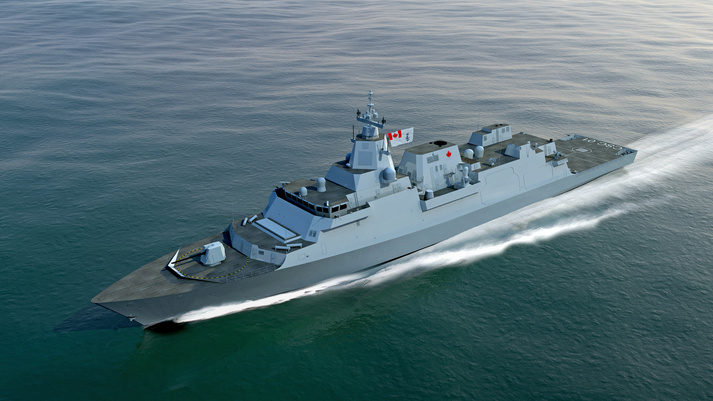
Artits Rendering of the BAE Type-26 Global Combat Ship; which many believe is the frontrunner in the CSC Fleet Proposal.
Finn said a contract is expected to be awarded by the end of the year.

About half of the cost of the surface combatants is for systems and equipment that will go on the 15 ships, according to federal documents obtained by Postmedia through the Access the Information law. “Approximately one-half of the CSC build cost is comprised of labour in the (Irving’s) Halifax yard and materials,” the documents added.

Last year, Jean-Denis Fréchette, the Parliamentary Budget Officer, estimated the CSC program would cost $61.82 billion. He also warned that every year the awarding of the contract is delayed beyond 2018, taxpayers will spend an extra $3 billion because of inflation.

Tuesday, April 17, 2018

Clement: It's Time to Change Course on Shipbuilding


By Tony Clement, Special to Postmedia Network

Canada’s National Shipbuilding Strategy was announced with the goal of delivering vessels for the Canadian Coast Guard and the Royal Canadian Navy that were affordable, modern and effective. It was expected that the strategy would create world class, competitive yards that could produce vessels which could be exported.
Image result for aops
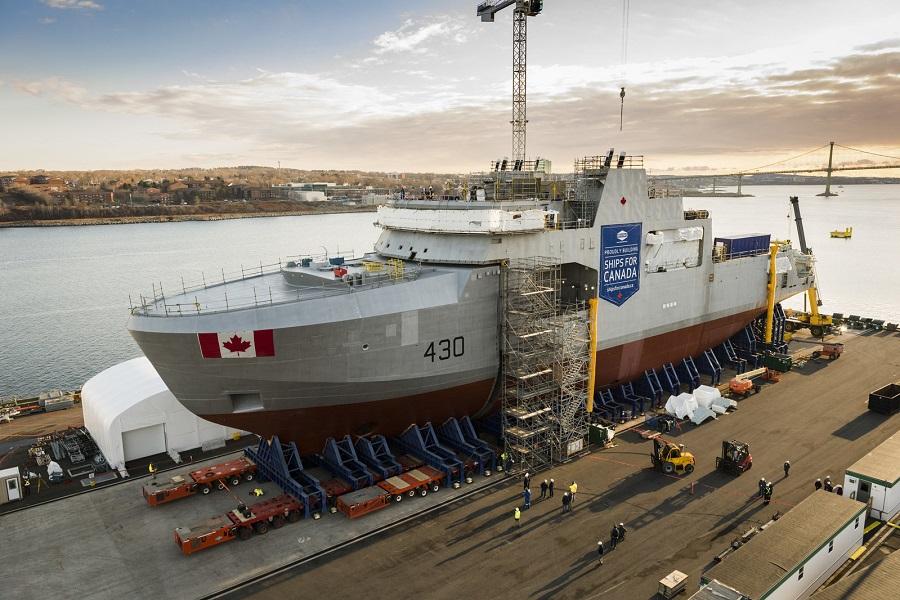
The Royal Canadian Navy's first Arctic and Offshore Patrol Ship (AOPS), the future HMCS Harry DeWolf, assembled at Irving Shipbuilding's Halifax Shipyard.
Two shipyards were selected under the plan in 2010 – Irving Shipbuilding of Halifax and Seaspan of Vancouver – and they were to be capable to start building ships immediately, and close gaps over time at “no cost to Canada” under a non-binding umbrella agreement.

Irving Shipbuilding in Nova Scotia was chosen to build the five Arctic Off-Shore Patrol Vessels (AOPS) and the future fleet of up to 15 Canadian Surface Combatants (CSC). Seaspan in Vancouver was selected to build five coast guard vessels and two Joint Support Ships (JSS) for the Navy.

Under the strategy, the two yards were guaranteed this work provided they could close their capability gaps within a specific period of time and at no cost to taxpayers. So where do we stand after almost eight years?

To date, millions in government subsidies have poured into the two selected shipyards; costs to taxpayers are‎ soaring and vessel delivery dates are pushed further back. Seven years later, not one ship has been delivered. When it comes to costs:

— The budget for the three Off-Shore Fisheries Science Vessels has grown from $244 million to $687 million.

— The Off-Shore Oceanographic Science Vessel, which is still in the design phase, has seen its budget grow from $108 million to $144 million, and speculation abounds that the budget will grow to over $275 million in the coming year.

— The two JSS originally budgeted at $2.6 billion are now expected to cost $4.13 billion according to the Parliamentary Budget Office (PBO).

Add to the list of shipbuilding woes, the John G. Diefenbaker, Canada’s planned polar class icebreaker for $1.3 billion. The vessel was designed in 2012; however it may not be contracted until 2030, meaning its design will already be obsolete before the keel is laid.

The Liberal government has no plans for the second polar class icebreaker, and no actions are being taken to build the three high endurance multi-tasked icebreakers or the five ocean patrol vessels for which funding has been allocated.

When it comes to the five AOPS, progress is being made, yet taxpayers will not know the cost of the vessels until at least six months after the first ship is delivered.

The budget for the future fleet of 15 surface combatants has grown from $26 billion to $60 billion and the procurement is in question, as many bidders have backed away from a process is that has been amended over 50 times.

Under the Liberals, the National Shipbuilding Program is failing. It is time for a course correction. Here are a few suggestions:

— All vessels under the NSS must come under a fixed-price contract.

— The government must return to selecting a proven design for the future fleet of surface combatants, rather than spending billions more and taking significant risks, and delays with an unproven ship design.

— Expand the shipbuilding strategy to add capacity and commercial pressure by including Davie Shipbuilding of Quebec in ongoing planning, including building additional coast guard vessels which are urgently needed, and for which funding was allocated years ago.

— The government should also follow up on the success of the Astérix, and accept Davie’s offer to build the second interim supply ship at $650M, (significantly cheaper than JSS) so the Navy can get on with having the capability to refuel the Atlantic and Pacific fleet simultaneously at sea.

Without some drastic changes in this program, all signs point to taxpayers getting soaked; our navy and coast guard being hobbled, and our security and sovereignty being put at risk.
---
— Tony Clement is a Conservative MP and Official Opposition Public Services and Procurement Critic

Thursday, April 6, 2017

RCMP Accuse Vice-Admiral Norman of Leaking Cabinet Secrets

ROBERT FIFE, STEVEN CHASE AND DANIEL LEBLANC
The Globe and Mail

The RCMP allege Vice-Admiral Mark Norman violated the Criminal Code by leaking government secrets, an accusation that arises from a 16-month probe into the release of information about cabinet deliberations to a Quebec-based shipbuilder that wanted Ottawa to stop delaying approval of a $667-million contract for an interim naval supply ship.A breach of trust conviction under Section 122 of the Criminal Code carries a sentence of up to five years in prison.

The RCMP investigation into the leaks – called Project Anchor – has not yet resulted in charges against Vice-Adm. Norman, who has served in the navy for 36 years.

Read also: Vice-Admiral Norman's removal from post shocks friends, colleagues

On Wednesday, an Ottawa court released an affidavit and supporting documents, including e-mails, that police used to obtain a warrant to search Vice-Adm. Norman's home earlier this year.

The documents show that the criminal probe has expanded to include interviews of prominent Ottawa lobbyists and executives of the Chantier-Davie Canada Inc. shipyard in Levis, Que. The Mounties also interviewed senior cabinet ministers, including Treasury Board President Scott Brison and top mandarins.

"Norman is suspected of having committed a Criminal Code section 122 breach of trust offence," RCMP Corporal Matthieu Boulanger wrote in an affidavit to obtain a search warrant to raid the Vice-Admiral's Ottawa home on Jan. 9. The Mounties also allege Vice-Adm. Norman violated the Security of Information Act.

The RCMP affidavit filed in the Ottawa courthouse alleges that Chantier-Davie shipyard and a sister company were attempting to press the Trudeau cabinet to stick with a contract the former Conservative government ordered in the final day of the October, 2015, federal election campaign.

Soon after taking power in November, 2015, the Trudeau Liberals put the supply ship project on hold after receiving a letter of complaint from Irving Shipbuilding Inc., which already had a multibillion-dollar contract to build the navy's new fleet of warships. This delay meant that cabinet might look at other, lower bids, threatening Chantier-Davie's contract.

The heavily redacted affidavit provides little idea of what the RCMP allege are Vice-Adm. Norman's motives. The senior naval officer, however, last year said delays in shipbuilding programs had hurt the navy. "It's important to keep in mind that [the delays were] completely avoidable," he said in 2016.

Irving Shipbuilding CEO James Irving tried to persuade the Trudeau Liberals to kill the sole-source contract with Chantier-Davie, arguing that his firm had offered a lower-cost option. Another shipbuilding firm, Vancouver-based Seaspan, called for an open competition and said it could convert a civilian cargo ship into a military supply ship at a significantly lower cost.


Court documents show that the RCMP obtained search warrants in the last two months of 2016 to seize the contents of Vice-Adm. Norman's mobile devices as well as e-mails from Spencer Fraser, CEO of Federal Fleet Services, the Chantier-Davie company in charge of the interim supply ship project.

The Mounties also raided the offices of Mr. Fraser and three Chantier-Davie executives and their Ottawa lobbyists: Brian Mersereau, chairman of Hill and Knowlton, and Kevin MacIntosh, a partner and senior vice-president at FleishmanHillard.

"As a result of the data seized at Chantier Davie, it was discovered that Spencer Fraser was supplying information subject to cabinet confidence to [Chantier-Davie vice-president John] Schmidt, to Alex Vicefield, CEO of Inocea, parent company of Chantier Davie, and to various lobbyists working on behalf of Chantier Davie," Cpl. Boulanger wrote.

Attempts to reach Mr. Fraser, Vice-Adm. Norman, FleishmannHillard and executives of Chantier-Davie on Wednesday were unsuccessful. Mr. Mersereau did not comment. There is no indication in the court documents that anyone other than Vice-Adm. Norman is under police investigation.

The Globe and Mail has gone to court to seek the release of an unredacted version of the warrant and production order used by the RCMP to search Vice-Adm. Norman's home.

Toronto lawyer Marie Henein, who is representing Vice-Adm. Norman, has obtained a court order to keep all potentially incriminating e-mails involved in the Norman probe under wraps. Lawyers for The Globe will argue in court that the material should be released except for parts dealing with cabinet confidentiality.

Ms. Henein has publicly asserted her client "was caught in bureaucratic cross-fire" and said his "sole objective" is to advance the country's national interest.

There was no indication of any bureaucratic infighting in the documents released by court on Wednesday.

The e-mails attached to the RCMP affidavit also suggest that lobbyists were planning to use the media to press Ottawa to rule in favour of the Chantier-Davie contract, and that Mr. Fraser developed a lobbying effort to get Quebec government to rally on behalf of Chantier-Davie.

Vice-Adm. Norman was Canada's second-most-senior military commander when he was suspended from his duties three months ago after RCMP raided his home and questioned him extensively. It is not known what the police seized during the raid or what the suspended military commander told the Mounties.

A curious feature of the Norman investigation is that it was set in motion by a story from then CBC radio reporter James Cudmore on Nov. 20, 2015. The story, citing secret deliberations, revealed cabinet had delayed approval of the Chantier-Davie contract for 60 days, the affidavit says. Two months after this story – and after an RCMP investigation had commenced – Mr. Sajjan hired Mr. Cudmore as a senior adviser.

Mr. Cudmore's story reported in detail on a cabinet decision to delay approval of the sole-source contract to Chantier-Davie.

In one e-mail discussion among Ottawa lobbyists that was part of the RCMP affidavit, one of them writes "the only thing we can do is sic the media and the union" on Social Development Minister Jean-Yves Duclos, who represents the Quebec City region. Mr. Mersereau at Hill and Knowlton writes: "Want me to try some of the media here?" Two days later, on Nov. 20, 2016, Mr. Cudmore reported on CBC that the Davie supply ship deal had been "halted by Liberals" and was "leading to concerns the plan will soon be scuttled and the navy will be left unable to properly defend Canada or deploy its forces abroad."

Mr. Cudmore also reported Mr. Irving had allegedly "meddled in the decision by sending letters to several cabinet ministers about the deal."

This CBC report went on to say "there was little risk" that Mr. Irving's concerns about the sole-source contract "could be successfully challenged."

The story took the Liberal cabinet by surprise. After the CBC report, Mr. Brison told the RCMP that "rendering of this [classified information] into the public domain did an awful lot to limit our ability to what we'd [the committee] intended to do, and that is more due diligence on this."

The government approved the Chantier-Davie deal on Nov. 30.

Mr. Cudmore also revealed in a Nov. 25 story that Seaspan CEO Jonathan Whitworth wrote to Mr. Sajjan expressing his interest in bidding on the supply ship contract.

Mr. Cudmore said on Wednesday that he has not seen the affidavit and has no comment.

The PMO ordered an internal investigation of the cabinet leaks, which led to the Mounties being summoned.

Editor's note: An earlier version of this story incorrectly said that the RCMP interviewed a former CBC journalist who is now a senior adviser to Defence Minister Harjit Sajjan. In fact, there is no mention of this in the affidavit. This is the corrected version.

Follow Robert Fife, Steven Chase and Daniel Leblanc on Twitter @RobertFife @stevenchase  @danlebla

Tuesday, February 14, 2017

Shipbuilders Seek Simplified Government System

By: ANDREA GUNN, The Chrinicle Herald 

Having someone make swift decisions would save time and money on the National Shipbuilding Strategy, according to the government’s two key shipbuilders.

Both Irving Shipyard in Halifax and Seaspan in Vancouver have recommended Ottawa take a page from other seafaring nations and hire someone to act as a single point of accountability and decision-making in shipbuilding.

Jonathan Whitworth, CEO of Seaspan — which has contracts to build DFO and Coast Guard vessels as well as the navy’s Joint Support Ships under the NSS — told the Chronicle Herald the current system is cumbersome, often requiring extensive consultation among different bodies and levels of bureaucracy for simple decisions on things like engineering changes or matters of priority on the shipyard floor.

“What we’re asking for from the government side is that we have one person that can speak for all of the stakeholders within the government,” he said.

Whitworth said it’s often unclear who the point of contact is for a particular decision, and queries could end up with any number of government bodies: national defence, DFO, Public Works and Procurement Canada, or even the Treasury Board.

“There’s a lot of individuals,” Whitworth said.

“I will say we get along well, we talk in large groups, but that’s just really not the most efficient way to really make decisions.”

Whitworth said ideally there would be a central point of accountability within government for the NSS combat package, which Irving is building in Halifax, and one for Seaspan’s non-combat package.

“Just like any project, especially complex projects, time is money. The ability to make decisions on a more timely basis means the ship will be built quicker, which means it will inevitably be cheaper,” Whitworth said.

Though Irving president Kevin McCoy was not available for an interview, he offered similar comments to the House of Commons Standing Committee on National Defence in Ottawa earlier this month. Asked why the U.S. and U.K. tend to not have the same issues with delays as Canada when it comes to naval procurement, McCoy sa speed of decision-making as a major concern.

“I think one thing that does work against the system here is the very distributed authorities and responsibilities through many departments rather than what I’m used to, a single accountable officer, particularly for a program as huge as the Canadian service combatant,” McCoy told the committee.

“Somebody that can say, yes, in that area I’m going to go with Canadian content, in that area I’m going to go with operational requirements, in that area I’m going to go with low costs and risks and be able to push forward rather than debate it for a very long period of time.”

He went on to say that for major builds like the Canadian Surface Combatant, inflation is a real killer to a ship count, putting even more importance on swift decision-making if the navy wants the best bang for its buck.

Whitworth told the Chronicle Herald that Irving and Seaspan have already made the recommendation to government both at the defence committee as well as at a regular private meeting with government officials several weeks earlier, but have yet to get any sort of concrete answer.

He said the recommendation is not a particularly new or groundbreaking one and is something both the U.S. and U.K. have employed for years.

In fact, Whitworth said, Steve Brunton — the man hired by Ottawa last year as the government’s independent advisor on shipbuilding and ship acquisition — used to hold that position within the U.K. ministry of defence.

“This is something you don’t have to plough new ground with,” he said.

Retired navy commander and defence analyst Ken Hansen said there is definite value in having a single point of accountability on shipbuilding, from a time-saving point of view, but also to avoid issues with industrial capacity and workforce management.

“In a country like Canada where shipbuilding has not been very active for a long time, the suppliers have dwindled and their industrial capacity is reduced, so if you suddenly inject two, three, four more different construction programs under the central policy you can create conflict between them,” he said.

By putting a point of co-ordination in place, the government could better prioritize its shipbuilding activity to get the most value for the money.

The only potential issue, Hansen said, is that sometimes decisions will have to prioritize a certain project over another to arrive at the best option for the NSS as a whole.

“Whenever you have to make choices between various priorities, there’s always someone who is disappointed in the outcome.”

Public Works and Procurement Canada did not respond to an interview request by the Chronicle Herald’s deadline.

Wednesday, February 8, 2017

Four Companies ask Canada to Delay Shipbuilding Bidding

By: David Pugliese, The National Post 

A third of the companies involved in a $26-billion project to build a new fleet of warships for Canada have asked the Liberal government to delay bidding as problems continue to mount for the program.

On Monday, the Ottawa Citizen reported that one of the world’s largest shipbuilders — Fincantieri — had told Procurement Minister Judy Foote the project was so poorly structured it had doubts whether it would bid.

Foote’s department has now confirmed that four firms have come forward to request the bidding process for the Canadian Surface Combatant be delayed.

Canada has pre-approved 12 firms to bid on various aspects of the program, which would see Irving Shipbuilding construct a fleet of new ships for the Royal Canadian Navy.

“Canada and Irving Shipbuilding Inc. are considering the extension requests,” Jean-François Létourneau, a spokesman for Public Services and Procurement Canada, noted in an email. He did not identify the companies requesting the delay.

The Liberal government announced on Oct. 27 that Irving had issued a request for proposals from companies on the design of the new warships.

The firms have until April 27 to provide those bids, which must not only include the design but details of teaming arrangements with Canadian firms.

Allowing only six months to compile bids for one of the largest procurements in Canadian history doesn’t make sense, say representatives of some of the companies. The extent of the technical data and other information the Canadian government requires is overwhelming.

Fincantieri’s letter to Foote provided a detailed outline of other problems with the acquisition process, warning that “Canada is exposed to unnecessary cost uncertainty.”

There is also the belief in industry circles that the Liberals favour the design from the British firm BAE, which is offering the navy the Type 26 warship.

Foote had previously said only proven warship designs would be considered, to reduce the risk of problems. But the Liberals retreated on that, and will now accept a Type 26 bid, even though the vessel has not been built yet.

Over the last several months, various firms have highlighted their serious concerns about the project but are frustrated Foote has not acted to deal with those, industry sources added.

But Foote’s spokeswoman, Annie Trépanier, said industry has been repeatedly consulted on the project and an independent fairness monitor is involved in the process.

Irving spokesman Sean Lewis said the contract for the design would be awarded to an existing warship design that best fits the requirements of Canada’s navy. All bidders are being treated equally and no one bidder has an unfair advantage, he added.

Industry officials aren’t the only ones raising concerns. In December 2015, Vice Admiral Mark Norman told CBC journalist James Cudmore the Canadian public had not been given accurate information about the growing price of the ships. Norman warned the project, originally budgeted at $26 billion, could end up costing taxpayers $42 billion.

Cudmore is now a procurement adviser for Defence Minister Harjit Sajjan.

Norman was temporarily removed from his job as vice chief of the defence staff on Jan. 13 by Chief of the Defence Staff Gen. Jon Vance. The government and military have declined to provide a reason for the decision.

Monday, January 23, 2017

Companies Request Bidding for Surface Combatant Fleet be Delayed

By: David Pugliese, National Post 

Two companies looking to bid on the multibillion-dollar project to build a new warship fleet for Canada have asked that the process be delayed as controversy swirls around the removal of a top military commander.

And at least another two companies are also preparing to make similar requests to the Canadian government and its prime contractor, Irving Shipbuilding, industry sources have told the Ottawa Citizen.

While the removal of Vice-Admiral Mark Norman from his command for allegedly leaking sensitive shipbuilding information has sent shock waves through the maritime industry, the main reason for the requested delay is because the Canadian Surface Combatant project is poorly structured and allows little time for firms to properly prepare bids, sources say.

But some industry representatives say the removal of Norman has only contributed to their worries that the warship project, worth more than $26 billion, is in trouble.

Norman, the former head of the Royal Canadian Navy, was the vice-chief of the defence staff until Jan. 13, at which point he was removed from command.


Chief of the Defence Gen. Jon Vance, who originally selected Norman for the VCDS position, made the decision to remove him.

Vance has refused to provide any details about the situation and his office claims all aspects of the case — including whether taxpayers are still paying Norman — are covered under federal privacy provisions.

Related
Suspension of high-ranking military officer casts clouds over Canada’s $35B shipbuilding plan
Second-highest ranking officer in military relieved of command in unprecedented move
Leak of information about shipbuilding plans behind removal of senior military officer, sources say

The mystery surrounding Norman’s removal, and allegations from sources that it was linked to the unauthorized leak of information about the Canadian Surface Combatant program, has only further raised questions about the project, company representatives contend.

The Liberal government announced Oct. 27, 2016, that Irving Shipbuilding had issued a request for proposals from companies on the design of the new warships.

The firms have until April 27 to provide those bids, which must not only include the design but details of teaming arrangements with Canadian firms.

Allowing only six months to compile bids for one of the largest procurements in Canadian history doesn’t make sense, say representatives of some of the companies. The extent of the technical data and other information the Canadian government requires is overwhelming, they added.

Jean-François Létourneau, a spokesman for Public Services and Procurement Canada, confirmed Thursday that Irving has received two requests for an extension to the closing date for the bids.

He did not provide the names of the firms requesting the extension.

“Irving Shipyards and the Government of Canada are considering these requests,” Létourneau noted. “Responses to these requests will be provided to all bidders.”

Twelve firms have been pre-approved to bid on the surface combatant program.

Over the past several months, various firms have highlighted to the Liberal government their serious concerns about the project and are frustrated Procurement Minister Judy Foote has not acted to deal with those issues, industry sources added.

The project will provide a future warship fleet for the Royal Canadian Navy.

Norman has not commented on his removal from command.

But the senior officer has been vocal in his concerns that the federal government seriously misjudged on the amount of money needed to build the Canadian Surface Combatants. In addition, he has privately raised concerns that the Royal Canadian Navy might not get enough ships in the future because of how the shipbuilding plan is devised.

Norman’s concerns are well known inside the Liberal government.

In December 2015, he told CBC journalist James Cudmore that the Canadian public had not been given accurate information about the growing price of the surface combatants. He said just the warships alone will likely cost $30 billion. With added costs, that price tag could climb to $42 billion.

Cudmore is now a procurement advisor for Defence Minister Harjit Sajjan.

Public Services and Procurement Canada declined to comment on whether Norman‘s removal will have any impact on the Canadian Surface Combatant program. It referred that question to the Department of National Defence.

DND refused to comment.

Prime Minister Justin Trudeau has refused to provide any additional details about Norman’s removal. But he and Sajjan said they supported Vance in his decision to remove Norman.

Thursday, September 8, 2016

Irving facing significant challenges in building Arctic Offshore Patrol Ships

By: David Pugliese, Defence Watch with The Canadian Press

Assembly of Canada’s first Arctic offshore patrol ship on time and within budget is proving to be a “significant challenge” for the Irving Shipyard, though its top executive says a promised deadline will be met, the Canadian Press writes.

Here is the rest of the Canadian Press article:

Kevin McCoy said Wednesday his firm still plans to deliver the first of the ships designed to steam off Canada’s northern coasts in 2018, as originally announced.

aops-3-best-sized-copy

However, he told reporters at a defence industry conference in Halifax that his firm’s efforts to create North America’s most modern shipyard from the ground up hasn’t been easy.

“Now I’ll tell you, starting a shipyard up from scratch … all new software, new training, over 700 new procedures in place, establishing a supply chain for shipbuilding in Canada, all of that is a significant challenge,” he said.

He also said he realizes that the new Liberal government is observing his company’s progress on the offshore patrol ships as precursor to the yet-to-be finalized contracts for the replacements for Canada’s aging warships.

That project could sustain the yard for the next two decades.

“Clearly it’s a confidence builder for the Canadian government. The Arctic ships are a great warmup to the Canadian surface combatant,” said McCoy, standing before a model of the ships conceived of by the Harper government.

Observers of the procurement process say the Liberal government has been looking for ways to curb costs on the Arctic patrol vessel program.

Michael Byers, a professor of political science at the University of British Columbia, says Ottawa will likely have to scale back on promises to create six to eight of the Arctic patrol vessels and 15 warships to replace much of Canada’s bluewater fleet.

The original 2011 shipbuilding strategy announced by the Harper government was an umbrella agreement that designated the Irving shipyard in Halifax and the Seaspan shipyard in British Columbia as the two locations.

However, the specific deals on how many ships will be completed is the subject of contracts being worked out between the yards and the Trudeau government.

Byers, who closely follows defence procurement, says the resurrection of the Davie shipyard in Levis, Que., has given National Defence a possible alternative where some of the shipbuilding work could be shared out – putting some pressure on the prime contractors to fulfil timelines and stay on budget.

Original projections put the cost of building 15 new vessels at $26 billion, but internal documents and reports published last fall suggest the bill could run as high as $40 billion, with the federal public works minister recently declining to provide updated figures.

Byers says the Arctic patrol ships are challenging because the Harper government chose to create a new type of vessel that no other country had built, which can lead to design challenges and delays.

“There will be real pressures to compromise on capabilities to keep costs down. The federal cabinet will be scrutinizing all of this closely,” he said.

Still, McCoy announced during his speech that the shipyard currently has 50 of the 64 modular pieces of the first Arctic patrol vessel, HMCS Harry Dewolf, in its facility, and it cut steel last month for the second vessel, HMCS Margaret Brooke.

The company has been trying to build public awareness of shipbuilding’s importance to the Canadian economy, billing itself as being the key to a sustainable national shipbuilding industry that will avoid previous boom and bust cycles.

The company handed out a glossy brochure Wednesday that highlights that the company has hired over 1,300 employees, and said the magazine will be distributed to every household in Halifax to increase awareness of progress at the yard.

Harper announced his plans for Arctic vessels during the 2006 federal election campaign, saying the Tories would build three armed icebreakers.

This promise was later transformed to six to eight Arctic offshore patrol vessels and a refueling berth in the Arctic.

(the above was written by the Canadian Press)

Thursday, May 5, 2016

Harper government funded Seaspan Shipyard to help with Contract

BY MARIE-DANIELLE SMITH

OTTAWA — The former Conservative government quietly helped fund improvements for a Vancouver shipyard that was scrambling to get ready for shipbuilding, despite saying it would not do so.

Seaspan’s Vancouver Shipyards received about $40 million in 2014-15 to get its engineering systems up to speed as it prepared to build non-combat vessels for the Canadian Coast Guard, documents suggest.

But one of the premises underlying the Conservative government’s enormous National Shipbuilding Procurement Strategy (NSPS) — lauded by prime minister Stephen Harper’s government as the biggest defence program in Canadian history — is that shipyards would have to fund improvements to their shipbuilding infrastructure at no cost to Ottawa.

The existence of a government-funded program to help Seaspan, an association of western Canadian marine transportation companies, was revealed at a House of Commons committee meeting in December 2014.

Marty Muldoon, assistant deputy minister and chief financial officer at Fisheries and Oceans, told committee members $9.5 million of his department’s money was going to the “horizontal engineering program plan,” an initiative shared with the Department of National Defence.

That money was to help Seaspan “hit full stride in manufacturing capability or construction capability for our vessels,” he said.

“Basically, what we’re doing is investing in the shipyard’s capability to get itself up to capacity, to start churning out vessels.”

(Seaspan) went from a very small shipyard to a very large shipyard in a very short amount of time.

Though Public Services and Procurement Canada admits the contract is being used to help Seaspan create “material, engineering and production standards” for its yard, making systems consistent across “multiple projects,” it says this doesn’t count as the type of shipyard improvement forbidden under the agreement governing NSPS.

Jessica Kingsbury, a spokeswoman for PSPC, said this contract is “clearly distinguished” from capital investments Seaspan made to ready its yard for shipbuilding.

The horizontal engineering program plan is “in no way related to the criteria which the shipyards were required to meet, at their own cost, to achieve target-state,” she added.

Rather, it aims to co-ordinate and manage Seaspan’s non-combat package “more strategically,” through building a “program management capability.”

All three bids for NSPS contracts — from Halifax-based Irving, Seaspan and Quebec-based Davie — orginally included the guarantee that Ottawa wouldn’t pay to help the shipyards get ready for shipbuilding. Federal money would only go towards the shipbuilding projects.

But successful bidders Irving and Seaspan lacked capacity to start building ships when umbrella agreements were announced in 2011. Both negotiated to include clauses in the agreements, saying Ottawa would reimburse them for shipyard infrastructure if it decided to spend less than promised on new ships.

Irving and Seaspan also went to the provinces for money. Irving got a $304-million loan from Nova Scotia, $260 million of it forgivable, while Seaspan got only $40 million, for training from British Columbia.

No federal money was officially announced for either shipyard.

The agreement between Ottawa and Seaspan, dated Feb. 14, 2012, obtained by the National Post, says Seaspan agreed any improvements to shipyard capacity would be “paid for by the company entirely at its own expense” — unless Canada reneged on its commitments.

In November 2014, Seaspan announced a two-year, $170-million project to modernize its shipyard had finished “ahead of schedule and under-budget,” according to its website.

Still, recent job postings show it has continued hiring people to work on the “horizontal engineering program plan.”

The plan does not include improvements to physical infrastructure, but focuses on improving engineering systems, technical programs and management, says a consultant who worked for Seaspan from April to October 2014.

“It covered the whole spectrum of trying to stand up an engineering organization that was robust enough to support the overall shipbuilding objectives,” said Matt von Ruden, now director of vessels at Washington State Ferries.

Employees believed Ottawa was helping fund this work, he confirmed. “The government understood the need for this program, as far as I understand,” he said.

“(Seaspan) went from a very small shipyard to a very large shipyard in a very short amount of time.”

The fact government money was used for “systems” and “programs,” not physical infrastructure, may have made this a grey area under NSPS guidelines.

Several unusual contracts posted on the government’s Buy and Sell website from June 2014 to October 2015 appear to show money flowing into such programs.

For example, Public Services and Procurement Canada sourced just under $40 million in “engineering services” from the Vancouver shipyard.

Contracts are labelled as noncompetitive, representing the “best interests” and “value” to government. They differ from other contracts held by Seaspan, which are usually identified as being tied to a shipbuilding project.

The NSPS has an official budget of $39 billion, with $8 billion set aside for non-combat vessels.

Construction is expected to take at least 20 to 30 years, says the procurement department.

Seaspan began building the first of three offshore fisheries science vessels in June 2015 and the second in March. The three vessels, the first NSPS ships to come out of the improved Vancouver shipyard, are scheduled to be delivered by the end of 2017.

• Email: mdsmith@postmedia.com |
© Copyright (c) National Post

Tuesday, April 19, 2016

Re-Fresh Idea for the National Shipbuilding Procurement Strategy


By Mikaël Perron, CD
Defence Watch Guest Writer

As a three-ocean nation and a member of the G7, Canada shall be at the forefront of the world’s ocean safety. The flagships of a nation like ours should be using our own specific home design and should be of the highest standard.

So, the main classes of ships to be built under the National Shipbuilding Procurement Strategy (NSPS aka NSS) should be of a Canadian design. Over the years, Canada achieved independence from mother England by designing ships like the Cadillac destroyers, the Louis St-Laurent and river class icebreakers, the Provider and Protecteur class AOR, the Tribal class destroyer and the Halifax class frigate.

In the process, we developed ground breaking technologies like the bear trap that allows for the usage of a heavy helicopter from a destroyer’s deck, the probe at sea refuelling system, the extensive use of gas turbines on combat ships, the integrated platform management system and many other innovations. I strongly believe that we should be keeping that attitude, especially in the case of the Canadian Surface Combatant program.

A MP once questioned why the Canadian Navy should get the best destroyers in the world since we are a middle power! Well, for starters, Canada is a member of the G7 and is looking for a seat at the UN Security Council. We do not possess aircraft carriers, amphibious assault ships or nuclear attack submarines but we definitely are a destroyers/frigate Navy.

More than 80% of world trade goes through the seas and nations that maintain the security of the major sea lane of communication (SLOC) are getting noticed. The western world’s population lost sight of it but there is a major fleet building in Asia and a great submarine proliferation around the world; our new ship should be able to match threats from, and capabilities of, other nations so our sailors return safely home.

In many parts of the world, gun boat diplomacy is a very actual tactic that is well understood. At a time of financial constrain, ships are much less expensive to deploy and maintain for an sustained international presence than moving a ground force or a large air force deployment.

Ships can remain in international waters for long periods; a minimum footprint ashore is required. Warships can also rapidly shift from a humanitarian or diplomacy mission to full combat capability.

Only a few nations can keep ships deploy away from home for long periods of time or seamlessly integrate into an American battle group; we should not lose those abilities.

On the Arctic front, the race for northern resources has begun. Russia is building up to 14 new conventionally and nuclear propelled heavy Icebreakers on top of their large actual fleet. The USA are now accelerating the regeneration process of their icebreaker fleet while players like China are sending Icebreakers to test the resolve of Arctic nations. We should maintain an active and persistent presence that requires more than one heavy icebreaker, considering the vastness of our Arctic claim and the maintenance cycle of these ships.

The National Shipbuilding Procurement Strategy was a very well thought process that was done with the best information available at that time. I fully support it but it needs to evolve to include a higher level of flexibility. As the situation evolves, it should be able to get the most out of the passing opportunities. It must, at all time, take in consideration the interests of our military personnel, the strategic interests of the nation, the taxpayers and of course the industry.

For example, Davie shipyard was basically bankrupt at the selection moment and it made sense from an accountant’s point of view to discard them although they possess the highest capacity shipyard in Canada.

Since then, they’ve built the most advanced civilian ship in North America and we could take advantage of that. The government must seize the opportunity to improve the NSPS to ad flexibility to it that will better serve our sailors, national interest, our budget but also the industry.

The downturn in the oil industry offers us the possibility to negotiate the acquisition of ships that would be otherwise unaffordable and unavailable. There are now two VS4220 sitting at Davie shipyard; one 70% and the other one 40% complete. These ships possess extreme capabilities that are perfect for our ocean’s conditions.

I propose that Canada acquires them as true multi-task high endurance vessel that will also double as Offshore Oceanographic Science Vessels (OOSV). The science equipment that was to go on the OOSV to be built will be installed on one of them (we could easily buy extra gear to equip both the same way).

They will also possess helicopter support capability to carry up to a Cyclone size helicopter and to land up to Cormorant or even Chinook helicopters. Their large fuel carrying capacity would also allow them to support other government vessel such as the AOPS and other offshore vessel.

With a good negotiation process, the Canadian government could obtain these two ships at a low price. They would replace the OOSV and one of the Medium Endurance Multi-Tasked Vessel that were to be built.

That would speed up the delivery process of some much needed ships. In addition, the non-combatant winner of the NSPS – Seaspan – would not lose out in such a scenario. I can see three main scenarios that could deliver more to every stakeholder:

First scenario: 

Once the OOSV is cancelled, the building of the JSS can start ahead of time (Scientific gear that was to go on the OOSV will be installed on the VS4220). Seaspan will be given the construction of the more profitable third optional JSS instead of the OOSV. Because of reasons I will explain further, the Navy actually needs four supply ships — the three JSS and the interim AOR (iAOR) in this scenario.

Two Diefenbaker-class Icebreakers would be built. In order to have these two icebreakers in due time, the building of the Diefenbaker’s sister ship could be awarded to the Davie Shipyard. The performance of both Seaspan and Davie could be effectively measured and help to set a competitive bidding process in order to build three Canadian-designed River-class Icebreakers that would be optimal to the taxpayers later on.

Davie is also proposing the conversion of a three-year old PC3 Icebreaker sitting idle in Seattle. That has the potential to be a great bargain to the taxpayers as well as prevent a capability gap. The replacement of our icebreaker fleet would be achieved with much added capability while the NSPS process would keep the course with no losers.

Second scenario:

Once the OOSV is cancelled, the building of the JSS still can start ahead of time. Davie would be given the building of a second interim AOR so the building of the first Diefenbaker-class Icebreaker could also start ahead of time. In this case, Seaspan would be given the contract to build two Diefenbaker class Icebreakers. Davie would also do the conversion of the PC3 Icebreaker sitting idle in Seattle to prevent a capability gap and to strengthen our nation’s Icebreaking capability. A contract involving a competition would also be awarded later to replace the three remaining River-class Icebreakers. (The River-class Icebreakers were commissioned between 1979 and 1987).

Third scenario: 

Still having replaced the OOSV and the first Medium Endurance Multi-Tasked Vessel with two VS4220 vessels from Davie, Seaspan would be more than compensated with the building of three JSS and two Diefenbaker-class Icebreakers. The GoC would negotiate Davie’s offer for the PC3 Icebreaker conversion and also the three River-class conversions that they earlier proposed. That would offer a significant deal to the Canadian public and compensate for the delays caused by the building of additional JSS and heavy Icebreaker. Let’s remember that the CCGS Terry Fox was a commercial Icebreaker before joining the CCG fleet. The nation will then possess a strong shipbuilding industry ready to compete on the international market for specialized ship conversion.

The main point of this text is about the Canadian Surface Combatant (CSC) portion of the National Shipbuilding Procurement Strategy. The program is to renew our surface combatant fleet with up to 15 vessels to replace the Iroquois class destroyers and the Halifax class frigates. It is understood that the program is more expensive than it was initially planned for and that the actual budget could only afford around eleven ships.

It is now under consideration to adopt a foreign design and to do a cost trade-off on the required capabilities.

I do believe that such a course of action is the wrong way to go. We are a major industrial nation with the largest coast line in the world. The CSC will be our flagship.

There is a solution that would allow us to reach a maximum effect with eleven ships with no or minimum compromise to the statement of requirement (SOR).

Last year, before I retired from the Canadian Armed Forces, I submitted a few initiatives under the defence renewal program. One of those was a fleet manning concept for the CSC.

The core idea of that solution is to separate the needs of the crew from the needs of the ships themselves. The end result looks like this: five Area Air Defence (CSC AAD) ships, five General Purpose (CSC GP) ships with all the necessary spares. One extra hull will allow for each ship to go on a two year extended maintenance period every ten years.

There will be twelve sea going crews and a shore maintenance team. It is organized so we can have four ships permanently deployed, four ships available for training, local exercises / patrol, short work periods and finally three ships on extended work period. This way of operating a class of ships will work with classes of ships of five or more ships. These ships also need to be designed so they could operate away from home port for a complete year.

That is also where the need for, at least, four JSS/iAOR comes from. Support ships multiply the effect of the surface fleet. We need to have at least one supply ship available on each coast at any given time. They will support the deployed CSC, do humanitarian relief mission, support the AOPS on northern patrol occasionally, etc.

To have fewer CSCs will free up the necessary personnel to man these two extra supply ships and also a class of around four corvette/light frigates, similar to the Dutch Holland class patrol ships with the addition of anti-submarine warfare capability. Those would be very affordable (around four of them for the price of a single CSC and would reposition gear from the Halifax class frigates such as the 57 mm gun, the close in weapon system (CIWS), the naval remote weapon system (NRWS) and other systems. These are excellent and up to date pieces of equipment; for example, the most advanced Dutch frigate are using the exact same guns that used to be installed on our Iroquois class destroyers in the 70s-80s after being refurbished. The proposed corvettes would also operate with a small crew. Such ship would patrol our coast, participate to Op Caribbe-type missions, conduct piracy patrols and support the CSC on some occasion.

As for the CSC, the use of AAD and CSC GP concepts would be ideal with the required number of hulls. I would see a ship of around 148-155 metres in length and around 20m breadth. Its displacement would probably be around 6000-7000 tons.

It would possess an integrated electric power plant consisting of two main diesel generators, a gas turbine generator and two small diesel generators for anchor or shore without power. That power plant allows for better fuel efficiency (only one generator supplying propulsion and hotel load at sea).

It allows for a great redundancy, for the disposal of the maintenance heavy controllable reversible pitch propeller (CRPP) and the disposal of the main gear box and gives extra power for eventual addition of energy-consuming technologies like a rail gun or laser CIWS. A possible option toward that power plant would be to use already designed parts of the QE class carrier an incorporate them to our hulls. I am thinking here of two of their 9MW diesel generators, one MT-30 gas turbine generator and two 20 MW electric motors.

For cruising, one diesel economically supplies hotel load and a speed above 15 kts along with a minimum range of 7000 nm. Two diesels will be used for fast cruising and close proximity maneuvering. The gas turbine will be used for sub hunting and fast man oeuvre while a diesel can be added to reach a maximum speed above 30 kts with a diesel to spare and the potential to later add some new energy consuming technologies. This would give a high level of redundancy.

They would carry a minimum of two multi-role boats (MRBs) and the flight deck will be able to land up to Chinook helicopter in order to support Special Forces operations.

We could afford the best weapons and sensors; 5 inch gun, two millennium guns, harpoon, evolved sea sparrow missile (ESSM), standard missile for the AAD and Tomahawk for GP version without forgetting torpedoes and the naval remote weapon system (NRWS).

I believe a 48 cell MK-41vls launcher could allow us to carry 32 ESSM and 40 SM missiles for the AAD version and 32 ESSM and a combination of Tomahawk and ASROC for the GP version. If savings are needed, the mix of weapon could be changed.

All CSC shall have full ASW capability with Cyclone helicopter, torpedo launchers, towed and hull sonars and possess the latest in torpedo counter-measures. I would suggest the I-mast 500 to be used on them ship since we participate in the development of the active phased array radar (APAR). The I-mast of the AAD version would be without the sea master 400 radar since it would utilize the SMART-L ER radar while the GP version would use the sea master 400 not using the SMART-L radar. The new upcoming SF500 radar could offer further possibilities.

The ships would possess an optimized crew around 200 strong.

OPV, Corvette or Light frigate

To balance the fleet and keep the NSPS going, a class of four smaller ships would be designed and built. They would be around 110m long 15m wide and displace about 3500 tons. They might share the same power plant as the AOPS or even a more economical plant aiming for a max speed between 21 and 24 kts. The use helicopter and two MRBs will compensate for the lower maximum speed. The I-mast 400 could be a good choice of sensors in this case. The crew would consist of a (65-75 strong) team with extra room for up to 20 and an extra 20 in austere conditions, in the same way as the CSC.

To conclude, the NSPS is essential in order to keep a modern government fleet at all time. It must enable us to replace every existing and to be built ships before it gets to its best before date. Every possibility to make it more affordable such as a new manning strategy for the CSC shall be taken. It must also quickly adapt to the changing economic situation and take advantage of passing occasions. A strong naval presence home and abroad is probably the best way for Canada to affirm itself on the world stage.

Monday, March 21, 2016

Tories urge Liberals to reconsider unsolicited icebreaker bid

Written by Murray Brewster, CTV-News

OTTAWA -- Conservative MP and former cabinet minister Steven Blaney says the Trudeau government was too hasty in dismissing a pair of unsolicited bids from the Davie Shipyard, which offered to pad out existing plans to rebuild the coast guard's icebreaker fleet.

The company, in Levis, Que., is located in Blaney's riding.

"It is irresponsible not to consider a competitive offer that would provide additional, much needed ships," he said.

He said he supports the national shipbuilding program conceived under the Conservative government, but there is nothing stopping the federal Liberals from adding ships to the plan outside of the existing framework.

Blaney says the rapidly aging fleet of federal civilian ships, particularly the heavy icebreaker Louis St. Laurent, needs replacements right away -- or at least faster than the existing plan can produce them.

"Let's be clear. We are expecting the shipyards to deliver the ships awarded under (the national shipbuilding plan) on time and on cost," Blaney told The Canadian Press. "But what are the needs of the navy and the coast guard? They have huge needs and if there is room for additional ships, well, this should be seriously looked into."

The shipbuilding program, announced five years ago, has yet to see any vessels constructed because the winning yards -- in Halifax and Vancouver -- have gone through hundreds of millions of dollars in modernization and planning.

Davie offered to rebuild -- or construct from scratch -- seven icebreakers and support ships at a cost between $1.5 billion to $1.7 billion, in a bid that officials said would not be answered.

"(Procurement Canada) does not comment on or respond to unsolicited proposals," said department spokeswoman Michele LaRose.

The Canadian Press outlined details of the bids last week, but the department did not issue a firm denial until late Friday, a hesitation that stoked uncertainty in both Nova Scotia and B.C., which are heavily invested in the success of the existing program. Premiers Stephen McNeil and Christie Clark condemned the Davie offers.

The Davie proposals were seen as a deliberate attempt to undermine Seaspan shipyards in Vancouver, which is gearing up to build many of the vessels offered in the unsolicited bids. The shipbuilding program establishes both Seaspan and Irving Shipbuilding Inc., in Halifax, as the go-to yards for federal work.

Blaney says both of those facilities, which he has visited, are at capacity and still years away from producing the planned ships.

He noted that the civilian shipbuilding program -- depending on class and size -- has ordered fewer vessels than needed for replacements.

Asked why the Conservatives didn't order more ships up front -- or move the process along faster -- Blaney said that the government was working within a tight fiscal envelope and did what it thought best.

Friday, March 18, 2016

Irving President fires back at Davie CEO of NSPS

Originally Published  by the Chronicle Herald on March 17, 2016.

Irving president Kevin McCoy is firing back at the CEO of Davie shipyard’s parent company for criticisms over Canada’s National Shipbuilding Procurement strategy.

In an interview with CBC, Alex Vicefield, CEO of Inocea, an international shipping conglomerate that owns Quebec’s Davie Chantier shipyard, called the NSPS a “national embarrassment” because of cost overruns and delays.

Speaking with the CBC from Inocea’s Monaco headquarters, Vicefield slammed the government for using a cost-plus approach that ensures profits based on a percentage of the cost incurred instead of fixed-price contracts, which he said are the international norm, and encourage builders to keep costs low.

In the interview Vicefield said in his entire career working in the international marine industry he had never witnessed a country so willing to spend money unnecessarily. He also called out the contractors for failing to deliver a single ship since the program was announced five years ago.


In a statement issued Thursday, McCoy said his company, which was selected as the prime contractor for largest portion of the NSPS, rejects the “outrageous” claims made by Vicefield and defended the program as being a “widely recognized as a robust, open and fair procurement strategy.”

McCoy then slammed Vicefield for spreading what he called baseless claims about exorbitant prices and incorrect information about cost incentives for the program.

“Irving Shipbuilding is incentivized to reduce costs. If costs go up, our profit goes down,” McCoy said. “All cost estimates have been vetted and accepted by independent third parties. It appears that Vicefield has little experience in complex military shipbuilding programs and his comments are uninformed.”

McCoy also defended timelines for the project, and boasted that since being selected as prime contractor for the Arctic Offshore Patrol Vessels and Canada’s new fleet of surface combatants Irving has finished ships that were under construction at the time, demolished their old shipyard and built a new one, hired and trained 600 employees and finished the design for the patrol ships.

The spitting match comes after reports last week that Davie had presented the government with an unsolicited bid offering a Polar Class 3 icebreaker, three smaller River-class icebreakers and two multi-purpose research, border control and search and rescue ships. Due to the slowdown in oil prices, Davie claimed it could deliver the ships for a fraction of the price of the current set of non-combat vessels being built by Seaspan in Vancouver as part of the NSPS and in under 18 months.

The bid was criticized by both Irving and Nova Scotia Premier Stephen McNeil at the time, and the federal government has since said it does not intend to respond.

Davie and Irving also butted heads late last year when the Liberals decided to go ahead with a sole-sourced $700 million proposal — originally accepted by the previous Conservative government — to convert a civilian cargo ship into a badly needed interim supply vessel for the navy while Seaspan completes construction on two new supply ships as part of the shipbuilding strategy.

McCoy accused Davie Thursday of trying to continually undermine the NSPS.

Though it is now solvent, Davie, the largest shipyard in Canada, was in bankruptcy when Seaspan and Irving were chosen as the contractors for the $39 billion NSPS in 2011.

Tuesday, March 15, 2016

Seaspan's gets $65M to build Navy AOR and Science Vessels

Written by: Lisa Johnson, CBCNews 

Seaspan's Vancouver Shipyards will receive $65.4-million in federal money to start building two non-combat vessels for oceanographic research and navy supply, the procurement minister announced today.

This is the latest injection of federal dollars for the North Vancouver shipyard, which in 2011 won the $8-billion contract for seven non-combat vessels, including these two, as part of the government's 30-year National Shipbuilding Strategy.

So, today's announcement is no surprise but does allow the company to start buying steel, motors, propellers, shafts and scientific equipment for the ships.
Halifax and Vancouver yards win shipbuilding work

"Canada needs a well-equipped navy and Coast Guard, and we are committed as a government to making this happen," said Minister of Public Services and Procurement Judy Foote in North Vancouver.

Replacing Canada's oldest science vessel


Up to $30-million of the money announced today will go toward building a new offshore oceanographic science vessel, which will replace the CCGS Hudson, Canada's oldest science vessel, Foote said.

The Hudson, which has its own Facebook fan page, "has put in over half a century of service for our country and is desperately in need of being replaced," she said.
Scientific ship's replacement delayed

The new vessel is estimated to cost $144.4-million and will be used to conduct geological surveys, fish habitat studies and other research into the biology and chemistry of the ocean.

"Evidence and research are vital to our country's environment and to the fishery on which so many coastal communities depend for their well-being," said Foote, who represents the riding of Bonavista-Burin-Trinity in Newfoundland and Labrador.


The famed research vessel, CCGS Hudson, has been in service since 1962. (John Darrell David/Facebook)

Naval supply ship

The other $35-million of today's announcement is for one of two joint support ships, which will help supply Royal Canadian Navy ships to let them stay at sea longer without returning to port.

The two vessels are estimated to cost a total of $2.3-billion.

"I am pleased we are now one step closer to ... delivering on a critical capability needed by the brave naval men and women of our Royal Canadian Navy," said Minister of National Defence Harjit Sajjan in a statement.

The North Vancouver shipyard has already started building one of three offshore fisheries science vessels, and will also build a polar icebreaker.


An artist's rendering of the Offshore Fisheries Science Vessel, another one of the seven non-combat vessels being built by Seaspan's Vancouver Shipyards. (Seaspan Shipyards)

Friday, March 11, 2016

Davie shipyard submits unsolicited $1B bid on Liberals to build icebreakers

The battle over building Canada's future Navy, Coast Guard, and Icebreakers just got even uglier. Davie, who is currently converting the Asterix into a Resolve-Class AOR for the Navy, says it can do the same for the Coast Guard, and Icebreakers that Canada needs, for $1 billion - nearly $1 billion cheaper than currently awarded to Seaspan. 

Here is the rest of the article. 

By: Murray Brewster, The National Post

OTTAWA — An unsolicited bid — potentially worth up to $1 billion — to provide icebreakers and multi-purpose ships for the coast guard was submitted to the Trudeau government late last month, The Canadian Press has learned.

The proposal by Quebec-based Chantier Davie Canada Inc. has the potential to undercut one pillar of the national shipbuilding strategy, which delegates the construction of civilian ships to Vancouver’s Seaspan shipyard.

In a presentation to Public Services and Procurement Canada, Davie is partially reviving a pitch made to the former Conservative government in 2013, where it offered to a construct a Polar Class 3 icebreaker and deliver it in 18 months.

The latest bid offers not only that, but three smaller so-called River-class icebreakers and two multi-purpose ships, which could be used for scientific research, border patrol of search and rescue.


Related
Michael Den Tandt: Liberals’ untangling of shipbuilding strategy could ignite regional tug-of-war
Smaller Canadian Forces ships won’t have to be built in Canada, undercutting Tory shipbuilding strategy

The pitch involves converting three different types of vessels which Davie already has under construction — or can be obtained on the international market “at highly affordable prices.”

Some of the ships were being built for the offshore oil and gas sector, but the collapse in energy prices has led to their cancellation.

“This is a fast-track solution providing enhanced capabilities at a fraction of the newbuilding (sic) price,” said the proposal.

Davie says its ships can be delivered at 60 per cent of the cost of the current program with Seaspan and gives the federal government the option of either buying or leasing the vessels.

The prices are blacked out from a copy of the Feb. 24 cover letter to Public Services and Procurement Minister Judy Foote, which was obtained by The Canadian Press. But officials, speaking on background because they’re not authorized to talk to the media, say the pitch adds up to at least $1 billion, depending on the options chosen.

Alex Vicefield, CEO of Davie’s parent company, said the pitch “has been very well received,” but would not go into detail.

Public services and procurement spokesman Pierre-Alain Bujold would not confirm receipt of the proposal but did say the government has not issued a request for proposals for icebreakers and reaffirmed the department’s commitment to the overall shipbuilding program.

Vicefield said there is a business opportunity but also an important public policy issue at stake.

“We come from the international marine industry where we have to be innovative and lean to compete,” he said Wednesday.

“When we see a situation which is clearly facing all kinds of problems and we have solutions which can save our client many hundreds of millions of dollars and receive an even better product faster, it would not be in anyone’s interest to hold back.”

Davie used a similar approach to the federal government when it pitched — and won — a multimillion-dollar contract to provide the navy with a temporary supply ship. The former Harper government had to amend cabinet rules in order to allow the sole-sourced contract to go through.

Both Seaspan and Halifax-based Irving Shipyards, the other company in the national shipbuilding program, protested and the Liberals, shortly after being elected last fall, temporarily put the plan on hold. They relented and Davie has already begun the modifications for the leased ship.


The worst thing we could do is to stop, alter or otherwise change the (National Shipbuilding Procurement Strategy) before it’s actually really gotten underway

Jonathan Whitworth, the CEO of Seaspan, said the new bid is an attempt to undermine the shipbuilding program, where the fundamental premise was to establish only two go-to shipyards in the country — one for combat, the other for civilian vessels.

“The worst thing we could do is to stop, alter or otherwise change the (National Shipbuilding Procurement Strategy) before it’s actually really gotten underway,” he said in an interview Wednesday.

One of the biggest criticisms of the program, which was launched in 2011, is that it has yet to produce a single ship, something the Davie proposal plays on in its presentation by referencing the age of the current decades-old fleet.

“What has become increasingly evident is that it would be considerably more cost-effective and considerably better for the men and women of the Canadian Coast Guard to fully replace these over-aged vessels,” said the presentation.

Whitworth would not discuss the potential legal ramifications of the Liberals running with the Davie proposal. But he said if the federal government was looking for stop-gap ships until Seaspan delivered, then it should allow an open competition among all the shipyards in Canada rather than a “sole-source gift” as the previous government did with the navy supply ship.

Tuesday, December 1, 2015

Project Resolve: Liberal Government OK's Davie Deal for iAOR


Published by: The National Post - Canadian Press

LEVIS, Que. — After putting the project on hold, the federal government announced Monday the Chantier Davie Shipyard in Quebec will be granted the sole-source contract to provide a temporary supply ship for the navy.

Procurement Minister Judy Foote said the contract, which is valued at up to $587 million, will be given to the shipyard to upgrade a civilian tanker to act as a military replenishment ship while the navy’s long-delayed, joint support ships are built as part of the national shipbuilding program.


“After amassing the facts and carefully deliberating, the Government of Canada determined that proceeding with (Davie) is the most viable course of action to provide the navy’s (temporary) at-sea oil replenishment capacity,” she said in a statement.

The Conservative government had arranged for Davie to retrofit the ship through a sole-source process rather than a competitive one after it was forced to retire its two, 45-year-old replenishment vessels.

At the time the Harper government’s move was unprecedented.

Documents obtained by The Canadian Press revealed a line was added to contracting regulations giving cabinet authority to award a deal to a single company if there are urgent “operational reasons” and it fulfils an interim requirement.

Defence sources had told The Canadian Press that Prime Minister Justin Trudeau put the plan on hold because his government was uncomfortable with the sole-source nature of the arrangement.

The Liberals also faced pressure from the two companies that received contracts in the national shipbuilding program — Irving Shipbuilding, in Halifax, and Seaspan, in Vancouver. Both wrote letters protesting the deal with Davie.

Trudeau’s decision sparked a strong rebuke from Quebec politicians who pointed out the ship was already purchased and in the Davie yard and that hundreds of workers had already been hired.

Foote noted in her statement that the agreement signed by the Conservatives required the government to pay Davie $89 million should the project not proceed.

The minister said the government will “undertake a review of the process” for sole-source contracts for military procurement.

Davie’s work should be completed within two years and the ship is contracted to serve the navy for a period of five years, with an option to renew for up to another five.

The Quebec shipyard estimated the government contract will create 1,100 jobs with the yard, and another 400 with sub-contractors.

Opposition Parti Quebecois member Martine Ouellet said Davie deserved the contract because the yard was left out of the national shipbuilding program.

Without replenishment ships, the navy’s frigates are forced to rely on other nations for ammunition, fuel and food while on long overseas deployments.

It also affects the navy’s ability to deploy more than one warship at a time.

Davie is located in Levis, across the St. Lawrence River from Quebec City

Wednesday, November 25, 2015

Project Resolve: CEO says Seaspan could Supply iAOR Cheaper/Faster


By Jonathan Whitworth,

Chief Executive Officer, Seaspan ULC

Let’s give the new Liberal government in Ottawa credit for taking a deeper dive into the reported costs associated with Canada’s search for an interim capability to support the Royal Canadian Navy’s supply ship needs in the aftermath of the unanticipated retirement of HMCS Protecteur and HMCS Preserver. This interim capability would provide a needed bridge to the greater capability of the future Joint Support Ship (JSS) to be built at Seaspan’s Vancouver Shipyard.

Notwithstanding the indignation of certain commentators from Quebec, the Davie Shipyard-controlled Shipbuilding Association of Canada (neither Seaspan nor Irving are members of this organization) and some in the media, at the heart of the issue is whether Canada will get value for the reported $750 million it would be spending on a sole-source contract with Chantier Davie. Taxpayers should expect our federal government to have confidence in the answer they give to that question and one clear way of determining best value is through a fair, open and transparent competition.

Since Seaspan’s name has found its way into media articles related to this issue over the past week, I offer facts for the public record.

– Seaspan believes in competition and are proud to have won the federal government’s competition to build the next generation of vessels for the Canadian Coast Guard and Joint Support (supply ships) for the Royal Canadian Navy (RCN) under the National Shipbuilding Procurement Strategy (NSPS).

– With no financial support from either the Province of British Columbia or the federal government we have invested $170 million of our own money to build North America’s most modern shipyard through which we have begun to produce the vessels that make up our initial inventory of work;

– The first of those vessels – the Offshore Fisheries Science Vessel for the Canadian Coast Guard – began construction in June and has 15 of 37 blocks presently under construction and is on plan;

– The engineering and planning phases are well underway on the next two classes of ships to be built in Vancouver. The Offshore Ocean Science Vessel for the Canadian Coast Guard and JSS for the Royal Canadian Navy are both benefiting from the world-class expertise that has been built at the Vancouver Shipyard under NSPS;

– This level of effort is currently providing employment to over 650 people at the Vancouver Shipyard and has resulted in contracts valued at over $321 million being awarded to some 140 Canadian suppliers. These numbers will continue to climb as our NSPS build program increases;

– Project delays that are often attributed to JSS are related to a failed procurement back in 2008 which predates NSPS and is unrelated to our current program. We are currently working to schedule and to budget with our JSS deliverables;

– We have formally expressed interest to Canada, at its request, to support the RCN’s interim capability need with a converted containership, similar to that offered by Davie but at a significantly lower price and faster, through our Victoria Shipyards. The work would be performed without compromise to our capacity at Vancouver Shipyards which will deliver JSS to Canada, in 2020;

– Seaspan’s Victoria Shipyards, and its trades-men and women, have enjoyed a very successful long-term relationship with the RCN including our delivery next summer of the fifth of five extensively refit Halifax Class frigates, each delivered to Canada on-time and on-budget. If Canada opens the interim supply ship project to best value competition, it is the Victoria Shipyard that stands ready to offer a winning, low-cost interim solution as a bridge to the much more capable Joint Support Ship.

We invite journalists and those who comment through the media to come and visit us at Seaspan, in both Vancouver and Victoria, to see with their own eyes why we are bullish on the future.