Translate

Thursday, May 19, 2016

CAF Expansion of OP IMPACT and RCAF Griffon's Head to Iraq


DND Press Release
May 19, 2016 – Ottawa – National Defence / Canadian Armed Forces

As part of the Government of Canada’s expanded contribution to multinational efforts to degrade and defeat the so-called Islamic State of Iraq and the Levant (ISIL), the Canadian Armed Forces (CAF) recently added three CH-146 Griffon helicopters, an all-source intelligence centre, and additional trainers to Operation IMPACT.

The three CH-146 Griffon helicopters will enhance in-theatre tactical transport, including medical evacuations if required. The Griffons and their crews excel in the tactical transportation of troops and materiel. A variety of self-defence weapons are fitted to the aircraft for the deployment.
CH-146 Griffon helicopters
Members of the Canadian Armed Forces load CH-146 Griffon helicopters, which are deploying as part of Operation IMPACT, into a CC-177 Globemaster aircraft at Canadian Forces Base Trenton, Ontario, on May 4, 2016.
As a part of Joint Task Force-Iraq, the CAF officially opened an all-source intelligence centre, responsible for collecting, synthesizing, and analyzing information derived from a variety of sources. This intelligence is then used to inform operational planning, ultimately contributing to the protection of Coalition forces and the conduct of Coalition operations.

The additional tactical aviation, intelligence and training personnel are part of Canada’s enhanced mission that will eventually see around 830 CAF members deployed as part of Canada’s contribution to Coalition efforts to improve the security of Iraq and the region. These adjustments of personnel and capabilities are expected to be completed by late summer.

Under the enhanced mission, Canada is tripling the size of its train, advise, and assist mission to help Iraqi Security Forces plan and conduct military operations against ISIL.

“These new capabilities underscore Canada’s unwavering commitment to the Global Coalition and the fight against ISIL. Canada’s expanded mission is setting the conditions for Iraqi security forces and regional partners to achieve long-term success by enabling them to effectively plan and execute military operations aimed at defeating ISIL and improving security and stability in the region.” - Harjit S. Sajjan, Defence Minister

“The fight against ISIL depends on credible, integrated, and timely intelligence, which is essential in planning and executing military operations. The all-source intelligence centre will enhance our situational awareness along with that of the Coalition. Griffon helicopters will provide effective in-theatre tactical transport, and will enhance the capabilities of our trainers in Iraq. All of these Canadian assets will make significant contributions to Coalition operations.” - General Jonathan Vance, Chief of the Defence Staff

Canadian Rangers Receiving New Uniforms


By Peter Moon

Defence Watch Guest author

The Canadian Army is issuing several items of new clothing for Canadian Rangers across the Far North of Ontario.

“The clothing they are getting is in their traditional red colour,” said Lieutenant-Colonel Matthew Richardson, commanding officer of the 3rd Canadian Ranger Patrol Group, which commands the 650 Rangers in 23 First Nation communities in northern Ontario. “People will know that they are clearly Rangers in their new uniforms because it’s all in Ranger red.”

The new uniforms are a red fleece, red raincoat, and a red winter outer jacket

The Rangers are part-time army reservists who wear a traditional red “hoodie” as part of their distinctive military uniform.

The first uniforms were delivered to the Peawanuck and Attawapiskat patrols during a visit to the two communities by Colonel Richardson. He said they will soon be delivered to other Rangers across the north. The new uniforms supplement the military kit already issued to all Rangers.

“They have the gear they wear out on the land and that gear is warmer than the new items of clothing,” Richardson said. “The purpose of the new uniforms is not so much for day to day events. It’s more something to wear at ceremonial and community events and for some training events. In addition to the new uniforms we’ve thrown in new hats, t-shirts, and hoodies for them.”

(Sergeant Peter Moon is the public affairs ranger for 3rd Canadian Ranger Patrol Group at Canadian Forces Base Borden.)

Photo above: New Ranger uniforms arrive at Peawanuck airport.

Photo below: Ranger Denise Patrick and Master Corporal Pamela Chookomoolin show of their new uniforms to Winisk First Nation Chief Edmund Hunter in Peawanuck.


Photos by Peter Moon

Wednesday, May 18, 2016

6,000+ CAF Members to Participate in MAPLE RESOLVE-16

By: David Pugliese, Defence Watch 

Over 6000 Canadian Forces personnel will participate in Exercise MAPLE RESOLVE 2016, the Canadian Army’s largest training event of the year. Exercise MAPLE RESOLVE will take place in Wainwright, Alberta, from May 23 to June 6.

The exercise is hosted by the Canadian Manoeuvre Training Centre and will provide Canadian Army soldiers, leaders, and other military personnel an opportunity to enhance their combat readiness, according to the army’s news release.

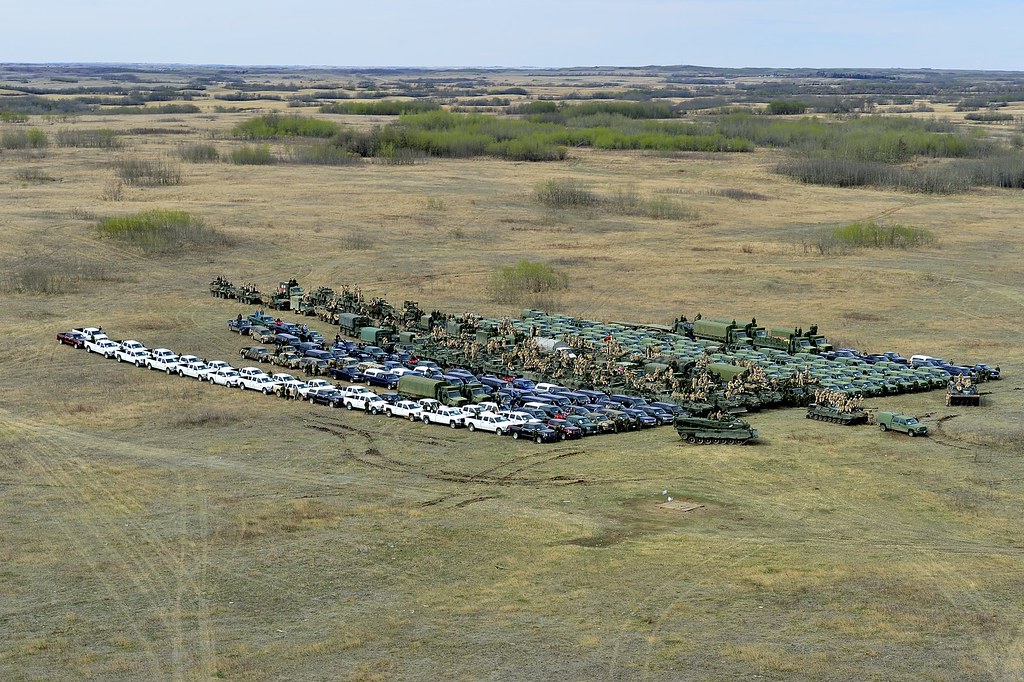
Equipment and Personnel before Ex. MAPLE RESOLVE-15 (Canadian Forces - Flickr)
The training will confirm the readiness of 1 Canadian Mechanized Brigade Group (1 CMBG); 1 CMBG to assume its responsibilities as the Canadian Army’s High Readiness brigade on July 1.

During the exercise Canadian soldiers serving with 1 CMBG based in Edmonton, Alberta and Shilo, Manitoba will train with elements of the Royal Canadian Air Force, the United States Army, U.S. National Guard, U.S. Army Reserves, U.S. Marine Corps, and the British Army. Allied participation will involve over 1200 soldiers from the U.S. military and approximately 150 soldiers from the British Army, according to the news release.

Honouring a Forgotten Canadian Naval Medal of Honor Recipient

Royal Canadian Navy Press Release

More than 130 years after his death, a long-forgotten naval hero has finally received a well-deserved tribute by Canadian and U.S. military leaders in a ceremony in the historic cemetery at Saint Elizabeth’s Hospital in Washington, D.C.

The bravery of Captain-of-the-Hold Joseph Benjamin Noil, an African-Canadian who served in the United States Navy (USN) and who received the Congressional Medal of Honor for saving a shipmate from drowning in 1872, was largely forgotten for more than 130 years. In 2011, members of the Medal of Honor Historical Society of the United States, working with the Congressional Medal of Honor Society, discovered the grave upon which his name had been misspelled, and his Medal of Honor status omitted.

As a result of their research, Noil was honoured in the U.S. capital on April 29, 2016, by Rear-Admiral William Truelove, Commander of the Canadian Defence Liaison Staff (Washington)/Canadian Defence Attaché, as well as by representatives of the Canadian Embassy, the District of Columbia, members of the U.S. Coast Guard, Navy, Army, Marines, National Guard and veterans. A Medal of Honor headstone was unveiled to appropriately mark his final resting place. 

Sentries stand by as Joseph Noil’s Medal of Honor headstone is set to be unveiled
Sentries stand by as Joseph Noil’s Medal of Honor headstone is set to be unveiled during a ceremony at Saint Elizabeth’s Hospital cemetery in Washington.
Noil, born between 1839 and 1841 in what would become Liverpool, N.S., enlisted in the USN in New York in 1862. On the morning of December 26, 1872, he was a seaman in United States Ship (USS) Powhattan when, during a sleeting northwest gale, the ship’s boatswain fell overboard. According to the ship’s captain, Seaman Noil dove overboard to rescue his fellow shipmate, who “would have perished but for the noble conduct of Noil, as he was sinking at the time he was rescued.” For his bravery, Noil received the Medal of Honor, one of only 108 Canadians and the only black Canadian known to have received this honour.

“How fitting it is, that I, another proud son of Liverpool, have the privilege of eulogizing Captain-of-the-Hold Noil, ensuring that his act of bravery is rightly recognized,” said RAdm Truelove.

“I can say that the people of Liverpool are profoundly honoured to know that one of their own was bestowed with the Medal of Honor of which, to date, there have been only 3,514 recipients,” continued RAdm Truelove. “With thanks to the work of the Medal of Honor Historical Society of the United States, we begin a new chapter wherein future generations will be able to bear witness to Joseph Noil’s bravery and our common recognition of it. In Canada, we pride ourselves in remembering our fallen. Captain-of-the-Hold Joseph Benjamin Noil was indeed Canadian and we see him as our hero too.”

Following his heroic actions as a member of USS Powhattan, Noil continued to rise to the rank of Captain-of-the-Hold and served in the USN with distinction, including during the American Civil War. He was admitted to the Naval Hospital in Norfolk, Va., in 1881. The diagnosis was “paralysis.” His mind and body were failing him. The hospital noted that he had been in the service for 17 years and that the disease originated in the line of duty. He was soon transferred to the Government Hospital for the Insane (now Saint Elizabeth’s Hospital), where he died on March 21, 1882.

He was buried in the hospital graveyard, but his headstone did not include his status as a Medal of Honor recipient. Additionally, his death certificate misspelled his name as “Noel”, which is what was engraved on his headstone. Joseph Benjamin Noil, hero, was lost to history, until now.

When Saint Elizabeth’s Hospital opened in 1855, it was called the Government Hospital for the Insane of the Army, the Navy and the District of Columbia. Its 5,000-grave cemetery is the final resting place for more than 2,000 servicemen who served in conflicts ranging from the War of 1812 to World War One, and who suffered from what we now call post-traumatic stress disorder, or PTSD.

Canadian WW2 Remains Identified as Pvt. K. Duncanson

DND Press Release
Ottawa – National Defence / Canadian Armed Forces

The Department of National Defence (DND) and the Canadian Armed Forces (CAF) have identified the remains of a Second World War soldier found in a farmer’s field near Molentje, Damme, Belgium, as those of Private Kenneth Donald Duncanson from Dutton, Ontario. Private Duncanson was a member of The Algonquin Regiment, which served in 10th Infantry Brigade, 4th Canadian Armoured Division in Northwest Europe.

DND and the CAF have notified members of Private Duncanson’s family, and Veterans Affairs Canada is providing the family with ongoing support as final arrangements are made. Private Duncanson’s remains will be interred at Adegem Canadian War Cemetery in Belgium in the fall of 2016 by his Regiment. Next-of-kin have been invited to attend.

Adegem Canadian War Cemetery, Belgium (Commonwealth War Graves Commission)
DND’s Casualty Identification Program exists to identify unknown soldiers when their remains are discovered so that they may be buried with a name by their Regiment and in the presence of their family. In meeting this aim, the program fosters a sense of continuity and identity within the CAF, as it provides an opportunity for all Canadians to reflect upon the experiences of those men and women who made the ultimate sacrifice for their country.

“We are grateful for the dedication of the Raakvlak Intercommunal Archaeological Service of Belgium, and the support of our international partners, which ultimately made it possible for our officers to identify Private Duncanson, and to provide a sense of closure to his family, his Regiment, and the country which he served. He will not be forgotten.” - Harjit S. Sajjan, Defence Minister

“Private Duncanson gave his life in service to Canada during the Second World War. Now, finally, he may be solemnly laid to rest with the honour and dignity he deserves.”- Kent Hehr, Veterans Affairs Minister and Associate Minister of National Defence

Private Duncanson was born in Wallacetown, Ontario, on June 7, 1915. He married in 1939 and lived in Dutton, Ontario. He enlisted in the Canadian Army on August 24, 1942. He joined The Algonquin Regiment in April 1944.

Private Duncanson was killed on September 14, 1944, during an attempt by the Algonquin Regiment to establish a bridgehead crossing of the Dérivation de la Lys and the Leopold Canal, at the hamlet of Molentje, now in the municipality of Damme, Belgium. This was part of the preliminary battles leading up to the Battle of the Scheldt. Private Duncanson was 29 at the time of his death.
His name is recorded on panel 11 of the Groesbeek Memorial at the Groesbeek Canadian War Cemetery in the Netherlands, which commemorates by name more than 1,000 members of the Commonwealth land forces who died during the campaign in Northwest Europe between the time of crossing the Seine at the end of August 1944 and the end of the war in Europe, and whose graves are not known.

On Remembrance Day, November 11, 2014, a metal detector hobbyist discovered the remains of Private Duncanson in a farmer’s field near Molentje, Damme, Belgium.

Subsequently, the remains were fully recovered by the Raakvlak Intercommunal Archaeological Service of Bruges, Belgium, with assistance from DND’s Casualty Identification Program, and with the support of the Commonwealth War Graves Commission, the Canadian Embassy in Brussels, and the Canadian Defence Attaché in Paris.

Private Duncanson’s identification resulted from a combination of historical context, anthropological analysis, artefact evidence, and dental records. The identification was made by the Casualty Identification Program, with the assistance of the Royal Canadian Dental Corps and the Canadian Museum of History.