Translate

Showing posts with label Canada and ISIL. Show all posts

Monday, May 28, 2018

RCAF Griffons Still Busy Over Iraq

By: Chris Thatcher, Vertical Magazine 

The battle for the northern Iraqi city of Mosul and an offensive in the Hawija pocket further south may have concluded in the summer and fall of 2017, but the whirl of Canadian helicopters continues to resound over the region.

Iraqi security forces, with the assistance of a coalition of international partners, broke the four-year siege of Mosul by the Islamic State of Iraq and Syria (ISIS) in July and have continued a sporadic fight against pockets of ISIS, also known by its Arabic name, Daesh, and its supporters across Iraq’s northern provinces.
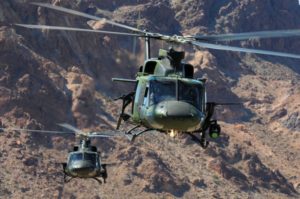
CH-146 Griffon aircrews have resumed conducting four to five missions per day, seven days a week, a pace similar to the height of the pre-Mosul campaign. Skip Robinson Photo
Though the scope of the conflict has changed, Canadian Special Operations Forces (SOF) continue to train, advise and assist the Kurdish Peshmerga as part of Operation Impact. In support of that effort, a tactical aviation detachment comprised of four CH-146 Griffon helicopters and around 50 aircrew, maintenance, logistics and headquarters personnel continue to provide tactical transport from an airbase near Erbil, carry Canadian and coalition SOF, equipment and ammunition between forward locations.

“There is really no change to that part,” said Maj Sylvain Lapierre, commanding officer of the fifth rotation of the detachment. “We still provide them with liaison, reconnaissance, and material support, and we are on standby for casualty evacuation if it were to be required.”

In the months following the ouster of Daesh from Mosul, Iraq’s second largest city, the aviation detachment saw what Lapierre calls a “tactical pause” in coalition SOF operations. But it was only a brief respite. As winter turned to spring, Griffon aircrews have resumed conducting four to five missions per day, seven days a week, a pace similar to the height of the pre-Mosul campaign when special forces helped Iraqi troops establish blocking positions around the city.

“We are task-tailored for 12 hours a day and we routinely do about 16,” said Lapierre of what remains, despite the disintegrating enemy force, a remarkably high operational tempo. In fiscal 2017, the detachment flew over 3,000 hours. “We would have no difficulties surging to 24 hours a day if we needed to.”

As with all commanders since the tactical aviation detachment was first deployed in October 2016, risk management remains the biggest concern.

Lapierre, a helicopter pilot with two tours in Bosnia and one in Afghanistan, as well as two years as a liaison officer with the U.S. Army Aviation Center of Excellence in Fort Rucker, Alabama, said the threat of enemy rocket, mortar and small arms fire is still a threat. But the variable weather, which can quickly reduce visibility, and man-made obstacles, also have to be mitigated.

“Lots of towers, lots of power lines-they are everywhere,” he said. “And they are not necessarily marked to the same standards that we are used to in Canada.”

Still, “rogue actors” in the form of Daesh or their sympathizers remain the preeminent threat to both helicopters and special forces. Aircrews routinely change flight profiles and rely on well-honed tactics, techniques and procedures to transit potentially risky airspace and to protect the aircraft.

Potentially complicating matters further, Turkey, a NATO ally, has been conducting offensive operations across its southern border against Syrian Kurdish militia. While the fighting has not affected the detachment’s missions-it’s a conflict to be addressed at the political level, Lapierre noted-it nonetheless is one more issue to keep an eye on.

“We obviously monitor everything that happens in the region from an intelligence perspective,” he said. “But nothing has really changed the way we are flying or how the [detachment] is operating in the area.”

However, before granting mission acceptance and launch authority, air task force commanders routinely use a risk assessment scorecard that has its origins in the helicopter missions of Afghanistan. The evolving tool forces leaders to deliberately evaluate the level of risk they are being asked to accept by assigning a score to the nature of the mission, how it is organized, the number and type of aircraft involved, the types of passengers, the degree of reliable intelligence, the availability of supporting enablers, and the environmental conditions.

“When we are looking at communicating the aspects of flight safety, it has become a very important supervision tool,” said Lapierre.

Many of those risks are mitigated by the fact that, although most of the tactical aviation detachment are on their first operational tour, all of the aircraft commanders (AC) are veteran pilots of multiple tours.

“I find myself in a privileged situation,” Lapierre acknowledged. “It makes the risk management aspect a little easier. And they have become outstanding mentors for the newer generation of aircrew that are rotating through theatre that may not have [served] in Afghanistan or on a previous mission. There is great sharing of information, not just among the aircrews but also within the maintenance organization.”

Exercises might train and validate the competency of an air task force, but the repetition of missions on an operation can make it easier to absorb instruction in a way that isn’t always possible in complex exercise scenarios, he observed.

“Sometimes coming to a theatre where the focus is different brings new opportunities to learn. Here we have the opportunity to train our younger aircrew in a real theatre, with real tasks and real control measures, with real users. In some ways it caps everything. What you have learned before as a young aviator, this is the sum of it.”

Despite temperature swings that have ranged between 35 C and below zero since the rotation began, the CH-146 Griffon has exceeded expectations. The detachment, which slimmed down from around 60 to 50 personnel last fall, is largely self-sufficient, managing most aspects of maintenance and logistics, and yet has had little trouble keeping the almost 20-year-old helicopters flying.

“I have outstanding serviceability here,” said Lapierre. “We haven’t seen any loss of performance. Like any other helicopter, there comes a point in the very high heat of the summer where we have to get into the books, look at the performance charts and find efficiencies, which we can do by managing the missions and the timings for the tasks. I think we are doing very well with this aircraft.”
Leading the way

Since the detachment was first stood up in 2016, three squadrons have assumed the leadership, beginning with 427 Special Operations Aviation Squadron from Petawawa, Ont., and then 430 Tactical Helicopter Squadron (THS) from Valcartier, Quebec.

Like Lapierre, many of the current detachment are from 408 THS in Edmonton. But over the course of his more than seven-month tour, he has seen members from every tactical aviation squadron in 1 Wing, as well as 417 Combat Support Squadron from Cold Lake, Alta., deployed to Camp Erable, home to Joint Task Force-Iraq Detachment Erbil, a headquarters staff of approximately 30 personnel and a Canadian-led Coalition Role 2 medical facility.

The commander admits he wasn’t sure how well a diverse group would gel without a lot of pre-deployment training. To his surprise, the different helicopter organizations clicked together almost immediately, proving the flexibility the Royal Canadian Air Force tactical aviation detachment concept.

“It’s one of those cases where one plus one equals three,” he said. “We’ve got a lot of synergies with different units. Everybody brought something and it made the sum of everything greater.

“It proves that we have a great deal of interoperability. Regardless of which unit people were coming from, it was easy to integrate them,” he observed as he prepared to hand over command to 430 THS in late May.

“[It’s also] a testament to our level of readiness and how strong and mature our SOPs (standard operating procedures) are. That is one thing I’ll be passing on, that we maintain our solid SOPs and work practices back home-they transfer well into theater.”

If anything, he’s realized how difficult it is to deliver such a high level of service for so long a period.

“One of my challenges is going to be to go back home and maintain the 100 per cent focus people have here,” he said. “Whether it’s maintenance, flying, logistical support-everyone has worked hand-in-hand to make these missions happen.”

Tuesday, February 13, 2018

Future of Canada's Role in Iraq Still Uncertain

By: David Pugliese, The Ottawa Citizen

Defence Minister Harjit Sajjan will travel to Rome and Brussels from February 13-15 to participate in a meeting of defence ministers from the main force contributors in the war against the Islamic State. Sajjan will also participate in a meeting of NATO defence ministers.

His trip comes as the Liberal government has yet to decide what comes next for Canadian military personnel involved in the war against the Islamic State of Iraq and the Levant.

Training by Canadian special forces for Kurdish personnel is still suspended.

Sajjan said in late December that he hoped to have a better idea of the future direction of Canada’s mission in Iraq even as the U.S. and Iraq have declared Islamic extremists defeated.

Sajjan said at that time the Canadian Forces leadership was developing options for what is to come next and that advice was expected in early 2018.

The Liberal government has extended Canada’s mission in Iraq until at least March 2019.

Following the meetings on ISIL, Sajjan will travel to Munich from February 16-17 to attend the annual Munich Security Conference, a global forum focused on defence and security related issues, his office said.

Monday, November 13, 2017

Canada Suspends Aid to Iraq and Kurdish-Peshmerga

By: David Pugliese, The National Post 

Canada has suspended the assistance its special forces were providing to Iraqi security forces as Iraqi and Kurdish forces battle each other.

Canadian commandos have been working with the Kurds and some assistance has been provided to the Iraqis.
Canadian special forces look over a Peshmerga observation post, Monday, February 20, 2017 in northern Iraq.THE CANADIAN PRESS/Ryan Remiorz

But, “given the fluidity of the current situation, Canada’s Special Operations Task Force has temporarily suspended the provision of assistance to various elements of Iraqi security forces,” Canadian Forces spokesman Col. Jay Janzen said Friday.

“Once more clarity exists regarding the interrelationships of Iraqi security forces, and the key priorities and tasks going forward, the Task Force will resume activities,” he said. “In the interim, they will continue to monitor the situation and plan for the next potential phases of operational activity.”

The Ottawa Citizen reported Wednesday that Canada is also reviewing its program to supply the Kurds with small arms.

Canadian special forces have been providing assistance to the Kurds and Iraqis in their war against ISIL. But with ISIL in retreat, Iraqi and Kurdish forces are now fighting each other. The Kurds want to separate from Iraq and, during the war against ISIL, they seized large portions of the country. That included the city of Kirkuk and nearby oil fields, which hold an estimated 40 per cent of Iraq’s oil.

The Iraqi government declared the recent Kurdish referendum supporting independence illegal and sent troops to retake Kirkuk and other territory.

The Kurds offered on Wednesday to put any drive towards independence on hold, but that was rejected by the Iraqis.

However, on Friday, Iraqi Prime Minister Haider al-Abadi ordered a 24-hour ceasefire. That “should allow a joint technical committee to work on the deployment of federal Iraqi forces in all disputed areas, including Fish-Khabur, and the international border,” Abadi said in a statement.

The Kurds have welcomed the pause in fighting.

Janzen said the Canadian Forces will continue to support the U.S.-led coalition battling ISIL. That includes the provision of transport helicopters, a medical facility and surveillance and intelligence gathering capabilities.

“Only the provision of assistance to various elements of Iraqi security forces has been temporarily suspended,” Janzen said.

The previous Conservative government sent Canadian special forces to northern Iraq to train the Kurds starting in 2014. That program was continued by the Liberals.

But the issue of training and arming the Kurds has been highly controversial from the start. Kurdish leaders openly acknowledged their intent was to eventually create an independent state. The arms were needed both to fight against ISIL and to defend an independent state, they said.

The Kurds say at least 30 of their soldiers have been killed and another 150 wounded in ongoing clashes.

Bayan Sami Abdul Rahman, the Kurds’ top diplomat in Washington, said it’s past time the international community end its “laser focus” on ISIL and begin to address Iraq’s many underlying problems.

“’We are laser-focused on (ISIL).’ That has been the mantra of the past few years,” Abdul Rahman told The Canadian Press. “But to continue to say we’re laser-focused on (ISIL) is missing the obvious truth of what is happening in Iraq.”

Tuesday, June 13, 2017

Sajjan: Canada Committed to Iraq for the Long-Haul; Afghanistan Training Mission a Possibility

Michael MacDonald, The Canadian Press

HALIFAX — The federal government is considering a NATO request to send police trainers to Afghanistan, but Defence Minister Harjit Sajjan says Canada's military focus remains in Iraq.

"As any good allied partner does, we will look at that request," Sajjan said Monday after a news conference highlighting the Defence Department's new, 10-year defence policy, which was rolled out last week.

"Our focus right now is on our mission in Iraq and the region. We will be moving forward with that mission."

Sajjan said even though Canada continues to provide funding for development and security personnel in Afghanistan, the military mission there ended three years ago.

The conflict claimed the lives of 158 Canadian soldiers, one diplomat and one journalist between 2001 and 2014. Thousands of those who served there continue to suffer from physical or mental injuries, an issue that continues to make headlines across the country.

However, the United States and NATO are reaching out for more help in Afghanistan now that the Taliban appear to be making a comeback in the region. As well, the arrival of the Islamic State of Iraq and the Levant has complicated matters. During the past year, the group has launched deadly attacks across the country.

As for Iraq, Sajjan says Canada remains committed to maintaining a long-term military presence in that country, but he followed up by suggesting some changes were in order.

"For Iraq ... we are in this as a reliable coalition partner, in for the long term," the minister said as he answered questions from reporters gathered at Her Majesty's Canadian Dockyard, along the west side of Halifax's sprawling harbour.

"We're going to make adjustments to the mission ... We have taken this year to review the evolution of the situation on the ground. We will be extending the mission, but we'll be making the final decision on this very shortly to outline what our contributions will be. One thing I can assure you: we will remain as a credible partner to make sure the coalition has all the right assets in place."

There are about 200 Canadian special forces soldiers deployed in northern Iraq. Though their mission is to train Kurdish fighters, they have engaged in gun battles in Iraq.

The federal government has confirmed that in March some of the special forces took part in the battle to reclaim the Iraqi city of Mosul from ISIL.

In the defence policy overhaul, Sajjan has committed to adding 605 new elite special forces commandos.

Overall, the new policy commits Canada to spending an extra $14 billion over the next 10 years on defence matters — a 70 per cent increase for the department's budget.

The money will be used to put another 5,000 troops in uniform and, among other big-ticket items, offset the skyrocketing cost of buying new warships and fighter jets.

But much of the money won't flow until after the next election, and it’s not clear whether the spending spike would mean bigger federal deficits or spending cuts in other areas.

Sajjan noted that two of Canada's new Arctic patrol ships were under construction at the nearby Halifax Shipyard, and he said his new defence policy commits the government to spending up to $60 billion on building 15 new warships, which will replace much of the Royal Canadian Navy's aging fleet.

"We are excited for the economic growth and development that this policy means for Halifax, Nova Scotia and the broader Canadian defence industry," he said. More than 14,000 Nova Scotians are employed as part of a "defence team" that spends $1.3 billion annually in the province, he said.

Sajjan said the original budget for the Canadian Surface Combatant program in 2008 was set at $26.2 billion, which the Parliamentary Budget Office later determined was enough for only six ships.

"We need 15 and we are committed to 15 ships," Sajjan said, adding that the policy also commits the government to maintaining the navy's four problem-plagued submarines and to build two new support ships.

Tuesday, June 6, 2017

CAF Expects Anti-ISIL Missing to be Extended

The Canadian Press 

OTTAWA -- The commander of the Canadian Forces mission in Iraq and Syria says he expects the government to extend the operation past its scheduled expiry date at the end of the month.

Brig.-Gen. Dan MacIsaac told The Canadian Press that he's looking forward to seeing a renewed commitment of more than 800 military personnel in the international anti-terror coalition as part of Wednesday's long-awaited defence policy review.

Details of that and other future foreign military deployments are expected to be unveiled when Defence Minister Harjit Sajjan and Gen. Jonathan Vance, the chief of the defence staff, release the government's new blueprint for national defence.

The table for that defence review will be set in a major foreign policy speech Tuesday by Foreign Affairs Minister Chrystia Freeland. That speech will affirm "multilateralism and rules-based international systems, human rights, gender equality, the fight against climate change, and economic benefits being shared by all," the government said in a statement.

Freeland's speech will be the Liberal government's attempt to define its military, development, diplomatic and trade priorities, and how Canada plans to navigate a world order thrown into disarray by disruptive events such as the election of Donald Trump and the rise of anti-trade forces, sources say.

The speech is meant to serve as the "umbrella" for Wednesday's defence review and the release of the international development review later this month, said a source, who spoke on the condition of anonymity because it was still a work in progress.

Wednesday's defence review is expected to lay out the military's priorities for future overseas deployments, and outline government's 20-year plan for spending billions of dollars on military hardware to upgrade warships and fighter jets, among other things.

Sajjan has said the review will also dovetail with the government's broader innovation agenda and will explain how the military will partner with the defence industry to create jobs by developing of cutting-edge equipment.

For soldiers such as MacIsaac, who is overseeing Canada's contribution to the international anti-terror fight, it will bring more clarity to ongoing military operations.

"We're looking forward to the government releasing the defence policy review, likely in the next couple of days," MacIsaac said in a lengthy telephone interview Monday from his headquarters in Kuwait.

"I foresee government providing defence further direction, and the government of Canada is committed to contributing to defeating Daesh in Iraq and Syria," he said, using the Arabic acronym for the Islamic State of Iraq and the Levant.

"We're definitely here past the 30th of June."

The government has not formally announced an extension of the mission, which is Canada's contribution to the international coalition of more than 60 countries that is trying to degrade ISIS.

MacIsaac said the coalition is continually degrading ISIL's command and control, weapons making and financing operations across Iraq and Syria, and has reclaimed a swath of land the size of Nova Scotia.

"They've had to move many a headquarters and many a leader, and we are tracking those changes," he explained.

Though he didn't specifically reference the recent attacks in London, Manchester and elsewhere, MacIsaac said ISIS is losing the ability to direct attacks across the globe.

"There are many Daesh-influenced attacks but I'm not aware of any Daesh-directed attacks," he said. "So it's interesting to watch them now try to claim when someone does something criminal. They're on their hind foot."

Asked if he had a message for war-weary Canadians, MacIsaac replied:

"Canada is fortunate. We live in a safe place. But we have a duty to take collective action with our friends to advance the liberty of others and security at home.

"If you think you have values, you've got to work to show it."

Freeland's speech will address how Canada plans to project the "hard power" of its military and use its "soft-power" diplomacy, sources say.

She will describe how and why Canada was able to play a role in shaping the multilateral order that was built after the Second World War -- because the country suffered heavy losses fighting the two world wars, sources say.

Now, with the world's multilateral order under threat and the globe in a period of constant change, those sources say Freeland will say the country must now work to shape the shifting global forces to the Canada's advantage.

Much of that disruption is due to Trump's "America First" foreign policy -- throwing cold water on NATO and the G7, while dumping the Paris agreement on fighting climate change.

The source said the speech may not mention Trump directly, but it will re-enforce Canada's strong economic ties with the U.S., and how Canada's foreign policy diverges -- notably on climate - with its southern neighbour.

Thursday, May 25, 2017

RCAF CP-140 Aurora Quietly Recalled from OP IMPACT

By: Murray Brewster, CBC News 

One of the Canadian air force spy planes assigned to the campaign against the Islamic State has been quietly withdrawn and brought home, CBC News has learned.

The CP-140 Aurora, with a suite of high-tech surveillance equipment, was one of two that had been flying missions over northern Iraq and Syria since the fall of 2014.

The decision to bring one of the turboprop aircraft home was not announced by the Liberal government, which recently extended the deployment of the Canadian military, including special forces trainers on the ground, until the end of June.

A single CP-140 and a refuelling tanker remain in Kuwait, where the Canadian Air Task Force has been based, to continue operations alongside the U.S.-led coalition.

But the decision could signal the beginning of the end of Canada's military involvement in the anti-ISIS fight.

A spokesperson for the military's operations command said the Aurora was withdrawn on May 15 and its departure has not impeded the coalition's air campaign.

"The [Canadian Armed Forces] shared its intent to return the aircraft to Canada with our coalition partners well in advance in order to ensure continuity in the coalition's intelligence, surveillance and reconnaissance operations against Daesh," said Capt. Vincent Bouchard, referring to ISIS by its Arabic acronym.
Battle for Mosul

Iraqi security forces and Kurdish fighters are close to liberating the northern Iraqi city of Mosul and when the bloody campaign is completed, ISIS will largely have been driven from country.

In an email, Bouchard painted the decision to remove one of the CP-140s as a routine matter, meant "to effectively balance its expeditionary requirements and domestic commitments." He said the aircraft was needed to "deliver on its full range of missions domestically."

The primary mission of the CP-140s in Iraq was to act as spotters, targeting ISIS combat units and buildings for destruction.
In February 2016, Defence Minister Harjit Sajjan told the House of Commons that Canada's CF-18 fighter jets had completed their bombing mission in Iraq and Syria. At that time, the Liberal government took pains to underline it was leaving the spy planes and tanker in place. (Sean Kilpatrick/Canadian Press)

When Canada's CF-18 fighter jets were withdrawn from the bombing campaign in February 2016, the Liberal government took pains to underline it was leaving the spy planes and tanker in place to support other coalition members as they continued combat operations.

As of May 20, the Auroras had flown 793 reconnaissance missions.
Special forces in northern Iraq

Canada still has more than 200 special forces troops advising Kurdish and Iraqi forces, as well as a tactical helicopter detachment, a number of intelligence officers and a Role 2 combat hospital deployed in Iraq.

The mission was reviewed in March, but only given a three-month mandate extension, to June 30.

Kurdish Peshmerga commanders have asked that highly trained special forces remain behind once Mosul is freed in order to help with training in counter-insurgency warfare.

Many experts and U.S. commanders have said expelling ISIS from Iraq will not entirely end the fighting and that extremists will likely resort to hit-and-run guerilla tactics.

The Liberal government has been unclear on whether it's prepared to facilitate that kind of training or participate in reconstruction efforts.
Beginning of the end?

The removal of the Aurora, which has been called out by allies for its usefulness, is a signal to defence analysts that the deployment could be coming to an end.

"If this is not the end of the mission, it seems a bit strange they would be pulling out one of these aircraft, which arguably has been one of the most important parts of our contribution," said Richard Cohen, who was an adviser to former defence minister Peter MacKay and served in both the Canadian and British militaries.

Given the deployment of troops to Latvia next month and the Liberal government's plan to return to peacekeeping, he said the military might not have the bodies to sustain an extended commitment in Iraq.
Four Canadian aircrew who fly one of the country's CP-140 surveillance planes leave the flight line at an unidentified coalition airbase in Kuwait on Nov. 13, 2016. (Murray Brewster/CBC)
The question of what Canada is going to do post-Mosul has been met with resounding silence, said Steve Saideman, a professor of international affairs at Carleton University.

The U.S.-led coalition has been organizing the next phase of the anti-ISIS campaign, with a finite number of positions, and Canada has yet to apparently signal interest.

"Canada has no role there," said Saideman. "And what that's going to lead to is dumb politics, shockingly enough."

By not articulating a clear way forward in the fight against ISIS, the Liberals have opened themselves up to criticism from Opposition Conservatives and possibly allies, he said.

The future of the Iraq mission could be made clear with the release of Canada's new long-awaited defence policy on June 7, but Saideman said it's unlikely to change the narrative.

"The fact is Canada may not be needed, and given the tempo of special forces operations, it might be time for them to come home and relax," he said. "But that's not going to be the conversation. The conservation is going to be about [how] Canada doesn't care about Iraq."

Dealing with terrorism, and specifically ISIS, is a top priority for the Trump administration. The U.S. leader recently scored a victory on that front, as NATO commanders moved to endorse a plan to formally join the U.S.-led coalition in Iraq and Syria.

Monday, April 3, 2017

Canada Extends OP IMPACT Until June 2017

DND Press Release

The Government of Canada remains strongly committed to defeating Da’esh and responding to the needs of people who have been displaced or devastated by war in Iraq, Syria, and the region.

Today, Defence Minister Sajjan announced that the Government of Canada is extending Canada’s current military contribution to the fight against Da’esh until June 30, 2017.

This extension provides the Government of Canada the time required to assess the evolving nature of the fight while allowing the Canadian Armed Forces to maintain their important contributions to ongoing operations as a responsible coalition partner.

The scope and mission of Canada’s military contribution will remain the same over the next three months, with a few adjustments. As a result of recent successes in the campaign, some elements of the Canadian Special Operations Task Force have recently been operating in Eastern Mosul, providing advice and assistance to Iraqi Security Forces. There has been no change to their mandate or to the parameters of their mission. Canadian troops remain behind the forward line of troops, and are providing advice and assistance to Iraqi Forces.

Canada has implemented a comprehensive and integrated approach to do its part in defeating Da’esh, restore basic government services in Iraq, and enable citizens to return to their homes in newly-liberated areas.

Canadians will be regularly updated as this mission continues to evolve.

Wednesday, November 2, 2016

How Canada Is Indirectly Taking Part In The Battle For Mosul

By: Jonathan Wade, Huffington Post 

While Canada pulled its fighter aircraft from the U.S.-led coalition earlier this year, the Canadian Forces still pull its share on the ground. Providing vital support to Peshmerga fighters through "advise-and-assist" operations, Canada has boots on the ground and is actively taking part in the battle.

As a matter of fact, soldiers from the Canadian Special Operation Forces Command (CANSOFCOM) are working alongside their Kurdish counterparts against ISIL. Deemed a non-combat mission, CANSOFCOM soldiers are constantly moving near the frontline to monitor the progress of the recently-trained Peshmerga fighters.

According to brigadier-general Peter Dawe, deputy commander of CANSOFCOM, the mission on the ground has evolved from defensive to offensive operations. Due to that Canadian operator on the ground often have to exchange fire with ISIL combatants to defend themselves and their allies.

"We are more engaged on the line -- there should be no doubt about that -- and, by extension, the risk has increased to our troops simply by virtue of time spent at the line and the work we're doing now in a more dynamic and fluid environment," Brig-Gen. Dawe said.

During the last few months, Dawe confirmed no Canadian soldiers were wounded even with the recent augmentation of confrontation with ISIL fighters.

Canadian Forces' participation in the Battle of Mosul

Having conducted successful operations in the past, the Kurdish Peshmerga are now actively taking part in the battle of Mosul. That said, it is pretty obvious their Canadian advisers are also taking part in the battle. However, the Canadian soldiers are most likely playing a supporting role such as guiding U.S.-led coalition aircraft, assisting in medical evacuation and by providing a liaison between the Peshmerga and Western forces.

Recently deployed to replace the 427 Special Operations Aviation Squadron (SOAS), pilots and ground crew of the 430 Tactical Helicopter Squadron will also take part in the Battle of Mosul . Based in Valcartier, Quebec, the 430th is equipped with CH-146 Griffon helicopters and will provide reconnaissance, troops and equipment transport, and will assist in the evacuation of wounded soldiers.

Although Canada is indirectly taking part in the battle of Mosul, its contribution still remains important to the success of the operation. Adding to the ground troops and helicopters, Canada still have a CP-140 Aurora providing intelligence, surveillance, target acquisition and reconnaissance (ISR) and a CC-150 Polaris for refueling purposes to the U.S.-led coalition under Operation IMPACT.

Canada is also getting ready to deploy and operate a field hospital equipped with two operating rooms (OR) in the region to treat wounded allied soldiers. Our medical evacuation (MEDEVAC) helicopters will have the ability to extract the wounded soldiers to a Canadian-led field hospital, increasing interoperability between the two elements.

It is my understanding that even if the Trudeau government has been constantly stating there was no combat mission being conducted in Iraq, Canadian soldiers are still moving on the frontline. That said, as a combat veteran of Afghanistan who spent several months embedded with the Afghan National Army, I know vital it is for the success of the operation to have the CANSOFCOM operators on the frontline along the Peshmerga to show our willingness to fight alongside them. By doing so, the Canadian soldiers are earning respect and their working relationship with the Peshmerga is much better.
----
Jonathan Wade is a Military and Foreign Affairs Specialist. Combat Veteran of Afghanistan. Specializing on Russia, Canada and the Arctic.

Thursday, October 27, 2016

Sajjan stays mum on role of Canadian soldiers in Mosul offensive

By: Bruce Champion-Smith, Toronto Star

OTTAWA—Photos have emerged that apparently show Canadian special forces soldiers near front-line action in northern Iraq, even as Defence Minister Harjit Sajjan stays mum about their involvement in the ongoing offensive against Daesh extremists.

One photo shows Canadians in what appear to be heavily-armed Humvees. Another shows soldiers setting up a heavy anti-armour weapon atop an armoured vehicle, a Canadian flag is clearly visible on the uniform of one of them.

This photo allegedly shows Canadian special forces setting up an anti-tank weapon atop an armored vehicle east of Mosul, Iraq. Defence department officials do not comment on the ongoing operations of Canadian troops. The Star could not verify when or where the image was taken.
The Star could not independently verify the photos or when they were taken. The defence department said it does not comment on ongoing operations but did not dispute the authenticity of the pictures.

The Canadian military has become more guarded in recent months about the work of some 200 soldiers deployed in northern Iraq to help train and advise Kurdish peshmerga forces, a mission that is supposed be non-combat.

It’s believed the photos show troops operating in an area east of Mosul, where peshmerga forces have been reclaiming territory that had been held by Daesh, also known as ISIS or ISIL.


In a conference call with reporters Tuesday, Sajjan was asked about the photos, including one that shows Canadian soldiers setting up the heavy weapon.

Sajjan also did not question the photos, but said any weapons the Canadians have would be for their own self-defence and protection of the Kurdish peshmerga troops they are advising.

“Our troops have all the necessary equipment to be able to apply the rules of engagement if necessary,” Sajjan said, adding that their arsenal now includes anti-armour weapons.


“I want to make sure that our troops have the necessary equipment in place to mitigate any threat,” Sajjan said.

Earlier this month, Iraqi and Kurdish security forces, backed by coalition militaries, launched a long-awaited offensive against Daesh fighters holed up in Mosul.

Yet Sajjan and the military have refused to provide any details about the role Canadian forces are playing as the Kurdish forces they are mentoring try to clear territory around Mosul.

Sajjan offered few clues Tuesday during a conference call with reporters from Paris, where he had attended a meeting of nations involved in the fight against Daesh.

“In terms of their role and exactly what’s happening, for operational security and force protection reason, I can’t give you the details,” Sajjan said.

“When the time is right I will be providing details . . . but right now these are the absolute early stages of the operation,” the minister said.

“Absolutely, Canadians deserve to know how the mission is going, what our troops are doing,” he said.

In the Commons Tuesday, the Conservatives ridiculed the secrecy and questioned why Canadians are being kept in the dark.

“Images of Canadian troops operating Iraqi vehicles, sighting targets with sniper rifles, and painting targets near Mosul have emerged on social media,” Conservative MP James Bezan said.

“Why should Canadians have to learn on Twitter what our troops are doing to defeat ISIS rather than from the government,” he said.

In an interview later, Bezan, who served as parliamentary secretary to the defence minister in the previous government, accused the Liberals of hiding “behind a curtain of secrecy.”

Even allowing for security concerns, he said there is ample room for more “transparency” about military operations.

He said the photos show Canadian soldiers “painting targets”— using a laser to mark targets for air strikes by coalition aircraft.

“This is definitely part of the support for combat operations and the offensive that is taking place to liberate Mosul,” Bezan said.

“They’re right at the front line and we know that,” he said.

Meanwhile, Sajjan revealed that a Canada-led hospital — meant to be ready to treat casualties from the Mosul fight — is still not up and running.

“There was some delays from the Iraqi government side in terms of getting all the resources. . . . That has been dealt with and things are moving along,” Sajjan said.

The hospital will have two operating rooms staffed by some 50 personnel — doctors, nurses, medics and support staff. According to the armed forces, it will be able to provide triage, resuscitation and emergency surgery.

Given that the Mosul offensive is still in its early stages, Sajjan said the hospital will still be “timely and needed.”

In a statement, the defence department said the hospital should be operating within “several weeks.” In the meantime, the department said it was working with its partners to ensure that there were no gaps in medical care because of the delay.

Wednesday, October 26, 2016

Video Appears to Show Canadian Special Forces in Battle Against ISIL Near Mosul

By: Ben Makuch, Vice News

New video released last week shows Canadian special forces setting up a mobile anti-tank rocket atop a Kurdish armoured vehicle, in one of the clearest pictures yet showcasing Canada's role on the frontlines of the war to retake Mosul from the Islamic State.

Screen grabs of the footage, broadcast by Kurdish news station Rudaw and posted to Twitter and Instagram, show several special forces, in desert fatigues with Canadian flag patches, helping set up what appears to be an anti-tank missile launcher. A cropped version of the footage—without the Canadian soldier—appeared in a nightly newscast.

Canadian SOF (CSOR) in — Abraxas Spa (@AbraxasSpa) October 24, 2016

New video appears to clearly show  a Canadian commando sets up an ATGM atop an armoured vehicle, with the Canadian flag patch visible on his left arm. Screenshot.
In recent months, Ottawa has become cagey in giving details about special forces operations in northern Iraq, especially when it comes to the battle to retake Mosul.

Recently, military brass has admitted that their special forces have been increasingly on the front lines—but only under an 'advise and assist' mandate

But the video, which shows the special forces setting up the missile for what appears to be an offensive attack against an Islamic State position in the distance, shows just how integrated Canadian personnel are to the fight.

Other sections of the video shows the special forces peering through what seems to be a Canadian-made scope, sitting on the armoured vehicle's machine gun.

The video appears to be from the Hamdaniya region, east of Mosul, where had been held by the Islamic State until recent days, when the Iraqi and Kurdish fighters pushed the terrorist group out of several towns in the area.

When asked about the photos, Defense Minister Harjit Singh Sajjan told VICE Canada from a defense ministers meeting in Paris that while Canada has brought heavy anti-armour weaponry to Iraq, it's intended for self-defense.

"There is no secret here," Sajjan said in response. "Our troops have all the necessary equipment to be able to apply the rules of engagement, if necessary.

"I was actually very upfront from last year, when I visited the troops on the ground, that we need to bring some anti-armour capability in, where the previous government did not have this. So we brought the right resources in for our troops, in making sure that they could protect themselves, the partners they're working with, and other coalition partners as well."

A spokesperson from the Department of National Defence wouldn't comment on the Rudaw video featuring Canadian special operations forces.

"To ensure the safety and protection of our deployed personnel, the exact details of ongoing operations will not be disclosed," DND spokesperson Dan Lebouthillier told VICE Canada. "Our mandate has not changed. We are there to train, advise, and assist the Iraqi security forces and it is important at this time to let them do their work."

The covert role Canada's special operations forces play in the fight against ISIS in Iraq has been questioned in recent weeks, just as international forces ramp up an assault on Mosul. Both of Canada's elite soldier units, the Canadian Special Operations Regiment and Joint Task Force 2, are deployed in Iraq as part of the training mission.Media in Canada is particularly interested in the operations of special operations soldiers in Iraq since they were deployed in 2014, some calling for the Trudeau government to simply admit the country is serving in a combat role and directly engaging ISIS forces.

In an early October news conference, the Justin Trudeau government conceded Canadian special forces previously came under direct ISIS attack and returned fire, but that these occurrences were "sporadic in nature and have not resulted in any Canadian injuries." But in March 2015, a Canadian special forces member died in a frontline Peshmerga controlled position in what was deemed to be a friendly-fire incident.

At the same news conference earlier in the month, defence officials maintained the mission in Iraq was swiftly transforming into a more offensive engagement demanding Canadian troops travel to the frontlines with their Peshmerga counterparts. The Rudaw footage confirms just that: the Peshmerga forces on camera clearly show an entrenched frontline position, with heavy fighting and a large Kurdish force within direct sight of IS fighters.

Canada currently has 200-plus special forces stationed in Iraq advising Kurdish forces and calling in airstrikes.

Wednesday, October 19, 2016

Canada in Iraq: At war by any other name ...

By: Michael Den Tandt, National Post 

Image result for jtf2 iraq

As the pivotal battle of the war with the Islamic State of Iraq and the Levant begins, Canada is deeply implicated, with about 600 soldiers deployed in four countries, more than a quarter of those in ground combat. You wouldn’t know it though, unless you dug around. There is no stream of independent dispatches from embedded reporters, as was the rule during the 2002-14 Afghan campaign because there is no embed program. And the Defence Department has been exceptionally stingy with information. “Operational security” is a handy excuse. It doesn’t justify the level of secrecy.

There will be quibbling, as is customary whenever Canada fields soldiers carrying loaded firearms, about whether the troops “advising and assisting” Kurdish forces in northern Iraq are actually in combat. It may be in the Liberal government’s political interest to assert that, although Canadians have exchanged fire with the enemy — we don’t know how often, that’s a secret — these have been “defensive” actions only. The truth is much simpler, as it has been since the Conservative government launched the mission in 2014: Canada is at war. That’s what it means to provide intelligence, targeting for airstrikes, refuelling, aerial surveillance and leadership on the ground, at the front. To call it anything else is dishonest. It’s also a great disservice to the soldiers risking life and limb.

THE TRUTH IS MUCH SIMPLER ... CANADA IS AT WAR.

If we acknowledge that Canada is at war — and, reading between the lines of recent remarks from Brig.-Gen. Peter Dawe and an “update” Monday from Defence Minister Harjit Sajjan, this conclusion is inevitable — then certain other conclusions also become inevitable. The first is that the Liberals either did not know, or knew and did not care, when they promised last year to remove Royal Canadian Air Force CF-18 jets from “combat” in Iraq and Syria, that this would soon prove to be an empty gesture.

The campaign pledge to end Canada’s role in coalition bombardment of ISIL positions — based on the specious notion that bombing was somehow more aggressive or combative than, say, refuelling or targeting — did not withstand scrutiny from the get-go.

When Prime Minister Justin Trudeau promised to replace the CF-18s with a more robust ground training mission, it was pointed out that ground training was both more dangerous than flying bombing runs and no less combative, given the nature of modern war. Humanitarian work and training require force protection; force protection requires intelligence; intelligence applied requires pre-emptive action, which sometimes mean bombing.


In an integrated command, such as the coalition against ISIL is, there is no distinction between the left hand and the right. They work together.

There can be no effective training of ground troops in a shooting war without accompanying those troops into combat, a point made during the election campaign. This was a central lesson of the Afghan war. Canadian trainers in Kandahar found they needed to join Afghan trainees on the battlefield to be credible. Trainers from other nations, who stayed mostly behind the wire and out of harm’s way, got little traction, Afghan contacts told me at the time.

Perhaps because it made so little sense upon examination, the vow to pull the CF-18s was not popular with most Canadians, polls indicated in 2015. But it did have an obvious political benefit: it helped make a vote for the Grits more palatable to the more pacifist-minded New Democratic Party voters who were the Liberals’ main strategic target in Campaign 2015.

The CF-18 withdrawal reflected Trudeau’s genuine desire to keep Canada at some remove from a conflict that had, after all, begun with president George W. Bush’s catastrophic decision to pre-emptively invade Iraq in 2003. Likewise the “whole-of-government” approach to Iraq introduced in February, including a boost in of humanitarian assistance and a tripling of the special forces contingent, was in keeping with the PM’s desire for Canada to have lasting impact on the ground, rather than “just bombing.”

The arguments that there is no such thing as “just bombing” in modern warfare, as applied by the U.S.led coalition in Iraq and Syria, that bombing is precisely targeted, and that it protects allies on the ground, fell on deaf ears. Last winter, when the Liberals could have changed course and left the fighters in place, they chose not to, the political imperative of keeping this signature promise apparently outweighing military considerations, frank speech and common sense.

Yet now Canada is at war outside Mosul, with soldiers on the front lines of what appears to be ISIL’s last stand as a wannabe state with its own territory — and, thanks to the lack of independent reports from the scene, something that can only be done with relative security through an embed program, we know next to nothing about it, beyond the scraps of mission data parcelled out on a Defence website.

Transparent and accountable? No. This is neither.