Translate

Showing posts with label Special Forces in Iraq. Show all posts

Friday, October 12, 2018

CAF Drawing up plans to Extend Iraq Mission


Lee Berthiaume, The Canadian Press

OTTAWA -- The Canadian military is drawing up options to extend its mission in Iraq even as growing political instability and competing foreign interests threaten to plunge the country into yet another cycle of bloody violence.

The mission, which includes hundreds of special forces soldiers, transport and refuelling aircraft, a military hospital and counter-explosive experts, recently entered its fifth year and is currently set to expire at the end of March.

But Brig.-Gen. Colin Keiver, the commander of Joint Task Force-Iraq, said the Iraqi government will continue to rely on Canada and other international partners for the foreseeable future despite the Islamic State's defeat last year.

"They recognize they need continued assistance in order to ensure security and work on stability and prosperity in Iraq," Keiver said on a call with reporters on Friday.

Prime Minister Justin Trudeau announced in June that Canada would contribute 250 soldiers to lead an expanded NATO training mission in Iraq whose focus will be helping local forces bring peace and stability to the country.

But military planners have started working on proposals for an extension to the rest of Canada's mission beyond March, which Keiver expects will be presented to cabinet ministers for a decision sometime this fall.

Peace and stability appear a long way off for many Iraqis, thanks to political infighting and deep ethnic and religious divisions across the country.

Keiver said the Islamic State of Iraq and the Levant has become a shadow of its former self thanks to sustained pressure by Iraqi and allied forces, but the militant group that once threatened to take over the whole of the region remains a threat nonetheless.

"What we see is them trying to reconstitute and trying to regroup to potentially do bigger things in the future and the Iraqi security forces are really keeping the pressure on them right now," Keiver said of ISIL.

"We watch it very closely. It is something that Iraq has to stay on top of."

The more immediate threat appears to be political infighting, corruption and public anger.

The country remains without a government four months after parliamentary elections, and there are concerns that tensions between different political groups -- some backed by the U.S. and others by Iran -- will erupt into civil war.

Those fears have escalated in recent weeks after Iran destroyed a Kurdish political headquarters in Iraq, a protest destroyed the Iranian consulate in the oil-rich city of Basra and the U.S. Embassy in Baghdad was shelled. Iranian-backed militias also continue to prowl the country.

Violent protests have also erupted in recent weeks over the slow pace of reconstruction and rampant government corruption and many Iraqis are angry at the lack of economic opportunity and development within the country.

The different challenges have not directly affected Canadian military operations in Iraq, Keiver said, though he added that officials are watching developments closely and feel Baghdad needs to start taking action or risk further problems.

"They've got to get on with the business of forming a government," he said. "They've got to address things like unemployment and reconstructions and all these things like that. (ISIL) can't exploit those potential opportunities, but they're working hard to get there."

Monday, June 11, 2018

Canada's Next Mission in Iraq - Awaiting Iraqi Approval

By: Lee Berthiaume, Global News 

OTTAWA – Canada is waiting for the Iraqi government to sign off before launching the next phase of its fight against the Islamic State militant group, Gen. Jonathan Vance said Thursday.

Canadian special forces are preparing to work with the Iraqi military to secure the war-ravaged city of Mosul, where Vance said ISIL remains a threat even as thousands of displaced families return home.

Yet before that can happen, the Iraqis need to form a new government – which has proven difficult following elections last month – and indicate whether it still wants international forces operating in the country.

“There are a number of factors affecting mission planning for Iraq as we go forward,” Vance said after an event organized by the Canadian Global Affairs Institute.

“The government of Iraq needs to form a government and signal its intent as it relates to future military operations by coalition or on a bilateral basis in Iraq. So that’s Job 1.”

Canadian troops have been largely on the sidelines in Iraq since October when Canada suspended all assistance to the Iraqi military and Kurdish peshmerga when the two clashed over the latter’s independence referendum.
Up until that point, Canadian special forces had worked almost exclusively alongside the Kurds for more than three years to first stop ISIL’s advance across northern Iraq and then to dislodge it from the region.

Since the suspension of assistance, ISIL has lost control of the last of its territory in Iraq and turned to traditional insurgency tactics such as suicide bombings, while tensions between the Iraqis and Kurds have also cooled.

But friction between the country’s various political parties, none of whom secured enough votes for a majority government, have raised concerns about renewed divisions along religious and ethnic lines.

The Canadian Forces have been conducting reconnaissance and other preparatory work to get ready for the launch of the next phase of their mission in Iraq, Vance said, with a specific focus on helping families return to Mosul.

The country’s second-largest city was held by ISIL for three years, until Iraqi forces – with help from Canada and other international partners – were able to liberate it from the extremist group following nearly a year of bloody fighting.

Hundreds of thousands of people fled the city ahead of its capture by ISIL and during its liberation, and Vance indicated Canadian troops will help Iraqi forces make it more secure so families can return.

“It needs to be secure and there’s still remnants of ISIL there,” he said.

“They’re not actively conducting operations, but they could. So, trying to ensure successful security conditions in Mosul so that people have the confidence to return home is also what we’re looking at.”

Vance also confirmed that Canada has officially ceased operations with the Kurds after years of working alongside the peshmerga in the north of the country, and that it intends to partner exclusively with the Iraqi military.

The military’s current mandate in Iraq is set to expire in March.

Monday, May 28, 2018

RCAF Griffons Still Busy Over Iraq

By: Chris Thatcher, Vertical Magazine 

The battle for the northern Iraqi city of Mosul and an offensive in the Hawija pocket further south may have concluded in the summer and fall of 2017, but the whirl of Canadian helicopters continues to resound over the region.

Iraqi security forces, with the assistance of a coalition of international partners, broke the four-year siege of Mosul by the Islamic State of Iraq and Syria (ISIS) in July and have continued a sporadic fight against pockets of ISIS, also known by its Arabic name, Daesh, and its supporters across Iraq’s northern provinces.

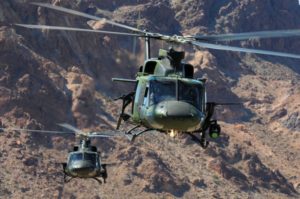
CH-146 Griffon aircrews have resumed conducting four to five missions per day, seven days a week, a pace similar to the height of the pre-Mosul campaign. Skip Robinson Photo
Though the scope of the conflict has changed, Canadian Special Operations Forces (SOF) continue to train, advise and assist the Kurdish Peshmerga as part of Operation Impact. In support of that effort, a tactical aviation detachment comprised of four CH-146 Griffon helicopters and around 50 aircrew, maintenance, logistics and headquarters personnel continue to provide tactical transport from an airbase near Erbil, carry Canadian and coalition SOF, equipment and ammunition between forward locations.

“There is really no change to that part,” said Maj Sylvain Lapierre, commanding officer of the fifth rotation of the detachment. “We still provide them with liaison, reconnaissance, and material support, and we are on standby for casualty evacuation if it were to be required.”

In the months following the ouster of Daesh from Mosul, Iraq’s second largest city, the aviation detachment saw what Lapierre calls a “tactical pause” in coalition SOF operations. But it was only a brief respite. As winter turned to spring, Griffon aircrews have resumed conducting four to five missions per day, seven days a week, a pace similar to the height of the pre-Mosul campaign when special forces helped Iraqi troops establish blocking positions around the city.

“We are task-tailored for 12 hours a day and we routinely do about 16,” said Lapierre of what remains, despite the disintegrating enemy force, a remarkably high operational tempo. In fiscal 2017, the detachment flew over 3,000 hours. “We would have no difficulties surging to 24 hours a day if we needed to.”

As with all commanders since the tactical aviation detachment was first deployed in October 2016, risk management remains the biggest concern.

Lapierre, a helicopter pilot with two tours in Bosnia and one in Afghanistan, as well as two years as a liaison officer with the U.S. Army Aviation Center of Excellence in Fort Rucker, Alabama, said the threat of enemy rocket, mortar and small arms fire is still a threat. But the variable weather, which can quickly reduce visibility, and man-made obstacles, also have to be mitigated.

“Lots of towers, lots of power lines-they are everywhere,” he said. “And they are not necessarily marked to the same standards that we are used to in Canada.”

Still, “rogue actors” in the form of Daesh or their sympathizers remain the preeminent threat to both helicopters and special forces. Aircrews routinely change flight profiles and rely on well-honed tactics, techniques and procedures to transit potentially risky airspace and to protect the aircraft.

Potentially complicating matters further, Turkey, a NATO ally, has been conducting offensive operations across its southern border against Syrian Kurdish militia. While the fighting has not affected the detachment’s missions-it’s a conflict to be addressed at the political level, Lapierre noted-it nonetheless is one more issue to keep an eye on.

“We obviously monitor everything that happens in the region from an intelligence perspective,” he said. “But nothing has really changed the way we are flying or how the [detachment] is operating in the area.”

However, before granting mission acceptance and launch authority, air task force commanders routinely use a risk assessment scorecard that has its origins in the helicopter missions of Afghanistan. The evolving tool forces leaders to deliberately evaluate the level of risk they are being asked to accept by assigning a score to the nature of the mission, how it is organized, the number and type of aircraft involved, the types of passengers, the degree of reliable intelligence, the availability of supporting enablers, and the environmental conditions.

“When we are looking at communicating the aspects of flight safety, it has become a very important supervision tool,” said Lapierre.

Many of those risks are mitigated by the fact that, although most of the tactical aviation detachment are on their first operational tour, all of the aircraft commanders (AC) are veteran pilots of multiple tours.

“I find myself in a privileged situation,” Lapierre acknowledged. “It makes the risk management aspect a little easier. And they have become outstanding mentors for the newer generation of aircrew that are rotating through theatre that may not have [served] in Afghanistan or on a previous mission. There is great sharing of information, not just among the aircrews but also within the maintenance organization.”

Exercises might train and validate the competency of an air task force, but the repetition of missions on an operation can make it easier to absorb instruction in a way that isn’t always possible in complex exercise scenarios, he observed.

“Sometimes coming to a theatre where the focus is different brings new opportunities to learn. Here we have the opportunity to train our younger aircrew in a real theatre, with real tasks and real control measures, with real users. In some ways it caps everything. What you have learned before as a young aviator, this is the sum of it.”

Despite temperature swings that have ranged between 35 C and below zero since the rotation began, the CH-146 Griffon has exceeded expectations. The detachment, which slimmed down from around 60 to 50 personnel last fall, is largely self-sufficient, managing most aspects of maintenance and logistics, and yet has had little trouble keeping the almost 20-year-old helicopters flying.

“I have outstanding serviceability here,” said Lapierre. “We haven’t seen any loss of performance. Like any other helicopter, there comes a point in the very high heat of the summer where we have to get into the books, look at the performance charts and find efficiencies, which we can do by managing the missions and the timings for the tasks. I think we are doing very well with this aircraft.”
Leading the way

Since the detachment was first stood up in 2016, three squadrons have assumed the leadership, beginning with 427 Special Operations Aviation Squadron from Petawawa, Ont., and then 430 Tactical Helicopter Squadron (THS) from Valcartier, Quebec.

Like Lapierre, many of the current detachment are from 408 THS in Edmonton. But over the course of his more than seven-month tour, he has seen members from every tactical aviation squadron in 1 Wing, as well as 417 Combat Support Squadron from Cold Lake, Alta., deployed to Camp Erable, home to Joint Task Force-Iraq Detachment Erbil, a headquarters staff of approximately 30 personnel and a Canadian-led Coalition Role 2 medical facility.

The commander admits he wasn’t sure how well a diverse group would gel without a lot of pre-deployment training. To his surprise, the different helicopter organizations clicked together almost immediately, proving the flexibility the Royal Canadian Air Force tactical aviation detachment concept.

“It’s one of those cases where one plus one equals three,” he said. “We’ve got a lot of synergies with different units. Everybody brought something and it made the sum of everything greater.

“It proves that we have a great deal of interoperability. Regardless of which unit people were coming from, it was easy to integrate them,” he observed as he prepared to hand over command to 430 THS in late May.

“[It’s also] a testament to our level of readiness and how strong and mature our SOPs (standard operating procedures) are. That is one thing I’ll be passing on, that we maintain our solid SOPs and work practices back home-they transfer well into theater.”

If anything, he’s realized how difficult it is to deliver such a high level of service for so long a period.

“One of my challenges is going to be to go back home and maintain the 100 per cent focus people have here,” he said. “Whether it’s maintenance, flying, logistical support-everyone has worked hand-in-hand to make these missions happen.”

Monday, March 26, 2018

Future of CAF in Iraq in Limbo

By: Vassy Kapelos, CBC News 

Six months after it was suspended, Canada's advise and assist mission in northern Iraq remains in a state of limbo, with no immediate end in sight.

The mission was suspended after fighting broke out between Iraqi and Kurdish forces following a controversial Kurdish independence referendum in September. The two groups had been working together to defeat ISIS, but long-held tensions boiled over after an overwhelming majority of Kurds voted to separate from Iraq.

At the time violence broke out, roughly 200 Canadian special forces were stationed in and around Erbil. They had been training Kurdish troops in the fight against ISIS, and providing logistics support for front-line operations as part of Canada's Operation Impact. Those activities were suspended "temporarily" in late October.

So what's happened since? And why is the mission still suspended?

It's not easy to get answers.

What we do know is there are fewer Canadian special forces on the ground in Iraq. Sources at the Department of National Defence say they now number about 120, down from a peak of 210 last year. Since their mission was suspended, they have helped put together potential options for what happens next.
Canadian special forces soldiers, left and right, speak with Kurdish Peshmerga fighters at an observation post in northern Iraq back in February 2017. (Ryan Remiorz/Canadian Press)
But those options have been handed off to the government, and the waiting game persists.

Defence Minister Harjit Sajjan recently returned from a fact-finding trip to Iraq, but spokesperson Byrne Furlong said there is no exact date for when a decision will be made. She insisted, however, that the government is committed to renewing the mission sometime this spring.

"Discussions are ongoing on the next phase," Furlong said in an email to CBC News. "We are not in a position to presuppose them."

But defence sources say special forces will remain in Iraq in some capacity, probably as part of a NATO training mission. The options presented to the government are all predicated on the belief that ISIS may have lost its territory but it has not been defeated. So, each option involves some form of partnership to train one of the groups operating in Iraq.

Ultimately, though, what partnerships can Canadian forces establish given the tensions that persist in the region?

To be fair, the conflict between the Kurds and Baghdad isn't nearly as violent today as it was six months ago. The groups reached an agreement late last week that could be considered a breakthrough, as the Iraqis agreed to transfer badly needed funds to the Kurdish regional government.
Iraqi Kurds carry torches as they celebrate Newroz Day, a festival marking their spring and new year, near the town of Akra on Tuesday. Baghdad and Kurdish leaders recently reached a deal on government funding that helped to defuse tensions in Iraq. (Ari Jalal/Reuters)
But the fight for Kurdish independence hasn't gone away — it's decades old and shouldn't have surprised anyone when it re-emerged after ISIS's territorial defeat.

Kurdish officials hoped Canada's support on the battleground would have extended to its fight against Baghdad, but the federal government avoided weighing in on the conflict at all costs.

In deciding on a new mission, they might not have the same luxury. To ignore the tensions between Baghdad and Erbil again could be dangerous — and it makes many observers wonder: why weren't they taken more into account from the start?

Vassy Kapelos is the new host of CBC News Network's Power & Politics. She hosts her first program on Monday at 5 p.m. ET.

Tuesday, February 13, 2018

Future of Canada's Role in Iraq Still Uncertain

By: David Pugliese, The Ottawa Citizen

Defence Minister Harjit Sajjan will travel to Rome and Brussels from February 13-15 to participate in a meeting of defence ministers from the main force contributors in the war against the Islamic State. Sajjan will also participate in a meeting of NATO defence ministers.

His trip comes as the Liberal government has yet to decide what comes next for Canadian military personnel involved in the war against the Islamic State of Iraq and the Levant.

Training by Canadian special forces for Kurdish personnel is still suspended.

Sajjan said in late December that he hoped to have a better idea of the future direction of Canada’s mission in Iraq even as the U.S. and Iraq have declared Islamic extremists defeated.

Sajjan said at that time the Canadian Forces leadership was developing options for what is to come next and that advice was expected in early 2018.

The Liberal government has extended Canada’s mission in Iraq until at least March 2019.

Following the meetings on ISIL, Sajjan will travel to Munich from February 16-17 to attend the annual Munich Security Conference, a global forum focused on defence and security related issues, his office said.

Friday, February 9, 2018

Canadian Bomb Experts help Iraqis clean up after fight with Daesh

By: BRUCE CAMPION-SMITH, Toronto Star

OTTAWA—A mission by Canadian military explosives experts in Iraq has been extended to help the country clean up the dangerous remnants of the battle against Daesh.
A Canadian Forces Griffon helicopter flies over a displaced persons camp near Erbil, Iraq on Feb. 20, 2017. Up to four Griffon helicopters remain in the region as well as two C-130 Hercules transport aircraft, a CC-150 Polaris air-to-air refueller, and up to 200 special operations forces.
A Canadian Forces Griffon helicopter flies over a displaced persons camp near Erbil, Iraq on Feb. 20, 2017. Up to four Griffon helicopters remain in the region as well as two C-130 Hercules transport aircraft, a CC-150 Polaris air-to-air refueller, and up to 200 special operations forces. (RYAN REMIORZ / THE CANADIAN PRESS)
Ottawa is weighing other military commitments as the Daesh fight enters a new stage but it’s already decided that the combat engineers who have been training Iraqi personnel in the safe disposal of explosives should remain in the country for several more months.

The Canadian soldiers — from the 2 Combat Engineering Regiment based in Petawawa — have been working since last fall as trainers at the Iraq Army’s bomb disposal school. That mission has now been extended to this fall, Brig.-Gen. Andrew Jayne, commander of Joint Task Force — Iraq told the Star.

“Every time the hostilities are over, the explosive remnants of war — not just mines — but unexploded ordnance are always a threat to the people, the soldiers,” Jayne said in a telephone interview from his headquarters in Kuwait.

American military officials say that this month alone, Iraqi security forces have destroyed more than 100 improvised explosive devices and other types of explosives.

“There is quite a focus on helping the Iraqis deal with this threat. That’s why we think this is an important contribution,” Jayne said.

Canada’s military contribution to the fight against Daesh — known as Operation Impact — has some 650 personnel deployed in Kuwait and Iraq. It includes a medical facility in Erbil, up to four Griffon helicopters, two C-130 Hercules transport aircraft, a CC-150 Polaris air-to-air refueller, and up to 200 special operations forces soldiers who advise and assist Iraqi and Kurdish forces.

While Daesh has been defeated on the battlefield, commanders caution that extremist fighters, hiding in the civilian population, will likely now turn to terror tactics.

“There are still remnants of ISIS who reside in a cellular structure who seek to bring instability to local areas, in particular population centers,” said Brig.-Gen. James Glynn, the U.S. officer who serves as deputy commanding general of the special operations joint task force for Operation Inherent Resolve.

“And that remains as it has for some time the focus of the Iraqi security forces and their counterterrorism forces specifically,” he told a briefing earlier this month.

That was echoed by Jayne who said that while the defeat of Daesh “came earlier than expected” security challenges remain.

“That’s why the coalition continues to evolve,” he said.

“Daesh no longer hold ground in Iraq but we do need to continue to support and train their people to deal with the aftermath. Dealing with those explosive threats . . . is part of that. But there’s also training for other groups,” he said.

Senior commanders are preparing recommendations to put before Gen. Jonathan Vance, the chief of defence staff, in the near future and a political decision on the make-up of Canada’s military commitments to Iraq are expected soon after that. The mission is due to end in March 2019.

“There remains a lot of work to do to ensure a stable and secure Iraq. We’ve been considering . . . as part of the process, how the Canadian Armed Forces is going to move forward within that context,” Jayne said.

Canada suspended the training mission by special forces operations last October after rising tensions and clashes between Iraqi and Kurdish forces.

While the counter-insurgency has changed, Jayne said Canada’s current contributions, such as the medical facility in Erbil, are still needed.

For example, he noted that the pace of operations by the Polaris air-to-air refueller to support patrols by coalition fighter jets has not slowed.

“Planes still fly and cover forces on the ground and our numbers of fuel delivered keep continuing to grow,” Jayne said. “I haven’t seen that rate drop off.”

He said it’s the same for the two C-130 Hercules transport aircraft. “It’s nonstop. The aircraft go in, they pick up cargo, move it to the next location, pick up people,” Jayne said.

“I’m confident that the resources that we have here today are providing a valuable contribution,” he said.

Meanwhile, Canada is helping Iraq on the governance front too. Liberal MP Omar Alghabra, parliamentary secretary to the Minister of Foreign Affairs, says he came away from a visit to Iraq optimistic about democratic reforms underway.

“Yes, security is still a threat but there’s a sense of optimism, a sense of promise, a sense of excitement,” the MP for Mississauga Centre told the Star.

Alghabra made a one-day visit to Baghdad where he was a keynote speaker at a conference on governance focused on a decentralized federal system of government in Iraq.

In his talks with local officials, Alghabra said he underscored the need for a governance system that lasts.

“Parliaments and politicians come and go but you need a system that works and you also need the population to have confidence in the system,” he said.

“The confidence really needs to be in the system as much as it is in the politicians,” he said Friday in a telephone interview from Istanbul.

He said he was encouraged by the steps taken so far as the government prepares a budget and sticks to a schedule for a parliamentary election in May.

“Don’t get me wrong, there are still a lot of challenges. I don’t think anyone is underestimating those challenges,” he said.

“But not only did I see willingness but I saw a roadmap and a desire to implement that roadmap,” he said.

Monday, November 13, 2017

Canada Suspends Aid to Iraq and Kurdish-Peshmerga

By: David Pugliese, The National Post 

Canada has suspended the assistance its special forces were providing to Iraqi security forces as Iraqi and Kurdish forces battle each other.

Canadian commandos have been working with the Kurds and some assistance has been provided to the Iraqis.
Canadian special forces look over a Peshmerga observation post, Monday, February 20, 2017 in northern Iraq.THE CANADIAN PRESS/Ryan Remiorz

But, “given the fluidity of the current situation, Canada’s Special Operations Task Force has temporarily suspended the provision of assistance to various elements of Iraqi security forces,” Canadian Forces spokesman Col. Jay Janzen said Friday.

“Once more clarity exists regarding the interrelationships of Iraqi security forces, and the key priorities and tasks going forward, the Task Force will resume activities,” he said. “In the interim, they will continue to monitor the situation and plan for the next potential phases of operational activity.”

The Ottawa Citizen reported Wednesday that Canada is also reviewing its program to supply the Kurds with small arms.

Canadian special forces have been providing assistance to the Kurds and Iraqis in their war against ISIL. But with ISIL in retreat, Iraqi and Kurdish forces are now fighting each other. The Kurds want to separate from Iraq and, during the war against ISIL, they seized large portions of the country. That included the city of Kirkuk and nearby oil fields, which hold an estimated 40 per cent of Iraq’s oil.

The Iraqi government declared the recent Kurdish referendum supporting independence illegal and sent troops to retake Kirkuk and other territory.

The Kurds offered on Wednesday to put any drive towards independence on hold, but that was rejected by the Iraqis.

However, on Friday, Iraqi Prime Minister Haider al-Abadi ordered a 24-hour ceasefire. That “should allow a joint technical committee to work on the deployment of federal Iraqi forces in all disputed areas, including Fish-Khabur, and the international border,” Abadi said in a statement.

The Kurds have welcomed the pause in fighting.

Janzen said the Canadian Forces will continue to support the U.S.-led coalition battling ISIL. That includes the provision of transport helicopters, a medical facility and surveillance and intelligence gathering capabilities.

“Only the provision of assistance to various elements of Iraqi security forces has been temporarily suspended,” Janzen said.

The previous Conservative government sent Canadian special forces to northern Iraq to train the Kurds starting in 2014. That program was continued by the Liberals.

But the issue of training and arming the Kurds has been highly controversial from the start. Kurdish leaders openly acknowledged their intent was to eventually create an independent state. The arms were needed both to fight against ISIL and to defend an independent state, they said.

The Kurds say at least 30 of their soldiers have been killed and another 150 wounded in ongoing clashes.

Bayan Sami Abdul Rahman, the Kurds’ top diplomat in Washington, said it’s past time the international community end its “laser focus” on ISIL and begin to address Iraq’s many underlying problems.

“’We are laser-focused on (ISIL).’ That has been the mantra of the past few years,” Abdul Rahman told The Canadian Press. “But to continue to say we’re laser-focused on (ISIL) is missing the obvious truth of what is happening in Iraq.”

Wednesday, October 18, 2017

Does Threat of Iraq Civil War Endanger Canadian Special Forces?

By: David Pugliese, The Ottawa Citizen 

Is civil war looming in Iraq?

Iraqi Vice President Ayad Allawi seems to think that could be a possibility. In an interview with the Associated Press, he warned a “civil war” could erupt over the Kurdish-administered city of Kirkuk.

The city of Kirkuk falls outside the autonomous Kurdish region in the northeast Iraq. But the Kurdish referendum for independence from Iraq included the city.

Allawi is particularly worried about how militias in Iraq will react to the Kurds retaining Kirkuk.

The head of the Asaib al-Haq militia Qais Khazali warned worshippers in a sermon Sunday that Iraq’s Kurds were planning to claim much of north Iraq, including Kirkuk, for an independent state, after Iraq’s Kurds voted for independence in a controversial but non-binding referendum two weeks ago, Associated Press reported.

That, he said, is a “foreign occupation.”

But Allawi, a former prime minister, told Associated Press that any move by the country’s Popular Mobilization Front militias, which include the Asaib al-Haq, to enter Kirkuk would open the door to “violent conflict.”

“The government claims they control the Popular Mobilization Forces. If they do they should restrain them, rather than go into a kind of civil war. And there should be a restraint on Masoud Barzani and the Peshmerga not to take aggressive measures to control these lands,” said Allawi.

In July, Gen. Raymond Thomas, head of U.S. Special Forces Command, suggested any moves toward independence by the Kurds, who now control the city of Kirkuk and 40 per cent of Iraq’s oil, will lead to conflict. The Iraqis will not stand by and allow independence to happen. “I don’t think they’re going to say, sure, take the oilfields and Kirkuk and go your way,” Thomas told a security forum. “It’s not going to go peacefully.”

If fighting breaks out between the Kurds and Iraqis what happens to the Canadian special forces in the Kurdish area? Are they pulled out or do they sit tight?

There is no word from the government or Canadian military. They have been relatively silent on the Kurdish independence vote and its implications for the Canadian military mission.

Since the fall of 2014, Canada has been providing equipment and military training to Kurdish troops in northern Iraq as part of the coalition against the Islamic State of Iraq and the Levant, or ISIL.

Barzani has cited Quebec’s quest for independence as one of the reasons why he and his fellow Kurds are entitled to their own country.

The Kurds were able to use the war against ISIL to seize portions of Iraq, such as Kirkuk. That gave them control of 40 per cent of Iraq’s oil and a steady flow of cash from oil sales to bolster their quest for independence.

In November 2015, Kurdish forces, with support from coalition fighter jets including Canadian CF-18s, helped push ISIL out of the city of Sinjar. The Kurdish flag – not Iraq’s – was erected over the city. “Long live Kurdistan,” Kurdish gunmen shouted as they fired their weapons into the air.

Barzani has said the Kurds will never surrender any of the territory they now hold in Iraq.

Canadian Special Forces Dismantling Chemical Weapons in Iraq

By: Robert Fife, The Globe and Mail 

Canadian special forces have played a central role in hunting down, detecting and dismantling stockpiles of chemical weapons used by Islamic State militants in Iraq, according to sources with knowledge of the top-secret operations.

Some of these highly trained soldiers have advanced scientific degrees and used their specialized skills to decontaminate Kurdish Peshmerga fighters and Iraqi soldiers affected by mustard gas.

Canada's special forces are made up of the elite JTF-2 counterterrorism force, regular commandos, a special helicopter detachment and the Canadian Joint Incident Response Unit (CJIRU), which is responsible for responding to nuclear, chemical and biological attacks.

Soldiers with the CJIRU are among about 200 Canadian special forces deployed in northern Iraq focused mainly on training Kurdish fighters. Some of them recently helped in the battle to reclaim the Iraqi city of Mosul from the Islamic State, including a small number of CJIRU soldiers whose job was to search for and destroy chemical weapons.

Mosul was at the centre of the Islamic State's chemical-weapons production, mostly small batches of low-quality chlorine and sulphur mustard agents, but the hardline Sunni militants also had control over radioactive material at the city's university.

Sources, with knowledge of the activities of Canada's special forces in Iraq, but who were not authorized to speak on the record, have told The Globe and Mail that CJIRU soldiers detected and dismantled weaponized chemical components and hazardous material in Mosul between March and August of this year.

"It is a very, very highly capable organization that deals with very, very ugly situations," said retired lieutenant-colonel Steve Day, the former head of Canada's secret JTF-2 special-operations unit who worked alongside CJIRU soldiers.

"They have got both tactical training, so they can operate alongside special forces, but they also have technical training in their ability to handle biological, chemical or radioactive agents."

For security reasons, the sources would not discuss the exact nature of the operations that were conducted in eastern and western Mosul.

Major Alexandre Cadieux, who speaks for Canadian Special Operations Task Force (SOTF) in Iraq, said the military has a policy of not commenting on its special-forces activities and the role of CJIRU soldiers.

"The Canadian Special Operations Forces Command does not discuss the specific composition of its task forces … [and] does not discuss the exact threats that the SOTF detects against its personnel," Major Cadieux said in an e-mail.

The Washington Post reported in July that two caches of the highly dangerous cobalt-60 isotope used in radiotherapy-treatment machines in medical facilities was discovered on a university campus in Mosul. It is not known whether the Islamic State knew that the cobalt-60 could be used to make a dirty bomb, or whether they did, but were afraid of being exposed to the lethally high levels of radiation.

The Canadian military would not say whether CJIRU soldiers were part of the U.S. operation to retrieve the cobalt-60 radiation machines. Asked if Canada played a role in finding the radiation machines, Major Cadieux said the armed forces "will not provide information that could jeopardize, even indirectly, operations by Iraqi security forces and the [U.S.-led] coalition."

U.S. officials have confirmed that the Islamic State had gained control of small quantities of natural or low-enriched uranium from the days of Saddam Hussein's rule, as well as some relatively harmless radioactive iridium used in industrial equipment.

The Canadians, often working alongside their secretive U.S. counterparts, have highly specialized sensor equipment that allows them to sample, identify and characterize chemical and hazardous material. They are assisted in their operations by U.S. airborne sniffers that can detect radioactive and chemical agents.

"They have got the ability, in very small numbers, to do the decontamination and containment of the site," Mr. Day said. "Some of the [chemical weapons] are lethal within metres, some of them are lethal within hundreds of metres and that is what these men and women are doing."

Mosul, Iraq's second-biggest city, was captured by Islamic State fighters in 2014 but government forces – with the help of U.S. and Canadian special forces – retook the city in late July in an operation that lasted six months.

Iraqi police have accused the Islamic State of using chemical weapons against their forces in Mosul. Most of these involved either the use of chlorine or sulphur mustard agents, delivered with mortars, rockets and improvised explosive devices.

The Islamic State has used chemical weapons in Iraq and Syria at least 52 times according to the IHS Conflict Monitor, a London-based research and intelligence-gathering group. A report by IHS said at least 19 of 52 attacks took place in and around Mosul.

Canada's Armed Forces established the CJIRU team in 2006. Its principal focus – working alongside the RCMP and Health Canada – is protecting Canada from a nuclear, radioactive, chemical or biological attack.

Mr. Day said only a small number of CJIRU member are sent overseas on military missions, such as Iraq.

"Their number one priority is the domestic response. That domestic capability is fenced off and thou shall not touch that capability except in times of emergency," Mr. Day said.

Monday, July 10, 2017

Canada's Iraq Mission Extended until 2019 at Cost of $371 million

By: David Pugliese, Defence Watch 

The Liberal government has extended Canada’s military mission in Iraq for almost another two years.

The mission will be extended until March 31, 2019, the government announced Thursday.

“Canada is providing $371.4 million over two years to support the cost of this renewed contribution to the Global Coalition against Daesh,” the government noted in a news release. Daesh is another name for the Islamic State of Iraq and the Levant.

The Canadian military will be able to deploy capabilities as needs arise, the government noted. “This extension includes the authority to provide training for new potential partners within the Iraqi security forces and a CC-130J Hercules aircraft for tactical airlift,” it added in the news release.

Canada will also continue to contribute existing capabilities, including:

o Aerial refueling and surveillance capabilities;

o Tactical helicopters;

o Training, advising, and assisting Iraqi security forces;

o Capacity building in Jordan and Lebanon;

o A Role 2 medical facility; and

o Personnel, including intelligence support.
This extension includes the authority to deploy up to 850 military personnel.

Peggy Mason, president of the Rideau Institute in Ottawa, pointed out that the Liberals extended the mission without Parliamentary debate.

“The situation on the ground in Iraq is about to radically change with the impending demise of the territorial phase of the Islamic State enterprise,” Mason said in a statement. “Canadian military trainers may find themselves not only confronting a diffused Islamic state insurgency but a Kurdish independence movement and deep sectarian divisions between the Shia- controlled Iraqi government and the Sunni majority population.”

That type of situation should prompt a full debate in Parliament, she added.

“Instead what we have from the Trudeau government is a press release, after Parliament has recessed, and two days before the July 1st festivities begin, which appears to delegate the responsibility for updating the mission in light of evolving circumstances to the Canadian military, without even the involvement of the government, let alone Parliament,” Mason said.

Defence Minister Harjit Sajjan told journalists on Thursday that the original mission was already debated in the House of Commons.

Wednesday, July 5, 2017

General Warns Canada's SOF Operating on 'Borrowed Time'

The Canadian Press,

The deputy commander of Canada’s special forces says his troops risk being run ragged after three years in Iraq, as well as several other lesser-known missions in other parts of the world.

Brig.-Gen. Peter Dawe says that’s why the Liberal government’s plan to add more than 600 additional soldiers to the elite force is not only welcome, but necessary.

Canada currently has about 2,000 special forces soldiers, many of whom Dawe says have done multiple tours through Iraq since first being sent to help fight the Islamic State group in August 2014.

But Canadian special forces have also been called upon to help train local forces facing extremist threats in different parts of Africa, Southeast Asia and Central America.

The demand doesn’t appear to be letting up, as the government announced last week that Canadian soldiers will stay in Iraq for at least another two years.

Dawe says his troops continue to get the job done, but have been operating “on borrowed time” and need the help to ensure they — and their families — don’t suffer burnout.

Thursday, June 22, 2017

Canadian Elite Special Forces Sniper makes record-breaking kill shot in Iraq

By: Robert Fife, The Globe and Mail

A sniper with Canada’s elite special forces in Iraq has shattered the world record for the longest confirmed kill shot in military history at a staggering distance of 3,450 metres.

Sources say a member of Joint Task Force 2 killed an Islamic State insurgent with a McMillan TAC-50 sniper rifle while firing from a high-rise during an operation that took place within the last month in Iraq. It took under 10 seconds to hit the target.


“The shot in question actually disrupted a Daesh [Islamic State] attack on Iraqi security forces,” said a military source, who stressed the operation fell within the strictures of the government’s advise and assist mission. “Instead of dropping a bomb that could potentially kill civilians in the area, it is a very precise application of force and because it was so far way, the bad guys didn’t have a clue what was happening.”

The kill was independently verified by video camera and other data, The Globe and Mail has learned.

“Hard data on this. It isn’t an opinion. It isn’t an approximation. There is a second location with eyes on with all the right equipment to capture exactly what the shot was,” another military source said.

A military insider told The Globe: “This is an incredible feat. It is a world record that might never be equalled.”

The world record was previously held by British sniper Craig Harrison, who shot a Taliban gunner with a 338 Lapua Magnum rifle from 2,475 metres away in 2009.

Previously, Canadian Corporal Rob Furlong had set the world record in 2002 at 2,430 metres when he gunned down an Afghan insurgent carrying an RPK machine gun during Operation Anaconda.

Weeks before, Canadian Master Cpl. Arron Perry briefly held the world’s best sniper record after he fatally shot an insurgent at 2,310 metres during the same operation. Both soldiers were members of the 3rd Battalion Princess Patricia’s Canadian Light Infantry.

JTF2 special forces are primarily tasked with counterterrorism, sniper operations and hostage rescue. Much of the information about this elite organization is classified and not commented on by the government. The unit’s snipers and members of Canadian Special Operations Regiment, who are carrying out the main task of training Kurdish forces, have been operating in tough conditions in Iraq.

The Trudeau government pulled CF-18 fighter jets out of Iraq in 2016 but expanded the military mission, which will see the number of Canadian special forces trainers climb to 207 from 69 in an assist, train and advise mission. Canadian commandos are not supposed to be involved in direct combat, but are authorized to go up to the front lines on training missions with Kurdish Peshmerga fighters and to paint targets for coalition air strikes.

For operational security reasons, sources would not reveal the names of the elite Canadian sniper and his partner, nor the location where the action took place.

A sniper and his observer partner are often sent to remote and dangerous locations to hunt down insurgents while having to carry heavy equipment. Once they have located the target, snipers follow the same methodical approach before each shot. Breathe in, out, in, out, find a natural pause and then squeeze the trigger.

Canada has a reputation among Western military forces for the quality of its snipers, despite the small size of the Canadian Armed Forces compared to the United States and Britain.

“Canada has a world-class sniper system. It is not just a sniper. They work in pairs. There is an observer,” a military source said. “This is a skill set that only a very few people have.”

The skill of the JTF2 sniper in taking down an insurgent at 3,450 metres required math skills, great eyesight, precision of ammunition and firearms, and superb training.

“It is at the distance where you have to account not just for the ballistics of the round, which change over time and distance, you have to adjust for wind, and the wind would be swirling,” said a source with expertise in training Canadian special forces.

“You have to adjust for him firing from a higher location downward and as the round drops you have to account for that. And from that distance you actually have to account for the curvature of the Earth.”

U.S. Sergeant Bryan Kremer has the longest confirmed sniper kill shot by a U.S. soldier. He killed an Iraqi insurgent with his Barrett M82A1 rifle at 2,300 metres in 2004.

Tuesday, June 13, 2017

Sajjan: Canada Committed to Iraq for the Long-Haul; Afghanistan Training Mission a Possibility

Michael MacDonald, The Canadian Press

HALIFAX — The federal government is considering a NATO request to send police trainers to Afghanistan, but Defence Minister Harjit Sajjan says Canada's military focus remains in Iraq.

"As any good allied partner does, we will look at that request," Sajjan said Monday after a news conference highlighting the Defence Department's new, 10-year defence policy, which was rolled out last week.

"Our focus right now is on our mission in Iraq and the region. We will be moving forward with that mission."

Sajjan said even though Canada continues to provide funding for development and security personnel in Afghanistan, the military mission there ended three years ago.

The conflict claimed the lives of 158 Canadian soldiers, one diplomat and one journalist between 2001 and 2014. Thousands of those who served there continue to suffer from physical or mental injuries, an issue that continues to make headlines across the country.

However, the United States and NATO are reaching out for more help in Afghanistan now that the Taliban appear to be making a comeback in the region. As well, the arrival of the Islamic State of Iraq and the Levant has complicated matters. During the past year, the group has launched deadly attacks across the country.

As for Iraq, Sajjan says Canada remains committed to maintaining a long-term military presence in that country, but he followed up by suggesting some changes were in order.

"For Iraq ... we are in this as a reliable coalition partner, in for the long term," the minister said as he answered questions from reporters gathered at Her Majesty's Canadian Dockyard, along the west side of Halifax's sprawling harbour.

"We're going to make adjustments to the mission ... We have taken this year to review the evolution of the situation on the ground. We will be extending the mission, but we'll be making the final decision on this very shortly to outline what our contributions will be. One thing I can assure you: we will remain as a credible partner to make sure the coalition has all the right assets in place."

There are about 200 Canadian special forces soldiers deployed in northern Iraq. Though their mission is to train Kurdish fighters, they have engaged in gun battles in Iraq.

The federal government has confirmed that in March some of the special forces took part in the battle to reclaim the Iraqi city of Mosul from ISIL.

In the defence policy overhaul, Sajjan has committed to adding 605 new elite special forces commandos.

Overall, the new policy commits Canada to spending an extra $14 billion over the next 10 years on defence matters — a 70 per cent increase for the department's budget.

The money will be used to put another 5,000 troops in uniform and, among other big-ticket items, offset the skyrocketing cost of buying new warships and fighter jets.

But much of the money won't flow until after the next election, and it’s not clear whether the spending spike would mean bigger federal deficits or spending cuts in other areas.

Sajjan noted that two of Canada's new Arctic patrol ships were under construction at the nearby Halifax Shipyard, and he said his new defence policy commits the government to spending up to $60 billion on building 15 new warships, which will replace much of the Royal Canadian Navy's aging fleet.

"We are excited for the economic growth and development that this policy means for Halifax, Nova Scotia and the broader Canadian defence industry," he said. More than 14,000 Nova Scotians are employed as part of a "defence team" that spends $1.3 billion annually in the province, he said.

Sajjan said the original budget for the Canadian Surface Combatant program in 2008 was set at $26.2 billion, which the Parliamentary Budget Office later determined was enough for only six ships.

"We need 15 and we are committed to 15 ships," Sajjan said, adding that the policy also commits the government to maintaining the navy's four problem-plagued submarines and to build two new support ships.

Thursday, May 25, 2017

RCAF CP-140 Aurora Quietly Recalled from OP IMPACT

By: Murray Brewster, CBC News 

One of the Canadian air force spy planes assigned to the campaign against the Islamic State has been quietly withdrawn and brought home, CBC News has learned.

The CP-140 Aurora, with a suite of high-tech surveillance equipment, was one of two that had been flying missions over northern Iraq and Syria since the fall of 2014.

The decision to bring one of the turboprop aircraft home was not announced by the Liberal government, which recently extended the deployment of the Canadian military, including special forces trainers on the ground, until the end of June.

A single CP-140 and a refuelling tanker remain in Kuwait, where the Canadian Air Task Force has been based, to continue operations alongside the U.S.-led coalition.

But the decision could signal the beginning of the end of Canada's military involvement in the anti-ISIS fight.

A spokesperson for the military's operations command said the Aurora was withdrawn on May 15 and its departure has not impeded the coalition's air campaign.

"The [Canadian Armed Forces] shared its intent to return the aircraft to Canada with our coalition partners well in advance in order to ensure continuity in the coalition's intelligence, surveillance and reconnaissance operations against Daesh," said Capt. Vincent Bouchard, referring to ISIS by its Arabic acronym.
Battle for Mosul

Iraqi security forces and Kurdish fighters are close to liberating the northern Iraqi city of Mosul and when the bloody campaign is completed, ISIS will largely have been driven from country.

In an email, Bouchard painted the decision to remove one of the CP-140s as a routine matter, meant "to effectively balance its expeditionary requirements and domestic commitments." He said the aircraft was needed to "deliver on its full range of missions domestically."

The primary mission of the CP-140s in Iraq was to act as spotters, targeting ISIS combat units and buildings for destruction.
In February 2016, Defence Minister Harjit Sajjan told the House of Commons that Canada's CF-18 fighter jets had completed their bombing mission in Iraq and Syria. At that time, the Liberal government took pains to underline it was leaving the spy planes and tanker in place. (Sean Kilpatrick/Canadian Press)

When Canada's CF-18 fighter jets were withdrawn from the bombing campaign in February 2016, the Liberal government took pains to underline it was leaving the spy planes and tanker in place to support other coalition members as they continued combat operations.

As of May 20, the Auroras had flown 793 reconnaissance missions.
Special forces in northern Iraq

Canada still has more than 200 special forces troops advising Kurdish and Iraqi forces, as well as a tactical helicopter detachment, a number of intelligence officers and a Role 2 combat hospital deployed in Iraq.

The mission was reviewed in March, but only given a three-month mandate extension, to June 30.

Kurdish Peshmerga commanders have asked that highly trained special forces remain behind once Mosul is freed in order to help with training in counter-insurgency warfare.

Many experts and U.S. commanders have said expelling ISIS from Iraq will not entirely end the fighting and that extremists will likely resort to hit-and-run guerilla tactics.

The Liberal government has been unclear on whether it's prepared to facilitate that kind of training or participate in reconstruction efforts.
Beginning of the end?

The removal of the Aurora, which has been called out by allies for its usefulness, is a signal to defence analysts that the deployment could be coming to an end.

"If this is not the end of the mission, it seems a bit strange they would be pulling out one of these aircraft, which arguably has been one of the most important parts of our contribution," said Richard Cohen, who was an adviser to former defence minister Peter MacKay and served in both the Canadian and British militaries.

Given the deployment of troops to Latvia next month and the Liberal government's plan to return to peacekeeping, he said the military might not have the bodies to sustain an extended commitment in Iraq.
Four Canadian aircrew who fly one of the country's CP-140 surveillance planes leave the flight line at an unidentified coalition airbase in Kuwait on Nov. 13, 2016. (Murray Brewster/CBC)
The question of what Canada is going to do post-Mosul has been met with resounding silence, said Steve Saideman, a professor of international affairs at Carleton University.

The U.S.-led coalition has been organizing the next phase of the anti-ISIS campaign, with a finite number of positions, and Canada has yet to apparently signal interest.

"Canada has no role there," said Saideman. "And what that's going to lead to is dumb politics, shockingly enough."

By not articulating a clear way forward in the fight against ISIS, the Liberals have opened themselves up to criticism from Opposition Conservatives and possibly allies, he said.

The future of the Iraq mission could be made clear with the release of Canada's new long-awaited defence policy on June 7, but Saideman said it's unlikely to change the narrative.

"The fact is Canada may not be needed, and given the tempo of special forces operations, it might be time for them to come home and relax," he said. "But that's not going to be the conversation. The conservation is going to be about [how] Canada doesn't care about Iraq."

Dealing with terrorism, and specifically ISIS, is a top priority for the Trump administration. The U.S. leader recently scored a victory on that front, as NATO commanders moved to endorse a plan to formally join the U.S.-led coalition in Iraq and Syria.

Tuesday, April 18, 2017

Edmonton Helicopter Squadron Deploys to Iraq

The Canadian Press 

EDMONTON—The Canadian military has deployed 60 members of an Edmonton-based helicopter squadron to Iraq as part of Operation Impact, a mission to fight Daesh militants in the country’s north.

The Department of National Defence says the Royal Canadian Air Force’s 408 Tactical Helicopter Squadron will take over from their counterparts from Valcartier, Que., who have been providing tactical support since October 2016.

The 408 squadron operates out of 3rd Canadian Division Support Base in Edmonton.

They will fly and maintain up to four CH-146 Griffon helicopters at Camp Erable near Erbil, Iraq.

Maj.-Gen. Christian Drouin, commander of 1 Canadian Air Division, says the squadron will provide support to both Canadian and coalition partners.


There are currently 830 Canadian military personnel based in both Iraq and Kuwait as part of Operation Impact.

“The men and women of 408 Tactical Helicopter Squadron will continue to provide agile, reliable and dedicated service that Canada’s Special Operations Forces and our coalition allies have come to expect from the RCAF,” Col. Jeannot Boucher, commander 1 Wing, said in a news release.

Monday, April 3, 2017

Canada Extends OP IMPACT Until June 2017

DND Press Release

The Government of Canada remains strongly committed to defeating Da’esh and responding to the needs of people who have been displaced or devastated by war in Iraq, Syria, and the region.

Today, Defence Minister Sajjan announced that the Government of Canada is extending Canada’s current military contribution to the fight against Da’esh until June 30, 2017.

This extension provides the Government of Canada the time required to assess the evolving nature of the fight while allowing the Canadian Armed Forces to maintain their important contributions to ongoing operations as a responsible coalition partner.

The scope and mission of Canada’s military contribution will remain the same over the next three months, with a few adjustments. As a result of recent successes in the campaign, some elements of the Canadian Special Operations Task Force have recently been operating in Eastern Mosul, providing advice and assistance to Iraqi Security Forces. There has been no change to their mandate or to the parameters of their mission. Canadian troops remain behind the forward line of troops, and are providing advice and assistance to Iraqi Forces.

Canada has implemented a comprehensive and integrated approach to do its part in defeating Da’esh, restore basic government services in Iraq, and enable citizens to return to their homes in newly-liberated areas.

Canadians will be regularly updated as this mission continues to evolve.

Wednesday, March 22, 2017

Ottawa Appears Likely to Extend Military Mission in Iraq

By: Bruce Campion-Smith, Toronto Star

Ottawa appears likely to extend Canada’s military deployment in Iraq by several months as the fight for Mosul continues and then consider a longer-term plan for the counter-Daesh mission, the Star has learned.

The mission, which includes some 200 special forces soldiers on the ground near Erbil, plus air force crews operating reconnaissance and refuelling aircraft, was due to wrap up at the end of March.

Ottawa will consider what kind of military contribution is needed if Canada decides to recommit to the counter-Daesh coalition in Iraq.
Ottawa will consider what kind of military contribution is needed if Canada decides to recommit to the counter-Daesh coalition in Iraq. (RYAN REMIORZ /THE CANADIAN PRESS FILE PHOTO)
But with Iraqi and peshmerga forces still fighting to reclaim Mosul and surrounding territory from Daesh insurgents, the federal government now seems likely to extend the mission by several months, a source told the Star. A final decision is expected shortly.

During the extension, the government will consider what kind of military contribution is needed if Canada decides to recommit to the counter-Daesh coalition.

Defence Minister Harjit Sajjan declined Tuesday to say what the government may do next but did say that consultations are ongoing with allies.

“That’s what we’re doing now is making sure that we’re talking to our coalition partners, looking at the situation on the ground. It is very fluid, and we just want to make sure that we have the right resources,” Sajjan told reporters on Parliament Hill.

“We will continue to look at any type of adjustments so that we are a responsible coalition partner,” he said.

The mission was originally launched by former prime minister Stephen Harper in the fall of 2014 and included deploying troops to northern Iraq in an advise-and-assist role to train peshmerga troops and dispatching an air-to-air refueller, reconnaissance aircraft and six CF-18 fighters that join in coalition bombing campaigns.

After taking power, the Liberals ended the bombings by the CF-18s but boosted the number of troops on the ground. More recently, Canada has taken over command of a military hospital in Erbil to treat casualties from the ongoing offensive launched by local forces to beat back Daesh (also known as ISIS or ISIL).

Though it’s ostensibly a non-combat mission, Canadian troops have several times engaged in firefights with Daesh insurgents to protect themselves or the Kurdish troops they are with.

Tuesday, February 28, 2017

Canadian Forces Studying Options for Potential Syrian Deployment

By: Matthew Fisher, The National Post

The Canadian military has begun to study options for an operation in Syria, for the Liberal government to consider as U.S. president Donald Trump hints he may expand the 16-year-old war on terrorism by sending more troops to that country after the offensive to liberate the Iraqi city of Mosul from ISIL concludes.

Officers familiar with how the military does long-range planning said that offering such choices — as well as examining ways Canada might continue to contribute to the U.S.-led coalition in Iraq after the war there ends — was standard procedure. It is prudent to constantly prepare and update options regarding potential overseas deployment to hot spots in case the government of the day asks for them, they said.

What comes next for Canada and its allies is an obvious question, with the Islamic State in Iraq and the Levant holding only a sliver of land in Iraq and a much larger swathe of territory in Syria. Lt.-Gen. Steve Townsend, the U.S. ground commander for the wars in Iraq and Syria, expects ISIL to be defeated in both countries within six months. But nobody expects that ISIL, or its rivals, Al Qaeda, will be entirely eradicated for a very long time. There are fears the terrorist groups will go underground in those countries, increase their activities in Somalia or northern and central Africa or take their war global, launching more terrorist attacks on soft civilian targets, particularly in Europe.

It is not publicly known whether the Trump government has asked Ottawa to contribute troops or assist in other ways in the war against ISIL in Syria, or to take on other roles in the war on terror. But if there is anything to be taken from the example of the war in neighbouring Iraq, where Canada has been a participant since August, 2014, such a request is possible.

Canada is one of 17 countries currently assisting Iraqi and Kurdish forces in Iraq. About Canadian 800 troops now involved in what the Canadian Forces calls Operation Impact. About 70 are elite Special Forces from the Ontario-based JTF2. They train, advise and assist Kurdish fighters and when at risk themselves, have occasionally joined the fight.

Other Canadians are targeting experts, based in Kuwait and Qatar, or work with Kuwait-based reconnaissance aircraft which help identify ISIL targets. A small team of Canadian doctors, nurses and technicians also runs a military hospital in the Kurdish city of Erbil, about 70 kilometres east of the front lines around Mosul.

The U.S. already has 500 Special Forces soldiers in Syria and has been preparing the American public for the possibility that more troops may soon be headed there. Gen. Joseph Votel, the U.S. commander responsible for overseeing military operations in the Middle East and South Asia, took journalists with him on a secretive tour of northern Syria last week. At an undisclosed location he told his media entourage that “take-no-prisoners fighting” was in the offing to capture ISIL’s Syrian hub, Raqqa, and that more troops may be needed to accelerate the war against ISIL there.

Any expansion of the coalition war in Syria is complicated by Russia’s political and military support for the government of Syrian President Bashir Assad. There remains confusion over to what extent Trump’s professed admiration for Russia’s leader, Vladimir Putin, will play a role in decisions made in Washington, particularly as the U.S. president’s top security advisers regard the Kremlin with deep suspicion. Turkey, which is a member of NATO that has improving ties with Moscow, also does not want Syrian Kurdish forces allied with the U.S. to become more powerful.

Canada is already indirectly involved in the war in Syria. Since December, JTF2 has been advising Iraqi Kurds deployed near the Syrian border in northwestern Iraq, in an attempt to prevent ISIL forces escaping from Mosul and reaching Syria. It had been involved in the air war in Syria until the Liberals ordered home the RCAF’s F-18s.

If Canada were to become involved militarily in Syria again it could send a small number of JTF2 troops there in an advisory role. Another possibility is that Canada could be asked to provide “boots on the ground” to help protect civilians from violence in safe zones that Trump has said he intends to establish to prevent the Syrian refugee crisis from worsening.

Canadian Brig.-Gen. Dave Anderson, who heads the coalition’s strategic advisory team in Iraq, told Postmedia in an interview late last year that discussions were already taking place then about how “we — that is, the Iraqi security forces — can not only take Mosul but hold it afterwards.” According to Trump’s most senior general, Joseph Dunford, the U.S. and NATO are considering a long-term military commitment to assist Iraqi and Kurdish forces who will be responsible for trying to prevent ISIL or other terrorist groups from regrouping. Canada’s Iraq mission could be extended indefinitely as part of that effort.

The potential ask for Canada to extend or expand its role in the region comes as Ottawa undertakes an open-ended commitment to lead a NATO battalion in Latvia from this June, and continue training missions in Poland and Ukraine.

Wednesday, February 22, 2017

Canadian Generals Defend Strategy for Defeating ISIL

By: The Canadian Press

PERSIAN GULF — Two senior Canadian generals have defended the current strategy for defeating Daesh (also known as ISIS) in Iraq and Syria, which U.S. officials have put under review following scathing criticism by President Donald Trump.

U.S. Defence Secretary James Mattis was in Iraq this week after Trump gave the retired Marine Corps general until the end of the month to come up with a plan for speeding up the campaign.

During last year’s presidential election, Trump repeatedly criticized the slow pace of progress and promised to introduce a new approach that would hasten Daesh’s defeat.

But Brig.-Gen. David Anderson and Brig.-Gen. Stephen Kelsey say they are hard-pressed to think of ways to improve the existing strategy, which they have watched unfold firsthand for the better part of a year.

And they worry that rushing to destroy Daesh could in fact undermine the progress that has been made in dealing with the root causes that led to the extremist group’s rise in the first place.

“I can’t think of a different way to do this that doesn’t create all the problems that have been there from the past,” Anderson said Monday, before Mattis’s unannounced arrival in Iraq. “I think we’ve got it right.”

Anderson and Kelsey are both based in Baghdad. And while they’re Canadian, each holds a key position within the larger international coalition for defeating Daesh.

Since last spring, Anderson has led a multinational team of military advisers posted inside the Iraqi defence ministry in Baghdad, where they have helped formulate and implement the current campaign strategy.

Kelsey has helped oversee the actual fighting on the ground, which is being largely conducted by Iraqi forces with significant assistance from Canada and other countries.

Mattis hasn’t said what changes he wants to see in the campaign plan, but reports suggest the options under discussion include putting more U.S. troops on the ground and having them do more of the fighting.

American troops, like the roughly 200 Canadian special forces in northern Iraq, have largely stayed out of the fight and instead provided training, advice and some battlefield support from behind.

Anderson and Kelsey insisted it is up to the U.S. to decide its own approach to defeating Daesh; but any change would affect all countries involved in the effort.

That includes Iraq itself, which has been the scene of more than a decade of violence and strife after the U.S. invasion of Iraq in 2003 tore the country apart along ethnic and religious lines.

Kelsey said what’s different in Iraq this time around, and what he believes will end the cycle of violence, is that Iraqi troops are the ones doing the fighting and dying for their own country.

“What’s happening now with the strategy . . . is we are enabling our (Iraqi) partners to defeat Daesh,” he said. “We’re also creating capacity for the longer term.

“And in trying to accelerate that or do it for them, we then start owning the problem and affect their ability to create their own capacity, which is the key to long-term stability in the region.”

The two generals heaped praise on the Iraqi government and military for the progress they have made over the past two years in fighting Daesh while also dealing with various economic and political challenges.

And they said despite the fact Daesh remains a threat in Iraq and Syria more than two years after Canada and other countries intervened militarily, there is light at the end of the tunnel.

“We are closer than we think,” Kelsey said. “And that’s the adult discussion that’s going to play out here in the next little bit.”

Tuesday, February 21, 2017

CAF Special Forces Monitor ISIL Near Syrian border

By:  Lee Berthiaume, The Canadian Press

ERBIL, Iraq — Canadian special forces have shifted their operations in northern Iraq to put pressure on ISIL in places outside the strategic city of Mosul — including along the border with Syria.

The objective: To figure out the good guys from the bad so Iraqi military forces and coalition aircraft can attack.

THE CANADIAN PRESS/Ryan Remiorz
Canadian special forces look over a Peshmerga observation post, Monday, February 20, 2017 in northern Iraq. THE CANADIAN PRESS/Ryan Remiorz
High atop a rocky hilltop Monday, two Canadian soldiers sat in a makeshift bunker located more than a kilometre behind the frontline between Kurdish forces and the Islamic State of Iraq and the Levant.

One bearded soldier looked through a high-powered viewfinder, scanning the small community that lay below, while the other took notes. A camera sat between them in case something interesting appeared.

When the first Canadian soldiers arrived in the country in September 2014, their mission was to help train the Peshmerga to stop and hold back a confident and, until then, undefeated ISIL hoard.

That was the first phase of the now nearly two-and-a-half-year-old mission, before ISIL lost the upper hand.

Now, flying by helicopter from Erbil, the Kurds' capital in Iraq, to the Mosul Dam, one can see the barricades of dirt and defensive positions that helped the Peshmerga stop ISIL from overwhelming northern Iraq.

The trenches and stone buildings hastily constructed during that period two years ago lie abandoned today, as the war — and Canada's role in it — shifted from defence to offence.

Kurdish forces, supported by the Canadians, kicked off a long-anticipated attack to free Mosul, Iraq's second-largest city, from ISIL in October.

But the Kurds and their Canadian comrades stopped short of Mosul, as planned. Instead, they shifted to fighting the extremist group in other ways and let the Iraqi military enter and clear ISIL from the city.

Briefing reporters on Monday at Camp Erable, the Canadian military camp in Erbil, a special forces officer said the mission has turned toward identifying and monitoring potential ISIL targets in the region.

That includes keeping tabs through optical sights and other means, on "key enemy movement corridors" between Iraq and Syria as well as areas inside and immediately outside Kurdish territory.

The officer said such monitoring helped locate ISIL forces inside a large town that was sidestepped during the early parts of the Mosul offensive and needed cleaning up.

It also means a decline in the number of times Canadian soldiers have actually fired their weapons in recent months, the officer said, as potential targets are relayed to the Iraqis and coalition for destruction.
THE CANADIAN PRESS/Ryan Remiorz
Canadian special forces man an observation bunker, Monday, February 20, 2017 in northern Iraq. THE CANADIAN PRESS/Ryan Remiorz
The special forces officer, who asked not to be identified for security reasons, said the nature of the Mosul offensive had meant Canadian troops often found themselves in situations where they were required to fire.

That isn't the case now, he said, adding that Canadian soldiers are specifically told to set up in locations where such circumstances are unlikely.

The Canadians continue to work with the Peshmerga. At the hilltop encampment, a number of fighters from the Kurds' elite Zeravani stood guard on the perimeter while others relaxed inside.

In fact, the special forces officer said his soldiers have started working on a program that will train some Kurds to take on the role of instructors themselves.

Capt. Dhyab Mohammed Omar, commander of the Peshmerga fighters, praised his Canadian comrades and the contribution they had made in helping the Kurds fight ISIL.

"We are always honoured to have them at our positions," he said. "It was my wildest dream to work with the Canadians. Having them show up and help us, we would die for them."

While much of the attention surrounding Canada's mission in northern Iraq has been focused on the role being played by the special forces, they aren't operating alone.

Roughly 150 Canadian troops are stationed in Erbil, including a helicopter squadron, logistical staff, and medical personnel, all in support of the special forces mission and broader coalition fight against ISIL.

Four Griffon helicopters from Canadian Forces Base Valcartier ferry troops and equipment from Camp Erable to the special forces troops in the field every day, zipping low like dragonflies over fields, around hills and past isolated communities to avoid enemy fire.

"The challenge here is the more (power) wires and the weather during winter," said Maj. Mathieu Bertrand, commander of the helicopter squadron. "We had some fog. But generally, the weather is good."

THE CANADIAN PRESS/Ryan Remiorz
A Canadian Forces Griffon helicopter flies over a Internal Displaced persons camp near Erbil, Iraq, February 20, 2017.
THE CANADIAN PRESS/Ryan Remiorz
Meanwhile, a Canadian military hospital located within Camp Erable's small footprint, which itself is part of a larger coalition base dominated by the U.S., stands ready to provide aid to those wounded in battle.

While the hospital, whose personnel hail from CFB Petawawa, has treated more than 100 patients for various injuries, Lt.-Col. Richard Morin said only 13 had received battlefield wounds. None were Canadian.

"The predominance of cases we're getting are emergency department-type casualties or patients that you would get when you get over 5,000 military troops all in one place," he said.

The hospital has also treated a handful of ISIL fighters who were wounded and detained by coalition forces, which Morin said falls in line with the laws governing war.

"We actually understand even in conflict, there are rules that you need to follow that … respects the dignity of life," he said. "That's what makes us different."

The entire effort is underpinned by logistical personnel, led by Lt.-Col. Dominique Dagenais, who are responsible for Camp Erable and ensuring that everything runs smoothly.

Dagenais said the biggest challenge he faces is ensuring new personnel get their Iraqi visas in time to replace those who are nearing the end of their deployments.

The Iraqi government has in the past dragged its feet when it comes to Canada's mission against ISIL, including delaying deployment of the military hospital and signing off on a plan to arm the Kurds.

— Follow @leeberthiaume on Twitter