Translate

Tuesday, September 15, 2015

HMCS Chicoutimi officially commissioned into the RCN

comissioning-of-chicoutimi
HMCS Chicoutimi at its official commissioning at CFB Esquimalt
Photo: Lookout Newspaper 

I apologize for the delay in new posts - it has been a busy start to the school year.

On September 3, 2015 at CFB Esquimalt, HMCS Chicoutimi was officially commissioned into the Royal Canadian Navy.

It has been more than a decade since Canada purchased four Upholder Class (renamed Victoria Class) Submarines that had been mothballed by the Royal Navy. The submarines have been plagued with technical problems, and fires ever since - leading many to call the nearly $2 Billion purchase the biggest waste for a Navy which needs new surface vessels. In February of this year, all four of the Victoria Class Submarines were declared fully operational.

HMCS Chicoutimi, while operational had yet to be commissioned into the Navy. So, while it has been able to fly the white ensign at sea, it has not been allowed to fly it in any official ceremony; such as the Navy's Sun Set Ceremonies.

While Chicoutimi officially joined the fleet, HMCS Victoria has returned to dry dock; but according to the Ottawa Citizen which has quoted a Navy Official; it will only be for a short period of time. Regularly scheduled maintenance. The Navy is certain that Victoria will return to the water in the near future.

Friday, September 4, 2015

Refugee Crisis: CAF Can Help - Deploy Them

In the wake of the recent tragic death of 3 year old Alan Kurdi, his brother and mother - there have been calls for Canada and the World do to more to help Syrian and Iraqi refugees fleeing the Middle East. Minister of Defence Jason Kenney comes out and said that Canada has no responsibility to help the migrant issue. We had no 'onus' to help.

What about the human responsibility? While I have always been a proponent of the Peacekeeping Myth - that Canada became a Peacekeeping country as a war by other means during the Cold War. Canada has always cared about those in need.

According to the UN an estimated 350,000 refugees crossed the Mediterranean fleeing the Middle East in the last year - and approximately 2,500 have died trying. Earlier this year Italy made a global outcry for help on the migrant problem, as their Navy is baring the brunt of the rescue.
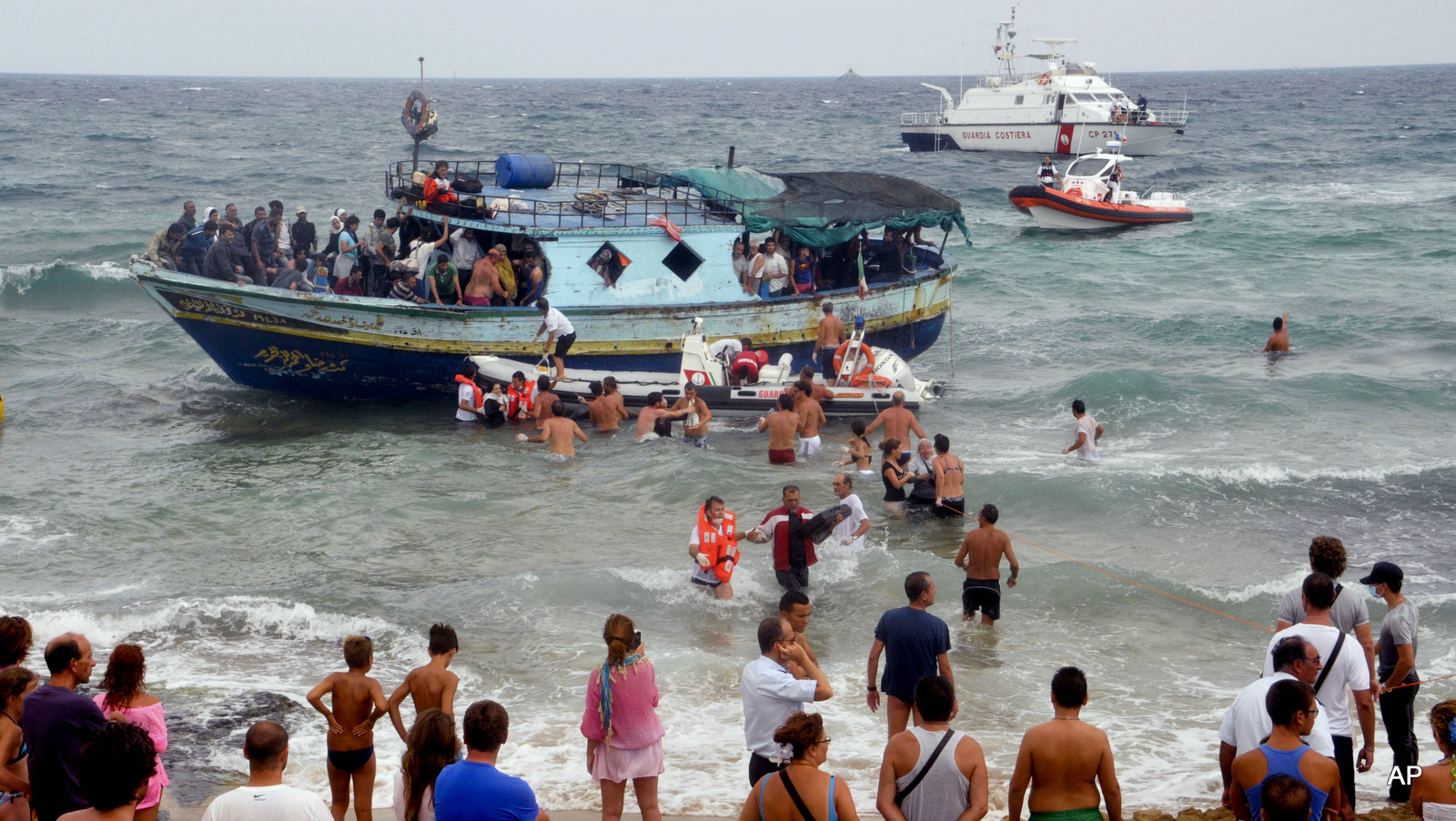


Other European nations have send support. In May Great Britain deployed HMS Bulwark to help. It rescued 500 migrants off of Libya earlier this year. The Irish Naval service also deployed a ship, and it has rescued some 2,000 migrants. As of August 22, 2015, the Italian Navy has rescued more than 3,000 migrants.

Canada has had a Naval vessel deployed to the Mediterranean since 2014, and could have went to the aid of migrants. But, according to the Royal Canadian Navy, they were never given the order to intervene by the Conservative Government.

My question is why not? Why does Canada not have any military responsibility to help European nations struggling with the thousands of migrants?

It would not cost any extra money to have the RCN vessel that is already deployed to help support Eastern Europe. Not sending help when it is the vicinity, is like not stopping at the scene of a horrific car accident on a back road, when you know paramedics will not make it in time.

Why not help at the refugee centers? Hungary has thousands of migrants blockaded in their train station. While this situation needs political help to help move the trains to locations willing to accept the migrants - the camps in Turkey and Jordan are huge, and quickly outgrow their boundaries. Canada could easily deploy the DART (Disaster Assistance Response Team) to one of the regions to help. This team specializes in setting up and helping in humanitarian crisises. They are usually deployed for a month long period, but with added support - the team could be deployed for a longer period of time.

In the current election campaign, the Liberals and NDP have both said they will do more to help the humanitarian issue caused by ISIS and the Syrian Civil War - neither are willing to continue to stand up and confront ISIS. Yet, now it seems the Conservatives are unwilling to help through  humanitarianism. What we need is a government that will step up on both fronts - the CAF can help in the refugee crisis all we need is a leader who will deploy them to do so.


Thursday, September 3, 2015

Construction Begins on AOPS

It has been 8 years since the Harper government announced the procurement of six Arctic Offshore Patrol Ships (AOPS) - construction of the first AOPS started Tuesday in Halifax.

Numerous employees celebrated the start of production.

Irving Shipbuilding released the following image for the press:

20150901_C8010_PHOTO_EN_488696

According to Irving the first AOPS will be complete in 2018, and be fully operational by 2019. The final AOPS will be complete by 2022.

Construction has actually started according to Irving - as many people cheered June 18, 2015 when a similar announcement was made - but that was only testing for test modules.

Tuesday, September 1, 2015

Navy Rents Barge to Deliver Fuel to Arctic

The Royal Canadian Navy is supplying its ships through any means necessary. This summer, the Navy rented the Chilean Navies AOR supply vessel for$6 million for 40 days, and are working on leasing a Spanish Navy AOR for the East Coast. The Navy has also announced it will rent the Chilean vessel several more times in the coming years.

Now the Navy has hired a company to move more than 220,000 liters of marine fuel on a barge into the Arctic, so that the Navy could fuel its warships during Northern exercises. The barge was also used to resupply the ships, according to a Navy officer.

Last month the Navy deployed two Maritime Coastal Defence Vessels (MCDVs) to the Arctic from the West Coast. This is the first time in 60 years that ships from Canada's Pacific fleet have ventured into the North. The military identified refueling the ships as a major hurdle in the exercise. The military has experimented with refueling barges before and decided that this was the best way to resupply the ships. Logistics when operating in the North is one of the most difficult tasks for any military when operating in such a remote location.

The Navy originally planned on sailing the barge from CFB Esquimalt, but that proved to me too difficult, and not very cost effective - a journey of more than 6,500 km. Instead the fuel was transported by truck to Mackenzie River, and then towed into the Arctic.

The barge was jointly used to help resupply other ships taking part in the 2015 portion of OP NANOOK.

In 2007 the Harper government announced it would construct a deep-water port and refueling station at Nanisivik on Baffin Island - which was supposed to be operational by 2012 - but it has fallen behind schedule and rising costs will limit the project. It is supposed to be operational by 2018 - and will only act as a refueling station during the summer months. A number of defence analysis inisit the Canadian Forces will need multiple refueling stations in the North if the Navy and the CF will have a larger presence in the future. It would also help Canada's sovereignty claims.

No costs associated with renting the barge have been released.

Friday, August 28, 2015

Report: JTF2 Relocation Delayed


According to an article in the Ottawa Citizen published today, by Defence insider David Pugliese the Department of National Defence's planned relocation of the special forces JTF2 Unit from its Ottawa location at Dwyer Hill to CFB Trenton is facing at least a year delay and a significant increase in the cost required to move.

JTF2 is Canada's anti-terrorism special forces, and they have been looking for a new home since 2005. Their current facility, Dwyer Hill, just outside Ottawa is an 80-hectare site that was formerly a horse farm which was purchased by DND in 1993 with the creation of JTF2. The site is designed for counter-terrorism training and includes; a pool, multiple firing ranges, and a rappel tower.

In 2008 the Conservative government announced that it would relocate JTF2 from its Ottawa facility to CFB Trenton, which would grant it more access to military transport aircraft which are flown out of Trenton. It also places the team on the 401 Highway, allowing for rapid deployment to Toronto or Montreal if they are needed. Stationing JTF2 in Trenton also places them next to the Canadian Forces Joint Incident Response Unit - which are responsible for  nuclear, biological, and chemical incidents. The Canadian Special Forces Regiment, are currently stationed at CFB Petawawa, and will stay there.

The initial estimate to more JTF2 was $346 million, which included moving, decommissioning, and building a new facility. The amount of the increase has not been disclosed, but an increase has been discussed, as well as delays. JTF2 is supposed to be in Trenton by 2019, but current contractor documents suggest they will still be occupying Dwyer Hill until at least 2020. That extension from 2019 to 2020 is costing $17 million.

DND has announced they still plan to move JTF2 - and will offer the site to other DND units following its Special Forces decommissioning. If no one at DND wants the site, it will be offered to Federal or Provincial departments. Following that, if no one steps forward to wanting the site, it will sell it on the open market in a fair and open process.